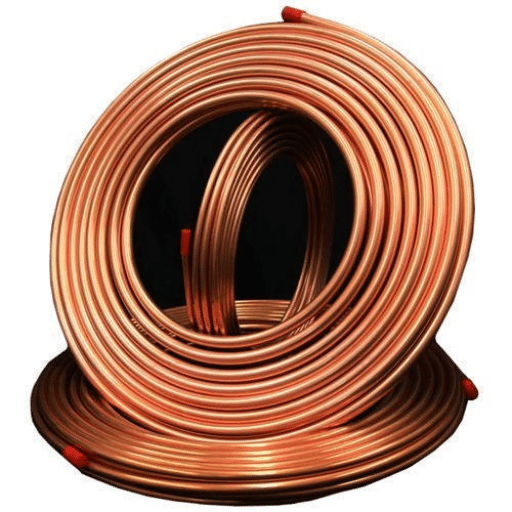
Your pharmaceutical WFI system failed validation because the tubing surface exceeded Ra 0.5μm — a specification that wasn’t clearly communicated in the purchase order. The tubing appeared to be bright and clean when viewed from the front, but the surface profilometer showed that the delivered product differed from the expected “bright annealed” standard and instead matched a pickled passivated finish. The difference between these two things extends beyond surface appearance because it determines which outcomes will lead to FDA approval or result in 200000 dollars worth of product failure.
The correct procedure for specifying 304 bright annealed stainless steel tubing requires users to understand that surface finish measurements exist in micrometers instead of visual assessments. The Ra value (surface roughness average) determines whether that tubing performs in high-purity pharmaceutical applications, maintains ultra-high purity in semiconductor gas delivery, or simply carries process fluids in general instrumentation. The guide establishes technical specifications that enable users to select 304 bright annealed tubing through Ra value measurements and ASTM standards and industry-specific requirements which will enable their tubing specifications to meet their application needs.
What Is 304 Bright Annealed Stainless Steel Tubing?

The Bright Annealing Process
The tubing undergoes bright annealing process which uses controlled-atmosphere heat treatment to create its unique properties that differentiate it from standard products which use conventional annealing and pickling methods. The process takes place inside a furnace which contains protective gas that typically uses hydrogen or a hydrogen-nitrogen mixture to stop oxidation from occurring on the stainless steel surface throughout the annealing process.
Standard annealing occurs in air or combustion atmospheres, leaving the tube surface oxidized and discolored. The oxide layer needs to be eliminated through mechanical polishing or acid pickling process. Bright annealing eliminates this step entire because the tube exits the furnace with a mirror-like metallic finish which has no oxide scale and maintains the complete passive chromium oxide layer.
The dimensional precision achieved through bright annealing is superior to conventional methods. The tube maintains outer diameter and wall thickness tolerances of ±0.05mm because it does not undergo pickling which removes surface material in unpredictable ways. The application needs this precision because flow characteristics must be predictable and repeatable for instrumentation purposes.
Surface Finish Characteristics
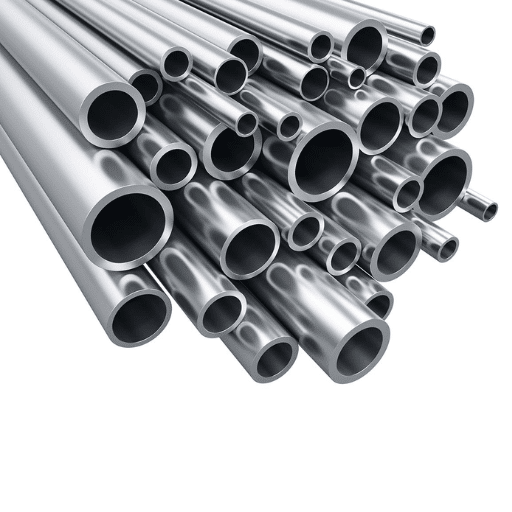
The defining characteristic of bright annealed tubing is its surface roughness, which scientists measure through Ra (Roughness Average) in micro meter (μm) units. The bright annealing process creates a smooth surface that does not exhibit directional patterns, which differs from mechanical polishing that results in embedded abrasive particles and visible scratch marks.
| BA Grade | Ra (Inner Surface) | Applications |
|---|---|---|
| Standard BA | ≤0.6 μm | General instrumentation, hydraulics |
| Precision BA | ≤0.4 μm | Pharmaceutical, food processing |
| High-Precision BA | ≤0.25 μm | Semiconductor, UHP gas systems |
| EP Base | ≤0.25 μm | Base material for electropolishing |
The Ra values of passivated tubing and pickled tubing show a range from 0.8 to 1.0 micrometers which creates visible roughness when observed through magnification and leads to different performance results in high-purity applications.
The mirror-like appearance of BA tubing isn’t merely aesthetic. The smooth surface creates three essential advantages for semiconductor and pharmaceutical environments. The smooth surface creates three essential advantages for semiconductor and pharmaceutical environments because it decreases particle adhesion and enhances cleanability and creates less turbulence during gas flow.
Key Benefits Over Conventional Finishes
Enhanced Corrosion Resistance: The smooth surface provides fewer initiation sites for pitting corrosion. The surface defects function as nucleation sites in chloride environments while BA finish decreases these defects by 60 to 80 percent when compared to pickled surfaces.
Improved Cleanability: The CIP (Clean-in-Place) systems used in pharmaceutical applications require Ra values below 0.4μm because this standard guarantees that cleaning solutions will reach every surface area without retaining residues in tiny valleys. The validation success rates get affected by this relationship.
No Embedded Abrasives: The process of mechanical polishing which creates smooth surfaces through its method creates the possibility of stainless steel surfaces receiving hidden abrasive particle contamination. The BA finish achieves its smoothness through thermal treatment which prevents any risk of contamination.
Dimensional Stability: The BA tubing system maintains its dimensional accuracy through all lengths because it does not require material removal which occurs during both pickling and mechanical polishing processes.
ASTM Standards and Surface Finish Specifications

ASTM A269 — General Service Tubing
The standard most frequently used for 304 bright annealed instrumentation tubing is ASTM A269″Seamless and Welded Austenitic Stainless Steel Tubing for General Service. The A269 standard cannot serve critical applications because:
Critical specification gap: ASTM A269 requires only a “workmanlike finish.” The standard does not mandate Ra measurements, specify surface roughness limits, or define “bright annealed” in measurable terms. Two suppliers can both provide “A269 BA tubing” which meets standard requirements through their respective Ra values of 0.4μm and 0.8μm.
Specifying BA under A269: To ensure the surface finish meets application requirements, the purchase order must include supplemental requirements:
“Bright annealed finish, inner surface Ra ≤0.4μm per ANSI B46.1, measured per ASTM D7127.”
Without this explicit specification, suppliers default to their standard BA process — which may or may not meet your validation requirements.
ASTM A270 — Sanitary/Hygienic Tubing
When surface finish integrity is critical — food, beverage, pharmaceutical, and bioprocessing applications — ASTM A270 supersedes A269. Key differences:
- Surface finish requirements: A270 specifies maximum Ra values by grade (typically 20, 25, or 32 μin)
- Inspection requirements: Bore scope inspection for ID defects (ASME BPE Standard)
- Documentation: Surface finish certification required
For pharmaceutical WFI systems and bioprocessing equipment, specify ASTM A270 Grade TP304 or TP316L with BA finish rather than general service A269.
Surface Roughness (Ra) Specification Guide
Ra values must be specified as supplemental requirements when ordering 304 bright annealed stainless steel tubing:
| Application | Recommended Ra | Specification Language |
|---|---|---|
| General instrumentation | ≤0.6 μm | “Standard BA finish, ID Ra ≤0.6μm” |
| Pharmaceutical CIP/WFI | ≤0.4 μm | “Precision BA, ID Ra ≤0.4μm, ASTM A270” |
| Semiconductor UHP gas | ≤0.25 μm | “High-precision BA, ID Ra ≤0.25μm” |
| Electropolish base material | ≤0.25 μm | “BA finish, ID Ra ≤0.25μm prior to EP” |
Measurement method: Surface profilometer per ASTM D7127, with cutoff length appropriate to tubing diameter. Require test report with Ra, Rz, and Rmax values.
Bright Annealed vs. Pickled & Passivated vs. Electropolished

Manufacturing Process Comparison
Understanding the three primary surface finish options for 304 stainless steel tubing enables correct specification:
| Aspect | Bright Annealed (BA) | Pickled & Passivated (AP) | Electropolished (EP) |
|---|---|---|---|
| Process | Controlled atmosphere annealing | Air annealing → acid pickling → passivation | BA base → electrolytic material removal |
| Surface | Mirror-like, shiny | Matte, dull silver-white | Mirror-bright, chrome-like |
| Ra (typical) | 0.4–0.6 μm | 0.8–1.0 μm | ≤0.2 μm |
| Cost premium | Baseline | -10 to -15% | +40 to +60% |
| Corrosion resistance | High | Moderate | Highest |
Sarah Chen chose a pickled passivated finish as the tubing material for the 2023 pharmaceutical WFI system because it provided 12% material cost savings. The surface roughness tests conducted during IQ/OQ validation showed results of Ra 0.9μm, which exceeded the WFI application limit of 0.5μm. The replacement BA tubing with Ra 0.35μm costs an additional 8,500, but the three-week scheduled delay and validation costs exceeded 8,500 but thethreeweekscheduledelayandrevalidationcostsexceeded45,000. The AP’s “savings” resulted in a cost increase that became five times higher than expected.
Selection Decision Framework
Specify Bright Annealed When:
- Ra <0.8μm is required for particle-sensitive applications
- Ultra-high purity gas systems (UHP/HP delivery)
- Pharmaceutical WFI or CIP systems
- Semiconductor process gas lines (non-critical)
- Surface cleanliness is critical but electropolish is cost-prohibitive
- Electropolishing is the next processing step (BA is mandatory base material for EP)
Specify Pickled & Passivated When:
- General industrial instrumentation (no Ra requirement)
- Hydraulic systems per SAE J3129 (standard allows either)
- Cost is primary selection criterion
- Surface appearance is not functionally critical
- Marine or structural applications where Ra is irrelevant
Specify Electropolished When:
- Critical semiconductor UHP gas delivery (Ra ≤0.2μm required)
- Ultra-pure water systems with particle count requirements
- Pharmaceutical applications requiring the lowest possible bacterial adhesion
- Outgassing requirements <5×10⁻¹² Torr·L/s·cm²
Cost-Benefit Analysis
| Finish | Relative Cost | Validation Pass Rate | 10-Year Lifecycle Cost |
|---|---|---|---|
| Pickled & Passivated | 85% | 60% (pharma apps) | High (failure risk) |
| Bright Annealed | 100% (baseline) | 95% | Baseline |
| Electropolished | 140–160% | 99% | Lower (reduced maintenance) |
For pharmaceutical and semiconductor applications, BA tubing provides the optimal balance of performance, cleanliness, and cost. The 10–15% premium over pickled tubing is recovered through first-pass validation success and reduced contamination risk.
Industry Applications and Specifications

Pharmaceutical & Bioprocessing
The surface finish in pharmaceutical manufacturing determines both product quality and compliance with regulatory requirements. The 304 bright annealed stainless steel tubing functions three distinct essential purposes:
Water for Injection (WFI) Systems: USP and FDA guidance recommend surfaces that minimize biofilm formation. BA tubing with Ra ≤0.4μm provides a surface that resists bacterial adhesion and enables effective sanitization. The 316L BA tubing should be used for WFI systems because its molybdenum content ensures necessary chloride resistance in hot water systems.
Clean-in-Place (CIP) Systems: Automated cleaning cycles require surfaces that don’t trap product residues. The clean BA surface enables cleaning solutions to reach every part of the surface because there are no areas where solutions can become trapped.
Bioreactor Fluid Transfer: Vaccine and monoclonal antibody production requires sterile pathways. Aseptic processing systems depend on BA tubing which has certified surface finish as their essential foundation.
Typical specification for pharmaceutical:
“ASTM A270 TP316L, seamless, bright annealed finish, ID Ra ≤0.4μm, with EN 10204 3.1 material certification and surface finish test report.”
Semiconductor Manufacturing
Semiconductor fabrication facilities operate at contamination levels measured in particles per cubic meter. The presence of a single particle that exceeds 0.1 micrometers in size will cause damage to a wafer that costs 50000 dollars during its manufacturing process. 304 bright annealed stainless steel tubing — and more commonly 316L — serves as the backbone of UHP gas delivery systems.
Ultra-High Purity (UHP) Gas Lines: The delivery systems for nitrogen argon hydrogen and specialty process gases must have minimal outgassing and particle generation. BA tubing with Ra ≤0.25μm approaches the smoothness required for UHP service. The most important applications use BA tubing as their primary material which enables electropolishing to achieve Ra measurements under 0.2μm.
Ultra-Pure Water (UPW) Systems: The cleaning process for wafers requires deionized water which must use tubing that prevents both contaminant leaching and bacterial growth. The standard requires a high-precision BA finish.
Chemical Mechanical Planarization (CMP): Wafer polishing needs slurry delivery systems that use smooth surfaces to stop particle agglomeration while maintaining constant slurry chemistry.
Critical specification for semiconductor:
“ASTM A269 TP316L, seamless, high-precision bright annealed, ID Ra ≤0.25μm, passivated, certified for outgassing per SEMI F20.”
Instrumentation & Process Control
General industrial instrumentation represents the largest volume application for 304 bright annealed tubing. Applications include:
Analytical Instrumentation: Sample lines for gas chromatographs, mass spectrometers, and process analyzers require inert, non-adsorptive surfaces. BA finish prevents sample cross-contamination and ensures measurement accuracy.
Chromatography Systems: GC and HPLC carrier gas lines benefit from the smooth interior surface, which minimizes turbulence and ensures consistent flow characteristics.
Process Control: Pressure transmitters, flow meters, and analytical probes connect to process lines via BA tubing that maintains calibration stability.
Typical specification for instrumentation:
“ASTM A269 TP304 or TP316L, seamless, bright annealed, OD 1/4″ to 1/2″, wall 0.035″ or 0.049″, ID Ra ≤0.6μm.”
Food & Beverage
Hygienic processing applications use BA tubing for control lines and instrumentation in process areas:
Hygienic Control Lines: Instrumentation tubing in dairy, brewery, and beverage processing must withstand aggressive CIP chemicals while maintaining surface integrity. BA finish provides the corrosion resistance and cleanability required.
Clean Steam Systems: High-temperature steam for sterilization requires tubing that resists sensitization and maintains surface finish after thermal cycling.
Specification: DIN 11850 or ASTM A270 with BA or EP finish, typically 316L grade for chloride-containing cleaning agents.
Material Grade Selection for Bright Annealed Tubing

304 vs. 304L
304 (UNS S30400): The standard austenitic grade with carbon content up to 0.08%. Suitable for general instrumentation where welding is minimal and the tubing will not be exposed to sensitization temperatures (450–850°C).
304L (UNS S30403): Low-carbon variant (≤0.03% C) recommended for:
- Welded fabrication (reduces carbide precipitation in HAZ)
- High-temperature service
- Applications where intergranular corrosion is a concern
For most bright annealed tubing applications, 304L is the safer specification unless the application is strictly ambient temperature and non-welded.
316/316L — The Pharmaceutical Standard
316 (UNS S31600) and 316L (UNS S31603) contain 2–3% molybdenum, providing significantly improved chloride corrosion resistance compared to 304. Specify 316L BA tubing for:
- Pharmaceutical WFI and CIP systems
- Marine and coastal applications
- Chemical processing with halide exposure
- High-purity water systems
The cost premium for 316L over 304L is typically 15–20%, but the lifecycle cost is lower in corrosive environments.
316Ti for High-Temperature Service
316Ti (UNS S31635) is titanium-stabilized to prevent sensitization during high-temperature service. Specify for:
- Clean steam systems above 400°C
- High-temperature CIP systems
- Applications requiring post-weld heat treatment
Specifying 304 Bright Annealed Tubing: Procurement Checklist
Technical Specification Requirements
□ Material grade: 304, 304L, 316, or 316L (316L recommended for pharmaceutical/water)
□ Standard: ASTM A269 (general) or ASTM A270 (sanitary/pharmaceutical)
□ Manufacturing method: Seamless (high pressure/ temp) or welded (cost-sensitive)
□ Surface finish: Bright annealed with explicit Ra requirement
□ Ra specification: ≤0.6μm (standard), ≤0.4μm (precision), or ≤0.25μm (high-precision)
□ Dimensional tolerances: Standard ASTM or precision (±0.05mm OD)
□ Testing: Hydrostatic, eddy current, or ultrasonic per application requirements
Documentation Requirements
Mill Test Report (MTR) must include:
- Heat number and chemical composition (spectrographic verification)
- Mechanical properties (tensile, yield, elongation)
- Surface finish certification (when Ra is specified)
- Heat treatment records
Additional documentation (when specified):
- Surface roughness test report (profilometer data)
- EN 10204 3.1 or 3.2 material certification
- Third-party inspection report (SGS, TÜV, Bureau Veritas)
- Passivation certification
Incoming Inspection Protocol
When receiving 304 bright annealed stainless steel tubing, verify:
- Visual inspection: Mirror-like finish, no oxidation stains, no mechanical damage
- Dimensional check: Sample OD, wall thickness, and straightness against specification
- Surface roughness verification: Profilometer measurement of ID surface (spot-check 10% of pieces)
- Documentation review: MTR completeness, heat number traceability, test results
Common Specification Mistakes

Mistake 1: Confusing BA with EP
The error: Specifying BA tubing when electropolished (EP) is required.
The consequence: Semiconductor UHP gas systems require Ra ≤0.2μm. BA achieves 0.25–0.4μm. A major fab in Arizona specified BA instead of EP for specialty gas lines in 2022. Particle contamination during wafer processing caused yield losses exceeding $2 million before the error was traced to tubing surface finish.
The solution: For critical semiconductor UHP applications, specify “BA finish, electropolished to Ra ≤0.2μm” or order pre-electropolished tubing.
Mistake 2: Not Specifying Ra Under ASTM A269
The error: Ordering “ASTM A269, bright annealed” without Ra requirement.
The consequence: ASTM A269 does not mandate Ra values. One supplier delivers BA with Ra 0.8μm (compliant but inadequate), another delivers 0.4μm. Validation fails because the delivered material doesn’t meet the unstated requirement.
The solution: Always specify: “Bright annealed, ID Ra ≤[value]μm per ANSI B46.1.”
Mistake 3: Using 304 Instead of 316L for Pharmaceutical
The error: Specifying 304 BA tubing for WFI systems to save 15% on material costs.
The consequence: 304 lacks the molybdenum for chloride resistance in hot water systems. Pitting corrosion develops within 2–3 years, requiring system replacement.
The solution: Specify 316L (or 316L Urea grade for urea production) for all pharmaceutical water systems.
Mistake 4: Skipping Passivation After Welding
The error: Assuming BA tubing maintains its passive layer after welding.
The consequence: Welding destroys the passive chromium oxide layer in the heat-affected zone. Without passivation, rapid corrosion occurs at weld joints.
The solution: Always specify passivation of weld joints after fabrication, regardless of base material finish.
FAQ
What is the difference between bright annealed and electropolished tubing?
The treatment process for bright annealed tubing achieves surface smoothness through controlled-atmosphere heat treatment which produces an Ra measurement between 0.4 and 0.6μm. Electropolished (EP) tubing starts with BA material and undergoes electrolytic material removal, achieving Ra ≤0.2μm. EP is required for critical semiconductor UHP applications; BA is sufficient for most pharmaceutical and instrumentation uses. EP costs 40–60% more than BA.
What Ra value should I specify for pharmaceutical WFI systems?
The Water for Injection systems require a surface roughness which does not exceed Ra 0.4μm. The chosen surface roughness helps to reduce bacterial adhesion while enabling sanitary CIP cleaning procedures. The surface finish certification needs ASTM A270 because it provides better assessment than A269. 316L grade material provides better protection against chloride damage in hot water systems than 304 grade material.
Does ASTM A269 require bright annealed finish?
The standard requires only workmanlike finishing according to ASTM A269 which does not require Ra measurement and does not provide a definition of bright annealed surface finish. The surface finish you need requires additional specifications because you must specify the exact surface finish standards which include “Bright annealed, ID Ra ≤0.4μm per ANSI B46.1.” The suppliers will deliver different surface finishes which range from 0.3μm to 0.8μm because they have not received specific Ra requirements from you.
Can I weld bright annealed tubing without losing surface finish properties?
The process of welding removes the chromium oxide protective layer from the heat-affected zone (HAZ) section of the welded metal base material regardless of its initial surface condition. The BA surface finish itself remains intact away from the weld, but the welded area will be discolored and susceptible to corrosion until passivated. The specification requires all weld joints to undergo passivation after the completion of manufacturing. The application requires users to choose orbital welding which uses automatic purging because it reduces HAZ and oxidation results.
Which material costs less, BA tubing or pickled passivated tubing?
The price of bright annealed tubing exceeds that of pickled and passivated tubing by 10 to 15 percent for both materials in identical grades and dimensions. The lifecycle costs ofBA materials for pharmaceutical and semiconductor applications make this option more affordable because the 10 to 15 percent material cost increase leads to first-pass validation success which decreases contamination risk and reduces cleaning and validation costs throughout the system’s operational lifetime.
When should I specify 316L instead of 304 for BA tubing?
Specify 316L (rather than 304) for:
- Pharmaceutical WFI and CIP systems (chloride resistance)
- Marine or coastal applications
- Chemical processing with halide exposure
- High-purity water systems
- Any application with welding (316L has better weldability)
The cost premium is 15–20%, but the corrosion resistance improvement is significant in these environments.
How do I verify the Ra value on incoming BA tubing?
You should use a portable surface profilometer according to ASTM D7127 specifications. The inner surface diameter (ID) needs measurement at multiple points which must be tested throughout the entire length of the tubing. The supplier needs to deliver a surface roughness test report that includes Ra Rz and Rmax measurement results. The organization requires third-party verification of surface finishing for its vital processes. The organization accepts Ra values below 0.4 micrometers for pharmaceutical use and below 0.6 micrometers for general instrumentation use.
Can Zhongzheng provide BA tubing with Ra ≤0.4μm certification?
Yes. Zhongzheng produces bright annealed tubing in 304 and 316L materials which undergo bright annealing in controlled atmospheres and achieve surface finish certification that meets specified Ra standards. Our Wenzhou facility produces BA tubing for pharmaceutical, semiconductor, and instrumentation applications with full MTR documentation including surface finish test reports. Our technical team will assess your specification with its required Ra value to determine our capability and lead time which we will deliver within 24 hours.
Conclusion
The procurement process requires surface finish standards to be established for selecting 304 bright annealed stainless steel tubing. The difference between Ra 0.6μm and 0.4μm requires visual detection to determine which standard your system needs to achieve for FDA validation or UHP purity in semiconductor gas lines. The ASTM standard does not provide measurable definitions for bright annealed because you need to specify Ra values which will ensure the tubing meets your application needs.
Key takeaways:
- Specify Ra values explicitly under ASTM A269 — the standard doesn’t mandate them
- Match material grade to environment: 304 for general, 316L for pharmaceutical and corrosive service
- BA is the base material for EP; specify EP only when Ra ≤0.2μm is required
- Always passivate after welding, regardless of base material finish
- The 10–15% BA premium over pickled is recovered through validation success and lifecycle performance
Ready to specify 304 bright annealed tubing for your project? Submit your requirements — material grade, dimensions, Ra value, and application — and Zhongzheng’s technical team will confirm specification compliance, provide certified surface finish test reports, and deliver a detailed quotation within 24 hours.
Reference Sources
- ASTM International — ASTM A269: Seamless and Welded Austenitic Stainless Steel Tubing for General Service
- ASTM International — ASTM A270: Seamless and Welded Austenitic Stainless Steel Sanitary Tubing
- ASTM International — ASTM D7127: Standard Test Method for Measurement of Surface Roughness of Abrasive Blast Cleaned Metal Surfaces
- ASME BPE: Bioprocessing Equipment Standard (Surface Finish Requirements)
- SEMI F20: Specification for 316L Stainless Steel Bar, Forgings, Extruded Shapes, Plate, and Tubing
- FDA Guidance for Industry: Sterile Drug Products Produced by Aseptic Processing
- USP <1231>: Water for Pharmaceutical Purposes
- DLSS Pipeline Technical Bulletin: Bright Annealed Tube Surface Finish Specifications
- Pinghou Trading: Applications of BA Tubing in High-Purity Industrial Applications
- Silver Tubes: SS 304 Bright Annealed Pipes & Tubes Guide