Your process piping specification requires stainless steel as its designated material. The project budget is tight, the fluid is non-corrosive, and your lead engineer suggests 316L “just to be safe.” But 316L carries a 20% material premium, and the chloride level in your service water tests at 12 ppm. You are about to over-specify a project that already faces margin pressure.
This scenario repeats daily in engineering offices throughout the world. Grade 304 stainless steel pipe handles roughly 80% of industrial applications where corrosion resistance is required yet it gets bypassed for 316L out of specification conservatism. That conservatism costs projects millions in unnecessary alloy upgrades.
The guide provides a complete 304 stainless steel pipe specification framework which includes chemical composition requirements according to ASTM A312 and pressure-temperature ratings from ASME B31.3 and dimensional schedules and welding procedures and the specific environmental thresholds that determine when 304 is fully adequate versus when 316L becomes mandatory. Your decision framework enables you to select materials that optimize both performance and cost.
What Is 304 Stainless Steel Pipe?

Austenitic Stainless Steel Fundamentals
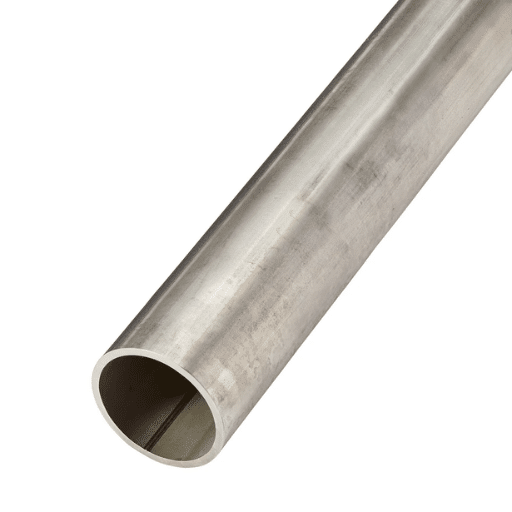
The 304 stainless steel pipe contains chromium and nickel which make it an austenitic alloy that qualifies as UNS S30400 (standard carbon) and UNS S30403 (low-carbon 304L) standards. The alloy contains nominally 18% chromium and 8% nickel which creates the common name “18-8 stainless steel.” The material composition generates a face-centered cubic crystal structure which provides outstanding formability and welding capabilities plus the ability to withstand corrosion at multiple temperature extremes.
The chromium content forms a passive oxide layer approximately 3 nanometers thick on the pipe surface. The protective layer establishes self-healing capability which restores its integrity through contact with oxygen thereby providing the stainless steel’s corrosion resistance. The nickel addition stabilizes the austenitic structure at room temperature which maintains material toughness and ductility through to cryogenic temperatures.
Engineering Note: When Marcus Chen specified 304 seamless pipe for a Wisconsin dairy processing plant in March 2024, he faced pressure to upgrade to 316L. The plant used municipal water with 8 ppm chloride and standard caustic CIP cycles. Three years later, the 304 pipe shows zero corrosion. The “upgrade” would have added 47,000toa47,000toa240,000 piping package with no performance benefit.
304 vs 304L: The Carbon Distinction
The difference between 304 and 304L is carbon content. Standard 304 contains maximum 0.08% carbon, while 304L limits carbon to 0.03% maximum. The performance difference between these two substances results from their 0.05% carbon content difference.
When 304 reaches its sensitization temperature range during welding and high-temperature operations, its carbon atoms bond with chromium atoms to create chromium carbides at the grain boundaries. This process decreases chromium levels at the boundaries, which leads to increased intergranular corrosion vulnerability. The reduced carbon content in 304L results in decreased carbide formation, which helps preserve corrosion resistance throughout the heat-affected area.
Specify 304L when:
- Welding is required (any welded construction)
- Service temperature exceeds 800°F
- Post-weld heat treatment is impractical
- The application involves corrosive environments where intergranular attack is a risk
304 is acceptable when:
- Using seamless pipe without welding
- Operating temperatures remain below 800°F
- The application is non-corrosive or mildly corrosive
- Cost optimization is critical and service conditions permit
Key Physical and Mechanical Properties
| Property | Value | Notes |
|---|---|---|
| Density | 8.0 g/cm³ | Standard for austenitic grades |
| Melting Point | 1400–1455°C | Allows high-temperature service |
| Thermal Conductivity | 16.2 W/m·K | Lower than carbon steel; consider for heat transfer |
| Thermal Expansion | 17.8 μm/m·K | Account for in high-temperature piping design |
| Yield Strength (min) | 30 ksi | Annealed condition per ASTM A312 |
| Tensile Strength (min) | 75 ksi | Provides excellent strength-to-weight ratio |
| Elongation (min) | 35% | Indicates excellent formability |
| Hardness (max) | 90 HRB | Annealed condition |
Chemical Composition and Standards

ASTM A312 vs A778 vs A269
The production of 304 stainless steel pipe follows various ASTM standards which depend on specific application needs.
ASTM A312 — The primary specification for seamless and welded austenitic stainless steel pipe intended for high-temperature and general corrosive service. This specification serves as the standard requirement which process piping must follow according to ASME B31.3. A312 requires heat treatment (annealing) after welding and mandates mechanical testing including tensile and flattening tests.
ASTM A778 — Covers welded unannealed austenitic stainless steel pipe for general corrosion service at moderate temperatures. A778 pipe does not undergo heat treatment after welding which results in lower costs but renders the material unsuitable for applications involving high-pressure or high-temperature conditions. The material serves common purposes in water treatment facilities and structural uses which require lower pressure capacity.
ASTM A269 — Specifies seamless and welded austenitic stainless steel tubing (not pipe) for general service. A269 products have tighter dimensional tolerances than A312 pipe and are commonly used for instrumentation, heat exchangers, and hydraulic applications. The tubing system requires users to designate outer diameter and wall thickness while the pipe system utilizes nominal pipe size and schedule for identification.
When to specify each:
- Process piping, high pressure, high temperature: ASTM A312
- General corrosion service, low pressure, cost-sensitive: ASTM A778
- Instrumentation, tight tolerances, heat exchangers: ASTM A269
Chemical Composition Requirements
| Element | UNS S30400 (304) | UNS S30403 (304L) |
|---|---|---|
| Chromium | 18.0–20.0% | 18.0–20.0% |
| Nickel | 8.0–10.5% | 8.0–12.0% |
| Carbon | ≤0.08% | ≤0.03% |
| Manganese | ≤2.00% | ≤2.00% |
| Silicon | ≤1.00% | ≤1.00% |
| Phosphorus | ≤0.045% | ≤0.045% |
| Sulfur | ≤0.030% | ≤0.030% |
| Nitrogen | ≤0.10% | ≤0.10% |
The chromium range of 18–20% ensures reliable passivation across manufacturing variations. The nickel content provides austenite stability; the slightly wider range for 304L (8–12% vs 8–10.5%) accommodates nitrogen additions that help compensate for strength reduction from lower carbon.
ASME and International Standards
Beyond ASTM specifications, 304 pipe is covered by multiple international standards:
ASME B36.19M — Defines dimensions and wall thicknesses for stainless steel pipe. The “M” designation indicates metric units; an imperial version exists as B36.19. Schedule designations (5S, 10S, 40S, 80S) are defined here.
EN 10216-5 — European standard for seamless steel tubes for pressure purposes, including technical delivery conditions for stainless steel tubes. Equivalent to ASTM A312 but with some testing and certification differences.
GB/T 14976 — Chinese national standard for seamless stainless steel pipes for fluid transport. Zhongzheng manufactures to both GB/T 14976 and ASTM A312, with full compliance documentation available.
JIS G3459 — Japanese Industrial Standard for stainless steel pipes. Common in Asian construction projects and Japanese-engineered facilities.
Dimensions and Schedules

Nominal Pipe Size (NPS) vs Actual Dimensions
Stainless steel pipe uses the Nominal Pipe Size (NPS) designation system. A critical concept: NPS does not equal the actual pipe diameter. NPS 2″ pipe has an outside diameter of 2.375 inches, not 2.0 inches. This nomenclature dates to early pipe manufacturing when internal diameter was approximately nominal.
Key dimensional principles:
- OD remains constant for a given NPS regardless of schedule
- Wall thickness varies by schedule, changing the internal diameter
- ID decreases as schedule number increases
- Weight increases with wall thickness for the same length
Common NPS sizes range from 1/8″ through 24″, with larger diameters available for special applications.
Schedule System Explained
The wall thickness of pipes depends on their schedule numbers which determine their ability to withstand pressure. The ASME B36.19M standard specifies pipe dimensions through its Schedules 5S, 10S, 40S and 80S specifications for stainless steel pipes. The system used to determine pressure ratings of pipes requires users to select between different schedule numbers which will result in thicker pipe walls based their selected schedule number.
The relationship between schedule and pressure exists through this mathematical equation: Schedule ≈ 1000 × (P/S), where P represents internal pressure and S denotes allowable stress. The same schedule shows different pressure ratings because materials have different allowable stress limits.
Schedule selection criteria:
- 5S and 10S: Low-pressure applications, cost savings, weight reduction
- 40S: Standard industrial piping, most common specification
- 80S: High-pressure service, increased safety factor
- 160S and XXS: Extreme pressure or corrosion allowance requirements
Complete Dimension Reference Table
| NPS | OD (in) | Sch 5S WT (in) | Sch 10S WT (in) | Sch 40S WT (in) | Sch 80S WT (in) |
|---|---|---|---|---|---|
| 1/2″ | 0.840 | 0.065 | 0.083 | 0.109 | 0.147 |
| 3/4″ | 1.050 | 0.065 | 0.083 | 0.113 | 0.154 |
| 1″ | 1.315 | 0.065 | 0.109 | 0.133 | 0.179 |
| 1-1/2″ | 1.900 | 0.065 | 0.109 | 0.145 | 0.200 |
| 2″ | 2.375 | 0.065 | 0.109 | 0.154 | 0.218 |
| 3″ | 3.500 | 0.083 | 0.120 | 0.216 | 0.300 |
| 4″ | 4.500 | 0.083 | 0.120 | 0.237 | 0.337 |
| 6″ | 6.625 | 0.109 | 0.134 | 0.280 | 0.432 |
| 8″ | 8.625 | 0.109 | 0.148 | 0.322 | 0.500 |
| 10″ | 10.750 | 0.134 | 0.165 | 0.365 | 0.594 |
| 12″ | 12.750 | 0.156 | 0.180 | 0.406 | 0.688 |
Weight Calculation
Calculate pipe weight per foot using the formula:
W = 10.69 × (OD − WT) × WT
Where:
- W = weight in pounds per foot
- OD = outside diameter in inches
- WT = wall thickness in inches
Example: For 6″ NPS Schedule 40S (OD = 6.625″, WT = 0.280″):
W = 10.69 × (6.625 − 0.280) × 0.280 = 10.69 × 6.345 × 0.280 = 19.0 lbs/ft
For metric: kg/m = lbs/ft × 1.488 (so 19.0 lbs/ft = 28.3 kg/m)
Pressure Ratings and Temperature Limits

ASME B31.3 Process Piping Ratings
ASME B31.3 is the governing code for process piping in chemical, petroleum, and pharmaceutical plants. It provides pressure-temperature ratings based on material allowable stress at temperature.
The following table shows representative working pressures for ASTM A312 304/304L pipe:
| Temperature (°F) | Sch 40S 1″ | Sch 40S 4″ | Sch 80S 1″ | Sch 80S 4″ |
|---|---|---|---|---|
| 100 | 3040 | 1440 | 4210 | 2550 |
| 200 | 2620 | 1240 | 3630 | 2200 |
| 300 | 2620 | 1240 | 3630 | 2200 |
| 400 | 2460 | 1160 | 3410 | 2060 |
| 500 | 2330 | 1100 | 3230 | 1960 |
| 600 | 2180 | 1030 | 3020 | 1830 |
| 700 | 2070 | 980 | 2870 | 1740 |
| 800 | 1950 | 920 | 2710 | 1640 |
| 900 | 1850 | 875 | 2570 | 1560 |
| 1000 | 1750 | 825 | 2430 | 1470 |
Values in psig (pounds per square inch gauge). Consult ASME B31.3 Table A-1 for complete ratings.
Key observations:
- Pressure rating decreases as temperature increases
- Smaller diameter pipe has higher pressure rating at same schedule
- Schedule 80S provides approximately 70% higher pressure rating than 40S
- Derating begins above 100°F and accelerates above 600°F
Maximum Operating Temperatures
304 stainless steel maintains structural integrity across an exceptionally wide temperature range:
Continuous service: 800°F (427°C) maximum recommended for 304; 304L can operate slightly higher due to better creep resistance from carbide stability
Intermittent exposure: Up to 1650°F (899°C) with no structural damage, though scaling may occur above 1200°F
Oxidation resistance: Excellent in air up to 1650°F due to protective chromium oxide layer
Creep consideration: Above 750°F, creep deformation becomes a design factor. For long-term service above this temperature, consider 321 or 347 stabilized grades or higher-nickel alloys.
Low-temperature ductility: 304 maintains excellent toughness down to cryogenic temperatures. At −425°F (−254°C), impact properties remain suitable for liquefied natural gas (LNG) applications.
Hydrostatic Testing Requirements
ASTM A312 requires hydrostatic testing at a pressure calculated as:
P = 2 × S × t / D
Where:
- P = test pressure
- S = allowable stress at test temperature
- t = nominal wall thickness
- D = outside diameter
Standard practice tests to 1.5× design pressure minimum. Alternative pneumatic testing at 1.1× design pressure is permitted when hydrostatic testing is impractical, with appropriate safety precautions due to stored energy in compressed gas.
Corrosion Resistance and Application Limits

General Corrosion Performance
304 stainless steel provides excellent corrosion resistance in numerous environments:
Atmospheric corrosion: Resists urban, industrial, marine, and rural atmospheres. Surface may discolor (tea staining) in aggressive marine environments but structural integrity remains.
Fresh water: Excellent resistance up to 200°F in potable and process water with chloride below 50 ppm.
Food and beverages: Approved by FDA for food contact. Resists organic acids, food acids, and standard cleaning solutions.
Oxidizing acids: Limited resistance. Nitric acid at low concentrations (<20%) and ambient temperature is acceptable; higher concentrations or temperatures require upgrade to higher alloys.
Organic chemicals: Good resistance to alcohols, ketones, esters, and hydrocarbons.
Chloride Pitting and Crevice Corrosion
This is the primary failure mode that limits 304 applications. Chloride ions break down the passive oxide layer, initiating localized pitting attack.
Critical chloride thresholds:
- Ambient temperature (70°F): Approximately 50 ppm chloride threshold
- Elevated temperature (140°F): Threshold drops to approximately 10–20 ppm
- Boiling water: Threshold below 5 ppm
The Pitting Resistance Equivalent Number (PREN) quantifies this resistance:
PREN = %Cr + 3.3 × %Mo + 16 × %N
For 304: PREN ≈ 18 (18% Cr + 0% Mo + minimal N)
For 316: PREN ≈ 24 (16% Cr + 2% Mo × 3.3 + minimal N)
Higher PREN indicates better pitting resistance. The jump from 18 to 24 explains why 316 outperforms 304 in chloride environments.
Failure Case Study: A Florida desalination plant specified 304 pipe for seawater intake at 19,000 ppm chloride. Within 18 months, through-wall pitting required complete replacement with super duplex S32750. The material “savings” from selecting 304 instead of duplex cost the project $2.3 million in emergency replacement and downtime.
Stress Corrosion Cracking (SCC)
304 is susceptible to chloride stress corrosion cracking above approximately 140°F (60°C) when under tensile stress. Three factors must align for SCC:
- Chloride presence (even trace amounts at elevated temperature)
- Tensile stress (residual from fabrication or applied in service)
- Temperature above threshold
Prevention strategies:
- Use 304L to reduce residual stress sensitivity
- Specify stress-relief annealing after fabrication
- Control chloride concentration in service fluid
- Use 316L or duplex grades when SCC risk is identified
Welding and Fabrication Guidelines

Filler Metal Selection
Proper filler metal selection ensures weld joint corrosion resistance matches base metal:
| Base Metal Combination | Recommended Filler | Notes |
|---|---|---|
| 304 to 304 | ER308L | Standard match, low carbon prevents sensitization |
| 304L to 304L | ER308L | L-grade filler for L-grade base |
| 304 to carbon steel | ER309L | Higher alloy compensates for dilution |
| 304/304L (critical corrosion) | ER316L | Enhanced corrosion resistance in weld |
Welding Processes
GTAW (TIG) — Gas Tungsten Arc Welding:
- Preferred for thin wall pipe (under 0.125″ wall)
- Excellent control, no spatter
- Back purging required for sanitary applications
- Lower deposition rate, higher labor cost
GMAW (MIG) — Gas Metal Arc Welding:
- Higher deposition for thicker sections
- Faster than GTAW, lower labor cost
- Good for shop fabrication of Schedule 40S and heavier
- Short-circuiting or spray transfer modes
SMAW — Shielded Metal Arc Welding:
- Field welding convenience
- No shielding gas required
- Stick electrodes E308L-16 or -17
- Slower than wire processes
FCAW — Flux-Cored Arc Welding:
- Highest productivity for heavy wall
- Good for construction site applications
- Requires slag removal
Heat Input Control
Excessive heat input during welding can cause:
- Sensitization in 304 (carbide precipitation)
- Distortion and residual stress
- Reduced corrosion resistance in heat-affected zone
Recommendations:
- Limit heat input to 0.5–1.5 kJ/mm for thin wall, 1.5–2.5 kJ/mm for heavy wall
- Control interpass temperature below 300°F (150°C)
- Use skip welding or back-stepping to minimize distortion
Post-Weld Treatment
For 304L: Post-weld heat treatment is generally not required due to low carbon content preventing sensitization.
For 304: Consider solution annealing if service involves corrosive environments and weldment will operate in sensitization temperature range.
Passivation: Chemical treatment (typically nitric or citric acid) after welding removes iron contamination and restores passive layer.
304 vs 316: Selection Decision Framework

Side-by-Side Comparison
| Property | 304/304L | 316/316L |
|---|---|---|
| Chromium | 18–20% | 16–18% |
| Nickel | 8–10.5% | 10–14% |
| Molybdenum | None | 2–3% |
| PREN | ~18 | ~24 |
| Chloride Resistance | Moderate (50 ppm limit) | Excellent (1000+ ppm) |
| High-Temperature Strength | Good | Better |
| Cost (relative) | Baseline | +15–25% |
| Availability | Excellent | Excellent |
When to Specify 304
Specify 304/304L when these conditions apply:
- Water service: Chloride content below 50 ppm at ambient, below 20 ppm above 140°F
- Food processing: Mild detergents, non-chlorinated sanitizers, pH 4–10
- Chemical processing: Non-halogenated chemicals, no seawater or brine
- Atmospheric exposure: Urban, industrial, or mild marine (not direct seawater)
- Cost-sensitive applications: Where environment is benign and 304 performance is proven
- Architectural: Decorative, structural, non-contact applications
When to Upgrade to 316
Upgrade to 316/316L when any of these conditions exist:
- Chloride levels exceed 50 ppm at ambient temperature
- Seawater or brine exposure of any concentration
- Marine atmospheres within 10 miles of coast (salt spray)
- Bleach contact: Sodium hypochlorite solutions, swimming pool environments
- High-temperature chlorides: Above 140°F with any chloride present
- Pharmaceutical injectables: WFI (Water for Injection) systems require 316L minimum
- Desalination: Product or brine side exposure
Cost-Benefit Analysis
The material cost differential between 304 and 316 typically runs 15–25% for standard sizes. However, lifecycle cost analysis often favors 316 in marginal applications.
Analysis framework:
- Calculate material cost difference (316−316−304)
- Estimate probability of premature failure if 304 is underspecified
- Calculate cost of replacement: downtime + removal + disposal + new installation
- Compare: Material savings vs. (Probability × Replacement cost)
When replacement cost exceeds 5× material premium, 316 becomes the rational choice even for low-probability failures.
Applications by Industry

Food and Beverage Processing
304 is the standard grade for food contact applications where chlorinated sanitizers are not used:
- Dairy processing: Milk, cream, yogurt handling equipment
- Breweries: Fermentation tanks, transfer piping, CIP systems (with non-chlorinated cleaners)
- Wineries: Crush equipment, fermentation, storage
- Beverage: Soft drink syrup handling, water treatment pre-RO
- Food packaging: Filling machines, conveyors
Limitation: High-chlorine sanitizers (common in some facilities) can attack 304. Specify 316L if bleach-based CIP is standard practice.
Chemical Processing
304 serves general process service in chemical plants:
- Process piping: Non-chlorinated chemical transfer
- Tank internals: Product contact surfaces for compatible chemicals
- Heat exchangers: Shell-and-tube units in non-chloride service
- Reactor vessels: Internals and piping for organic synthesis
Limitation: Not suitable for hydrochloric acid, ferric chloride, or other halogenated chemicals. Not for seawater cooling systems.
Oil and Gas
304 has limited but defined applications in oil and gas:
- Refinery sweet service: Process piping for hydrocarbons without H2S
- Pipeline internals: Product-compatible sections
- Instrument tubing: Air, nitrogen, sweet gas
Limitation: Not for sour service (H2S > 0.05 psi partial pressure requires NACE MR0175-compliant materials). Not for offshore seawater exposure.
Water and Wastewater
Excellent performance in water applications:
- Potable water distribution: Municipal and industrial water supply
- Wastewater treatment: Process equipment in non-seawater plants
- Desalination: Product water side only (not brine or seawater intake)
Limitation: Avoid for seawater intake, brine handling, or coastal splash zones.
Pharmaceutical and Biotechnology
304 has limited pharmaceutical applications:
- Purified water systems: PW distribution loops
- Clean steam: Distribution piping
- Oral solid dosage: Non-sterile manufacturing areas
Limitation: WFI (Water for Injection) and sterile manufacturing require 316L or higher grades. USP and EP standards mandate higher alloy for injectables.
Quality Control and Testing

Manufacturing Quality Verification
At Zhongzheng, every 304 pipe production lot undergoes:
Chemical composition verification: Imported optical emission spectrometer confirms chromium, nickel, carbon, and trace elements against ASTM A312 requirements. Every heat is tested before production begins.
Dimensional inspection: OD, wall thickness, length, straightness, and ovality measured against specification tolerances. 304 pipe must meet ASME B36.19M dimensional requirements.
Surface quality examination: Visual inspection for scratches, die marks, pits, and other surface defects that could affect corrosion performance.
Ultrasonic testing: 100% non-destructive ultrasonic examination of seamless pipe to detect internal defects, laminations, and inclusions.
Pressure Testing
Hydrostatic test: Every pipe is tested to minimum 1.5× design pressure (per ASTM A312). Test pressure held for minimum 5 seconds with no leakage or visible deformation.
Pneumatic test: Alternative when hydrostatic testing is impractical, conducted at 1.1× design pressure with appropriate safety precautions.
Test certification: Results recorded on Mill Test Report with test pressure, duration, and acceptance confirmation.
Third-Party Inspection Support
Zhongzheng accommodates third-party inspection agencies including:
- SGS
- Bureau Veritas
- TÜV Rheinland
- Lloyds Register
- Project-specified inspectors
Inspection scope can include witnessed testing, dimensional verification, documentation review, and final inspection before shipment.
Documentation Package
Mill Test Report (MTR) contents:
- Heat number and traceability
- Chemical composition (spectrographic analysis results)
- Mechanical properties (tensile test, yield strength, elongation)
- Heat treatment records
- Hydrostatic test results
- Dimensional inspection summary
- Standard compliance statement
EN 10204 certification:
- Type 3.1: Test results from the manufacturer (Zhongzheng provides as standard)
- Type 3.2: Test results verified by independent inspection agency (available upon request)
Procurement and Specification Best Practices
Key Specification Elements
Complete 304 pipe specification includes:
- Standard designation: ASTM A312, A778, or applicable standard
- Grade: 304 or 304L (be specific)
- Form: Seamless (SMLS) or welded (WLD)
- Size: NPS × Schedule OR OD × wall thickness
- Length: Random (16–22 ft typical), single random, double random, or cut lengths
- Surface finish: Mill finish, pickled, polished, or electropolished
- Testing requirements: Hydrostatic, ultrasonic, eddy current
- Documentation: MTR requirements, certificates, inspection level
Sample Specification Language
“ASTM A312 TP304L seamless stainless steel pipe, NPS 4″ Sch 40S, random lengths 16–22 feet, mill finish, hydrostatically tested per ASTM A312, with EN 10204 3.1 Mill Test Report including chemical analysis and mechanical properties per heat.”
Lead Times and Planning
From Zhongzheng’s Wenzhou facility:
- Standard 304/304L pipe: 2–4 weeks production + shipping
- Large diameter (>12″): 4–6 weeks production
- Special lengths or cutting: Add 1 week
- Additional testing (UT, RT): Add 1–2 weeks
- Chinese New Year: Add 2–3 weeks (January/February)
Planning recommendation: For project orders, place purchase orders 8–10 weeks before required delivery to accommodate production, testing, and ocean freight.
Price Factors
304 stainless steel pipe pricing depends on:
- Raw material cost: Nickel price volatility (LME nickel) affects 304 significantly
- Diameter and wall thickness: Larger OD and heavier wall increase cost per foot
- Quantity: Volume discounts typically apply above 1,000 kg or meter equivalents
- Testing requirements: Additional NDT (ultrasonic, radiographic) adds cost
- Documentation: Third-party inspection and special certificates incur fees
- Surface finish: Electropolished or special finishes cost more than mill finish
Frequently Asked Questions
What is the difference between 304 and 304L stainless steel pipe?
The maximum carbon content in 304L is 0.03% while 304 has a standard carbon limit of 0.08%. This lower carbon prevents chromium carbide formation during welding or elevated-temperature service (sensitization), maintaining corrosion resistance in the heat-affected zone. For all welded applications or operations above 800°F use 304L as your material choice. Use 304 for seamless applications at lower temperatures where cost savings matter.
What is the maximum pressure rating for 304 stainless steel pipe?
The pressure rating of a pipe depends on its schedule and size and operating temperature. The NPS 4 pipe with Schedule 40S 304 material achieves 1440 psig pressure rating at 100°F according to ASME B31.3. The same size of Schedule 80S material achieves a 2550 psig pressure rating. The pressure ratings decrease when temperatures rise because the Schedule 40S rating reaches 920 psig at 800°F. The specific ratings must be consulted through ASME B31.3 Table A-1.
Can 304 stainless steel pipe be used for drinking water?
Yes. The FDA has approved 304 for use in potable water applications which makes it a common material choice for municipal water distribution systems and building plumbing systems. The chloride content needs to stay below 50 ppm when the temperature is at ambient conditions. For high-chloride water sources or elevated temperatures, consider 316L.
What is the cost difference between 304 and 316 stainless steel pipe?
The standard sizes of 316 stainless steel pipe costs 15 to 25 percent more than 304 because of its increased nickel content and added molybdenum. The price difference between two materials becomes important for large-scale construction projects. The lifecycle cost analysis shows that 316 becomes the better choice when 304 replacement costs exceed the cost of replacing materials.
How do I weld 304 stainless steel pipe?
The welding process for 304 stainless steel pipe requires specific techniques and materials. The 304-to-304 joints require ER308L filler metal for proper welding. The preferred welding method for thin walls and sanitary systems is GTAW (TIG) while GMAW (MIG) provides better production rates for large diameter pipes. Operators should manage heat input because excessive heat creates sensitization problems. Sanitary welding operations require operators to perform back purging with argon gas. The post-weld passivation process restores the metal’s ability to resist corrosion.
What is the maximum chloride concentration allowed in 304 stainless steel?
The practical chloride limit reaches its highest point at approximately 50 ppm which exists at ambient temperature 70°F. The chloride threshold decreases with rising temperatures and at 140°F the limit reduces to 10 20 ppm. The limits above this point lead to major dangers of pitting and stress corrosion cracking. For environments with higher chloride exposure an upgrade to 316L or duplex grades is necessary.
Is it safe to use 304 stainless steel pipe in seawater environments?
The answer is no because 304 stainless steel cannot withstand the 19000 ppm chloride content found in seawater which exceeds its corrosion resistance limits. The metal will experience rapid pitting which leads to complete wall penetration. The preferred material for seawater applications includes super duplex S32750 with PREN value above 40 and 6Mo grades and titanium.
What distinguishes Schedule 40 pipe from Schedule 80 pipe?
Schedule 80 pipes provide higher pressure rating because their wall thickness exceeds that of Schedule 40 pipes which share the same NPS size. The Schedule 40S 304 pipe for NPS 4″ requires 0.237″ wall thickness as Schedule 80S needs 0.337″ wall thickness. Schedule 80S provides higher pressure capacity than Schedule 40S because it has more weight and higher cost. The cost-sensitive applications require Schedules 5S and 10S because they provide thinner and lighter construction with lower pressure capacity.
How do I verify 304 stainless steel composition?
Request a Mill Test Report (MTR) with spectrographic chemical analysis. The analysis needs to establish chromium content between 18 to 20 percent and nickel content between 8 to 10.5 percent and carbon content which must not exceed 0.08 percent or 0.03 percent for 304L. The portable XRF analyzers enable users to conduct quick field tests. For essential operations, please request testing from independent agencies like SGS and Bureau Veritas and similar organizations.
What certifications should I request for 304 stainless steel pipe?
The base documentation should include EN 10204 3.1 Mill Test Report which contains chemical analysis data and mechanical property information. Your pressure piping system needs to have valid hydrostatic test certification. The critical service requires you to obtain ultrasonic testing reports. The presence of third-party inspection certificates from SGS and TÜV allows for extra validation for projects which demand high-quality standards.
Conclusion
Grade 304 stainless steel pipe exists as the primary industrial piping standard, which meets 80 percent of corrosion-resistant piping needs through its cost-effective performance efficiency. The 18-8 composition of the material provides excellent corrosion resistance for non-chloride environments, which extend from cryogenic temperatures to 800°F while maintaining complete weldability under approved welding conditions.
Chloride exposure represents the main restriction that limits system performance. The material begins to develop pitting and stress corrosion cracking at ambient temperature when chloride levels exceed 50 ppm or at elevated temperatures with lower chloride concentrations. The understanding of this threshold helps to reduce expensive misapplications of the material while protecting against unnecessary upgrades, which require 316L investment when 304 material meets all necessary standards.
The procurement team needs to establish complete specifications through their examination of grade requirements, which include 304 and 304L and standard requirements which include ASTM A312 and A778, and schedule requirements, which define pressure ratings and testing standards and documentation requirements. A complete 304 pipe order needs to include all necessary specifications, which define the required pipe dimensions and surface finish standards and hydrostatic testing requirements and EN 10204 3.1 MTR specifications which include all chemical and mechanical testing results.
Zhongzheng produces 304/304L stainless steel pipes according to ASTM A312 standards while providing full compliance documentation for ASME B31.3 regulations. Before production starts all materials undergo spectrographic verification testing for every heat. The company performs hydrostatic testing on all pipes before they leave the facility. Our technical team provides confirmation about grade suitability together with available dimensions and lead times, within 24 hours.