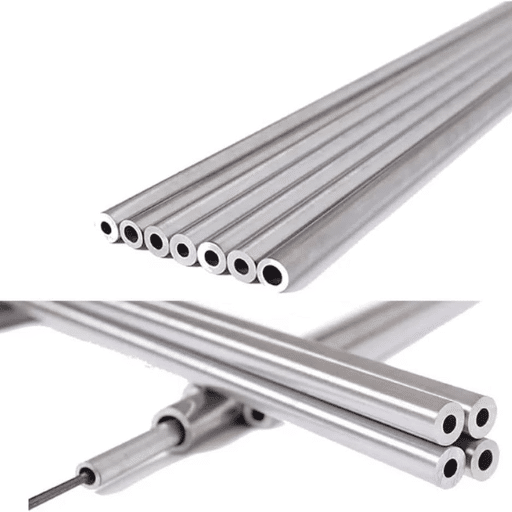
The specification engineer stared at the line list for the new chemical processing plant, pencil hovering over the material column. The project required 304 stainless steel pipe because it constituted standard material, but the pressure rating of Stream P-104 operationally required seamless construction to meet its specifications. The wrong testing format will show the design phase errors that the hydrostatic test fails to identify. The correct selection enables twenty years of plant operation without any corrosion failures occurring in that pipeline.
The process of specifying 304 stainless steel seamless pipe requires knowledge about current industrial standards. The grade handles roughly 50% of all industrial stainless applications, but engineers need to choose between seamless and welded pipes as well as between 304 and 304L, which affects their work. The correct solution produces a piping system that meets code requirements while maintaining affordable costs. The incorrect choice leads to either unnecessarily high expenses or early system breakdown.
The guide establishes specifications for ASTM A312 TP304 seamless pipe through its content, which defines the required conditions for seamless construction, shows the differences between 304 and 304L, provides full pressure-temperature ratings, and presents the procedures that ensure that only compliant pipe passes quality checks while costly issues arise.
What is 304 Stainless Steel Seamless Pipe?

Austenitic Stainless Steel Fundamentals
304 stainless steel seamless pipe is manufactured from UNS S30400, an austenitic chromium-nickel alloy containing 18% chromium and 8% nickel—commonly called “18-8” stainless steel. The austenitic crystal structure (face-centered cubic) provides the combination of corrosion resistance, formability, and weldability that makes 304 the most widely specified stainless grade globally.
The “seamless” designation matters. Unlike welded pipe, which is formed from flat strip and fused along a longitudinal joint, seamless pipe is produced by piercing a solid billet and elongating it through rolling or drawing. The result is a pipe with no weld seam—uniform grain structure throughout the wall thickness, no heat-affected zone, and consistent mechanical properties in all directions.
For engineers, this means:
- No weld seam as a potential failure initiation point
- Uniform pressure capacity in all orientations
- No sensitization from welding heat input (in the pipe body)
- Suitability for cyclic loading and fatigue-critical service
Mini-Story: The Hydrotest Failure
In 2019, a Midwest chemical plant commissioned a new process line using welded 304 pipe for a 1,200 psig steam application. During commissioning hydrostatic testing at 1.5× design pressure, a longitudinal weld defect propagated, causing a split along the seam. The plant shutdown cost $340,000 in lost production. The root cause analysis confirmed that seamless pipe, while 30% more expensive upfront, would have eliminated the weld-related failure mode entirely. The facility now specifies seamless for all pressure services above 1,000 psig.
304 vs 304L: The Carbon Distinction
The difference between 304 and 304L seamless pipe comes down to carbon content—and that difference determines welding requirements and high-temperature service limits.
| Property | 304 (UNS S30400) | 304L (UNS S30403) |
|---|---|---|
| Carbon, max | 0.08% | 0.03% |
| Chromium | 18.0–20.0% | 18.0–20.0% |
| Nickel | 8.0–11.0% | 8.0–13.0% |
| Tensile Strength, min | 515 MPa (75 ksi) | 485 MPa (70 ksi) |
| Yield Strength, min | 205 MPa (30 ksi) | 170 MPa (25 ksi) |
When 304L is mandatory:
- Welded construction (any significant welding of the pipe)
- Service temperatures between 800°F and 1500°F (sensitization range)
- Thick-wall sections where post-weld heat treatment is impractical
- Applications where intergranular corrosion is a concern
When 304 is acceptable:
- Seamless pipe with minimal field welding
- Service below 800°F
- Post-weld solution annealing can be performed
- Maximum strength is the priority
The lower carbon in 304L minimizes chromium carbide precipitation at grain boundaries during welding or high-temperature exposure. Chromium depletion from nearby metal occurs through this “sensitization” process, which results in decreased corrosion resistance. 304L stands as the safe selection for welded systems that require seamless pipe. 304 offers greater strength than 304L at a reduced price for seamless pipe in systems that use threaded, flanged, or mechanical joint connections.
ASTM A312 TP304 Seamless Pipe Specifications

Chemical Composition Requirements
ASTM A312/A312M establishes the requirements for seamless, welded, and heavily cold-worked austenitic stainless steel pipe. For TP304 and TP304L seamless pipe, the chemical composition limits are:
| Element | TP304 (UNS S30400) | TP304L (UNS S30403) |
|---|---|---|
| Carbon, max | 0.08% | 0.03% |
| Manganese, max | 2.00% | 2.00% |
| Phosphorus, max | 0.045% | 0.045% |
| Sulfur, max | 0.030% | 0.030% |
| Silicon, max | 1.00% | 1.00% |
| Chromium | 18.0–20.0% | 18.0–20.0% |
| Nickel | 8.0–11.0% | 8.0–13.0% |
| Nitrogen, max | 0.10% | 0.10% |
The chromium content establishes the passive oxide layer that provides corrosion resistance. The nickel content stabilizes the austenitic structure and improves toughness, particularly at low temperatures. The tight carbon limit in 304L is what distinguishes it for welded applications.
Mechanical Properties
ASTM A312 specifies minimum mechanical properties for seamless 304 pipe in the solution-annealed condition:
| Property | TP304 | TP304L |
|---|---|---|
| Tensile Strength, min | 515 MPa (75 ksi) | 485 MPa (70 ksi) |
| Yield Strength (0.2% offset), min | 205 MPa (30 ksi) | 170 MPa (25 ksi) |
| Elongation in 2 inches, min | 35% | 35% |
| Hardness, max (Brinell) | 192 HBW | 192 HBW |
| Hardness, max (Rockwell B) | 90 HRB | 90 HRB |
Note that 304L has slightly lower strength requirements due to its reduced carbon content. In practice, both grades typically exceed these minimums, but the specification recognizes the strength-carbon relationship.
Dimensional Tolerances (Seamless Specific)
ASTM A312 and ASME B36.19M establish specific tolerances for seamless pipe dimensions:
Outside Diameter Tolerances:
| NPS Designator | OD Tolerance |
|---|---|
| 1/8″ to 1-1/2″ | +1/64″ (-0) |
| Over 1-1/2″ to 4″ | +1/32″ (-0) |
| Over 4″ to 8″ | +1/16″ (-0) |
| Over 8″ to 18″ | +3/32″ (-0) |
Wall Thickness Tolerance:
- Seamless pipe: +22.5% / -12.5% of specified wall thickness
This tolerance recognizes the nature of seamless manufacturing—wall thickness can vary more than in welded pipe, which uses uniform strip stock. For critical applications, specify “minimum wall” or add an engineering corrosion allowance.
Length:
- Standard: Random lengths, 16–22 feet (4.9–6.7 m)
- Cut lengths: Must not exceed specified length by more than 1/4 inch (6 mm)
Pressure Ratings and Temperature Limits
ASME B31.3 Process Piping Ratings
The allowable working pressure for 304 stainless steel seamless pipe is governed by ASME B31.3 for process piping. The pressure-temperature ratings vary by schedule (wall thickness) and nominal pipe size.
Working Pressure (psig) for ASTM A312 304 Seamless Pipe—Schedule 40S:
| Temp (°F) | 1″ NPS | 2″ NPS | 4″ NPS | 6″ NPS | 8″ NPS |
|---|---|---|---|---|---|
| 100 | 3,040 | 2,575 | 1,440 | 1,195 | 1,050 |
| 300 | 2,620 | 2,215 | 1,240 | 1,030 | 905 |
| 500 | 2,330 | 1,970 | 1,100 | 915 | 805 |
| 700 | 2,065 | 1,745 | 975 | 810 | 715 |
| 800 | 1,950 | 1,645 | 920 | 765 | 670 |
Working Pressure (psig) for ASTM A312 304 Seamless Pipe—Schedule 80S:
| Temp (°F) | 1″ NPS | 2″ NPS | 4″ NPS | 6″ NPS | 8″ NPS |
|---|---|---|---|---|---|
| 100 | 4,210 | 3,575 | 2,550 | 2,120 | 1,865 |
| 300 | 3,630 | 3,080 | 2,200 | 1,830 | 1,605 |
| 500 | 3,230 | 2,740 | 1,960 | 1,625 | 1,430 |
| 700 | 2,865 | 2,430 | 1,735 | 1,440 | 1,270 |
| 800 | 2,710 | 2,295 | 1,640 | 1,360 | 1,200 |
These values are calculated using the ASME B31.3 pressure design formula with allowable stresses from ASME B31.3 Table A-1. Hydrostatic testing is performed at 1.5× design pressure to verify integrity.
CTA: Need pressure ratings for a specific size and temperature? Submit your specification for a 24-hour technical response →
Maximum Operating Temperatures
Continuous Service: 800°F (427°C) for 304, limited by oxidation and creep considerations
Intermittent Service: Up to 1650°F (899°C), limited by scaling and structural stability
Low-Temperature Limit: -425°F (-254°C), with excellent toughness retained
Above 800°F, carbon diffusion accelerates and mechanical properties degrade over time. For sustained high-temperature service, consider 321 or 347 stabilized grades (with titanium or niobium additions) to prevent sensitization.
When to Specify Seamless 304 Pipe

Applications Requiring Seamless Format
While welded 304 pipe is suitable for many applications, seamless construction is the standard specification when:
High-Pressure Service
- Design pressures exceeding 1,000 psig at ambient temperature
- Systems where the weld seam represents a potential failure mode
- Hydrotest pressures that approach welded pipe limits
Critical Safety Applications
- Nuclear applications (ASME Section III requires seamless for many classifications)
- High-pressure steam lines where rupture would endanger personnel
- Toxic or hazardous fluid service where leak prevention is paramount
Cyclic and Fatigue Loading
- Pressure cycling that could initiate fatigue cracks at weld discontinuities
- Thermal cycling causing repeated expansion and contraction stress
- Vibration service (compressor discharge, pump suction) where weld beads create stress risers
Severe Corrosion Environments
- Applications where the weld heat-affected zone has different corrosion susceptibility
- Crevice corrosion conditions where weld bead geometry creates attack sites
- Polished or electropolished surfaces where weld lines are unacceptable
Mini-Story: The Offshore Platform Specification
The engineering team for a North Sea offshore platform faced a specification dilemma. The project standard called for seamless pipe for all hydrocarbon service above 1,500 psig, but the procurement team found welded pipe at a 35% cost savings. The lead materials engineer, Dr. Chen, insisted on seamless for the high-pressure injection lines. His reasoning: “In this environment, a weld seam isn’t just a theoretical weakness—it’s a corrosion cell waiting to form in salt spray. The cost of one replacement trip offshore exceeds the entire pipe premium.” The platform has operated for eight years without a single pipe failure in the seamless sections.
Industries and Applications
Oil & Gas
- Downhole tubing for well completion
- High-pressure flowlines and gathering lines
- Refinery process piping (sweet service)
- Instrument and control tubing
Chemical Processing
- High-pressure reactor feed lines
- Steam and condensate distribution
- Process piping in cyclic temperature service
- Heat exchanger tubing (shell side and tube side)
Power Generation
- Feedwater piping in thermal plants
- Steam distribution headers
- Heat recovery steam generator (HRSG) tubing
- Condensate and boiler blowdown lines
Food & Beverage
- High-pressure clean-in-place (CIP) systems
- Steam injection heating systems
- Aseptic process lines requiring polished surfaces
- Brewery and dairy high-pressure pasteurization
Pharmaceuticals
- High-purity water (HPW) distribution
- Clean steam (pure steam) systems
- WFI (water for injection) distribution (though 316L is preferred)
- Bioreactor process lines
When Welded 304 Pipe is Acceptable
Seamless pipe carries a 20–40% cost premium and longer lead times. Welded pipe is entirely appropriate for:
- Low-to-medium pressure systems (under 1,000 psig)
- Non-critical applications where weld integrity is not a limiting factor
- Large-diameter requirements (above NPS 24, where seamless is rarely available)
- Cost-sensitive projects with benign service conditions
- Applications where short lead times outweigh seamless advantages
For a detailed comparison of seamless vs. welded selection criteria, see our seamless vs welded stainless steel pipe guide.
304 vs 304L Selection Decision Framework

Side-by-Side Grade Comparison
| Property | 304 (UNS S30400) | 304L (UNS S30403) |
|---|---|---|
| Carbon Content | ≤0.08% | ≤0.03% |
| Chromium | 18–20% | 18–20% |
| Nickel | 8–11% | 8–13% |
| Tensile Strength | 75 ksi min | 70 ksi min |
| Yield Strength | 30 ksi min | 25 ksi min |
| Weldability | Good, may require PWHT | Excellent, no PWHT needed |
| Sensitization Risk | Moderate (in HAZ) | Minimal |
| Cost | Baseline | +5–10% premium |
Decision Matrix: When to Specify Each Grade
Specify 304L Seamless Pipe When:
- The system will be field-welded during installation
- Post-weld heat treatment is impractical (large tanks, remote sites)
- Service temperature exceeds 800°F (risk of sensitization)
- The pipe wall is thick (Schedules 80, 160, XXS)
- Intergranular corrosion is a concern in the service environment
- The application is pharmaceutical or food-grade requiring minimal weld discoloration
Specify 304 Seamless Pipe When:
- The pipe will be used with mechanical joints (flanges, threads, compression fittings)
- Service temperature remains below 800°F
- Post-weld solution annealing can be performed if needed
- Maximum strength is required (slightly higher mechanical properties)
- Cost optimization is a priority and welding is minimal
Mini-Story: The Fabrication Shop Realization
James, a fabrication supervisor at a pressure vessel shop, received a shipment of 304 seamless pipe for a food processing tank. The drawing called for 304L, but the buyer had substituted 304 to save 8% on material cost. After welding the nozzles, James discovered the heat-affected zones showed chromium carbide precipitation when tested. The tank required post-weld solution annealing—heating the entire assembly to 1,950°F and water quenching—adding $12,000 to the fabrication cost and two weeks to the schedule. The “savings” from 304 over 304L cost the project three times the material difference. The shop now requires 304L for all welded sanitary applications regardless of procurement suggestions.
Cost-Benefit Analysis
Material Cost Differential: 304L typically commands a 5–10% premium over 304 due to more precise manufacturing requirements for low-carbon control.
Fabrication Cost Considerations:
- 304L requires no post-weld heat treatment in most applications
- 304 may require solution annealing after welding, adding significant cost
- Welding 304L is more forgiving—less critical heat input control
Lifecycle Cost: For welded systems, 304L almost always provides lower total cost of ownership when fabrication is considered. For seamless systems with mechanical joints, 304 provides adequate performance at lower material cost.
Welding and Fabrication Guidelines
Filler Metal Selection
Even when using 304 base metal, specify 308L filler metal for welding:
| Base Metal | Filler Metal | Application |
|---|---|---|
| 304 or 304L | ER308L | 304-to-304 joints (standard) |
| 304 to carbon steel | ER309L | Dissimilar metal joints |
| 304L requiring maximum corrosion resistance | ER316L | Enhanced Mo content for critical service |
The “L” designation in the filler metal is essential—even when welding 304 base metal, using ER308L (low carbon) prevents sensitization in the weld metal itself.
Welding Process Considerations
GTAW (TIG Welding):
- Preferred for thin-wall seamless pipe (Schedules 5S, 10S)
- Provides excellent control and minimal heat input
- Root pass requires back-purging with argon for sanitary applications
GMAW (MIG Welding):
- Higher deposition rates for thicker sections
- Suitable for Schedules 40S and heavier
- Requires careful parameter control to prevent excessive heat input
SMAW (Stick Welding):
- Field welding convenience
- Use E308L electrodes for 304/304L base metals
Heat Input Control
To minimize sensitization in 304 (when 304L is not used), control heat input:
- Maximum heat input: 1.0–1.5 kJ/mm for thin wall, 1.5–2.0 kJ/mm for thick wall
- Interpass temperature: Maximum 300°F (150°C)
- Use stringer beads rather than wide weave patterns
For 304L, heat input restrictions are less critical due to the low carbon content, but excessive heat can still cause distortion and residual stress.
Post-Weld Treatment
304L: Generally requires no post-weld heat treatment. Passivation (nitric acid or citric acid treatment) restores the passive oxide layer after fabrication.
304: May require solution annealing (heating to 1,950°F/1,065°C minimum, water quenching) to dissolve chromium carbides and restore corrosion resistance. This is often impractical for large assemblies.
Quality Control and Testing

Seamless-Specific Testing Requirements
ASTM A312 mandates specific tests for seamless pipe:
Hydrostatic Testing:
- Each pipe tested at a minimum pressure calculated from the formula: P = 2St/D
- Where: P = test pressure, S = stress (50% of specified minimum yield), t = nominal wall thickness, D = nominal outside diameter
- Test pressure maintained for minimum 5 seconds
- No leakage or visible deformation permitted
Non-Destructive Testing (NDT):
- Seamless pipe may be tested by ultrasonic or eddy current methods
- Ultrasonic testing detects internal and external discontinuities
- Eddy current testing identifies surface and near-surface defects
Chemical Composition Verification:
- Each heat (melt) of steel is analyzed for all specified elements
- Spectrographic analysis confirms compliance before production
- Heat number traceability maintained through production to final shipment
Documentation Package
A complete ASTM A312 304 seamless pipe order should include:
- Mill Test Report (MTR) per EN 10204 3.1 or 3.2
- Heat number and chemical composition
- Mechanical test results (tensile, yield, elongation, hardness)
- Heat treatment records
- Hydrostatic test results
- Dimensional inspection data
- Compliance Certificates
- ASTM A312/A312M conformance
- ASME B31.3 material compliance (if applicable)
- NACE MR0175 compliance (for sour service, if required)
- Third-Party Inspection (when specified)
- Witnessed testing by SGS, Bureau Veritas, TÜV, or equivalent
- Independent verification of chemical and mechanical properties
- Dimensional inspection report
Quality Verification at Receiving
When seamless 304 pipe arrives at your facility, verify:
- Markings: Each pipe should be marked with heat number, grade (304 or 304L), ASTM A312, and manufacturer’s identifier
- Documentation: MTR should match markings; chemical composition within specification limits
- Dimensional Check: Sample OD, wall thickness, and length against specification
- Visual Inspection: No dents, scratches, or surface defects exceeding ASTM A312 limits
Procurement Best Practices
Complete Specification Example
A properly specified seamless 304 pipe order reads:
“ASTM A312 TP304L seamless stainless steel pipe, NPS 4” Sch 40S, random lengths 16–22 feet, mill finish, plain ends beveled for welding, 100% hydrostatically tested per ASTM A312, with EN 10204 3.1 Mill Test Report including complete chemical analysis and mechanical properties. Third-party inspection by SGS at manufacturer’s facility.”*
This specification includes:
- Standard (ASTM A312)
- Grade (TP304L)
- Form (seamless)
- Size (NPS 4″, Schedule 40S)
- Length (random, 16–22 ft)
- Surface (mill finish)
- End preparation (beveled)
- Testing (hydrostatic)
- Documentation (EN 10204 3.1 MTR)
- Inspection level (third-party)
Lead Times and Planning
Standard Seamless 304 Pipe:
- 3–5 weeks from order confirmation (China manufacture)
- Add 1–2 weeks for third-party inspection
- Add 2–3 weeks during Chinese New Year (January/February)
Large Diameter or Heavy Wall:
- 5–8 weeks (limited number of mills capable of producing)
- Specialty sizes may require minimum order quantities
Custom Testing or Documentation:
- Add 1–2 weeks for special testing requirements
- Additional time for witnessed inspection scheduling
Price Factors
Seamless 304 pipe pricing depends on:
- Raw Material (Nickel) Price: LME nickel volatility directly affects 304 pricing
- Diameter and Schedule: Larger OD and heavier wall require more material and processing
- Quantity: Volume discounts apply at truckload and container-load quantities
- Testing Requirements: 100% ultrasonic testing, third-party inspection add cost
- Documentation: EN 10204 3.2 (inspected by purchaser’s representative) costs more than 3.1
FAQs
What is the difference between 304 and 304L seamless pipe?
The two seamless pipes 304 and 304L stainless steel have different properties. The carbon content of 304L stainless steel reaches a maximum level of 0.03% which differs from the 0.08% limit of 304 stainless steel. The lower carbon content of 304L prevents chromium carbide precipitation during welding so 304L becomes the preferred welding material for construction. 304 stainless steel delivers higher strength than other materials yet it works for seamless applications which require only limited welding.
What is the pressure rating of 304 stainless steel seamless pipe?
The pressure ratings depend on the schedule and temperature of the system. The ASME B31.3 standard allows Schedule 40S 4″ seamless 304 pipe to handle 1,440 psig at 100°F. The same dimension Schedule 80S pipe has a pressure rating of 2,550 psig. The ratings drop when temperatures increase.
When should I specify seamless instead of welded 304 pipe?
High-pressure service above 1,000 psig and all critical safety applications and severe cyclic loading and nuclear applications require seamless pipes. The project specifications require seamless installation in all cases. Welded pipe works for applications that need lower pressure and do not require critical service.
Can 304 seamless pipe be used for drinking water?
The NSF/ANSI 61 certification, which permits 304 stainless steel to be used for drinking water, shows that it meets health safety requirements. The pipe needs to comply with local plumbing codes, but 304L needs to be specified for welding work in this installation.
What is the cost difference between 304 and 316 seamless pipe?
The cost of 316 seamless pipe exceeds 304 by 15 to 25 percent because it contains 2 to 3 percent molybdenum and higher nickel content. The upgrade is justified for environments that contain chloride above 50 parts per million and for marine environments and for chemical processing that uses halogen compounds.
How do I verify that the Chinese 304 seamless pipe meets ASTM standards?
Request 3.1 Mill Test Reports according to EN 10204 which include chemical composition information. The supplier needs to demonstrate that they perform spectrographic analysis for every production batch. The manufacturing facility needs to undergo third-party inspection from SGS, Bureau Veritas, or TÜV to witness testing and review documentation.
What is the maximum temperature for 304 seamless pipe?
The material can endure maximum temperatures of 800°F, which equals 427°C, during continuous operations. The material can withstand temperatures between 800°F and 1,650°F which is equal to 899°C, for a limited time. When temperatures exceed 800°F, you should use stabilized grades 321, 347 or superior alloys for extended high-temperature operations.
What filler metal should I use for welding 304 seamless pipe?
The welding of 304 base metal requires ER308L filler metal to create 304-to-304 joints. The “L” designation ensures low carbon content in the weld deposit which protects against sensitization. Use ER309L for 304-to-carbon steel dissimilar joints.
Can 304 seamless pipe be used in seawater applications?
The answer is no because 304 material does not have seawater resistance and it cannot withstand high-chloride environments that exceed 50 parts per million chloride at room temperature. For marine or coastal applications, you should choose 316L or duplex 2205 or super duplex materials.
What documentation should I request with a 304 seamless pipe?
Request EN 10204 3.1 Mill Test Reports, which contain chemical composition details, mechanical properties, heat treatment records, and hydrostatic test outcomes. For critical applications, specify EN 10204 3.2 with a third-party inspection witness.
Conclusion
304 stainless steel seamless pipe remains the specification standard for high-pressure, critical-service piping systems across chemical processing, oil and gas, power generation, and food manufacturing industries. The combination of 18% chromium and 8% nickel provides excellent corrosion resistance in benign environments, while the seamless manufacturing format eliminates the weld seam as a potential failure mode.
Key specification decisions:
- 304 vs 304L: Choose 304L for any welded construction or service above 800°F. 304 is acceptable for seamless systems with mechanical joints.
- Seamless vs Welded: Specify seamless for pressures above 1,000 psig, cyclic loading, nuclear applications, or when the design code requires it.
- Quality Verification: Require EN 10204 3.1 MTRs with chemical composition data, and consider third-party inspection for critical applications.
At Zhongzheng, we manufacture ASTM A312 TP304 and TP304L seamless pipe with full spectrographic verification, ultrasonic testing, and hydrostatic proof testing. Every heat is analyzed before production, and every pipe is pressure-tested before shipment—delivering the documentation and physical integrity your project requires.