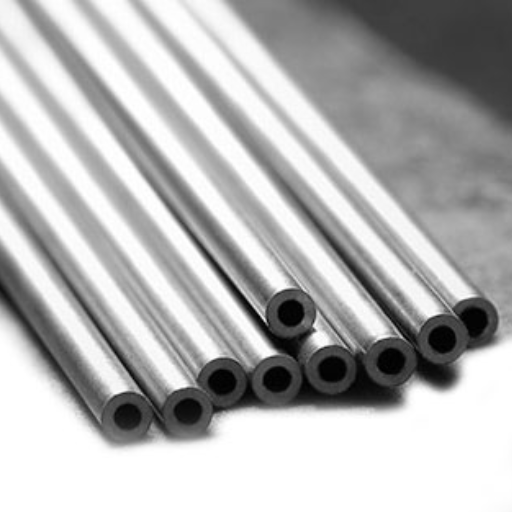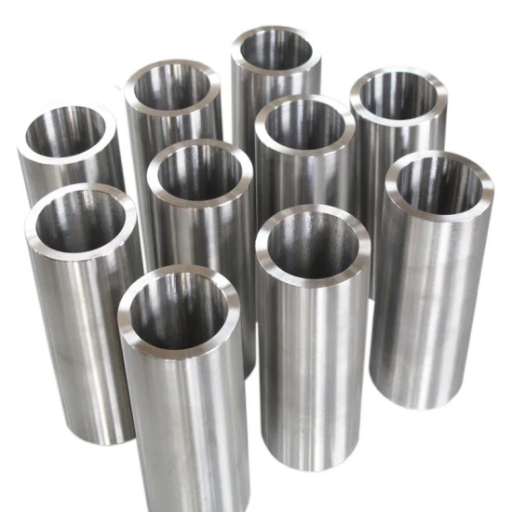

Offshore operators lose millions due to double stainless steel pipe selection mistakes which result in production halts and unexpected emergency pipe replacements. The engineering firm reviewed 2.3 million submarine manifolds which contained an incorrect single material specification that would have resulted 47,000 daily costs to the operator after installation. The procurement team selected duplex 2205 for flowlines that would operate under 50,000 ppm chloride content at 90°C yet the service environment required super duplex S32750 because its PREN exceeds 40. The error was discovered during third-party inspection but production of 4,200 meters of pipe had already started.
Operators tend to deny that this situation happens frequently. The confusion between duplex and super duplex grades, the misunderstanding of PREN requirements for specific chloride concentrations, and the complexity of NACE MR0175 compliance for sour service create specification traps that can derail offshore projects before they begin.
This guide provides the technical foundation for correct duplex stainless steel pipe specification. You will learn the precise difference between UNS S32205 and UNS S32750, how to calculate PREN for your specific service environment, when NACE compliance is mandatory, and how to structure procurement specifications that deliver the right material the first time. The principles in this document will help you create specifications that meet your operational requirements whether you are using ASTM A312 seamless pipe for general service or super duplex S32750 seamless pipe for critical offshore applications.
What is Duplex Stainless Steel Pipe?

Austenitic-Ferritic Microstructure
Duplex stainless steel occupies a unique position in the metallurgical spectrum. The duplex grades use two distinct microstructures because they maintain 50 percent austenite and 50 percent ferrite at room temperature. The dual-phase structure of this material exists because its chemical composition and heat treatment process are executed with precise control.
The ferrite phase provides high strength and resistance to chloride stress corrosion cracking (SCC). The austenite phase provides toughness and improved weldability. The material achieves double the yield strength of standard austenitic grades while providing better protection against corrosion in chloride-rich environments.
Ferrite content verification is critical. Most duplex grades require ferrite content between 35 and 65 percent according to ASTM A790, with 45 to 55 percent serving as the optimal range. Zhongzheng measures ferrite content on every heat using calibrated Feritscope instruments or metallographic examination, documenting the results in the Mill Test Report (MTR). The verification process establishes the phase balance needed for duplex functional performance.
Duplex 2205 (UNS S31803/S32205)
Duplex 2205 is the workhorse grade of the duplex family, accounting for approximately 80% of duplex stainless steel consumption globally. Its chemical composition—22% chromium, 5% nickel, 3% molybdenum, and approximately 0.15% nitrogen—creates the austenite-ferrite balance that defines the grade.
The PREN (Pitting Resistance Equivalent Number) calculation for 2205 is straightforward:
PREN = %Cr + 3.3 × %Mo + 16 × %N
For a typical 2205 composition: 22 + (3.3 × 3) + (16 × 0.15) = 22 + 9.9 + 2.4 = 34.3 minimum, typically 35-36
The PREN value of 35+ shows that the material can withstand pitting corrosion when exposed to seawater and chloride environments at temperatures below its maximum limit. The material demonstrates outstanding mechanical properties which include a minimum yield strength of 65 ksi (450 MPa) and a tensile strength of 95 ksi (655 MPa) minimum which exceeds the 30 ksi (205 MPa) yield strength of 316L.
UNS S31803 and UNS S32205 are often used interchangeably but S32205 represents the modern tighter-controlled specification with improved nitrogen content 0.14-0.20% vs 0.08-0.20%. For new projects you should use UNS S32205 because it provides superior nitrogen control which increases corrosion resistance.
Super Duplex S32750 (UNS S32750)
Super duplex S32750 represents the premium tier of duplex stainless steels. The elevated alloy content—25% chromium, 7% nickel, 4% molybdenum, and 0.25% nitrogen—pushes the PREN calculation significantly higher:
**PREN = 25 + (3.3 × 4) + (16 × 0.25) = 25 + 13.2 + 4.0 = 42.2 minimum, typically 42-44
The PREN threshold of 40 plus serves as the minimum requirement for using severe service applications in deepwater subsea flowlines and high-temperature seawater systems and highly corrosive chemical environments. The higher molybdenum and nitrogen content also improve resistance to crevice corrosion which serves as the main limitation for designing flange and connection systems.
The material displays mechanical properties which surpass the 2205 standard because it achieves a minimum yield strength of 80 ksi (550 MPa) and a tensile strength of 116 ksi (800 MPa). The design advantage of this strength allows for thinner wall sections in pressure vessel designs but engineers must conduct thorough assessments to verify compliance with established codes.
Super duplex S32750 costs approximately 30 to 40 percent more than 2205 when purchased as a mill product. The premium cost becomes acceptable only if the service conditions require better corrosion protection or if the strength benefits support important design improvements.
ASTM A790 Standard Overview
ASTM A790 is the governing specification for seamless and welded ferritic/austenitic stainless steel pipe. It covers the full range of duplex grades: UNS S31803, S32205, S32750, and S32760. The standard specifies requirements for:
- Chemical composition ranges for each grade
- Mechanical property minimums (tensile, yield, elongation)
- Heat treatment requirements (solution annealing temperature and cooling rate)
- Testing protocols (hydrostatic, ultrasonic, eddy current)
- Dimensional tolerances
- Documentation requirements
The seamless pipe needs to follow the general requirements specified in ASTM A999 which includes dimension variations and approved methods of nondestructive electric testing according to ASTM A790. The seamless manufacturing process which starts with hot extrusion or rotary piercing and continues with cold working creates uniform grain structure and phase balance which are essential for duplex performance.
What are the manufacturing differences that exist between duplex pipe and standard austenitic seamless pipe? The complete production details of our ASTM A312 seamless pipe manufacturing process can be found in our manufacturing process guide. Our stainless steel manufacturer China guide provides insights into how to source products from China while ensuring proper quality verification.
Duplex vs Super Duplex: Selection Guide

PREN Comparison Table
| Grade | UNS | Cr% | Mo% | N% | PREN Range | Relative Corrosion Resistance |
|---|---|---|---|---|---|---|
| 316L | S31603 | 16-18 | 2-3 | 0 | 24-26 | Baseline |
| 2205 | S32205 | 22-23 | 3-3.5 | 0.14-0.20 | 35-37 | 1.4x vs 316L |
| S32750 | S32750 | 24-26 | 3-5 | 0.24-0.32 | 42-45 | 1.7x vs 316L |
PREN values above 35 indicate suitability for seawater service at ambient temperature. Values above 40 indicate suitability for high-temperature seawater (above 40°C), sour service, and severely corrosive chemical environments.
Application Decision Matrix
Seawater Cooling Systems (Up to 30°C): Duplex 2205 is completely appropriate. Seawater-cooled heat exchangers HVAC condensers and once-through cooling systems which power coastal power plants operate with 2205 because it lasts more than 25 years. The piping system requires seawater to flow through 2205 tubing at a maximum speed of 3.5 m/s because this limit protects the pipes from erosion-corrosion.
Subsea Flowlines and Risers: Super duplex S32750 serves as the standard material for North Sea and Gulf of Mexico deepwater operations. The combination of high chloride content and elevated pressure conditions (which can reach 15 000 psi in deepwater) and the possibility of sour gas (H2S) requires all materials to meet the PREN 40+ standard without any exceptions.
Sour Service (H2S Environments): Both 2205 and S32750 can achieve NACE MR0175/ISO 15156 compliance but S32750 better suits applications with high H2S partial pressures. The hardness limitation of 32 HRC maximum is more readily achieved and verified in super duplex grades through controlled heat treatment.
Desalination Plants: Reverse osmosis pressure vessels and brine heater tubes represent a growing duplex application. 2205 serves as the standard material for seawater reverse osmosis plants while S32750 serves as the required material for high-pressure MSF distillers which operate at temperatures above 100°C.
Cost-Benefit Analysis
The Middle East EPC contractor procurement engineer Marcus Chen faced a standard choice about the 14 million pipe package during the previous 12 months. The specification allowed the seawater injection system to use either 2205 or S32750. The total cost for S32750 premium reached 3514 million pipe package during the previous year. The specification allowed the seawater injection system to use either 2205 or S32750. The S32750 premium brought an extra cost of 351.8 million.
He examined three factors for his analysis which included corrosion allowance because the S32750 design permitted thinner wall construction to achieve identical design life. The main injection lines used 2205 material which he chose while S32750 material became his selection for wellhead manifolds because of possible H2S exposure.
The hybrid method combines minimum grade requirements with technical specifications to achieve optimized project economic results while maintaining safety standards.
Grade Equivalents and Substitutions
International grade equivalents matter when sourcing from global mills or verifying material certificates:
- UNS S32205 = EN 1.4462 = X2CrNiMoN22-5-3 = JIS SUS329J3L
- UNS S32750 = EN 1.4410 = X2CrNiMoN25-7-4 = JIS SUS329J4L
The Unified Numbering System requires all MTRs to display their UNS designation. The supplier needs to provide UNS verification before we will accept their “equivalent” grades. Zhongzheng provides full UNS traceability from raw material through finished product, with chemical composition verified by imported optical emission spectrometer before production begins.
Offshore and Marine Applications

Oil & Gas Production
Offshore platforms experience multiple simultaneous pipeline threats from seawater which contains high chloride levels, the combined impact of elevated pressure and temperature fluctuations, and the rising presence of sour gas (H2S) and CO2. Standard austenitic grades like 316L cannot withstand this combination because they experience chloride stress corrosion cracking at temperatures above 60°C and their PREN rating proves inadequate for extended seawater contact.
Duplex stainless steel pipe serves multiple functions on offshore facilities:
- Flowlines and Risers: Subsea pipelines which transport production fluids from wellheads to platform. The standard material for water depths exceeding 300 meters is S32750 because external pressure and collapse resistance become essential design requirements.
- Manifolds and Jumpers: Subsea distribution headers which connect with piping spools. These components experience the highest stress concentrations and require the superior strength and corrosion resistance of super duplex.
- Processing Equipment: Separators and scrubbers and heat exchangers which operate on the platform. 2205 is common for process piping where chloride content is moderate.
- FPSO Seawater Systems: Ballast and cooling and firewater systems which operate on floating production vessels. 2205 heat exchanger tubes and piping provide biofouling resistance and seawater corrosion protection while maintaining minimum weight.
Subsea Pipeline Systems
Deepwater pipeline design needs to address particular challenges which arise from operating in underwater environments. The external hydrostatic pressure at 1,000 meters water depth reaches 100 bar (1,450 psi), which creates a collapse risk that must be analyzed together with internal pressure containment requirements.
The duplex and super duplex grades enable superior collapse resistance because their yield strength exceeds that of standard materials. The D/t (diameter to wall thickness) ratio for collapse-critical designs can be optimized using duplex strength properties. The API RP 1111 standard together with DNV-OS-F101 offers methods to calculate combined loading conditions.
The CO2 injection lines used for enhanced oil recovery (EOR) and carbon capture storage (CCS) represent a new field of development. The presence of water makes dense phase CO2 highly corrosive because it generates carbonic acid. S32750 alloy demonstrates sweet corrosion resistance through its elevated chromium and molybdenum content, which enables it to withstand high-pressure injection strength at 100-200 bar.
Seawater Cooling Systems
The Caribbean refinery installed 2205 as their new material after 12 years of rising costs to maintain their original carbon steel seawater cooling system. The project decision resulted from lifecycle economics because carbon steel required yearly replacement of its corroded parts together with permanent installation of corrosion inhibitor systems. The 2205 system has operated for 8 years with zero maintenance—validating the 25-year design life projection.
The design of seawater cooling systems using duplex materials needs to follow specific velocity limits. The 2205 material protects against general seawater corrosion but loses strength when water moves at speeds higher than 3.5 m/s through tube inlets and bends. The design velocities at 2-3 m/s enable optimal heat transfer while preventing erosion damage to the system.
The development of cathodic protection systems for duplex structures requires special design considerations. The duplex grades experience hydrogen embrittlement when their protection levels reach more negative than -1,000 mV vs Ag/AgCl. The cathodic protection system should be designed for -800 to -900 mV range, with regular potential monitoring.
The required duplex grade for your offshore project needs identification. The technical team will assist you after you provide the service conditions of chloride content and temperature and H2S partial pressure and design life. Find out about China’s stainless steel production capacity and our system for confirming quality standards.
Desalination Plants
The global desalination capacity exceeds 100 million cubic meters per day, and duplex stainless steel is the material of choice for critical components. In multi-stage flash (MSF) distillation plants, S32750 brine heater tubes withstand temperatures up to 120°C in high-salinity brine—conditions that would rapidly degrade 316L.
The design of reverse osmosis (RO) pressure vessels requires 2205 as the material for their end closures and permeate ports. The high strength of duplex allows thinner wall sections compared to 316L, which results in lighter vessels that enhance modular plant system mobility.
Duplex provides significant cost savings over titanium because its material expenses are 50-60% lower while maintaining similar corrosion resistance for seawater applications. The PREN 35+ of 2205 matches titanium’s seawater performance at a fraction of the cost.
Sour Service and NACE MR0175 Compliance

H2S Environment Requirements
The material challenges in sour service environments which contain hydrogen sulfide (H2S) present unique requirements. The presence of H2S in steel results in hydrogen absorption which causes sulfide stress cracking (SSC) and hydrogen-induced cracking (HIC). The limit for sour service classification exists at a partial pressure of 0.05 psi (0.3 kPa) which corresponds to 50 ppm H2S content in natural gas under total pressure of 1,000 psi.
NACE MR0175/ISO 15156 defines environmental severity regions and material requirements. For duplex stainless steels:
- Region 0 (Non-sour): H2S partial pressure below 0.05 psi. No NACE compliance required.
- Region 1 (Mildly sour): H2S partial pressure 0.05-1 psi. 2205 and S32750 acceptable with hardness control.
- Region 2 (Moderately sour): H2S partial pressure 1-10 psi. S32750 preferred; 2205 requires careful qualification.
- Region 3 (Highly sour): H2S partial pressure above 10 psi. May require nickel-based alloys; S32750 evaluated case-by-case.
The hardness limitation is strict: 32 HRC (Rockwell C) maximum for all duplex grades in sour service. This requirement drives heat treatment and welding procedure controls.
Manufacturing Controls for Sour Service
Achieving NACE compliance requires process discipline from melt to shipment. Zhongzheng’s sour service protocol includes:
Solution Annealing: Duplex grades require solution annealing at 1050-1100°C which needs to be followed by immediate water quenching. The process dissolves all intermetallic phases created during hot working while it establishes the correct austenite-ferrite ratio. The cooling rate must remain at a specific value because slow cooling through the temperature range of 800-500°C leads to sigma phase precipitation which results in decreased toughness and reduced corrosion resistance.
Nitrogen Control: Corrosion resistance requires nitrogen as an essential element because it contributes 16 times its weight to the PREN calculation. Excessive nitrogen creates a problem because it leads to austenite stabilization while reducing the amount of ferrite present. Zhongzheng maintains nitrogen levels between 0.16-0.18% for 2205 and 0.26-0.28% for S32750 which enables the company to achieve optimal phase balance and PREN.
Ferrite Verification: The process requires sampling and analysis of every heat to determine ferrite content through Feritscope or quantitative metallography methods. The target range demands 45-55% ferrite content. The process needs to reject or re-process heats that do not meet the 40-60% standard.
Testing and Qualification
NACE compliance requires testing beyond standard ASTM A790 requirements:
SSC Resistance: Slow strain rate testing (SSRT) per NACE TM0198 or four-point bend testing per NACE TM0177 Method A demonstrates resistance to sulfide stress cracking. Test specimens are exposed to the specified H2S environment at 25°C under applied stress for 720 hours with no cracking allowed.
HIC Resistance: NACE TM0284 testing evaluates hydrogen-induced cracking resistance. Steel coupons are exposed to H2S-saturated synthetic seawater for 96 hours, then sectioned and examined for internal cracks. Acceptance criteria specify maximum crack length and thickness ratios.
Documentation: The MTR must include a NACE compliance statement referencing the specific NACE MR0175/ISO 15156 clause satisfied, hardness test results (32 HRC maximum), and the test methods used for qualification. Zhongzheng provides complete NACE documentation packages suitable for submission to major oil company engineering teams.
Manufacturing and Quality Control

Zhongzheng Duplex Production Process
Producing duplex stainless steel pipe that meets ASTM A790 and NACE requirements demands precise process control. Zhongzheng’s production workflow for duplex seamless pipe follows this sequence:
1. Raw Material Melting: Electric arc furnace (EAF) melting of charge materials including recycled stainless steel, ferrochrome, ferronickel, and molybdenum additions. Initial composition adjustment in the EAF gets the chemistry within broad target ranges.
2. Argon Oxygen Decarburization (AOD): The molten steel transfers to the AOD vessel for refining. Oxygen and argon mixtures decarburize the steel while minimizing chromium oxidation. Nitrogen is added during AOD processing to achieve the specified nitrogen content—this is critical for duplex grades.
3. Ladle Metallurgy: Final chemistry adjustment and temperature control occur in the ladle furnace. Samples are taken for spectrometric analysis. The heat proceeds only after composition is verified within specification, including the critical nitrogen level.
4. Continuous Casting: Refined molten steel casts into round billets (typically 150-250mm diameter). Continuous casting parameters—mold temperature, cooling rate, and withdrawal speed—are optimized for duplex solidification to minimize segregation.
5. Hot Extrusion: Billets are reheated to 1,200-1,250°C and extruded through a die to form hollow shells. This hot working breaks the cast structure and begins the grain refinement process essential for duplex properties.
6. Cold Drawing: The hollow shell cold-draws through successive dies with intermediate annealing to achieve final dimensions. Cold working increases strength and improves surface finish. Wall thickness tolerances of ±10% are maintained.
Critical Process Controls
Sigma Phase Prevention: Sigma phase is a brittle intermetallic compound (FeCr) that forms in the 650-950°C temperature range. Its presence catastrophically reduces toughness and corrosion resistance. Zhongzheng prevents sigma phase through:
- Rapid cooling after hot working (water quench within 60 seconds)
- Solution annealing at 1050-1100°C with immediate water quenching
- Controlled reheat temperatures during any subsequent processing
ASTM A923 Method C testing verifies absence of detrimental intermetallic phases. Test specimens are etched and examined at 400x minimum magnification—no sigma phase precipitates are permitted.
885°F Embrittlement (475°C Embrittlement): Prolonged exposure to 370-540°C causes spinodal decomposition of the ferrite phase into chromium-rich and chromium-depleted regions. This “475°C embrittlement” reduces toughness and is not reversible by heat treatment. Manufacturing avoids this temperature range entirely during processing and shipping.
Inspection and Testing
Zhongzheng’s zero-defect QC system for duplex pipe includes:
Ferrite Content Measurement: Every heat is tested for ferrite content using either:
- Feritscope (electromagnetic instrument calibrated to AWS A4.2)
- Quantitative metallography per ASTM E562
Results are recorded on the MTR with acceptance criteria of 35-65% ferrite per ASTM A790.
Ultrasonic Testing: The ASTM E213 standard establishes 100% volumetric ultrasonic testing as an effective method to identify internal defects through ultrasonic testing. The calibration process requires reference standards that need either drilled holes or notches for testing purposes. Testing occurs when the material reaches its designated condition after completing the final heat treatment process.
Hydrostatic Testing: Each pipe undergoes hydrostatic testing per ASTM A790 at a pressure calculated from the specified minimum yield strength and wall thickness. Test pressure typically equals 1.5 times design pressure or higher. The system requires complete absence of leaks while maintaining structural integrity throughout its operations.
Mechanical Testing: Tensile tests verify three material properties which include yield strength and tensile strength and elongation. The Charpy V-notch impact test at -46°C determines subsea material toughness for low-temperature applications. The hardness testing methods which include Brinell and Rockwell testing confirm NACE requirement compliance.
Chemical Analysis: Optical emission spectrometry verifies chemical composition which includes the essential nitrogen content. The laboratory performs daily calibration of the spectrograph using certified reference standards.
Documentation Package
Zhongzheng’s MTR for duplex stainless steel pipe includes:
- Complete chemical composition (all specified elements)
- Mechanical test results (tensile, impact, hardness)
- Ferrite content measurement
- Heat treatment records (temperature, time, cooling method)
- Non-destructive test results (UT, hydrostatic)
- Intermetallic phase test results (ASTM A923 when specified)
- NACE compliance statement (when required)
This documentation package satisfies the requirements of major oil companies, EPC contractors, and third-party inspection agencies including SGS, Bureau Veritas, and TÜV.
Welding and Fabrication Guidelines

Welding Process Selection
Welding duplex stainless steel requires process control to maintain the austenite-ferrite balance in the weld metal and heat-affected zone. Excessive heat input or slow cooling promotes excessive ferrite formation, while inadequate heat input can limit austenite reformation during cooling.
GTAW (TIG): Preferred for root passes and small-diameter pipe. Provides excellent control over heat input and shielding gas coverage. Pure argon shielding with 2-5% nitrogen addition helps maintain nitrogen content in the weld metal.
SMAW (Stick): Used for fill and cap passes on thicker sections. E2209 electrodes (for 2205 base metal) or E2594 electrodes (for S32750 base metal) provide matching chemistry with controlled ferrite content.
GMAW (MIG): Suitable for high-deposition welding on large-diameter pipe. Pulsed spray transfer reduces heat input compared to conventional spray transfer. Argon-nitrogen shielding gas mixtures are recommended.
Heat Input Control: Typical heat input ranges from 0.5 to 1.5 kJ/mm depending on wall thickness. Excessive heat input (above 2.0 kJ/mm) risks excessive ferrite formation and reduced corrosion resistance. Heat input is calculated as:
Heat Input (kJ/mm) = (Voltage × Current × 60) / (Travel Speed mm/min × 1000)
Filler Metal Selection
Filler metal chemistry is critical for duplex weld performance. Overmatching filler metal—slightly higher alloy content than the base metal—ensures the weld metal achieves equivalent or superior corrosion resistance.
| Base Metal | Filler Metal | AWS Classification | Typical Ferrite Content |
|---|---|---|---|
| 2205 (S32205) | 2209 | ER2209 (GTAW), E2209 (SMAW) | 35-50% |
| S32750 | 2594 | ER2594 (GTAW), E2594 (SMAW) | 30-45% |
The “overmatching” concept means 2209 filler contains slightly higher Cr, Mo, and N than 2205 base metal, and 2594 filler contains higher alloy than S32750 base metal. This compensates for nitrogen loss during welding and ensures the weld metal PREN matches or exceeds the base metal.
Post-Weld Considerations
Post-Weld Heat Treatment: Duplex stainless steel requires no post-weld heat treatment because it differs from most carbon steels and specific stainless steel grades. The base metal maintains its solution annealed state when heat input remains within specified limits. The PWHT process for duplex metal results in material property decline because it leads to sigma phase development and extensive grain size increase.
Interpass Temperature: The interpass welding temperature must not exceed 150°C (300°F) because this threshold prevents excessive ferrite development during multiple welding operations. The temperature compliance of the system is confirmed through temperature-indicating crayons and infrared thermometers.
Ferrite in Weld Metal: The acceptable range of weld metal ferrite content extends from 35 to 65 percent while the optimal range falls between 40 and 50 percent. Toughness and corrosion resistance decrease when ferrite content exceeds 70 percent. The presence of excessive ferrite requires solution annealing to be performed after welding.
Welding Procedure Qualification
Critical duplex welding requires Welding Procedure Specification (WPS) and Procedure Qualification Record (PQR) per ASME Section IX or ISO 15614-1. The qualification testing includes:
- Visual inspection and dimensional verification
- Radiographic or ultrasonic examination
- Transverse tensile testing
- Bend testing (face, root, and side bends)
- Ferrite content measurement in weld metal
- Corrosion testing (ASTM G48 Method A pitting test when specified)
Zhongzheng can provide WPS/PQR documentation for client-specific welding requirements, supporting fabrication shops in qualifying their duplex welding procedures.
Procurement and Specification Best Practices

Key Specification Elements
A complete duplex stainless steel pipe specification should include these elements:
1. UNS Designation: Specify the exact UNS number—UNS S32205 for standard duplex, UNS S32750 for super duplex. Avoid generic terms like “duplex stainless steel” that create ambiguity.
2. ASTM Standard: ASTM A790 for pipe, ASTM A815 for fittings, ASTM A182 for flanges. Include the specific year-date of the standard (e.g., ASTM A790-24).
3. PREN Minimum: State the required PREN value—35 minimum for 2205, 40 minimum for S32750. Require mill certification of actual PREN calculated from measured composition.
4. Ferrite Content Range: Specify 35-65% ferrite, or narrower range (40-60%) for critical applications. Require measurement method (Feritscope or metallography).
5. NACE Compliance: When sour service is possible, require NACE MR0175/ISO 15156 compliance with hardness limit of 32 HRC maximum. Reference the specific environmental severity region anticipated.
6. Impact Test Temperature: For low-temperature service, specify Charpy V-notch impact testing temperature (typically -46°C for subsea applications) and minimum absorbed energy (typically 40 Joules average, 30 Joules individual).
Inspection and Witness Points
Major projects benefit from third-party inspection (TPI) at key manufacturing stages:
Incoming Material: Witness verification of raw material certificates and incoming inspection.
Solution Annealing: Witness temperature monitoring and quenching rate verification.
NDT: Witness ultrasonic testing calibration and examination.
Final Inspection: Witness dimensional inspection, visual examination, and marking verification.
Documentation Review: Verify MTR completeness, standard compliance, and NACE documentation.
Zhongzheng coordinates TPI activities with agencies including SGS, Bureau Veritas, TÜV, Lloyds Register, and project-specified inspectors. Inspection Test Plans (ITPs) define hold points and witness requirements. For guidance on qualifying Chinese manufacturers and managing third-party inspection, refer to our stainless steel manufacturer China guide.
Lead Times and Availability
Duplex stainless steel lead times vary by grade, size, and quantity:
- Standard Duplex 2205 (common sizes): 4-6 weeks from order
- Super Duplex S32750: 6-10 weeks (longer lead time reflects lower production volume)
- Large OD / Heavy Wall: 8-12 weeks (requires custom billet procurement)
- Emergency Orders: Selected 2205 sizes available from inventory with 1-2 week shipment
Planning considerations for offshore projects:
- Long-lead items (super duplex, large diameter) should be ordered 12-16 weeks before fabrication start
- NACE compliance testing adds 1-2 weeks to lead time
- Third-party inspection coordination requires 2-3 weeks advance scheduling
- Chinese New Year (January/February) adds 2-3 weeks to all lead times
Request a quotation for your duplex stainless steel pipe requirement—specify UNS grade, dimensions, standard, quantity, and any special requirements (NACE, impact testing, TPI). Our technical team responds within 24 hours with confirmed pricing, lead time, and documentation scope.
Common Mistakes and How to Avoid Them

Specification Errors
Confusing S31803 with S32205: The older specifications use UNS S31803 to describe the original duplex 2205 grade but modern production operates with UNS S32205 which has improved nitrogen control. The new projects should use S32205 as their standard because it provides better protection against corrosion than other materials.
Inadequate PREN Requirements: Some specifications state “duplex stainless steel” without PREN minimums. The current system permits the use of inferior materials. The calculation for minimum PREN should include 35 for duplex and 40 for super duplex which uses measured composition data.
Missing NACE Compliance: Projects in oil and gas should evaluate H2S exposure early. The introduction of NACE requirements after order placement creates two problems: delays and material rejection. NACE MR0175 compliance requirements should be included in the initial sour service specification.
Incorrect Ferrite Content: The specifications need to specify acceptable ferrite levels because missing this requirement leads to incorrect material phase distribution. The engineer needs to specify the verification approach for testing ferrite content within the 35-65% range which ASTM A790 establishes.
Fabrication Issues
Excessive Heat Input: Welding procedures developed for austenitic grades often use heat input too high for duplex. Welders accustomed to 316L may apply excessive heat, causing ferrite content above 70% in the weld metal. Retrain welding teams on duplex-specific procedures.
Inadequate Shielding Gas Coverage: Nitrogen loss from the weld pool reduces corrosion resistance. Inadequate shielding gas flow or coverage allows nitrogen to escape. Use 2-5% nitrogen additions to argon shielding gas to compensate.
Post-Weld Heat Treatment Errors: Applying PWHT cycles designed for carbon steel or austenitic stainless to duplex grades can cause sigma phase formation and catastrophic property loss. Solution anneal only if weld metal ferrite exceeds 70%.
Interpass Temperature Exceedance: Allowing interpass temperature above 150°C promotes excessive ferrite. Use temperature-indicating crayons and enforce cooling periods between passes.
Procurement Pitfalls
Insufficient Documentation Requirements: The requirement for “mill test reports” without content specifications leads to incomplete documentation. The complete documentation package consists of chemical analysis results, mechanical testing results, ferrite content measurements, NDT results, and NACE compliance documentation which applies in specific cases.
No Ferrite Content Verification: Some suppliers provide MTRs without ferrite measurement, claiming “typical duplex properties.” The measurement of ferrite content must occur for each heat and the results should appear on the MTR.
Missing Impact Test Requirements: Impact testing becomes mandatory for subsea operations and low-temperature applications. The procurement process needs impact testing requirements but current operations fail to include this requirement which results in both production delays and material disposal.
Inadequate Third-Party Inspection: The process of critical applications needs thorough inspection from independent sources because manufacturer inspection creates a conflict of interest. Budget allocation should exist for independent third-party inspection at all significant manufacturing milestones.
FAQs
What is the difference between S31803 and S32205?
The first duplex 2205 specification UNS S31803 defined its nitrogen content range as 0.08 to 0.20 percent. UNS S32205 is the modern, tighter specification with nitrogen controlled to 0.14-0.20%. S32205 provides more consistent corrosion resistance and phase balance. For new projects, specify S32205.
Can duplex stainless steel be used in seawater?
Duplex grades exist specifically for use in seawater environments. 2205 with PREN 35+ provides excellent resistance to seawater corrosion at ambient temperatures. Super duplex S32750 with PREN 40+ is recommended for use in systems that operate above 40°C or experience high-velocity conditions.
What is the maximum temperature for duplex 2205?
The practical upper temperature limit for 2205 is 300°C (570°F) for continuous service. Sigma phase precipitation becomes a risk when temperatures exceed this limit. The system can handle brief temperature spikes which reach 350°C during its intermittent exposure. Super duplex S32750 has similar temperature limitations.
How do I calculate PREN for duplex stainless steel?
PREN = %Cr + 3.3 × %Mo + 16 × %N. Use the actual measured composition from the mill test report, not the specification ranges. For 2205, PREN typically calculates to 35-37. For S32750, PREN typically calculates to 42-45.
Is post-weld heat treatment required for duplex pipe?
The answer to your question about post-weld heat treatment for duplex pipe is that it is not necessary to perform the treatment. The as-welded condition of duplex stainless steel maintains its properties when weld heat input stays within controlled limits. PWHT becomes necessary when the weld metal ferrite content reaches 70% or when intermetallic phases develop. The process of PWHT will cause damages to the properties of duplex materials when performed incorrectly.
What is sigma phase and why is it a problem?
Sigma phase is a brittle intermetallic compound (FeCr) that forms in duplex grades exposed to 650-950°C. The material experiences a significant loss of toughness which results in decreased corrosion protection. Sigma phase develops when metal cools down slowly after hot working or through incorrect heat treatment procedures. The process requires quick water quenching after the solution annealing phase.
Can I weld duplex to carbon steel?
Dissimilar metal welding requires specific procedures to weld different metals together. The use of nickel-based filler metals (ENiCrFe-3 or similar) enables proper connection between two materials that have different thermal expansion patterns and metallurgical properties. Designers should create joint designs that reduce stress concentration while post-weld heat treatment on carbon steel components needs to be performed.
What is NACE MR0175 compliance?
NACE MR0175/ISO 15156 establishes material standards that apply to environments with sour service which contain H2S. Duplex grade compliance requires a maximum hardness restriction of 32 HRC which must be validated through standardized testing. The MTR documentation must include all compliance details through particular test methods and their corresponding results.
Conclusion
The correct specification of duplex stainless steel pipe needs three essential parameters which include PREN values for assessing corrosion resistance and ferrite content for evaluating mechanical strength and NACE compliance for determining suitability in sour service conditions. The difference between duplex 2205 (PREN 35+) and super duplex S32750 (PREN 40+) can determine whether a subsea flowline operates for 25 years or fails prematurely.
The selection process starts with precise identification of service environment details through assessment of chloride concentration and temperature and H2S partial pressure and projected operational duration. From these parameters, calculate the required PREN, specify the appropriate UNS grade, and define the documentation requirements including ferrite verification and NACE compliance when applicable.
General guidelines do not restrict project-specific requirements which must take priority. The operating company specifications together with regulatory requirements and insurance conditions impose extra restrictions that go beyond ASTM A790. Procurement requires a complete specification package review to confirm that all necessary requirements have been fulfilled.
Zhongzheng produces seamless pipe in duplex 2205 and super duplex S32750 according to ASTM A790 standards with complete material tracking and ferrite content measurement and NACE MR0175 certification documentation. The company conducts spectrographic testing for every heat before production and all pipes receive ultrasonic and hydrostatic examinations before delivery.
Request a quotation for your duplex stainless steel pipe requirement. You need to provide your line list which must include UNS grade and dimensions and ASTM standard and quantity and any special requirements which include NACE compliance and impact testing and third-party inspection. Our technical team will confirm grade suitability, verify dimensional availability, and provide detailed pricing with lead time within 24 hours.