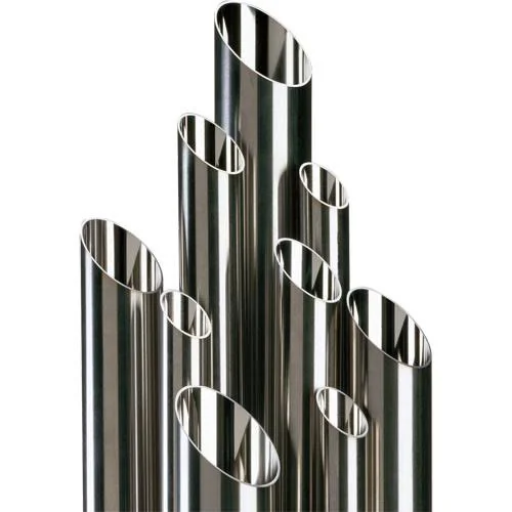
ASME BPE surface finish is defined by seven designations, SF0 through SF6, each setting a maximum Ra for the product-contact surface of tubing, fittings and valves. SF1, SF2 and SF3 are mechanical finishes with limits of 0.51, 0.64 and 0.76 µm. SF4, SF5 and SF6 are electropolished finishes with limits of 0.38, 0.51 and 0.64 µm. SF0 carries no roughness requirement.
The table takes two minutes to find online and two years to learn to use.
Daniel, a validation engineer at a contract manufacturer in Ireland, approved an SF4 tube lot on a report showing an average of 0.36 µm Ra. Four months later an auditor asked for the individual readings. One position, at the weld end of a 6 m length, read 0.52 µm.
The tube was rejected, and the cause wasn’t the polish. It was a misreading of the rule: ASME BPE sets a maximum, not an average. Averaging the readings was the error, and the report format had invited it.
This guide covers what the designations require, the maximum rule that trips most buyers, the acceptance criteria beside Ra, the ID and OD distinction, and how to tell a certified supplier from a compliant one. If you need the measurement side first, our guide to surface finish Ra on stainless tubing covers how Ra is taken on a tube bore.
Key Takeaways
- ASME BPE defines seven finish designations, SF0 to SF6. SF4, at 15 µin or 0.38 µm electropolished, is the pharmaceutical default.
- The Ra figure is a maximum. No single reading may exceed it, so a report showing only an average does not prove compliance.
- The numbering is not a quality ladder. SF1 (20 µin) is tighter than SF3 (30 µin), and SF4 is tighter than SF6.
- Ra is one line in an acceptance table that also limits pits, scratches, inclusions and weld defects.
- The ASME BPE Certification Mark belongs to certificate holders only. A supplier can manufacture to BPE without holding that certificate, and the two claims are not interchangeable.
What ASME BPE Surface Finish Designations Actually Require
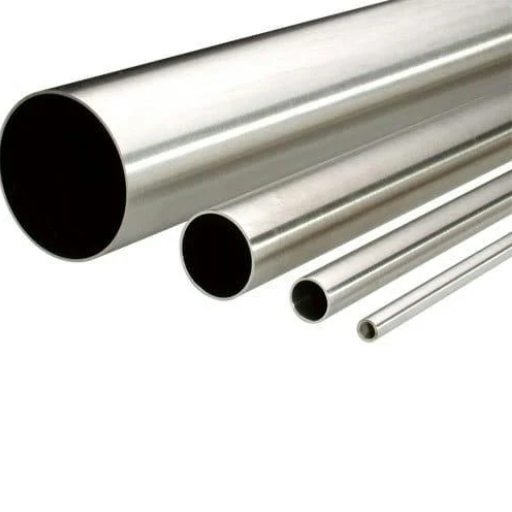
The ASME BPE standard covers the design, materials, fabrication, examination and certification of equipment for biopharmaceutical, pharmaceutical and personal-care production. It is organised in parts, from General Requirements through Metallic Materials, Dimensions and Tolerances, Surface Finishes and Certification. The finish requirements live in the Surface Finishes part and apply to the metallic surface that touches product. The BPE standard page at ASME lists the current edition and its parts.
The SF0 to SF6 table
| Designation | Finish requirement | Ra max (µin) | Ra max (µm) |
|---|---|---|---|
| SF0 | No finish requirement | n/a | n/a |
| SF1 | Mechanically polished | 20 | 0.51 |
| SF2 | Mechanically polished | 25 | 0.64 |
| SF3 | Mechanically polished | 30 | 0.76 |
| SF4 | Electropolished | 15 | 0.38 |
| SF5 | Electropolished | 20 | 0.51 |
| SF6 | Electropolished | 25 | 0.64 |
Values as published in BPE-2024 and reproduced by the suppliers surveyed for this article. See the note on BPE-2026 below.
Three notes travel with this table, and all three matter more than the numbers.
The limit is a maximum, not an average. No single Ra reading may exceed the table value. A lot where most readings sit at 0.30 µm and one sits at 0.45 µm fails SF4.
Readings are taken to ASME B46.1, across the lay where possible. The cutoff and evaluation length have to be stated, or the figures aren’t comparable between labs.
Two methods are excluded. Mechanical buffing as a final polishing step is not accepted, and flash electropolishing is not permitted. Both can hit a number without producing the surface the standard is after.
Two cautions come with this table. The table number varies by edition and by who reproduces it, cited as SF-2.4.1-1, SF-2.4-1 and SF-2.4-1.1. And the SF3 value may have moved in BPE-2026, as the edition section explains. Check both against your project’s edition before either goes on a drawing.
Why SF1 is tighter than SF3
Readers assume a higher number means a finer finish. In ASME BPE, the opposite holds. SF1 is the tightest mechanical grade at 20 µin and SF3 the loosest at 30 µin in the 2024 edition.
The same inversion appears in the electropolished family, where SF4 is finest at 15 µin and SF6 coarsest at 25 µin. The designations are labels, not a scale.
SF5 is worth a second look for that reason. It carries the same 20 µin limit as SF1, so the Ra number alone can’t tell you which one you got. The difference is the process. Electropolishing removes the disturbed, work-hardened layer that mechanical polishing leaves behind, and that layer affects corrosion resistance and passivation.
The ASME BPE Surface Finish Rule Most Buyers Miss: Ra Is a Maximum
Almost every failed finish audit I’ve seen came down to two things: an average where a maximum was required, or a number with no stated measurement method.
The maximum rule is easy to state and easy to break. A polished surface isn’t uniform. The bore of a tube varies along its length, around its circumference, and sharply at the weld seam and heat-affected zone. If a supplier measures five positions and reports the mean, a single out-of-limit peak disappears into the arithmetic.
Two habits prevent the problem. Ask for the individual readings with their locations, not a summary figure. And put the reading count and positions in the purchase order, so the sampling plan is agreed before the lot is made rather than argued after.
The measurement method carries equal weight. A 2.5 mm cutoff includes longer wavelengths than a 0.8 mm cutoff and usually returns a rougher figure on the same surface, so the setting alone can move a tube across the limit. ASME B46.1 and ISO 4288 put the routine cutoff at 0.8 mm with a 4 mm evaluation length for values in the 0.1 to 2 µm band, which covers every SF designation.
Specifying a pharma line? Send the finish level and tube size, and our technical team will confirm the achievable Ra and report format. Request a finish quotation.
ASME BPE Surface Finish Is One Line in a Longer Acceptance Table
Ra answers one question: how rough is the surface on average. The BPE acceptance criteria for product-contact surfaces answer about ten, and a report that stops at Ra has answered the easy one.
| Indication | Acceptance criterion |
|---|---|
| Cluster of pits | No more than 4 pits per 0.5 in × 0.5 in window; cumulative total ≤ 0.040 in |
| Individual pits | Acceptable below 0.020 in diameter with a shiny bottom; pits under 0.003 in are not counted |
| Scratches | Acceptable if under 0.25 in long, under 0.003 in deep, and the Ra maximum is met |
| Grit lines | Acceptable if the Ra maximum is met |
| Welds | Acceptable if polished smooth, blended, and the Ra maximum is met |
| Demarcation | Acceptable if under 5% of the inspected area and the Ra maximum is met |
| Surface inclusions | Acceptable if the Ra maximum is met and there is no liquid penetrant indication |
| Nicks, dents, star bursts, cracks | None accepted |
| Weld slag, porosity, surface residuals | None accepted |
Read the second column closely and the logic shows. Most defects are tolerated only if the Ra maximum is still met, so roughness is the gate and the defect categories cover what may remain once you are through it. Cracks, dents and slag fail regardless, because no Ra value makes a crack acceptable.
For incoming inspection this changes the report you demand. A single roughness figure certifies a surface that could still carry a scratch at the limit or an unblended seam. Ask for the visual and penetrant results alongside the Ra numbers.
ID, OD, and the Finish Your Purchase Order Forgot
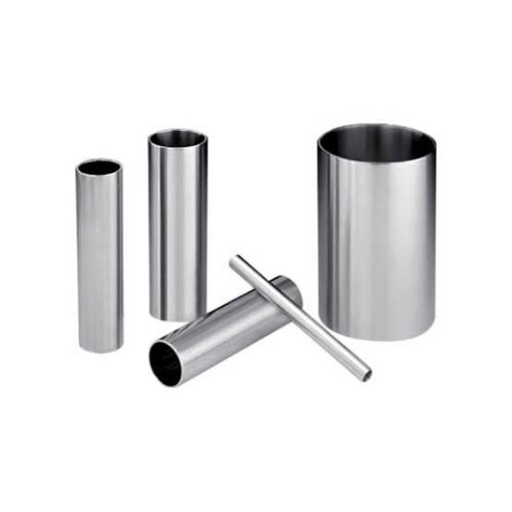
The SF designations govern the product-contact surface, which on tube is the inside diameter. The outside diameter is a separate question, and the answer isn’t automatic.
Older BPE practice, before BPE tubing, fittings and valves were brought under one SF system, spelled the split out explicitly. Each tube grade came in two variants: a polished or electropolished ID with an unpolished OD, or the same ID finish plus a specified OD finish. An SF4 tube could ship with a 15 µin bore and an untreated outside, and both were correct to the standard. An electropolished tube is an electropolished bore unless the order says otherwise.
A dairy project in New Zealand found this out after installation. The specification named SF4, and the tube arrived with a mirror bore, so the process side looked right. The plant’s external cleanliness standard assumed a polished, passivated outside, and the mill-finish OD failed it.
The fix was a re-specification and a four-week delay on a skid already assembled. Nothing was wrong with the tube: the purchase order had specified half of it.
If your plant standard covers external surfaces, write the OD requirement into the line item: the Ra, the process, and whether the OD is polished or supplied as-is.
Which ASME BPE Surface Finish Should You Specify?
ASME BPE does not assign finish levels to applications. The process owner does. What follows is the common industry mapping, not a rule in the standard.
| Situation | Typical specification | Reasoning |
|---|---|---|
| WFI, purified water, product-contact bioprocess lines | SF4, 0.38 µm electropolished | De facto pharmaceutical default; EP removes the disturbed layer and enriches chromium |
| Critical sterile contact, high-risk product | SF4, with a tighter project limit by agreement | The standard has no designation below 15 µin; write a project Ra limit if you need one |
| Utility and CIP-served systems, no product contact | SF1, 0.51 µm mechanical | Cheapest compliant mechanical finish |
| Buffer and preparation areas where EP is unavailable | SF2 or SF3 | Progressively looser mechanical limits, still compliant |
| Semiconductor and UHP gas service | SEMI F19, not BPE | Different standard with different criteria |
Two points on the middle rows. You can’t specify “better than SF4” as an SF number, because the table ends at 15 µin; when a validation package needs 0.25 µm, that is a project-specific limit written into the purchase order, not a BPE designation. And a tighter finish than the application needs costs money in bath time, handling and inspection without adding cleanability the validation can show.
The wider DIN 11850 and ASME BPE sanitary tube guide covers how these choices interact with connection dimensions and 3-A requirements.
Certified, Compliant, or Neither: Reading a Supplier’s BPE Claim
ASME runs a Bioprocessing Equipment Certification programme. A manufacturer holding a Certificate of Authorization may apply the ASME Single Certification Mark with the BPE designator to metallic BPE tubing, fittings and valves. A separate Quality System Certificate covers makers of polymeric static seals. The certificate runs for a term of years, with audits in between.
A manufacturer without that certificate may still mark “BPE” as a reference to the standard it was made to. It may not use the ASME mark or designator.
Both markings exist in the market, and they aren’t the same claim. One says an accredited body has audited the quality system and authorised the stamp. The other says the manufacturer asserts compliance. Neither is worthless, but treating them as interchangeable relies on a claim nobody verified.
The practical check is simple: ask for the certificate number. ASME treats a claim to certificate-holder status as invalid without it, so a supplier who can’t produce one has told you which claim applies.
A purchasing manager in Hyderabad learned the distinction the hard way. A quotation called the supplier “BPE certified,” and the phrase was copied into the project file, where it sat until vendor qualification asked for the certificate number. The supplier had never claimed to hold one. The order survived on its documentation, after a month of rework and a second audit.
A certificate of authorization is also not a material certificate, and auditors ask for the whole package together.
What Must Arrive With the Tube
A finish is only as good as the evidence attached to it. On a pharma BPE order, expect:
- A mill test report to EN 10204 3.1 with heat number and tested chemistry and mechanicals, not merely specified values.
- A surface roughness report naming the instrument, the cutoff and evaluation length, each reading with its location, the maximum, and pass or fail against the order limit.
- A dimensional inspection report covering OD, wall and length.
- Ferrite content where a DL designation applies.
- A passivation record to ASTM A967 where passivation was part of the finish.
- Permanent marking with the heat number traceable to the test report, the material type, the manufacturer’s mark, the standard reference, and a single finish designation.
- Weld records and heat-tint acceptance where orbital welding is in scope. The 2026 edition added guidance on heat tint in the weld heat-affected zone.
The marking deserves a note of its own, because it is the one part of the package that stays on the tube after the paperwork is filed. A stamp with no heat number you can match to the report breaks traceability at the pipe rack. Our quality control process shows how those checks are sequenced before shipment.
Want the format before you order? Ask for a sample roughness report and documentation package with your enquiry, and compare it to what your auditor expects. Request the documentation sample.
What Changed in ASME BPE-2026
The current edition is ASME BPE-2026, issued 1 May 2026 and mandatory from November 2026, and that gap is your window to review the change list. If a supplier’s literature quotes “ASME BPE 2026,” this is that edition. It revises BPE-2024, so a specification naming 2019 or 2022 is already behind. GMP-Compliance’s summary of the 2026 changes gives the full change list by part.
On finish, three changes are documented. The acceptance criteria for pits and porosity on product-contact surfaces of multiuse systems were revised. The standard was harmonised with 3-A and the DIN 11866 series, narrowing the gap between American and European finish frameworks. A new paragraph covers training and qualification of the people who do the grinding, electropolishing and passivation, putting the operator inside the scope, not just the process.
The Ra values are the unsettled part. Two published summaries say the 2026 table revised the SF0 and SF3 rows, with SF3 moving from 30 to 32 µin (0.80 µm). A third says the numbers did not move and only the acceptance criteria changed. ASME has published nothing that resolves the conflict, and every table reproduced here comes from a pre-2026 edition. Until you read the table in your own copy, treat an SF3 callout as edition-dependent.
Tube tolerances still come from elsewhere: BPE dimensions refer onward to ASTM A270 Supplement 2, which our ASTM A270 guide covers.
Frequently Asked Questions
What is ASME BPE SF4?
SF4 is an electropolished finish with a maximum Ra of 15 µin (0.38 µm) on the product-contact surface, and the most commonly specified level for pharmaceutical and bioprocess tube. Mechanical polishing alone at 15 µin does not qualify, because the designation requires electropolishing.
Is ASME BPE the same as 3-A?
No. ASME BPE is a design and fabrication standard for bioprocessing equipment. 3-A SSI publishes sanitary standards for dairy and food processing. They overlap on cleanability and increasingly share acceptance criteria, and the 2026 BPE edition was harmonised with 3-A, but they remain separate documents.
Can a manufacturer say “BPE compliant” without being certified?
Yes. Compliance is a claim about the product; certification is a credential held by the manufacturer. Only an ASME BPE Certificate of Authorization allows the ASME mark with the BPE designator to be stamped, and a manufacturer without one may still mark “BPE” as a standard reference.
Does SF4 cover the outside of the tube?
Not by default. The SF designations apply to the product-contact surface, which on tube is the bore. An SF4 tube can arrive with an unpolished outside diameter unless the purchase order names an OD finish separately.
Why is SF1 tighter than SF3?
Because the designations are labels, not a scale. SF1 sets a 20 µin maximum, SF2 sets 25 and SF3 sets 30 in BPE-2024. Lower mechanical numbers are finer, so the order runs opposite to how most people read it. The same inversion applies to the electropolished family, where SF4 at 15 µin is finer than SF6 at 25 µin.
Does a lower Ra mean a cleaner surface?
Not on its own. A cold-drawn tube can read a lower average Ra than an electropolished tube while carrying deeper peaks, because Ra averages them away. Electropolishing tends to leave a more uniform surface with the disturbed layer removed, which is why it cleans better at a comparable Ra. Treat Ra as one criterion among several, not a cleanliness certificate.
Conclusion: Specify the Edition, the Level, and the Evidence
The ASME BPE finish table is short: seven designations, one maximum Ra each, two process families. Using it well takes three habits.
Name the edition. BPE-2026 revised the acceptance criteria and takes effect on a known date, and the SF3 value may differ between 2024 and 2026. A specification that says only “ASME BPE surface finish” will drift with every revision.
Write a maximum and a method. “SF4, Ra ≤ 0.38 µm, readings per ASME B46.1 at 0.8 mm cutoff, five positions per end, individual readings reported” is a clause a supplier can meet and an auditor can check. “Electropolished, smooth” is neither.
Ask what the claim rests on. A certificate number, or a documentation package. Either can support a purchase. A phrase in a quotation supports nothing.
Zhongzheng manufactures sanitary and electropolished tubing to ASME BPE finish requirements, with in-house electropolishing to Ra ≤ 0.4 µm on the inside diameter and roughness reports with each order. Send your line item with the SF level, the tube size and the documentation you need, and our technical team will confirm the achievable finish and report format within 24 hours.