Carbon steel wire stands as one of the most critical components in metal products across diverse industries including construction, automotive, and manufacturing. This comprehensive guide explores why carbon steel wire maintains its importance, examines the various types that enhance its usability, and reveals the factors contributing to its exceptional strength. Whether you’re an industry professional or simply curious about materials shaping our world, this article provides an accessible yet thorough overview of carbon steel wire and its remarkable characteristics.
Understanding Carbon Steel Wire
What is Carbon Steel Wire?
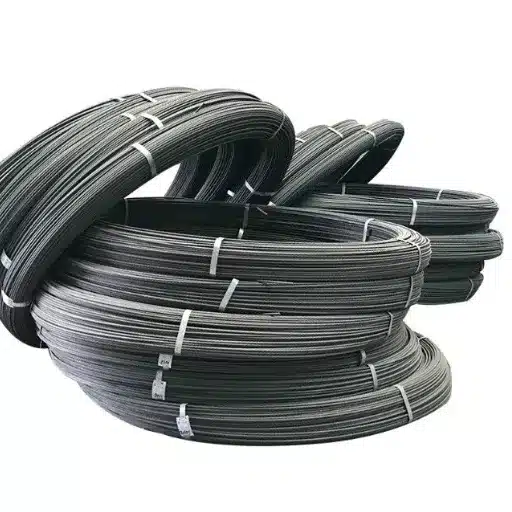
Carbon steel wire is manufactured primarily from an alloy consisting of iron and carbon, with small percentages of additional elements such as silicon or manganese. The steel derives its name from its carbon content, which fundamentally determines its properties including strength, toughness, and hardness. Based on carbon content levels, carbon steel wire can be categorized into low, medium, and high carbon types, with each category particularly well-suited to specific industry and manufacturing applications.
This versatile material finds extensive use in construction, automotive, and agricultural sectors, where it is valued for its longevity, tensile strength, and adaptability. Its exceptional versatility enables applications ranging from fencing and springs to fasteners and various wire products, making it an indispensable component in numerous technological and infrastructure projects.
Types of Carbon Steel Wire
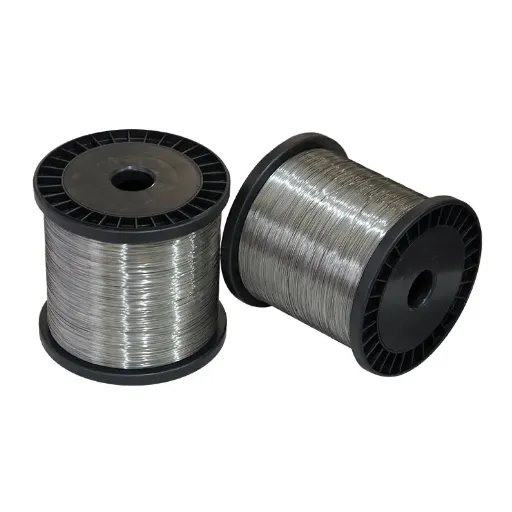
Carbon steel wire is systematically classified based on its carbon content and characteristics, allowing for optimal utilization across various industries. Understanding these classifications is essential for selecting the appropriate wire type for specific applications.
Low Carbon Steel Wire
With carbon content ranging from approximately 0.05% to 0.30%, low carbon steel wire exhibits high ductility, making it ideal for applications requiring easy bending and shaping. This type is commonly utilized in wire rods, mesh, nails, and light-duty fencing applications where flexibility and formability take precedence over maximum strength.
Medium Carbon Steel Wire
Classified with carbon content between 0.30% and 0.60%, medium carbon steel wire delivers a balanced compromise between ductility and strength. This wire type finds extensive use in automotive parts, machinery components, and tools where moderate toughness and wear resistance are essential requirements.
High Carbon Steel Wire
Containing carbon content ranging from 0.60% to 1.00%, high carbon steel wire is distinguished by its exceptional hardness and tensile strength. This type is predominantly employed in springs, cutting tools, and music wire applications, where its ability to handle heavy loads and resist deformation becomes crucial.
Specialty Carbon Steel Wire
Specialty wires represent modified carbon steel wire with coatings or alloys designed to enhance specific properties such as corrosion resistance or conductivity. Galvanized carbon steel wire, for instance, serves as an excellent outdoor wire for fencing and cables due to its enhanced durability and long-lasting strength.
Key Insight: Each carbon steel wire type is specifically engineered for different applications, ensuring optimal performance in its designated field.
Properties of Carbon Steel Wire

Carbon steel wire is manufactured from a blend of steel, carbon, and various other metals, resulting in highly desirable properties for numerous applications. The following characteristics define its widespread utility:
High Tensile Strength
Carbon steel wire is engineered to withstand substantial mechanical stress, making it indispensable for suspension cables and springs that require superior resistance to pulling forces.
Flexibility and Ductility
Carbon content directly influences material flexibility. Low-carbon steel wires demonstrate high ductility and malleability, while high-carbon variants offer greater hardness with reduced deformation tendencies.
Corrosion Resistance (with Treatments)
While untreated carbon steel is vulnerable to rust, treatments such as galvanization or alloying significantly enhance corrosion resistance, extending lifespan for outdoor and marine applications.
Conductivity
While not matching copper’s conductivity, carbon steel wire provides sufficient electrical conductivity for certain applications, particularly where cost-effectiveness is prioritized.
Heat Resistance
High-carbon wires exhibit excellent heat resistance, making them suitable for high-temperature environments including industrial furnaces and cutting tools.
Customizability
Advanced treatment and manufacturing processes enable extensive customization of carbon steel wire to meet various mechanical and chemical requirements, including hardness, surface finish, and cross-sectional shape.
The combined properties of carbon steel wire ensure its continued prominence in construction, automotive, electronics, and agriculture sectors. Its versatility establishes it as one of the most sought-after materials in today’s industrial landscape.
Applications of Carbon Steel Wire

Common Applications in Industries
Carbon steel wire finds extensive application across multiple industries due to its exceptional strength, durability, and versatility. Its widespread adoption stems from the ability to perform reliably in diverse conditions and applications.
These diverse roles have established carbon steel wire as an absolutely essential material in modern industrial applications, where its adaptability successfully meets a wide range of technical and environmental requirements.
Use of Spring Wire in Manufacturing
Spring wire demonstrates multiple applications throughout the manufacturing sector, valued for its strength, flexibility, and durability. The production of tension, compression, and torsion springs represents one of the primary areas where spring wire proves indispensable, with these spring types subsequently utilized in various machines and devices.
Within automotive, aerospace, and construction industries, spring wire contributes to manufacturing suspension springs, valve springs, and precision instruments. The steady increase in demand for spring wire correlates with the advancement of manufacturing technologies and the growing need for high-performance materials. Spring wire remains essential for producing reliable, efficient components critical to modern industry, particularly due to its ability to withstand and perform exceptionally well under high stress and repeated use.
Packaging and Distribution of Wire Products
The quality of wire products is substantially influenced by their packaging and distribution processes, which play crucial roles in delivering products to end-users efficiently and safely. Current industry trends indicate an increasing demand for eco-friendly and efficient packaging solutions that balance protection with environmental responsibility.
Packaging Considerations:
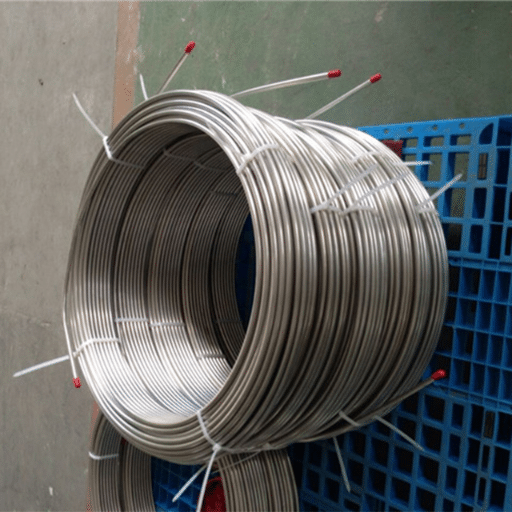
- Format Options: Products packaged in coils, spools, or reels depending on application and customer requirements
- Protective Measures: Plastic films and protective wrapping prevent rust and damage during transport
- Environmental Conditions: Packaging designed to withstand unfavorable conditions during transit
- Sustainability: Growing consumer preference for sustainable and durable packaging options
Well-planned packaging significantly reduces damage, minimizes waste, and eliminates uneconomical logistics costs. Moreover, with smart packaging technologies advancing rapidly, manufacturers increasingly implement shipment tracking capabilities, thereby enhancing supply chain reliability and transparency.
Grades and Strength of Carbon Steel Wire
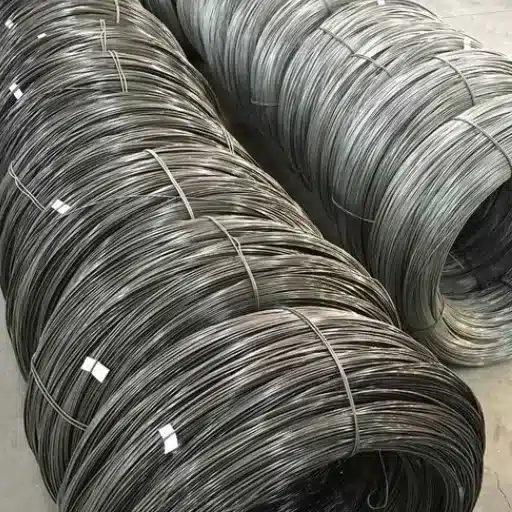
Carbon Wire Selection: Low vs. High
Low and high carbon wires serve distinct purposes in industrial applications, each possessing different properties that address specific requirements. Understanding these differences is fundamental to making informed material selection decisions.
Low Carbon Wire
Carbon Content: Under 0.25%
Characteristics: Softer, more ductile
Applications: Fencing, meshes, lightweight construction
Advantages: Flexibility, affordability, easy welding
Trend: Growing recognition for sustainability and eco-friendly practices
High Carbon Wire
Carbon Content: 0.6% to 1.0%
Characteristics: Exceptional strength and hardness
Applications: Springs, high-tensile cables, cutting tools
Advantages: Superior strength for heavy-duty applications
Trend: Gaining traction in automotive, construction, and energy sectors
The selection criteria for low or high carbon wire are determined by project requirements regarding strength, flexibility, cost considerations, and environmental impact.
Carbon Steel Wire with High Tensile Strength
The outstanding tensile strength of carbon steel wire is frequently cited as the primary reason for its utilization in numerous demanding applications. This property enables the wire to withstand extremely high amounts of tension and strain without breaking, making it suitable for load-bearing construction such as suspension bridges and heavy machinery components.
Current industry data reveals significant increases in inquiries regarding “high tensile carbon steel wire uses,” suggesting growing interest in its applications within emerging technologies, including renewable energy and advanced transportation systems. Industry experts consider this material highly promising because it facilitates innovations that are simultaneously lightweight and extremely durable, resulting in safer and more efficient designs. Additionally, employing cutting-edge methods such as heat-treating and alloying, manufacturers have successfully advanced to meet demands of sophisticated engineering projects while pushing the limits of carbon steel wire’s tensile strength capabilities.
Spring Steel Characteristics and Applications
Spring steel is characterized by a remarkable combination of elasticity, resilience, and strength, establishing it as the ideal material for demanding applications subjected to constant stress. Typically manufactured from medium or high-carbon steel, spring steel possesses the characteristic ability to return to its original shape without losing strength after experiencing heavy working loads.
Key Applications of Spring Steel:
- Spring Elements: Manufacturing various types of springs for mechanical systems
- Vehicle Suspension Parts: Critical components ensuring ride comfort and handling
- Saw Blades: Tools requiring flexibility combined with cutting edge retention
- Industrial Tools: Equipment subjected to repeated flexing or oscillating movement
The material’s hardness and wear resistance prove particularly advantageous in environments experiencing dynamic loading and vibration. Advanced practices in heat treatment and alloy composition have achieved successful increments in fatigue resistance, substantially reducing susceptibility to breakage—a significant advantage that extends spring steel’s operational lifespan. These qualities make it highly suitable for diverse industries including automotive, aerospace, construction, and manufacturing sectors.
Manufacturing Process of Carbon Steel Wire
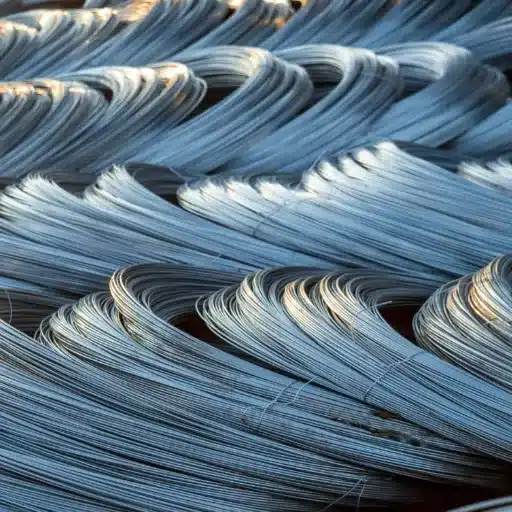
Wire Processing Techniques
Wire processing techniques comprise numerous different stages that transform raw materials into high-performance carbon steel wire suitable for diverse applications. The manufacturing process follows a systematic approach to ensure quality and consistency.
Manufacturing Process Steps:
1. Descaling
Initial stage removing surface impurities from raw material
2. Wire Drawing
Critical phase where steel wire is pushed through progressively smaller dies to achieve desired diameter and strengthen tensile force. Advanced lubrication methods minimize friction and prevent wire breakage.
3. Heat Treatment
Methods such as annealing are implemented to reduce brittleness and relieve internal stresses
4. Quality Assurance
Advanced monitoring systems ensure compliance with specifications
Recent advancements in wire processing include precision die manufacturing and automated monitoring systems, which have considerably enhanced productivity and quality. These technologies guarantee superior uniformity in dimensional accuracy and material properties, significantly reducing defects and production downtime. Additionally, the integration of AI and machine learning in manufacturing plants enables real-time wire quality monitoring, ensuring compliance with the strictest industry standards.
Galvanizing Carbon Steel Wire
Galvanizing carbon steel wire represents an essential process that significantly enhances the metal’s functionality and corrosion resistance, proving crucial for project success. The process consists of applying a protective zinc coating to steel wire through techniques such as hot-dip galvanizing or electro-galvanizing. This protective layer shields the steel from environmental elements, preventing rust and corrosion that would otherwise compromise the material’s integrity.
Innovation in the galvanizing sector continues advancing, with improved coating techniques and enhanced surface preparation methods leading to more uniform zinc layers and extended product lifespans. Current industry data confirms that galvanizing carbon steel wire remains essential across construction, agriculture, telecommunications, and automotive sectors. The process is particularly valued for being cost-effective and environmentally friendly compared to alternative corrosion protection methods. Furthermore, improvements in galvanizing standards such as ISO and ASTM specifications have enabled manufacturers worldwide to deliver reliable quality meeting global industry demands.
Quality Control in Wire Production
Quality control in wire production is a comprehensive multi-faceted process ensuring product compatibility with demanding industry and consumer standards. This process encompasses meticulous inspection at every stage, from raw material selection through final product delivery.
Advanced Quality Control Techniques:
- Non-Destructive Testing: Inspection methods that don’t damage the product
- Tensile Strength Evaluation: Measuring load-bearing capacity and mechanical properties
- Coating Thickness Measurement: Ensuring protective layers meet specifications
- Dimensional Accuracy Verification: Confirming precise measurements throughout production
Technology has dramatically transformed quality control in wire production, enabling real-time monitoring and automated inspection processes. Manufacturers now deploy smart sensors and AI-based analytics that detect discrepancies with exceptional accuracy while ensuring compliance with ISO and ASTM standards. These technologies not only reduce resource wastage but also minimize human error probability, thereby enhancing both process efficiency and product reliability. Access to data and insights through advanced analytical tools supports continuous optimization of manufacturing processes, providing manufacturers with updated practices to address continuously evolving industry requirements.
Choosing a Supplier for Carbon Steel Wire

What to Look for in a Distributor
Selecting the appropriate distributor for carbon steel wire requires prioritizing reliability, quality, and adherence to industry standards. A supplier with an established track record of delivering quality materials that meet ISO and ASTM specifications represents an excellent choice for guaranteeing consistency and performance.
Essential Distributor Selection Criteria:
✓ Quality Assurance
Verified compliance with ISO and ASTM specifications
✓ Supply Chain Efficiency
Reliable delivery schedules and inventory availability
✓ Customization Capability
Ability to provide tailored solutions for specific requirements
✓ Customer Service
Responsive support and transparent pricing structure
✓ Market Reputation
Positive customer feedback and industry standing
✓ Technical Expertise
Access to modern technology and industry knowledge
Accessibility to modern technological tools and current industry data enables thorough evaluation of customer feedback, distributor certifications, and market reputation. A trustworthy distributor should demonstrate transparent pricing, attentive customer service, and commitment to building reliable, long-term business relationships.
ISO Standards for Wire Products
ISO wire product standards represent a definitive set of guidelines establishing quality, safety, and performance uniformity across all industries. The implementation of ISO standards—such as ISO 9001 for quality management systems or ISO 6892 for tensile testing of metallic materials—guarantees that wire products comply with internationally recognized benchmarks.
Key ISO Standards for Wire Products:
- ISO 9001: Quality management systems ensuring consistent product quality
- ISO 6892: Tensile testing standards for metallic materials
- ISO 4954: Specifications for steel wire rod for cold forming
- ISO 16120: Steel wire rods for tire reinforcement materials
Current industry data clearly demonstrates that adherence to ISO standards not only ensures reliable product quality but also enhances marketability by establishing trust with global customers. When selecting wire products, always verify the manufacturer’s compliance with these standards to ensure optimal quality and maximum durability.
Evaluating Supplier Capabilities
When evaluating supplier capabilities, begin by examining production processes, quality control measures, and adherence to international standards such as ISO 6892-2 for tensile testing of metallic materials. Utilizing current industry data and resources enables identification of suppliers with strong market credibility and positive customer reviews testifying to their consistent performance.
A dependable supplier should demonstrate transparency, maintain a solid certification portfolio, and show genuine commitment to continuous process improvement. Through effective use of online resources and certified compliance information, companies can make informed decisions ensuring their supply chain meets the highest quality standards and operational requirements.
Frequently Asked Questions (FAQ)
What are the mechanical differences between carbon steel wire and low-carbon wire?
Low carbon wire typically contains less carbon than higher-grade carbon steel wire, resulting in reduced tensile strength but increased ductility and easier shaping capabilities. High carbon steel wire can achieve greater strength and hardness through heat treatment, while low carbon wire is generally preferred for drawing, bending, and cold forming processes. Both materials have limited corrosion resistance compared to stainless steel; therefore, they typically require coatings or plating for outdoor or corrosive environments. When choosing between them, consider priorities such as springiness, weldability, or surface finish requirements. Manufacturers often recommend low carbon wire for fasteners, clips, or mesh where processing ease is crucial.
How does low carbon wire perform in corrosive environments compared to stainless steel?
Low carbon wire possesses limited inherent corrosion resistance and will oxidize faster than stainless steel in humid or saline environments. Protective treatments for low carbon wire typically include galvanizing, oiling, or applying polymer coatings, which can significantly extend the material’s service life. Stainless steel provides inherent rust resistance due to chromium content, making it the superior choice for areas with continuous moisture and chemical exposure. Nevertheless, stainless steel typically costs more and may not be necessary for short-term or indoor applications where coated low carbon wire suffices. Consider lifecycle cost, maintenance demands, and the specific operational environment before deciding between coated low carbon wire and stainless steel options.
Can low-carbon wire be welded, and how does it compare to welding stainless steel?
Low carbon wire can generally be welded very easily using common techniques such as resistance, arc, or spot welding due to its low carbon content, which minimizes hardening and cracking risks. Welding low carbon wire proves easier than welding higher carbon steels, though joint design and heat control remain critical to preventing distortion. Welding stainless steel is more complex, requiring precise heat input control and potentially specialized filler metals to ensure both wear and corrosion resistance; the process tends to be costlier and may require post-weld cleaning for certain grades. Therefore, for structures involving frequent welding, low carbon wire is more commonly used due to lower costs, while for corrosive service where quality is paramount, stainless steel is preferred despite its complicated welding process. Pre- and post-weld treatments and appropriate filler materials are recommended for both materials to ensure durable, lasting joints.
What are the possible coatings for low carbon wire that can increase its lifecycle?
Low carbon wire is commonly protected with hot-dip galvanizing, electro-galvanizing, zinc-iron coatings, and polymer or PVC coatings, which function as physical and chemical barriers against corrosion. Hot-dip galvanizing demonstrates pronounced durability, withstanding rigors of outdoor and seaside environments, while electro-galvanizing’s smoothness makes it ideal for indoor applications. Polymer coatings not only add color but also contribute insulation and protection against wear, making them suitable for areas where handling or appearance matters. In many instances, stainless steel eliminates coating requirements; however, when low carbon wire is selected for cost benefits, proper coating selection can deliver equivalent in-service life for numerous applications. When choosing coatings, consider environmental exposure, mechanical wear, and regulatory requirements.
Are there any typical instances where low-carbon wire is chosen over stainless steel due to cost and performance reasons?
Low carbon wire is generally more suitable for large-volume applications such as fencing, binding wire, nails, staples, and general fasteners where primary considerations are cost-effectiveness and forming simplicity. Its ductility and affordability make low carbon wire the preferred choice for drawing, bending, and cold heading processes at high throughput rates. Stainless steel is selected when corrosion resistance, aesthetic finish, or hygiene become primary criteria—for example, in food processing, medical devices, or marine hardware—although stainless steel cost can present barriers to mass-market applications. In numerous construction and agricultural applications, properly coated low carbon wire offers the optimal performance-to-cost ratio. The selection should depend upon expected service conditions, maintenance intervals, and total lifecycle cost rather than solely on initial material price.
Reference Sources
- University of North Texas – Mechanical Behavior of Ultrahigh Strength Ultrahigh Carbon Steel:
This study explores the mechanical properties and high strength of ultrahigh-carbon steel in wire or rod form, providing insights into its applications and performance.
Mechanical Behavior of Ultrahigh Strength Ultrahigh Carbon Steel – UNT Digital Library - Harvard ADS – Effects of Carbon Percentage and Cooling Rate on Steel Wire Rods:
This research discusses the production and applications of low-carbon steel wire rods, including their use in fine wire, coat hangers, and staples.
Effects of Carbon Percentage and Cooling Rate – Harvard ADS - PubMed Central (PMC) – Quality Control of High Carbon Steel for Steel Wires:
This paper reviews quality control measures and research findings on high-carbon steel wires, presenting both laboratory-scale and industrial results.
Quality Control of High Carbon Steel for Steel Wires – PMC