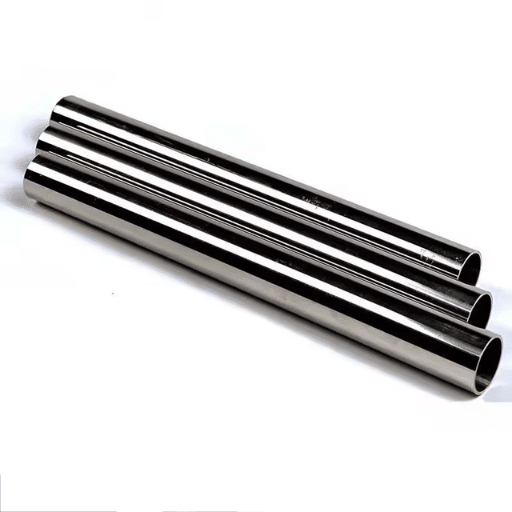
The inspector rejected your condenser tube bundle after it operated in seawater for eight years. The 316L stainless steel material which appeared adequate according to documents experienced crevice corrosion because of the tube support system. The company faces a $2.8 million replacement cost which occurs during the most active time of their business operations. The materials engineer on your team suggests cupronickel — specifically C70600 90/10 alloy — with decades of proven service in naval vessels and desalination plants. The procurement department requires proof which explains why the standard copper tube costs 40% more than other options.
The cupronickel tube offers customers two advantages which neither copper nor stainless steel can deliver because it provides exceptional seawater corrosion protection and efficient heat transfer and natural biofouling resistance and installation-friendly manufacturing properties. The guide supplies engineers and procurement teams with specification data and grade selection framework and application guidance which enables them to specify C70600 and C71500 tube materials with assurance.
The training will show you the required chemical composition according to ASTM B111 standards and describe the investment value of corrosion resistance benefits and specify the conditions when 70/30 C71500 should be used instead of 90/10 C70600 and explain the process to confirm your supplier provides authentic cupronickel alloy instead of brass with additional nickel content.
What is Cupronickel Tube?

Cu-Ni Alloy Metallurgy and History
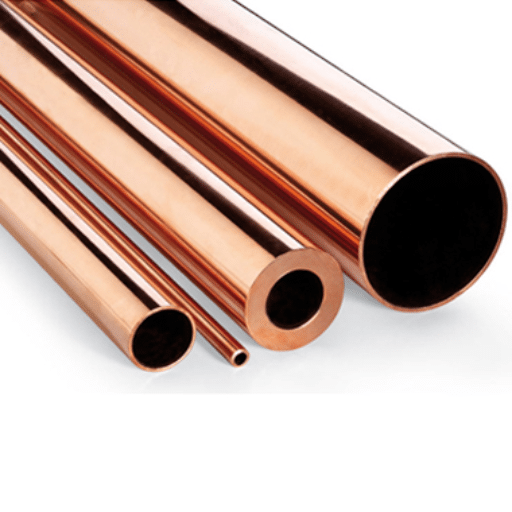
Cupronickel tube is seamless or welded tubing manufactured from copper-nickel alloys — specifically alloys containing 10% to 30% nickel with copper as the base metal. The most commonly specified grades for industrial tubing are C70600 (90% copper, 10% nickel, commonly called 90/10) and C71500 (70% copper, 30% nickel, called 70/30). The alloys produce thermal conductivity and ductility through copper which they combine with nickel to create corrosion resistance and strength.
Naval engineers developed cupronickel alloys during the early 20th century because they needed a material that could resist seawater exposure and outperform both carbon steel and pure copper because of their respective weaknesses to rapid corrosion and biofouling. The addition of nickel to copper creates a new corrosion mechanism because cupronickel produces a protective film that develops as a thin layer which protects the metal from further corrosion to an extent that scientists measure corrosion progress in thousandths of millimeters each year.
The microstructure of cupronickel exists as a single-phase solid solution because nickel atoms replace copper atoms in the face-centered cubic crystal lattice structure. The single-phase structure provides excellent formability which enables cupronickel tube to be bent flared and expanded into tube sheets without cracking because it eliminates all galvanic corrosion problems that two-phase alloys experience.
ASTM B111 and B466 Specifications
The primary specification that controls cupronickel tube usage for condenser and heat exchanger applications exists in ASTM B111. The standard establishes requirements for seamless copper and copper-alloy tube production intended for condenser and heat exchanger applications which include C70600 (UNS designation) 90/10 cupronickel and C71500 70/30 cupronickel. The specification defines chemical composition limits, mechanical property requirements, dimensional tolerances, and testing protocols.
The standard ASTM B466 establishes welding requirements for cupronickel pipe, which includes specifications that apply to seawater piping systems that use larger-diameter and thicker-wall pipe instead of heat exchanger tubing. The guide focuses on heat exchanger applications which use ASTM B111 as the governing specification.
Key requirements of ASTM B111 for cupronickel tube include:
- Chemical composition verification by spectrographic analysis
- Tensile testing to verify minimum strength requirements
- Eddy current or ultrasonic testing for defect detection
- Dimensional inspection for OD, wall thickness, and length
- Visual inspection for surface quality
Mills producing ASTM B111 cupronickel tube must maintain documented quality systems, and Mill Test Reports (MTRs) must certify that the material meets all applicable requirements of the specification.
Why Cupronickel for Seawater Service
Three characteristics make cupronickel the preferred material for seawater heat exchangers and piping systems because it shows exceptional corrosion resistance and natural biofouling resistance and it maintains predictable long-term performance.
Corrosion Resistance: Cupronickel C70600 shows a corrosion rate of 0.02-0.05 mm/year in flowing seawater which equals approximately 1/10th of carbon steel’s corrosion rate while showing lower rates than both aluminum brass and standard copper. The protective film that forms on the surface is self-healing because it can quickly restore its protective function after mechanical impact and erosion damage in seawater.
Biofouling Resistance: The copper content in cupronickel provides natural resistance against macrofouling which includes barnacles mussels and algae that disrupt other materials. The surface of cupronickel does not completely stop biological growth but the copper ions which emerge from the surface create conditions that prevent heavy fouling from developing. This process decreases the need for maintenance work while heat transfer efficiency remains intact throughout the operational period.
Predictable Performance: Cupronickel fails through uniform thinning while stainless steels experience sudden catastrophic failure from chloride stress corrosion cracking. Engineers can monitor wall thickness during inspections and predict remaining service life with confidence because there are no sudden surprises.
C70600 vs C71500: Grade Selection Guide

90/10 vs 70/30 Chemical Composition
The fundamental difference between C70600 and C71500 is the nickel content — 10% for C70600 versus 30% for C71500. This compositional difference drives differences in corrosion resistance, strength, and cost.
C70600 (90/10 Cupronickel) Chemical Composition per ASTM B111
| Element | Requirement (%) | Function |
|---|---|---|
| Copper | 86.0 min, 89.5 max | Base metal, thermal conductivity |
| Nickel | 9.0 – 11.0 | Corrosion resistance, strength |
| Iron | 1.0 – 1.8 | Improves erosion resistance |
| Manganese | 1.0 max | Deoxidizer, sulfur control |
| Zinc | 0.50 max | Impurity limit |
| Lead | 0.02 max | Impurity limit (toxicity concern) |
| Carbon | 0.05 max | Impurity limit |
C71500 (70/30 Cupronickel) Chemical Composition per ASTM B111
| Element | Requirement (%) | Function |
|---|---|---|
| Copper | 65.0 min, 70.0 max | Base metal |
| Nickel | 29.0 – 33.0 | Enhanced corrosion resistance |
| Iron | 0.40 – 1.0 | Erosion resistance |
| Manganese | 1.0 max | Deoxidizer |
| Zinc | 0.50 max | Impurity limit |
| Lead | 0.02 max | Impurity limit |
The iron addition in both grades is critical — it significantly improves resistance to erosion-corrosion in high-velocity seawater. The iron content must be controlled within the specified range; too little provides no benefit, while too much can reduce formability.
Mechanical Property Comparison
C71500 offers greater strength than C70600 because it contains more nickel, yet both materials provide sufficient strength for use in heat exchangers and piping systems. The increased strength of C71500 enables some applications to use thinner wall designs which help to balance its material expenses.
ASTM B111 Mechanical Property Requirements (Annealed Temper)
| Property | C70600 (90/10) | C71500 (70/30) |
|---|---|---|
| Tensile Strength (min) | 303 MPa (44 ksi) | 345 MPa (50 ksi) |
| Yield Strength (min) | 110 MPa (16 ksi) | 125 MPa (18 ksi) |
| Elongation in 2 in. (min) | 30% | 30% |
| Hardness (typical) | 60-80 HRB | 70-85 HRB |
Both alloys remain highly ductile in the annealed condition, enabling tube expansion into tube sheets, bending for U-bend configurations, and flaring for mechanical joints. Work hardening occurs with cold forming, which must be considered when severe forming operations are required.
Corrosion Resistance in Seawater
The higher nickel content in C71500 provides measurably better corrosion resistance in severe conditions, particularly at elevated temperatures and in polluted or stagnant seawater. The following table summarizes relative performance:
Seawater Corrosion Comparison — Relative Performance Rating
| Condition | C70600 (90/10) | C71500 (70/30) |
|---|---|---|
| Clean flowing seawater | Excellent | Excellent |
| Elevated temperature (>50°C) | Good | Excellent |
| Stagnant/low velocity | Good | Very Good |
| Polluted/harbors | Good | Excellent |
| High velocity (>3 m/s) | Good | Very Good |
| Intermittent wet/dry | Fair | Good |
The two materials show equivalent performance in clean seawater testing at normal environmental conditions because their corrosion rates remain below 0.05 millimeters per year. The benefits of C71500 become most important when used in extreme conditions that require high-temperature operation for steam condensers and desalination plant brine heaters and hot seawater systems.
When to Specify 70/30 Over 90/10
Specify C71500 70/30 cupronickel when your application demands the additional corrosion resistance margin:
Specify C71500 (70/30) for:
- Seawater temperatures above 50°C (122°F)
- Steam condensers and power plant applications
- Desalination plant evaporators and brine heaters
- Hot water heating systems
- Intermittent service with stagnant periods
- Polluted harbor or estuary water
- Critical applications where maximum service life is required
- Applications with erosion-corrosion risk from high velocity or particulates
C70600 (90/10) is acceptable for:
- Clean seawater cooling at ambient temperatures
- Continuous flow conditions (velocity 1-3 m/s)
- Surface ships and coastal vessels
- Heat exchangers with regular operation
- Applications where cost optimization is important
- Offshore platform firewater and utility systems
The cost differential between C71500 and C70600 typically runs 40-60% higher for the 70/30 alloy. C70600 delivers sufficient service life for standard seawater cooling applications while costing much less than other materials. The use of C71500 should be restricted to high-temperature applications and extreme environments that need its superior corrosion protection.
Manufacturing & Quality Requirements

Seamless Cupronickel Tube Production
The seamless process is the primary method used to produce Cupronickel tubes which are intended for use in heat exchangers. The manufacturing sequence involves:
- Melting and Casting: High-purity copper and nickel are melted in a controlled-atmosphere furnace, with iron and manganese added to achieve the specified composition. The round billets are created from the melted material.
- Extrusion: The billet is heated to approximately 850-950°C and extruded through a die to create a hollow shell. The extrusion process establishes the primary tube shape which has identical thickness throughout its entire surface.
- Cold Drawing: The extruded shell undergoes cold drawing during which it passes through dies and over mandrels to achieve its final diameter and wall thickness. The process requires multiple drawing passes that include intermediate annealing to achieve precise dimensions.
- Annealing: The cold-worked tube undergoes annealing which is a heat treatment process that makes the material softer and restores its ductility. The controlled atmosphere during annealing protects the material from surface oxidation.
- Finishing: The final operations of the process involve straightening the material cutting it to the desired length and cleaning its surface through either pickling or bright annealing.
Seamless manufacturing creates consistent material properties around the tube which is essential for tube expansion into tube sheets and for U-bend applications that involve tensile stress on the outer radius of the bend.
Extrusion Process for Cu-Ni Alloys
Cupronickel requires higher extrusion temperatures than pure copper due to the strength imparted by nickel. The extrusion temperature for this process starts at 850°C and ends at 950°C while pure copper requires a range from 700°C to 850°C. The process requires exact temperature management because low temperatures create excessive extrusion pressure while high temperatures result in surface defects.
The extrusion ratio (billet cross-section to tube cross-section) affects the mechanical properties of the finished tube. Higher extrusion ratios produce more favorable grain structures and better mechanical properties. Modern extrusion presses with computerized temperature and pressure control produce cupronickel tube with consistent dimensional and mechanical properties.
ASTM B111 Testing Requirements
ASTM B111 mandates specific tests to verify that cupronickel tube meets specification requirements:
Chemical Analysis: Spectrographic analysis verifies that the alloy composition falls within the specified ranges for copper, nickel, iron, and manganese. This analysis is performed on each heat (melt) of material.
Tensile Testing: Samples from each lot are tested for tensile strength, yield strength, and elongation. The test results must meet or exceed the minimum values specified in ASTM B111 Table 2
Expansion Test: A sample tube is expanded by a tapered pin to a specified percentage increase in diameter. The tube must withstand this expansion without cracking, verifying adequate ductility for tube sheet expansion.
Flattening Test: A short section of tube is flattened between parallel plates to a specified height. No cracks should appear in the flattened section.
Non-Destructive Testing: Eddy current testing or hydrostatic testing is performed on all tubing to detect defects such as seams, cracks, or inclusions.
Non-Destructive Testing (Eddy Current, Ultrasonic)
ASTM B111 requires that all cupronickel tube undergo non-destructive testing to evaluate its integrity because any hidden flaws must be detected through this testing process. The two main testing methods which technicians use are:
Eddy Current Testing: An electromagnetic coil induces eddy currents in the tube wall. The currents become disrupted by defects which include cracks seams and inclusions which create a signal that can be detected. Eddy current testing detects defects which exist on the surface and just beneath the surface while it functions at production-line speeds.
Ultrasonic Testing: High-frequency sound waves are transmitted through the tube wall. The sound waves reflect from internal defects which the receiving transducers detect. Ultrasonic testing detects internal defects that may not reach the surface.
Eddy current testing and ultrasonic testing become mandatory for specific applications according to some specifications. The MTR should document which NDT methods were applied and the acceptance criteria used.
Hydrostatic Testing Requirements
ASTM B111 requires hydrostatic testing of cupronickel tube unless eddy current or ultrasonic testing is specified instead. The hydrostatic test applies internal water pressure to a specified value based on tube dimensions:
Test Pressure Formula (per ASTM B111):
Test Pressure (psi) = 2 × S × t / D
Where:
- S = Allowable stress (typically 7,000 psi for annealed cupronickel)
- t = Nominal wall thickness (inches)
- D = Nominal outside diameter (inches)
The test pressure must be maintained for at least 5 seconds while the system shows no leakage or weeping or visible deformation. The hydrostatic test confirms that the tube can handle operational pressure requirements.
At Zhongzheng, cupronickel tube production includes 100% eddy current testing followed by hydrostatic testing to pressures calculated per ASTM B111. The MTR records test pressures and results for every production lot.
Dimensional Specifications & Tolerances

Standard Cupronickel Tube Sizes
ASTM B111 cupronickel tube is available in standard dimensions covering the range typically required for heat exchangers, condensers, and piping systems. Common sizes for heat exchanger applications include:
Common C70600/C71500 Tube Dimensions (Metric)
| OD (mm) | Wall (mm) | Weight (kg/m) | Common Application |
|---|---|---|---|
| 12.7 | 0.71 | 0.24 | Small condensers |
| 15.88 | 0.71 | 0.30 | Heat exchangers |
| 19.05 | 0.89 | 0.45 | Standard condenser |
| 25.4 | 0.89 | 0.61 | Power plant condenser |
| 25.4 | 1.24 | 0.84 | Higher pressure service |
| 31.8 | 1.24 | 1.07 | Large condensers |
| 38.1 | 1.24 | 1.29 | Desalination plants |
Common C70600/C71500 Tube Dimensions (Imperial)
| OD (in.) | Wall (in.) | Weight (lb/ft) | Common Application |
|---|---|---|---|
| 0.5 | 0.028 | 0.16 | Small condensers |
| 0.625 | 0.028 | 0.20 | Heat exchangers |
| 0.75 | 0.035 | 0.30 | Standard condenser |
| 1.0 | 0.035 | 0.41 | Power plant condenser |
| 1.0 | 0.049 | 0.57 | Higher pressure service |
| 1.25 | 0.049 | 0.72 | Large condensers |
| 1.5 | 0.049 | 0.87 | Desalination plants |
Custom OD and wall thickness combinations outside standard stocked sizes are available with extended lead times. Zhongzheng’s seamless production lines accommodate non-standard dimensions subject to technical feasibility review.
ASTM B111 Tolerance Tables
ASTM B111 specifies dimensional tolerances that vary by tube size and temper. For heat exchanger tube (H55 temper — light-drawn and annealed for expandability), the following tolerances apply:
ASTM B111 Dimensional Tolerances
| Parameter | Tolerance |
|---|---|
| OD ≤ 25.4 mm (1 in.) | ±0.10 mm (±0.004 in.) |
| OD 25.4 – 50.8 mm (1-2 in.) | ±0.13 mm (±0.005 in.) |
| Wall thickness | ±10% of nominal wall |
| Length (cut lengths) | +6 mm / -0 mm (+0.25 in. / -0 in.) |
For condenser applications requiring precise tube sheet fit, OD tolerances may be specified tighter than ASTM B111 standard — typically ±0.05 mm. This “condenser quality” specification requires additional production controls and sorting.
Length Requirements and Coiling Options
ASTM B111 cupronickel tube is supplied in:
- Straight Lengths: Typically 6-7 meter random lengths or cut-to-length per specification. Cut length tolerances are typically +6 mm / -0 mm.
- U-Bend Configuration: For U-tube heat exchangers, tube is supplied in straight lengths with ends prepared for bending, or pre-bent to specified radius and leg lengths. Minimum bend radius is typically 1.5×OD for cupronickel.
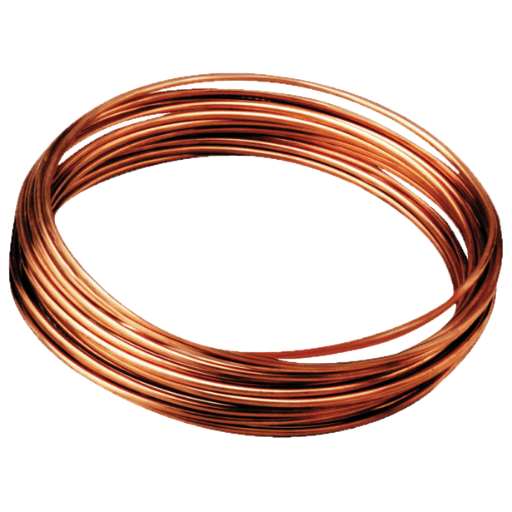
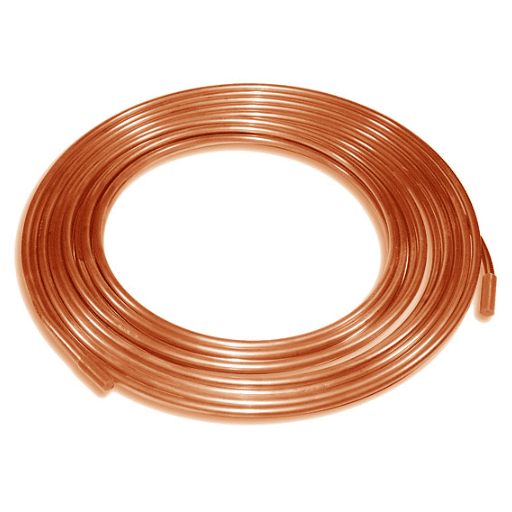
- Coiled Format: For certain applications, cupronickel tube is supplied in continuous coils up to 100+ meters. Coiled tube reduces field joints but requires specialized unrolling equipment during installation.
Zhongzheng supplies ASTM B111 cupronickel tube in straight lengths, U-bend configuration, and coiled format per order requirements. Cut-to-length tolerances of ±3 mm are available for precision applications upon request.
Applications & Industry Usage

Heat Exchangers and Condensers
The largest demand for cupronickel tube exists in heat exchangers. Shell-and-tube heat exchangers in power plants and chemical plants and HVAC systems use cupronickel tube for cooling water that contains chlorides and when the required service life exceeds the capabilities of copper and aluminum brass.
Power Plant Condensers: Steam turbine condensers represent one of the most demanding cupronickel applications. The large surface condensers operate with 20,000 to 50,000 tubes that use either seawater or cooling tower water for circulation. The standard material for most power plant condensers is C70600 90/10 whereas C71500 70/30 serves high-temperature applications and polluted cooling water systems.
Process Heat Exchangers: Chemical plants use cupronickel tube for product coolers and intercoolers and reboilers that handle seawater and brackish cooling water. Biofouling resistance enables this material to require less maintenance than carbon steel and stainless steel units.
HVAC Chillers: Commercial and industrial chillers use cupronickel tube for their evaporators and condensers in large facilities. The thermal conductivity of C70600 which ranges between 40 and 50 W/m·K enables effective heat transfer while its corrosion resistance enables extended operational life in open cooling tower systems.
Seawater Cooling Systems
Cupronickel tube dominates seawater cooling applications across multiple industries:
Marine Propulsion: Naval vessels and commercial ships use cupronickel for main engine cooling, auxiliary cooling, and firemain systems. The U.S. Navy has standardized on C70600 for seawater piping in surface ships, with documented service life exceeding 30 years.
Offshore Platforms: Oil and gas production platforms use cupronickel for seawater lift systems, cooling water circuits, and firewater systems. The combination of corrosion resistance and resistance to erosion from sand and silt makes cupronickel suitable for raw seawater service.
Coastal Industrial Plants: Power stations, refineries, and chemical plants located on coastlines use cupronickel tube in once-through cooling systems drawing seawater directly from the ocean. The biofouling resistance is particularly valuable in these continuous-flow applications.
Desalination Plants
Multi-stage flash (MSF) and multi-effect distillation (MED) desalination plants are major consumers of cupronickel tube. The combination of seawater, elevated temperatures (up to 120°C in brine heaters), and the critical need for reliability makes cupronickel the standard material choice.
Brine Heaters: The highest temperature zones in MSF plants use C71500 70/30 tube due to its superior resistance to elevated temperature corrosion. The 70/30 alloy withstands the combination of hot brine and steam heating without the stress corrosion cracking that affects stainless steels.
Heat Recovery Sections: Lower temperature stages typically use C70600 90/10 tube, providing a cost-effective solution where temperature and corrosion conditions are less severe.
Reverse Osmosis Plants: While RO plants operate at lower temperatures than thermal desalination, cupronickel is still used for high-pressure pump cooling, energy recovery heat exchangers, and product water post-treatment systems.
Marine and Shipbuilding
Beyond cooling systems, cupronickel tube finds application in various marine systems:
Sanitary Systems: Cupronickel’s resistance to seawater and biofouling makes it suitable for marine sanitary and sewage systems, though regulatory requirements may restrict its use in certain applications.
Bilge and Ballast Systems: Some vessel designs utilize cupronickel for bilge and ballast piping where corrosion resistance is prioritized over initial cost.
Heat Recovery: Waste heat recovery systems on ships use cupronickel tube for exhaust gas heat exchangers and economizers, handling the combination of hot exhaust and seawater cooling.
Offshore Oil & Gas
Offshore production facilities specify cupronickel for several critical services:
Seawater Injection: Secondary recovery operations that inject seawater into reservoirs use cupronickel tubing in heat exchangers cooling the injection water. The high chloride content of seawater and the need for reliability make cupronickel the standard choice.
Process Cooling: Offshore platforms use cupronickel tube bundles for compressor intercoolers, glycol dehydration unit coolers, and other process heat exchangers using seawater cooling.
Firewater Systems: Cupronickel is specified for fire pump cooling and firewater distribution piping on platforms where corrosion could compromise emergency systems.
Welding & Fabrication Considerations

Cu-Ni Welding Process Selection (GTAW, SMAW)
Cupronickel tube welding requires specific techniques to achieve sound, corrosion-resistant welds. The two primary processes used are:
Gas Tungsten Arc Welding (GTAW/TIG): GTAW is the preferred process for cupronickel tube welding, particularly for thin-wall heat exchanger tube and precision applications. GTAW provides:
- Precise heat input control
- Clean, spatter-free welds
- Excellent root bead control with backing gas
- Minimal post-weld cleaning required
Shielded Metal Arc Welding (SMAW/Stick): SMAW is used for thicker-wall piping applications and field welding where GTAW equipment is impractical. SMAW electrodes for cupronickel are available with flux formulations specifically designed for these alloys.
Process Parameters: Key welding parameters for cupronickel include:
- Heat input: Moderate (cupronickel has high thermal conductivity like copper)
- Interpass temperature: Maximum 150°C (302°F)
- Shielding gas: Argon or argon-helium mixture
- Backing gas: Argon purge for root pass protection
Filler Metal Recommendations (ERCuNi)
Welding cupronickel requires filler metal with composition matching or exceeding the base metal nickel content. AWS A5.7 ERCuNi (70/30 composition) is the standard filler metal for both C70600 and C71500 welding.
ERCuNi Composition: Approximately 70% copper, 30% nickel, with iron and manganese additions similar to the base metals. This composition ensures:
- Corrosion resistance matching the base metal
- Color match for cosmetic applications
- Mechanical properties compatible with the base metal
- Freedom from weld metal hot cracking
For C71500 70/30 base metal, ERCuNi filler provides matching composition. For C70600 90/10 base metal, ERCuNi filler provides slightly higher nickel content in the weld metal, which is acceptable and may even improve weld zone corrosion resistance.
Consumables for SMAW: AWS A5.6 ECuNi electrodes provide equivalent composition in stick electrode form. These electrodes operate with direct current electrode positive (DCEP) polarity.
Preheat and Interpass Temperature
Cupronickel welding generally requires no preheat for ambient temperature applications. However, specific guidelines should be followed:
Preheat: Not normally required for thicknesses under 6 mm (0.25 in.). For thicker sections (over 12 mm / 0.5 in.), a low preheat of 20-50°C may be beneficial to promote fusion and reduce thermal stresses.
Interpass Temperature: Maximum 150°C (302°F). Excessive interpass temperature can lead to:
- Grain growth and reduced ductility
- Oxidation of previously deposited weld metal
- Distortion of thin-wall tubing
Temperature should be monitored with contact pyrometers or temperature-indicating crayons. Allowing the weld to cool between passes improves weld quality and reduces distortion.
Post-Weld Cleaning Requirements
Cupronickel welds require thorough cleaning to remove oxidation and flux residues that could impair corrosion resistance:
Mechanical Cleaning: Stainless steel wire brushing removes surface oxidation and slag. Brushes must be dedicated to cupronickel/copper alloys — never use brushes previously used on carbon steel, which could embed iron particles and cause galvanic corrosion.
Chemical Cleaning: Pickling with acid solutions (typically nitric-hydrofluoric or sulfuric acid mixtures) removes heat tint and oxide scale from the heat-affected zone. Proper neutralization and water rinsing after pickling are essential.
Inspection: Cleaned welds should be visually inspected for cracks, lack of fusion, and oxidation. Dye penetrant inspection may be specified for critical applications to detect surface-breaking defects.
Cupronickel vs Alternative Materials

Cupronickel vs Titanium Cost Analysis
Titanium represents the ultimate corrosion resistance for seawater applications — but at a significant cost premium. A thorough comparison helps engineers make informed material selections:
Property Comparison: Cupronickel vs Titanium
| Property | C70600 Cupronickel | Grade 2 Titanium |
|---|---|---|
| Relative Material Cost | 1.0× (baseline) | 8-12× |
| Corrosion Rate (seawater) | 0.02-0.05 mm/year | <0.001 mm/year |
| Thermal Conductivity | 40-50 W/m·K | 17 W/m·K |
| Yield Strength (annealed) | 110 MPa | 275 MPa |
| Biofouling Resistance | Excellent (copper-based) | Poor (fouling accumulates) |
| Fabrication | Excellent | Difficult (special procedures) |
When Titanium is Worth the Premium:
- Extreme service life requirements (40+ years)
- Very high temperature seawater (>80°C)
- Severe erosion conditions
- Applications where any corrosion is unacceptable
- Thin-wall designs where strength-to-weight ratio matters
When Cupronickel is the Better Choice:
- Standard 20-30 year design life
- Ambient to moderate temperature seawater
- Applications where biofouling resistance matters
- Designs requiring field fabrication and modification
- Budget-constrained projects
The thermal conductivity advantage of cupronickel (2-3× higher than titanium) can enable smaller heat exchanger designs or provide better performance in the same footprint — an advantage often overlooked in pure corrosion comparisons.
Cupronickel vs Stainless Steel in Seawater
316L stainless steel is often considered for seawater applications due to its familiarity and lower initial cost. However, significant differences exist:
Property Comparison: Cupronickel vs 316L
| Property | C70600 Cupronickel | 316L Stainless |
|---|---|---|
| Corrosion in Seawater | Excellent, predictable | Risk of pitting, crevice corrosion |
| Stress Corrosion Cracking | Immune | Susceptible in warm seawater |
| Biofouling Resistance | Natural | Requires anti-fouling measures |
| Thermal Conductivity | 40-50 W/m·K | 15 W/m·K |
| Fabrication | Easy, forgiving | Requires careful weld procedures |
| Cost (tube) | 3-4× carbon steel | 4-6× carbon steel |
Critical Differences:
Chloride stress corrosion cracking (SCC) emerged as the main weakness of stainless steel when it faced seawater exposure. The 316L alloy begins to show SCC which causes it to experience sudden failure at temperatures above 60°C in environments containing chloride. The SCC-proof nature of cupronickel causes it to experience predictable uniform thinning which operators can detect and control.
The 316L alloy needs precise management of its welding heat input together with proper cleaning measures after welding to achieve effective corrosion protection. The welding process of cupronickel demonstrates greater tolerance because it can handle small changes in operational procedures without negative effects.
The biofouling advantage of cupronickel can be significant in continuous-flow applications. The seawater heat exchangers made from stainless steel need to undergo regular cleaning or chlorination procedures to prevent biological growth while cupronickel automatically protects against macrofouling.
The lifecycle value of cupronickel surpasses that of 316L in seawater applications which maintain temperatures above 30°C because both materials have similar initial costs.
Cupronickel vs Aluminum Brass
Aluminum brass (C68700, 76% Cu / 22% Zn / 2% Al) is a lower-cost alternative to cupronickel for seawater condensers. The comparison:
Property Comparison: Cupronickel vs Aluminum Brass
| Property | C70600 Cupronickel | Aluminum Brass |
|---|---|---|
| Corrosion Resistance | Superior | Good |
| Velocity Limit (max) | 3.5 m/s | 2.4 m/s |
| Dezincification Resistance | Excellent | Fair |
| Heat Transfer | Excellent | Excellent |
| Cost | 2.5-3× copper | 1.5-2× copper |
Aluminum brass performs adequately in clean seawater at moderate velocities. However, it is susceptible to dezincification in stagnant conditions and has lower velocity tolerance than cupronickel. For critical applications, polluted water, or high-velocity service, cupronickel provides better reliability.
Procurement & Quality Verification

Mill Test Report Requirements for Cu-Ni
The Mill Test Report (MTR) for ASTM B111 cupronickel tube must document:
Required MTR Data:
- Heat number and product identification
- Chemical composition (Cu, Ni, Fe, Mn, Zn, Pb — all elements per ASTM B111)
- Mechanical test results (tensile strength, yield strength, elongation)
- Dimensional inspection results (OD, wall, length)
- NDT method and results (eddy current, ultrasonic, or hydrostatic)
- Expansion or flattening test results
- Quantity and item description
- Standard compliance statement (ASTM B111)
Additional Documentation Available Upon Request:
- Third-party inspection reports (SGS, Bureau Veritas, TÜV)
- Certificate of compliance to specific project specifications
- Traceability documentation from raw material to finished product
- Specialized testing (corrosion testing, metallography)
Zhongzheng provides comprehensive MTR packages for cupronickel tube orders, including spectrographic analysis results and complete test documentation.
Third-Party Inspection Options
For critical projects, third-party inspection (TPI) by recognized agencies provides independent verification of quality:
Inspection Scope Typically Includes:
- Witness of chemical analysis
- Witness of mechanical testing
- Dimensional inspection verification
- NDT witness (eddy current, ultrasonic)
- Visual inspection and marking verification
- Documentation review and MTR certification
Common TPI Agencies:
- SGS (Société Générale de Surveillance)
- Bureau Veritas
- TÜV (Technischer Überwachungsverein)
- Lloyds Register
- DNV (Det Norske Veritas)
TPI inspection adds cost (typically 3-5% of material value) but provides the quality assurance documentation required by major EPC contractors and end-users. Zhongzheng supports TPI inspection at our facility with advance notification and inspection coordination.
Lead Times and MOQ Considerations
Standard Stocked Sizes (C70600):
- Common condenser tube sizes: 2-4 weeks
- Minimum order: Typically 500 kg per size
Non-Stocked / Custom Sizes:
- Custom dimensions: 6-10 weeks
- Minimum order: 1,000-2,000 kg (varies by size)
C71500 (70/30):
- Lead time typically 2-4 weeks longer than C70600
- Higher minimum orders due to production run economics
With TPI Inspection:
- Add 1-2 weeks for inspection scheduling and report preparation
Zhongzheng provides confirmed lead times at quotation stage, with milestone updates during production for project-scheduled orders. Expedited delivery options may be available for critical requirements.
FAQ
What is the difference between ASTM B111 and B466?
The ASTM B111 standard specifies seamless copper and copper-alloy tubing for condenser and heat exchanger applications which includes both cupronickel C70600 and C71500 alloys. The ASTM B466 standard applies to welded cupronickel piping made from UNS C70600 and C71500 materials which are used in various piping needs. The correct specification for heat exchanger tube applications is ASTM B111 while process piping requires ASTM B466 or B467.
Can cupronickel tube be used with titanium tube sheets?
Direct contact between cupronickel and titanium in seawater creates a galvanic couple with titanium as the cathode and cupronickel as the anode. This can accelerate corrosion of the cupronickel. Design solutions include:
- Using compatible tube sheet materials (cupronickel-clad steel or Monel)
- Installing dielectric gaskets or sleeves at tube-to-tubesheet joints
- Applying cathodic protection to the cupronickel
- Specifying thicker cupronickel tube wall to accommodate some galvanic corrosion
What is the maximum design velocity for cupronickel tube?
The maximum design velocity for the cupronickel tube reaches its peak at 6.0 m/s. C70600 90/10 cupronickel is generally limited to 3.5 m/s (11.5 ft/s) maximum velocity in seawater. The material will experience increased erosion rate when operating above this speed. C71500 70/30 has slightly better velocity tolerance up to approximately 4.0 m/s. For high-velocity applications consider increasing wall thickness or selecting a more erosion-resistant material.
What happens to cupronickel when it is exposed to polluted seawater?
The presence of hydrogen sulfide and ammonia and organic contaminants makes polluted seawater more corrosive than clean seawater. C70600 experiences faster corrosion rates when it is subjected to highly contaminated environments. C71500 70/30 offers superior protection against polluted water which makes it suitable for use in harbor environments and brackish water and situations with changing or contaminated water conditions.
Can a cupronickel tube be expanded into tube sheets?
Expandability into tube sheets stands as the primary function of cupronickel tube according to its design. The ASTM B111 standard requires expansion tests to confirm that tubes can be expanded without developing cracks. The H55 temper (light-drawn and annealed) provides the optimal balance of strength and ductility for tube expansion. Both roller expanders and hydraulic expansion equipment work effectively with cupronickel materials.
What causes pitting in cupronickel, and how can it be prevented?
Cupronickel is highly resistant to pitting in flowing seawater, but pitting can occur under specific conditions:
- Stagnant seawater with sulfide contamination
- Deposits or biofilms creating crevice conditions
- Galvanic contact with less noble materials
Prevention measures include:
- Ensuring continuous flow (avoid stagnant conditions)
- Maintaining clean surfaces (prevent deposit accumulation)
- Designing systems to avoid crevices
- Using impressed current or sacrificial anode cathodic protection
How long does cupronickel tube last in seawater service?
With proper design and operation, C70600 cupronickel tube typically provides 20-30+ years of service in seawater condensers and heat exchangers. Some installations have exceeded 40 years. Service life depends on:
- Water velocity (within design limits)
- Water quality (clean vs. polluted)
- Temperature (lower is better)
- Design details (avoiding crevices, galvanic couples)
- Maintenance practices (periodic cleaning)
Conclusion
The seawater heat exchanger system requires both corrosion resistance and operational reliability which the cupronickel tube provides. The selection of the right grade C70600 90/10 for standard seawater cooling and C71500 70/30 for elevated temperatures and severe conditions functions as the essential process for accurate specification.
Key specification takeaways:
- Specify C71500 over C70600 when seawater temperature exceeds 50°C or water quality is poor
- ASTM B111 is the governing specification for heat exchanger tube
- Control maximum velocity to 3.5 m/s (C70600) or 4.0 m/s (C71500) to prevent erosion
- Use ERCuNi filler metal for welding; no preheat required for thin-wall tube
- Require MTR documentation including chemical analysis and NDT results
Zhongzheng manufactures ASTM B111 cupronickel seamless tube in C70600 and C71500 grades at our Wenzhou facility, with full MTR documentation including spectrographic analysis, eddy current testing, and hydrostatic pressure verification. Our technical team contacts customerswithin 24 hours after they submit their specification inquiries, which include required heat exchanger tube specifications.