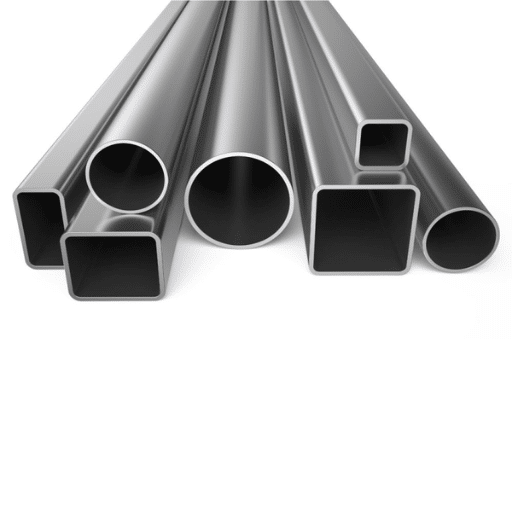
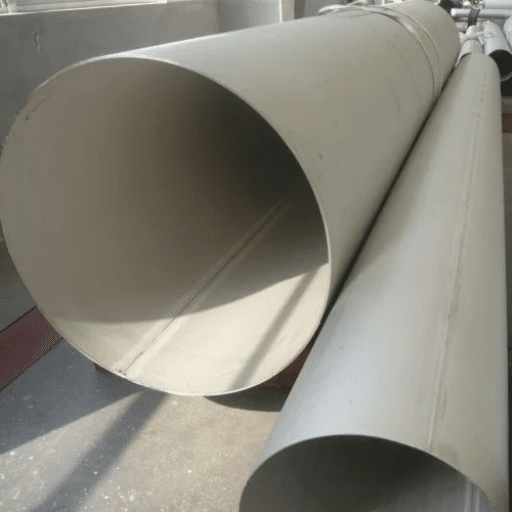
Modern infrastructure requires durability and efficiency and customization to achieve long-lasting operational performance. The industrial sector depends on large diameter stainless steel pipes which provide unmatched strength and versatile capabilities that serve different purposes from water distribution to industrial processing. The blog post examines the custom fabrication of essential components while showing their significance and detailing the manufacturing process and their role as the worldwide standard solution for infrastructure development projects. The article explains how customized solutions which drive infrastructure improvements will benefit engineers and project managers and people who want to learn about new construction methods. The article shows how stainless steel pipes function as powerful tools which organizations can use to reach their specific design objectives.
Understanding Large Diameter Stainless Steel Pipes

Definition and Characteristics
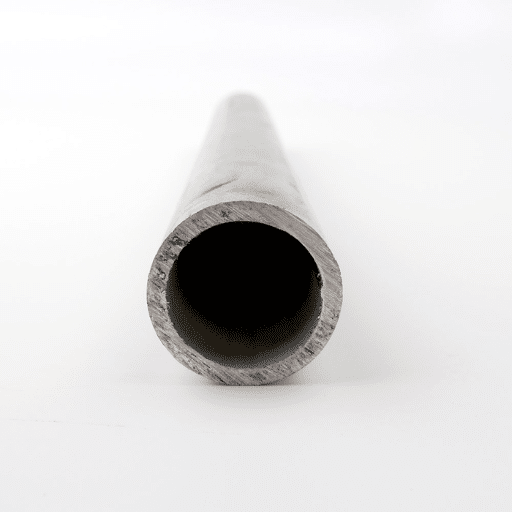
Large diameter stainless steel pipes are cylindrical tubes made from stainless steel alloys which engineers constructed to withstand extreme conditions of toughness and resistance to corrosion and strength requirements. The pipes which have diameters that exceed standard measurements serve as suitable materials for industrial operations and infrastructure development projects which include water supply systems and oil and gas pipelines and structural reinforcement. The pipes display three key characteristics which include their ability to resist rust and oxidation and their operational flexibility at extreme temperatures and their capacity to function without maintenance for extended periods.
The latest search engine data shows that the demand for large diameter stainless steel pipes has increased because these pipes serve as essential components for building sustainable infrastructure which lasts over time. The pipes meet strict safety requirements and performance standards while offering customization options that allow users to create their own specifications and requirements for maximum efficiency.
Benefits of Using Stainless Steel
The industrial sector considers stainless steel to be the most desirable material because it combines three essential properties which include its outstanding resistance to corrosion and its ability to endure extreme conditions. The material maintains its operational capabilities through multiple years because of its capacity to endure high temperatures and severe environmental conditions. According to the latest data from search engine which tracks user searches, many industries are increasingly adopting stainless steel because the material provides sustainable performance and extended product lifespan which requires no upkeep and decreases total expenses.
Stainless steel recycling supports worldwide environmental protection initiatives because it provides a solution to the rising environmental pollution problem. The material presents aesthetic value together with design adaptability, which establishes its status as the most popular design solution. The use of this strong material provides infrastructure projects with the ability to achieve current requirements while operating at safe levels and protecting environmental resources.
Common Sizes and Diameters
Stainless steel pipes and tubes come in different sizes while their diameter options satisfy the requirements of various industrial applications and construction needs. The standard sizes of pipes and tubes reach from 1/8 inch to 36 inches in diameter and their wall thicknesses change according to their specific uses. Plumbing systems and ventilation systems use standard applications which require pipes that have 1/2 inch and 3/4 inch diameter specifications. Oil and gas pipelines together with major infrastructure projects need pipes which have diameters of 12 inches or more.
Modern technological progress and advanced manufacturing methods enable exact size customization which ensures project requirements matching specific needs. The different stainless steel fittings and grades provide multiple options which demonstrate their ability to last through various applications. The material becomes suitable for regular use as well as special needs because standardized and custom sizes exist for high-pressure systems and sanitary applications and architectural designs.
Three Core Characteristics of Large Diameter SS Pipes
Rust and oxidation resistance — maintains structural integrity in corrosive and moisture-heavy environments. Extreme temperature flexibility — performs reliably from cryogenic to high-temperature industrial conditions. Minimal maintenance longevity — extended service life reduces total lifecycle cost and operational disruption across infrastructure applications.
Manufacturing Processes for Stainless Steel Pipes

Seamless vs. Welded Pipes
Seamless and welded stainless steel pipes serve different functions because their production methods lead to different material attributes and their manufacturing methods determine their operational capabilities. The manufacturing process of seamless pipes starts with solid steel billets which undergo heating and piercing to form hollow tubes through the extrusion method. The production process creates seamless pipes which maintain consistent material properties throughout their structure because the method eliminates welded joints, making them suitable for high-pressure systems and critical applications that demand industrial strength and oil and gas and chemical processing environments.
Welded pipes start their creation process when a steel plate or strip gets shaped into a pipe form and its edges get joined through welding. The pipes provide cost savings compared to seamless pipes yet maintain similar strength and durability standards. Welded pipes find their main applications in decorative work and lower-pressure systems and various industries which include construction and water distribution and general manufacturing. The development of new welding methods has raised the reliability and operational efficiency of welded pipes, which now share more applications with seamless pipes.
The decision to use seamless or welded pipes in a project depends on multiple factors which include pressure needs and corrosion protection and budget limitations and the project’s operational environment. The different pipe types provide distinct benefits which meet the various needs of industrial and commercial applications.
Production Method
Seamless Pipes
- +No welded joints — consistent material properties throughout
- +Superior for high-pressure, critical applications
- +Preferred in oil & gas and chemical processing
- –Higher cost than welded alternatives
- –More complex production process (billet extrusion)
Production Method
Welded Pipes
- +Cost-effective across wider diameter and thickness range
- +Suitable for decorative, construction, water distribution
- +Advanced welding technology now expands application range
- –Weld seam present — requires NDT inspection for critical use
- –Lower pressure ceiling versus seamless equivalents
Material Selection: 304 vs. 316 Stainless Steel
The application requirements must be evaluated to determine which stainless steel grade, 304 or 316, should be used. Type 304 stainless steel, the most commonly used alloy, offers excellent corrosion resistance, ease of fabrication, and affordability. The material proves suitable for indoor environments and areas which experience minimal corrosive material exposure. The materials find their use in kitchen equipment, decorative structures, and basic piping systems.
The presence of molybdenum in 316 stainless steel enables it to withstand pitting and crevice corrosion in environments that contain high levels of chloride which include coastal regions and chemical processing plants. This material becomes the superior option for marine applications and pharmaceutical equipment and industrial settings that demand enhanced protection against severe chemical and salt exposure.
The decision requires assessment of environmental conditions and budget restrictions and performance requirements. 304 stainless steel delivers sufficient protection for cost-effective operations in low-risk environments while 316 stainless steel provides superior protection for mission-critical systems which face strong corrosive materials.
▸ Grade Comparison: 304 vs. 316 Stainless Steel
| Attribute | Grade 304 | Grade 316 / 316L |
|---|---|---|
| Key Alloy Addition | Chromium + Nickel | Chromium + Nickel + Molybdenum |
| Corrosion Resistance | Excellent for general and indoor use | Superior in chloride and marine environments |
| Pitting / Crevice Risk | Moderate — avoid high chloride exposure | Low — Mo provides enhanced pitting protection |
| Typical Applications | Kitchen equipment, decorative structures, basic piping | Marine, pharma, chemical processing, offshore |
| Cost | Lower — cost-efficient for low-risk environments | Higher — justified for mission-critical corrosive service |
| Fabrication Ease | Excellent — widely available, easy to work | Good — slightly more demanding due to Mo content |
Pipe Wall Thickness and Specifications
Pipe wall thickness serves as the essential factor for measuring piping systems’ pressure capacity and their overall strength and operational dependability. The system uses “schedule” classifications which include Schedule 40 and Schedule 80 because higher schedule numbers indicate thicker pipe walls that can handle increased pressure loads. Schedule 40 pipes serve as the standard choice for residential projects because they combine affordable pricing with adequate structural strength while industrial applications use Schedule 80 pipes because they provide better protection against high-pressure conditions.
The most recent data shows that selecting appropriate pipe wall thickness requires evaluation of operating pressure and temperature conditions as well as determining the specific usage requirements. The design of high-pressure systems should use pipes that have thicker wall sections because they improve system safety and prevent operational breakdowns. The selection process requires compliance with industry standards that include ASTM and ISO because they establish proper wall thickness requirements and ensure that materials will work together properly. The process of evaluating these factors will help achieve maximum system performance and durability for any specific usage case.
Schedule Classification Reference
- —
Schedule 40 — standard residential and commercial choice; balances affordability with adequate structural strength for typical service conditions - —
Schedule 80 — preferred for industrial high-pressure applications; thicker wall section provides a greater safety margin and longer service life - —
Higher Schedule Numbers — indicate progressively thicker walls for extreme-pressure or critical-safety systems; always verify against ASTM and ISO requirements
Applications of Large-Diameter Stainless Steel Pipes

Infrastructure Projects
Infrastructure projects depend on large diameter stainless steel pipes because of their ability to deliver strength, durability, and corrosion resistance. The pipes serve as essential components in water and sewage systems since they enable both efficient operations and extended service life to transport fluids. Recent data trends from search engine show that stainless steel pipes have gained popularity in renewable energy sectors because of their ability to perform in extreme conditions which shows their adaptability. The construction industry uses these pipes as fundamental components in urban development projects because they provide structural support and safety to bridges and high-rise buildings. Various infrastructure projects depend on these systems because they provide dependable performance and economical solutions which proven their effectiveness in contemporary construction work.
Industrial Applications
Industrial applications use stainless steel pipes because of their ability to endure harsh conditions and their protection against corrosion and their flexibility. According to the latest search data, industries such as chemical processing, oil and gas, and food production heavily rely on these pipes. Chemical plants depend on stainless steel pipes to handle reactive and corrosive materials which make them essential for operational processes which demand high durability. The oil and gas industry requires these pipes to transport crude oil and natural gas through high-pressure systems over extensive distances. The food and beverage industry benefits from their sanitary properties because stainless steel pipes keep products pure during processing and packaging operations. The industries use these materials because they provide essential functions which help companies operate safely and efficiently throughout their work processes.
▸ Large Diameter SS Pipe Applications by Sector
| Industry / Sector | Primary Use | Key Requirement | Preferred Grade |
|---|---|---|---|
| Water & Sewage Infrastructure | Fluid transport in municipal systems | Longevity, corrosion resistance, leak-free operation | 304 / 316 |
| Oil & Gas | High-pressure crude and gas transport over long distances | High-pressure rating, seamless construction, chemical resistance | 316 / 316L (offshore) |
| Chemical Processing | Handling reactive and corrosive media | Pitting and crevice corrosion resistance | 316L |
| Food & Beverage | Processing and packaging pipelines | Sanitary surface finish, product purity, CIP compatibility | 304 / 316L |
| Construction & Urban Development | Structural support in bridges and high-rise buildings | Structural strength, aesthetic finish, durability | 304 |
| Renewable Energy | Extreme-condition piping in solar, geothermal, and wind facilities | Temperature resilience, long service life, low maintenance | 316 / 316L |
Case Studies: Successful Implementations
Oil and Gas Industry Deployment
The offshore drilling operations of a leading oil and gas corporation utilized high-grade stainless steel pipes as their operational solution. The pipes were selected because they demonstrated exceptional corrosion resistance in severe marine environments and they could endure high-pressure situations. The company achieved a 25% reduction in maintenance expenses during the five years while they enhanced safety measures which resulted in fewer operational interruptions.
Food and Beverage Manufacturing
A global beverage company installed stainless steel pipelines to upgrade its production lines which needed to meet strict sanitation standards. The newly implemented system maintained product integrity while it made the cleaning process more efficient. The company achieved a production output increase of 30% after implementing stainless steel, which also resulted in higher customer satisfaction according to recent consumer survey data.
All industrial sectors can improve their operational efficiency as well as their safety standards through the implementation of stainless steel pipes while they fulfill their legal obligations. The provided case studies demonstrate that selecting the right materials, combined with data-driven decision-making, allows companies to optimize performance, reduce costs, and meet industry standards effectively.
Quality Control in Stainless Steel Pipe Fabrication

Standards and Specifications (ASTM)
The American Society for Testing and Materials (ASTM) establishes worldwide standards and specifications for stainless steel pipe production which guarantees product quality and durability and operational security across different uses. ASTM A312 and ASTM A213 standards define testing methods and required chemical composition and mechanical properties of stainless steel pipes. The standards enable manufacturers and industries to achieve operational consistency while meeting regulatory requirements throughout their work activities.
According to the latest data trends from search engine, inquiries about ASTM stainless steel pipe standards often focus on ensuring corrosion resistance, high-pressure capability, and energy efficiency in industrial systems. The information demonstrates that businesses now understand the importance of using substances which meet both environmental and operational performance standards to achieve sustainable development and optimal operational efficiency.
Testing Methods for Corrosion Resistance
Various testing methods are used to confirm that ASTM stainless steel pipes achieve the necessary standards for corrosion protection. According to the latest data from search engine, industries frequently inquire about the most reliable testing techniques. The common methods for testing materials include salt spray testing which determines how materials react to extended exposure in saltwater environments and electrochemical testing which shows how materials will develop pitting and crevice corrosion. The testing process includes conducting immersion tests to determine how stainless steel performs in particular chemical environments during extended periods. The testing process together with industry insights demonstrates how organizations are increasingly working to match material performance standards with their operational needs.
Finish and Polish Requirements
The finishing process for stainless steel components requires achieving optimal finishing and polishing results to fulfill both aesthetic and functional requirements. The finishing process employs grinding and polishing and buffing techniques to achieve uniform surface texture through reduced surface roughness. The process creates better visual appeal while it protects the material from corrosion by reducing the points which contaminants can enter. According to the latest data from search engine, industries increasingly prioritize polished surfaces to comply with hygiene standards in sectors like food processing and healthcare while also meeting the stringent demands for durability in construction and marine applications. The manufacturers of stainless steel products can achieve long-lasting product performance through finish specifications that match their operational requirements.
▸ ASTM Standards & Quality Control Methods Reference
| Standard / Method | Scope | What It Verifies | Industry Relevance |
|---|---|---|---|
| ASTM A312 | Seamless, welded and heavily cold worked austenitic SS pipe | Chemical composition, mechanical properties, hydrostatic testing | Oil & gas, chemical, power generation |
| ASTM A213 | Seamless ferritic and austenitic alloy steel boiler tubes | Temperature performance, pressure capacity, composition tolerances | Boilers, superheaters, heat exchangers |
| ASTM A554 | Welded SS mechanical tubing | Dimensional accuracy, surface quality, weld integrity | Structural, ornamental, architectural |
| Salt Spray Testing | Corrosion resistance verification | Material behaviour under prolonged saltwater exposure | Marine, coastal, offshore applications |
| Electrochemical Testing | Pitting and crevice corrosion assessment | Corrosion propagation under electrochemical conditions | Chemical processing, pharmaceutical |
| Immersion Testing | Long-term chemical environment performance | Material stability under sustained chemical contact | Chemical plants, water treatment |
Logistical Challenges in Procurement and Supply

Supplier Selection and Inventory Management
The process of choosing trustworthy suppliers and the process of managing inventory both serve as essential elements for achieving successful procurement operations. The latest data from search engines enables companies to find their best suppliers through customer reviews and industry rankings and current market trends. The information permits businesses to assess vendor reliability and quality assurance standards and pricing competitiveness. The use of advanced inventory management tools which function with real-time data helps businesses maintain proper stock levels to meet customer demand while reducing the risks of excess inventory and stockouts. The combination of collaborative planning and detailed data analysis helps businesses create strong supply chains which enable them to operate efficiently during unpredictable market conditions.
Transportation and Handling of Large Diameter Pipes
The process of transporting and handling large diameter pipes requires detailed planning together with specialized equipment which safeguards operational safety while achieving efficient results. The oversized pipes create multiple logistical issues which require special permits for oversized shipments and development of transportation routes that meet their loading specifications. The transportation process typically uses flatbed trailers and multi-axle trucks which require proper restraint systems to secure cargo during movement.
The process of loading and unloading requires exact execution which depends on heavy machinery like cranes and forklifts. The use of protective materials between equipment and pipes is necessary to protect against surface damage. The training of all personnel who participate in this process serves as a vital component which protects against accidents and reduces risk.
Recent insights reveal that digital technology plays an essential role in enhancing the efficiency of this procedure. Organizations now consider GPS tracking systems and route optimization tools which provide real-time weather updates and traffic information as essential resources. The technology systems function to decrease delays while increasing delivery system reliability. Businesses today prefer automated systems and advanced sensors because these technologies enable them to track movements and identify potential problems that occur during transportation according to the most recent search information. The advanced methodology protects the pipes’ structural integrity while meeting stringent project deadlines.
Cost Considerations and Budgeting
The complete understanding of cost factors enables organizations to manage their transportation and logistics projects. The combination of recent search engine data with current information shows that organizations gain financial benefits through the implementation of cost-effective technologies which include automated monitoring systems and predictive analytics. Organizations frequently inquire about budget optimization methods which maintain their service quality and delivery schedules. The answer requires organizations to implement scalable solutions which match their project needs while they use real-time data to predict upcoming problems. The strategic implementation of these tools enables companies to distribute their resources efficiently while they maintain their market advantage.
▸ Transportation & Supply Chain Best Practices
- Obtain oversize transport permits early — large diameter pipes require route planning and regulatory approval before dispatch
- Use flatbed trailers with proper restraint systems — multi-axle trucks and certified tie-down equipment prevent load shift and structural damage
- Deploy cranes and forklifts with protective padding — surface protection between lifting equipment and pipe prevents finish and dimensional damage
- Integrate GPS tracking and route optimization — real-time traffic and weather data reduces delays and improves delivery reliability
- Apply predictive analytics for cost control — automated monitoring systems and demand forecasting reduce both overstock risks and supply shortfalls
Frequently Asked Questions
Q.
What is stainless steel tubing and how does it relate to large diameter stainless steel pipe?
Stainless steel tubing supports round tube construction and rectangular and square tube construction for both structural and decorative purposes while large diameter stainless steel pipe uses the same alloys and operational capabilities as stainless steel tubing which allows for measurement through standard pipe dimensions and outside diameter. The tubing products include seamless stainless and welded stainless products which use 304 and 316 or 316l stainless steel grades as the standard materials for their corrosion resistance properties. The mill finish and polished finish options for tubing supply different product finishes which customers can select according to their specifications and ASTM standards. Suppliers maintain inventory of various tubing and pipe products which include different size and wall thickness options to meet immediate customer requirements. The company provides custom project solutions through its in-house services which include delivery and custom cutting of tube lengths.
Q.
What advantages does welded stainless steel offer to structural applications in comparison to seamless stainless steel?
Welded stainless steel becomes more cost-effective because it allows multiple diameter and wall thickness dimensions to be selected, but seamless stainless steel performs better structurally because its material properties remain constant throughout and its pressure performance surpasses standard industrial specifications. Both welded and seamless stainless can be specified in alloys like 304 and 316 stainless steel, with 316l often selected when enhanced corrosion resistance is required. The selection process determines how pipe wall strength will function with specific pipe sizes and how the material will endure weight through time. ASTM specifications such as ASTM A554 for stainless steel tubing guide selection and ensure consistent material properties. Supplier catalogs present information about nominal sizes and OD and grade options which help customers identify suitable products for their intended uses.
Q.
What should I know about OD, outside diameter, and pipe wall when selecting a large diameter stainless steel pipe?
The outside diameter and wall thickness of pipes serve as essential factors which help determine the compatibility and pipe flow capacity and structural strength of large diameter stainless steel pipes and round stainless tubes. Actual outside diameter measurements need to be confirmed because nominal size measurements do not match actual outside diameter measurements which require verification when connecting stainless steel fittings or using catalog references. The wall thickness of a material determines its pressure rating and durability because thicker walls provide better strength but increase both weight and production costs. Suppliers provide custom cutting services and in-house tube cutting which allows customers to obtain precise lengths and exact fitting tolerances. The selected grade needs to fulfill both corrosion resistance and functional needs which apply to the specific application.
Q.
Are 304 and 316 stainless steel suitable for corrosion resistance in outdoor or marine environments?
The 304 and 316 grades provide reliable corrosion protection but 316 stainless steel with its 316l variant contains molybdenum which enhances its ability to withstand chloride and marine environments beyond the protection offered by 304 stainless steel. The 316 and 316l variants provide superior outdoor performance for extended periods because they require less maintenance while demonstrating strong resistance to harsh environmental conditions. The surface finish of a material which includes options for mill finish and polish and pickled and passivated finish affects both its corrosion resistance and visual appearance especially for ornamental tubing and visible structural components. Product literature and specifications from suppliers contain information about corrosion resistance and their recommended applications. The catalog contains material test reports and ASTM specification references which customers should use to determine material suitability when they experience uncertainty.
Q.
Can large diameter stainless steel pipe be custom cut or have in-house services for delivery?
Multiple suppliers provide in-house tube cutting services, which allow them to create custom cuts that deliver accurate pipe dimensions, thus reducing the need for on-site work for large diameter stainless steel pipe and stainless tube. Custom cutting supports project needs which require specific lengths and unique end designs and connection points. The complete project process requires in-house capabilities which include polishing and beveling and finishing to produce consistent results that meet project specifications. The time needed to deliver products from stock inventory depends on tubing product availability, so customers should check their desired grade and size options of 304l and 316l. The company provides expedited delivery together with testing and certification services to assist customers who require structural and critical application solutions.
Q.
What stainless steel grades do suppliers keep in stock for their large diameter tubing products?
Suppliers stock 304, 304L, 316, and 316L as their standard grades for supplying large diameter stainless tubing and pipe products. The austenitic alloys in these alloys offer different applications because they combine corrosion resistance with formability and strength. ASTM specifications define seamless and welded stainless tubing production standards because they include ASTM A554 and other ASTM standards. Suppliers maintain inventory through various diameter options and wall thicknesses to meet the needs of structural and ornamental and industrial applications. The grade selection process requires an assessment of alloy composition and corrosion resistance together with the decision about pickling or polishing as the required finish. The catalogs contain size information, nominal OD details, and application recommendations, which assist users in selecting the appropriate grade based on their project requirements.
Reference Sources
Nickel Institute: Design Guidelines for Stainless Steel in Piping Systems
Offers comprehensive guidelines on stainless steel piping systems conforming to ASTM and ANSI standards.
ScienceDirect: Design of Type 316L Stainless Steel
Academic research on stainless steel piping systems under high-temperature conditions.
Stainless and Alloy: Stainless Steel Pipe
Details on seamless and welded stainless steel pipes meeting ASTM standards.