Stainless steel is usually the top choice for materials in industrial, medical, or even domestic use when it comes to various properties such as durability, rust resistance, and good look. Out of all the stainless steel types, the 316 stainless steel is very often picked due to its remarkable ability not only to withstand bad environments but also to resist chemical attacks. Yet, there is more than one question that comes to mind: what about the magnetism of 316 stainless steel? The reason for working out the magnetic character of stainless steel is simply that it is a basic property for engineers, producers, and users to know since it dictates to a large extent the material’s application. This article explores the scientific and technical aspects of the magnetic properties of 316 stainless steel where we will also discuss what makes it different and how its magnetic behavior may or may not be important depending on the application.
Overview of Stainless Steel
What is Stainless Steel?
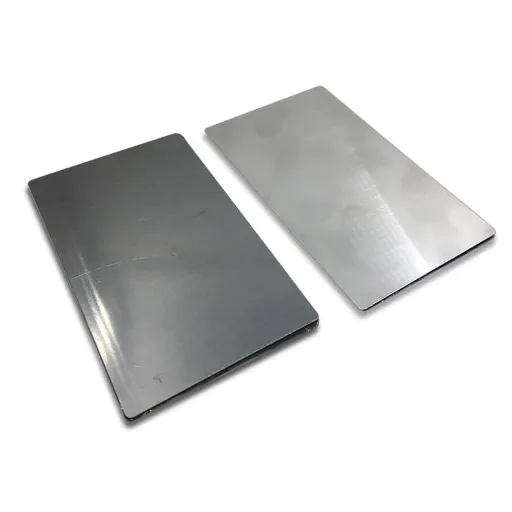
Stainless steel is an alloy that is not only flexible but also strong. It mainly consists of iron, carbon, and a minimum of 10.5% chromium. Chromium addition is the reason behind the rustproof nature of stainless steel as it develops a very thin coating of oxide on its surface which is a way of protecting the steel against rust and discoloration. Different grades of stainless steel and the use of different elements like nickel, molybdenum, and manganese in different amounts may have an effect on the strength, life span, and resistance to harsh conditions.
Key Components of Stainless Steel
- Iron: The primary base metal of the alloy
- Chromium (minimum 10.5%): Creates protective oxide layer for corrosion resistance
- Nickel: Enhances corrosion resistance and stabilizes austenitic structure
- Molybdenum: Improves resistance to pitting and crevice corrosion
- Manganese & Carbon: Contribute to strength and formability
There are several types of stainless steel which include austenitic, ferritic, martensitic, and duplex. Its non-reactive property, hygienic features, and high-temperature resistance put stainless steel at the top in a variety of industries: it can be found in the medical, food, and even manufacturing industry. The compound of practicality and durability has made this amazing material part and parcel of our daily lives.
Types of Stainless Steel
Stainless steel is divided into several main types according to its microstructure and the composition of alloys, each with unique characteristics that are suitable for different applications:
Austenitic Stainless Steel
The most popular type with a very high percentage of chromium and nickel, offering great weldability and corrosion resistance. Mostly non-magnetic and used in cookware, chemical apparatus and architectural designs.
Common Grades: 304, 316
Ferritic Stainless Steel
Known for good corrosion resistance and being less expensive. Has higher chromium but lower nickel compared to austenitic types. Magnetic in nature and used in automotive parts and household appliances.
Common Grades: 409, 430
Martensitic Stainless Steel
Associated with strength and hardness but moderate corrosion resistance. Magnetic and heat-treatable. Used for items requiring high mechanical strength like knives, tools, and turbine blades.
Common Grades: 410, 420
Duplex Stainless Steel
Made of austenitic and ferritic microstructures, highly resistant to stress corrosion cracking. Combines high strength with excellent corrosion resistance. Used in chemical processing and offshore construction.
Common Grade: 2205
Precipitation-Hardening Stainless Steel
Designed for very high strength through heat treatment while maintaining corrosion resistance. Used in aerospace components, shafts, and molds where extreme durability is required.
Common Grade: 17-4 PH
Common Uses of Stainless Steel
Stainless steel is a generally applicable material that is considered for its mechanical strength, resistance to corrosion, and durability; hence, it is a must-have material in most industries. The following are its most prevalent applications:
Industry Applications
- Construction and Architecture: Long-lasting material used extensively in structural systems, cladding, and roofing applications. Famous structures like the Chrysler Building in New York feature stainless steel in their design
- Kitchenware and Appliances: Cutlery, cookware, and appliances in the food and beverage sector. Non-reactive property ensures it doesn’t affect taste, with easy-to-clean surfaces assuring hygiene
- Medical and Surgical Tools: Most commonly used for surgical instruments, implants, and hospital equipment. Biocompatibility and resistance to sterilization processes make it essential for healthcare
- Automotive and Transportation: Components in exhaust systems, trims, and structural elements. Resistance to heat, corrosion, and impact guarantees vehicle durability and safety
- Energy and Heavy Industries: Extensively used in oil drilling, chemical processing, power plants, and water treatment where high temperatures and harsh environments are the norm
- Consumer Products: Watches, jewelry, and electronics where sleek appearance and corrosion resistance merge aesthetics with functionality
Understanding Magnetic Properties
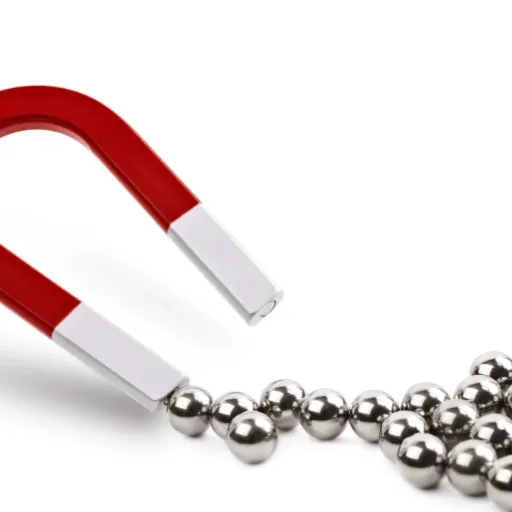
What Gives a Substance Its Magnetism?
The magnetic properties of a material depend on the behavior of electrons, or more precisely, upon their arrangements and charges in the atomic structure. The existence of magnetism is dependent on the movement of the electrons, magnetic domains, the coupling of these domains and electrons, and the net magnetic field that develops as a result. When most tiny domains have their magnetizations in the same direction, the material creates a magnetic field.
Classification of Magnetic Materials
- Ferromagnetic: Materials with strong magnetic properties (examples: iron, cobalt, nickel)
- Paramagnetic: Materials only somewhat magnetized when located in a magnetic field
- Diamagnetic: Materials that are repelled by magnetic fields
Knowledge about these constituents is very important for an assortment of applications, spanning the design of electric motors to very sophisticated medical imaging technology.
Types of Magnetism
| Type | Examples | Applications |
|---|---|---|
| Ferromagnetic | Iron, cobalt, nickel | Electric motors, transformers, data storage units |
| Paramagnetic | Aluminum, platinum | MRI machines where temporary magnetism is desirable |
| Diamagnetic | Copper, lead, water | Magnetic levitation technology (maglev trains) |
| Antiferromagnetic | Certain metal oxides | Spintronic devices |
| Ferrimagnetic | Magnetite | Magnetic ceramics, microwave devices |
Magnetic vs. Non-Magnetic Materials
A magnetic material is something that demonstrates its magnetic properties because of the internal alignment of its magnetic domains. On the other hand, non-magnetic materials are substances in which no magnetism can be observed, as their magnetic domains are either missing or randomly oriented, canceling out any magnetic effect.
Key Distinctions
Magnetic Materials: Examples include iron, nickel, and cobalt, commonly used for producing magnets, electric motors, and transformers. These materials possess unpaired electrons that spin on their axes, thereby producing a net magnetic moment.
Non-Magnetic Materials: Examples include wood, glass, and most plastics. These substances have paired electrons that cancel each other out magnetically. Knowledge of these distinctions is of utmost importance while designing devices where one requires magnetism or protection from magnetic interference for sensitive equipment.
316 Stainless Steel: Composition and Characteristics
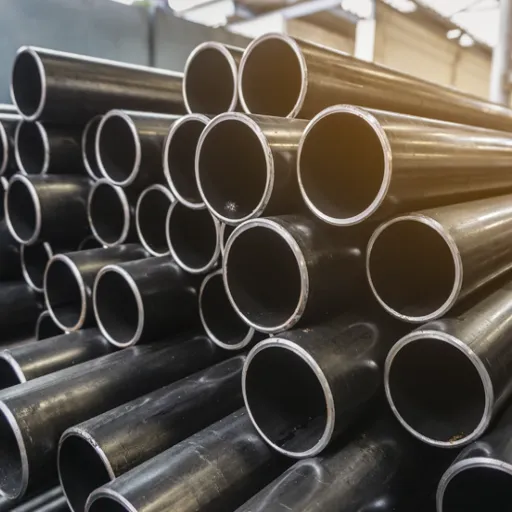
Understanding 316 Stainless Steel
The 316 stainless steel is a molybdenum-bearing austenitic stainless steel having tremendous corrosion resistance and adaptability. Mostly composed of iron, with key alloying elements including:
| Element | Percentage Range | Purpose |
|---|---|---|
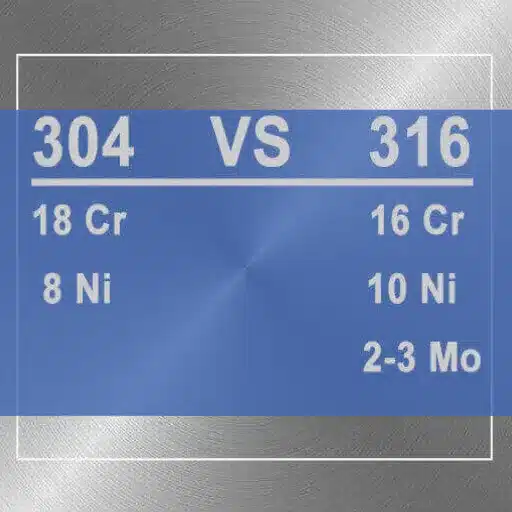
| Chromium | 16-18% | Corrosion resistance and oxide layer formation |
| Nickel | 10-14% | Stabilizes austenitic structure, reduces magnetism |
| Molybdenum | 2-3% | Enhances resistance to pitting and crevice corrosion |
| Manganese, Silicon, Carbon | Trace amounts | Contributes to mechanical properties and formability |
The beneficial addition of molybdenum enhances the resistance of 316 stainless steel against pitting and crevice corrosion, especially in chloride-rich environments, hence making it ideal for marine, chemical, and pharmaceutical industries. Being equipped with good mechanical properties, 316 SS is commonly used in industries requiring exposure to rugged conditions, as in medical instruments, food processing equipment, and marine hardware.
Key Characteristics of 316 Stainless Steel
Outstanding Properties
- Exceptional Corrosion Resistance: Demonstrates excellent resistance to corrosion, especially under chloride-rich atmospheres and acidic surroundings. Molybdenum present retards pitting and crevice corrosion with application areas widened to marine and severe industrial environments
- Extreme-Temperature Performance: Offers durability in environments up to 800°C or even 815°C with almost no concern over strength deterioration—accordingly, 316 is suitable for furnaces, heat exchangers, and high-temperature environments
- Hygienic Quality: Smooth surface finish and resistance to oxidation results in the advantage of cleanliness, making it ideal for medical instruments, food processing equipment, and pharmaceutical industries
- Excellent Welding and Forming: Has excellent weldability and fabrication properties allowing complex components to be conveniently made with no compromise in structural strength
- Aesthetic Qualities: Attractive, polished finish widely used for architectural and ornamental applications
- Longevity and Durability: Resistance to corrosion, wear, and harsh conditions makes it an attractive long-term choice, reducing maintenance and replacement expenses over time
Comparison: 316 vs. 304 Stainless Steel
316 and 304 are among the most common grades of stainless steel, each with unique trait sets. Both are strong, corrosion-resistant and quite versatile, but there are important differences to consider.
| Property | 304 Stainless Steel | 316 Stainless Steel |
|---|---|---|
| Molybdenum Content | None | 2-3% |
| Corrosion Resistance | Good for general use | Superior, especially in chloride environments |
| Cost | More affordable | Higher due to molybdenum content |
| Best Applications | Indoor, mildly corrosive environments | Marine, chemical processing, harsh environments |
| Magnetic Susceptibility | Non-magnetic (can become slightly magnetic with cold working) | Non-magnetic (more resistant to magnetic transformation) |
💡 Selection Guideline
316 stainless steel is superior to 304 in industrial environments such as exposure to harsh chemicals, saltwater, or thermal fluctuations owing to its molybdenum content. However, 304 is more financially accessible and suitable for applications with less demanding corrosion requirements. This choice has to be made with respect to specific environmental conditions and funding considerations.
Is 316 Stainless Steel Magnetic?

The Mystery of the Magnetism of 316 Stainless Steel
316 stainless steel almost always retains a non-magnetic nature in its annealed applications, and it is predominantly non-magnetic. This characteristic is due to the austenitic crystal structure that rarely allows magnetic properties to develop. However, magnetism can subsequently be introduced into 316 stainless steel in certain cases.
The Austenitic Factor
The austenitic crystal structure of 316 stainless steel is the primary reason for its non-magnetic behavior. The high nickel content (10-14%) stabilizes this austenitic phase, preventing the formation of magnetic phases like ferrite or martensite under normal conditions.
Important Note: By comparison with much more magnetic stainless steels, such as ferritic or martensitic grades, the magnetism of 316 stainless steel is of very weak strength. 316 could therefore indeed serve as a good selection if non-magnetic material is required, but these delicate magnetic characteristics need to be taken into account, depending on the precision details of a project.
Factors Influencing Magnetic Properties of 316 Stainless Steel
There are various factors leading to the magnetic properties of 316 stainless steel, beginning with the material’s chemical makeup and extending to the manufacturing processes. Understanding these factors is essential for engineers and designers working with precision applications.
Key Influencing Factors
- Alloying Elements: Nickel and molybdenum stabilize the austenitic structure and inhibit magnetic character
- Cold Working: Ferrite can develop in sections that have been cold-worked or deformed during fabrication, which activates a certain amount of magnetic response
- High-Temperature Exposure: Dealing with high-temperature situations or stress can alter the structure to a minor degree, affecting magnetic characteristics
- Impurities: Slight variations in alloy chemistry may confer slight magnetic properties
- Manufacturing Processes: Manufacturers have modified manufacturing processes to reduce magnetism in applications requiring low or no magnetic interference
Comparison: Magnetic Properties of 304 vs. 316Stainless Steel
Magnetic properties of stainless steel in the 304 and 316 varieties are quite different largely due to their composition and their respective responses to cold work and strain hardening. Both develop non-magnetic austenitic structures, but their behavior under stress differs significantly.
| Aspect | 304 Stainless Steel | 316 Stainless Steel |
|---|---|---|
| Base State | Non-magnetic when annealed | Non-magnetic when annealed |
| Response to Cold Working | Becomes magnetic more readily | More resistant to magnetic transformation |
| Reason | Austenite converts to martensite more easily | Molybdenum helps resist phase change |
| Best For | General applications | Applications requiring extremely low magnetic properties |
✓ Practical Insight
In practical terms, 316 stainless steel appears better since available data and expert views see it as the viable remedy against magnetic interference—ever the most important consideration for very sensitive electronic or medical purposes. Through its superior corrosion resistance and predominant stability of non-magnetic qualities under stress, 316 steel is proving itself superior compared with 304 steel in such circumstances.
How Does 316 Stainless Steel Become Magnetic?
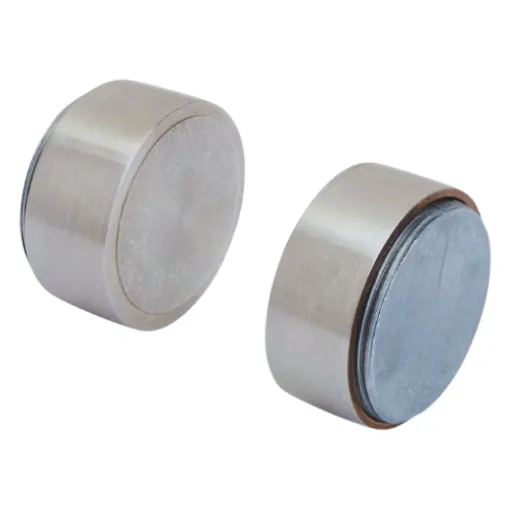
Cases When Non-Magnetic 316 Stainless Steel Can Become Magnetic
316 stainless steel is primarily non-magnetic when it is in its annealed condition thanks to the austenitic crystal structure. However, under some circumstances, it can acquire magnetic properties. Understanding these conditions is essential for applications where magnetic properties must be precisely controlled.
Conditions That Induce Magnetism
- Cold Deformation: Procedures such as bending, rolling, or hammering will alter the structure and partially transform the austenite state of the metal to martensite (which is magnetic). This is one of the main factors affecting magnetism
- Extreme Low Temperatures: Prolonged exposure at very low temperatures will further enhance slightly the magnetic trait when it disturbs the molecular structure of the material
- Welding Processes: Localized heating and rapid cooling during welding can alter the microstructure of 316 stainless steel. The alteration will affect the magnetization of the heat-affected zones
- Impurities or Alloy Variations: May contribute in a very small way to magnetic characteristics
⚠️ Important Note
The most current data concerning various properties tend to conclude that the effect is mostly local, not uniform across the whole material. Hence, 316 stainless steel may become magnetic under certain conditions, but its non-magnetic properties are still highly prized with respect to other classes, making it dependable for the most delicate potential uses.
Influence of Cold Working on Magnetism
Cold working changes the magnetic properties of 316 stainless steel significantly. Cold working strains cause mechanical manipulation that affects steel microstructure—well-known to form martensite, which is a much more magnetic phase of steel.
Understanding the Cold Working Effect
Cold working processes like wire drawing, bending, and forming at room temperature can substantially influence the steel’s magnetic properties. Some data from workshops indicate that light cold work barely results in some magnetic properties but that heavy deformation will make indeed an intense magnetic effect.
Key Takeaway: Even with cold working, 316 stainless steel is generally given all the protections against corrosion to preserve the basic benefits. It will still be the best option for applications that call for durability and minimal magnetism. Users shall examine carefully to what degree the cold working may be carried out in view of obtaining the required features.
Applications of Magnetic 316 Stainless Steel
Wrought 316 stainless steel exhibits some degree of magnetism (from work hardening) and is, therefore, used in various specialized applications where corrosion resistance and some magnetic properties constitute the prerequisites.
Specialized Applications
- Medical Instruments: Surgical tools may benefit from slight magnetization that may make grasping and fitting in the assembly a possibility
- Marine Structures: 316 magnetic can endure high salinity and retain material strength in harsh saltwater environments
- Industrial Components: Screws, springs, and machinery parts that demand considerable magnetism but not at the cost of material strength and robustness
- Electronic Assemblies: Components requiring both corrosion resistance and controlled magnetic properties for precise positioning
Choosing Between 304 and 316 Stainless Steel
When to Use 304 Stainless Steel
The 304 stainless steel is one of the most commonly used stainless steel grades for its corrosion resistance and its affordability. It is well-suited for applications where more general corrosion protection is required but exposure to highly corrosive environments is minimal.
Ideal Applications for 304
- Mildly corrosive environments with good heat and oxidation resistance
- Food and beverage industry for its sleek, cleanable surface and good hygiene properties
- Kitchen accessories, medical equipment, and processing equipment
- Indoor applications and mildly corrosive environments
- Industrial architectural designs and household appliance manufacturing
- Automotive fittings where salt-rich and marine environments are not a concern
Type 304 stainless steel works very well offering good mechanical durability at a lower cost than 316 stainless steel. If your budget does not allow for stainless steel with excellent corrosion resistance, austenitic 304 stainless steel could be a practical and secure choice.
When to Use 316 Stainless Steel
Experienced engineers should base their choice on 316 stainless steel primarily on the much higher corrosion resistance needed and, in certain cases, the benefits against stress corrosion cracking. It is clear that the stainless steel framework, unlike the milder types, can withstand the highest demands.
Priority Applications for 316
- Marine Environments: Strong seawater exposure requiring exceptional chloride resistance
- Chemical Processing: Industrial-grade endurance in harsh chemical environments
- Pharmaceutical Industry: Where rigorous hygiene standards must be adhered to
- Medical Devices: Implants and instruments requiring biocompatibility and sterilization resistance
- Long Service-Life Facilities: Environmental conditions that include high corrosiveness validated by its premium for rigorous/low-maintenance-specific applications
Cost Considerations
One must ponder the justification for the higher price of 316 stainless steel and weigh it against the long-term savings this material furnishes. Recent searches for stainless steel bring up hot topics: Is the cost extra worth it for specific applications?
Cost-Benefit Analysis
Initial Investment: 316 stainless steel comes with a higher upfront cost due to molybdenum content and superior properties.
Long-Term Savings: The chief guiding aspect is higher corrosion resistance, accompanied by durability and low-maintenance requirements, which lower replacement and repair costs over its lifetime.
ROI for Harsh Environments: A large initial investment into 316 stainless steel for industries functioning under corrosive environments such as marine and chemical process industries means far more uptime and superior performance directly translating into a longer useful life, thus delivering significant long-term value.
Frequently Asked Questions
Is 304 or 316 stainless steel magnetic and how does magnetic attraction vary?
Both 304 and 316 stainless steel are austenitic grades and if they are in their annealed state, they are normally considered non-magnetic stainless steels. However, cold working can induce magnetic susceptibility. The nickel contained in these stainless steel alloys serves to stabilize the austenitic phase of iron, which reduces magnetism compared to martensitic and ferritic stainless steels. Work hardening, deformation, or forming processes can cause some martensitic transformation at different sites in these materials, hence affecting magnetism to give rise to a slightly magnetic part. It is important to note that the grading of 304 and 316 differs regarding molybdenum content, with 316 grade containing molybdenum to resist corrosion, while simultaneously its magnetic behavior is similar to grade 304.
Are 304 and 316 stainless steels fully austenitic or can they exhibit magnetism?
Yes, 304 and 316 stainless steel are meant to be fully austenitic in the annealed state and as such remain non-magnetic. However, at times, under heavy cold working, austenitic grades can partially transform into martensite or ferrite phases causing partial magnetization to occur. The amount of carbon and the level of nickel content determine this partial level of magnetization; more nickel content helps retain the austenitic structure and decrease overall magnetic susceptibility. Ferritic grades like 430 and 409 are examples of stainless steel that is inherently magnetic without any further deformation. Looking for conditions when a component will take up a slightly magnetic state encompasses understanding the nature of the specific stainless steel alloy together with their processing history.
How do 304 or 316 stainless steels compare to carbon steel regarding magnetic behavior?
Compared to carbon steel and regular steel, which are usually magnetic because of the presence of ferritic and martensitic structures plus a higher carbon content, 304 or 316 stainless steels are much lower in magnetic behavior. Carbon steels made up of different forms of iron are the most magnetic, and higher carbon content can make steel martensitic and very magnetic with quenching. Stainless steel is a large group of alloys, including ferritic grades that usually exhibit behavior very similar to carbon steels in magnetic tests, but austenitic grades with compositions like 316L and 316 are usually very weakly magnetic unless cold worked. Magnetic separators generally make use of heavy-duty magnetic power for extracting ferritic materials, hence austenitic stainless parts are less affected.
Can 316L or 316 stainless steel become slightly magnetic after work hardening?
316L and the austenitic group can become slightly magnetic after drastic work hardening. This is due to martensitic transformation induced by mechanical deformation. The low carbon content in 316L (compared to 316) reduces martensite-formation tendency through cold work, and so 316L is often less magnetic than 316 when both are worked. Still, even 316L may register as somewhat magnetic on sensitive instruments after heavy bending or forming since more magnetic susceptibility develops. Molybdenum and nickel add resistance toward corrosion in these stainless steel alloys and stabilize the austenitic phase, but they still allow magnetism to be induced. For critical non-magnetic applications, specify processing with minimal cold working.
Does chromium content affect whether 304 and 316 are magnetic?
Significantly boosting grades 304 and 316’s chromium levels contributes to their corrosion resistance, though the alloy’s magnetic qualities are dictated more by the combination of nickel and carbon than the individual action of chromium. Chromium is responsible for the formation of a passive oxide layer, which contributes to corrosion resistance properties of stainless steel, while nickel has a similar role in stabilizing the austenitic microstructure and decreasing magnetic susceptibility. Molybdenum present in grade 316 helps increase corrosion resistance in chloride environments but does nothing significant to affect magnetic properties. Ferritic steels with higher chromium content but low nickel content are mostly magnetic. Therefore, when evaluating if steels are magnetic, one should consider the whole design of the alloy and the heat treatment history rather than just relying solely on chromium content.
Conclusion
316 stainless steel is predominantly non-magnetic in its annealed state due to its austenitic crystal structure stabilized by high nickel and molybdenum content. While it can develop slight magnetic properties under specific conditions such as cold working, welding, or extreme temperatures, these effects are typically localized and much weaker compared to ferritic or martensitic stainless steels.
For applications requiring minimal magnetic interference, such as sensitive electronic equipment or medical devices, 316 stainless steel remains an excellent choice. Its superior corrosion resistance, especially in chloride-rich environments, combined with its predominantly non-magnetic nature, makes it the preferred material for demanding industrial, marine, and medical applications where both properties are critical.
Reference Sources
- University of Illinois – Physics Van: This resource explains the magnetic properties of various stainless steel groups, including the austenitic series like 316 Magnetic Stainless Steel | Physics Van – University of Illinois
- Harvard ADS – Magnetic Properties of Austenitic Stainless Steels: This study measures the magnetization of austenitic stainless steels, including SUS316 and SUS316L, across a range of temperatures Magnetic Properties of Austenitic Stainless Steels – Harvard ADS
- University of Pennsylvania – Materials Guide on Stainless Steels: This guide provides an overview of austenitic stainless steels, highlighting their non-magnetic properties and common applications MEAM.Design: Materials Stainless Steels – University of Pennsylvania