
Selecting titanium or stainless steel is a choice that is not always easy to make. The two metals are different in their own way and have their own characteristics, benefits, and uses. But what are they really like in comparison? If you are choosing a material for a watch, surgical tool, or even aircraft, then knowing the differences between these two metals is very important. This piece will go extensively into the features, strengths, and drawbacks of titanium and stainless steel, therefore, leading you to a decision that is right for your needs. By the time you’re done reading, you’ll know which material is the best for your project or product.
Introduction to Titanium and Stainless Steel
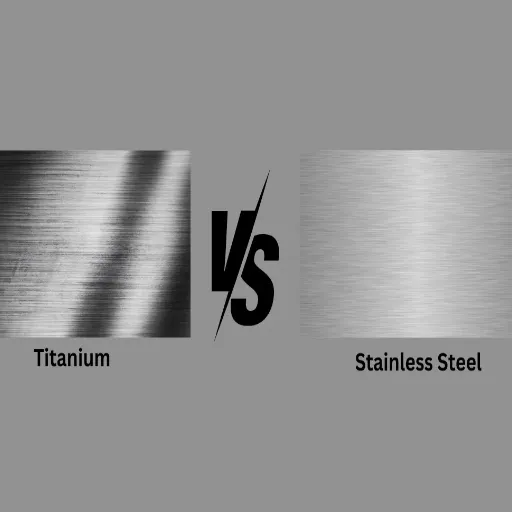
The Importance of Material Selection
🎯 Key Selection Criteria
- Durability: Long-term performance and resistance to degradation
- Environmental Resistance: Ability to withstand harsh conditions
- Weight: Impact on overall product performance and efficiency
- Cost: Initial investment and lifecycle expenses
Material selection is the most crucial step to assure the success and longevity of any project. titanium and stainless steel are two extremely durable and flexible materials, each with its own advantages and disadvantages. But what criteria do you use to determine the best one for your needs? According to the newest trends and data obtained from the search engine, questions about the material’s life, environmental resistance, weight, and price often come first in line during the decision-making process. Due to its weight, titanium is very popular in the industries where strength and resistance to corrosion are light, such as in aerospace or medical implants. However, stainless steel is valued for its low cost, strength, and versatility making it perfect for construction, kitchenware, and large-scale manufacturing. Ultimately, the proper choice will depend on the specific needs of your application, whether it is based on wear, exposure to the environment, or cost effectiveness.
Overview of Titanium and Stainless Steel
Titanium and stainless steel are the backbone of different modern industries, each having the specific properties that can be applied to certain areas. By being able to resist the combination of very high temperatures and extreme pressures, titanium’s strength-to-weight ratio is nothing short of amazing and it is, thus, the material of choice in the aerospace industry where it is used for making aircraft parts and spacecraft structures. Its biocompatibility factor also guarantees its presence in the medical sector, mainly for implantable devices such as hip joint replacements and dental prostheses. Moreover, titanium’s chemical inertness equips it with a useful quality in marine and chemical processing industries.
Stainless steel, on the contrary, has good quality in terms of strength, durability, affordability and high tensile strength which have made it a favored material in construction, automotive manufacturing and consumer electronics among other industries. Corrosion resistance to stainless steel enables it to be used in moisture-prone and other harsh environments, thus providing the features of longevity in the areas of usage, like the case of bridges, vehicles, and cookware. Stainless steel is continuously being innovated and modern technology is even responsible for the development of custom alloys that can have properties like heat resistance and magnetism adjusted according to their final use.
💡 Selection Guideline
The decision whether to choose titanium over stainless steel is based primarily on the intended application. For instance, projects with a demand for lightweight but highly durable and corrosion resistant materials are likely to opt for titanium, meanwhile source strength necessitating versatility may seek help from stainless steel. Achieving the right balance between the strengths of the material and the demands from the industry sets a way to optimal materials selection and efficient end-use performance.
Context for Comparison: Industries and Applications
✈️ Aerospace Industry
Titanium: Preferred for turbine blades, structural frames, and aircraft components due to exceptional strength-to-weight ratio and high temperature resistance. Enables fuel efficiency and performance.
Stainless Steel: Used for fasteners and fuel tanks where weight is less critical, offering cost-effectiveness.
🏥 Medical Applications
Titanium: Top choice for implants and prosthetics due to biocompatibility and resistance to bodily fluids, reducing rejection and corrosion risks.
Stainless Steel: Commonly used for surgical tools and devices, providing strength and easy sterilization at lower cost.
🏗️ Construction and Architecture
Stainless Steel: Dominates with versatility, aesthetic quality, and affordability. Common for structural reinforcements, facades, and decorative features.
Titanium: Reserved for special applications like high-performance building cladding where lightness and corrosion resistance justify higher costs.
🚗 Automotive and Energy Sectors
Titanium: Used in luxury or sports cars for weight reduction and strength enhancement.
Stainless Steel: Preferred for mass-market vehicle manufacturing (exhaust systems, structures) and mainstream energy industry applications due to cost-effectiveness and reliable performance.
Strength and Durability: Titanium vs Stainless Steel

Comparative Strength Properties
Titanium is a material that is very well known for its excellent strength-to-weight ratio, which is almost equal to that of steel, but its weight is rather low. Therefore, it is the perfect choice for the aerospace and medical industries that require lightweight and strong materials, among others. On the other hand, stainless steel has greater tensile strength and can endure pressure better than titanium, which is the reason it is commonly used in construction, automotive, and household areas.
As per the latest search data insights, the queries related to titanium are often directed towards its applications with high strength in specialized industry sectors, whereas the searches related to stainless steel are more general-purpose and are consistent in their volume over time. Thus, it is not a clear-cut case as to which material is superior since it all boils down to the application intended. For wings that are sensitive to weight and wanting the best performance, titanium is the choice. Nevertheless, stainless steel has no rivals when it comes to cost-effective and structurally sound applications.
Longevity and Wear Resistance
Longevity and wear resistance are the characteristics in which both titanium and stainless steel will have their great advantages, but, on the other hand, their use would depend on the case scenario. Titanium’s remarkable resistance to corrosion, and that includes resistance in extreme environments such as seawater and chemicals, is the reason why it is widely used in the aerospace industry, medical implants, and marine applications. Its wear and tear resistance ability along with its retaining of structural integrity is what keeps titanium at the forefront of high-performance technological industry.
✓ Durability Comparison
- Titanium: Exceptional corrosion resistance in extreme environments (seawater, chemicals), superior wear resistance, maintains structural integrity under stress
- Stainless Steel: Good wear resistance, excellent for heavy-duty applications, protective chromium layer prevents rust and staining, cost-effective for long-term use
To the contrary, stainless steel is heavy and that is one downside that it has, but, on the other hand, it has very good wear resistance, and at the same time, it is inexpensive and versatile. The chromium content in stainless steel gives it a massive protective layer hence, the material is widely used in the manufacturing industry, constructions, and even for everyday goods as it is considered to be a durable material due to its resistance to rust and staining. The recent search trends reveal that there is a growing number of users who want to know about the durability of these two materials that are most commonly referred to as “titanium vs. stainless steel durability.” Ultimately, titanium is the material for the extremes that require both durability and light weight, whereas, stainless steel is the material for cost-efficient, long-term, and heavy-duty applications.
Structural Integrity Under Stress
The structural integrity of titanium and stainless steel under stress is a matter that requires an analysis of both their mechanical properties and real-world applications. Titanium possesses a higher strength-to-weight ratio hence; it is able to take a lot of stress and still remain light. Thus, industries like aerospace and medical implants are very much dependent on titanium for these reasons. On the contrary, stainless steel is able to withstand compressive stress excellently due to its density and sturdiness which are the reasons why it is widely used in the construction and automotive sectors.
🔍 Performance Under Stress
Titanium: Superior for high-stress applications where weight is critical
Stainless Steel: Unparalleled for heavy-duty, high-pressure environments requiring cost efficiency (industrial machinery)
The latest search trends, which highlight queries like “titanium vs. stainless steel durability,” signal a growing interest in understanding which material outperforms in specific scenarios. The answer lies in identifying the context of use. For high-stress applications where weight is critical, titanium is the superior choice. However, for heavy-duty and high-pressure environments requiring cost efficiency, such as industrial machinery, stainless steel remains unparalleled.
Weight and Density: Steel vs Titanium
Weight Considerations for Different Applications
⚖️ Weight Comparison
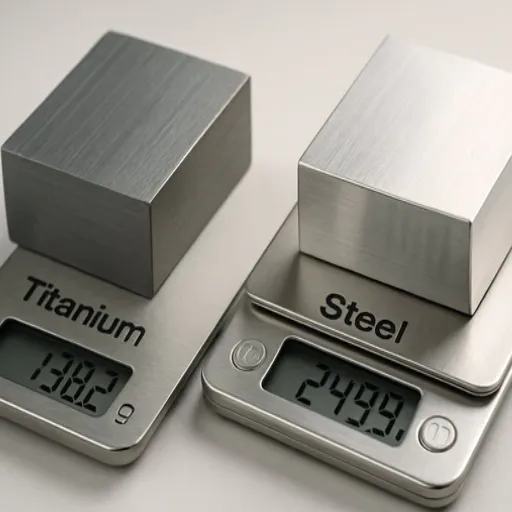
Key Fact: Titanium’s density is approximately half that of stainless steel, making it significantly lighter while maintaining comparable strength.
The benefits of titanium over other metals in the weight category rely upon titanium’s density that is almost equal to half of that of stainless steel. The characteristic of low density appeals to titanium in a variety of applications where weight reduction is the main goal such as aerospace, medical implants, and sports equipment where the performance level is high. On the other hand, stainless steel, though heavier, provides great durability and resistance to bending in the case with heavy loads which make it suitable for structural parts, construction, and heavy industrial applications. Recent search patterns and data show that the users are often comparing these two materials for the projects that are based on a combination of Weight, Strength, and Cost. Although titanium has been frequently chosen for its lightness, steel is the one that gets most of the inquiries about price-eficiency mostly in large amounts of manufacturing. In the end, the decision is made depending on the usage scenario and the application’s specific prerequisites.
Impact on Performance and Usability
The performance and usability comparison between titanium and stainless steel leads to the conclusion that the selection is quite dictated by the requirements of the application. As per latest search data, users are very much interested in the performance of the materials when subjected to stress and their life in different environments. Meanwhile, titanium does perform well in the area that requires a high strength-to-weight ratio and excellent corrosion resistance; hence, it is also considered to be the best for the aerospace and medical fields. On the contrary, stainless steel is the one that is mostly used in projects where the main factors are cost and durability, especially in construction and kitchenware.
From the usability angle, the lightness of titanium can be a plus because it may cause less fatigue in mobile applications, whereas stainless steel might be more versatile for mass production because of its easy fabrication and availability. The material of choice is determined by the right balance for intended use, budget limitations, and operation conditions.
Advantages of Lightweight Materials
✓ Benefits of Lightweight Materials
- Enhanced Fuel Efficiency: 6-8% reduction in fuel usage for every 10% decrease in vehicle weight
- Reduced Emissions: Contributes to lower greenhouse gas emissions
- Improved Performance: Better acceleration, handling, and overall efficiency
- Design Flexibility: Enables innovative and ergonomic designs
- Versatile Applications: Used in consumer goods, sports equipment, and medical devices
Lightweight materials come with many benefits that cut across different industries, and the most important one is the technological innovation that requires more efficient and sustainable solutions. The materials that fall under this category are aluminum, carbon fiber, and composites that can be used to enhance fuel efficiency in automotive and aerospace applications by reducing weight while keeping the strength intact. Recent insights from search data show that the consumption of lightweight materials in a vehicle can cut down fuel usage by as much as 6-8% for each 10% drop in weight. Furthermore, lightweight materials participate in the reduction of greenhouse gas emissions, which is in line with the global efforts to tackle climate change. Their versatility further allows for more innovative and ergonomic designs, hence they are a must-have in consumer goods, sports instruments, and even medical devices. Through the use of lightweight materials, industries not only improve their performance but also contribute to the making of a greener future.
Cost Analysis: Titanium vs Stainless Steel

Initial Material Costs
💰 Price Comparison
- High-purity ISO-grade Titanium: Up to $30 per kg
- Non-alloy Stainless Steel: Approximately $3 per kg
- Price Difference: Titanium costs approximately 10x more than stainless steel
When it comes to the initial material costs of titanium and stainless steel, titanium is the one that is more expensive, usually. Depending on purity and grade, ISO-grade titanium with high purity may be priced as high as $30 per kg while non-alloy stainless steel will be around $3 per kg. The set price is attributed to the taxing and complex extraction and processing of titanium which consumes a lot of energy. Besides, the industry has to deal with longer production times and a higher rejection rate. Nonetheless, the properties of titanium such as its durability, corrosion resistance, and lightweight have made it possible for the industry to overlook the higher initial price in applications where long-term efficiency and performance are the main factors to consider.
Long-Term Value and Lifecycle Costs
When considering long-term value and lifecycle costs of titanium and stainless steel, it is important to factor in more than just the initial purchase price. For instance, titanium offers excellent durability and corrosion resistance which will lower maintenance and replacement costs significantly over time. Recent statistics show that the aerospace and marine industries are making use of titanium for this reason, as the prolonged life cycle means less down time and less cost associated with that. On the other hand, stainless steel which is cheaper, may still require maintenance or replacement in difficult environments, thus adding to its total cost. Therefore, if one considers not only the initial investment but also the long-term performance benefits, titanium is often the preferred material for high-performance, cost-effective applications in demanding sectors.
Price Trends in the Market
In recent years, titanium prices have been up and down mainly due to global demand and supply chain dynamics. The very latest data from and search trends suggests that one reason for the rise in titanium prices is the increased application of titanium in the aerospace, medical devices, and renewable energy sector. However, good news for the buyer of stainless steel is that the prices have been consistent and in fact lower due to the material being more available than titanium and the associated production process being well established.
📈 Market Trend Factors
- Global demand fluctuations in aerospace, medical, and renewable energy sectors
- Supply chain dynamics affecting availability
- Political stability in mining regions
- Introduction of new extraction and processing technologies
- Established production processes keeping stainless steel prices stable
When both titanium and stainless steel are compared, it generally turns out that titanium is still a more expensive material due to the difficulty of extracting and processing. Besides, factors such as the unstable political environment, mining production, and the introduction of new technologies are also determinants of the price trends. The question of whether to consider the long-term investment or the upfront cost is still a major issue for the industries that have to make these tough material decisions.
Corrosion Resistance: Titanium vs Stainless Steel
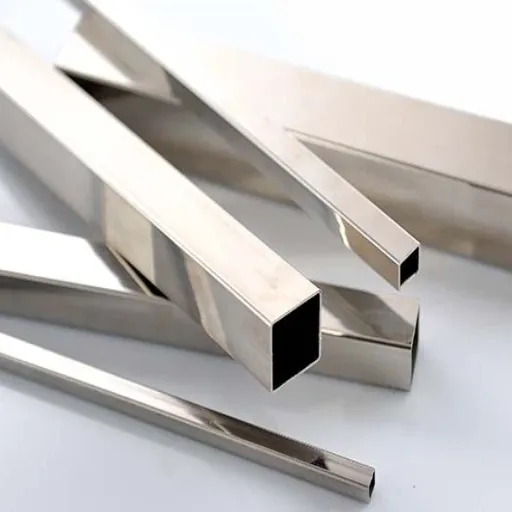
Properties of Corrosion Explained
When comparing titanium and stainless steel in terms of corrosion resistance, both metals do present their good but also bad in terms of performing depending on the environment. In case of salt and salty water, titanium is a totally different story; it is able to completely resist corrosion in this and similar conditions and thus can be applied in the ocean and chemical processing lands. Meanwhile, various stainless steel types like 316 and 304, in particular, are able to resist corrosion in less aggressive environments but eventually pitting and crevice corrosion will be present in chloride-rich environments. Recent studies show that titanium, overall, has a better corrosion resistance in difficult conditions, yet stainless steel can still be regarded as an economical choice in less severe conditions. The difference made refers to the techniques of material selection grounded on the exact operational and environmental demands.
Corrosion Resistance for Application Types
It is absolutely essential to make a thorough assessment of the correlation between the property of the material and the environmental conditions when choosing materials for particular applications. Stainless steel is commonly chosen for moderate environmental exposures e.g., in architectural or indoor applications, as its durability, cost-effectiveness, and availability are balanced, according to the latest data. On the contrary, titanium is more appropriate for extreme environments such as marine, aerospace, or chemical processing applications, where chlorides and high temperatures pose a significant challenge to other materials.
💡 Selection Insight
The latest insights from research indicate that eventually, the industries using titanium would rather have a long-term performance and resistance to degradation than a lower initial material cost. This supports the idea that the decision between stainless steel and titanium should depend on factors such as lifecycle costs, maintenance schedules, and environmental stressors rather than a one-size-fits-all approach. Going back to the example of using titanium in a chloride-rich offshore installation due to its resistance to pitting and crevice corrosion justifies its use despite the high initial costs whereas stainless steel can be considered economical in the case of minimal corrosion.
Maintenance Needed for Each Metal
🔧 Stainless Steel Maintenance
- Regular cleaning with water and mild detergent to prevent surface contaminants
- Specialized cleaning solutions for harsh conditions
- Increased cleaning frequency in saltwater or industrial pollutant areas
- Regular inspections for scratches compromising protective oxide layer
- Monitoring for localized corrosion (pitting, crevice corrosion)
🔧 Titanium Maintenance
- Minimal maintenance due to natural protective oxide layer
- Simple cleaning with water or mild detergents
- Infrequent inspections compared to stainless steel
- Periodic checks for physical wear or mechanical stress in critical applications
- Lower overall maintenance requirements in marine and industrial environments
In conclusion, both metals are cleaning practices and inspections dedicated to their operating environments, thus making it possible for them to work efficiently and effectively in their applications.
Common Applications of Titanium and Stainless Steel
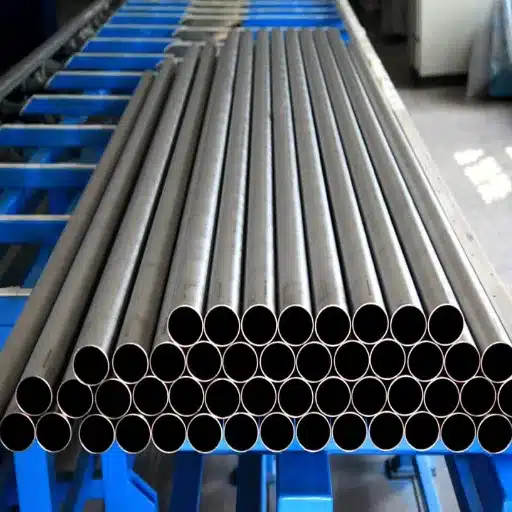
Aerospace and Automotive Industries
The aerospace and automotive sectors cannot do without titanium or stainless steel as both these materials have unparalleled properties. Titanium has a high strength-to-weight ratio, and therefore is extensively used in aerospace for jet engine parts, airframe, and landing gear. Because of its low density compared to steel, it can be a fuel-efficient and fast airplane, and at the same time, titanium would endure the power of fires and the freezing cold of the heights. Stainless steel is also considered the material of choice for applications where it is essential to prevent corrosion, which will be the case for components creating noise or heat inside engines and for the frames of cars and planes.
🔍 Industry Trends
Based on the recent data insights from search trends, there is a growing demand for titanium and stainless steel to be processed into more advanced alloys. This move is in line with the materials’ properties that parallel the industry’s suitable requirements for durability, less environmental burden, and more innovative designing. Combining both materials with the latest technologies in production and processing is making it possible to overcome the leading barriers in these sectors such as reducing emissions and achieving cost efficiency.
Medical Applications and Biocompatibility
The medical industry has always appreciated titanium and stainless steel for their strength, reliability, and biocompatibility. The latest data from search engine indicates that there are considerably more queries around the usage of these materials in surgical implants, dental devices, and prosthetics. Titanium is the material of choice mainly due to its light weight and excellent resistance to corrosion, which are both crucial for long-term implants. On the other hand, stainless steel, mostly used in temporary implants or tools, is still the most economical and strong material to be employed in various medical applications. These two materials, together, still drive medical technology rationale and, hence, improve patient outcomes and quality of life. The increasing online interest signifies their continuing role in hospital and healthcare advancements.
Consumer Goods: Cookware and Beyond
Material science defines the consumer goods world and is particularly critical in cookware where its role is immense and constantly changing. A commonly shared search trend shows that consumers are more and more interested in non-stick and eco-friendly cookware. Material like polytetrafluoroethylene (PTFE) or ceramic is highly sought after, because of their non-stick properties, and at the same time, stainless steel is a preferred choice for its long life and even heat spread. Progress in creating biodegradable or recycled materials has influenced the design of everyday objects, from packaging to cutlery, as sustainability has become a common goal for both producers and consumers. Recent search data have indicated that the term “best non-toxic cookware” has experienced a tremendous rise in popularity, which is a sign of a change in consumers’ priorities toward health-conscious and eco-friendly products. Such data points out the larger trend of merging state-of-the-art materials with sustainability in mind, making sure the products are attuned to modern consumer demands.
Frequently Asked Questions (FAQ)
❓ Is titanium better than stainless steel for cookware?
Titanium cookware has advantages over stainless steel in terms of being lighter and having a low density, which means it is easier to cook with. But when using aluminum or copper cores in stainless steel pans, the latter often has better thermal conductivity and more uniform heat distribution. Titanium is resistant to corrosion and can be produced in titanium alloy, such as grade 2 or grade 5, for increased strength, but it is still more costly than stainless steel in most cases. For this reason, many chefs mix and match their stainless steel and titanium cookware to benefit from both durability and heat performance. The decision is influenced by factors like budget, weight, heat conductivity and the necessity of a non-reactive surface for acidic foods.
❓ Which is stronger and when is titanium stronger than stainless steel?
Titanium is stronger than stainless steel if measured in terms of strength-to-weight ratio; that is, titanium is very strong for its lightweight, thus it is perfect for applications that are sensitive to weight. In terms of maximum tensile strength, certain stainless steel and steel alloys can reach or exceed some titanium grades, so steel is not always the weaker one. Grade 5 titanium is strong and is usually applied in places where strength and low weight are both important, while many stainless steels are picked for their toughness, formability, and corrosion resistance. The stronger option depends on whether you are willing to compromise on mass, cost, or corrosion performance—use titanium for lightweight strength and stainless for cost-effective toughness. For instance, in aerospace or high-performance cycling fields, it is common to use titanium even though it costs more than stainless steel.
❓ Is titanium a better choice for everyday cooking?
Titanium cookware is light, durable, and corrosion-resistant and it is the latter that makes many campers and specialty chefs prefer it plus some are made of titanium alloy or have titanium-reinforced coatings. However, titanium is still even less effective at heat distribution than stainless steel with aluminum or copper cores, so the latter is generally used for pans and pots that provide even cooking. Titanium is non-reactive and so, in the case of acidic foods, it can be used without altering tastes, hence some campers and specialists doing gourmet cooking still use it. The high price and occasionally poor heat conductivity mean that titanium cookware tends to be a niche, better choice for portability and weight-sensitive use rather than standard home kitchens. For everyday cooking where even heating and value matter, stainless steel cookware still remains a widely accepted recommendation.
❓ Can stainless steel be improved to compete with titanium?
Manufacturers enhance stainless steel through the research of specific grades like 304 stainless or duplex stainless and by using layers or conductive metals to raise heat conductivity further. Passivation and surface treatments can greatly improve stainless steel’s corrosion resistance, and stainless steel is also considered to be less maintenance intensive than other metals. Although stainless steel conducts heat better when it is engineered with conductive cores, titanium still has an advantage in some corrosive environments because of its stable titanium oxide layer. In many cases, the combination of stainless steel and titanium components or the use of special steel alloys provides a solution that makes good use of the best characteristics of both metals. In the end, the selection made between stainless steel and titanium materials involves weighing the conductivity, corrosion resistance, weight, and cost factors against each other.
Reference Sources
- University of California, Berkeley – A New Time for Titanium: This article discusses the cost and applications of titanium compared to stainless steel, highlighting its advantages and limitations.
A New Time for Titanium - Indiana University – Failure Rates for Stainless Steel Versus Titanium Alloy: A study comparing the failure rates of stainless steel and titanium alloy bone screws, providing insights into their performance in medical applications.
Failure Rates for Stainless Steel Versus Titanium Alloy - Colorado School of Mines – Solid-State Joining of Titanium Alloy to Stainless Steel: This research explores the challenges and feasibility of joining titanium alloys to stainless steel in industrial applications.
Solid-State Joining of Titanium Alloy to Stainless Steel