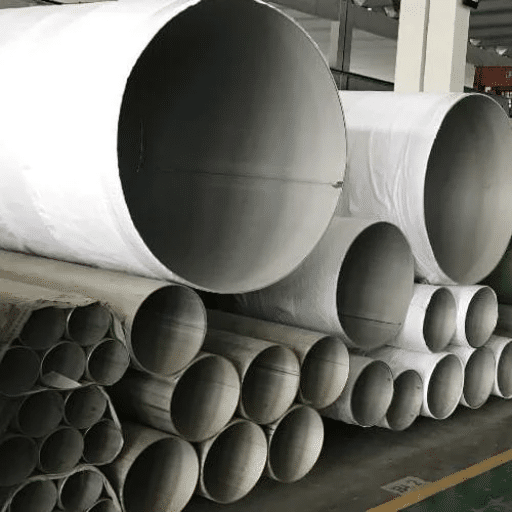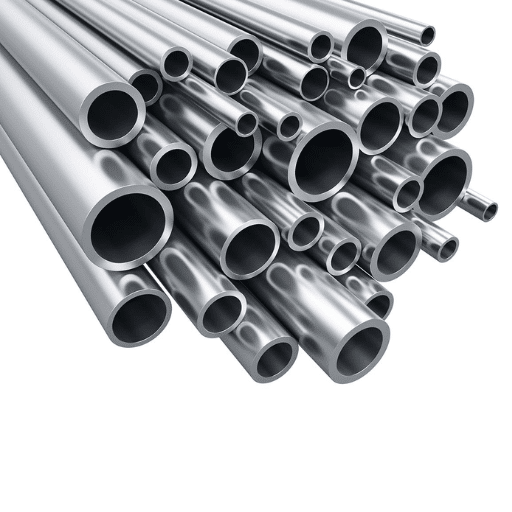
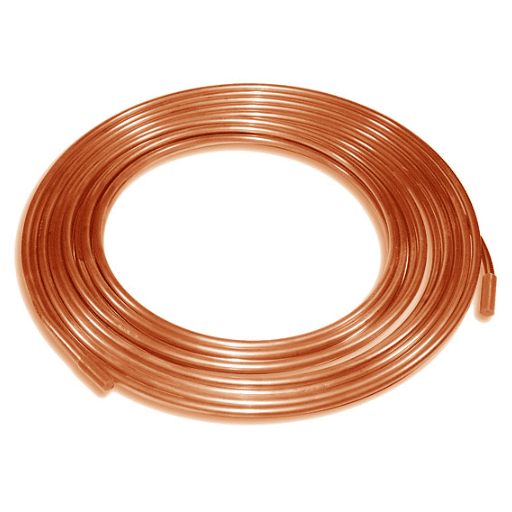
The engineering field experienced a significant impact after the Massachusetts Board of Building Regulations banned unlined copper tube as a natural gas distribution material. The issue with copper arose because the metal failed to withstand specific conditions which it was unable to endure. Hydrogen sulfide which exists in different amounts throughout the United States natural gas supply system causes copper tubing to shift from its role as a dependable distribution system to become a corrosion risk which is about to break down.
Engineers throughout the United States must tackle an issue which extends beyond Massachusetts borders. At the material selection stage for fuel gas piping systems engineers must choose between two options: they can either use copper with its established limitations together with strict gas composition testing or they can use stainless steel which removes hydrogen sulfide as a potential issue. The wrong choice doesn’t just risk code violations—it risks infrastructure integrity, safety, and long-term project economics.
The guide defines technical requirements which need to be followed when choosing between natural gas pipeline copper tube and stainless steel pipe options. The exact ASTM standards which govern each material will be presented together with the 0.3 grain H₂S threshold which determines copper operational limits and the situations which require 316L stainless steel as the only valid selection.
Understanding Copper Tube Specifications for Natural Gas

ASTM B837 Type GAS: The Dedicated Standard
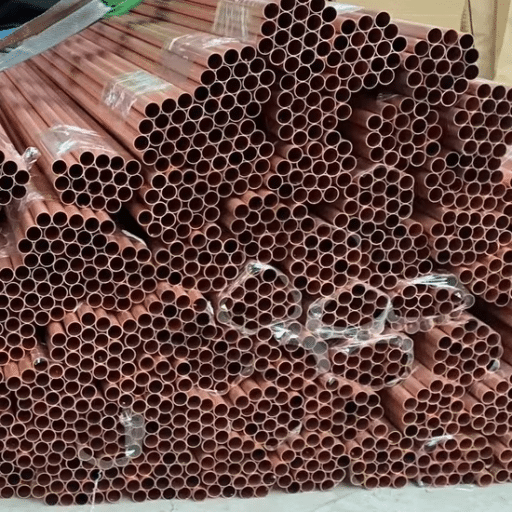
The copper tubing specification specifically engineered for fuel gas applications is ASTM B837-19, “Standard Specification for Seamless Copper Tube for Natural Gas and Liquified Petroleum (LP) Gas Fuel Distribution Systems.” The standard provides specific guidelines which fulfill the distinct needs of fuel gas service while general plumbing specifications remain insufficient.
Material Composition Requirements:
ASTM B837 mandates Alloy C12200 (phosphorus-deoxidized copper, high residual phosphorus—DHP). The specification requires:
- Copper + Silver: 99.9% minimum
- Phosphorus: 0.015%–0.040%
This phosphorus content is critical—it provides the deoxidation necessary for reliable welding and brazing while maintaining the corrosion resistance that makes copper viable for gas service.
Temper and Dimensional Range:
| Temper | Available Sizes | Wall Thickness |
|---|---|---|
| Annealed (O60) | 3/8″ O.D. through 7/8″ O.D. | Per Table 1, ASTM B837 |
| Drawn (H58) | 3/8″ O.D. through 1-1/8″ O.D. | Per Table 1, ASTM B837 |
The annealed temper provides the flexibility needed for complex routing in residential and light commercial installations. The drawn temper offers higher strength for above-ground exposed applications where mechanical damage resistance matters.
Critical Marking Requirement:
Every tube must be permanently marked (incised) at intervals not exceeding 18 inches with:
- “Type GAS” designation
- Manufacturer’s name or trademark
For drawn (hard) temper, a yellow colored stripe containing type designation, manufacturer identification, and country of origin is required. This marking ensures positive identification during installation and inspection—no guessing whether the tube in your hand is rated for fuel gas service.
ASTM B88 Type K and Type L: The Plumbing Crossover
While ASTM B837 is the dedicated fuel gas specification, NFPA 54 (National Fuel Gas Code) and the International Fuel Gas Code (IFGC) also permit copper water tube meeting ASTM B88 under specific conditions. Understanding the differences between Type K and Type L is essential for proper specification.
Type K Copper Tube:
- Wall thickness: Heaviest wall among ASTM B88 types
- Pressure rating: Highest pressure capability
- Application preference: Underground installations, high-pressure drops
- Color code: Green stripe (soft temper), green printing (hard temper)
Type L Copper Tube:
- Wall thickness: Standard wall thickness
- Pressure rating: Suitable for most above-ground distribution
- Application preference: Interior above-ground runs where permitted
- Color code: Blue stripe (soft temper), blue printing (hard temper)
The thickness differential matters in fuel gas applications. Type K’s additional wall thickness provides a safety margin for underground installations where future damage risk exists. Type L is lighter and more economical for interior runs where mechanical protection is assured.
Federal Pipeline Safety Requirements
For natural gas service lines, 49 CFR § 192.125 establishes minimum wall thickness requirements:
| Size | Nominal O.D. | Minimum Wall Thickness |
|---|---|---|
| 1/2″ | 0.625″ | 0.040″ (1.06 mm) |
| 5/8″ | 0.750″ | 0.042″ (1.07 mm) |
| 3/4″ | 0.875″ | 0.045″ (1.14 mm) |
| 1″ | 1.125″ | 0.050″ (1.27 mm) |
| 1-1/4″ | 1.375″ | 0.055″ (1.40 mm) |
| 1-1/2″ | 1.625″ | 0.060″ (1.52 mm) |
The federal regulation further specifies that copper pipe used in mains must have a minimum wall thickness of 0.065″ (1.65 mm)—significantly thicker than the thinner-walled varieties sometimes used for interior distribution.
The Critical H₂S Problem: When Copper Fails

Understanding Hydrogen Sulfide Corrosion
The Achilles heel of copper in natural gas service is hydrogen sulfide (H₂S). This compound, present in varying concentrations in natural gas supplies worldwide, triggers a corrosion mechanism that fundamentally compromises copper tubing integrity.
The Chemistry:
When H₂S contacts copper tubing, the reaction produces copper sulfide (Cu₂S)—a brittle, porous compound that offers none of copper’s inherent corrosion resistance. The reaction proceeds as:
2Cu + H₂S → Cu₂S + H₂
The copper sulfide layer fails to provide any protective function. The copper sulfide layer continues to expand which creates pitting that ultimately leads to through-wall penetration. The corrosion process becomes faster when moisture is present and when temperatures rise which occurs in most gas distribution systems.
The Practical Impact:
The Midwestern gas utility discovered copper service lines which failed at higher rates than standard corrosion models predicted in 2019. The investigation showed H2S concentrations which averaged 0.45 grains per 100 standard cubic feet. The equipment exceeded the code threshold by 50 percent yet it caused visible wall deterioration within 8 years of installation. The utility needed to spend $2.3 million on infrastructure replacement because the lines should have remained operational for more than 30 years.
The 0.3 Grain Threshold: Code vs Reality
NFPA 54 Section 5.5.3.4 and IFGC G2414.5.2 establish the same critical limit:
“Copper and copper alloy pipe/tubing shall not be used if the gas contains more than an average of 0.3 grains of hydrogen sulfide per 100 standard cubic feet (0.7 mg per 100 L) of gas at standard conditions (60°F/16°C and 14.7 psia/101 kPa).”
This 0.3 grain limit (approximately 6.9 mg/m³ at standard conditions) is not arbitrary. It represents the concentration at which copper sulfide formation accelerates beyond acceptable rates for 30-year service life.
The Verification Problem:
The point establishes an intersection between engineering theoretical principles and the practicalities of procurement operations. Gas utilities can provide current H₂S measurements, but few will guarantee future composition. Changes occur in gas sources while blending operations exhibit different patterns. Supply mix changes during different seasons will lead to unexpected H₂S concentration increases which exceed established thresholds.
The specification writers need to resolve this uncertainty because it creates engineering risks for essential infrastructure. The choice between specifying copper and accepting H₂S monitoring responsibilities or selecting a material that prevents this failure mode exists.
Regional Code Restrictions
Some jurisdictions have simply eliminated the H₂S variable by restricting copper use:
Massachusetts (248 CMR):
- Unlined copper tube: Prohibited
- Tin-lined or internally treated copper: Permitted
The Massachusetts regulation reflects the state’s conservative approach to fuel gas safety. With older infrastructure and varied gas supply sources, the state determined that the H₂S verification burden was too high for widespread copper deployment.
Other Jurisdictions:
Engineers should verify local amendments to NFPA 54 or the IFGC before specifying copper. Some jurisdictions require additional documentation of gas composition. Other jurisdictions require particular methods for joining materials. The Uniform Plumbing Code (UPC) permits copper for fuel gas but includes specific H₂S restrictions identical to NFPA 54.
Mercaptan Complications
Natural gas requires odorization through mercaptan compounds which use tertiary butyl mercaptan or tetrahydrothiophene for leak detection purposes. The sulfur-based odorants which contain sulfur components lead to copper corrosion problems when oxygen and moisture exist.
The Copper Development Association research shows that mercaptan corrosion results in less damage than H₂S corrosion but multiple sulfur compounds interact to produce combined corrosion problems which make it hard to estimate service life.
Stainless Steel Natural Gas Pipeline Solutions

316L Stainless Steel: The Sour Gas Solution
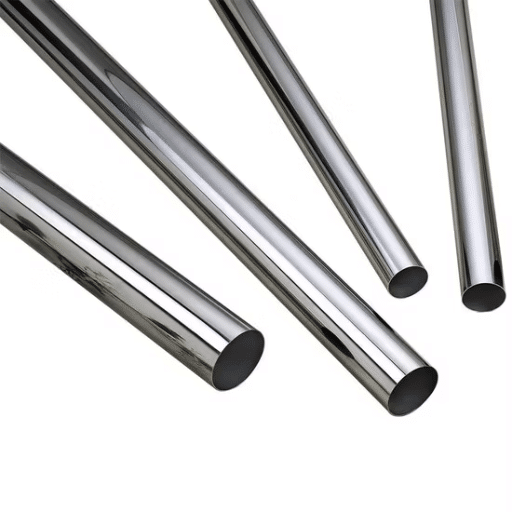
When H₂S corrosion risk eliminates copper from consideration, 316L stainless steel (UNS S31603) emerges as the technically superior alternative. This austenitic grade contains 2–3% molybdenum that provides exceptional resistance to sulfide stress cracking and general corrosion in sour gas environments.
Material Specifications:
| Property | 316L Stainless Steel |
|---|---|
| Chromium | 16–18% |
| Nickel | 10–14% |
| Molybdenum | 2–3% |
| Carbon (max) | 0.03% |
| Tensile Strength | 485 MPa (70 ksi) minimum |
| Yield Strength | 170 MPa (25 ksi) minimum |
The low carbon content (indicated by the “L” designation) prevents sensitization during welding, maintaining corrosion resistance in the heat-affected zone. This is critical for fabricated piping systems where weld integrity determines service life.
Applicable Standards:
- ASTM A269: Seamless and welded austenitic stainless steel tubing for general service
- ASTM A312: Seamless, welded, and heavily cold-worked austenitic stainless steel pipes
- ASTM A213: Seamless ferritic and austenitic alloy-steel boiler, superheater, and heat-exchanger tubes
- ASME B31.3: Process piping code acceptance
The PREN (Pitting Resistance Equivalent Number) for 316L calculates to approximately 23–25, well above the threshold for adequate pitting resistance in natural gas service with moderate chloride and sulfide content.
Corrugated Stainless Steel Tubing (CSST)
For residential and light commercial fuel gas distribution, corrugated stainless steel tubing (CSST) offers a flexible alternative to rigid copper systems. CSST has been recognized by the National Fuel Gas Code since 1988 and provides significant installation advantages.
Manufacturing:
CSST is manufactured from continuous stainless steel strip (typically Type 304 or 316L) that is formed into a corrugated profile and helically wound. The corrugations provide flexibility while maintaining pressure containment integrity.
Key Specifications:
| Parameter | Typical CSST Range |
|---|---|
| Material | Type 304 or 316L stainless steel |
| Pressure Rating | Up to 25 psi (standard), higher ratings available |
| Temperature Range | -40°F to 165°F (-40°C to 74°C) |
| Flexibility | Bends by hand, no fittings required for direction changes |
| Standards | ANSI LC1/CSA 6.26, ASTM E1086 |
The flexibility advantage is substantial. Where rigid copper requires fittings for every direction change, CSST routes continuously through walls and around obstacles. This reduces potential leak points and installation time.
Lightning Protection:
According to NFPA 54 and manufacturer specifications, CSST installations must achieve proper bonding and grounding requirements. Lightning strikes create electrical arcing which can create holes in CSST walls, a danger that does not exist with rigid copper or steel pipes. The correct installation procedure needs to establish direct bonding to the building’s electrical grounding system.
Press-Fit Technology: Installation Efficiency
Modern stainless steel fuel gas systems increasingly use press-fit joining technology, which eliminates the hot work permits and specialized labor required for welding or brazing.
How It Works:
Stainless steel pipe or tubing is cut to length, deburred, and fitted with specialized press fittings containing EPDM or HNBR seals. A battery-powered press tool mechanically crimps the fitting onto the tube, creating a permanent mechanical joint with an elastomeric seal.
Standards Compliance:
Press fittings for fuel gas must meet ANSI LC 4/CSA 6.32 (Press-Connect Copper and Copper Alloy Fittings for Use in Fuel Gas Distribution Systems) or equivalent standards for stainless steel applications. The DVGW G 260 German gas standard also recognizes press-fit systems for natural gas and LPG.
Installation Advantages:
- No hot work permits: Eliminates fire watch requirements and hot work authorization delays
- Reduced labor time: Press connections take seconds versus minutes for brazed joints
- Consistent quality: Factory-controlled seal element eliminates variable quality of field-made joints
- Visual inspection: Press indicator marks confirm proper crimp completion
Zhongzheng’s stainless steel seamless pipe and tubing are compatible with major press-fit systems when specified with the appropriate dimensional tolerances.
Side-by-Side Technical Comparison

Material Properties
| Property | Copper (ASTM B837) | 316L Stainless Steel | Winner |
|---|---|---|---|
| Tensile Strength | ~200 MPa | 485+ MPa | Stainless Steel |
| Yield Strength | ~70 MPa | 170+ MPa | Stainless Steel |
| Max Pressure (typical) | 100 psi | 300+ bar capability | Stainless Steel |
| H₂S Tolerance | 0.3 grains/100 scf max | Unlimited | Stainless Steel |
| CO₂ Corrosion Resistance | Moderate | Excellent | Stainless Steel |
| Thermal Conductivity | 223 W/m·K | 16.2 W/m·K | Copper |
| Flexibility (rigid tube) | Excellent bendability | Requires fittings or CSST | Copper |
| Theft Risk | High (scrap value) | Low | Stainless Steel |
Installation Factors
| Factor | Copper | Stainless Steel | Winner |
|---|---|---|---|
| Joining Method | Brazing, flaring, press-fit | Welding, press-fit | Tie |
| Hot Work Permits | Required for brazing | Not required (press-fit) | Stainless Steel |
| Support Spacing | 6 feet (UPC) | Greater spans possible | Stainless Steel |
| Field Flexibility | Easy hand bends | CSST required for flexibility | Copper |
| Labor Skill Level | Moderate (brazing) | Lower (press-fit) | Stainless Steel |
| Installation Speed | Moderate | 50% faster (press-fit) | Stainless Steel |
Lifecycle Economics
| Cost Factor | Copper | Stainless Steel | Winner |
|---|---|---|---|
| Material Cost (2026) | High/volatile | Stable/moderate | Stainless Steel |
| Installation Labor | Moderate | Reduced | Stainless Steel |
| Maintenance Requirements | Patina monitoring, corrosion inspection | Minimal | Stainless Steel |
| Expected Service Life | 20–30 years | 50+ years | Stainless Steel |
| Residual/Scrap Value | High (theft risk) | Moderate | Copper |
| Total Lifecycle Cost | Higher | Lower over 30 years | Stainless Steel |
Application-Specific Recommendations

When to Specify Copper Tube
Copper remains a technically viable choice when:
1. Verified Low-H₂S Gas Supply
The gas utility maintains H₂S levels below 0.3 grains per 100 scf through established delivery requirements and regulatory oversight which ensures ongoing maintenance of gas quality standards. This situation occurs most frequently in areas which receive natural gas through a single delivery point that provides gas with predetermined quality standards.
2. Residential Distribution with Complex Routing
The installation requires multiple directional changes throughout its narrow areas because copper permits bending through hand application which eliminates the need for multiple connectors. Typical applications include single-family residential service lines with multiple appliance drops.
3. Jurisdictions with Established Copper Approval
Local codes explicitly permit copper, inspection authorities are familiar with copper installations, and contractor expertise in copper brazing and flaring is well-established. This solution leads to decreased chances of installation problems while it helps prevent inspection process delays.
4. Short Runs with Temperature Considerations
Heat transfer characteristics matter. Copper’s exceptional heat transfer capabilities provide benefits in applications where gas lines pass through climate-controlled areas because thermal conductivity plays a role in energy efficiency.
5. Interior Low-Pressure Applications
The system operates at pressures which remain under copper’s 100 psi threshold thus providing considerable safety protection. This includes standard residential service at 0.25–0.5 psi operating pressure.
When to Specify Stainless Steel
Stainless steel becomes the only technically defensible choice when:
1. Sour Gas Service (Any H₂S Presence)
The gas composition contains measurable H₂S, the composition varies seasonally or by supply source, or future H₂S content cannot be guaranteed below 0.3 grains/100 scf. This includes most industrial gas supplies and many municipal systems with blended sources.
2. High-Pressure Applications
The system needs to operate at pressures which exceed copper’s maximum capacity or its safety requirements create operational problems for copper material.industrial process gas CNG fueling stations and high-pressure distribution mains fall into this category.
3. Corrosive Environments
The installation experiences exposure to coastal atmospheric conditions and chemical plant ambient conditions and other corrosive environments where 316L’s passive oxide layer provides better protection than copper’s patina formation.
4. Long-Term Infrastructure (50+ Year Design Life)
The project specifies extended service life requirements that exceed copper’s demonstrated reliability window. Major infrastructure projects government facilities and critical industrial installations typically require 50-year material lifespan.
5. Copper Theft Risk Areas
The installation location has documented copper theft problems. Construction sites and remote facilities and unmanned installations face significant risk from copper’s high scrap value. Theft incentive decreases because stainless steel has lower resale value.
The Hybrid Approach
Some large installations benefit from a hybrid specification:
- Stainless steel mains: Type 316L seamless pipe for high-pressure, high-volume distribution from meter to building distribution points
- Copper drops: Type L or K copper for final connections to individual appliances where flexibility and contractor familiarity matter
Transition Fitting Considerations:
Dielectric unions or specialized transition fittings prevent galvanic corrosion when dissimilar metals connect. The transition point should be accessible for inspection and properly documented on as-built drawings.
Code Compliance:
Both materials must meet the same pressure testing and inspection requirements. The hybrid approach does not simplify code compliance—it simply applies the appropriate material to each application segment.
Code Compliance Checklist

Pre-Design Verification
Before specifying either material, verify:
NFPA 54 Requirements:
- Local amendments to NFPA 54 reviewed
- H₂S content limits confirmed for project gas supply
- Copper type approval confirmed (Type GAS per ASTM B837, or Type K/L per ASTM B88)
- Joining method compliance verified (brazing alloy melting point >1000°F, phosphorus ≤0.05%)
International Fuel Gas Code (IFGC):
- G2414.5.2 compliance path identified
- Local jurisdiction adoption status confirmed
- Amendment variations reviewed
Federal Requirements (if applicable):
- 49 CFR Part 192 compliance for transmission/distribution lines
- DOT PHMSA notification requirements reviewed
- Class location study completed if required
Gas Utility Coordination
Contact the gas utility early in the design process to obtain:
- Current gas composition analysis with H₂S measurement method and detection limits
- Historical composition data showing seasonal and annual variation
- Future supply source plans that might affect composition
- Warranty/guarantee limitations regarding future gas quality
Document this coordination in the project file. If the utility cannot guarantee H₂S below 0.3 grains/100 scf, stainless steel specification is the conservative engineering choice.
Third-Party Inspection Protocols
For critical installations, specify third-party inspection (TPI) at manufacturing:
- Chemical verification: Spectrographic analysis confirming alloy composition
- Dimensional inspection: OD, wall thickness, and length verification per ASTM tolerances
- Non-destructive testing: Ultrasonic or eddy current testing for seamless products
- Pressure testing: Hydrostatic test to 1.5× design pressure per applicable code
Zhongzheng supports TPI agency presence (SGS, Bureau Veritas, TÜV, Lloyds) with advance notification of production and test readiness.
Documentation Requirements
Ensure the material delivery includes:
- Mill Test Reports (MTRs) with chemical composition and mechanical properties
- Heat treatment records (if applicable)
- Hydrostatic test reports for pressure-tested products
- Dimensional inspection reports
- Standard compliance certificates
For copper tube: Verify “Type GAS” marking on every length.
For stainless steel: Verify grade marking (304, 316L) and standard conformance.
Frequently Asked Questions
What is the hydrogen sulfide limit for copper gas pipes?
The hydrogen sulfide limit for copper tube in natural gas service is 0.3 grains per 100 standard cubic feet (0.7 mg per 100 L) at standard conditions (60°F and 14.7 psia). This limit appears in NFPA 54 Section 5.5. 3.4 and the International Fuel Gas Code G2414.5. 2. Gas exceeding this limit causes accelerated copper sulfide corrosion which leads to pitting and potential failure. For gas supplies with H₂S above this threshold stainless steel 316L is the recommended material.
Can you use Type L copper for natural gas?
Yes Type L copper tube meeting ASTM B88 is permitted for natural gas under NFPA 54 and IFGC when the gas H₂S content is verified below 0.3 grains/100 scf. Type L has a standard wall thickness which differs from Type K’s heavier wall. Type K is preferred for underground installations because it can withstand more damage. Type L is acceptable for above-ground interior installations where mechanical protection is assured. Always verify local code amendments because some jurisdictions restrict copper use regardless of type.
Is copper or stainless steel better for natural gas?
The “better” material depends on application-specific requirements. Copper offers superior flexibility for complex routing and established contractor familiarity and excellent thermal conductivity. It’s suitable for low-pressure residential applications with verified clean gas supply. Stainless steel 316L provides unlimited H₂S tolerance and 3× higher tensile strength and 50+ year service life and immunity to corrosion in aggressive environments. For high-pressure sour gas applications or long-service-life needs or theft-risk situations stainless steel is technically superior. Many engineers use copper for residential drops and stainless steel for mains and commercial systems.
Why is copper banned for natural gas in Massachusetts?
The state of Massachusetts prohibits copper piping without insulation because they need to protect their gas pipelines from potential corrosion damage which affects their various gas distribution systems. The regulation permits only tin-lined or equivalently internally treated copper tube. The state chose this conservative method because it wants to protect its long-lasting infrastructure assets instead of diminishing their value through cheaper material choices. The Massachusetts regulation establishes a complete prohibition which other states do not use but it demonstrates to engineers that they need to assess H₂S corrosion danger whenever they select copper materials for their projects.
What ASTM standard covers copper tube for natural gas?
The dedicated standard for natural gas and LP gas fuel distribution systems uses seamless copper tube according to ASTM B837. The standard defines Alloy C12200 as phosphorus-deoxidized copper and establishes both dimensional requirements and temper options which include annealed and drawn states and it requires Type GAS marking to be incised every 18 inches. NFPA 54 also permits ASTM B88 Type K and Type L copper water tube for fuel gas when H₂S content requirements are met. The design of ASTM B837 tube enables its use in fuel gas applications without using plumbing systems as a base design.
What is the pressure rating for copper gas tubing?
The maximum operating pressure for natural gas applications using ASTM B837 copper tube and ASTM B88 Type K/L tube reaches 100 psi. Federal regulations (49 CFR § 192.125) specify minimum wall thickness requirements for various tube sizes. The 316L seamless pipe needs to be properly specified according to ASTM A312 standards because it can withstand pressure levels above 300 bar and 4350 psi for higher pressure applications. The specific pressure-temperature rating information must be obtained from ASME B31.3 or the relevant piping codes which apply to your project.
Can copper tube be used for propane (LPG) service?
The use of copper tube which complies with ASTM B837 specifications has been approved for the distribution of liquefied petroleum gas (LPG) and propane gas. The same H₂S limitations apply—propane with H₂S content exceeding 0.3 grains/100 scf requires tin-lined copper or alternative materials. The operating pressure of propane exceeds the operating pressure of natural gas because propane operates between 10 and 150 psi while natural gas operates between 0.25 and 5 psi. The installation of ASTM B837 Type GAS tube according to NFPA 58 (Liquefied Petroleum Gas Code) allows its use in both natural gas and LPG applications.
Conclusion
Natural gas pipelines require material selection which must consider specific project needs. Copper tube, meeting ASTM B837 Type GAS or ASTM B88 Type K/L specifications, remains a viable choice for low-pressure residential and light commercial applications where gas composition is verified clean and flexibility advantages matter. The material demonstrates dependable performance for over one hundred years of use in fuel gas service according to established H₂S limits.
The 0.3 grain hydrogen sulfide threshold is non-negotiable. Engineers must secure gas utility verification of copper material composition before they can proceed with design work. For infrastructure that needs to last 50 years at high pressure and with changing gas quality 316L stainless steel completely removes H₂S risks.
The comparison is clear:
- Copper: Lower material cost, superior flexibility, proven reliability—with H₂S corrosion risk
- Stainless Steel: Higher strength, unlimited H₂S tolerance, 50+ year life, theft resistance—at moderate cost premium
The critical fuel gas infrastructure needs stainless steel as its best engineering solution. Copper maintains its financial benefits for residential systems that use certified clean gas. The hybrid approach—stainless steel mains with copper drops—captures the advantages of both materials where code-compliant.
You need to send your fuel gas piping needs to Zhongzheng’s technical team. We will check material grade suitability and measure dimensional and pressure needs and we will provide a complete documentation package within 24 hours. The engineering team will check your project specifications for 316L seamless pipe and ASTM B837 copper tube before we start production.