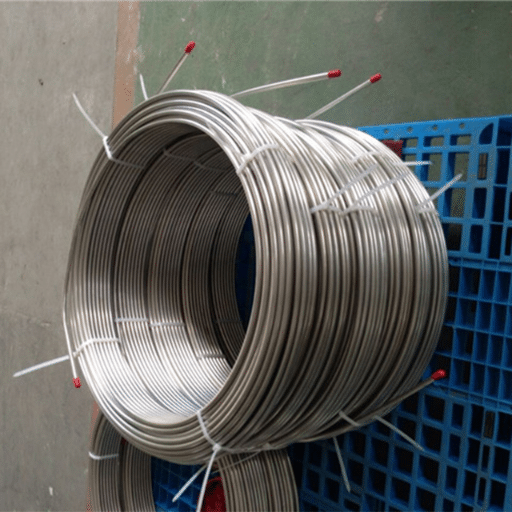
The oil and gas sector depends on stainless steel coil tubing because it provides exceptional durability and operational efficiency which enables it to function under extreme work conditions. The new material has emerged as the preferred solution for various applications which include well intervention and hydraulic systems and chemical injection processes because companies now prioritize productivity improvements and downtime reductions. The article will examine how stainless steel coil tubing provides essential advantages through its ability to resist corrosion and handle high-pressure situations while decreasing maintenance needs which make it vital for contemporary oil and gas operations. The assessment will provide you with detailed information about how this adaptable material will transform future industry developments
Introduction to Stainless Steel Coil Tubing

What is Stainless Steel Coil Tubing?
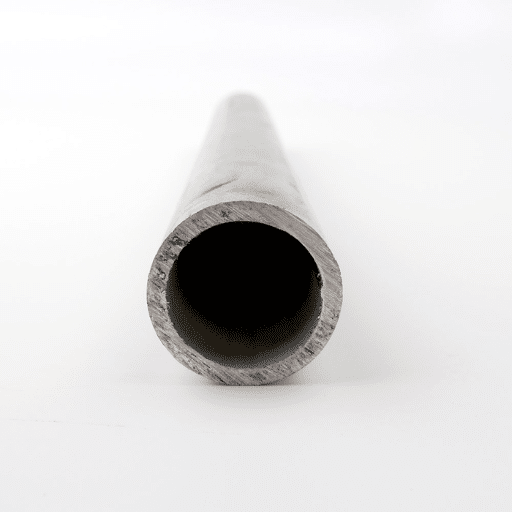
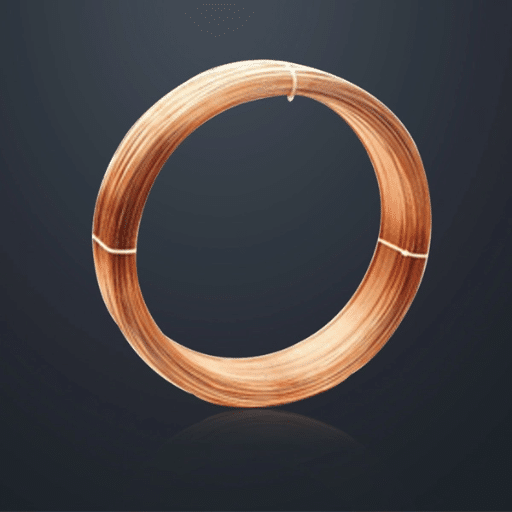
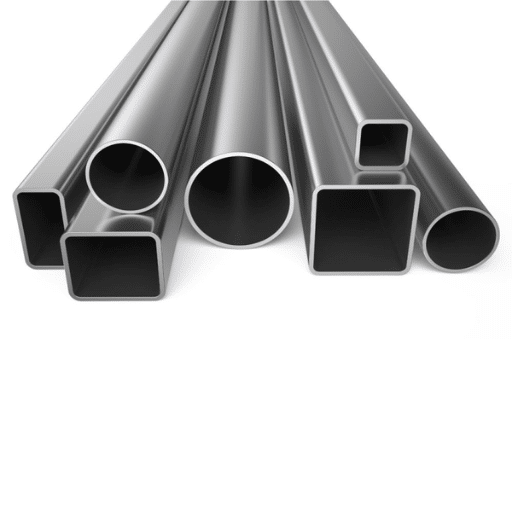
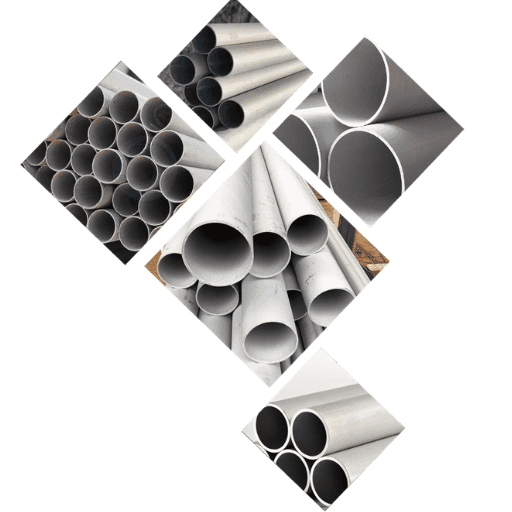
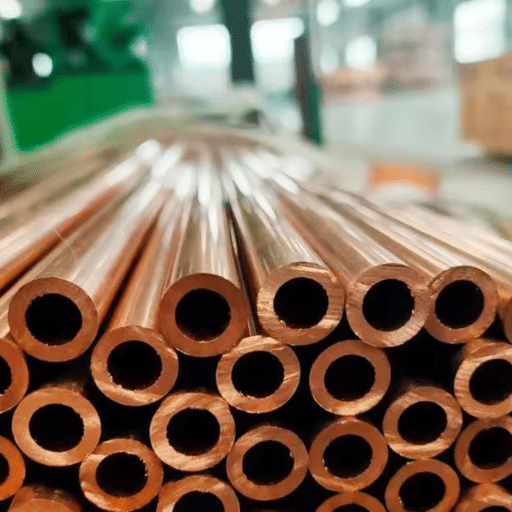
Stainless steel coil tubing consists of stainless steel tubing which designers create in a continuous length that they wind into a coiled shape for use in multiple challenging applications. The product utilizes premium stainless steel alloys which typically include 304 and 316 grades that provide outstanding protection against both corrosion and high-temperature conditions. The tubing finds extensive application in oil and gas and chemical processing and power generation industries because it can withstand extreme pressure and protection against harsh conditions and corrosive materials.
The latest advancements demonstrate that stainless steel coil tubing can meet current requirements because it now serves multiple purposes in contemporary drilling projects and hydraulic machinery and chemical injection systems. The system achieves durability through its seamless design which maintains exact dimensioning that results in long-lasting performance while preventing system breakdowns when exposed to severe conditions. The manufacturing sector made advances which resulted in better weld strength and enhanced performance for equipment used in high-stress operational environments, which led to its selection as the best option for essential operational requirements.
Overview of 304 and 316L Stainless Steel
The austenitic stainless steel family shows widespread use for 304 and 316L grades because they provide superior protection against corrosion while maintaining their strength and flexible application range. The two materials deliver outstanding performance in multiple industrial sectors, yet their distinct chemical compositions and material properties determine their different industrial application areas.
The main difference between 304 and 316L exists in their different chemical compositions. The 304 stainless steel alloy contains 18 percent chromium and 8 percent nickel whereas 316L stainless steel contains 2 to 3 percent molybdenum and lower carbon content than standard 316. The inclusion of molybdenum in 316L steel enhances its resistance to pitting and crevice corrosion which occurs in chloride-rich environments, thus making this material appropriate for marine applications and chemical processing plants and pharmaceutical production facilities.
People choose 304 stainless steel for their applications because its economical performance works best in areas with lower corrosion levels. The material exists in kitchen products and building facades and food processing plants because these areas experience low contact with hazardous materials.
The carbon content in 316L steel exists at lower levels which results in reduced carbide formation during welding but this condition maintains its ability to resist intergranular corrosion. The material serves as an optimal choice for fabrications that must undergo extensive welding processes or endure high-temperature environments. The material proves to be more cost-effective solution than 304 for applications that need minimal performance requirements.
Recent industry data shows that 316L has become the preferred material for biotech and medical device manufacturing because it meets strict hygiene and corrosion protection standards and its durability exceeds ISO requirements. The choice between 304 and 316L should follow a complete process that assesses environmental factors and financial limits and the exact mechanical and chemical conditions present in the application.
▸ Grade Comparison: 304 vs. 316L Stainless Steel
| Property | Grade 304 | Grade 316L |
|---|---|---|
| Chromium Content | 18% | 16–18% |
| Nickel Content | 8% | 10–14% |
| Molybdenum | None | 2–3% (pitting/crevice resistance) |
| Max Carbon Content | 0.08% | 0.03% (reduced carbide precipitation) |
| Weldability | Good — post-weld treatment may be needed | Excellent — no post-weld heat treatment required |
| Chloride Resistance | Moderate | Superior — marine and chemical environments |
| Typical Applications | Food processing, building facades, general industry | Marine, pharma, chemical processing, biotech, oil & gas |
| Cost | Lower | Higher (molybdenum premium) |
Importance of ASTM Specifications
ASTM specifications provide essential standards which maintain consistent material properties and quality standards and performance requirements across various industrial applications. The standards establish exact specifications which outline material composition and mechanical characteristics and testing processes that manufacturers and engineers use to determine their operational choices. The use of ASTM A240 standards enables users to select austenitic stainless steels through the evaluation of 304 and 316L materials which meet specified requirements for thickness and corrosion resistance and strength.
According to the latest data from search engine, a significant number of professionals look up ASTM standards to ensure compliance in regulated industries, such as construction, aerospace, and pharmaceuticals. Manufacturers currently operate their factories with dual priorities which include operational efficiency along with product quality. Organizations that implement ASTM standards for their materials achieve safe operations while reducing failures and maintaining their ability to compete in international markets.
Advantages of Stainless Steel Coil Tubing

Corrosion Resistance and Durability
Stainless steel coil tubing provides excellent protection against corrosion while maintaining its strength for extended periods in demanding environments. The material develops a protective oxide layer through its chromium content which reacts with oxygen when exposed to air. The protective layer effectively blocks all corrosive substances which include moisture and salt and various chemicals, which makes it suitable for operations in extreme environments. The oil and gas and chemical processing and marine engineering industries show increasing interest in “corrosion-resistant materials” according to recent search data, which demonstrates their need for durable and dependable materials like stainless steel coil tubing. The properties of these materials enable industries to achieve lower maintenance expenses while extending equipment life and maintaining structural stability during severe operational conditions.
Weldability and Fabrication Benefits
Manufacturers across many industries use stainless steel coil tubing because it delivers excellent welding and fabrication capabilities. The search data shows that people want to know why designers choose stainless steel for their custom fabrication work because they want to understand how the metal performs in production environments. Stainless steel maintains its corrosion resistance and mechanical strength through correct welding techniques which ensure consistent performance throughout its lifespan. The material’s flexible properties enable it to create complex shapes while retaining its original strength which engineers use to construct advanced systems that include heat exchangers and fluid transport networks. The material’s compatibility with advanced fabrication technologies like laser cutting and automated welding further simplifies production, improving efficiency and reducing overall costs.
Cost-Effectiveness and Longevity
The material proves cost-effective because it delivers extended durability while needing only limited maintenance work. The latest industry data and trends show that advanced alloys and composites enable companies to achieve lower total ownership costs because these materials maintain their durability over extended periods. The materials provide protection against wear and corrosion and environmental stressors, which leads to reduced replacement and repair costs because their protective properties extend their service life. The researchers discovered that modern manufacturing techniques, which he identified through search engine results, enabled them to achieve lower production costs because automation and precision machining streamlined their industrial processes. The material becomes an economical option for industrial and consumer use because it combines high initial efficiency with long-lasting performance and low operating costs.
▸ Core Advantages of Stainless Steel Coil Tubing
- Passive chromium oxide layer blocks moisture, salt, and chemicals — enabling service in extreme environments
- Seamless design maintains exact dimensioning, preventing system breakdowns under severe conditions
- Compatible with laser cutting and automated welding — streamlining production and reducing cost
- Extended service life reduces total ownership cost versus metals and conventional alloys
- Long continuous coil lengths minimize field joints, reducing potential leak points in critical systems
Common Applications in the Oil and Gas Industry

Use in Pipelines and Flowlines
Pipelines and flowlines function as essential infrastructure which enables the movement of oil, gas, and other hydrocarbons across extensive distances. The modern market has shown an increasing trend toward the application of corrosion-resistant alloys (CRAs) which search engines have proven through their data analysis. The design of CRAs which include stainless steel and nickel-based superalloys provides protection against the extreme environmental conditions that oil and gas operations experience through high pressure and temperature and corrosive elements such as CO2 and H2S and chlorides.
The installation of CRAs in pipelines decreases both the need for maintenance work and the possibility that materials will break down through time. The implementation of these materials together with advanced metallurgical research and precise manufacturing methods, establishes cost-saving benefits which improve operational reliability and lengthen the operational lifetime of essential infrastructure. The oil and gas industry now selects CRAs as its most effective material because they deliver better technical and economic performance, while maintaining system operation and reducing environmental hazards from pipeline leaks.
Applications in Wellhead and Downhole Equipment
Corrosion-resistant alloys (CRAs) are extensively used in wellhead and downhole equipment because these materials can withstand the harsh conditions which occur during hydrocarbon extraction operations. Wellhead components such as valves and tubing hangers and chokes face extreme pressure conditions while experiencing temperature changes and contact with hydrogen sulfide (H2S) and carbon dioxide (CO2) and chlorine-based fluids. CRAs which include duplex stainless steels and nickel-based alloys and titanium deliver greater protection against hazardous conditions which enable equipment to function properly while reducing the chances of malfunctioning.
The selection of CRA materials for downhole tools which include production tubing and packers and subsurface safety valves depends on three factors which are well depth and fluid composition and temperature gradients. The technological progress of CRA materials has led to a major decrease in two critical problems which affect high-pressure high-temperature (HPHT) wells: sulfide stress cracking (SSC) and pitting. Operators can enhance material selection for specific well conditions through the combination of real-time monitoring systems and predictive modeling which uses recent data analytics from tools. CRAs function as essential components which help modern oil and gas operations preserve both operational safety and production efficiency.
Role in Hydraulic Systems
Corrosion-resistant alloys (CRAs) provide essential support for hydraulic system operations and system dependability under extreme conditions which include deep-sea missions and HPHT well operations. The system demands materials which can withstand extreme stress conditions because it operates under conditions that include aggressive fluids and high pressure and extreme temperature environments. The engineers use advanced search algorithms and machine learning models to create predictive models which show how corrosion will happen under different operational environments. The ability to predict results enables engineers to create custom hydraulic systems which provide longer performance life and lower maintenance expenses and improved overall system performance. The material CRAs provides engineers with an effective solution to maintain hydraulic system performance and reliability which requires precise operation and strong system performance.
▸ Stainless Steel Coil Tubing: Oil & Gas Applications Overview
| Application Area | Key Components | Primary Threats Addressed | Recommended Grade |
|---|---|---|---|
| Pipelines & Flowlines | Transmission lines, gathering lines | CO₂, H₂S, chloride corrosion | 316L / Duplex SS |
| Wellhead Equipment | Valves, tubing hangers, chokes | H₂S exposure, high pressure, temperature swings | Duplex SS / Ni-based alloys |
| Downhole Tools | Production tubing, packers, safety valves | SSC, pitting, HPHT degradation | 316L / Titanium CRA |
| Hydraulic Systems | Control lines, umbilicals, subsea systems | Aggressive fluids, extreme pressure/temp | 316L / Duplex SS |
| Chemical Injection | Injection lines, metering systems | Chemical attack, scaling, blockage | 316L |
HPHT Environment: Material Challenges
High-pressure high-temperature (HPHT) wells present two critical failure risks for downhole materials: sulfide stress cracking (SSC) and pitting corrosion. Advances in CRA metallurgy — combined with real-time monitoring and predictive modeling — have significantly reduced both failure modes, enabling operators to select grade-specific solutions with confidence for each well’s unique fluid composition and temperature gradient.
Technical Specifications of Stainless Steel Coil Tubing

Dimensions and Length Considerations
Industrial applications require different sizes of stainless steel coil tubing which stainless steel coil tubing provides. The standard outer diameter range starts from 1/8 inch and extends to 1 inch, while the wall thicknesses depend on system pressure requirements and operational demands. Manufacturers can produce tubing which reaches lengths of multiple thousand feet because coil tubing length specifications enable them to do so. The length capabilities reduce the need for multiple connections, which helps to decrease potential leak points while enhancing system reliability.
The selection process for stainless steel coil tubing dimensions and length requires a detailed assessment of necessary flow rate data and operating pressure specifications and installation space requirements. The latest industry data and search trends demonstrate an increasing requirement for tubing which has uniform wall thickness and exact measurements to meet the needs of high-precision applications, such as subsea hydraulic systems and advanced instrumentation.
Comparison of 304 and 304L Stainless Steel Coil Tubing
People use 304 and 304L stainless steel for coil tubing because both metals protect against corrosion and maintain high strength while providing multiple practical uses. The main difference between these two materials exists because 304L contains lower maximum carbon content (0.03%) than standard 304 which has higher carbon content (0.08%). The reduced carbon content of 304L prevents carbide precipitation through the welding process, which leads to better corrosion resistance in welded structures and components that face high-temperature conditions.
The recent search data shows that interest in 304L stainless steel tubing has increased among industries that need materials with excellent weldability which does not require post-weld heat treatment. 304L stainless steel has become the preferred choice for chemical processing equipment and precision instruments and marine environments because it provides better protection against intergranular corrosion. 304 stainless steel remains a common selection for applications which do not need welding, as users require materials with slightly better yield strength than other options.
The selection between 304 and 304L requires decision-makers to evaluate their operational needs, which include their exposure to corrosive materials and their thermal cycling requirements and their welding activities. The latest trends show that organizations need to choose their materials according to performance requirements and cost-effectiveness standards.
Welded vs. Non-Welded Options
The selection between welded and non-welded stainless steel options depends on three main factors which include structural integrity and application requirements and cost factors. Welded stainless steel products are formed by fusing two or more pieces of stainless steel together, offering design flexibility while their production costs decrease. The welding procedure results in microstructural modifications which include sensitization that leads to decreased corrosion resistance in specific steel grades when they undergo improper heat treatment after welding.
Manufacturers produce non-welded stainless steel components as seamless products which prevent the occurrence of weld-related problems such as porosity and localized weakness. The design of non-welded systems provides dependable performance in high-pressure settings which demand strict structural and safety standards.
The latest data shows that material durability has become more important to researchers who study material properties. Welded options receive preference because they deliver cost savings and simple production methods for projects that require low operational standards. In contrast non-welded solutions serve as the main option for vital industries such as aerospace and marine and chemical processing because these sectors demand dependable systems with uniform material characteristics.
▸ Welded vs. Non-Welded Stainless Steel Coil Tubing
| Attribute | Welded | Non-Welded (Seamless) |
|---|---|---|
| Construction Method | Strip fusion — fused seam along length | Extruded from solid billet — no seam |
| Design Flexibility | High | Moderate |
| Production Cost | Lower | Higher |
| Structural Integrity Risk | Sensitization risk if post-weld treatment improper | No weld-related porosity or localized weakness |
| High-Pressure Suitability | Moderate — suitable for standard service | Excellent — preferred for critical service |
| Best Applications | General industry, lower operational standards | Aerospace, marine, chemical processing, oil & gas |
Selecting a Supplier or Manufacturer

Criteria for Choosing a Coil Tubing Supplier
The process of choosing a coil tubing supplier requires evaluation of multiple essential factors which must match operational needs and industry standards. The current search trend data shows that people now pay more attention to three aspects which are quality control and material integrity and supplier transparency. The suppliers need to provide proof that their products meet international safety and reliability standards through relevant industrial certifications which include ASME and ISO standards.
The process of tracing materials back to their original sources demonstrates vital importance. Clients can confirm material origins and product content through suppliers who maintain effective documentation systems. The practice becomes mandatory for aerospace and chemical processing industries because environmental factors and corrosive materials result in product performance decline. The industry requires manufacturers who offer extensive options for product customization because their products allow customers to create solutions which meet their specific project requirements. Supply chains require both reliable logistics systems and efficient communication methods because any delays or miscommunications during the supply process will result in disruptions to project schedules and financial plans.
The combination of these criteria and search analyses shows that decision-makers now give more weight to technological advancements which include suppliers who use modern non-destructive testing (NDT) technologies and digital reporting systems that improve their operational performance. The requirement for a supplier who combines technical knowledge with contemporary solutions demonstrates the necessity for reliable and superior coil tubing supply services.
Importance of Quality Certifications and Standards
The coil tubing industry demonstrates its commitment to certifications because it follows international standards which include ISO 9001 and API Q1 and ISO/TS 29001 according to current search data. The certifications function as essential requirements because they demonstrate to suppliers their need to maintain complete quality management systems which deliver trustworthy and safe products. The decision-making process requires active supplier search by decision-makers who want to find manufacturers that maintain consistent operations through their compliance practices. The market demand for traceability and audited processes and performance guarantees has increased because it requires businesses to choose suppliers who meet established industry standards. The current trend shows that buyers make purchasing decisions based on their preference for measurable quality assurance which they consider a fundamental factor.
- ▸Verify ASME, ISO 9001, API Q1, and ISO/TS 29001 certification compliance
- ▸Confirm full material traceability documentation from raw source to finished product
- ▸Assess customization capability for project-specific dimensional and grade requirements
- ▸Evaluate use of non-destructive testing (NDT) technologies and digital reporting systems
- ▸Confirm reliable logistics capability and track record for on-time delivery
- ▸Review audited process records and performance guarantees for quality assurance
Global Exporters of Stainless Steel Coil Tubing
The global stainless steel coil tubing market is characterized by a concentrated group of leading exporters who dominate the production and distribution of high-quality materials. The main countries that currently lead this industrial sector include China and India and the United States and Germany according to recent analysis and search trends and market data.
China maintains its position as the top exporter worldwide because the country operates vast manufacturing plants that produce stainless steel coil tubing which they export to international markets at minimal production costs. India maintains a strong position because it uses modern technology and affordable pricing to fulfill global market needs. The United States differentiates itself through its commitment to premium materials and its compliance with rigorous standards which specifically serve the energy and aerospace industries. Germany establishes itself as a leader in engineering and precision manufacturing because it provides specialized products to markets that need exact specifications.
Each exporter provides supplies to the worldwide shipping network, which operates through technological progress and international standard compliance that drives competition and research development in the industry. Buyers seeking reliable sourcing often focus on exporters with a track record of scalability, quality assurance, and logistical efficiency.
▸ Leading Global Exporters at a Glance
China
Extensive manufacturing capacity enabling high-volume, cost-competitive international distribution
India
Advanced technological processes and competitive pricing meeting strong international demand
USA
High-grade materials with stringent quality standards — primary supplier to energy and aerospace sectors
Germany
Engineering excellence and precision manufacturing for niche markets requiring strict dimensional specifications
Frequently Asked Questions
Q.
What are the main technical requirements for using coil tubing in oil pipelines?
The essential requirements for coil tubing include its outer diameter, wall thickness, material grade, and length specification, which requires assessment of both its anneal state and field deployment bend tolerances. The specifications establish requirements to follow standards which ASTM A269 and ASTM A213 define for seamless and welded stainless steel tube products. Pipeline systems must assess their ability to work with fittings and orbital welds while maintaining long lengths which decrease the need for field joints and enhance flow measurement systems. The SS 304 and 304L coiled variants display their mechanical properties through tensile strength and yield strength and corrosion resistance attributes which suppliers and tube suppliers will provide. A reputable coil tubing manufacturer or tubing exporter provides quality stainless steel tubing which enables traceability and meets petrochemical and natural gas service requirements.
Q.
How does tube selection affect performance in oil and gas lines?
Tube selection determines how well systems operate because it affects both flow efficiency and pressure drop and materials withstand both corrosion and hydrogen embrittlement in fuel lines and tubing used in oil systems. The project requirements call for either seamless coiled or 304 welded construction because SS 304 and 304L coiled stainless steel tubes provide adequate corrosion resistance. Tube suppliers offer products with both anneal treatments and specified outer diameter and wall thickness dimensions which enable field bending and radius bending. Natural gas and petrochemical systems achieve better reliability through proper fittings and orbital welds and compatible tubing products which decrease leak risks. An experienced coil tubing manufacturer or distributor provides essential support to help you choose the correct steel tube for your geothermal CNG or automotive fuel line projects.
Q.
Why is stainless steel tubing preferred for pipelines and flow measurement applications?
Stainless steel tubing stands as the preferred choice for pipeline systems and flow measurement tasks because it provides exceptional protection against corrosion while maintaining strong mechanical properties and handling various types of materials which include petrochemicals and natural gas. The coiled SS 304 and 304L variants protect against oxidation and scaling which makes them ideal for flow measurement purposes and long distances that require constant internal diameter maintenance. The performance of seamless stainless steel tubes exceeds that of welded tubes under cyclic and high-pressure conditions except 304 welded tubing meets operational needs when it obtains proper certification through ASTM A269 and other standards. High-quality tubing from a trustworthy tube supplier or tubing exporter ensures uniform outer diameter and wall thickness while maintaining ability to track material origins. The combination of fittings with orbital welds and suitable annealing methods improves system performance while increasing its operational lifespan.
Q.
What installation considerations apply to coil tubes in petroleum pipelines?
Coil tube installation needs complete planning for handling extended lengths of material plus establishing necessary bend radius specifications while implementing adequate support systems to stop operational fatigue and buckling. Delivery of coil tubes occurs through tubing coils because this method enables extended tubing lengths which minimizes joint usage and results in quick flow measurement processes. The installer must check material certificates to determine whether the product consists of seamless or welded components while confirming that it matches the required fittings for orbital welding procedures. The coil tubing manufacturer or distributor needs to provide documentation of anneal treatment and testing results according to ASTM A269 or equivalent standards for critical systems. Effective coordination between the tube supplier and tubing exporter enables product selection for petrochemical and natural gas environments while preventing delays.
Q.
What are the advantages and limitations of stainless steel 304 for pipeline tubing?
Stainless steel 304 provides excellent protection against corrosion while enabling easy shaping and it comes in numerous stock options, which makes it a preferred material for petroleum pipeline, fuel line, and petrochemical application tubing. The material exhibits multiple advantages because it protects against atmospheric conditions and various chemical substances while providing 304 welded products with strong welding performance and maintaining dimensional stability during flow measurement tests. The material has two main limitations, which are its vulnerability to chloride-induced pitting and its decreased protection against high-temperature conditions that exist in better-alloy materials. The 304L coiled variants become the preferred choice for applications that need better protection against welding-related corrosion and require lower carbon content in materials. Buyers of 304 stainless steel coil tubing should connect with tube suppliers who will help them verify product quality through ASTM A269 standards which provide information about stainless steel quality and its annealing and testing documentation.
Q.
What steps do manufacturers follow to create and evaluate stainless steel coil tube for use in pipelines?
The production of stainless steel coil tube manufacturing leads to two different product outputs which consist of seamless coiled tube and welded strip-based tube that undergoes annealing and sizing processes to achieve specific outer diameter and wall thickness requirements. The production process follows ASTM A269 standards which establish requirements for seamless and welded stainless steel tubing to meet the necessary mechanical and corrosion protection standards required in petroleum pipelines. The quality control procedure tests dimensional accuracy by using hydrostatic and pneumatic methods while non-destructive testing methods assess weld strength and material defects. Tube suppliers and coil tubing manufacturers provide material testing documents together with certification papers which demonstrate their products comply with petrochemical and natural gas and geothermal application requirements. The tubing export companies and distributors use appropriate packaging and handling techniques to preserve the integrity of orbital weld surfaces while stopping contaminants from entering before the installation process starts.
Reference Sources
“Corrosion in water supply pipe stainless steel 304 and a supply line of helium in stainless steel 316”
This study explores corrosion behavior in 304 stainless steel tubing, providing insights into its industrial applications.
“Failure investigation of a 304 stainless steel geothermal tube”
This paper investigates the performance and failure mechanisms of 304 stainless steel in industrial environments.
“Pipeline Engineering (2004)”
A comprehensive book covering pipeline engineering principles, including material selection and flow dynamics.