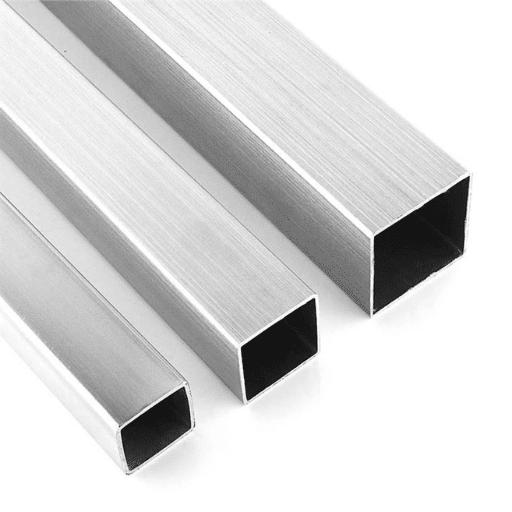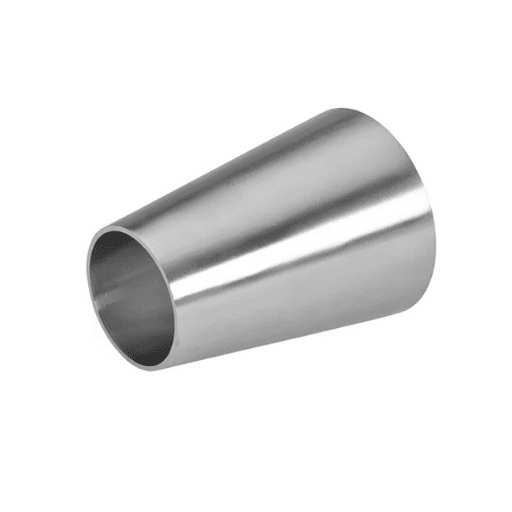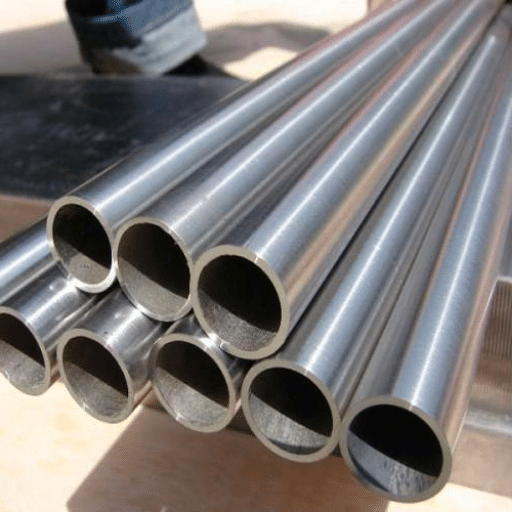
Seamless 304 stainless steel tubing stands as one of the most durable materials because of its ability to withstand damage and its multiple uses and its protection against corrosion. This type of tubing has become an essential component in various industrial fields because it delivers outstanding strength together with exceptional flexibility which makes it suitable for multiple applications. But what exactly makes it so indispensable? The article presents an analysis of seamless 304 stainless steel tubing which demonstrates its unique characteristics and multiple use cases and current research developments which are driving its growth. This guide provides essential information about stainless steel materials which professionals use in their work and which people find interesting about modern manufacturing methods.
Understanding Seamless Tubing

Definition and Characteristics of Seamless Tubing
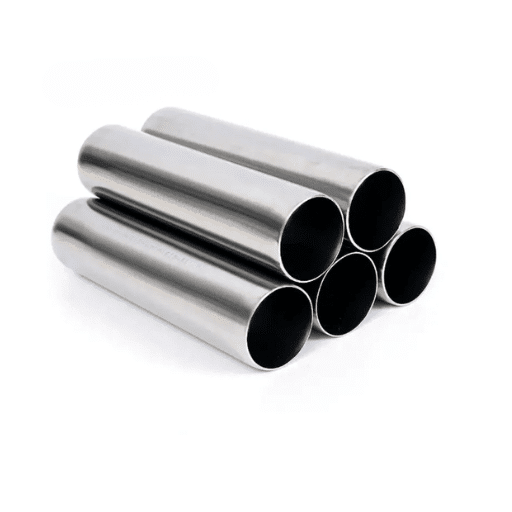
Seamless tubing describes a tube which manufacturers produce without any welding or seams and this process results in a tube which maintains a consistent surface from one end to the other. The production of seamless tubing starts with an extrusion process which creates a single metal piece that exists as a complete unlike welded tubes which require multiple metal parts to be connected. The manufacturing method produces products which exhibit strength and resistance to corrosion and maintain a visually unblemished appearance, thus making it suitable for use in demanding situations.
The latest data shows that seamless 304 stainless steel tubing provides durable performance which withstands changing temperatures and its main strength lies in its ability to resist both rust and chemical reactions. The aerospace and oil and gas and medical equipment and automotive industries prefer seamless tubing because it provides reliable performance under high-pressure conditions. The system achieves its continuous operation because its uniform design protects against mechanical breakdowns which would disrupt essential functions.
Manufacturing Processes of Seamless Stainless Steel Tubing
The production process of seamless stainless steel tubing requires a precise method which achieves high-quality results. The process starts with the selection of high-grade stainless steel billets, which are heated to extremely high temperatures to make them malleable. The heated billets undergo a piercing process which uses a rotating mandrel or extrusion method to form a hollow tube. The process of this stage makes it impossible to create seams which would weaken the tubing system because it creates seamless tubing.
The extrusion process leads to rolling and drawing operations which extend the tube until it reaches its required size and wall thickness. Tubing manufacturers use advanced techniques such as cold pilgering and cold drawing to improve surface finish and tensile strength and dimensional accuracy of their products. The tubes undergo heat treatment to relieve stress which results in improved mechanical properties and they undergo non-destructive testing through ultrasonic or eddy current tests to verify the absence of defects.
Manufacturers today create seamless tubing with perfect accuracy because of current technological advancements. The manufacturing process now uses computerized systems to monitor pressure and temperature, which helps to maintain consistent product quality. Advanced laser measurement systems enable companies to maintain precise measurement standards which allow their seamless stainless steel tubing products to meet high-performance industrial requirements.
Comparative Analysis: Seamless vs. Welded Tubing
The evaluation of seamless and welded tubing requires assessment of three key aspects, which include their strength and dependability and production expenses. Seamless tubing is manufactured without any joints or welds, which results in a product that demonstrates both strength and consistent structure throughout its entirety. The product serves as an optimal solution for high-pressure systems and situations which demand exceptional strength, which exists in both aerospace and oil and gas and medical fields.
Welded tubing has lower production costs than other options because manufacturers turn flat metal sheets into tubes through welding. The product functions effectively in applications which deal with low pressure and conditions that do not require precise measurements. The recent research findings show that seamless tubing has become the preferred choice in the industry because it maintains its structural integrity during operational demands. The commercial and industrial market maintains its need for welded tubing because it provides affordable solutions and allows easy product changes.
The selection of seamless or welded tubing depends on the specific needs of the application which requires performance expectations assessment and budget limitation evaluation and environmental condition examination.
Properties of 304 Stainless Steel Tubing

Mechanical Properties and Wall Thickness
The mechanical properties of 304 stainless steel tubing make it an excellent choice for multiple industrial applications. The material demonstrates a tensile strength of 75000 psi and a yield strength of 30000 psi, which enables it to withstand various force conditions. The tubing’s corrosion resistance properties improve through the presence of chromium and nickel because these materials help the tubing function effectively under both wet environments and high-temperature settings.
The thick wall construction enables the material to withstand high pressure while providing increased strength, which makes it suitable for demanding uses that involve hydraulic systems and pipelines with high-pressure requirements. The use of thinner walls provides benefits which include low weight and reduced costs which make them suitable for applications that require maximum load capacity and minimal material consumption. The selection of wall thickness requires thorough assessment of operational needs which include pressure requirements and environmental factors in addition to expected operational life. The balance between these two factors guarantees maximum operational efficiency combined with necessary safety measures.
Corrosion Resistance and Durability
The property of corrosion resistance functions as a vital requirement which enables materials to sustain their performance ability throughout extended periods of time in challenging environmental conditions. The combination of stainless steel with specific alloys provides built-in defense against rust and chemical attacks which makes these materials appropriate for use in marine environments and industrial settings and chemical processing industries. Recent research has demonstrated that protective coatings receive dual benefits from galvanization and advanced polymer coating which protects against both corrosion and moisture infiltration. Through nanotechnology innovators have created new methods that use self-repairing coatings to enhance corrosion protection systems because these coatings restore their initial condition after experiencing tiny damage. The combination of high-quality materials with advanced protective solutions guarantees that systems will maintain their operational strength throughout their designated runtime even when faced with demanding circumstances.
The Impact of Alloy Composition: 304 vs. 304L
The primary difference between 304 stainless steel and 304L stainless steel exists because of their different carbon levels, which determine their common industrial uses. Type 304 has a higher carbon content (up to 0.08%) compared to 304L, which contains a maximum of 0.03%. The lower carbon content which 304L contains, decreases the possibility of carbide precipitation during welding operations but enhances its resistance to intergranular corrosion that occurs in heat-affected zones.
The industrial data and research findings indicate that 304L exists as the preferred material within operational environments that experience regular welding and corrosive exposure such as chemical processing plants and marine environments. The 304 stainless steel grade provides better strength characteristics for applications that require infrequent welding. The project demands enable the selection of 304 or 304L to achieve the best possible performance which combines material strength with protection against corrosion and economical value.
Applications of Seamless 304 Stainless Steel Tubing

Common Industrial Uses
The superior corrosion resistance and strength of seamless 304 stainless steel tubing enables its application in multiple industrial sectors. The food and beverage industry requires processing equipment and piping systems which require both hygienic standards and durable performance. The material functions as a primary solution for chemical processing plants which require safe transportation of corrosive substances through extreme environmental conditions. 304 stainless steel tubing functions as an essential material for constructing heat exchangers and condensers which operate in power generation facilities through its capacity to endure high-pressure and high-temperature conditions. 304 stainless steel tubing functions as the primary material for aerospace and automotive component production because of its mechanical accuracy and material strength.
Niche Applications in Specialized Industries
304 stainless steel tubing holds a versatile position in niche applications across specialized industries. The medical field relies on this material to produce surgical instruments and hypodermic needles because it offers biocompatibility and corrosion resistance and sterilization ease. The food and beverage industry uses 304 stainless steel tubing in processing equipment and storage tanks and transportation to maintain hygienic standards and meet regulatory requirements. The search engine data shows that searchers have increased their searches for “high-performance stainless steel in medical” and “food-grade stainless steel tubing” which indicates rising interest and need for these materials. The specialized industries which depend on 304 stainless steel tubing have developed new requirements because of these evolving trends.
Instrumentation and Precision Requirements
Instrumentation applications require both precise performance capabilities and trustworthy operation, which 304 stainless steel tubing provides through its superior performance capacity. The material operates as a vital component which provides essential protection in multiple critical applications across healthcare and food processing and aerospace industries. The search engine data establishes growing interest in “high-performance stainless steel in medical” and “food-grade stainless steel tubing,” which shows that businesses increasingly choose materials which boost precise measurement and secure operations. The widespread use of 304 stainless steel tubing needs an explanation. The solution exists in its specific attributes which combine strength and chemical resistance and flexibility to create a product that fulfills both regulatory and operational requirements while maintaining cost efficiency.
Market Trends and Demand for Stainless Steel Tubing

Current Market Analysis and Future Projections
The worldwide need for 304 stainless steel tubing keeps growing because multiple industries use this material for their construction, healthcare, food processing and automotive manufacturing needs. Recent search engine analytics show that people now show greater interest in stainless steel tubing materials which they want to understand through the concepts of durability and corrosion resistance and cost efficiency. The increase in user interest matches market predictions which show that the stainless steel tubing industry will experience major growth during the next ten years. Manufacturing technology improvements and construction projects and regulations that require high-grade materials to be used have all contributed to this industry development. The 304 stainless steel tubing material serves as a vital asset for businesses that require dependable performance and extended product durability.
Impact of Global Supply Chains on Pricing
The international supply chain network establishes the price points which manufacturers use for their 304 stainless steel tubing products. Disruptions which include shipping delays and raw material shortages and geopolitical tensions lead to increased costs because of restricted material access and higher production costs. The efficiency of supply chains which businesses maintain directly affects their ability to create products according to market demand while keeping prices within competitive limits. According to latest search data, interest in supply chain management and its impact on material costs has surged, indicating heightened awareness among industries about its importance. The current business challenges require companies to establish multiple supplier relationships and support their local manufacturing operations and use advanced forecasting solutions to control price variations.
Technological Advances Driving Market Growth
The application of advanced technologies serves as the main driver for business expansion in numerous sectors. The latest search data shows an increase in research about artificial intelligence and automation and blockchain technology which companies now use to build their competitive advantage. Companies use AI-based analytics and IoT solutions to improve their operational processes and supply chain performance through market forecasting. Blockchain technology creates a transparent system which enables organizations to establish their trustworthiness with their various stakeholders. Businesses use these technological advancements to optimize their operations while maintaining capacity to adjust their activities according to market fluctuations, which guarantees their ongoing growth during economic changes.
Sustainability Considerations in Tubing Manufacturing

Environmental Impact of Stainless Steel Production
The environmental effects of stainless steel production show harmful effects because stainless steel production brings high value through its enduring strength and ability to be recycled. The extraction and processing of raw materials like iron ore, nickel, and chromium require significant energy expenditures which produce greenhouse gas emissions. The production of stainless steel results in approximately 5 percent of all industrial carbon emissions according to recent research findings. The process generates waste materials which require extensive water usage that threatens local ecosystems through improper management practices.
The technological improvements together with sustainable methods work to decrease the existing ecological effects. The manufacturers in the industry implement energy-efficient solutions while they generate electricity through renewable energy systems. The recycling ability of stainless steel enables its products to enter a closed product lifecycle which results in over 80 percent of all stainless steel items being recycled after they complete their useful life. The approach shows how innovation helps the industry to solve environmental problems because it reduces the need for new raw materials and decreases the overall environmental impact.
Recycling and Life Cycle of Seamless Tubing
The recycling process and the life cycle of seamless tubing provide essential sustainability benefits. The strong permanent material properties of stainless steel seamless tubing and its other materials enable recycling throughout its complete life cycle. The latest data shows that more than 80% of stainless steel worldwide gets recycled which results in reduced waste and supports the development of a circular economy. The entire manufacturing process of stainless steel seamless tubing becomes possible through its recyclability which enables all reused materials to keep their original form.
The production of seamless tubing now achieves higher energy efficiency levels through better manufacturing techniques which support worldwide sustainability objectives. The combination of these innovations together with effective recycling methods enables seamless tubing to fulfill industrial requirements while protecting the environment.
Innovations for Sustainable Manufacturing Practices
Sustainable manufacturing practices now use advanced technologies together with dedicated efforts from various industries to create their operational systems. The newest data indicates that production facilities achieve lower greenhouse gas emissions through the implementation of renewable energy solutions which include solar and wind power systems. Smart factories use AI and IoT technology to control resources by eliminating waste and improving their operational efficiency. The development of advanced materials engineering now allows production processes to use compostable materials and recycled substances which support circular economy principles.
People show growing interest in manufacturing applications which use carbon capture technologies and green hydrogen systems according to current search trends. The technologies function as vital tools which help industrial operations grow their business activities while achieving carbon neutrality. Industries can reduce their emissions by using renewable energy together with hydrogen power while still generating their required energy. Eco-friendly waste management solutions, including closed-loop water treatment systems, provide effective methods for resource preservation and harmful pollutant elimination. The combination of these innovations gives manufacturers sustainable solutions which help them meet global environmental sustainability requirements.
FAQ
What are the standard dimensions and permissible deviations that apply to seamless 304 stainless steel tubing?
Seamless 304 stainless steel tubing is available in a wide range of outer diameters (OD), inner diameters (ID), and wall thicknesses to meet various applications. The standard sizes of cold drawn tubing follow ASTM A312 dimensions and they have strict limits for outside diameter and wall thickness specifications which require accurate measurements. Manufacturers can supply custom sizes outside standard ranges, but lead times and minimum order quantities may apply. The production method determines the tolerances which hot finished tubing allows wider tolerances than cold drawn or annealed tubing. The surface finish which includes mill finish and electropolishing does not typically affect dimensional tolerances but it plays a crucial role in determining appearance and corrosion resistance.
How does annealing change the characteristics of seamless 304 stainless steel tubing?
Annealing relieves internal stresses and restores ductility after cold working operations like cold drawing, which improves formability while decreasing the risk of cracking during fabrication. For 304 stainless steel tubing solution annealing followed by rapid quenching produces an even austenitic microstructure which maximizes corrosion resistance. The annealed tubing exhibits superior toughness and simplified welding characteristics which makes it appropriate for use in sanitary and food grade environments. The process determines mechanical properties including yield and tensile strength which must be specified at the time of order. The process requires proper post-anneal cleaning or passivation to eliminate scale and restore surface quality.
Is seamless 304 stainless steel tubing suitable for food and pharmaceutical applications?
Seamless 304 stainless steel tubing serves food and pharmaceutical applications because it provides excellent corrosion resistance and hygienic performance. The seamless design of this product prevents bacteria from developing in hidden spaces while its electropolished surface reduces surface roughness to enable easier cleaning and sterilization. For more demanding sanitary requirements, 316L may be preferred due to higher chloride resistance, but 304 remains acceptable for many food processing and beverage lines. The certification process requires organizations to provide both appropriate standards and documentation which includes material test reports and evidence of compliance with food contact regulations. The piping system achieves compliance through proper welding procedures, passivation methods, and the installation of hygienic fittings.
What are the differences between seamless and welded 304 stainless steel tubing?
The two types of 304 stainless steel tubing differ because seamless tubing uses a solid billet to create a continuous pipe while welded tubing uses rolled strip material that contains an internal longitudinal weld. The production process of welded tubing creates more affordable products which come in different wall thicknesses and diameters that suit specific needs which do not require exact specifications. The industry prefers seamless 304 tubing because it maintains mechanical consistency and provides corrosion protection through its design which avoids using welded joints in high-pressure cryogenic environments. Welded tubing can undergo testing and treatment through post-weld heat treatment and non-destructive testing procedures, which will address existing safety concerns in particular areas. The proper selection process needs to assess the combination of service conditions with product expenses and product distribution network.
What processes exist for welding and joining seamless 304 stainless steel tubing?
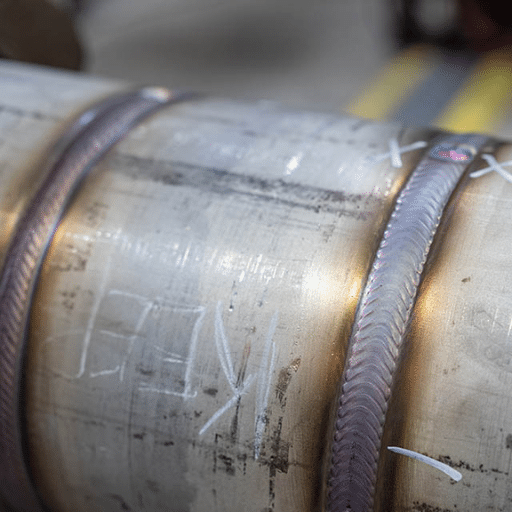
Professionals use TIG (GTAW) welding to create high-quality joints with minimal distortion when they need to weld seamless 304 stainless steel tubing, while they use MIG (GMAW) for fast production on larger pipe sections. The process of maintaining corrosion resistance and mechanical strength requires proper joint preparation and clean work environment and appropriate choice of matching filler metals which includes 308L. The process of removing heat tint and restoring the protective oxide layer through post-weld treatments requires either annealing or passivation methods. The use of orbital welding and purge gas techniques in hygienic systems ensures that weld quality remains constant while reducing risks of contamination. Mechanical fittings and compression joints serve as disassembly options, but they require manufacturers to produce them using 304 stainless steel material which prevents galvanic corrosion.
What cleaning and maintenance procedures help maintain the condition of seamless 304 stainless steel tubing?
The 304 stainless steel tubing system functions effectively because its routine cleaning schedule uses mild detergents and water to eliminate most contaminants which helps keep the system clean. The passive film on surfaces becomes damaged when users apply chloride-containing cleaners together with abrasive pads, which results in pitting corrosion; users need to rinse thoroughly and dry immediately to lower the risk when working with chlorides. The process of periodic passivation with nitric or citric acid solutions restores the chromium-rich oxide layer of surfaces, which occurs after fabrication and welding and through contamination from heavy materials. The sanitary system requires implementation of CIP (clean-in-place) procedures which need validated chemistries and temperatures to prevent biofilm development. Users need to check tubing systems at regular intervals to find mechanical damages and crevice formations and ongoing discoloration which must be handled right away to maintain system operation for extended periods.
Reference Sources
-
Residual-Stress Measurement in SS304 Seamless Tube
- Research analyzing residual stresses in 304 stainless steel seamless tubes, focusing on structural integrity.
-
Failure Analysis on 304 Stainless Steel Tube in Coal Chemical Plant
- A study on the performance and failure mechanisms of 304 stainless steel tubes in high-stress environments.
-
Welded Stainless Steel Tubes & Pipes vs. Seamless
- Comparative analysis of welded and seamless stainless steel tubes, including 304-grade applications.