Stainless steel concentric reducers function as essential components for fluid management systems because they create smooth pipe transitions that maintain optimal flow conditions between different pipe sizes. These essential components serve three main purposes: enhancing efficiency, decreasing turbulence, and extending the lifespan of systems used throughout industrial operations, chemical plants, and plumbing systems.
Introduction to Stainless Steel Concentric Reducers

What is a Concentric Reducer?
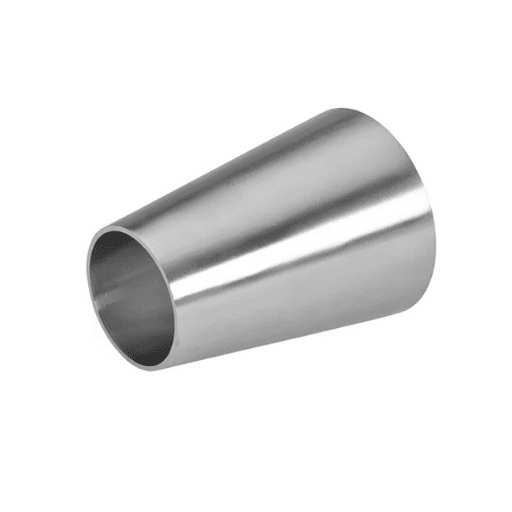
A concentric reducer is a type of piping connector that enables two different sized pipes to connect while keeping their central axes aligned. The design allows fluid to flow through the system while creating minimal impact on the waterway. The system needs concentric reducers because they allow smooth pipe diameter transitions which reduce turbulence and pressure loss and vibrations.
The product which contains stainless steel components provides strong resistance to corrosion and high temperatures, using its metal strength to serve industries like oil and gas, chemical processing, and water treatment facilities. Designers currently prefer using concentric reducers because they can support high-pressure applications while meeting ASME and ISO certification requirements. Their exact design and ability to work with different substances make them essential for developing piping systems that operate effectively and endure over time.
Types of Reducers: Concentric vs. Eccentric
Concentric Reducers
Create a symmetrical shape which keeps both ends centered around a common axis. Optimal for vertical pipelines that need to maintain continuous flow without interruption.
Eccentric Reducers
Create an offset design combining a flat side with a curved side for horizontal piping systems. Prevent air pockets in liquid systems and stop liquids from gathering in gas-carrying systems.
Current research findings show that users increasingly prefer to apply eccentric reducers in high-efficiency systems found in wastewater management and renewable energy sectors. Organizations are now focusing their efforts to enhance the movement of fluids while working to decrease operational downtime. Both types of reducers sustain their dominant position in traditional industries which depend on constant fluid movement and require high pressure.
Common Applications in Various Industries
Reducers which include both concentric and eccentric designs are widely used for various industrial applications because they provide effective solutions to control fluids and establish piping connections. Recent search engine data shows that these components are most demanded in the oil and gas, chemical processing, and water treatment industries.
Key Industry Applications
- Oil & Gas: Enable efficient crude oil and natural gas transportation through pipelines requiring different diameter sizes while maintaining desired flow speeds.
- Chemical Processing: Handle accurate flow control and pressure management which meets complex chemical reaction process needs.
- Water Treatment: Create smooth connections between different pipeline sizes which improve water flow and energy efficiency.
- Renewable Energy: Infrastructure components including biodigester plants and geothermal systems that depend on stable fluid movement.
Benefits of Using Stainless Steel Concentric Reducers

Durability and Strength of 316 Stainless Steel
The outstanding strength together with mechanical characteristics of 316 stainless steel make it appropriate for use in demanding industrial applications. Its primary advantage lies in its enhanced resistance to corrosion and extreme temperatures. The material achieves this capability because molybdenum addition delivers better defense against pitting and crevice corrosion that occurs in chloride-rich environments found in marine and chemical processing settings.
| Property | Specification |
|---|---|
| Tensile Strength | ~515 MPa (74,700 psi) |
| Yield Strength | ~205 MPa (29,700 psi) |
| Operating Temperature Range | 870-925°C (1600-1700°F) |
| Key Feature | Enhanced molybdenum content for corrosion resistance |
Corrosion Resistance and Longevity
316 stainless steel displays outstanding resistance to corrosion because its molybdenum content exceeds that of 304 stainless steel, which boosts its protection against pitting and crevice corrosion in chloride environments. The material displays better performance than all other austenitic stainless steels when tested in harsh maritime or industrial environments which involve contact with saltwater and chemical pollutants.
Ideal Applications for Long-Term Reliability
- Chemical processing equipment
- Marine fittings
- Medical devices
- High-corrosion industrial environments
Efficiency in Fluid Transfer Systems
Multiple factors determine fluid transfer system efficiency, including component design, fluid dynamics, material selection, and operational conditions. High-efficiency systems use advanced engineering principles to reduce energy loss which usually occurs through system friction, turbulence, and leaks. Computational fluid dynamics (CFD) modeling enables design teams to better forecast and fix design-related inefficiencies in their work.
Research shows that real-time system monitoring and sensor technology implementation lead to better efficiency results for fluid transfer systems. The system improvements provide operational efficiency control through maintenance prediction and system parameter adjustments which protect against expensive breakdowns. Modern fluid transfer systems achieve exceptional energy efficiency through their combination of advanced materials science and intelligent technology.
Specifications and Sizing of Stainless Steel Concentric Reducers

Schedule 10 and Schedule 40 Reducers: Understanding Their Differences
The primary distinction between Schedule 10 and Schedule 40 reducers exists in their wall thickness because this thickness determines their ability to handle pressure and their overall strength. The ASME B36.10M and ASME B36.19M standards include these schedules which engineers use to design piping systems and create their specifications.
| Specification | Schedule 10 | Schedule 40 |
|---|---|---|
| Wall Thickness | Thin wall construction | Thicker wall construction |
| Weight | Lightweight | Heavier |
| Cost | More economical | Higher cost |
| Pressure Capacity | Moderate pressure applications | High-pressure applications |
| Typical Applications | HVAC systems, low-pressure fluid transfer, food processing | Oil and gas, high-pressure steam systems, chemical manufacturing |
Important Note: The system’s performance requires proper schedule selection to prevent system failures including risks of rupture or leaks. System specifications must be accurately analyzed together with industry standards to guarantee that components will operate efficiently and maintain durability during their intended use.
Key Dimensions and Length Considerations
The evaluation of key dimensions for Schedule 40 reducers requires three specific parameters: nominal pipe size, outside diameter, and wall thickness. These elements determine both system integration and piping performance. Standard reducers connect two pipes with different diameters because their length design minimizes turbulence which helps maintain uninterrupted flow.
Critical Dimensional Parameters
- Nominal Pipe Size (NPS)
- Outside Diameter (OD)
- Wall Thickness
- Overall Length
- ANSI/ASME B16.9 compliance verification
Choosing the Right Size for Your System
The system’s efficiency and safety depend on selecting the correct size of Schedule 40 reducers which also ensures compliance with regulations. Recent search engine data shows that users want to know how to match reducer sizes to three specific requirements: pipe dimensions, flow capacities, and pressure requirements.
Selection Process Steps
- Evaluate Nominal Pipe Size (NPS): Must match both upstream and downstream system components
- Verify Complete Dimensions: Include overall length, end-to-end diameter, and wall thickness through ANSI/ASME B16.9 standard guidelines
- Confirm Pressure Ratings: System requirements at pressure ratings need to match system specifications to prevent mechanical breakdowns
- Assess Performance Parameters: Use engineering datasheets and performance charts for various temperature conditions and media types
Installation Guidelines for Weld Concentric Reducers

Preparing the Pipe and Fitting for Welding
Correct preparation of the pipe and fitting surfaces creates a vital requirement for preserving both welded joint strength and functional performance. Begin the process by cleaning all joining areas until all contaminants—including dirt, grease, oil, and oxides—become eliminated. The use of industry-approved cleaning products together with wire brushes and grinding wheels needs to happen because they will create a clean surface which meets necessary standards.
Pre-Welding Requirements
- Verify dimensions and alignment comply with ASME B31.1 and API 1104 tolerances
- Bevel pipe ends and reducer edges for proper weld groove formation
- Verify material specifications using heat numbers that match project documents
- Conduct NDT (eddy current testing and ultrasonic testing) to identify potential defects
Step-by-Step Installation Process
Step 1: Material Inspection and Verification
The project requires full assessment of all materials to determine their suitability for project requirements and their compliance with project specifications. The use of ultrasonic testing combined with advanced NDT technologies enables assessment of component integrity while all installation defects become detectable.
Step 2: Surface Preparation
The joining surfaces must be cleaned to eliminate all debris and oils and oxides which creates better adhesion and electrical conductivity. The team will choose between abrasive blasting and chemical cleaning methods based on the needed material requirements and the existing environmental conditions.
Step 3: Component Alignment
Align components according to established design specifications and specified tolerances. Use precise measuring equipment together with jigs to achieve consistent results, as correct alignment directly affects system performance after installation.
Step 4: Joining and Assembly
The joining process requires implementation of its designated method through welding, bolting, or adhesive bonding according to established industry standards. The organization should automate all processes which automation can solve because this will reduce operational variation and human error.
Step 5: Final Inspections and Quality Assurance
The team needs to perform complete inspections which will confirm that the installation meets all safety requirements and operational needs and industry standards. The assessment process includes three components which are visual inspection and mechanical testing for load capacity assessment and NDT testing to determine structural integrity.
Step 6: Documentation and Review
Common Mistakes to Avoid During Installation
| Common Mistake | Consequence | Prevention Strategy |
|---|---|---|
| Neglecting Pre-Installation Site Assessments | Equipment misalignment, space limitations, environmental problems | Conduct thorough site evaluation before starting installation |
| Improper Adherence to Manufacturer Specifications | Operational dysfunction, component failure | Reference technical manuals and confirm compliance with all provided details |
| Insufficient Staff Training and Oversight | Installation errors, costly rework | Implement training programs with on-site management |
| Data Logging and Configuration Errors | System malfunction, incorrect parameters | Validate all configuration stages through established standard procedures |
| Overlooking Environmental and Safety Standards | Operational interruptions, compliance violations, safety hazards | Monitor temperature, humidity, power supply compatibility, and safety requirements |
Best Practice: Use project management software together with advanced analytical tools to detect potential risks during their early stages, enabling data-driven project control and minimizing installation errors.
Maintenance Tips for Longevity of Stainless Steel Concentric Reducers

Routine Inspection and Cleaning
Stainless steel concentric reducers require both inspection activities and cleaning procedures to maintain their operational capabilities and durability. Analysis of search trends demonstrates that professionals frequently search for information about the most effective methods to clean their equipment and appropriate scheduling of maintenance work.
Key Maintenance Statistics
37% increase in operational inefficiencies due to improper maintenance practices
Recommended Maintenance Protocol
- Inspection Frequency: Six-month intervals which require adjustment according to changing environmental conditions and operational load conditions
- Cleaning Products: Non-abrasive chemical products which manufacturers developed specifically for stainless steel surface cleaning
- Advanced Detection: Endoscopic inspection cameras enable the detection of concealed internal defects while they also allow for tracking of contaminants through surfaces
Best Practices for Equipment Storage and Handling
The establishment of proper storage methods and proper handling techniques is essential for companies to achieve their goals of equipment efficiency and equipment durability. Organizations must keep essential parts in storage facilities that offer protection from moisture, dust, and extreme temperature variations.
Storage and Handling Best Practices
- Environmental Control: Components should be stored in facilities which protect them from moisture and dust and extreme temperature fluctuations
- Inventory Management: The correct equipment labeling methods should be implemented through the use of barcoding and RFID tagging to reduce handling errors
- Transportation Protection: Sensitive equipment requires packaging materials which can dampen vibrations and shock-resistant containers for safe transport
- Real-Time Monitoring: Implementing IoT-enabled storage systems will enable tracking environmental changes and alerting users to condition deviations.
Frequently Asked Questions (FAQ)
What size stainless steel 304 concentric reducer should I select for my needs?
The selection process requires you to choose proper dimensions which connect to your piping system and required flow rates. Begin by selecting both larger and smaller nominal pipe dimensions while checking their schedule and wall thickness. Determine between a standard 10s schedule or heavier schedule while examining the drawing and actual length for system compatibility. For sanitary and beverage applications, select both finishes and tube compatibility which enable cleaning and polishing processes. Evaluate 316l and 304l materials when you need higher corrosion resistance. Confirm the installation method to determine which buttweld concentric style matches your budget and available stock.
What is the procedure for welding reducers to sanitary pipes which use weld reducers?
Sanitary systems require welding weld reducers to pipe through clean procedures which include proper buttweld fit-up and use of stainless steel buttweld fittings as safe materials to prevent contamination. The sanitary tube requires TIG or orbital welding while weld profiles need smooth finish which meets sanitary specifications for beverage and food lines. Confirm reducer type matches flow and drainage needs while checking stock sizes of weld reducers for immediate installation. Follow ASTM A403 or equivalent standards while inspecting welds to stop bacteria gathering at crevice points. Document weld drawings and procedures to ensure quality control while enabling future maintenance and hydraulic system testing.
What conditions lead to an industrial preference for using an eccentric reducer instead of a concentric reducer?
An eccentric reducer is preferred when you need to maintain a flat pipeline top or bottom to avoid trapping fluids or to provide consistent pump suction conditions, which is especially important in hydraulic systems and many industry piping layouts. Eccentric reducers are commonly specified in horizontal lines to prevent air pockets and ensure full bore flow into pumps, whereas concentric reducers are used where alignment and vertical runs are primary considerations. The selection between custom and standard lengths with tapers depends on existing inventory. Eccentric options find limited use in sanitary and beverage industries, but remain essential for critical drainage and level control operations.
What stock and custom options are available for tube and buttweld concentric reducers?
Stock options include standard sizes made from 304 and 316 stainless steel which match common pipe system dimensions. Custom reducers can be manufactured to unique diameters, lengths, wall thicknesses, and polish requirements to meet special sanitary or beverage applications, and can be produced per customer drawings or ASTM A403 specifications. Many suppliers hold stainless steel buttweld items in stock, but for nonstandard orders you may need extra time for fabrication and to specify 316l or 304l if corrosion resistance is a priority. Customers can order increaser configurations for opposite flow direction and specific edge finishes for weld preparation. Custom parts require material certificates and dimensional drawings verification to ensure proper fitting and installation.
What affects the pricing and purchase price for 316 stainless steel concentric reducers?
Material cost of 316 stainless steel determines pricing compared to 304 and 316l while buttweld connection complexity and necessary sanitary application finishes affect pricing. Stock availability, custom drawing needs, thicker schedule requirements of 10s or higher, and ASTM A403 standard compliance create additional factors driving up fabrication expenses. Base price increases for customers who need hydraulic testing, radiographic testing, custom size requirements, and special testing needs. Cost savings may be found by choosing an alternate material grade or a stocked weld reducers item versus a custom-made part. Request quotes that separate material costs from fabrication and testing expenses to determine complete expense.
Are there alternative finishes, polishing options, and standards such as ASTM A403 for stainless steel concentric reducers?
Stainless steel concentric reducers provide multiple finishing and polishing options extending from mill finish to mirror polish, which determines cleanability and corrosion resistance of sanitary tube and beverage systems. Buttweld and buttweld concentric fittings achieve compliance with dimensional requirements and material specifications through fabrication to ASTM A403 standards, while customers can choose between 304l and 316l based on their need for lower carbon content post-weld corrosion protection. Customers who need hydraulic and sanitary applications must provide their required surface finish specifications together with their electro-polish standards and their documented drawings for compliance verification. Suppliers provide stocked items and custom-manufactured reducers as solutions for distinct application requirements, so verify lead times and available options before making your purchase. The part needs both material test reports and quality certifications to be validated as meeting your industry standards for expected product lifespan.
Reference Sources
- Behavior of Concentrically Loaded Austenitic Stainless Steel Single Unequal-Leg Angles – Explores the behavior and failure modes of concentrically loaded stainless steel components.
- Behavior and Design of Concentrically Loaded Duplex Stainless Steel Single Equal-Leg Angle Struts – Discusses the design and performance of duplex stainless steel under concentric compressive loading.
- Design of Stainless-Steel and Aluminum Slide Gates Based on a Combined Analytical and Finite Element Approach – Examines the design and testing of stainless steel components using advanced analytical methods.