The tubing system contains field joints, which create multiple possibilities for system failure because these joints enable both leaks and pressure declines and create situations which require maintenance work. The 304 stainless steel tubing at Marathon Petroleum’s Texas City refinery operated as the system’s core component until their process cooling system experienced continual refrigerant leaks. The system design faced 47 hazardous points, which existed at the 47 brazed joints that connected the straight-length sections for piping of aggressive chloride-containing process fluids.
The switch to continuous 304 stainless steel coil tubing resulted in the removal of 42. The installation process achieved a time reduction of 60 percent. The following 18 months recorded zero leak incidents. The procurement manager’s comment: “We should have specified coil from the start.”
The guide establishes 304 stainless steel coil tubing specifications through its technical guide, which includes ASTM A269 standards and describes coil shapes and continuous tube lengths and explains how to select products that will create dependable systems and those that will result in maintenance problems.
What is 304 Stainless Steel Coil Tubing?

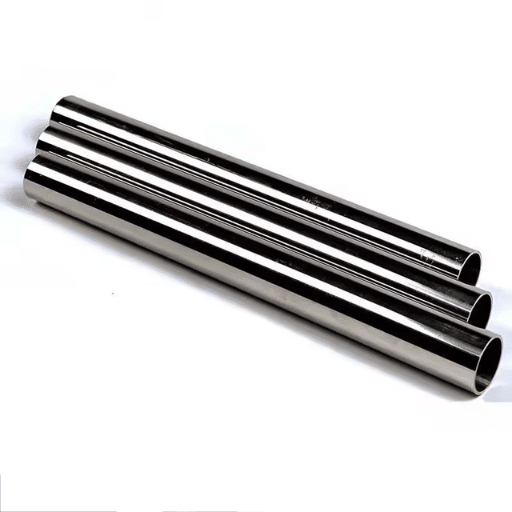
The material 304 stainless steel coil tubing exists as a continuous-length tube that comes in coiled form instead of delivering pre-cut straight sections. The product exists to meet ASTM A269 standards for instrumentation and general service applications while providing 304-grade materials throughout the product, because it enables installation without creating field joints.
Continuous Length Manufacturing
Unlike standard tubing cut to 6-meter or 20-foot lengths, coil tubing remains in continuous form from mill manufacture through final installation:
- Seamless coil production: Cold-drawn tube manufactured on specialized equipment designed for continuous coiling
- Welded coil production: TIG-welded strip formed and coiled inline during manufacture
- Length capabilities: Standard coils 50–100 meters; extended coils 150–200+ meters continuous
The manufacturing process maintains the same chemical composition and mechanical properties as a straight-length tube — the coil format is a packaging and delivery method, not a different product category. The process of defining coil specifications needs to include knowledge about how coiling procedures impact handling practices, pressure rating systems, and installation methods.
Coil vs Straight Length: Why the Format Matters
Chen, who works as a process engineer at a chemical plant in Singapore, encountered his first obstacle when he created a new analytical instrument sampling system. The sample lines needed to traverse 80 meters through existing congested pipe racks with multiple elevation changes. The system would have required 14 separate components because straight lengths needed 13 brazed joints, and workers needed to spend several hours on field fitting.
The usage of 304 stainless steel coil tubing enabled installation through a single extended section. The system required installation through two end connections, which linked the sample point with the analyzer. The coil’s natural flexibility enabled it to follow the routing bends, which eliminated the need for joints while workers completed the installation process 40% faster than they would have needed with the straight-tube option.
Key advantages of coil format:
- Reduced joints: Single continuous run eliminates intermediate connections
- Installation speed: Less field cutting, deburring, and fitting assembly
- Flexibility: Natural coil curvature accommodates bends and routing changes
- Inventory efficiency: One coil covers multiple straight-length equivalents
- Pressure integrity: Fewer joints mean fewer potential leak paths
ASTM A269 Standard: Coil Tubing Compliance

ASTM A269/A269M-22, Standard Specification for Seamless and Welded Austenitic Stainless Steel Tubing for General Service, governs 304 coil tubing for instrumentation, hydraulic, and process applications. Understanding this standard ensures specifications align with manufacturing capabilities and quality verification protocols.
Standard Requirements for 304 Grade
ASTM A269 specifies requirements for seamless and welded austenitic stainless steel tubing:
Chemical Composition Requirements (304):
| Element | UNS S30400 (304) | UNS S30403 (304L) |
|---|---|---|
| Carbon | ≤0.08% | ≤0.030% |
| Manganese | ≤2.00% | ≤2.00% |
| Phosphorus | ≤0.045% | ≤0.045% |
| Sulfur | ≤0.030% | ≤0.030% |
| Silicon | ≤1.00% | ≤1.00% |
| Chromium | 18.0–20.0% | 18.0–20.0% |
| Nickel | 8.0–11.0% | 8.0–12.0% |
Mechanical Properties (Annealed Condition):
| Property | Requirement |
|---|---|
| Tensile Strength | ≥515 MPa (75 ksi) |
| Yield Strength | ≥205 MPa (30 ksi) |
| Elongation (2 inch) | ≥35% |
| Hardness (Rockwell B) | ≤90 |
Quality Verification for Coil Format
Coil tubing undergoes the same quality verification as straight lengths, with additional considerations for continuous format:
Hydrostatic Testing: The coil pressure testing process verifies ASTM A269 standards because each coil undergoes testing at pressure levels between 1000 psi and 3000 psi which depends on the diameter and thickness of the coil. The test confirms that the structure maintains its complete length while also preventing any leaks.
Eddy Current Testing (ECT): The non-destructive testing method uses electromagnetic testing to identify surface and subsurface defects which include cracks and pits and inclusions throughout the entire length of the coil. The ECT process takes place either during the production of seamless tubes or after the completion of welded products.
Surface Finish Requirements:
- Bright Annealed (BA): Clean, oxide-free surface produced in controlled-atmosphere annealing; Ra typically ≤0.8 μm
- Annealed and Pickled (AP): Chemically descaled surface following annealing; slightly rougher finish suitable for industrial applications
Zhongzheng’s coil production includes 100% eddy current testing and hydrostatic pressure testing with full documentation in the Mill Test Report (MTR).
Coil Configurations and Terminology

Understanding coil terminology ensures clear communication with suppliers and correct specification for your application.
Level Wound Coil (LWC)
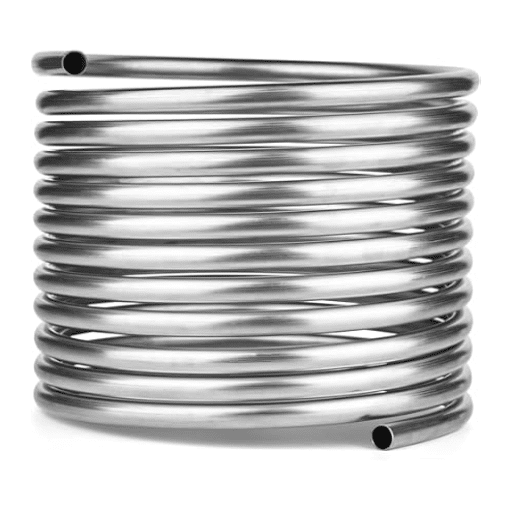
Level wound coil is the most common configuration for stainless steel coil tubing. The tube is wound in layers, with each turn laying parallel to adjacent turns in the same plane.
Characteristics:
- Appearance: Cylindrical coil with parallel layers
- Coil dimensions: Typical O.D. 800–1500mm depending on tube size and length
- Packaging: Wood or steel reels for larger coils; plastic or cardboard for smaller sizes
- Applications: General instrumentation, refrigeration, hydraulic systems
LWC format is optimized for automated uncoiling equipment and provides consistent payout during installation. The level winding prevents tangling and allows controlled deployment of long continuous lengths.
Pancake Coils
Pancake coils are wound in a flat spiral configuration rather than cylindrical layers. The tube forms a flat disc rather than a barrel shape.
Characteristics:
- Appearance: Flat, disc-shaped coil
- Space efficiency: Lower profile for height-constrained installations
- Heat transfer applications: Pancake configuration facilitates heat exchange
- Custom fabrication: Often custom-wound to specific dimensional requirements
Pancake coils are specified for heat exchanger applications, immersion heater elements, and space-constrained installations where cylindrical coils would not fit. The flat profile also simplifies mounting and support in equipment designs.
Serpentine and Custom Coil Patterns
For specialized applications, coil tubing can be formed into serpentine patterns or custom configurations:
Serpentine Coils: U-bend configurations creating a zig-zag pattern for maximum surface area in heat transfer applications
Custom Bending: Post-manufacture forming into specific shapes for OEM equipment integration
Pitch Specifications: The distance between adjacent tube centers can be specified for applications requiring precise spacing
Zhongzheng provides custom coil configuration services — specify your dimensional requirements and our technical team will confirm feasibility and lead time.
Dimensions, Specifications, and Selection

Standard Coil Tubing Sizes
304 stainless steel coil tubing is available in standard dimension ranges:
Common Outside Diameters:
- 4mm, 6mm, 8mm, 10mm, 12mm (metric)
- 1/8″, 1/4″, 3/8″, 1/2″ (imperial)
Wall Thickness Options:
- Light wall: 0.5mm–1.0mm
- Standard wall: 1.0mm–2.0mm
- Heavy wall: 2.0mm–3.0mm+
Length Capabilities:
- Standard coils: 50m, 100m
- Extended coils: 150m, 200m
- Custom lengths: Up to 300m+ continuous (subject to technical feasibility)
Coil Configuration Specifications
When specifying coil tubing, these parameters affect handling and installation:
Coil Outer Diameter (O.D.): The overall diameter of the wound coil affects shipping, storage, and uncoiling equipment requirements. Larger coils contain more tubing but require more space and heavier handling equipment.
Coil Inner Diameter (I.D.): The central opening determines mounting options for uncoiling. Standard I.D. accommodates common uncoiling equipment.
Pitch: The center-to-center distance between adjacent tube turns. Standard pitch provides efficient packing; wider pitch may be specified for applications requiring air circulation between turns.
Coil Weight: Total weight, including tubing and reel, affects shipping logistics and handling equipment requirements. Coils exceeding 500kg typically require mechanical handling.
304 vs 304L vs 316L Selection for Coils
Grade selection for coil tubing follows the same principles as straight lengths, with additional considerations for coil-specific applications:
Grade 304: General-purpose austenitic stainless steel for indoor and mild outdoor environments. The standard material used in instrumentation, hydraulic systems, and refrigeration systems operates effectively when there is low chloride exposure. Most coil applications use this solution because it delivers affordable results.
Grade 304L: The low-carbon version of this material becomes the preferred choice when field welding or brazing needs to be done. The lower carbon content protects against sensitization, which leads to chromium carbide precipitation that results in decreased corrosion resistance within heat-affected regions. The specification of 304L becomes necessary when operators will weld coil ends or when they need to conduct heat treatment after finishing fabrication work.
Grade 316L: This grade contains molybdenum, which makes it suitable for marine environments, chemical exposure, and high-chloride applications. The 2–3% molybdenum addition provides superior pitting resistance (PREN ~24 vs ~18 for 304). The use of 316L material becomes necessary for coastal projects, chemical process sampling, and all situations that involve exposure to chloride.
Selection Decision Matrix:
| Environment | Recommended Grade | Notes |
|---|---|---|
| Indoor instrumentation | 304 | Cost-effective, adequate corrosion resistance |
| Field-welded installations | 304L | Prevents sensitization in HAZ |
| Marine/coastal | 316L | Chloride resistance essential |
| Chemical exposure | 316L | Evaluate specific chemical compatibility |
| Food/pharma (non-product contact) | 304/304L | Confirm surface finish requirements |
Applications by Industry

Refrigeration and HVAC Systems
Coil tubing dominates commercial and industrial refrigeration applications:
Evaporator and Condenser Coils: Heat exchangers use pancake and serpentine coils to create maximum surface area, which enables refrigerant to undergo phase changes. The continuous tube construction maintains an uninterrupted path through the refrigerant circuit, which needs to protect system integrity and stop leaks from occurring.
Refrigerant Line Installations: The system requires long piping sections that connect the compressor and condenser, and evaporator components. The coil format enables an 80 to 90 percent reduction of brazed joints when used with straight tube, which results in both lower leak risk and faster installation processes.
Specification Guidance: The standard refrigeration system requires 304 material, while 316L material should be used for marine refrigeration systems and ammonia systems, which need high corrosion resistance. The clean refrigerant circuits require a bright annealed finish as their optimal solution.
Instrumentation and Control Systems
Process plants rely on coil tubing for analytical and control applications:
Sample Transport Tubing: Continuous coil from sample point to analyzer eliminates joints that could trap samples or introduce contamination. When a European pharmaceutical manufacturer upgraded their QC laboratory, switching to 304L coil tubing for HPLC sample lines reduced baseline noise by 40% — attributed to the elimination of joint interfaces where sample carryover occurred.
Instrument Air Lines: Coil format simplifies routing through congested instrument panels and cable trays.
Analytical Instrument Connections: Clean, continuous flow path essential for accurate analytical results.
Hydraulic and Pneumatic Systems
Coil tubing serves control and pressure applications:
Control Line Tubing: Long continuous runs for remote valve actuation and instrument control. The flexibility of coil tubing accommodates vibration and movement better than rigid straight lengths.
Pressure Rating Considerations: Coil tubing carries the same pressure ratings as straight tube of equivalent dimensions — the coiling process does not reduce pressure capacity. However, dynamic applications (vibration, flexing) may require derating based on cycle life requirements.
Heat Exchangers and Process Equipment
Coil configurations enable efficient heat transfer designs:
Cooling Coil Applications: Immersion coils for tank cooling, process heat removal. Pancake and serpentine configurations maximize heat transfer surface area.
Process Heating Coils: Steam or thermal fluid coils for vessel heating.
Chemical Process Coils: 316L coil for corrosive chemical heating/cooling where joint integrity is critical.
Oil and Gas Downhole Applications
Control line umbilicals and chemical injection systems use continuous coil tubing:
Control Line Umbilicals: Long continuous lengths for subsea well control systems. The coil format enables deployment from reels during installation.
Chemical Injection Lines: Continuous 316L coil for downhole chemical delivery (corrosion inhibitors, scale inhibitors).
Handling, Installation, and Field Preparation
Proper handling during uncoiling and installation prevents damage that could compromise system integrity.
Uncoiling Best Practices
Preventing Kinking and Ovalization:
When a major HVAC contractor in Dubai uncoiled a shipment of 304 stainless steel tube for a chiller installation, improper handling created kinks in two coils — rendering 40 meters of tubing unusable. The root cause: uncoiling against the natural curvature of the coil rather than with it.
Correct uncoiling technique:
- Mount coil on horizontal or vertical uncoiling stand
- Allow coil to rotate freely as tube pays out
- Uncoil in the same direction as the natural coil winding
- Maintain minimum bend radius during uncoiling (typically 3× tube O.D.)
- Support tube as it pays out to prevent sagging and ovalization
Minimum Bend Radius Guidelines:
| Tube O.D. | Minimum Bend Radius (coiled condition) |
|---|---|
| 6mm (1/4″) | 18mm |
| 10mm (3/8″) | 30mm |
| 12mm (1/2″) | 36mm |
| 16mm (5/8″) | 48mm |
Bending below these radii risks wall thinning, ovalization, and stress cracking. Use proper tube bending equipment for tight-radius requirements.
Field Cutting and Preparation
Proper Cutting Tools:
- Tube cutters: Preferred for clean, square cuts without burr formation
- Band saws: Acceptable for larger diameters with fine-tooth blades
- Avoid: Abrasive cutting wheels that generate heat and work-harden the cut edge
Deburring Requirements:
All cut ends must be deburred internally and externally:
- Internal burrs: Restrict flow, trap contamination, create turbulence
- External burrs: Damage fittings, prevent proper joint assembly
- Tools: Deburring tools, fine files, or specialized tube deburring equipment
End Preparation for Fittings:
- Compression fittings: Ensure square cut, remove all burrs, verify tube O.D. within fitting tolerance
- Brazed joints: Clean 25–50mm from end with abrasive pad or chemical cleaner; apply proper flux for stainless steel
- Welded connections: Bevel heavy-wall tube; clean all contamination from weld zone
Storage and Handling
Coil Storage Recommendations:
- Store coils indoors in clean, dry conditions
- Protect from contamination (dust, oil, chemical vapors)
- Avoid stacking heavy objects on coiled tubing
- Support coils to prevent deformation of outer wraps
Moisture and Contamination Prevention:
- Seal cut ends immediately after cutting
- Use end caps or tape to prevent ingress during storage
- Avoid contact with carbon steel (risk of galvanic contamination)
Temperature Considerations:
- Store away from heat sources that could affect temper (especially for bright annealed tubing)
- Allow cold-stored coils to reach ambient temperature before uncoiling (prevents condensation)
Manufacturing Quality and Testing

Zhongzheng Coil Production Process
Zhongzheng manufactures 304 stainless steel coil tubing through seamless cold-drawing or TIG-welded processes, with specialized inline coiling equipment:
Raw Material Verification: Every heat of 304 stainless steel is spectrographically analyzed before production entry. Chemical composition is verified against ASTM A269 requirements.
Continuous Manufacturing: Tube is formed and drawn (seamless) or welded and sized (TIG) inline with automatic coiling equipment.
In-Line Testing: Eddy current testing inspects 100% of tube length for surface defects during manufacture.
Surface Finish Control: Bright annealing in controlled-atmosphere furnaces produces clean, oxide-free surfaces. Annealed and pickled finish receives acid descaling per ASTM A380.
Quality Control for Coil Format
Hydrostatic Pressure Testing: Every coil is hydrostatically tested to ASTM A269 requirements. Test pressure is calculated based on OD and wall thickness per:
Test Pressure = 2 × S × t / D

Where:
S = Allowable stress (typically 50% of yield strength for test conditions)
t = Nominal wall thickness
D = Nominal outside diameter
Test duration is minimum 5 seconds with no leakage or visible deformation.
Eddy Current Flaw Detection: 100% length coverage detecting:
- Surface cracks and seams
- Pit-type defects
- Inclusions and laminations
- Wall thickness variations
Dimensional Verification: OD, wall thickness, and ovality measured at multiple points along coil length. Tolerances per ASTM A269:
- OD: ±0.005″ for tubes under 1/2″ OD
- Wall: ±10% of nominal wall thickness
- Ovality: Within OD tolerance
Documentation Package
Mill Test Report (MTR) Contents for Coil Tubing:
- Heat number and material grade (304 or 304L)
- Chemical composition analysis (all elements per ASTM A269)
- Mechanical test results (tensile, yield, elongation, hardness)
- Hydrostatic test pressure and duration
- Eddy current test certification
- Surface finish description
- Coil dimensions and weight
- Certificate type: EN 10204 2.2 (standard) or 3.1 (inspection certificate)
Procurement and Logistics

Specifying Coil Requirements
Provide these details for an accurate quotation:
Essential Information:
- Grade: 304, 304L, or 316L
- Outside diameter and wall thickness
- Total length required
- Coil configuration: LWC (level wound) or pancake
- Surface finish: Bright annealed or annealed/pickled
- Quantity: Number of coils or total meters
Additional Specifications:
- Maximum coil outer diameter (shipping constraints)
- Preferred coil inner diameter (uncoiling equipment compatibility)
- Special packaging requirements
- Documentation requirements (MTR type, additional testing)
Shipping and Logistics
Coil Packaging for Export:
Zhongzheng packages coil tubing for international shipment with protection appropriate for sea freight:
- VCI (Vapor Corrosion Inhibitor) wrapping: Protects against salt air and moisture during transit
- Wooden reels: Heavy-duty construction for large coils; reusable by the customer for storage
- Steel strapping: Secures coils to reels; prevents unwinding during handling
- End caps: Protect tube ends from damage and contamination
- Moisture barriers: Desiccant packets and sealed wrapping for long transit times
Weight and Volume Considerations:
Coil tubing shipping weight includes both tube weight and reel weight. For estimation:
- 304 stainless steel: ~8.0 g/cm³ density
- Add 10–15% for reel and packaging
- Typical coil weights: 100–500kg, depending on dimensions and length
Handling Equipment Requirements:
- Coils under 100kg: Manual handling is possible with proper technique
- Coils 100–300kg: Mechanical assistance (forklift, pallet jack) recommended
- Coils over 300kg: Mechanical handling required; specify lifting points
Lead Times and MOQ
Standard Coil Configurations:
- Lead time: 2–3 weeks from order confirmation
- MOQ: 500kg or 1–2 coils (depending on dimensions)
Custom Specifications:
- Lead time: 4–6 weeks
- MOQ: Typically 1000kg+ for custom dimensions
- Technical review required for non-standard combinations
Stock Items:
- Common sizes (1/4″ OD × 0.035″ wall, 3/8″ OD × 0.049″ wall) may be available from stock
- Lead time: 1 week for stocked items
Frequently Asked Questions
What is the maximum length available in coil tubing?
Standard continuous coil lengths range from 50 meters to 100 meters and 200 meters. The company provides custom orders for extended lengths which reach 300 meters and beyond when the requested outer diameter and wall thickness combination can be manufactured. Very long coils require larger reel diameters and mechanical handling equipment. Contact Zhongzheng’s technical team with your specific length requirement for feasibility confirmation.
Can coil tubing be used for high-pressure applications?
Yes. The pressure ratings of coil tubing match those of straight tubing, which has the same dimensions and grade specifications. The coiling process does not reduce pressure capacity because the material properties of the tube remain unchanged. The working pressure calculation requires standard ASME B31.3 or B31.1 formulas to determine the pressure limits for 304 stainless steel. The pressure rating of fittings and end connections must match the coil tubing pressure rating.
How do I straighten coil tubing for installation?
Small-diameter coil tubing (under 12mm OD) can often be straightened by hand during installation, working progressively along the length. For larger diameters or precision applications:
- Use a tube straightening tool with rollers
- Work in short sections (300–500mm at a time)
- Over-bend slightly and release to achieve straight section
- Verify no ovalization occurred after straightening
Minimum bend radius requirements still apply — do not straighten into bends tighter than 3× tube O.D.
What is the difference between bright annealed and annealed/pickled coil tubing?
Bright Annealed (BA): The controlled-atmosphere furnace, which operates with hydrogen and nitrogen, produces a heat treatment that generates a pristine oxide-free surface, which displays a shiny metallic finish. Ra surface roughness typically ≤0.8 μm. The material serves as the best option for clean applications, which include instrumentation and food and pharmaceutical sectors where any surface contamination needs to be avoided.
Annealed and Pickled (AP): The process begins with heat treatment, followed by acid pickling to eliminate oxide scale. The surface exhibits a matte finish which has a slightly rougher texture. The finish provides an economical solution that industrial facilities can use because they do not need to maintain high standards of surface appearance.
Can 304 coil tubing be used with seawater or marine applications?
The 304 coil tubing material is unsuitable for use with seawater and marine environments. The seawater environment proves unsuitable for continuous use of 304 stainless steel, which has been found to experience pitting and crevice corrosion when exposed to chloride-rich environments that include seawater. The 2–3% molybdenum content of 316L coil tubing enables its use in marine applications due to its essential chloride resistance.
What are the weight limitations for coil shipping?
Individual coil weight for standard export packaging has a typical limit of 500–600kg. The shipping process requires this distribution of compact and bulk items to create an optimal distribution of weight across the entire shipment. The company ships large orders through the use of multiple coils. The company provides service to projects that need continuous lengths over 200 meters through its ability to deliver multiple coils from one heat source while maintaining certified heat continuity.
How do I calculate pressure ratings for coiled tubing?
Use the same formulas as straight tubing. For 304 stainless steel coil tubing per ASTM A269, working pressure can be estimated using the Barlow formula:
Working Pressure = 2 × S × t / D

Where:
S = Allowable stress (20,000 psi for 304 at ambient temperature)
t = Wall thickness (inches)
D = Outside diameter (inches)
Apply appropriate safety factor (typically 4:1 for hydraulic, higher for critical applications). Remember that fittings and connections must be rated for the same pressure as the tubing. Dynamic applications (pulsating pressure, vibration) may require additional derating.
Conclusion
The use of 304 stainless steel coil tubing provides measurable benefits against standard straight-length systems because it decreases field joints by 80 to 95 percent while increasing installation speed by 40 to 60 percent and decreasing finished system leak probability. The ASTM A269 specification maintains identical chemical and mechanical properties of straight tube materials, which the coil format delivers through more efficient performance.
When procurement teams assess coil tubing, they focus on three main decisions, which include selecting the appropriate grade between 304 for general service, 304L for welded installations, and 316L for corrosive environments, plus determining the suitable surface finish between bright annealed for clean applications and standard 50 to 200m plus custom 300m length requirements. Understanding coil configuration options — LWC, pancake, or custom serpentine — ensures the delivered format matches installation requirements.
At our Wenzhou facility, we manufacture 304 and 304L coil tubing according to ASTM A269 specifications because our facility can produce continuous tubing lengths exceeding 200 meters while conducting complete in-line eddy current and hydrostatic tests and using export packaging designed for international shipment. Every coil includes complete MTR documentation which provides full heat traceability.