Welded duplex pipe is selected for subsea flowline because its prices are 20% lower than those of seamless pipes. The testing starts when the first chloride pitting cycle begins at the heat-affected zone. The costs of one unexpected shutdown exceed all material savings by multiple times.
Standard austenitic grades will not survive chloride exposure in your assessment of duplex stainless steel seamless pipe for an offshore platform, a chemical process line, and a seawater cooling system. The seamless manufacturing method becomes essential to maintain, while your Mill Test Report must show specific requirements that demonstrate pipe performance. The guide establishes testing methods for ASTM A790 duplex pipes, and it defines duplex stainless steel pipe quality through its ferrite-austenite phase balance, and presents a procurement checklist that distinguishes between authentic seamless duplex pipes and their documentation-based counterfeits.
Do you need assistance to determine whether your project needs seamless or welded duplex? Please send us your line list and operating conditions. Our technical team will determine grade suitability and manufacturing method, and lead time within 24 hours.
What Is Duplex Stainless Steel Seamless Pipe?
The ASTM A790 Standard
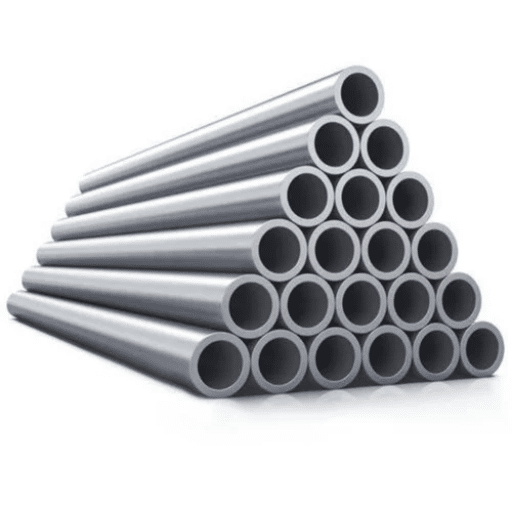
ASTM A790 creates the standard for welded and seamless ferritic-austenitic stainless steel piping which serves all general corrosive containment applications. The standard covers grades including UNS S31803, S32205, S32750, and S32760, and it mandates that all pipe be supplied in the solution-annealed and quenched condition. The heat treatment process enables complete intermetallic phase dissolution while preserving the duplex microstructure, which produces its distinctive strength and corrosion defense properties.
ASTM A790 mandates that seamless pipe manufacturers must follow the manufacturing criteria of ASTM A999 which establishes requirements for dimensional accuracy and wall thickness variation and hydrostatic testing procedures. The seamless method matters because it produces a uniform microstructure through the entire wall thickness, with no weld metal or heat-affected zone to compromise the phase balance in duplex stainless steel pipe.
The Duplex Microstructure
The performance of duplex stainless steel originates from its austenitic-ferritic microstructure, which contains equal amounts of ferrite and austenite. The ferritic phase brings high strength together with protection against chloride stress corrosion cracking, while the austenitic phase delivers toughness and weldability. The majority of project specifications establish a ferrite requirement between 35% and 65%, while 40% to 60% ferrite content represents the standard range that delivers peak operational efficiency.
Toughness decreases when ferrite content increases beyond 70%, which makes the material vulnerable to hydrogen-induced cracking. When the level drops below 30% the material loses strength while its ability to resist stress corrosion cracking becomes impaired. All duplex heats require phase balance testing because this process extends beyond the evaluation of chemical composition.
Key Grades for Seamless Pipe
The primary grade used in industrial applications is UNS S32205, which is known as Duplex 2205. The material consists of 22% chromium combined with 5% nickel and 3% molybdenum and 0.15% nitrogen, which results in a Pitting Resistance Equivalent Number of 35 or greater. The minimum yield strength reaches 65 ksi, which equals 450 MPa and this value doubles the strength of 316L. S32205 functions as the modern equivalent of S31803 because it offers better nitrogen control, which enhances welding capabilities and maintains phase stability.
UNS S32750 (Super Duplex 2507) requires a more expensive alloy composition, which includes 25% chromium, and 7% nickel, and 4% molybdenum and 0.25% nitrogen. The material achieves a PREN value of 40 or higher, which enables it to maintain a yield strength of 80 ksi (550 MPa) minimum. Super duplex becomes necessary when standard duplex systems cannot handle seawater contact with high chloride levels or operations under sour service environments.
Both grades are available as duplex stainless steel seamless pipe from Zhongzheng’s Wenzhou facility, manufactured to ASTM A790 with full MTR documentation including ferrite content verification.
Duplex Stainless Steel Seamless Pipe vs Welded: When Seamless Is Non-Negotiable
Applications That Demand Seamless
Seamless duplex pipe is the correct specification when the service conditions involve any of the following:
- High-pressure or high-temperature service. Boiler tubes, heat exchanger tubing, and pressure vessels operating above welded pipe design limits. Seamless construction provides uniform strength with no seam to act as a stress concentrator.
- Chloride-rich environments. Offshore platforms, subsea pipelines, desalination plants, and chemical process streams with elevated chloride ion concentration. The absence of a weld seam eliminates a potential initiation site for pitting and crevice corrosion.
- Sour service containing H2S. NACE MR0175/ISO 15156 requires controlled hardness and verified microstructure. Seamless pipe eliminates the weld heat-affected zone, where improper heat input can alter the ferrite-austenite balance and reduce sulfide stress cracking resistance.
- Cyclic loading or thermal shock. Seamless pipe offers better fatigue resistance because there is no weld seam or HAZ with differing mechanical properties.
- Clean internal surface requirements. Pickled, passivated, or electropolished internals are easier to achieve and verify on seamless pipe because there is no weld bead to remove or inspect.
Where Welded Duplex Pipe Is Acceptable
Welded duplex pipe, manufactured to ASTM A928 or ASTM A790 with a straight-seam weld, is a viable alternative for:
- Low- to moderate-pressure water or process fluid distribution
- Large diameters above 24 inches OD, where seamless capacity is limited
- Cost-sensitive projects with non-critical service conditions
- Applications where the longitudinal weld can be fully radiographed or ultrasonically inspected
The Cost-Benefit Reality
Seamless duplex pipe uses standard pricing, which costs 15 to 30 percent more than its welded counterpart. The standard sizes experience price increases that reach 50 percent during times of high demand. The seamless construction method provides 20 percent greater working pressure capacity while it removes the risk of weld seam corrosion. The seamless premium provides essential protection for critical systems that require inspection and replacement after any unplanned shutdown.
Mini-story: A procurement team at a Gulf of Mexico EPC contractor selected welded duplex 2205 for a seawater lift system to meet a tight budget. Eighteen months after commissioning, chloride pitting initiated at the weld seam of a 12-inch riser spool. The repair required platform shutdown, diver intervention, and replacement with seamless pipe. The total cost exceeded 400,000.Theoriginalseamlesspremiumwouldhavebeen400,000.Theoriginalseamlesspremiumwouldhavebeen28,000.
Manufacturing Duplex 2205 Seamless Pipe: Process Controls That Matter

From Melt to Finished Seamless Pipe
The process of creating seamless duplex pipe starts with the exact melting of alloys. The electric arc furnace receives raw materials, which undergo purification through the argon oxygen decarburization process. The process requires operators to introduce controlled nitrogen, which must be maintained at 0.15% for 2205 and 0.25% for S32750, because nitrogen controls the development of duplex microstructures while increasing PREN values.
Round billets are produced through the continuous casting of molten steel. The creation of hollow shells begins with reheating the billets, which workers then pierce before they undergo hot rolling and sizing operations. The pipe requires cold drawing or cold rolling to achieve precise dimensions, which operators will follow by solution annealing the material at 1050–1100°C and performing rapid water quenching.
The quenching step holds essential importance. The slow cooling process creates conditions that allow sigma and chi phases to form between 700 and 900 degrees Celsius, which results in the complete loss of both toughness and corrosion protection. The proper quenching of seamless duplex pipes results in a 50/50 ferrite-austenite distribution throughout their entire wall cross-section.
Wall Thickness and Dimensional Control
ASTM A790 permits a wall thickness tolerance of ±12.5% for seamless pipe. The company aims for ±10% thickness control concerning its duplex seamless products because wall thickness determines both pressure rating and collapse resistance for subsea applications. A Schedule 40 seamless duplex pipe with nominal 9.27 mm wall will show a 12.5% deviation which allows for an actual wall thickness measurement of 8.11 mm to occur. The tolerance band holds significance for a subsea flowline which operates under 200 bar internal pressure.
Surface Finish
Seamless duplex pipe is typically supplied in pickled and passivated condition per ASTM A380, which removes scale and restores the chromium oxide layer. For specialized applications, bright annealed or electropolished finishes are available on seamless tube formats.
Quality Verification: What Your Duplex MTR Must Document
A Mill Test Report for standard austenitic stainless steel documents chemical composition, mechanical properties, and heat treatment. A Mill Test Report for duplex stainless steel seamless pipe must document all of that, plus evidence that the dual-phase microstructure is correct.
Essential MTR Content for Duplex Seamless Pipe
- Chemical composition verified by spectrographic analysis. The MTR must show actual tested values for chromium, nickel, molybdenum, and nitrogen, not just nominal ranges. Nitrogen content is especially critical because it directly affects PREN and phase balance.
- Mechanical properties per ASTM A790. Yield strength, tensile strength, and elongation. For S32205, yield strength must be 65 ksi (450 MPa) minimum and tensile strength 95 ksi (655 MPa) minimum.
- Heat treatment confirmation. Solution annealing temperature and quenching method must be recorded. This proves the pipe was processed to dissolve any intermetallic phases.
- Ferrite content measurement. This is the item most often missing from generic supplier MTRs, and it is the item you should demand. Ferrite content should be reported as a percentage, measured by calibrated Feritscope or metallographic point counting per ASTM E562.
Supplementary Testing for Critical Service
For offshore, sour service, or low-temperature applications, the following tests should be specified and documented:
- ASTM A923 Method C: Intermetallic phase detection. A 24-hour immersion test in ferric chloride that reveals the presence of detrimental sigma, chi, or other intermetallic phases. This is the test that proves your pipe was properly solution annealed.
- Impact testing: Charpy V-notch testing at the minimum design temperature. Required for subsea and arctic applications where brittle fracture is a concern.
- NACE MR0175 compliance statement: For H2S service, the MTR should include a statement that the material meets the hardness and metallurgical requirements of NACE MR0175/ISO 15156.
- PREN calculation: Derived from the actual chemical composition using the formula %Cr + 3.3(%Mo) + 16(%N). For S32205, this must equal or exceed 35. For S32750, 40 or higher.
Mini-story: Elena Vasquez, a materials engineer at a European EPC firm, received a shipment of duplex 2205 pipe from a new supplier for a North Sea project. The MTR showed chemistry and mechanicals but no ferrite content. She rejected the shipment and requested a supplementary report. The supplier’s follow-up test showed 72% ferrite in one heat, well outside the acceptable range. The entire lot was returned. Elena now specifies ferrite content reporting as a mandatory MTR line item on every duplex purchase order.
Request a sample Zhongzheng MTR for duplex seamless pipe here to see what complete documentation looks like before you place your next order.
Offshore, Chemical, and Critical Applications

Oil and Gas Production
Duplex stainless steel seamless pipe dominates offshore oil and gas applications because it resists the combination of chloride exposure, high pressure, and in many cases H2S that eliminates standard austenitic grades from consideration. Specific applications include:
- Subsea flowlines and risers: S32750 super duplex is the default specification for seawater-facing components in the North Sea and Gulf of Mexico.
- Manifolds and jumpers: High-pressure piping systems where cyclic loading and chloride exposure coincide.
- FPSO seawater cooling systems: Seawater intake, cooling water, and ballast systems where 2205 provides adequate corrosion resistance at lower cost than super duplex or titanium.
- CO2 injection lines: Carbon capture and storage projects specify super duplex for CO2 injection tubing because the combination of CO2, chlorides, and residual water creates a highly corrosive environment.
Sour Service and NACE MR0175
When hydrogen sulfide is present at a partial pressure of 0.05 psi (0.3 kPa) or higher, NACE MR0175/ISO 15156 governs material selection. For duplex stainless steel, this means:
- Maximum hardness of 32 HRC
- Verified ferrite-austenite phase balance
- Controlled welding procedures if fabrication is required
- HIC (Hydrogen Induced Cracking) and SSC (Sulfide Stress Cracking) testing for severe environments
Seamless pipe simplifies NACE compliance because there is no weld seam requiring separate qualification.
Chemical Processing and Desalination
Chemical plants handling chloride-containing process streams specify duplex seamless pipe for heat exchanger tubing, reactor internals, and transfer lines. In desalination, reverse osmosis pressure vessels and brine heater tubes benefit from duplex corrosion resistance at a cost point well below titanium.
Welding and Fabrication of Seamless Duplex Pipe

One advantage of starting with seamless duplex pipe is that the base material arrives with a verified, uniform microstructure. The welding challenge then becomes preserving that microstructure in the weld metal and heat-affected zone.
Filler Metal Selection
- 2209 filler metal is used for welding 2205 base metal. It overmatches the base metal in nitrogen and nickel content to ensure the weld deposit achieves adequate austenite formation.
- 2594 filler metal is used for S32750 super duplex base metal, with higher alloy content to match the corrosion resistance of the parent material.
Welding Parameters
The heat input needs regulation, which should occur between 0.5 and 1.5 kJ/mm. High heat input results in increased ferrite grain size while it also decreases material toughness. The interpass heating limit must not exceed 150°C, which equals 300°F. The root pass requires nitrogen backing gas because it protects against nitrogen loss from the weld pool.
Duplex stainless steel needs no post-welding heat treatment because it differs from standard carbon steel and austenitic stainless steel procedures. The 700 to 900°C temperature range for post-weld heat treatment leads to sigma phase precipitation, which results in the complete loss of corrosion protection. The solution-annealed seamless pipe maintains its properties after welding, which requires users to manage heat input during the process.
Welding Procedure Qualification
For code-compliant fabrication to ASME B31.3 or similar, welding procedure specifications (WPS) and procedure qualification records (PQR) must include corrosion testing of the weldment, not just mechanical testing. This verifies that the welded joint matches the base metal’s corrosion resistance.
Procurement Best Practices
Specification Checklist
Before issuing a purchase order for duplex stainless steel seamless pipe, verify that your specification includes:
- UNS designation (S32205 or S32750) and ASTM A790 standard
- Seamless manufacturing method explicitly stated
- PREN minimum requirement (35 for 2205, 40 for S32750)
- Ferrite content range (35–65% or project-specified 40–60%)
- NACE MR0175 compliance statement if sour service applies
- Impact test temperature if low-temperature service applies
- ASTM A923 Method C intermetallic phase testing for critical service
- EN 10204 certificate type (3.1 for standard, 3.2 for witness inspection)
- Third-party inspection requirements (SGS, TUV, Bureau Veritas, DNV)
Qualifying Your Manufacturer
Not every supplier listing “duplex stainless steel” on their website actually produces it. To qualify a manufacturer for duplex seamless pipe:
- Request a sample MTR from a recent duplex heat. Verify that it includes ferrite content, actual nitrogen value, and PREN calculation.
- Confirm testing equipment: optical emission spectrometer for chemistry, ultrasonic flaw detector for internal defects, hydraulic testing machine for pressure integrity, and Feritscope or metallographic capability for phase balance.
- Ask for ASTM A923 testing capability. If the supplier cannot perform or subcontract this test, they cannot verify that intermetallic phases are absent.
- Request project references in similar service. A manufacturer with genuine duplex experience will have documentation from offshore, chemical, or desalination projects.
Lead Times
Seamless duplex pipe requires longer lead times than standard austenitic seamless pipe due to specialty alloy billet availability and lower production volumes:
- Standard duplex 2205 seamless: 6–10 weeks
- Super duplex S32750 seamless: 8–12 weeks
- Large OD or heavy wall custom sizes: 10–14 weeks
- Common sizes may be available from stock for urgent requirements
Zhongzheng provides confirmed lead times at quotation stage, with dedicated seamless production lines for both standard austenitic and duplex grades.
Common Mistakes to Avoid
Specification Errors
- Confusing S31803 with S32205. S31803 is the older grade with less tightly controlled nitrogen. S32205 is the current specification and should be specified for new projects.
- Omitting ferrite content requirements. Without a ferrite specification on the purchase order, the supplier has no obligation to measure or report it.
- Specifying welded pipe for high-pressure chloride service. In seawater systems above certain pressure thresholds, seamless is the only reliable option.
- Missing NACE compliance for sour service. If H2S is present, NACE MR0175 is not optional.
Fabrication Errors
- Using 316L filler on duplex base metal. This creates a weld deposit with lower PREN than the base metal, creating a corrosion risk exactly where strength is concentrated.
- Excessive heat input. High heat input welding reduces toughness and can cause nitrogen loss in the weld metal.
- Post-weld heat treatment in the sigma phase range. Never apply PWHT to duplex stainless steel without specific metallurgical guidance.
Procurement Pitfalls
- Accepting the lowest price without verifying seamless capability. Some suppliers quote welded pipe as “duplex pipe” and rely on buyer oversight.
- Insufficient documentation for EPC handover. EPC contractors require complete, indexed documentation packages. Request the full package format before ordering.
- No third-party inspection for first orders. A witnessed inspection at the manufacturing facility provides confidence that cannot be replaced by post-shipment sampling.
Mini-story: A project procurement manager for a Middle East chemical plant consolidated his entire duplex piping scope, seamless pipe, ASTM A815 fittings, and ASTM A182 flanges, with a single manufacturer for the first time. Previously, he had managed three separate suppliers with incompatible documentation formats and staggered deliveries. The consolidated order reduced his documentation review time by 60% and eliminated a schedule-critical delay caused by a fittings supplier who could not match the pipe delivery date.
Conclusion
The application needs duplex stainless steel seamless pipe for high pressure, elevated chloride exposure, cyclic loading, and sour service conditions. The manufacturing process uses seamless production to create pipes which lack any weld seams, which would act as corrosion starting points, and the process maintains equal distribution of materials throughout the pipe wall.
The documentation requirements serve as the main factor that distinguishes between different suppliers of duplex stainless steel seamless pipe. The complete MTR for duplex seamless pipe must contain chemical composition data that shows actual nitrogen content, together with mechanical property details, heat treatment results, and ferrite content assessment. The critical service needs additional testing through ASTM A923 intermetallic phase assessment and NACE MR0175 compliance validation.
Zhongzheng operates its Wenzhou facility to produce duplex 2205 and super duplex S32750 seamless pipes, which use special seamless production lines. We serve as a duplex seamless pipe manufacturer that provides our customers with complete piping solutions through our documentation process, which covers all their needs. Production begins only after each heat undergoes spectrographic verification. The process includes measuring and recording ferrite content. The company conducts hydrostatic and ultrasonic tests to confirm structural safety before products leave the facility. The technical team answers specification questions within a 24-hour period.
Request a quotation for duplex stainless steel seamless pipe with your ASTM A790, NACE, and dimensional requirements. Include your operating pressure, temperature, and chloride environment, and we will confirm the right grade, manufacturing method, and documentation package before production begins.
FAQ
What is the difference between S31803 and S32205?
The distinction between S31803 and S32205 exists because S32205 represents the current standard for Duplex 2205 which specifies stricter nitrogen control with a minimum nitrogen requirement of 0.14 to 0.20 percent compared to the 0.08 to 0.20 percent range in S31803. The enhanced nitrogen content results in improved phase balance stability and welding performance. All upcoming projects need to use S32205 as their material specification.
Can duplex stainless steel seamless pipe be used in seawater?
Duplex 2205 with a PREN of 35+ can be used for multiple seawater applications which include cooling systems and ballast lines. For subsea flowlines and risers and high-velocity seawater service applications that require pitting resistance Super duplex S32750 with a PREN of 40+ serves as the recommended material.
What is the maximum temperature for duplex 2205 seamless pipe?
Duplex 2205 maintains useful properties up to approximately 300°C (570°F). The temperature reaches the point where ferrite-austenite phase balance starts to change and 475°C embrittlement begins to occur after extended exposure. For high-temperature applications that exceed 300°C operate with austenitic grades 321 or 347.
How do I calculate PREN for duplex stainless steel?
The formula for PREN calculation involves the following components: %Cr plus 3.3 times %Mo plus 16 times %N. The minimum specified composition for S32205 shows that 22 plus 3.3 times 3.0 plus 16 times 0.15 equals 34.3. The actual nitrogen content of materials leads to PREN values that range between 35 and 37. The calculation for S32750 gives 25 plus 3.3 times 4.0 plus 16 times 0.25, which results in 42.2.
Does a duplex seamless pipe need post-weld heat treatment?
The microstructure of solution-annealed seamless duplex pipe remains intact after welding when operators control heat input. The 700–900°C temperature range for PWHT treatment leads to sigma phase precipitation, which results in complete loss of corrosion protection.
What is sigma phase and why is it a problem?
Duplex stainless steel develops sigma phase as a hard intermetallic compound which becomes brittle when exposed to 700–900°C temperatures for extended time periods. It diminishes both toughness and corrosion protection capabilities of materials. The combination of solution annealing with rapid quenching stops sigma phase creation. The testing of ASTM A923 Method C proves that it does not exist.
Can I weld duplex stainless steel to carbon steel?
Welding duplex stainless steel to carbon steel requires proper joint design. The joint requires engineering work to achieve successful results. The thermal expansion difference needs resolution through nickel alloy filler, which should be used with ERNiCrMo-3 (Inconel 625). The carbon steel side should receive either cladding or protective measures. The technical team at Zhongzheng assists in determining transition joint specifications.
What is NACE MR0175 compliance for duplex pipe?
NACE MR0175/ISO 15156 specifies material requirements for sour service containing hydrogen sulfide. The duplex stainless steel needs to verify three requirements for compliance which include a maximum hardness of 32 HRC and ferrite-austenite phase balance and proper manufacturing controls. The MTR should include a NACE compliance statement for sour service orders.