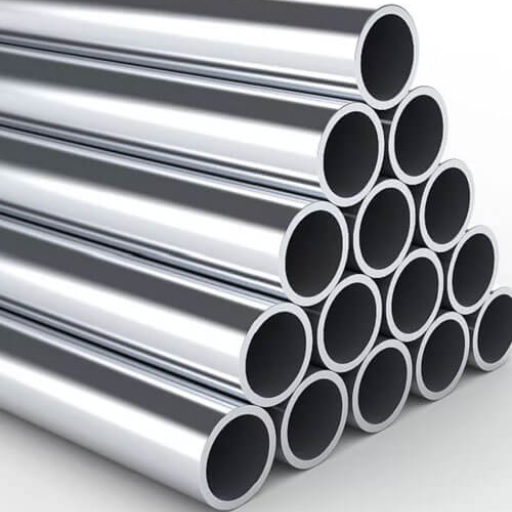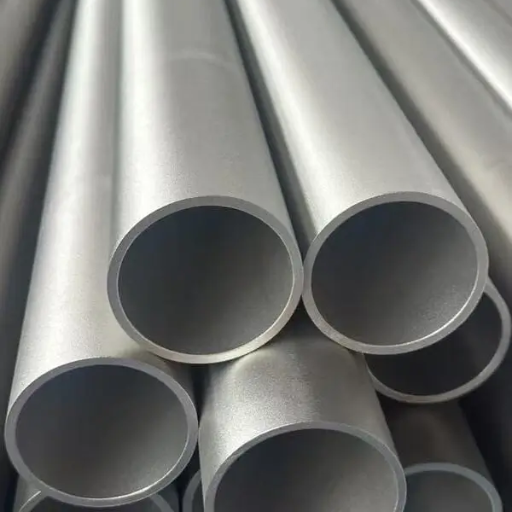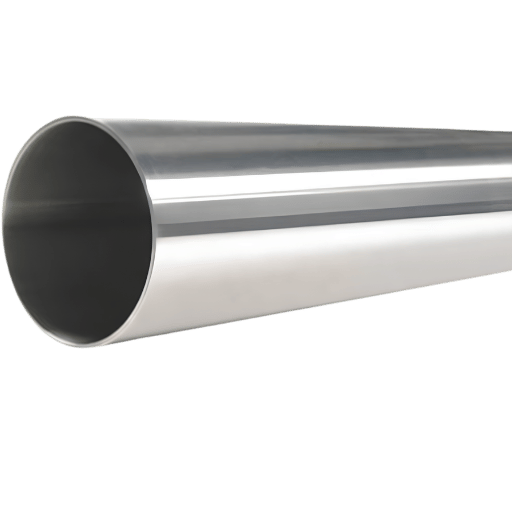
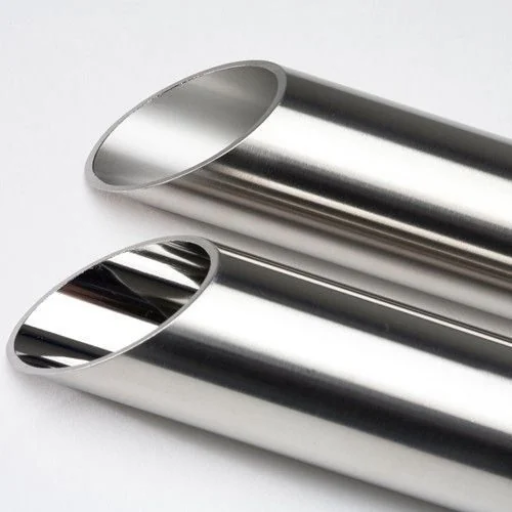
Electropolished stainless steel tubing is stainless steel tube whose internal and external surfaces have been smoothed by anodic dissolution in an acid electrolyte. The process typically takes surface roughness from about 0.8 µm Ra on a bright annealed tube down to 0.25–0.4 µm Ra, and it leaves the surface enriched in chromium. It is specified where residual roughness, embedded contamination, or weld heat tint would compromise cleanability or corrosion resistance.
Most buyers who write “electropolished” on a purchase order without an Ra limit and a standard don’t get the finish their auditors expect. That is the problem this guide solves.
Picture a bioprocessing plant in the middle of a validation review. The tubing arrived marked “EP,” the certificate says electropolished, and then a third-party inspector measures the inside surface at 0.9 µm Ra. The specification never named a number, so nobody can prove the tube is wrong, and nobody can prove it is right either. The project stalls for two weeks while the finish is argued about.
We manufacture electropolished tubing in Wenzhou and answer these questions daily. This guide gives you the numbers, the standards, and the specification language to avoid that argument entirely. Whether you are specifying a WFI loop, a semiconductor gas line, or a dairy CIP circuit, you will finish with a purchase order you can defend.
If you already know your finish and want dimensions and tolerances, the electropolished stainless steel tubing specifications page covers the product range directly.
Key Takeaways
- Electropolishing removes metal, typically 5–50 µm from the surface. It isn’t a coating, and it doesn’t change nominal dimensions.
- Name an Ra limit and a standard on the PO. 0.4 µm (15 µin) is the common contract limit; 0.25 µm (10 µin) is the tighter grade.
- ASTM B912 covers electropolishing used as passivation, ASME BPE sets hygienic finish levels, and SEMI F19 governs ultra-high-purity gas service.
- The hard part is the inside diameter. Finish depends on cathode design and tube length, and it must be measured at both ends.
- Welded tube can be electropolished to remove heat tint and smooth the weld, but EP doesn’t repair a poor weld.
What Electropolished Stainless Steel Tubing Is, and What It Is Not
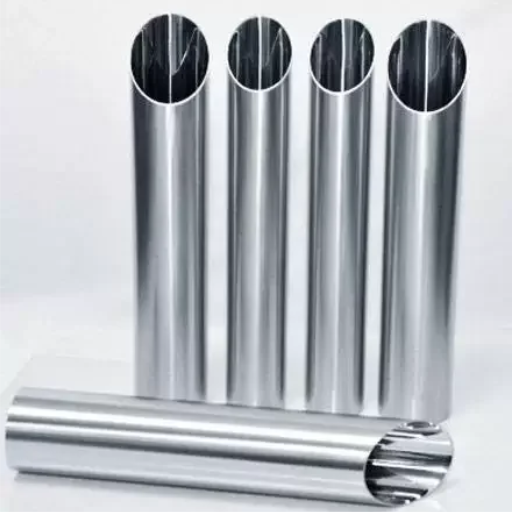
Electropolishing is an electrochemical process. The tube is the anode in a bath of concentrated acid, usually a phosphoric and sulfuric acid blend, held between roughly 50 °C and 80 °C. Direct current dissolves the surface, and because current density is highest at microscopic peaks, those peaks dissolve first.
Three things follow from that mechanism. The surface levels out, embedded foreign matter such as iron particles and polishing abrasive is removed rather than smeared, and the chromium-to-iron ratio at the surface rises as iron dissolves preferentially. The result is a smoother, more chemically uniform surface with a more stable passive film. In trade shorthand the product is EP tube, EP tubing, or electropolished tubing; all three mean the same thing.
What EP doesn’t do matters just as much. It doesn’t add material, so it can’t fix an under-tolerance wall. It doesn’t reshape a weld bead the way a scarfing tool does, though it will remove the heat tint around one. And it doesn’t substitute for correct heat treatment: electropolishing a sensitized tube produces a bright sensitized tube.
The confusion with “mirror polished” is worth clearing up. A mirror look is a cosmetic outcome; electropolishing is a controlled removal process with measurable results. A mechanically polished tube can look brighter than an electropolished one and still have a worse surface for cleanability, because mechanical polishing leaves a directional scratch pattern and can embed abrasive.
What Ra Does Electropolishing Achieve?
Ra is the arithmetic mean roughness of a measured profile. On tube, it is the number buyers quote and auditors check, and it varies by starting finish and by which surface you measure.
| Finish | How it is produced | Typical Ra | Typical µin |
|---|---|---|---|
| Pickled and annealed (mill) | Acid descaling after annealing | 1.5–3.5 µm | 60–140 |
| Bright annealed (BA) | Controlled-atmosphere annealing | 0.3–0.8 µm | 12–32 |
| Mechanical polish (MP) | Abrasive grit sequence | 0.2–0.8 µm | 8–32 |
| Electropolished (EP) | Anodic dissolution | 0.1–0.4 µm | 4–16 |
The conversion is fixed: 1 µm equals 39.37 µin. That makes 0.4 µm about 15.7 µin, which is why purchase orders say “Ra ≤ 0.4 µm (15 µin).” It also makes 0.25 µm about 9.8 µin, which is why the tighter limit gets written as “10 µin.” Those two values cover most of the specifications for electropolished stainless steel tubing sold into hygienic service.
Two practical points. First, EP improves whatever surface it starts from, so a rough starting tube needs longer bath time or a mechanical pre-polish to reach 0.4 µm. Second, a single low reading proves nothing. Roughness varies around the circumference and along the length, and it is normally higher near the ends where electrolyte flow and current distribution change.
How Ra is measured on a tube
A stylus profilometer traverses the surface and reports Ra over a cutoff length, typically 0.8 mm under ISO 4287. Short cutoff lengths flatter the result, so the report should state the cutoff, the number of traverses, and where they were taken.
Inside a long tube, access is the constraint. Suppliers use a profilometer with an extension, a surface replica, or a cut-up sample. All three are legitimate when the method is declared. A report that says “Ra 0.4 µm” with no method, no location, and no readings is not evidence.
Ra also doesn’t tell the whole story. Rz and Rmax describe the tallest peaks and valleys, and those are what trap residue and initiate crevice attack. For hygienic service, ask for the peak parameters as well as Ra.
Need the finish confirmed against your line list? Send your tube schedule and our technical team will confirm achievable Ra, length, and diameter before you issue the order.
How Electropolishing Works Inside a Tube
Polishing the outside of a tube is straightforward: it faces the cathode across a bath. Polishing the inside is a geometry problem, and it is where suppliers differ most.
The cathode has to sit inside the bore. For short, large-diameter tube, a simple rod works. For a six-metre tube with a 10 mm bore, the cathode is a wire or a small tube run down the centre, with electrolyte pumped through the annulus. Current density falls as distance from the contact point increases, so long tubes are processed with moving cathodes, segmented cathodes, or periodic repositioning.
Three variables decide the outcome:
- Current density sets the dissolution rate. Production baths commonly run in the range of 10–50 A/dm², depending on the grade and the bath.
- Electrolyte flow carries away dissolved metal and heat. Stagnant flow produces streaks and uneven finish.
- Cathode centring decides concentricity. An off-centre cathode removes more metal on the near side, which shows up as uneven finish rather than as a dimensional change.
Length limits are real. Every bath has a maximum tube length it can process uniformly, and every bore has a minimum below which a cathode can’t be reliably centred. Those limits belong in the quotation. A supplier who quotes any length and any bore without qualification is guessing.
This is the same electrochemistry described in the electropolishing process in detail, applied to a confined space.
What happens before the tube reaches the bath
Electropolishing is the last step in a chain, and the chain decides the result more than the bath does. The sequence runs like this:
- Forming and welding or drawing. The tube is produced, then annealed to remove work hardening and restore the microstructure.
- Scale removal. Annealing leaves an oxide scale. Pickling removes it; bright annealing prevents it by keeping oxygen out of the furnace atmosphere.
- Weld conditioning. On welded tube, a proud bead is scarfed or planished before polishing. Skipping this produces a beautifully polished tube with a visible step down the bore.
- Degreasing and rinsing. Oils, drawing lubricants, and handling marks all disturb current distribution. A fingerprint on the inside of a tube becomes a polished fingerprint.
- Electropolishing. Only now does the tube enter the bath.
When a supplier reports an unexpected roughness result, the cause is usually upstream: a pickled surface that was never uniform, or a weld that was never dressed.
Electropolished vs Bright Annealed vs Mechanically Polished
These three finishes are often treated as interchangeable upgrades. They aren’t, and the differences decide both performance and price.
Bright annealing is a heat treatment. The tube is annealed in a hydrogen or nitrogen-hydrogen atmosphere with a low dew point, which prevents oxidation and leaves a clean, reflective surface. It changes the metallurgy and the surface chemistry, but it doesn’t remove metal, so it can’t eliminate a scratch or a die mark.
Mechanical polishing removes metal with abrasives. It can reach low Ra values, and it is the right answer when the requirement is cosmetic or when the geometry is short and accessible. Its weakness is directionality: grit lines run in one direction and can hide residue, and abrasive particles can be pressed into the surface.
Electropolishing removes metal electrochemically. It is non-directional; it removes embedded contamination, and it enriches chromium. That combination is why hygienic and high-purity specifications call for it. The trade-off is cost and the practical limits of bath geometry.
The finishes also stack. Bright annealing followed by electropolishing is the standard sequence for pharmaceutical tube: BA gives a uniform, oxide-free starting surface, and EP takes it to the final Ra and passivates it. Buying EP on a pickled surface is possible but costs more bath time for the same result.
If your application only needs an oxide-free surface, bright annealed (BA) tubing is the lower-cost route. If it needs a cleaned, descaled surface without the finish level of EP, pickling and passivation covers that ground.
Which Grades Can Be Electropolished?
Most austenitic and duplex grades can be electropolished. The differences are in how predictable the result is and how much process control the grade demands.
| Grade | UNS | EP suitability | Notes |
|---|---|---|---|
| 304 / 304L | S30400 / S30403 | Good | General hygienic and industrial service |
| 316 / 316L | S31600 / S31603 | Best | Standard choice for pharma, biotech, UHP |
| 321 | S32100 | Good | Stabilized, high-temperature service |
| 347 | S34700 | Good | Stabilized, high-temperature service |
| 2205 | S32205 / S31803 | Possible | Ferrite-austenite phases dissolve at different rates |
| 2507 | S32750 | Possible | Higher alloy, tighter process control needed |
| 17-4 PH | S17400 | Possible | Finish after final heat treatment |
| 303 | S30300 | Avoid | Sulfur inclusions pit during dissolution |
316L dominates high-purity service for a reason. Its molybdenum content gives a pitting resistance equivalent number around 25, and its low carbon reduces sensitization risk at welds. For duplex, 2205 sits near 35 and 2507 above 40, which is why they appear in chloride-heavy service.
Duplex electropolishing isn’t the same job as austenitic electropolishing. Ferrite and austenite dissolve at different rates, so the process can leave a stepped microstructure if current density and bath time aren’t controlled. The finish can still meet specification, but the supplier should be able to explain how they control it.
Free-machining grades are the exception. Grade 303 contains sulfur to break chips, and those sulfide inclusions become initiation sites during anodic dissolution. The surface pits rather than smoothing.
Duplex and super duplex electropolishing
Duplex grades are the case buyers ask about most often, because the SERP is full of 304 and 316L and silent on everything else.
A duplex microstructure is roughly half ferrite and half austenite, and the two phases have different electrochemical behaviour. Under the same current density, one phase dissolves faster, which can leave a micro-stepped surface that a profilometer reads as roughness even though the macroscopic finish looks even.
The control levers are bath chemistry, current density, and time. A supplier who routinely polishes 2205 will have those set and will be able to show roughness data across the phase structure rather than a single average. A supplier who has never polished duplex will learn on your order.
For 2507, the molybdenum and nitrogen content that gives the grade its corrosion resistance also makes the dissolution less forgiving. Expect tighter process windows and more conservative achievable Ra than on 316L.
None of this makes duplex unsuitable for electropolishing. It makes the supplier’s experience the specification variable that matters most. We polish duplex and super duplex tube in the same shop as 316L, and the super duplex pipe range lists the grades we hold.
Welded or Seamless Tube for Electropolishing?
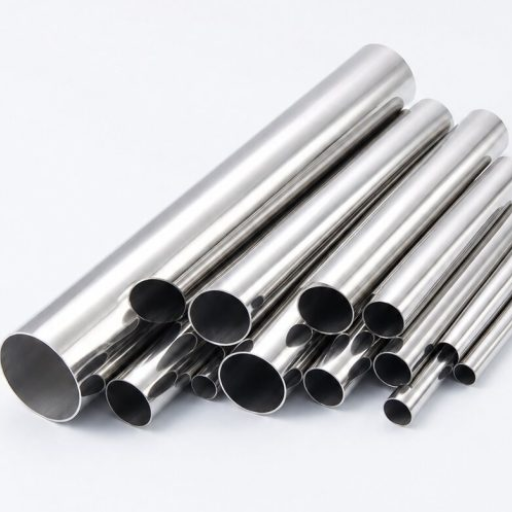
Both work. The choice comes down to pressure, size, and how much weld the application can tolerate.
Seamless tube has no weld and therefore no heat-affected zone and no weld bead to dress. It is the default for pressure service and for small diameters where a longitudinal weld would be a quality risk.
Welded tube is made from strip, formed, and welded longitudinally, typically by TIG or laser. It is more economical in larger diameters and thin walls, and modern weld control produces a very consistent seam. ASTM A269 covers general welded austenitic tube; ASTM A270 covers sanitary tube with tighter weld and finish requirements.
For electropolishing, the weld matters in two ways. The heat tint around the weld is chromium-depleted and must be removed, and a proud weld bead creates a geometric step that no amount of polishing will flatten. Electropolishing removes the tint and smooths the transition, but the weld geometry has to be right before the tube enters the bath.
That is why a welded and electropolished tube can outperform a seamless tube in a hygienic line: the weld is controlled, dressed, and passivated as part of the process. For pressure-critical service, the seamless versus welded construction question is decided by the design code, not the finish.
Standards to Specify: ASTM B912, ASME BPE, SEMI F19
Four standards come up most often, and buyers routinely cite the wrong one. Each answers a different question.
| Standard | What it covers | Cite it when |
|---|---|---|
| ASTM B912 | Electropolishing used as passivation of stainless steel | You want EP documented as a passivation step with acceptance criteria |
| ASTM A967 | Chemical passivation of stainless parts | You want passivation only, without EP |
| ASTM A380 | Cleaning, descaling, and passivation practice | You are defining surface condition before or after processing |
| ASME BPE | Bioprocessing equipment, including hygienic finish levels | Pharma, biotech, and other BPE-governed systems |
| SEMI F19 | Electropolished tubing and components for UHP gas delivery | Semiconductor and ultra-high-purity gas systems |
| ISO 15730 | Electropolishing as a means of smoothing and passivating stainless steel | Projects referencing ISO or EN frameworks |
ASTM B912 is the standard that turns electropolishing into a claim you can inspect. Its full title is “Standard Specification for Passivation of Stainless Steels Using Electropolishing,” and it sets acceptance criteria around surface condition and chromium enrichment. If your quality plan says “electropolished and passivated,” B912 is the citation that makes it verifiable.
ASME BPE is where hygienic buyers spend most of their time. The standard assigns surface finish categories, known as SF levels, that pair a finish method with a maximum roughness. The applicable limits vary with tube diameter and with the edition you are working to. Because those tables change between editions, cite the edition your project references and confirm the values against the standard itself rather than a supplier’s summary. The current ASME BPE standard is the authority here.
SEMI F19 covers electropolished stainless tubing and components for ultra-high-purity gas systems. It matters because semiconductor gas lines care about particle shedding and moisture, not just roughness. A tube that meets a pharma Ra limit doesn’t automatically meet a gas-line cleanliness requirement.
One common error: specifying SEMI F57 for stainless tube. F57 addresses polymer components. The stainless specification is F19.
For the standards themselves, ASTM International publishes B912, A967, and A380, while ASME and SEMI publish the others.
Applications for Electropolished Stainless Steel Tubing
Electropolished stainless steel tubing is specified for different reasons in different industries, and the reason should drive the Ra limit.
Pharmaceutical and biotech. WFI and purified water loops, buffer and media lines, and bioreactor piping are specified for cleanability and for resistance to cleaning and sterilization cycles. The finish limit usually follows the BPE level in the project specification, and the documentation package matters as much as the tube.
Semiconductor and ultra-high-purity gas. Gas delivery lines, valve manifolds, and tool hook-ups need low particle shedding, low moisture retention, and weld preparation that supports orbital welding. SEMI F19 is the usual reference, and bagging and end-capping are part of the specification rather than an afterthought.
Food, dairy, and beverage. CIP circuits, product lines, and filler feeds are specified for hygiene and for resistance to the chemistry of cleaning agents. Hygienic geometry and weld quality matter as much as roughness. The sanitary stainless steel tube range covers the dimensional standards used here. The sanitary tubing guide covers the hygienic design rules that decide whether EP is the right answer for a line in the first place.
Chemical and high-chloride service. EP is used to remove embedded iron and improve passive film stability in chloride-bearing streams. It supports corrosion performance, but it doesn’t change the alloy’s PREN. If the environment exceeds what 316L can take, the answer is a different grade, not a smoother surface.
Medical devices and analytical instruments. Instrument tubing, probe housings, and fluid paths use EP for cleanability and for consistent flow. Small diameters and short lengths make the process easier than in long process tube.
Inspecting Electropolished Stainless Steel Tubing
What arrives with the tube decides whether the receiving inspection passes. A finish certificate with no measurements is a brochure, not a record, and electropolished stainless steel tubing is the product category where that gap causes the most disputes.
A usable documentation package contains the mill test report to EN 10204 3.1, the chemical and mechanical results for the heat, and a roughness report. The roughness report should state the instrument type, the cutoff length, the number of traverses, the measurement locations, and the readings. Where the inside surface is specified, at least both ends should be measured.
For critical service, add a borescope record or a cut-up sample. A cut-up is destructive, but it is the only way to see the full bore on a long tube, and many pharma projects accept a sample per lot for exactly that reason.
A sampling plan that survives audit
Auditors rarely argue about a reading. They argue about whether the reading represents the lot.
A defensible plan states the lot size, the sample size, the measurement positions, and the acceptance rule before the order is placed. A practical default for hygienic tube is a sample from each lot, both ends measured, with three traverses per end and the average reported alongside the worst single reading.
The worst reading matters because acceptance should be based on a maximum, not an average that hides one bad section. If the specification says Ra ≤ 0.4 µm, it means no reading above 0.4 µm, not a mean of 0.4 µm.
Where the tube will be cut and re-welded on site, remember that the finish you accept at the ends is not the finish inside the cut. Orbital welds and field cuts create new surface that no supplier can control, which is why weld preparation and post-weld passivation belong in the installation specification separately.
Non-destructive testing sits alongside the finish records. Depending on the standard and the application, that means eddy current testing, hydrostatic testing, or both. The results belong in the same package.
Packing is part of the specification for high-purity tube. Electropolished surfaces are easily contaminated by handling, so the tube is dried with high-purity nitrogen, capped, and bagged, often in an ISO Class 4 or 5 cleanroom depending on the end use. Marking should survive the bagging and not be applied with a marker that outgasses.
Our own quality control process describes how the incoming heat, the finished dimensions, and the test records are handled before shipment.
How to Order Electropolished Stainless Steel Tubing
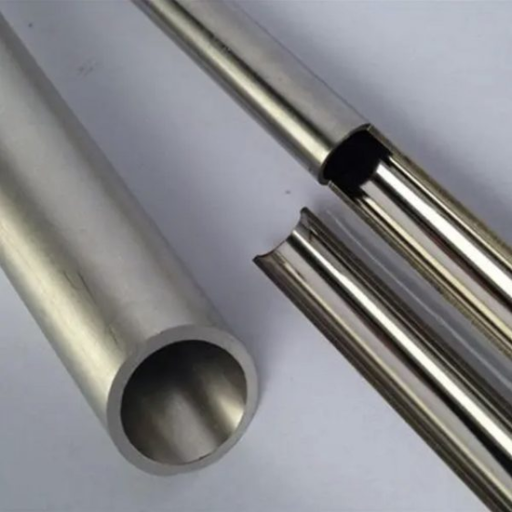
Most specification failures happen before the order is placed. This template closes the common gaps.
A usable purchase order line for electropolished tube:
- Material and standard: 316L, ASTM A269 or A270 (state which, and the edition).
- Dimensions: OD × wall thickness × length, with tolerances.
- Finish: internally and externally electropolished.
- Roughness: Ra ≤ 0.4 µm (15 µin) on the ID, measured per ISO 4287 with a stylus profilometer, 0.8 mm cutoff, minimum three traverses at each end.
- Process standard: ASTM B912, plus the applicable ASME BPE surface finish (SF) level if the project is BPE-governed.
- Testing: eddy current and/or hydrostatic, per the governing standard.
- Documentation: MTR to EN 10204 3.1, roughness report, electropolishing certificate.
- Packing: nitrogen-dried, capped, bagged to the specified cleanroom class, marked per project requirement.
The cost of electropolishing is driven by process time and handling, not by the metal. Bath time rises with the roughness you start from and the finish you need.
Cathode tooling is specific to the bore, so small diameters and unusual lengths cost more to set up. Masking, fixturing, and manual handling add labour. Scrap allowance matters because polishing exposes defects that were invisible before.
Order size changes the economics more than buyers expect. A single length still needs the same setup and tooling as a production run, so the per-metre cost on a small order is dominated by preparation. Lead time follows the same logic: bath scheduling, not machining, is usually the constraint.
None of this produces a fixed price per metre, and any supplier who publishes one is quoting a specific size and quantity, not a rule. Ask for a quotation against your schedule, and ask what the achievable Ra is for each size in it.
The four specification mistakes we see most
- Naming the finish but not the number. “Electropolished to pharmaceutical standard” gives the supplier room to deliver 0.8 µm. Write the Ra and the method.
- Citing a standard without the edition. Finish tables move between editions, and ASME BPE is the usual victim. State the edition or attach the relevant clause.
- Forgetting the inside diameter. A line that says “electropolished” without specifying ID and OD has been interpreted both ways in the same project.
- Separating finish from packing. An electropolished tube handled without gloves and bagged in a workshop is no longer clean when it is opened on site, however good the Ra was at the mill.
Each of these costs more to resolve after delivery than to write correctly before it.
Frequently Asked Questions
What is the difference between electropolished and passivated tubing?
Passivation removes free iron from the surface and rebuilds the chromium oxide layer without removing metal. Electropolishing removes metal, smooths the surface, and then passivates it as part of the same process. If you need a lower Ra, you need EP; if you need only chemical cleanliness on an already smooth surface, passivation may be enough.
What Ra value does electropolishing achieve on stainless tubing?
Typical electropolished tube lands between 0.1 and 0.4 µm Ra depending on the starting surface. The two common contract limits are 0.4 µm (15 µin) and 0.25 µm (10 µin), and the tighter one needs a smoother starting tube or a mechanical pre-polish.
Does electropolishing remove the weld seam in a welded tube?
It removes the heat tint and smooths the transition around the weld, but it doesn’t flatten a proud weld bead. Weld geometry has to be controlled before polishing, which is why sanitary tube standards address weld condition separately from finish.
Is electropolished tubing the same as bright annealed tubing?
No. Bright annealing is a heat treatment in a controlled atmosphere that prevents oxidation; it doesn’t remove metal. Electropolishing is an electrochemical removal process. A pharmaceutical tube is often bright annealed first and electropolished afterwards.
How is the inside of a long tube electropolished?
A cathode is inserted into the bore and electrolyte is circulated while current is applied. Long tubes need moving or segmented cathodes to keep current density uniform along the length, and both ends are measured because the finish varies along the tube.
What should a roughness report include?
The instrument type, cutoff length, number of traverses, measurement locations, and the actual readings, plus the standard the measurement follows. A certificate that states only a single Ra value isn’t a measurement record.
The Specification Is the Deliverable
Electropolished stainless steel tubing isn’t a commodity finish you can order by name, and the market treats it as one at its own cost. The process is well understood, the standards are clear, and the variables are known: starting surface, bath geometry, cathode design, grade, and length.
What separates a good order from a disputed one is the specification. Name the Ra, name the measurement method, name the standard and its edition, and require the records that prove all three. Do that, and the tube that arrives is the tube you specified.
If your project calls for electropolished tube in 304, 316L, duplex, or super duplex, send the line list with the finish requirement. Our technical team confirms grade, achievable Ra, dimensions, documentation, and lead time within 24 hours, and we will tell you when a different finish or grade is the better answer.