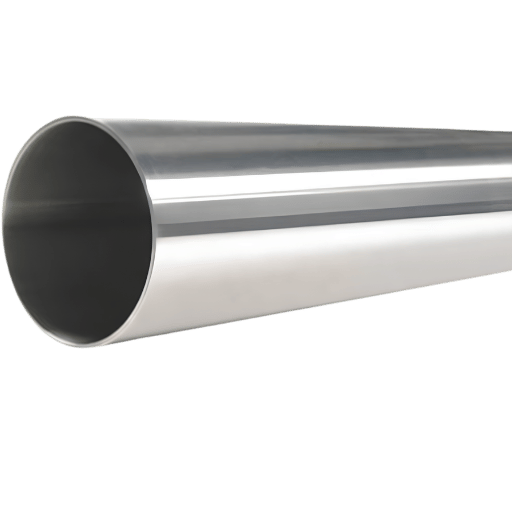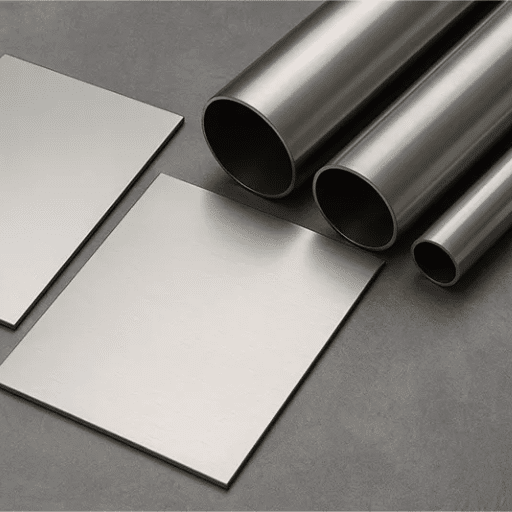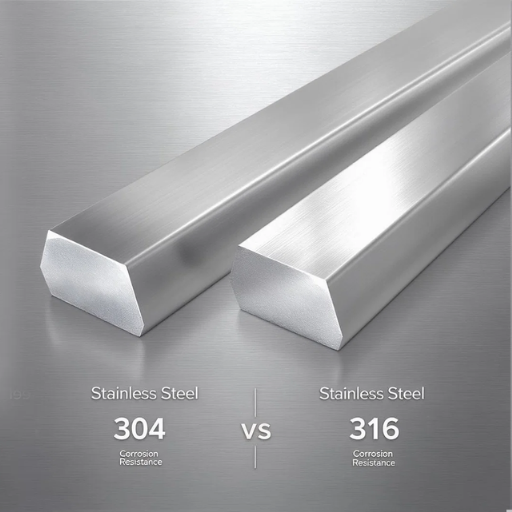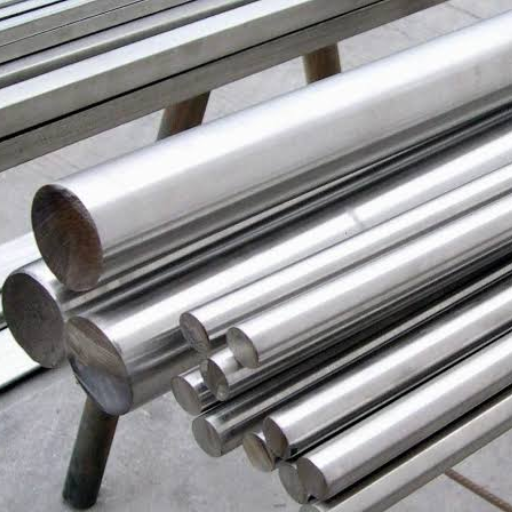
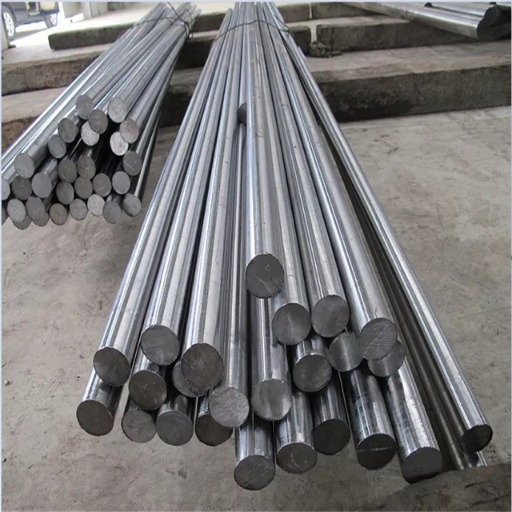
The best stainless steel for seawater depends on exposure, not on a label. 316L (PREN 24–27) is a splash-zone and intermittent-wetting grade. 2205 duplex (PREN 34–36) is the practical minimum for brackish water and moderate immersion. 2507 super duplex (PREN 42–43) is the default for continuous seawater immersion, chlorinated systems, and heat exchanger tubing.
“Marine grade” is not a specification. It is a phrase that has sold a great deal of 316 into applications where it had no chance: warm, slow, creviced seawater that breaks down the passive film within a few years. The material is rarely the problem. The mismatch between material and duty is.
If you specify pipe, tube, or fittings that touch seawater, you know the stakes. A failed seawater line means a shutdown, a rework, and an explanation to someone senior. This guide gives you the parts the ranking pages skip: an exposure-first selection ladder, the PREN values that make the choice objective, temperature and velocity limits, the ASTM standards to cite, and the documents to demand in the MTR. By the end, you can name the grade for your duty and write the purchase specification around it.
Key Takeaways
- PREN is the selection number: 316L ≈ 24–27, 2205 ≈ 34–36, 2507 ≈ 42–43. Full seawater immersion generally calls for PREN ≥ 40.
- 316L is not a continuous-immersion grade. It is a splash-zone material, and it fails first at crevices.
- Temperature narrows the shortlist as much as chemistry. Above roughly 60 °C in chlorinated seawater, super duplex, 6% Mo austenitic, or a nickel alloy are the realistic options.
- Stagnant seawater and crevices defeat grades that perform perfectly in flowing seawater.
- Specify the governing standard and the documentation along with the grade: ASTM A312 or ASTM A790, EN 10204 3.1 MTR, PMI, and ferrite content.
The Short Answer: Best Stainless Steel for Seawater by Duty
Seawater attack runs on four variables: chloride concentration, temperature, oxygen availability, and flow. Grade selection is the process of matching those four against a material’s pitting resistance.
| Exposure | Recommended grade | PREN | Temperature guide | Standard |
|---|---|---|---|---|
| Coastal atmosphere, above splash | 316L | 24–27 | Any | ASTM A312 / A213 |
| Splash zone, intermittent wetting | 316L (2205 where staining matters) | 24–36 | To ~40 °C | ASTM A312 / A790 |
| Brackish, tidal, occasional immersion | 2205 duplex | 34–36 | To ~30–40 °C | ASTM A790 / A789 |
| Continuous immersion, flowing | 2507 super duplex | 42–43 | To ~60 °C | ASTM A790 / A789 |
| Chlorinated seawater, heat exchangers | 2507, 254 SMO, or 6% Mo | 42–45 | To ~60–80 °C, verify | ASTM A789 / A213 |
| Hot brine above 80 °C, chlorinated | 6% Mo, nickel alloy, or titanium | 43+ | Case-by-case | Project spec |
Splash Zone, Atmospheric and Intermittent Wetting
Above the waterline, 316L is genuinely adequate: the passive film reforms between wettings, oxygen is plentiful, and chloride never accumulates the way it does under a deposit.
Failure here is cosmetic staining rather than perforation. Where appearance matters, 2205 holds a clean surface longer for a modest premium. Where the part is hidden or painted, 316L is the economical answer.
Continuous Immersion and Seawater Cooling
A 316L line in continuous seawater sees roughly 19,000 mg/L of chloride at 3.5% salinity, an environment that 2–3% molybdenum cannot resist indefinitely.
2205 raises PREN to 34–36 and more than doubles yield strength, which often permits a lighter schedule at equal pressure rating. It is right for tidal zones, brackish duty, and short-residence systems, and marginal as a lifetime choice in warm continuous immersion. 2507 at PREN 42–43 is the working default for continuous immersion, seawater cooling, firewater, and ballast systems.
One illustrative case, drawn from a common failure mode rather than a specific project: a coastal plant runs a 316L cooling header at 35 °C. At year three, inspection finds through-wall pits, nearly all at gasket faces and under sediment in a low-flow branch. The replacement is specified in 2507, and the branch is re-routed to kill the dead leg. The grade change fixes half the problem, and the layout change fixes the rest.
Hot, Chlorinated or Brine Service
Chlorination, used to control biofouling, raises the corrosion potential of seawater substantially. Combined with heat, it removes most standard austenitic grades from contention. Above roughly 60 °C in chlorinated seawater, 2507 needs case-by-case review rather than blanket approval. Above roughly 80 °C, no standard stainless grade is a reliable long-term answer, and 6% Mo austenitic or a nickel alloy enters the conversation.
Need the grade confirmed against your actual duty? Send the operating temperature, chloride level, flow rate, and line list to our technical team. We manufacture 316L, 2205, and 2507 in seamless and welded form and will confirm suitability before you commit. Send your line list
Stainless Steel Seawater Corrosion: Why Standard Grades Fail
Stainless steel resists corrosion because chromium forms a passive oxide film a few nanometres thick that seals the surface. It is not inert. Destroy that film faster than it can reform and the metal corrodes like ordinary steel, only with more dramatic local consequences. The worldstainless marine applications guide tracks the same mechanism from the alloy-development side.
Chlorides, PREN and the Passive Film
Chloride ions attack the film at weak points: inclusions, weld oxides, machining marks, and the sheltered gaps where a gasket meets a flange. Once the film breaks locally, the pit becomes an anode in a tiny, self-sustaining cell. The interior acidifies, chloride concentrates, and the pit deepens.
Molybdenum and nitrogen raise resistance to this attack. The industry expresses their combined effect as the Pitting Resistance Equivalent Number:
PREN = %Cr + 3.3(%Mo) + 16(%N)
Treat published PREN figures as bands, not single values, because composition varies within each grade’s range. The bands sort the grades into usable tiers. 304 at 18–20 is not a seawater material at all, 316L at 24–27 handles splash duty, and the duplex family from 34 upward begins to handle immersion.
Temperature, Flow Velocity and Crevices
Temperature decides more failure investigations than chemistry does. Critical pitting temperature, measured by ASTM G48 in 6% ferric chloride, gives an approximate ranking: 15–25 °C for 316L, 35–40 °C for 2205, and 65–85 °C for 2507. Always name the test method when you quote these numbers, because they shift with surface finish and test conditions.
Flow matters almost as much. Seawater held at roughly 1 m/s or faster stays oxygenated and resists biofouling. Still water lets marine organisms settle, and the deposit forms an oxygen-starved pocket underneath. That pocket is a crevice, and crevice corrosion proceeds at temperatures well below the pitting threshold.
Dead legs, blanked branches, and gasket faces are where seawater systems fail. A grade upgrade solves the chemistry. Only design solves the geometry, and pickling and passivation controls where the film is weakest to begin with.
The Four Contenders: 316L, 2205, 2507 and 254 SMO
Four grades cover the overwhelming majority of seawater specifications. Using one outside its role is how projects end up re-piping.
316L: The Splash-Zone Standard
316L (UNS S31603, EN 1.4404) adds 2–3% molybdenum to the 18/8 base, with 205 MPa minimum yield, and it is the most widely available seawater-adjacent stainless in the world. It is what most buyers mean by “316 stainless steel marine grade”, though marine grade remains a trade phrase rather than a standard. Its role is splash zone and intermittent wetting; its limit is continuous immersion at crevices, a line the British Stainless Steel Association draws in the same place. For the comparison against the base grade, see our 304 vs 316 stainless steel guide.
2205 Duplex: The Brackish Workhorse
2205 (UNS S32205, EN 1.4462) balances ferrite and austenite for 450 MPa minimum yield, more than double 316L, at PREN 34–36. The extra strength often permits a lighter schedule at equal pressure rating, which partly offsets the higher price per kilogram. For brackish water and moderate immersion, it is often the best value, and our duplex stainless steel seamless pipe is produced to ASTM A790 in this grade.
2507 Super Duplex: The Immersion Default
2507 (UNS S32750, EN 1.4410) raises chromium to about 25%, molybdenum to about 4%, and nitrogen to about 0.3%, reaching PREN 42–43 at 550 MPa yield. It is the grade most seawater specifications should start from. Our super duplex stainless steel pipe is manufactured to ASTM A790 in seamless form, with ferrite content and mechanical properties documented per heat.
254 SMO: The Austenitic Alternative
254 SMO (UNS S31254, EN 1.4547) reaches PREN 42–44 through 6% molybdenum in a fully austenitic structure. It fabricates more easily than super duplex, but its 300 MPa yield is well below 2507. Specify it where duplex welding qualification is impractical.
Grade Comparison Table
| Grade | UNS | EN | PREN | Min yield | Seawater role |
|---|---|---|---|---|---|
| 304/304L | S30400/S30403 | 1.4301/1.4307 | 18–20 | 205 MPa | Above waterline only |
| 316/316L | S31600/S31603 | 1.4401/1.4404 | 24–27 | 205 MPa | Splash zone, intermittent |
| 2205 | S32205/S31803 | 1.4462 | 34–36 | 450 MPa | Brackish, moderate immersion |
| 2507 | S32750 | 1.4410 | 42–43 | 550 MPa | Continuous immersion |
| 254 SMO | S31254 | 1.4547 | 42–44 | 300 MPa | Chlorinated seawater, exchangers |
| 904L | N08904 | 1.4539 | 34–36 | 220 MPa | Below the PREN 40 threshold |
| 6% Mo (AL-6XN) | N08367 | 1.4529 | 43–45 | 300 MPa | Severe chlorinated seawater |
Matching Stainless Steel to the Marine Environment
Seawater Cooling, Firewater and Ballast Systems
Cooling water is the classic seawater duty and the classic failure location: long residence times, warm outlets, and dozens of flange joints. Specify 2507 for wetted pipe and fittings, design for a minimum velocity near 1 m/s, and eliminate dead legs. Pumps add their own failure modes, and NACE’s guidance on stainless for seawater pumps is a useful reference.
Desalination and Brine
Brine is seawater with the water removed, so chloride is higher and temperature is often elevated. Reverse osmosis is comparatively kind. Thermal processes such as multi-stage flash and multi-effect distillation are not, and in their warm high-chloride stages the shortlist collapses to super duplex, 6% Mo, or a nickel alloy.
Heat Exchanger Tubing
Exchanger tube combines thin walls, high heat flux, and seawater on one side. Wall thickness gives no corrosion allowance, so grade selection is the only defence. 2507 and 254 SMO are the standard stainless answers, and our stainless steel heat exchanger tube is produced to ASTM A789 for duplex and super duplex grades.
Offshore, Subsea and Topside Piping
Offshore systems carry the highest consequence of failure and the tightest documentation. Super duplex is the norm, with NORSOK M-630 data sheets specified on many North Sea projects. Where sour service is present, NACE MR0175 enters because of H2S, not because of seawater. Do not conflate the two.
When Stainless Steel Is the Wrong Answer
Not every seawater duty belongs to stainless steel.
Cupronickel 90/10 and 70/30 remain the benchmark for seawater exchanger tubing. The copper-nickel surface resists biofouling in a way stainless cannot, and 90/10 has decades of marine cooling history. Our cupronickel tube range covers both alloys.
Titanium wins where velocity is high, chlorination is aggressive, and weight matters. It is often still cheapest over a 25-year horizon in severe exchanger duty.
Nickel alloys such as 625, 825, and C276 handle acid-bearing streams and the hottest chlorinated duties where even 6% Mo is uncertain.
6% Mo austenitic sits between super duplex and the nickel alloys, and is the pragmatic upgrade where welding duplex is impractical.
The rule: if the duty is hot, chlorinated, and continuous, price the alternatives before defaulting to stainless.
Standards, Documentation and Verification
A grade name on a purchase order is not a specification. The standard, the condition of supply, and the documentation package complete it.
| Product form | 316L | 2205 | 2507 |
|---|---|---|---|
| Seamless pipe | ASTM A312 | ASTM A790 | ASTM A790 |
| Welded pipe | ASTM A312 / A269 | ASTM A928 | ASTM A928 |
| Tube (HX or instrument) | ASTM A213 / A269 | ASTM A789 | ASTM A789 |
| Butt-weld fittings | ASTM A403 | ASTM A815 | ASTM A815 |
| Flanges and forgings | ASTM A182 F316L | ASTM A182 F51 | ASTM A182 F53/F55 |
| European equivalent | EN 10216-5 / 1.4404 | 1.4462 | 1.4410 |
Add ASTM G48 where pitting or crevice testing is specified, and ASTM A923 for duplex intermetallic phase checks. Both test the material’s condition, not just its chemistry, which is why they appear on offshore specifications.
What the Mill Test Report Must Show
For a seawater order, the MTR should carry more than a chemistry table:
- Composition by heat, including molybdenum and nitrogen for duplex grades
- Yield, tensile, elongation, and impact where specified
- Heat treatment record, including solution annealing temperature for duplex
- Ferrite or phase balance, typically targeted near 50/50
- Hydrostatic test pressure and duration
- Corrosion test results where G48 or A923 is invoked
- EN 10204 type 3.1 certification, tied to the specific heat
A certificate without a heat number traceable to the pipe marking is a document, not evidence. Our quality control process describes how each heat is spectrographically verified before production, which is what makes the chemistry section of the MTR a measurement rather than a transcription.
At receiving inspection, positive material identification takes minutes and catches the most expensive mistake in stainless procurement: material that is not what the paperwork says. Spot-check the heat number against the MTR, PMI the pipe ends and fittings, and take a ferrite reading on duplex to confirm the phase balance survived welding. If third-party inspection is required, agree the inspection and test plan before production.
Specifying Stainless Steel for Seawater Systems
Three decisions sit on top of the grade choice.
Seamless or welded. Seamless is the default for pressure and critical service. Welded to ASTM A928 is accepted in larger diameters and lower-pressure duties, and it shortens lead time; the seamless vs welded comparison covers that trade-off in detail.
Schedule and size. Duplex strength often allows a thinner wall than the 316L schedule it replaces. Re-run the pressure calculation rather than carrying the old schedule across, because carrying it across wastes the advantage you paid for.
Supplier qualification. Ask for the grade-specific MTR before the order. A buyer who accepts a 2507 quotation on price may receive a certificate listing chromium and molybdenum but not nitrogen, and discover at PMI that the pipe is closer to 2205. With only a grade name in the purchase order, there is no clause to reject it. Naming the standard, test methods, and MTR content costs nothing.
We manufacture 316L, 2205, and 2507 seamless pipe and tube in Wenzhou, with in-house spectrographic verification, ultrasonic testing, and hydraulic testing on every lot.
Have a seawater line list to price? Send the grade, size, schedule, quantity, and destination port. Our technical team returns grade confirmation, documentation details, and lead time within 24 hours. Request a seawater pipe quotation
Conclusion
Seawater grade selection comes down to one question asked in the right order: what is the exposure, and what is the temperature at that exposure?
316L answers splash zones and intermittent wetting. 2205 answers brackish water and moderate immersion at a strong strength-to-cost ratio. 2507 answers continuous immersion, chlorinated systems, and exchanger tubing, and it is the grade most specifications should start from. Above 80 °C in chlorinated seawater, none of them is the right answer.
The best stainless steel for seawater is therefore not a single grade. It is the grade whose PREN, temperature limit, and standard match the duty you have, documented in an MTR you can verify at receiving inspection. That is a specification. Everything else is a label.
Send us the duty and the line list, and our technical team will confirm the grade, the standard, and the documentation package within 24 hours. Talk to our technical team →
FAQ
Which stainless steel is best for salt water?
2507 super duplex (PREN 42–43) is the best general choice for continuous salt water immersion, chlorinated systems, and exchanger tubing. 316L suits only splash zones and intermittent wetting, where the surface dries between exposures.
Is 316 stainless steel OK for seawater?
316L is fine above the waterline and in splash zones, but it is not a continuous-immersion grade. In warm, slow seawater it pits at crevices and under deposits within a few years. For permanent immersion, specify 2205 as a minimum and 2507 where temperature or chlorination is involved.
Will 304 stainless steel rust in salt water?
Yes. 304 has a PREN of only 18–20 and no molybdenum, so it stains and pits even in coastal atmospheres without immersion. It should not be specified for any seawater-wetted component.
What is the best stainless steel for a saltwater boat?
Above the waterline, 316 fasteners and fittings are adequate if crevices are sealed and surfaces rinsed. Below the waterline, use duplex hardware or redesign the joint so water cannot sit against it. A thicker 316 part does not solve a crevice problem.
Can stainless steel stay underwater permanently?
Yes, with the right grade. 2507 commonly gives 20 years or more in flowing ambient seawater, while 316L can fail within months in warm, stagnant, creviced conditions. Permanent immersion requires PREN 40 or above, flowing water, and no stagnant pockets.
What PREN do I need for seawater?
A common industry threshold is PREN ≥ 40 for full seawater immersion and roughly 32 for brackish water. 2507 at 42–43 and 254 SMO at 42–44 clear the threshold. 316L at 24–27 and 904L at 34–36 do not.