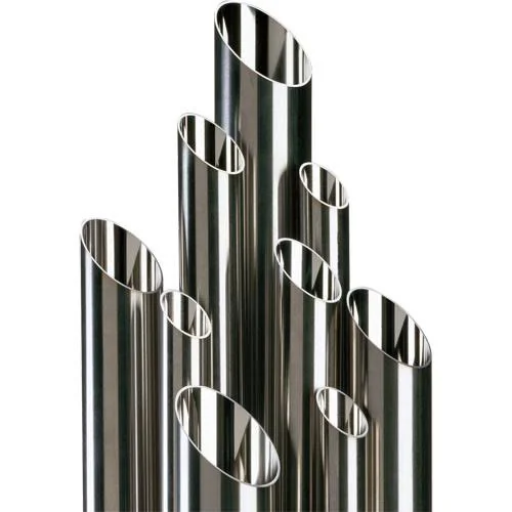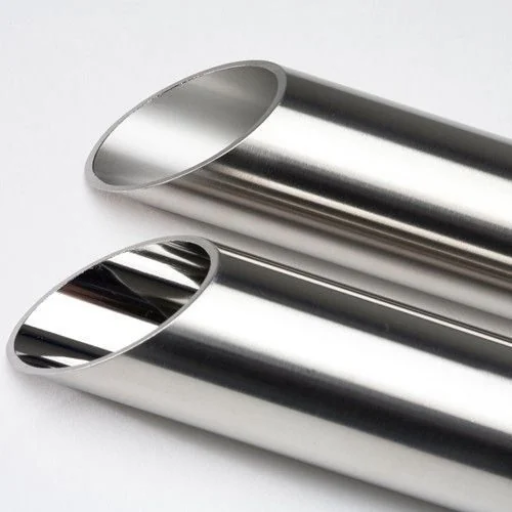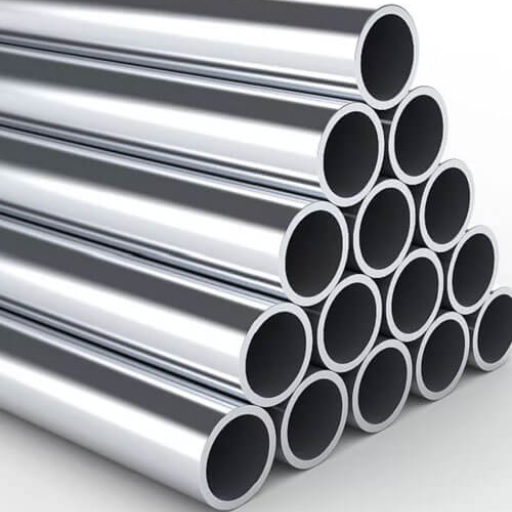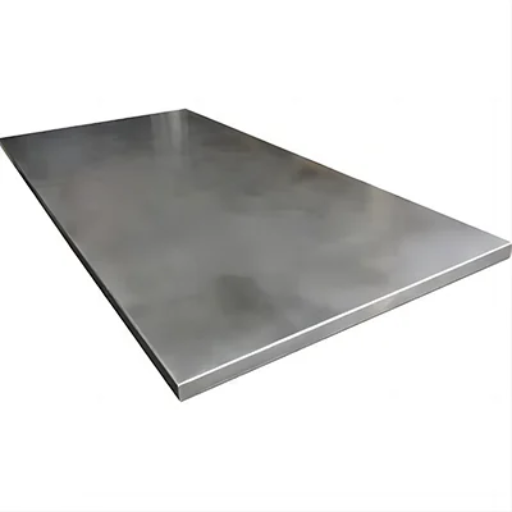
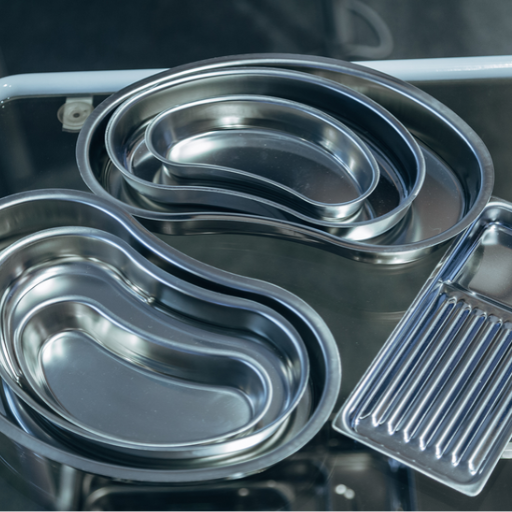
ASTM B912 is the electropolishing specification for passivating stainless steel. The current edition, B912-26, published in April 2026, covers 200, 300 and 400-series alloys plus precipitation-hardened grades, and defines how the surface is prepared, polished, post-dipped, rinsed and tested.
It does not define a roughness limit, a metal-removal depth or a chromium-to-iron ratio. Three numbers buyers routinely attribute to it come from elsewhere.
Elena, a quality engineer at a skid builder in northern Italy, found that out during a supplier audit. The report read “electropolished per ASTM B912” and gave a bore roughness of 0.32 µm. She asked which of the five B912 tests had been run. The supplier said the roughness figure was the proof.
It wasn’t. Roughness says how smooth the surface is. B912 asks whether it has been passivated, and names five tests for deciding that. The report answered a question the standard never asked.
Most purchase orders inherit “electropolished per ASTM B912” from a datasheet or an earlier project. Few say which edition, test or surface. This guide to ASTM B912 electropolishing walks the clauses, explains what each test proves, and gives you a clause you can defend.
If you are writing that clause now, send the drawing and finish requirement with your enquiry. Request a specification review.
Key Takeaways
- ASTM B912 governs passivation by electropolishing. It sets no Ra limit, metal-removal depth or Cr/Fe ratio.
- Its five tests are water immersion, humidity, salt spray, copper sulfate and modified ferroxyl. They prove passivation, not smoothness.
- B912-26 replaced B912-02(2018) in April 2026. No public change list exists, so state the edition on the PO.
- B912, ASTM A967 and ASTM A380 do different jobs. Citing the wrong one leaves the finish unverifiable.
- A conforming report names the edition, test method, raw results and sampling plan. An Ra value alone is not a passivation record.
What ASTM B912 Covers, and the Three Numbers It Does Not
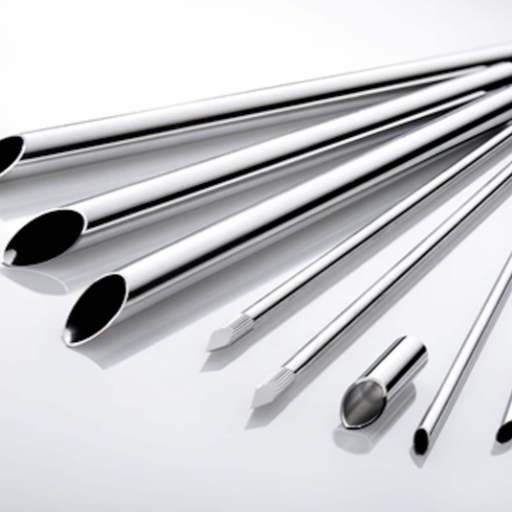
ASTM B912 is titled Standard Specification for Passivation of Stainless Steels Using Electropolishing. Committee B08 publishes it, and it runs to four pages in Volume 02.05. The ASTM store listing for B912-26 is the authoritative source for the current edition.
Section 1.1 covers 200, 300 and 400-series alloys, written as UNS 2XXXX, 3XXXX and 4XXXX, plus precipitation-hardened grades. Section 1.2 sets SI units, and the 2026 edition adds a WTO technical-barriers-to-trade clause.
Note 1 carries the sentence that matters. Passivation occurs simultaneously with electropolishing under proper conditions, and how well it occurs depends on the alloy, solution and operating parameters. It credits three effects: free iron is removed, smoothing improves corrosion resistance, and heat tint and oxide scale come off.
The standard’s job is therefore narrow: produce a passive surface by electropolishing, then demonstrate that it is passive.
Ra, metal removal and Cr/Fe: where those numbers really come from
Three figures circulate as if they were B912 requirements. None is in the standard.
| Figure | Usually written as | Where it actually comes from |
|---|---|---|
| Surface roughness | “B912 requires Ra ≤ 0.4 µm” | ASME BPE finish designations, SEMI F19, or the customer’s drawing. B912 sets no Ra value. |
| Metal removal | “B912 requires 5 to 25 µm per surface” | NASA PRC-5009 Rev C, which specifies 0.0002 to 0.0005 in per surface. Not B912. |
| Chromium enrichment | “B912 requires Cr/Fe ≥ 1.5” | ASME BPE acceptance criteria for 316L, and SEMI F19 with its F60 method. Not B912. |
The roughness error is most common because the two ideas travel together in a datasheet. Electropolishing does lower Ra, often by 30% to 50%, so a buyer who sees a polished bore assumes the standard required it. B912’s acceptance language is about visual defects and passivation tests.
If your process needs Ra ≤ 0.4 µm, put that on the drawing, referenced to ASME B46.1 or the BPE designation. Our guide to how Ra is measured on tube covers the method.
The metal-removal error has a traceable origin. NASA PRC-5009 Rev C requires 0.0002 to 0.0005 in per surface and cites B912 for the post-dip and rinse. Procurement templates have since collapsed the two documents into one sentence. If removal matters to your tolerance stack, write the allowance and its source on the drawing.
The Cr/Fe error matters most in pharmaceutical and semiconductor work. A ratio of 1.5 or higher is a real acceptance criterion, but it lives in ASME BPE and SEMI F19, measured by ESCA or XPS under SEMI F60. Our guide to ASME BPE surface finish levels covers that table. B912 does not contain it.
What changed in B912-26
B912-26 was published on 1 April 2026 and replaces ASTM B912-02(2018). For projects outside ASTM jurisdictions, ISO 15730:2023 covers the same ground internationally.
What changed inside the document is not public. No redline has been released, and ASTM’s 2026 abstract is word for word the 2018 abstract. One observable difference: ASTM G150, the electrochemical critical pitting temperature test, now appears in the normative references. Whether that is a new requirement or housekeeping, this article can’t say.
Write the edition on the PO. When a certificate cites B912-02(2018), ask whether that is the edition your project specified. A withdrawn edition is not automatically wrong, but it should be a deliberate decision rather than an inherited one.
What B912 Requires, Clause by Clause
Clause numbers below follow the 2000 to 2018 text as reproduced by standards resellers. The 2026 edition keeps the same structure as far as the public abstract shows, but confirm the numbering against the copy your project cites.
Ordering information
Section 4.1 covers what the purchaser puts on the order: alloy and product form, required surface condition, B912 edition and the verification test you expect. Leave the test unnamed and the supplier has no obligation to run one. Section 4.1 is also the one most often skipped, which is why two B912-compliant suppliers can return documents that look nothing alike.
Visual acceptance and surface preparation
Section 5.1 sets the visual baseline. Significant surfaces must be free of pits, roughness, striations and discoloration when viewed with 20/20 vision at about 0.5 m. That is a human inspection criterion, not an instrument reading, and it belongs in the report alongside the test results.
Section 5.2.1 covers preparation. Cleaning follows ASTM A380/A380M and ASTM B322 before the part enters the bath. Oil, scale, machining residue and handling marks interfere with current distribution, so a poorly prepared surface polishes and passivates unevenly.
The electropolishing step
Section 5.2.2 is the process clause. The electropolishing process immerses the article at the current density and temperature needed to produce the passive surface and, if specified, the required finish. The body text does not prescribe a bath chemistry; a typical solution sits in Appendix X1 as guidance.
Note 4 matters if your part has recesses, blind holes or a long small bore. Current density falls in shielded areas, so passivation is weaker there. The standard suggests longer time, higher current density or auxiliary cathodes. On tube, this is the most important sentence in B912: a 6 m length with a 12 mm bore is exactly the geometry that under-polishes at the far end.
Post dip and final rinse
Section 5.2.3 specifies a post dip: 10% to 30% by volume nitric acid at room temperature, with a citric acid dip at about 60 g/L as an alternative. Sulfuric and hydrochloric acids are not recommended.
Section 5.2.4 requires a final rinse. The sequence matters: electropolish, post dip, rinse, dry, then test. A part that is polished and rinsed but never post-dipped has not completed the process the standard describes.
Tomás, a process engineer at a Portuguese fabricator, learned this the expensive way. He wrote “electropolished to ASTM B912” on a PO for 400 m of 316L tube and left the test to the supplier. One returned a certificate with a copper sulfate result. The other returned a roughness report and a photograph. Both believed they had complied. Only one had documentation that could be checked against the standard.
The Five Tests That Prove Passivation
Section 5.3.1 lists the methods; any one or more may be used. Section 6 gives the procedures, and this is where the standard becomes an inspection document.
| Test | Method | Parameter, as reproduced from the pre-2026 text | Pass criterion |
|---|---|---|---|
| Water immersion | Cyclic wet and dry in distilled water | 12 cycles of 1 h wet and 1 h dry, 24 h total | No red rust or staining from free iron |
| Humidity | Humidity chamber | 100% RH at 38 ± 2 °C for 24 h | No rust or staining |
| Salt spray | Neutral salt spray to ASTM B117 or ISO 9227 | Minimum 2 h | No corrosion products |
| Copper sulfate | Acidified copper sulfate swab, Appendix X2 | Keep surface wet at least 6 min, then rinse | No copper-colored deposit |
| Modified ferroxyl | Potassium ferricyanide and nitric acid, Appendix X3 | Applied to the surface | Dark blue within 30 s indicates free iron and fails |
The tests answer different questions, which is why you choose. Copper sulfate and modified ferroxyl detect free iron directly; they are fast, cheap and well suited to a production lot. Humidity and water immersion test the passive film’s staying power over a day. Salt spray is the harshest and least specific: two hours tells you the surface is not badly contaminated, not how long it will last in service.
Choosing which test to specify
For general industrial work, copper sulfate or modified ferroxyl gives the clearest pass or fail on free iron. Hygienic and pharmaceutical work usually adds an ASME BPE finish designation to humidity testing. Semiconductor components pair B912 with SEMI F19 and F60, F72 and F73. Pick one test and name it: “B912 compliant” with no method is a claim, not an inspection result.
Need to match a customer’s B912 clause? Send the clause and the tube specification. We will confirm which test we can run, the sampling plan and the report format before production. Ask for a documentation sample.
ASTM B912 vs ASTM A967 vs A380: Which Belongs on the PO
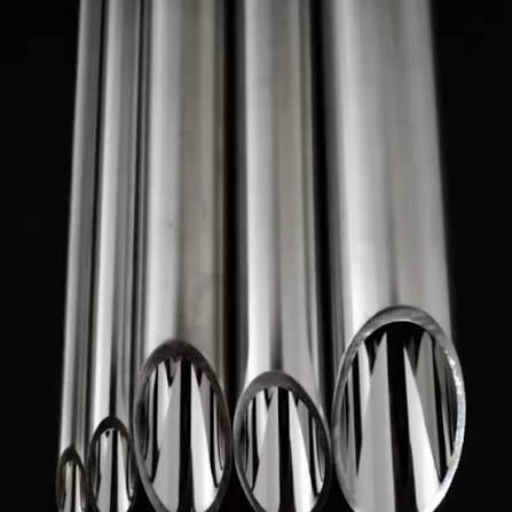
These three sit side by side in almost every specification, and they are not interchangeable.
| Standard | What it covers | Process | Current edition | What it proves |
|---|---|---|---|---|
| ASTM B912 | Passivation of stainless steels using electropolishing | Electrochemical, with post dip and rinse | B912-26, April 2026 | That an electropolished surface has been passivated and tested |
| ASTM A967/A967M | Chemical passivation treatments for stainless steel parts | Nitric acid, citric acid and an electrochemical option | A967/A967M-25, January 2025 | That a chemically passivated surface has been tested for free iron |
| ASTM A380/A380M | Cleaning, descaling and passivation practice | Guidance and recommended practice | 2025 revision | How to clean and passivate, not a pass or fail criterion |
B912 is the electropolishing route and A967 the chemical route, but the documents are messier than that summary. A967/A967M-25 lists an electrochemical treatment, so a PO citing only A967 for an electropolished part is not indefensible. It is weaker than B912, which addresses electropolishing itself. Our guide to pickling and passivation of stainless steel covers the chemical route.
The 2025 A967 revision replaced “free iron” with “contaminant iron” and added guidance on drying, sampling and re-passivation after laser marking. If your specification still says “free iron,” it quotes an older edition. That is not a defect, but align the wording across the PO, drawing and report.
A380 is the one buyers most often mistake for an acceptance standard. It’s a practice guide: it tells a fabricator how to clean, descale and passivate, but gives no test result to accept or reject a lot against. Use it to define the method, then use B912 or A967 to define the proof.
Writing the ASTM B912 Clause on a Purchase Order
A clause that can survive an audit has six parts: edition, surface, process, test, sampling and documentation.
Electropolish all product-contact surfaces to ASTM B912-26.
Internal surface finish: Ra ≤ [0.4] µm, measured to ASME B46.1
with a [0.8] mm cutoff and [4] mm evaluation length. The limit is
a maximum, not an average: no individual reading may exceed it.
Readings: [5] per length at [positions], with locations reported.

Passivation verification: [copper sulfate / modified ferroxyl /
humidity] per ASTM B912-26 Section [6.4 / 6.5 / 6.2].
Sampling: [random sample from each lot per ASTM B602].
Post dip: [10-30% v/v nitric acid / 60 g/L citric acid].
Final rinse and drying before test.

Report: B912 edition, heat number, bath and process records,
individual Ra readings with locations and instrument settings,
raw test results, sampling plan, visual inspection result, and
an EN 10204 3.1 mill test report.

Base material: [ASTM A269 / A270 / A213], [304L / 316L].
State the B912 edition on the certificate of compliance.
Read the block from the supplier’s side. The first line fixes the edition, so nobody can certify to a withdrawn text by accident. The second moves roughness onto a measurement method, where it belongs. The third names the test, because B912 lets the purchaser choose. The fourth fixes sampling, the fifth completes the process, the sixth lists the report contents.
The last line settles most arguments. “ASTM B912” without an edition is ambiguous in 2026. “ASTM B912-26” is not.
How to Verify a Supplier’s B912 Compliance
A conforming report is a package, not a single figure.
What the report should contain
- The B912 edition cited, stated explicitly.
- The alloy, heat number and product form.
- Process records: bath chemistry, temperature, current density, immersion time and, for tube, current distribution along the length.
- The post-dip solution and concentration.
- The test method, with raw results rather than a summary.
- The sampling plan and the lot size it was applied to.
- Roughness readings with locations, cutoff and evaluation length, if roughness was specified.
- The visual inspection result against Section 5.1.
- The mill test report to EN 10204 3.1.
If any of those is missing, the report is incomplete. It may still describe a good part, but it does not demonstrate compliance.
Sampling under Section 7
Section 7.1 points to ASTM B602, which corresponds to ISO 4519, for sampling electropolished finishes. Section 7.2 calls for a random sample from the inspection lot. Agree the sample size and acceptance number before the lot is made. A supplier who tests one cut-off coupon from a 500-piece lot has not sampled the lot.
Four phrases that should make you ask a question
“B912 certified.” There is no B912 certification scheme. A supplier can manufacture and test to the specification, and that is the claim to make.
“Ra 0.32 µm, therefore B912.” Roughness is not a passivation test. Ask for the test result.
“Passivated to B912” with no method named. B912 lists five tests. The report should name one.
“Cr/Fe 2.1 per B912.” The ratio may be real; the attribution is not. Ask which method produced it, usually ESCA or XPS, and which standard required it.
A semiconductor fabricator in Malaysia rejected a lot on that last point. The certificate claimed a Cr/Fe ratio “in accordance with ASTM B912.” The ratio was acceptable but untraceable to a test method in the cited standard. The rework and second audit cost more than the tubing.
Frequently Asked Questions
What is ASTM B912?
ASTM B912 is the specification for passivating stainless steels using electropolishing. B912-26 covers 200, 300 and 400-series alloys and precipitation-hardened grades, and defines preparation, the electropolishing step, post dip, final rinse and five verification tests.
Does ASTM B912 specify a surface finish or Ra value?
No. It requires significant surfaces free of visible pits, roughness, striations and discoloration, plus passivation testing. For Ra ≤ 0.4 µm, write it separately with an ASME B46.1 or BPE reference.
What is the difference between ASTM B912 and ASTM A967?
B912 covers passivation by electropolishing. A967/A967M covers chemical passivation, mainly nitric and citric acid immersion, plus an electrochemical option. B912 is the stronger citation for an electropolished part.
How much material does electropolishing remove under B912?
None is specified. The quoted 0.0002 to 0.0005 in per surface comes from NASA PRC-5009 Rev C. If removal matters, specify the allowance and its source on the drawing.
Which B912 test should I specify?
For free iron, copper sulfate or modified ferroxyl is quick and direct. Hygienic work commonly adds humidity testing to an ASME BPE designation. Semiconductor parts pair B912 with SEMI F19 and F60/F72/F73. Name the test on the PO.
Is B912-26 different from B912-02(2018)?
The edition changed in April 2026, and B912-02(2018) is withdrawn. No public change list exists, and the abstracts are identical. State the edition you require and check which one the certificate cites.
Conclusion
ASTM B912 does one job well: it defines how to passivate stainless steel by electropolishing and how to prove it happened. The confusion comes from asking it to do three jobs it was never written for.
Roughness belongs on the drawing. Metal removal belongs in the tolerance stack, with NASA PRC-5009 or your own process sheet as the source. Chromium enrichment belongs with ASME BPE or SEMI F19.
Write the edition, finish, test, sampling plan and report contents into the purchase order. Then the certificate that comes back can be checked against something.
If you are sourcing electropolished tube, review our electropolished stainless steel tubing specifications, then send the drawing, alloy, and finish requirements. Our technical team will confirm the achievable surface, test method and documentation package within 24 hours. Send your specifications.