The right capillary copper tube manufacturer is the one that can prove dimensional control, material traceability, and cleanliness before you place the order, not after the tubes arrive. In most procurement failures, the problem is not the copper grade or the outside diameter. It is the internal diameter tolerance, the internal residue, or the missing mill test record that quietly causes a field failure.
This guide is for buyers who’ve already moved past the catalog search and need to know how to qualify a capillary copper tube manufacturer or capillary copper tube supplier in China, what to specify in the RFQ, and which documentation to demand. You’ll get a practical supplier checklist, a clear specification framework, and a direct comparison between copper and stainless steel capillary tubes.
Key Takeaways
- A capillary copper tube manufacturer must prove ID tolerance, material traceability, and cleanliness before production, not after delivery.
- ASTM B360 requires ±0.001 inch (±0.025 mm) ID tolerance and a maximum internal residue of 0.0002 g/in².
- C12200 DHP copper is the default alloy for refrigeration and medical capillary tubes because of its brazing resistance and hydrogen embrittlement performance.
- Flow rate through a capillary tube depends on the fourth power of the internal diameter, so small ID variations create large system effects.
- Always ask for mill test records (MTRs), dimensional inspection reports, and EN 10204 3.1 certification before committing to a supplier.
What Capillary Copper Tube Is and Why Precision Matters

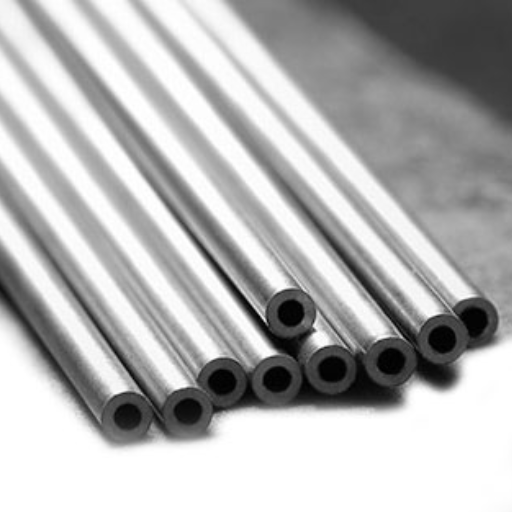
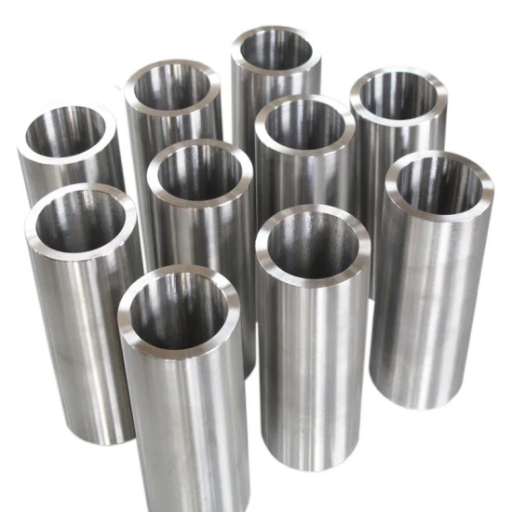
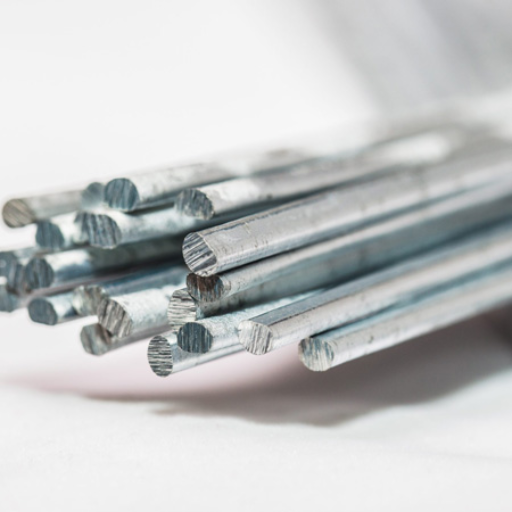
A capillary copper tube is a small-diameter, seamless copper tube used as a passive flow restrictor or metering device. It has no moving parts. The tube itself creates a pressure drop that controls refrigerant flow in HVAC systems, blood or reagent flow in medical devices, and gas or liquid handling in analytical instruments.
The physics that makes this work is also what makes it unforgiving. According to Poiseuille’s law, flow rate through a tube is proportional to the fourth power of the internal radius. A 5% increase in ID doesn’t produce a 5% increase in flow. It produces something closer to 20–25%. In a refrigeration system, that difference changes superheat, compressor load, and energy efficiency. In a medical device, it changes sample volume and test accuracy.
That is why the ID tolerance specified in ASTM B360 is so tight: ±0.001 inch (±0.025 mm). The OD tolerance is also controlled at ±0.002 inch (±0.051 mm). A capillary copper tube manufacturer that cannot produce and verify those tolerances consistently is not a precision supplier, regardless of the price. It is also the reason you cannot treat a capillary tube order as a simple commodity buy.
When the team at Acme Refrigeration in Ohio sourced their first container from a low-cost trading company, they specified “4.0 mm OD x 0.7 mm wall, 3 meter coils, hard temper.” The tubes looked correct. But the ID sat at the high end of the tolerance band, and the system showed an 8% flow increase. Superheat control drifted, warranty claims followed, and the line had to be re-qualified. The purchase saved 0.12permeter.Thereworkcost0.12permeter.Thereworkcost18,000.
Key Specifications to Lock Down Before You Send an RFQ
A strong RFQ doesn’t just list OD, wall, and quantity. It locks down the alloy, standard, dimensions, tolerance, temper, cleanliness, and documentation package. Suppliers that receive vague specifications quote vague prices. A precision capillary copper tube manufacturer asks better questions and quotes fewer surprises.
Alloy and Standard
The dominant alloy for capillary copper tube is C12200, phosphorus-deoxidized high-phosphorus (DHP) copper. A C12200 capillary tube resists hydrogen embrittlement during brazing, which is critical for refrigeration and HVAC assemblies. For applications that need higher conductivity or a different phosphorus range, C12000 and C10800 may be used, but C12200 remains the commercial default.
The relevant standard is ASTM B360, Standard Specification for Hard-Drawn Copper Capillary Tube for Restrictor Applications. Some medical and European projects also reference EN 12450 or ASTM B280. Make sure the manufacturer can test to your chosen standard, not just quote it.
If you need a deeper explanation of C12200 chemistry and performance, see our phosphorus-deoxidized copper tube guide.
Dimensions and Tolerances
Typical capillary copper tube dimensions fall in the following ranges:
| Dimension | Common Range |
|---|---|
| Outside diameter | 1.0 mm – 6.1 mm |
| Inside diameter | 0.5 mm – 2.0 mm |
| Wall thickness | 0.2 mm – 1.0 mm |
| ID tolerance | ±0.001 inch (±0.025 mm) per ASTM B360 |
| OD tolerance | ±0.002 inch (±0.051 mm) per ASTM B360 |
Do not assume a supplier will automatically hold ASTM B360 tolerances unless you specify them. Many commodity traders sell tubes that meet OD and wall but fall outside the ID band. Ask explicitly for the dimensional inspection report, and specify whether you need pin gauge verification, air-flow testing, or both.
Temper
Temper determines how the tube behaves during forming and installation:
- Hard-drawn (H80) is the default for refrigeration capillary tubes. It holds its shape, resists kinking, and is the standard for ASTM B360 restrictor applications.
- Soft annealed (O60) is used when the tube must be routed through tight bends or complex assemblies.
- Half-hard (H55) is an intermediate option when some formability is needed but rigidity is still preferred.
Specify the temper in your RFQ. A manufacturer that cannot anneal in-house is limited in the range of products it can supply reliably.
Cleanliness and Packaging
ASTM B360 Section 16.4 sets a maximum internal residue of 0.0002 g/in². For refrigeration systems, residue restricts flow and can contaminate the refrigerant circuit. For medical devices, residue can cause erratic sample volume or false readings.
A qualified manufacturer should dehydrate the tubes, seal them with nitrogen charge, and package them to prevent contamination during transport. Sealed coils are standard for refrigeration and medical shipments. If you need a cleanroom environment, state it in the specification.
Want to see how Zhongzheng controls these specifications in production? Explore our seamless copper tube selection guide for a broader view of standards and tolerances.
Applications That Drive Specification Differences
The same 3 mm capillary tube can be a refrigerator component, a medical device channel, or a gas chromatography line. The application determines which specifications matter most when you talk to a capillary copper tube manufacturer.
Refrigeration and HVAC
Refrigeration is the largest consumer of capillary copper tube. The tube acts as the expansion device between the condenser and the evaporator. It meters refrigerant flow based on pressure drop. Common refrigerants include R-134a, R-410A, R-22, R-600a, and R-290. Copper is compatible with all of these, but ammonia (R717) is not. For ammonia systems, stainless steel is required. Field guidance on cap tube sizing and refrigerant behavior is available from HVAC Training Solutions and the JB Industries Capillary Tube Manual.
In this market, ID tolerance and cleanliness are the top priorities. A slightly oversized ID raises superheat. Internal residue reduces effective flow area. Both problems show up only after the unit is installed.
Medical Devices and Diagnostics
Capillary copper tubes appear in blood glucose meters, hematocrit devices, diagnostic cooling loops, and laboratory automation. Here, the ID directly affects sample volume and flow repeatability. The walls must be clean, and the material must be traceable to the heat lot.
Medical device buyers often require ISO 13485 quality system alignment, even if the supplier is not certified. They also need documentation that supports the device manufacturer’s regulatory submission.
Laboratory and Instrumentation
Gas chromatography, HPLC, microfluidics, vacuum systems, and analytical instruments use capillary tubes for precise fluid or gas handling. These applications often require small quantities, custom lengths, and tight cleanliness. The manufacturer’s ability to cut, deburr, and package without contamination is as important as the dimensional capability.
Industrial Controls
Thermostats, pressure gauges, and metering devices use capillary tubes to transmit pressure or sense temperature remotely. These applications usually need long-term stability and corrosion resistance rather than ultra-tight ID tolerance.
How to Qualify a Capillary Copper Tube Manufacturer

Qualifying a manufacturer is not a matter of asking for the lowest price. It is a structured check of capability, quality system, and documentation discipline. Use the following seven checkpoints.
1. Check Material Traceability
A credible manufacturer starts with certified copper cathode or mother tube and can trace every coil back to a heat lot. Ask for:
- Spectrographic or heat analysis report showing copper and phosphorus content
- Compliance with ASTM B360 chemical requirements
- EN 10204 3.1 certification (mill certification by the manufacturer) or 3.2 if third-party inspection is required
If the supplier cannot show a sample MTR before order, treat that as a red flag.
2. Verify Dimensional Capability
Dimensional capability is the core of capillary tube manufacturing. Confirm that the supplier can:
- Hold the ID tolerance you need, typically ±0.001 inch for ASTM B360
- Provide OD, wall, and ID inspection reports per shipment
- Use pin gauges or air-flow testing for flow-critical applications
- Test long coils without cutting or distorting the ends
At Zhongzheng, we use cold drawing lines, bright annealing furnaces, and eddy-current testing to verify each coil. If a potential supplier cannot describe its inspection sequence, the tolerances are probably not verified.
3. Confirm the Cleanliness Process
Cleanliness is where many low-cost suppliers fail. Ask specifically:
- How is the internal surface cleaned after drawing?
- Is residue tested per ASTM B360 Section 16.4?
- Is the tube dehydrated and nitrogen-charged before sealing?
- What packaging prevents recontamination during sea or air freight?
For medical or refrigeration applications, request a cleanliness test report on a sample lot before placing the main order.
4. Review Production Equipment
Capillary tube manufacturing requires more than a small drawing bench. Look for:
- Cold drawing lines with multiple die passes for size control
- Bright annealing furnaces for soft and half-hard tempers
- Eddy-current or ultrasonic testing for internal defects
- Pin gauges, air gauges, or optical measurement systems for dimensional verification
A manufacturer that owns the full process has more control over lead time and quality than one that outsources drawing or annealing.
5. Assess the Quality System
ISO 9001 is the baseline. For medical device work, ask whether the supplier can operate under an ISO 13485-aligned quality system or accept customer audits. Also check whether the supplier has documented inspection plans, corrective action records, and calibration logs for measuring equipment.
6. Evaluate Communication and Engineering Support
International sourcing fails when specifications are lost in translation. A strong supplier should offer:
- 24-hour technical response time for urgent RFQs
- English-language MTRs and inspection reports
- Pre-order sample MTR and dimensional report
- Engineering review of your drawing or specification before quoting
When Maya, a sourcing manager at a diagnostic equipment startup in Germany, switched to a new Chinese supplier, she asked for a video call to walk through the drawing. The supplier’s engineer identified a wall-thickness issue that would have caused kinking during her assembly’s tight bend. That conversation saved a prototype run and six weeks of schedule.
7. Audit Export Experience
Export experience matters for packaging, customs, and documentation accuracy. Confirm that the supplier can:
- Pack coils to prevent deformation, corrosion, and contamination during transit
- Provide correct HS codes and certificates of origin
- Issue commercial invoices, packing lists, and bills of lading consistent with the MTR heat numbers
- Handle Incoterms and export documentation for your destination
Ready to evaluate a supplier with a documented checklist? Request a sample MTR and dimensional report from Zhongzheng and compare it against your current source.
Capillary Copper Tube vs Stainless Steel: When to Switch

Copper is the default for capillary tubing, but it isn’t always the right choice. The decision depends on the working fluid, the environment, and the thermal requirements. Your capillary copper tube manufacturer should be able to explain when stainless steel is the safer option.
| Factor | Capillary Copper Tube | Stainless Steel Capillary Tube |
|---|---|---|
| Thermal conductivity | ~398 W/m·K | ~15–25 W/m·K |
| Formability | Excellent, easy to bend and flare | Harder, requires special tooling |
| Refrigerant compatibility | R-134a, R-410A, R-22, R-600a, R-290 | Compatible with most refrigerants |
| Ammonia (R717) compatibility | No, ammonia attacks copper | Yes, standard choice for ammonia |
| Saltwater/marine | Corrodes without protection | Better corrosion resistance |
| Cost | Lower | Higher |
| Typical standard | ASTM B360 | ASTM A269, ASTM A213 |
Choose copper when thermal conductivity, formability, and cost are priorities. Choose stainless steel when the environment is aggressive, when ammonia is present, or when the application is in saltwater, chemicals, or high-temperature process lines. For heat exchanger applications where corrosion is a concern, our stainless steel heat exchanger tube overview may be useful.
RFQ Checklist for a Capillary Copper Tube Manufacturer
Use this checklist to make sure your RFQ captures everything a precision manufacturer needs to quote accurately.
- Alloy and standard: C12200 / ASTM B360 / EN 12450 / other
- Outside diameter with tolerance
- Inside diameter with tolerance, or wall thickness with tolerance
- Length per piece and total quantity
- Temper: hard-drawn (H80), soft annealed (O60), or half-hard (H55)
- Cleanliness level: standard ASTM B360 or stricter medical/cleanroom requirement
- Test package: tensile, hardness, dimensional, air-flow, residue
- Certification: MTR, EN 10204 3.1 or 3.2, certificate of origin
- Packaging: coil size, nitrogen charge, sealing, labeling, export crate
- Delivery terms: Incoterms, port, lead time, sample requirement
Typical minimum order quantities for capillary copper tube from a Chinese manufacturer range from 500 meters to 2,000 meters depending on diameter and temper. Lead times usually run 3–6 weeks after sample approval, plus shipping. Custom OD/ID combinations or special cleanliness levels may extend the timeline. If you need a custom capillary copper tube, state the drawing, tolerance band, and test package in your first RFQ so the manufacturer can quote accurately.
For a complete technical reference on capillary tube dimensions and standards, see our capillary copper tube specifications guide.
FAQ: Choosing a Capillary Copper Tube Manufacturer
What is the most important spec when sourcing capillary copper tube?
The internal diameter tolerance. Because flow varies with the fourth power of ID, even a small deviation changes system performance. Always specify ASTM B360 ID tolerance and request a dimensional report.
Which alloy is standard for capillary copper tube?
C12200 DHP copper is the default for refrigeration, HVAC, and most medical applications due to its brazing resistance and hydrogen embrittlement performance.
What documentation should I demand from a capillary copper tube manufacturer?
Ask for the mill test record (MTR), heat analysis, dimensional inspection report, residue/cleanliness test report, and EN 10204 3.1 or 3.2 certification.
How do I verify a manufacturer can hold ASTM B360 tolerances?
Request a sample lot with pin-gauge or air-flow testing, review the inspection report, and ask about the drawing, annealing, and eddy-current testing equipment in the plant.
When should I choose stainless steel instead of copper?
Choose stainless steel for ammonia (R717), saltwater, aggressive chemicals, or high-temperature process lines. Copper is preferred for thermal conductivity, formability, and standard refrigerants.
What is a typical MOQ from a capillary copper tube supplier in China?
MOQs usually range from 500 meters to 2,000 meters depending on diameter, temper, and customization. Smaller medical or prototype quantities may be negotiated with a clear specification.
Sourcing capillary copper tube from China is not a catalog exercise. It is a qualification exercise. The best manufacturer is the one that can prove ID tolerance, material traceability, cleanliness, and documentation discipline before you issue the purchase order.
Start with a clear RFQ that references ASTM B360 or your project standard. Ask for sample MTRs and dimensional reports. Verify that the supplier controls drawing, annealing, and inspection in-house. And always match the alloy and material to the application, copper for refrigeration, medical, and instrumentation; stainless steel for ammonia and aggressive environments.
If you are evaluating a new capillary copper tube manufacturer or replacing an underperforming supplier, the checklist in this guide gives you a structured way to compare sources. Request a sample MTR and dimensional report from Zhongzheng today, and put your next capillary tube order on a precision-controlled footing.