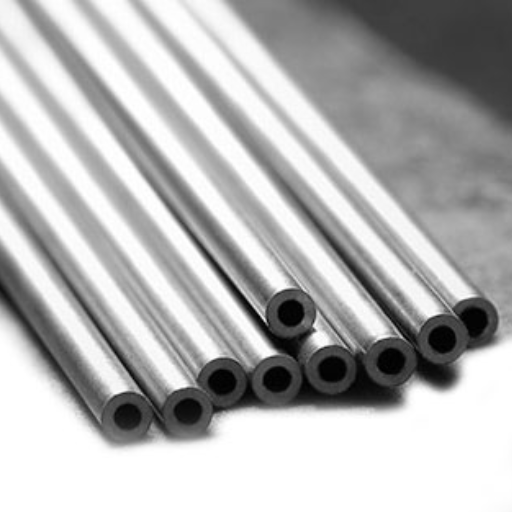
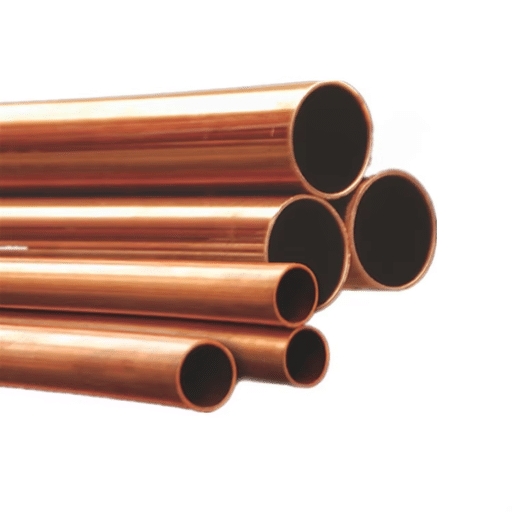
ASTM B75 copper tube is the standard specification for seamless round, rectangular, and square copper tube used in general engineering applications. If you are specifying tube for a heat exchanger, HVAC line, or plumbing system, ASTM B75 is probably the standard listed on your purchase order, but it is often confused with ASTM B68, B88, B280, and B111.
That confusion costs money. A procurement team in Mumbai once ordered ASTM B88 water tube for a shell-and-tube condenser because the spec sheet looked similar. The tubes arrived with the wrong temper and wall tolerance, and the contractor lost three weeks re-sourcing ASTM B75 seamless tube with the correct O60 anneal and expansion-test certification.
This guide will help you avoid that mistake. You will learn exactly what ASTM B75 covers, which UNS grades it includes, how to choose between C12000 and C12200, when to specify B75 over adjacent standards, and what to request from a Chinese manufacturer.
Key Takeaways
- ASTM B75/B75M-20 covers seamless copper tube in UNS grades C10100 through C12200 for general engineering service.
- C12200 DHP is the default grade for heat exchangers, plumbing, and refrigeration because of its excellent brazability and corrosion resistance.
- C12000 DLP trades slightly lower electrical conductivity for better brazing performance than pure copper.
- For seawater or high-velocity service, upgrade to ASTM B111 Cu-Ni alloys (C70600 or C71500) rather than C12200.
- Always request an MTR with heat traceability, hydrostatic or eddy-current test records, and EN 10204 3.1 certification when sourcing from China.
What Is ASTM B75 Copper Tube?

ASTM B75 is the ASTM International standard specification for seamless copper tube. The current edition is ASTM B75/B75M-20. It covers seamless round, rectangular, and square tube made from the following UNS grades:
- C10100, oxygen-free electronic (OFE)
- C10200, oxygen-free (OF)
- C10300, oxygen-free extra-low phosphorus (OFXLP)
- C10800, oxygen-free low phosphorus (OFLP)
- C12000, deoxidized low phosphorus (DLP)
- C12200, deoxidized high phosphorus (DHP)
The standard defines the chemical composition, mechanical properties, dimensional tolerances, and test methods required for each grade. Unlike ASTM B88, which is written specifically for water tube, or ASTM B280, which targets air-conditioning and refrigeration field service, ASTM B75 is a general-purpose engineering standard. That flexibility makes it the starting point for many heat-exchanger, instrumentation, and fluid-power designs.
According to ASTM B75/B75M-20 preview, the tube may be furnished in straight lengths or coils, and in tempers ranging from soft annealed to hard drawn. This matters because temper controls bendability, burst pressure, and fatigue life.
UNS Grades Covered by ASTM B75
The six UNS grades in ASTM B75 fall into two families: oxygen-free copper and phosphorus-deoxidized copper. Each family serves a different engineering purpose.
| UNS Grade | Common Name | Cu Min | Phosphorus | Typical Applications |
|---|---|---|---|---|
| C10100 | Oxygen-free electronic (OFE) | 99.99% | N/A | Electronics, vacuum, high-purity gas |
| C10200 | Oxygen-free (OF) | 99.95% | N/A | Electrical, heat exchangers, cryogenics |
| C10300 | Oxygen-free extra-low phosphorus | 99.95% | ≤0.001% | Welded components requiring high conductivity |
| C10800 | Oxygen-free low phosphorus | 99.95% | 0.005–0.012% | Brazed assemblies, moderate conductivity |
| C12000 | Deoxidized low phosphorus (DLP) | 99.90% | 0.004–0.012% | Heat exchangers, condensers, plumbing |
| C12200 | Deoxidized high phosphorus (DHP) | 99.90% | 0.015–0.040% | Heat exchangers, HVAC, refrigeration, brazing |
For most mechanical and thermal applications, C12200 DHP is the practical default. It is easier to braze and weld than oxygen-free grades because the residual phosphorus acts as a deoxidizer. It also resists hydrogen embrittlement during brazing, which is why it dominates heat-exchanger tube orders. C10100 and C10200 are reserved for applications where electrical conductivity or ultra-high purity matters more than brazing ease.
C12000 vs C12200: Which Grade Should You Specify?
C12000 and C12200 are both phosphorus-deoxidized coppers, but the phosphorus window separates them. That small difference changes conductivity, brazability, and price.
| Property | C12000 DLP | C12200 DHP |
|---|---|---|
| Phosphorus content | 0.004–0.012% | 0.015–0.040% |
| Electrical conductivity | Higher (~85–90% IACS) | Lower (~80–85% IACS) |
| Brazing performance | Good | Excellent |
| Hydrogen embrittlement risk | Low | Very low |
| Typical use | Condensers, moderate conductivity | Heat exchangers, HVAC, brazed manifolds |
Choose C12000 when your design needs a little more conductivity than C12200 but still requires reliable brazing. Choose C12200 when brazing quality and process forgiveness are the priorities, which is true for most shell-and-tube heat exchangers and refrigeration racks.
At a compressor OEM in Turkey, the engineering team switched from C12000 to C12200 for brazed suction-line assemblies. The higher phosphorus content eliminated the intermittent porosity they had seen during torch brazing, and first-pass yield rose by 12%. The small conductivity penalty was irrelevant in that fluid-transport application.
If you want a deeper comparison, see our phosphorus-deoxidized copper tube guide.
ASTM B75 Dimensions, Tempers, and Tolerances

ASTM B75 tube is produced across a wide dimensional envelope. Typical stock ranges are:
| Parameter | Common Range (Metric) | Common Range (Imperial) |
|---|---|---|
| Outer diameter | 4.76 mm to 219 mm | 3/16 in to 8 in |
| Wall thickness | 0.30 mm to 8.0 mm | 0.012 in to 0.315 in |
| Length | Straight lengths up to 6 m; coils up to several hundred meters | 20 ft straight; coils per order |
Tempers in ASTM B75
Temper designation follows ASTM B601. The most common tempers for ASTM B75 copper tube are:
- O60: soft annealed; used for bending, flaring, and heat-exchanger tube rolling into tubesheets
- O50: light anneal
- H55: light-drawn; moderate strength with some formability
- H58: drawn general purpose
- H80: hard drawn; highest strength, limited bending, used for pressure lines and instrumentation
For heat-exchanger service, O60 is almost always the right choice. The soft temper allows the tube to be expanded into tubesheets without cracking, and it provides the best fatigue resistance under thermal cycling.
Tolerances
ASTM B75 dimensional tolerances vary by OD and wall. As a rule of thumb:
- OD tolerance: ±0.05 mm to ±0.13 mm for small-diameter tube, increasing for larger sizes
- Wall thickness tolerance: typically ±10%
- Length tolerance: per purchase order; closer tolerances must be specified
If you are designing a tubesheet layout, specify the OD tolerance band in your purchase order. A tube that is at the high end of the OD tolerance may not fit a tubesheet hole drilled at the low end of the clearance, causing rework or leaks during expansion.
Want help matching tube tolerances to your tubesheet drawings? Contact our engineering team for a free spec review before you place your order.
ASTM B75 vs B68 vs B88 vs B280 vs B111
Buyers often receive quotes for ASTM B75 tube when they actually need B280, or vice versa. The standards are related but not interchangeable. Use the table below to pick the right one.
| Standard | Scope | Typical Alloys | Best For |
|---|---|---|---|
| ASTM B68 | Bright annealed seamless copper tube | C12200 | General service requiring clean, scale-free ID/OD surface |
| ASTM B75 | Seamless copper tube, general engineering | C10100–C12200 | Heat exchangers, plumbing, fluid power, general fabrication |
| ASTM B88 | Seamless copper water tube | C12200 | Potable water distribution, plumbing |
| ASTM B280 | Air-conditioning and refrigeration copper tube | C12200 | ACR field service, refrigeration lines |
| ASTM B111 | Copper and copper-alloy condenser and heat-exchanger tubes | C12200, C70600, C71500, etc. | Power-plant condensers, seawater coolers, high-duty heat exchangers |
| ASTM B395 | U-bend seamless copper and copper-alloy heat-exchanger tubes | C12200, C70600, C71500 | U-bend bundles |
| ASTM B359 | Copper and copper-alloy seamless condenser and heat-exchanger tubes with integral fins | C12200, C70600, etc. | Finned air-cooled exchangers |
When to choose ASTM B75: Specify B75 when you need a general-purpose seamless copper tube in a variety of shapes, sizes, and tempers, and your application is not covered by a more specific standard. It is the right default for heat exchangers that operate in fresh water or closed glycol circuits.
When to upgrade to ASTM B111: If the exchanger handles seawater, brackish water, or high-temperature steam, B111 with Cu-Ni alloys such as C70600 (90/10) or C71500 (70/30) is the safer choice. These alloys resist erosion-corrosion far better than C12200.
When to choose B280: For field-installed refrigeration lines, B280 tube has the cleaning, packaging, and temper requirements suited to ACR service. B75 tube can technically work, but B280 reduces installation risk.
For seawater applications, read our cupronickel tube guide before finalizing alloy selection.
ASTM B75 in Heat Exchanger and Condenser Service
C12200 ASTM B75 seamless tube is one of the most common materials for shell-and-tube heat exchangers, evaporators, and condensers in fresh-water or closed-loop duty. Its advantages are straightforward:
- Excellent thermal conductivity (~330–390 W/m·K, slightly below C11000 because of residual phosphorus)
- Good resistance to freshwater corrosion and biofouling
- Outstanding brazeability for tube-to-tubesheet joints
- Wide availability and competitive cost
Velocity Limits Matter
Copper tube performs well until water velocity becomes too high. Excessive velocity causes erosion-corrosion, a failure mode where the protective oxide layer is mechanically stripped and corrosion accelerates locally. According to RL Deppmann, the practical limits for copper tube in HVAC heat exchangers are:
- Design velocity: ≤ 6 ft/s (1.8 m/s)
- Absolute maximum velocity: ≤ 7.5 ft/s (2.3 m/s)
A chilled-water coil in Singapore failed after only 18 months because the design velocity at the tube inlets reached 9 ft/s. The erosion-corrosion pinholes appeared first at the entry zones, and the replacement bundle had to be upgraded to C70600 cupronickel. The lesson: always check velocity at the tube inlet, not just the average across the bundle.
If your design exceeds these limits, consider a stainless steel heat exchanger tube or cupronickel rather than C12200.
For a complete design-focused discussion, see our copper tube for heat exchanger guide.
Required Tests and Documentation
ASTM B75 specifies several tests to verify that tube meets the standard. The exact test package should be agreed in the purchase order. Common requirements include:
Mechanical and Dimensional Tests
- Tensile test: confirms minimum tensile strength and elongation per temper
- Hardness test: Rockwell or Vickers, used as an alternative to tensile in some cases
- Expansion test: confirms ductility by expanding the tube end with a tapered pin
- Flattening test: verifies soundness and weld integrity
Non-Destructive Tests
- Hydrostatic test: pressurizes each tube to a specified pressure to check for leaks
- Eddy current test: detects surface and near-surface flaws using electromagnetic induction
- Ultrasonic test: detects internal discontinuities and wall-thickness variations
Chemical and Documentation Requirements
- Chemical analysis: heat analysis to confirm UNS grade composition
- Mill Test Report (MTR): certificate showing heat number, chemical composition, mechanical results, and tests performed
- EN 10204 3.1: mill certificate issued by the manufacturer’s inspection department
- EN 10204 3.2: third-party inspection certificate when independent verification is required
For critical heat-exchanger orders, Zhongzheng typically supplies spectrographic chemical analysis, ultrasonic flaw detection, hydraulic pressure testing, and full MTR traceability. Ask your supplier to confirm which tests are included as standard and which are optional adders.
Buying ASTM B75 Tube from China: Checklist

International buyers sourcing ASTM B75 seamless copper tube from Chinese manufacturers should treat the first order as a qualification exercise. Use this checklist to reduce risk:
| Step | Action | Why It Matters |
|---|---|---|
| 1 | Confirm UNS grade and temper in writing | Prevents substitution of C12000 for C12200 or H80 for O60 |
| 2 | Specify OD, wall, and length tolerances | Avoids fit issues during tubesheet drilling or coil forming |
| 3 | Request a sample MTR before order | Verifies heat traceability, test methods, and certificate format |
| 4 | Define test package | Hydrostatic, eddy current, ultrasonic, expansion, specify which are mandatory |
| 5 | Agree on EN 10204 certificate type | 3.1 from mill inspection; 3.2 from third-party inspector |
| 6 | Inspect packaging and labeling | Prevents moisture, transit damage, and mixed heat numbers |
| 7 | Verify export documentation | Packing list, certificate of origin, and customs HS code alignment |
A distributor in Rotterdam followed this checklist on a 20-ton C12200 order and caught a discrepancy in the phosphorus range before production started. The mill re-issued the MTR with the correct heat analysis, saving the distributor a rejected-goods dispute and a two-month delay.
Ready to source ASTM B75 copper tube? Request a quote with your grade, temper, OD, wall, and test requirements. Our team will return a sample MTR and delivery schedule within 24 hours.
Conclusion
ASTM B75 copper tube is the workhorse specification for seamless copper tube in general engineering. It covers the grades, tempers, and tolerances you need for heat exchangers, plumbing, refrigeration, and fluid-power systems. For most thermal applications, C12200 DHP in O60 temper is the right starting point. If your application involves seawater or velocities above 6 ft/s, upgrade to ASTM B111 cupronickel rather than pushing C12200 beyond its limits.
Before you place your next order, confirm the UNS grade, temper, dimensional tolerances, and test package in writing. Request the MTR up front, and specify whether you need EN 10204 3.1 or third-party 3.2 certification. Those five minutes of specification work will prevent weeks of rework.
For more guidance on copper tube selection, visit our seamless copper tube selection guide or review our copper tube for heat exchanger guide. The Zhongzheng team is available to review your specification and recommend the right ASTM B75 copper tube for your project.