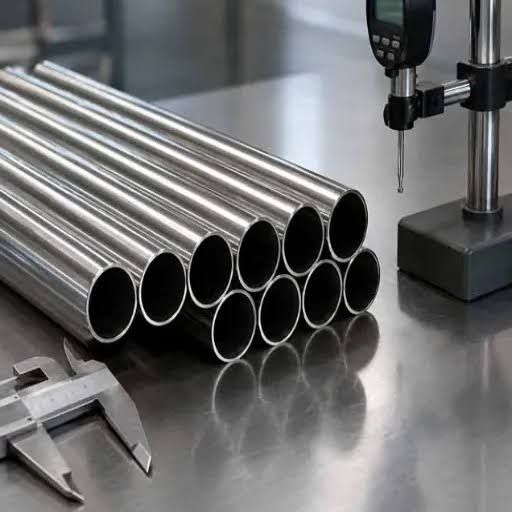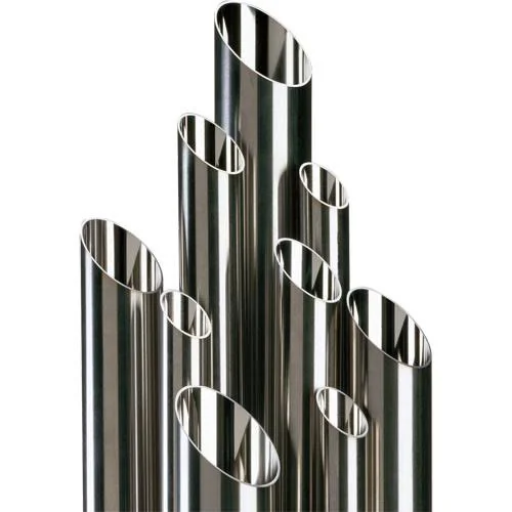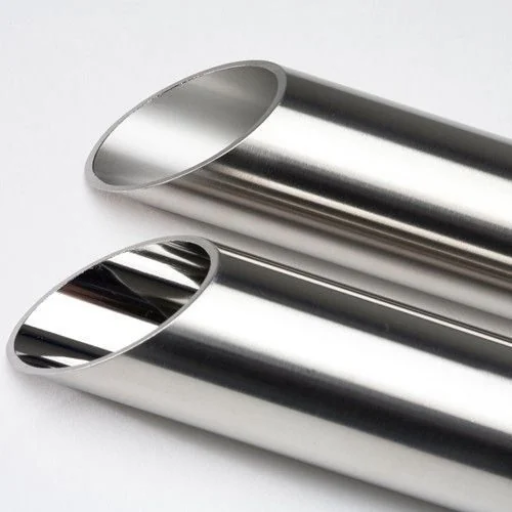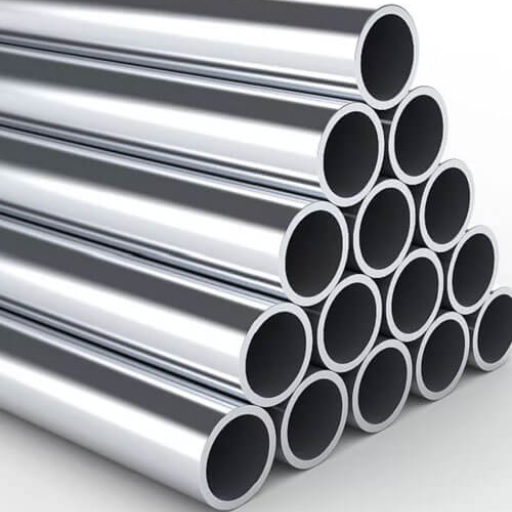
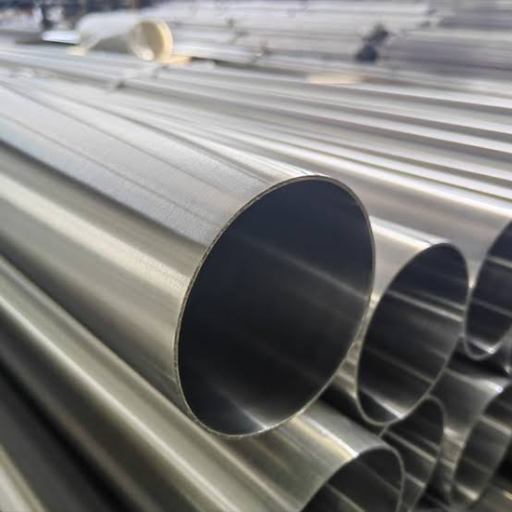
Pharmaceutical stainless steel tubing is 316L sanitary tube made to ASTM A270/A270M, supplied within a controlled sulfur range, finished to a specified ASME BPE surface level, and documented so every length traces to its heat number. The alloy is the easy part. The specification and the paperwork are where projects fail.
Elena is a QA engineer at a fill-finish plant in Slovenia. Her purchase order called for 316L, and the mill certificate that arrived said 316L.
It also said 0.024% sulfur, which passes the base chemistry table in ASTM A270 without argument. Her line is orbital-welded, and the procedure had been qualified on 0.012% material. Weld penetration drifted, the weld log showed parameter corrections, and the investigation took six weeks and one quarantined lot to reach a clause nobody had put on the order.
Most buyers review the alloy and specify the diameter. The items that decide whether a pharmaceutical line passes commissioning are quieter: a sulfur window, a finish expressed as a maximum, a wall tolerance, and a document package that either proves those things or does not.
Key Takeaways
- “Pharmaceutical grade” is not a grade. It points to 316L plus a product standard, a controlled-sulfur range, a specified finish and traceable documents.
- ASTM A270 delivers pharmaceutical quality only as Supplementary Requirement S2. If the order does not ask for it, the base standard does not provide it.
- ASME BPE’s controlled-sulfur range is 0.005% to 0.017%. A certificate reading 0.024% can meet A270’s base table and still sit outside the range your welding procedure was qualified on.
- Surface finish is a maximum, not an average, and it is measured to ASME B46.1. A report showing only a mean does not prove compliance.
- Manufacturing to ASME BPE and holding a BPE Certificate of Authorization are different claims. Ask which one your supplier holds.
What Pharmaceutical Stainless Steel Tubing Actually Means
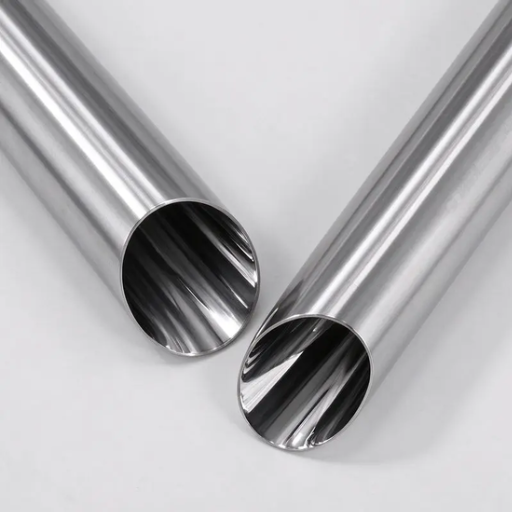
The phrase covers three products that share almost nothing except a shape.
| Product | Typical size | Governing documents | Used for |
|---|---|---|---|
| Process sanitary tube | 1/2 to 4 in. OD, 1.5 to 2.0 mm wall | ASTM A270, ASME BPE, 3-A 33-03, DIN 11850 / EN 10357 | WFI, CIP and SIP lines, buffer and media prep, purification skids |
| Instrument and capillary tube | 1/16 to 1/4 in. OD, thin wall | ASTM A269, ASTM A213, maker specs | Analytical instruments, chromatography, sampling |
| Single-use polymer tubing | varies | USP <87>/<88>, ISO 10993 | Bioreactor and single-use lines, where stainless is not used |
This article is about the first row. If you landed on a page selling silicone pump tubing or 1/16 in. hypodermic stock, you were in the second or third category. Mixing them is the first way a bill of materials goes wrong.
“Pharmaceutical grade” is not a grade
No mill produces an alloy by that name, and no certificate certifies it. The phrase describes a bundle: 316L chemistry, a product standard with sanitary finishes, a controlled-sulfur range for welding, a finish level with a maximum Ra, and documents tying each to a heat number. Two suppliers can therefore quote the same phrase and deliver material that behaves differently in the same weld bay.
The alloys that matter
316L (UNS S31603, EN 1.4404) is the product-contact default. 1.4435 appears where a specification caps delta ferrite. 316 shows up where an older specification has carried forward and is acceptable in some non-welded duties. 304L belongs in utility and non-product-contact service only. Duplex grades appear in seawater cooling and high-chloride utility duties, and A270/A270M does cover ferritic/austenitic grades within its scope.
Specifying a pharma line? Send the line list with the standard and finish you intend to cite. Our technical team will confirm grade, achievable Ra and the document set within 24 hours. Send your specification.
The Standards That Belong on a Pharmaceutical Tubing Order
Five documents come up in almost every pharma tubing specification. They do different jobs, and only two normally belong on the tube order itself.
| Standard | What it governs | Belongs on the tube PO? |
|---|---|---|
| ASTM A270/A270M | Seamless, welded, and heavily cold-worked austenitic and ferritic/austenitic sanitary tubing for dairy and food, with special surface finishes | Yes. This is the product standard. |
| ASME BPE-2026 | Design, materials, dimensions, finishes and certification for bioprocessing equipment | Yes, when the system is designed to BPE |
| 3-A 33-03 | Sanitary aspects of metal tubing: design, materials, fabrication. Not the assembly of tube into systems | Sometimes, on dairy and food projects |
| DIN 11850:2009-06 | Dimensions, materials, surface conditions, testing, cleanliness, marking, packaging | Yes, on European-style projects, usually with EN 10357 |
| ISO 2037 | Stainless steel tubes for the food industry | No. Withdrawn 8 April 2022, no replacement edition |
The ASTM A270/A270M standard is the product standard. It covers three routes: seamless with no welding, welded without filler metal, and heavily cold-worked welded with at least 35% reduction of wall and weld thickness before the final anneal. Sizes run up to 12 in. (300 mm) OD.
The clause that catches buyers is the supplementary requirement structure. The base standard covers dairy and food tubing with special surface finishes.
Pharmaceutical quality, with its tighter wall tolerance and surface-finish checks, is requested as S2. A specification citing “ASTM A270” and stopping there has ordered the base standard. S2 also brings the low-sulfur restriction: for S31600 and S31603, a sulfur range of 0.005% to 0.017%.
Testing follows the same logic. A270 requires either a hydrostatic pressure test or a non-destructive electric test, with the manufacturer choosing unless the purchaser specifies. If your quality plan assumes both, write both. For where A270 and the general-service A269 specification diverge, see our ASTM A270 vs A269 comparison.
ASME BPE is the system standard. BPE-2026 is current, approved by ANSI on 3 April 2026, and it governs design, materials, fabrication, examination and certification for bioprocessing equipment. The Dimensions and Tolerances part supplies the nominal OD and wall pairs; the Surface Finishes part supplies the SF designations; the Certification part is the one buyers misread. No change to the 316L controlled-sulfur range appears in the published summary of changes, but the text is paywalled, so confirm against your edition before printing a clause reference.
3-A, DIN and the standard that no longer exists. 3-A Standard 33-03 covers metal tubing for milk and milk products: design, materials and fabrication. It does not cover assembling tube into a system, so a 3-A statement on the tube doesn’t make the installed line compliant. DIN 11850:2009-06 covers dimensions, materials, surface conditions, testing and documentation; Range 2 runs from 13 × 1.5 through 204 × 2.0 and aligns with EN 10357-A. ISO 2037 was withdrawn in April 2022 with no replacement, and its practical role passed to EN 10357; a drawing still citing it is citing a withdrawn standard.
Material Callouts Buyers Get Wrong
316L is an alloy, not a finish
The most common failure is a purchase order reading “316L, pharmaceutical grade” and nothing else. That order can be met by mill-finish tube at base-table sulfur with no supplementary requirement, because none of those things is implied by the alloy name. Write the alloy, the product standard, the supplementary requirement, the finish designation and the sulfur range as separate lines. Each is a decision, and each is checkable on arrival.
The sulfur window
Sulfur cuts both ways in austenitic stainless. It improves machinability and weld pool fluidity, but forms manganese sulfide inclusions that reduce corrosion resistance and cleanability. For a pharma line the target is a narrow band: enough sulfur for consistent orbital welding, not enough to create inclusion stringers.
ASME BPE’s controlled-sulfur range is 0.005% to 0.017% for product-contact ends intended for automatic orbital welding. A270’s base Table 1 allows up to 0.030% sulfur for TP316 and TP316L. The S2 supplement restricts S31600 and S31603 to 0.005% to 0.017%.
Put those facts together and the trap is obvious. A certificate reading 0.024% sulfur passes A270’s base table. It also sits outside the range the BPE requirement and your qualified procedure assume.
Nothing on the certificate is wrong; the purchase order didn’t ask for the right thing. Ask for the range in the PO, and check the MTR against the welding procedure qualification, not just the standard. Very low sulfur carries its own risk: below roughly 0.003%, arc stability suffers and penetration becomes erratic.
Wall tolerance: -10% versus -12.5%
A270’s base wall tolerance is commonly quoted at -12.5%. S2 tightens it to -10%, which matters on thin-wall tube where corrosion allowance and pressure rating both depend on the wall received. Ask for the tolerance in the same sentence as the standard, and check the dimensional report against it.
Ferrite limits are project requirements, not A270 requirements
Delta ferrite appears in European pharma specifications, usually as a cap on ferrite fraction in 316L or a call for the 1.4435 variant. A270 sets no numeric delta-ferrite limit for austenitic grades. If your specification names one, state the test method and the sampling location, because a ferrite reading without a method is not a result.
Surface Finish on Pharmaceutical Stainless Steel Tubing
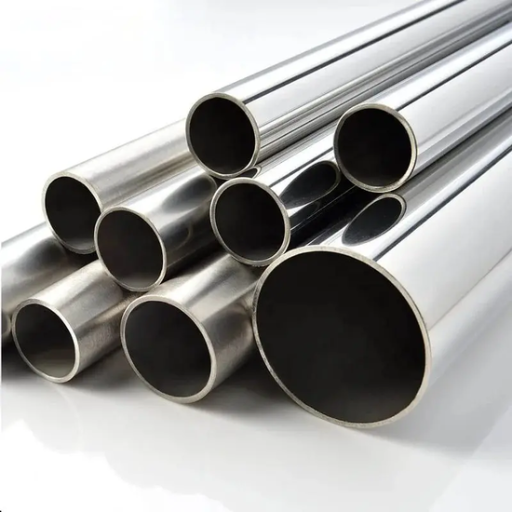
ASME BPE defines seven designations. Each sets a maximum Ra for the product-contact surface.
| Designation | Finish requirement | Ra max (µin) | Ra max (µm) |
|---|---|---|---|
| SF0 | No finish requirement | n/a | n/a |
| SF1 | Mechanically polished | 20 | 0.51 |
| SF2 | Mechanically polished | 25 | 0.64 |
| SF3 | Mechanically polished | 30 | 0.76 |
| SF4 | Electropolished | 15 | 0.38 |
| SF5 | Electropolished | 20 | 0.51 |
| SF6 | Electropolished | 25 | 0.64 |
Values as published in BPE-2024 and reproduced by the suppliers surveyed for this article. Confirm against your project’s edition.
Three rules travel with the table. The limit is a maximum: no single reading may exceed it, so a lot with most readings at 0.30 µm and one at 0.45 µm fails SF4. Readings are taken to ASME B46.1, with cutoff and evaluation length stated, or the numbers are not comparable between labs. The designation is not a quality ladder: SF1 is tighter than SF3, and SF4 tighter than SF6.
Under A270, §13 offers mill finish, ground finishes designated by grit (No. 80, 120, 180, 240) with no Ra value attached, electropolished, or a purchaser-specified maximum Ra. S2 is commonly quoted with ID 0.51 µm (20 µin) and OD 0.76 µm (30 µin); those figures come from supplier reproductions, so confirm them against the edition your project cites.
Electropolishing and bright annealing are often confused. Bright annealing is a heat-treatment result: a clean, oxide-free surface in a controlled atmosphere. Electropolishing is a surface-removal result: an electrochemical process that levels the surface and enriches chromium. They stack, and BA plus EP is a common pharma combination. Our guide to electropolished stainless steel tubing covers the process, and the ASME BPE surface finish levels explain each designation. For how Ra is taken on a tube bore, including cutoff length and why an average hides a failure, see how Ra is measured on stainless tubing.
Request a sample MTR and finish report. Our technical team will send a specimen document set so your QA group can review the format before the first order. Request the sample documents.
The Documentation Package to Require
The tube is a commodity. The document package is the product. This is the table to attach to the inquiry.
| Document | What it proves | What to check |
|---|---|---|
| MTR to EN 10204 3.1 | Chemistry, mechanical properties and heat treatment for the supplied material, validated by an inspection representative independent of manufacturing | Heat number matches tube marking and packing list; sulfur inside the PO range; grade matches the PO, not the invoice |
| EN 10204 3.2 certificate, if specified | Same content plus validation by the purchaser’s representative or a designated third-party inspector | That the third party witnessed testing. A stockist cannot turn a 3.1 into a 3.2 afterwards |
| Surface finish report | Ra readings against the specified designation | Individual readings with positions and directions, cutoff and evaluation length, instrument status. Not a mean |
| Electropolishing record | Bath parameters, current density, immersion time, post-treatment | That the process is named as electropolishing, not “mirror polished” |
| Passivation record | Treatment per ASTM A967/A967M-25 or the cited practice | Treatment type (nitric, citric or electrochemical), concentration, temperature, test performed |
| Dimensional report | OD, wall, length, straightness, ovality against the standard’s tolerances | The tolerance basis is stated (A270 base, S2, BPE DT, DIN 11850), because limits differ |
| Hydrostatic or NDT record | Pressure or electric-test integrity | Which test, at what pressure or reference standard, against which acceptance criterion |
| Cleanliness and packaging record | End caps, bagging, handling, preservation | Tube is end-capped and bagged, and the method is on the packing list |
| Certificate of conformity | The supplier’s declaration against the PO | That it references the standard, edition and supplementary requirements, not just the alloy |
MTRs: 3.1 versus 3.2
EN 10204 Type 3.1 is an inspection certificate issued by the manufacturer, with specific test results for the supplied product, validated by an inspection representative independent of manufacturing. Type 3.2 carries the same content plus validation by the purchaser’s representative or a designated third-party inspector. The content is essentially identical; the difference is who signs. Type 3.2 costs more and adds scheduling time, so it is specified for sour service, certain pressure equipment categories and classification-society projects.
Finish, passivation and cleanliness
A finish report without measurement positions proves nothing about a 6 m length. Ask for readings at both ends and the middle, in both directions where polishing was circumferential, and at the weld seam and heat-affected zone on welded tube.
Passivation is separate from electropolishing and documented separately. A967/A967M-25 defines the treatments and test methods: nitric acid immersion, citric acid immersion and an electrochemical treatment. A380/A380M-25 is a practice document for cleaning, descaling, pickling and passivation, not an acceptance criterion. A certificate citing A380 alone says a practice was followed, not that a result was achieved.
Packaging and heat-number continuity
Tom, a procurement lead at a contract manufacturer in North Carolina, once received a package with four heat numbers and a single MTR. The tube was correct. The traceability was not, because nothing on the packing list said which length came from which heat.
The supplier re-issued the documents three weeks later, after receiving inspection had already been rejected twice. Ask for heat-number marking on every length, a packing list mapping heat numbers to line items, and end caps with bagging that survive sea freight.
Validation and audit support
21 CFR 211.65(a) requires that equipment surfaces contacting components, in-process materials or drug products not be reactive, additive or absorptive so as to alter safety, identity, strength, quality or purity beyond established requirements. 21 CFR 211.67 requires cleaning and maintenance procedures and records. Neither names a grade or a finish. They set outcomes; A270, BPE and 3-A are the accepted means of demonstrating them.
Two points are worth getting right in an audit. The FDA does not approve stainless steel tubing. No approval, certificate or listing exists for a tube, so an “FDA approved” claim describes something that doesn’t exist in that form. USP <87>/<88> are written for elastomers, plastics and other polymeric materials. A stainless tube is outside their stated scope, so a “USP Class VI” claim on a metal certificate is either a customer-specific add-on or a category error. The revised <88>, effective 1 December 2026, narrows scope further.
How to Qualify a Pharmaceutical Stainless Steel Tubing Supplier
Ten questions, in the order a qualification review usually asks them:
- Which standard and edition will the certificate cite? A270/A270M, BPE-2026, DIN 11850:2009, EN 10357, or a project specification. “Compliant with all applicable standards” is not an answer.
- Will you supply S2 pharmaceutical quality, including 0.005% to 0.017% sulfur? Confirm before quotation, not after.
- What is the wall tolerance, and against which standard? Base A270, S2, BPE DT and DIN 11850 do not use the same band.
- Can you provide individual Ra readings with positions and method? If the answer is a mean and a designation, ask again.
- Do you electropolish in house, and to what maximum Ra? Outsourced polishing adds a supply chain link and a second document trail.
- Which passivation practice do you document, and to which edition? A967/A967M-25 and A380/A380M-25 are different documents with different jobs.
- What does the MTR format look like? Ask for a specimen. Reviewing the format before the order is cheaper than rejecting the package after it.
- Will you support third-party inspection? SGS, Bureau Veritas, TÜV, Lloyd’s or a project-named agency, with advance notice of test readiness and access for witness testing.
- How do you handle a nonconformance or a specification change? A written deviation and change-control process, not an email assurance.
- Can you trace every length to its heat number on the packing list? If not, the package is incomplete regardless of what the MTR says.
Two supporting checks are worth the time. Ask for the quality system documentation and a sample of the inspection records behind the certificate. Then ask whether the supplier holds an ASME BPE Certificate of Authorization or a 3-A symbol licence, and treat “we manufacture to BPE” as a different answer from “we hold the certificate.” Both can be true; only one is a certification. Our own quality control process describes the spectrographic verification, ultrasonic testing and hydraulic testing behind each certificate.
Frequently Asked Questions
Is pharmaceutical stainless steel tubing the same as sanitary tubing?
Not quite. Sanitary tubing is the broader category, covering dairy, food and beverage service. Pharmaceutical tubing is sanitary tubing specified with additional requirements: tighter wall tolerance, a controlled-sulfur range, a defined finish maximum and documents that support validation. A sanitary tube can be pharmaceutical quality; it is not automatically so. Our sanitary stainless steel tube guide covers dimensions and connections.
Is pharmaceutical stainless steel tubing FDA approved?
No. The FDA does not approve stainless steel tubing, and no certificate of approval exists for it. What applies is 21 CFR 211.65, which requires product-contact surfaces not to be reactive, additive or absorptive in a way that alters the drug product. Compliance is demonstrated through the material standard, the finish and the documentation.
What sizes does pharmaceutical stainless steel tubing come in?
Process tubing commonly runs from 1/2 to 4 in. OD with 1.5 to 2.0 mm wall, following ASME BPE dimensions or DIN 11850 Range 2 (13 × 1.5 through 204 × 2.0). ASTM A270 covers sizes up to 12 in. (300 mm) OD. Instrument and capillary tubing runs much smaller, typically 1/16 to 1/4 in. OD, and follows a different specification route.
Does pharmaceutical stainless steel tubing need to be electropolished?
Not always, but usually. SF4 (0.38 µm maximum, electropolished) is the common pharmaceutical default for product-contact surfaces. Mechanical finishes SF1 to SF3 are used where the product and cleaning regime allow them. Put the decision in the specification, with cleaning validation in view, rather than in a late-stage value-engineering review.
Can I use 304 instead of 316L for pharmaceutical tubing?
For utility and non-product-contact duties, sometimes. For product-contact lines, 316L is the default: molybdenum improves chloride resistance and low carbon limits carbide precipitation at welds. 304L lacks that margin. If a 304 substitution is proposed, ask about the cleaning regime and product chemistry, and document the answer.
The Bottom Line
Pharmaceutical stainless steel tubing is a specification problem before it is a materials problem. The alloy is settled: 316L, usually to ASTM A270/A270M with Supplementary Requirement S2, finished to an ASME BPE designation, and documented to EN 10204 3.1 or 3.2.
What separates a line that commissions cleanly from one that doesn’t is the decisions around that alloy. The sulfur window. The wall tolerance. The finish expressed as a maximum, with readings and positions. The document trail tying every length to a heat number and every claim to a test.
Send your line list, the standard and edition you intend to cite, and the finish you need. Our technical team will confirm the grade, achievable Ra, sulfur range and document set within 24 hours, in writing, so your QA group has something to review before the order is placed.