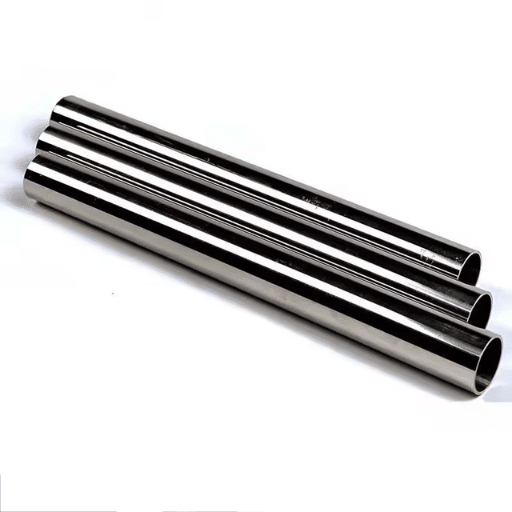
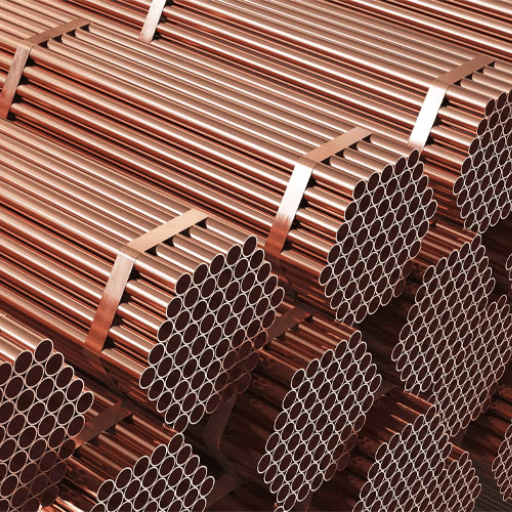
The installation team for the Jakarta Medical Center project encountered continuous failures during their attempt to braze newly received refrigerant lines at work. The copper tube looked correct, the fittings were standard, and the brazing procedure followed protocol, yet failure rates exceeded 40%. The actual problem originated because the procurement team acquired oxygen-free copper (OFHC) material for a system that did not need welding while they executed standard brazing without understanding how standard DHP copper’s phosphorus content prevented this particular issue.
The present situation demonstrates that you need to comprehend how phosphorus deoxidized copper tube and oxygen-free copper grades differ because this knowledge will determine your installation’s success or failure. DHP copper, designated UNS C12200, represents the standard specification for plumbing, HVAC, and refrigeration systems worldwide precisely because its controlled phosphorus content (0.015–0.040%) eliminates oxygen-related embrittlement while offering significant cost advantages over OFHC alternatives.
The guide establishes a technical basis for choosing and acquiring and installing phosphorus deoxidized copper tube according to ASTM B280 and ASTM B88 and EN 1057 international standards. The understanding of DHP copper’s properties together with its limitations and best use cases will help you choose the right coil tubing for commercial refrigeration systems and water distribution pipes for healthcare facilities and achieve performance standards without incurring extra expenses.
What Is Phosphorus Deoxidized Copper Tube?

The Science of DHP Copper Manufacturing
The DHP copper material which construction operates through copper tubing processes with controlled phosphorus content that reacts to oxygen during production The phosphorus content which manufacturers keep between 0.015% and 0.040% provides essential metallurgical benefits because it combines with oxygen to create phosphorus pentoxide which separates from molten copper during the casting process.
The deoxidization process proves important because remaining oxygen in copper metal creates a concealed danger. Hydrogen enters the metal when copper that contains oxygen undergoes exposure to hydrogen at high temperatures which occurs during both brazing and annealing and hydrogen-rich environments. The reaction between hydrogen and copper oxide produces water vapor which creates internal pressure that results in intergranular cracking which people refer to as hydrogen embrittlement.
C12200 seamless tube production begins with the use of high-purity cathode copper which contains 99.90% minimum Cu content. The controlled atmosphere furnace melts copper which manufacturers deoxidize with phosphorus before they cast it into billets. The production process creates billets which manufacturers convert into hollow shells through extrusion and piercing processes followed by cold drawing and annealing which build final dimensions and temper. The production process uses in-line eddy current testing to check wall integrity while dimensional monitoring verifies compliance with ASTM B280 and ASTM B88 tolerances.
Why Phosphorus? Understanding Deoxidization Chemistry
Phosphorus functions as a deoxidizing agent because its affinity for oxygen exceeds copper’s at elevated temperatures. The reaction proceeds as:
5Cu₂O + 2P → P₂O₅ + 10Cu
The phosphorus pentoxide (P₂O₅) forms as a slag that floats to the melt surface and is removed. The result is copper with residual phosphorus but essentially zero oxygen content which eliminates the hydrogen embrittlement risk that plagues oxygen-bearing grades.
This deoxidization process involves different advantages and disadvantages. Phosphorus in solid solution reduces electrical and thermal conductivity compared to oxygen-free copper. C12200 DHP copper achieves approximately 85% IACS International Annealed Copper Standard conductivity against 101% IACS for C10200 OFHC copper. Plumbing and HVAC applications which prioritize corrosion resistance and formability over conductivity find this reduction to be acceptable. OFHC remains the specification of choice for electrical busbar and high-performance heat exchanger applications.
DHP vs OFHC Copper: Critical Selection Differences
| Property | C12200 DHP Copper | C10200 OFHC Copper |
|---|---|---|
| Phosphorus Content | 0.015–0.040% | <0.0003% (trace) |
| Oxygen Content | <0.001% (effectively zero) | <0.001% |
| Conductivity (IACS) | ~85% | ~101% |
| Weldability/Brazeability | Limited (phosphorus embrittlement) | Excellent |
| Hydrogen Embrittlement Risk | None | Low (oxygen already removed) |
| Relative Cost | Base (100%) | Premium (115–125%) |
| Primary Applications | Plumbing, HVAC, refrigeration | Electrical, vacuum, welded systems |
Research shows that DHP copper becomes unjoinable through its mechanical compression fittings and press-fit systems and controlled soldering methods. The weldability limit exists because phosphorus in DHP copper moves to grain boundaries during heat treatment, which produces brittle phosphide phases that impair joint strength. The specific filler metal selection and technique adjustments create a requirement that OFHC becomes the better choice for fabricated assemblies.
ASTM Standards: DHP Copper Compliance Requirements

ASTM B280; Air Conditioning and Refrigeration Tube
The standard establishes requirements for seamless copper tubing which is utilized in air conditioning and refrigeration systems. The specification includes tube specifications which include soft (annealed) and light-drawn tempers together with particular cleanliness standards that must be achieved to maintain refrigerant circuit performance.
The standard addresses a failure mode that has destroyed countless compressor systems: internal contamination. The manufacturing process causes drawing lubricants together with copper fines and oxides to stick to the tube interior surfaces. System refrigerant flow enables contaminants to move through the system until they reach the compressor which results in bearing scoring and orifice blockage. The ASTM B280 standard requires that tube material must be “clean and free of harmful defects” and provides specific degreasing requirements that purchasers may request.
Key ASTM B280 requirements include:
- Chemical composition: Minimum 99.90% copper, phosphorus 0.015–0.040%
- Temper designations: O60 (soft annealed), H58 (light drawn)
- Dimensional tolerances: OD ±0.002–0.015″ depending on size; wall thickness ±10%
- Mechanical properties: Tensile strength 30,000–45,000 psi (O60), 40,000–55,000 psi (H58)
- Expansion test: Tube must withstand 40% OD expansion without cracking
For procurement teams, specifying “ASTM B280, C12200, O60 temper” ensures receiving tube suitable for field bending and flaring in split-system refrigerant lines. The O60 soft temper allows 90-degree bends with bending springs or lever benders without wall thinning or buckling, essential for tight mechanical room installations.
ASTM B88; Seamless Copper Water Tube
ASTM B88 governs copper tube for potable water distribution, fire protection, and certain drainage applications. B88 assesses pressure rating and wall thickness consistency of tube materials while B280 focuses on maintaining cleanliness standards.
The standard classifies tube into three types based on wall thickness relative to outside diameter:
| Type | Wall Thickness | Typical Applications |
|---|---|---|
| Type K | Thickest wall | Underground service lines, high-pressure commercial |
| Type L | Medium wall | General plumbing, residential and commercial water distribution |
| Type M | Thinnest wall | Above-ground drainage, low-pressure residential |
Type L delivers standard specifications which serve most domestic water needs by providing pressure capacity above 200 psi at room temperature to achieve cost savings. Type K provides extra corrosion protection for underground installations because soil conditions can lead to increased external damage. Type M exists as a cost-effective solution which organizations use for their above-ground heating systems and drainage systems that operate under low pressure demands.
The pressure ratings which apply to hot water distribution systems depend on temperature because this factor influences system performance. The Type L 1/2″ tube operates at 608 psi working pressure when the temperature reaches 100°F (38°C) and the pressure decreases to 475 psi at 200°F (93°C). Engineers need to confirm that their chosen system type maintains sufficient safety margins at maximum operational temperature when designing combined hot and cold systems.
EN 1057 and JIS H3300: Global Standards Cross-Reference
International projects often require compliance with European or Japanese standards. EN 1057 (European Norm) and JIS H3300 (Japanese Industrial Standard) provide equivalent specifications with important dimensional and tolerance differences.
EN 1057 designates copper tube by “Table X” classifications that approximate but do not exactly match ASTM types:
- Table X (thickest) ≈ ASTM Type K
- Table Y (medium) ≈ ASTM Type L
- Table Z (thinner) ≈ ASTM Type M
The standard specifies medical gas systems through its requirements which apply to oxygen, nitrous oxide, and medical air systems. The standard requires phosphorus content between 0.015–0.050% which extends beyond the range established by ASTM standards.
JIS H3300 provides three temper designations (O, 1/2H, H) which represent soft, half-hard, and hard material conditions. The Japanese medical gas tube uses “C1220T-O” to identify seamless phosphorus deoxidized copper tube that has been annealed.
Zhongzheng produces DHP copper tube for global markets by manufacturing all three standards from one production line which creates documentation packages that meet project specifications. Your governing standard needs to be specified at the inquiry stage because the MTR will display chemical, mechanical, and dimensional requirements according to that particular standard.
Grade Selection: DHP vs OFHC vs Alternative Copper Alloys

C12200 DHP Copper: The General-Purpose Standard
C12200 serves as the leading global copper tube material because it provides essential performance attributes which customers need for their plumbing and HVAC systems at the most affordable price. The process of phosphorus deoxidization delivers protection against hydrogen embrittlement without necessitating vacuum procedures which increase the costs of OFHC materials.
The HVAC system requires 200 meters of 7/8″ OD tube for refrigerant suction lines according to specifications which describe actual commercial HVAC needs. C12200 in O60 temper costs approximately 15–25% less than C10200 OFHC equivalent. The installation uses flare and compression fittings instead of brazed joints which means that phosphorus content does not create any restrictions. The thermal conductivity difference (85% vs 101% IACS) is irrelevant for refrigerant transport. DHP copper serves as the superior choice for both technical and economic reasons.
Key advantages of C12200 DHP copper:
- Cost efficiency: Lowest-cost seamless copper tube grade with full corrosion resistance
- Formability: Soft temper tube bends easily with standard hand tools
- Corrosion resistance: Equivalent to OFHC in potable water and atmospheric exposure
- Hydrogen immunity: No embrittlement risk during annealing or hydrogen exposure
- Antibacterial properties: Copper ion release inhibits bacterial growth (EPA-registered antimicrobial)
C10200 OFHC Copper: When Conductivity and Weldability Matter
C10200 OFHC (Oxygen-Free High Conductivity) copper commands a premium for applications where DHP’s limitations are disqualifying. The absence of phosphorus enables welding and brazing without joint embrittlement, while the 101% IACS conductivity serves electrical and high-performance thermal applications.
Specify OFHC when:
- Welding or brazing is required: Fabricated manifolds, custom headers, or repaired systems
- Electrical conductivity is critical: Busbar, grounding systems, or electrical connections
- Vacuum service: Particle accelerators, semiconductor processing, or space applications
- Ultra-high purity: Medical gas systems requiring absolute cleanliness
The manufacturing difference explains the cost: OFHC copper is produced by melting cathode copper in a vacuum or reducing atmosphere furnace, then casting under protective conditions. This vacuum processing eliminates oxygen without phosphorus addition, preserving conductivity and weldability at higher production expense.
Selection Decision Matrix
| Application Requirement | Recommended Grade | Rationale |
|---|---|---|
| Domestic water plumbing | C12200 DHP | Cost-optimal; no welding required |
| Commercial HVAC refrigerant lines | C12200 DHP | Standard specification; flare/compression joints |
| Medical gas distribution | C12200 DHP or C10200 OFHC | DHP acceptable for most systems; OFHC for critical oxygen |
| Welded heat exchanger headers | C10200 OFHC | Brazing/welding required; phosphorus embrittlement unacceptable |
| Electrical busbar | C10200 OFHC | Maximum conductivity required |
| Vacuum or semiconductor | C10200 OFHC | Outgassing requirements; no phosphorus vapor |
| Ammonia refrigeration | C12200 DHP (with limitations) | Note: ammonia attacks copper; consider stainless alternatives |
Critical note on ammonia systems: While DHP copper is the industry standard for halocarbon refrigerants (R-410A, R-134a, R-22), ammonia (R-717) attacks copper alloys through stress corrosion cracking. For ammonia refrigeration, specify stainless steel coil tubing or aluminum tube instead.
Temper, Dimensions, and Coil Configurations

Temper Classifications and Applications
Copper tube temper, which refers to the metallurgical state that controls both hardness and ductility, determines both installation needs and how well the system operates. Three tempers dominate commercial availability:
Soft Annealed (O60 / O): Maximum ductility for field bending and flaring. The annealing process recrystallizes the copper grain structure, eliminating work hardening from drawing operations. Soft temper tube can be bent around a pencil without cracking, making it ideal for tight routing in mechanical chases. The soft condition allows for easier installation but creates problems because it lacks enough strength to resist damage during construction work.
Half-Hard (H55 / 1/2H): Balanced properties for general fabrication. Half-hard temper offers enough ductility for moderate bending while providing the rigidity needed for straight runs without excessive support spacing. Many European specifications default to half-hard temper for plumbing installations.
Hard Drawn (H80 / H): Maximum strength for structural applications. The hard temper pipe maintains its original shape until operators use power tools to create any desired shape. The advantage is structural rigidity, hard drawn tube can span longer distances without support and resists mechanical damage. Hard temper is typically reserved for industrial process applications where bending is performed in shop conditions with proper equipment.
Minimum Bend Radius Guidelines (Soft Temper, Centerline Radius):
- 1/4″ OD: 1/2″ (2× tube diameter)
- 1/2″ OD: 1″ (2× tube diameter)
- 3/4″ OD: 1-1/2″ (2× tube diameter)
- 1″ OD: 2″ (2× tube diameter)
Tighter bends risk wall thinning, buckling, or crack initiation. Use bending springs or mandrel benders for bends approaching minimum radius.
Standard Dimension Ranges
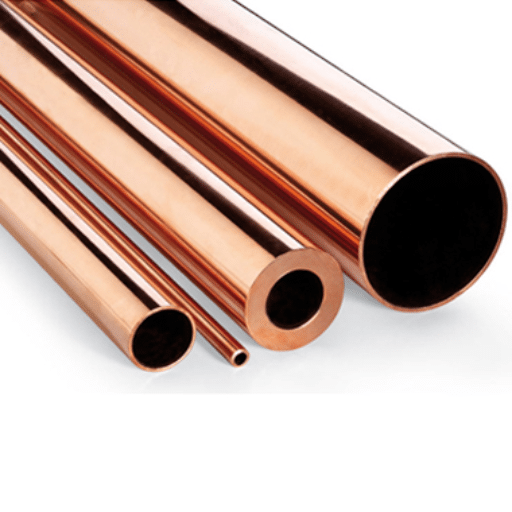
Phosphorus deoxidized copper tube is commercially available in dimensions ranging from 1/8″ (3.2mm) to 6″ (159mm) outside diameter, with wall thicknesses specified by type (K, L, M) or direct dimension callout. Common HVAC and plumbing sizes include:
| Nominal Size | OD (in) | Type L Wall (in) | Type L Wall (mm) | Pressure Rating (psi @ 100°F) |
|---|---|---|---|---|
| 1/4″ | 0.375 | 0.030 | 0.76 | 811 |
| 3/8″ | 0.500 | 0.035 | 0.89 | 659 |
| 1/2″ | 0.625 | 0.040 | 1.02 | 608 |
| 3/4″ | 0.875 | 0.045 | 1.14 | 484 |
| 1″ | 1.125 | 0.050 | 1.27 | 441 |
| 1-1/4″ | 1.375 | 0.055 | 1.40 | 395 |
The length specifications require both straight lengths of 20 feet and 6 meters and continuous coil delivery. The coil lengths for small-diameter soft temper tube start at 15 meters which equals 50 feet and extend to 30+ meters for larger sizes. The level wound coil (LWC) format enables mechanical uncoiling and straightening because the tube is wound in layers on a reel which enables high-volume installations.
Coil Configurations for Refrigeration Applications
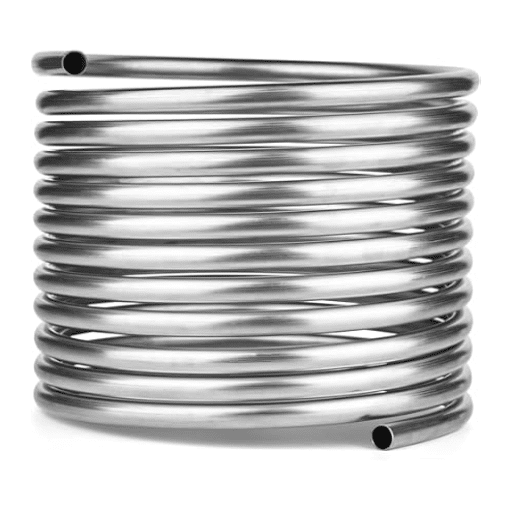
The contractors who work in refrigeration and air conditioning prefer to use coil format when they perform their installation work in the field. The continuous coil system provides a complete installation because it combines multiple piping sections into a single piece which needs no additional joints. The installation of one factory-sealed flare connection at each end of a 15-meter coil system can replace multiple straight piping sections with field-brazed connections for a typical split-system system which requires 50 feet of distance between its indoor and outdoor components.
Zhongzheng produces phosphorus deoxidized copper coil in level wound configuration with:
- Standard coil lengths: 15m, 30m, 45m, 60m (custom lengths available)
- Reel diameters optimized for standard uncoiling equipment
- VCI (Vapor Corrosion Inhibitor) film wrapping for sea freight protection
- End caps sealed to prevent contamination ingress
Coil weight varies with diameter and length. A 60-meter coil of 7/8″ OD Type L tube weighs approximately 45 kg, manageable for two-person handling but requiring appropriate lifting equipment for larger sizes.
Applications by Industry

Plumbing and Potable Water Systems
The C12200 DHP copper tube has served as a drinking water delivery system for more than 80 years because it protects against corrosion and allows easy shaping while displaying antimicrobial capabilities. The EPA has registered copper as the first solid antimicrobial material, copper ions released from the surface inhibit bacterial growth including Legionella pneumophila, the causative agent of Legionnaires’ disease.
Type L copper tube serves as the standard specification for both residential and commercial water distribution systems because it delivers sufficient pressure capacities to handle municipal supply pressures which range from 40 to 80 psi and protects against sudden pressure fluctuations. The phosphorus deoxidization process prevents hydrogen embrittlement during both installation and operation in conditions where dissimilar metals create galvanic corrosion.
For healthcare facilities copper tubing provides infection control advantages which extend beyond its mechanical capabilities. Research published in Applied and Environmental Microbiology shows that copper surfaces decrease bacterial contamination levels by more than 90 percent when compared to stainless steel and plastic surfaces. The material shows natural antimicrobial properties which need no coatings or treatments for activation.
HVAC and Refrigeration
ASTM B280 copper tube dominates commercial and residential refrigeration systems, from residential split-system air conditioners to industrial chillers. The soft temper specification enables field routing around structural obstacles, while the cleanliness requirements protect compressor integrity.
In a typical 20-ton commercial rooftop unit installation, the contractor receives:
- Liquid line: 3/8″ OD × 0.030″ wall, 60m coil, O60 temper
- Suction line: 7/8″ OD × 0.045″ wall, 60m coil, O60 temper
- Hot gas line: 5/8″ OD × 0.040″ wall, 30m coil, O60 temper
The flare connections at indoor and outdoor units use the ductility of soft temper tube to create metal-to-metal seals without gaskets. Properly formed flares withstand system pressures that exceed 500 psi during both operation and pressure testing.
The thermal conductivity of copper becomes important for large commercial systems which require long refrigerant lines. The 85% IACS thermal conductivity of copper which equals 230 BTU·in/(hr·ft²·°F) allows suction lines to absorb heat from their surroundings which results in capacity reduction and liquid slugging. Engineers specify insulation or consider stainless steel alternatives for extremely long lines where thermal transfer impacts system efficiency.
Heat Exchangers and Process Equipment
Shell-and-tube heat exchangers in water-to-water and water-to-refrigerant applications frequently specify C12200 tube for the water side. The phosphorus deoxidization provides corrosion resistance comparable to OFHC at lower cost, while the seamless construction ensures pressure integrity.
Key heat exchanger specifications include:
- ASTM B75: Seamless copper tube for heat exchangers (supersedes B88 for this application)
- TEMA standards: Tubular Exchanger Manufacturers Association dimensional requirements
- U-bend capability: Annealed temper tube enables tight-radius U-bends for return headers
For corrosive service, seawater, brine, or chemical process fluids, copper may be inadequate despite its general corrosion resistance. Chloride concentrations above 300 ppm accelerate copper corrosion; high-velocity seawater causes erosion-corrosion. In these applications, a stainless steel heat exchanger tube or titanium may be required despite higher cost.
Medical Gas Systems
Medical gas distribution systems transport oxygen, nitrous oxide, medical air, nitrogen, and vacuum for healthcare facilities. C12200 copper tube is the standard material for these services, specified under NFPA 99 (National Fire Protection Association) and ASSE 6010 requirements.
The critical requirements for medical gas tube extend beyond material composition to cleanliness and identification:
- Internal cleanliness: Tube must be degreased and free of particulates that could contaminate medical gases
- End sealing: Factory-sealed ends prevent contamination between manufacture and installation
- Identification: Tube marked “MEDICAL GAS” or color-coded per facility standard
- Brazing restrictions: Silversolder or brazing filler metals must be cadmium-free
For oxygen service specifically, the fire hazard from hydrocarbon contamination drives stringent cleanliness requirements. Oxygen under pressure reacts violently with oils and greases; medical gas tube is shipped with end caps and handling instructions that emphasize cleanliness preservation.
Handling, Installation, and Joining Methods

Field Cutting and Preparation
The existence of reliable joints depends on the execution of proper end preparation procedures. The use of tube cutters establishes better cutting results through creation of straight cuts which require less effort than hacksaws. A quality tube cutter with sharp wheel produces a smooth cut which maintains the tube end shape.
The process requires mandatory deburring which follows the cutting stage. Internal burrs restrict flow because they create turbulence and lead to downstream component contamination through breakage. External burrs prevent proper fitting engagement. The deburring tool for copper tube requires 360° rotation to remove all projections from the surface.
The tube end must maintain a round shape which has no surface scratches according to flare connection requirements. The flare will not seat properly against the fitting cone because of the out-of-round condition. Flaring tools which use rotating cone formers to create 45° flares produce consistent results because they prevent tube end splitting.
Joining Methods for DHP Copper Tube
The phosphorus content in C12200 limits but does not eliminate joining options. The most common methods include:
Mechanical Compression Fittings: The brass compression fittings which use ferrules provide secure connections which do not need heat for their operation. The ferrule creates a metal-to-metal seal when the nut tightens which results in the ferrule pressing against the tube’s outer diameter. The design of compression fittings allows for their use in service connections because users can take them apart and reuse them in future work.
Press-Fit Systems: The hydraulic pressing tool of modern press-fit systems (Viega ProPress, ZoomLock for refrigeration) creates pressure which compacts internal O-ring fittings onto tube ends. The press establishes a permanent mechanical connection because it operates without using flames for an instant. Press-fit has become the preferred method for commercial plumbing work because it provides fast results without requiring hot work permits.
Flare Joints: Flare connections serve as the standard connection method which refrigeration systems use. The tube end is flared outward to 45° then engages with a mating flare nut and fitting body. Proper flares remain intact under extreme pressure and vibrating conditions because they maintain their sealed status. Flare joints require only a flaring block and yoke for their repair work because they can be fixed at the job site.
Soldering: DHP copper requires capillary soldering with 95/5 tin-antimony or lead-free solder alloys. The phosphorus content does not interfere with soldering as it does with brazing. Soldered joints serve as the standard connection method for water plumbing systems but their use in refrigeration systems is not advised because solder does not provide enough strength to withstand refrigerant pressures.
Brazing (Limited Application): DHP copper brazing needs BAg series phosphorus-free filler metals which require specific techniques. The base metal phosphorus content will cause joint brazing to lose strength when workers fail to manage process parameters. OFHC copper represents the material which most brazing assemblies prefer.
Bending and Forming Guidelines
Soft temper tube bends easily with proper technique. Key considerations:
Bend Radius: Maintain minimum bend radius of 2× tube OD (measured to centerline) to prevent wall thinning and cracking. The tube interior requires support through mandrel benders or filler materials which include sand and low-melt alloy when performing tighter bends.
Bending Tools: Hand benders for small diameters; hydraulic or electric benders for 1″+ tube. The use of internal bending springs enables hand bending operations to maintain their shape without collapsing.
Springback: Copper exhibits springback which causes the tube to return partially to its original shape after it has been bent. To achieve the final angle the operator should overbend the material by 5 to 10 degrees.
Kink Prevention: Never bend tube without internal support or proper bending tools. Kinked tube sections require complete removal because the wall thinning at the kink point creates a stress concentration which will fail during pressure cycling.
Manufacturing Quality and Testing

Zhongzheng DHP Copper Production Process
Zhongzheng applies the same zero-defect manufacturing philosophy developed for stainless steel production to phosphorus deoxidized copper tube. The process starts with cathode copper verification, followed by controlled deoxidization and forming, and finishes with complete testing and documentation.
Raw Material Verification: Every cathode copper lot is sampled and analyzed by optical emission spectrometer before entering production. The verification process establishes that the substance contains at least 99.90% copper while measuring all trace contaminants which have the potential to reduce conductivity and corrosion resistance.
Controlled Deoxidization: The process of deoxidizing molten copper occurs through a controlled atmosphere which uses precise amounts of phosphorus. The target 0.015–0.040% phosphorus range is verified by in-process spectrographic analysis before casting.
Seamless Tube Formation: The process starts with billet extrusion which creates hollow shells before the material undergoes cold-drawing through exact dies to reach its end dimensions. Intermediate annealing operations in protective atmosphere maintain the soft temper grain structure required for field forming.
Quality Control Testing
The final product samples undergo analysis to verify phosphorus content and detect any harmful substances which exceed allowable limits. The Mill Test Report documents the complete composition data of the tested material.
The entire seamless copper tube length undergoes in-line eddy current testing which achieves 100% flaw detection through this procedure. The non-destructive testing method detects surface-level and subsurface defects which include cracks and pits and wall thinning.
The production lots undergo hydrostatic pressure testing which uses representative samples to meet ASTM testing requirements. The testing procedure applies pressures which exceed 700 psi to small-diameter Type L tube because its normal operating pressure range remains below that threshold.
The measurement process includes recording data for OD wall thickness and straightness in addition to length measurements. Zhongzheng maintains tolerances which exceed the minimum requirements of ASTM standards by maintaining an OD tolerance of ±0.003″ instead of the ±0.005″ ASTM standard.
The visual inspection process together with wipe testing confirms that there are no surface contaminants which include oils and drawing lubricants. The process of additional degreasing and cleaning occurs for medical gas and refrigeration systems according to specific requirements.
Documentation Package
Each shipment of Zhongzheng DHP copper tube includes:
- Mill Test Report (MTR): Chemical composition, mechanical properties, heat number, dimensional verification
- EN 10204 3.1 Certificate: Independent mill certification of compliance
- Hydrostatic Test Report: Test pressure, duration, and acceptance confirmation
- Dimensional Inspection Report: Measured values vs. specification tolerances
- Heat Traceability: Link from finished product to raw material cathode lot
For project supply, Zhongzheng compiles consolidated documentation packages indexed by line item, simplifying receiving inspection and record retention for EPC contractors.
Procurement Specifications and Logistics

Specifying DHP Copper Requirements
A complete specification for phosphorus deoxidized copper tube includes:
Material Designation: UNS C12200 (or C12000 for slightly lower phosphorus range)
Standard Compliance: ASTM B280 (refrigeration) or ASTM B88 (plumbing)
Type/Temper: Type L, O60 temper (or as required)
Dimensions: OD × wall thickness × length (e.g., “7/8″ OD × 0.045″ wall × 60m coils”)
Cleanliness: Standard or enhanced (specify for medical gas/refrigeration)
Packaging: VCI-wrapped coils, sealed end caps, export crating
Example complete specification:
“Phosphorus deoxidized copper tube per ASTM B280, UNS C12200, Type L, 7/8″ OD × 0.045″ wall, O60 soft temper, 60-meter level wound coils, degreased for refrigeration service, VCI-wrapped with sealed end caps. Mill Test Reports and EN 10204 3.1 certification required.”
Shipping and Export Packaging
Copper tube requires protection from moisture and mechanical damage during international shipment. Zhongzheng export packaging includes:
- VCI Film Wrapping: Volatile corrosion inhibitor film prevents oxidation during sea freight
- Reel Packaging: Level wound coils secured to wooden or steel reels for mechanical handling
- End Cap Sealing: Plastic end caps with tape seal prevent contamination ingress
- Bundle Strapping: Steel or PET strapping secures coils for lifting and transport
- Container Loading: Reels loaded and blocked to prevent movement; desiccant bags control humidity
Weight considerations affect handling requirements. Small-diameter coils may weigh 20–30 kg; large-diameter Type K coils can exceed 100 kg. Specify lifting equipment requirements and destination handling capabilities when ordering.
Lead Times and Minimum Orders
Standard DHP copper tube in common sizes (1/4″–1-1/8″ OD, Type L, soft temper) typically ships within 2–3 weeks from order confirmation. Custom dimensions, specialty tempers, or large coil lengths may require 4–6 weeks production time.
Minimum order quantities vary by size:
- Common sizes (1/2″, 3/4″, 7/8″ OD): 500–1000 kg minimum
- Smaller sizes (1/4″, 3/8″ OD): 300–500 kg minimum
- Large sizes (2″+ OD): 1000+ kg minimum
Mixed loads combining multiple sizes optimize shipping costs and meet project requirements. Zhongzheng can consolidate copper tube with stainless steel pipe, fittings, and valves in single container shipments, reducing total logistics costs for comprehensive material supply.
Frequently Asked Questions
What does “deoxidized” mean in copper tube?
Manufacturers produce deoxidized copper by removing dissolved oxygen from the metal through the use of deoxidizing agents which include phosphorus as the standard deoxidizer for C12200 DHP copper. The oxygen content is reduced to less than 0.001% which prevents hydrogen embrittlement that occurs when the copper encounters hydrogen at high temperatures. Deoxidized copper is essential for applications where the metal will be heated during fabrication or service.
Can a DHP copper tube be welded or brazed?
DHP copper can be brazed with limitations. The process of heating materials causes residual phosphorus to move towards grain boundaries which creates a risk of joint embrittlement. The process requires phosphorus-free brazing filler metals from the BAg series and specific thermal control procedures. C10200 OFHC copper provides optimal material selection for welded and heavily brazed assemblies. DHP copper establishes strong connections through mechanical joining methods which include compression fittings press-fit systems and flare connections.
What is the difference between C12200 and C10200 copper?
The DHP copper alloy C12200 contains 0.015 to 0.040 percent phosphorus which supports deoxidization while maintaining 85 percent IACS conductivity at a price 15 to 25 percent lower than OFHC. C10200 OFHC copper contains essentially no phosphorus or oxygen which allows it to achieve 101 percent IACS conductivity while maintaining its weld and brazeability without embrittlement. C12200 serves as the standard material for plumbing and HVAC systems while C10200 should be specified for all electrical and welded applications.
What type of copper tube should I use for drinking water?
The standard specification for residential and commercial potable water systems requires the use of Type L phosphorus deoxidized copper tube C12200 according to ASTM B88. Type L provides adequate pressure rating for municipal water supplies with safety margins. Type K may be specified for buried service lines requiring additional corrosion allowance. Type M is generally restricted to heating systems and drainage where pressure requirements are minimal.
How does phosphorus affect copper conductivity?
Phosphorus in solid solution reduces copper’s electrical and thermal conductivity. C12200 DHP copper achieves approximately 85% IACS versus 101% IACS for pure copper. The reduction meets acceptable standards because plumbing and HVAC applications need conductivity between electrical power and resistance to corrosion. For electrical busbar or high-performance heat transfer, specify C10200 OFHC copper instead.
What is the maximum pressure rating for Type L copper tube?
Pressure ratings vary with temperature and tube size. The 1/2 inch Type L copper tube has a working pressure rating of 608 psi at 100°F (38°C) which decreases to 475 psi at 200°F (93°C). Larger diameters have lower pressure ratings because their wall thickness decreases in proportion to their diameter. System design should include ASME B31.9 or manufacturer tables which provide specific pressure-temperature ratings together with necessary safety factors.
Can DHP copper be used for medical gas systems?
The standard material for medical gas distribution systems according to NFPA 99 requires C12200 DHP copper tube as the designated material. The tube must meet enhanced cleanliness requirements, be degreased and sealed at the factory, and handled carefully to prevent contamination during installation. Medical gas tube after installation requires identification through either color-coding or permanent marking. The specifications demand C10200 OFHC copper for critical oxygen service but permit C12200 as suitable material for most medical gas applications.
Conclusion
The UNS C12200 DHP copper tube which uses phosphorus deoxidation technology offers the best balance of corrosion resistance and formability and cost efficiency for use in plumbing and HVAC and refrigeration and medical gas systems. The controlled phosphorus content eliminates hydrogen embrittlement risk while maintaining the antibacterial properties and workability that have made copper the standard material for these services for decades.
The key limitation is clear that DHP copper does not work for welded or heavily brazed assemblies because of phosphorus embrittlement. For these applications, C10200 OFHC copper should be used as an upgrade. DHP copper provides similar performance to mechanical joints which use compression or press-fit or flare connections while costing less in most cases.
Zhongzheng produces phosphorus deoxidized copper tube which meets ASTM B280 ASTM B88 EN 1057 and JIS H3300 standards from its Wenzhou facility using the same spectrographic verification system and eddy current testing and documentation standards which it applies to its stainless steel production process. Our technical team confirms specifications and delivers 60-meter coils for commercial refrigeration projects and Type L tube for healthcare facilities within 24 hours.
References:
- ASTM International; ASTM B280-20: Standard Specification for Seamless Copper Tube for Air Conditioning and Refrigeration Field Service
- ASTM International; ASTM B88-20: Standard Specification for Seamless Copper Water Tube
- Copper Development Association; Copper Tube Handbook (2021 Edition)
- EN 1057:1996+A1:2010; Copper and copper alloys. Seamless, round copper tubes for water and gas in sanitary and heating applications
- NFPA 99-2021: Health Care Facilities Code; Medical Gas Systems Requirements