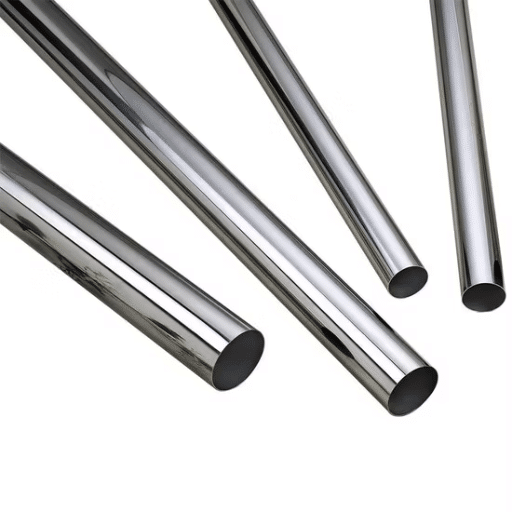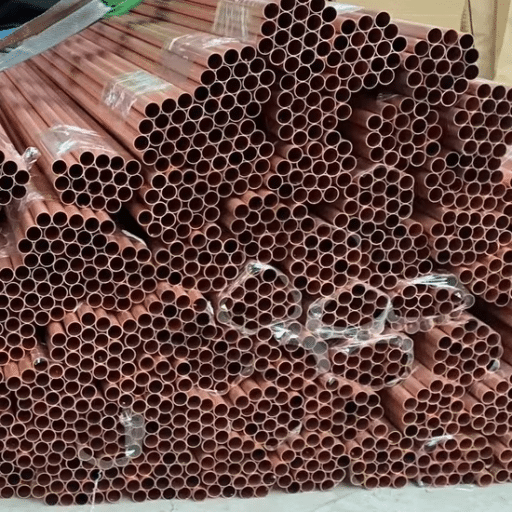
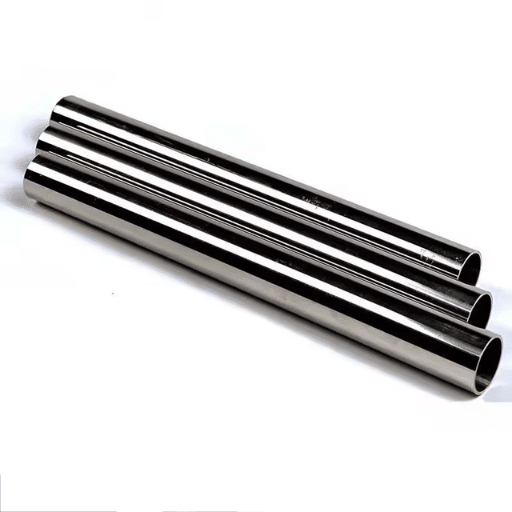
Your heat exchanger specification requires tubing material that can withstand a 50000 ppm chloride level at 80 degrees Celsius without experiencing any pitting damage. Your 316L proposal received one note from the project engineer who used the words “Check PREN” to mark his approval. The 316L material shows a Pitting Resistance Equivalent Number of 24, which does not meet your client’s minimum requirement of 32. The upgrade path leads directly to duplex stainless steel — specifically SA789/S31803 tube with its PREN of 35.
SA789 duplex stainless tube serves as the standard material for heat exchangers and chemical process piping, and oilfield applications, which require more strength than standard austenitic grades but less strength than super duplex alloys. This guide delivers the specification data, selection framework, and procurement guidance that engineers and procurement teams need to specify S31803 and S32205 tubes with confidence.
You will learn about the chemical composition requirements according to ASTM A789, and you will find out why duplex materials provide superior mechanical properties compared to 316L and you will discover the situations in which S32205’s enhanced nitrogen chemistry should be used instead of standard S31803 and you will learn how to confirm that your supplier provides authentic duplex microstructure instead of false documentation that claims compliance.
What is SA789 Duplex Stainless Tube?
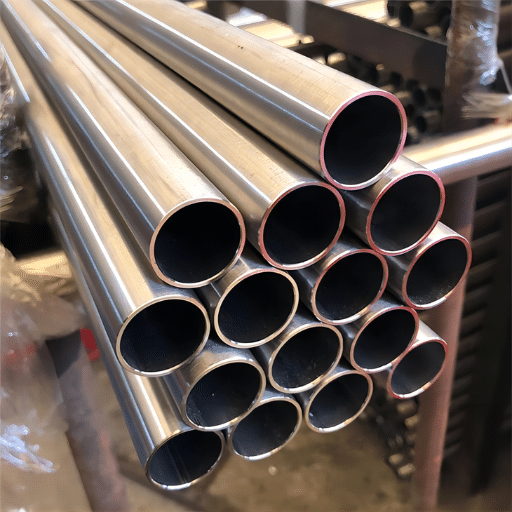
ASTM A789 vs ASME SA789 Designation
The SA789 duplex stainless tube exists as both seamless and welded options, which meet the ASTM A789/A789M standard specification for seamless and welded ferritic/austenitic stainless steel tubing used in general service. The “SA” prefix indicates ASME Boiler and Pressure Vessel Code adoption of the ASTM standard, making SA789 the designation most commonly referenced in pressure equipment specifications.
ASTM A789 covers multiple duplex grades, but S31803 (UNS designation) represents the most widely specified. The “S” in S31803 stands for stainless steel, and “31803” is the unified numbering system identifier. This grade is also commonly called “Duplex 2205” based on its approximate chromium (22%) and molybdenum (3%) content — though the unified UNS designation is the technically precise specification language.
The dual-phase microstructure consists of equal parts ferrite and austenite, which creates performance characteristics that include yield strength that exceeds austenitic steels at the 316L grade and improved protection against chloride stress corrosion cracking and better defense against pitting and crevice corrosion in seawater and brine environments.
S31803 Chemistry and Metallurgy
S31803 achieves its duplex microstructure through carefully balanced alloying: 21.0-23.0% chromium provides the corrosion resistance foundation, 4.5-6.5% nickel stabilizes the austenite phase, 2.5-3.5% molybdenum enhances pitting resistance, and 0.08-0.20% nitrogen strengthens both phases while improving weldability. The carbon content is restricted to 0.030% maximum because it protects against sensitization and intergranular corrosion.
SA789 S31803 Chemical Composition Requirements (ASTM A789 Table 1)
| Element | S31803 Requirement (%) | S32205 Requirement (%) | Function |
|---|---|---|---|
| Chromium | 21.0 – 23.0 | 22.0 – 23.0 | Corrosion resistance, ferrite former |
| Nickel | 4.5 – 6.5 | 4.5 – 6.5 | Austenite stabilizer |
| Molybdenum | 2.5 – 3.5 | 3.0 – 3.5 | Pitting resistance |
| Nitrogen | 0.08 – 0.20 | 0.14 – 0.20 | Strength, corrosion resistance |
| Carbon | ≤ 0.030 | ≤ 0.030 | Minimize carbide precipitation |
| Manganese | ≤ 2.00 | ≤ 2.00 | Deoxidizer, sulfur control |
| Silicon | ≤ 1.00 | ≤ 1.00 | Deoxidizer |
| Phosphorus | ≤ 0.030 | ≤ 0.030 | Impurity control |
| Sulfur | ≤ 0.020 | ≤ 0.020 | Machinability vs. corrosion tradeoff |
The nitrogen addition is particularly important. Nitrogen acts as a powerful austenite creator, which enhances strength while preventing chromium carbide precipitation at grain boundaries. The welded condition of S31803 maintains its corrosion resistance without needing post-weld heat treatment, which provides essential benefits to constructed heat exchangers and piping systems.
Ferrite-Austenite Phase Balance
The performance of the SA789 duplex tube depends on maintaining the proper phase balance. The ASTM A789 standard requires base metal and heat-affected zone materials to contain 30-60% ferrite, which must be measured through metallographic examination according to ASTM E562 or other quantitative metallography methods. The production test report confirms this requirement for duplex tube production according to SA789 standards.
The phase balance is disrupted because there is too much ferrite or too little austenite, which results in mechanical property damage and corrosion protection failures. The presence of excessive ferrite in materials results in decreased toughness, while weldability becomes more difficult. The material needs at least some degree of ferrite because its absence will remove the stress corrosion cracking resistance, which makes duplex materials suitable for use in chloride environments.
The manufacturing process needs to maintain this phase balance through exact measurement of nitrogen content and thermal processing control. The optimal microstructure results from solution annealing, which occurs at 1900-2050°F, 1040-1120°C, followed by water quenching. The temperature range of 600-1750°F, 315-955°C, between which reheating occurs, creates a risk for intermetallic phase development, which includes sigma chi and alpha-prime phases that lead to toughness and corrosion resistance deterioration.
S31803 vs S32205: Selection Guide

Chemical Composition Comparison
S32205 is the nitrogen-enhanced evolution of S31803, which was created to deliver better corrosion resistance and superior strength while preserving its fundamental metallurgical properties. The two materials exhibit their main distinction through their chromium content requirements because S32205 needs at least 22.0% chromium, whereas S31803 uses 21.0% chromium, and S32205 requires 3.0% molybdenum, while S31803 needs only 2.5% molybdenum, and S32205 needs 0.14% nitrogen, but S31803 needs only 0.08% nitrogen.
The composition changes result in a minimum PREN value of S31803, increasing from about 35 to 37-38 for S32205. The practical significance of S32205 shows that it has better resistance against pitting and crevice corrosion during testing under extreme chloride conditions, which occurs most effectively at high temperatures.
Mechanical Property Differences
Both grades exhibit significantly higher strength than austenitic stainless steels, but S32205’s enhanced nitrogen content pushes yield strength even higher. The material’s increased strength allows engineers to design pressure containment systems with thinner wall sections, which results in lighter weight and reduced costs for heat exchangers and pressure vessels.
Mechanical Property Requirements (ASTM A789 Table 2, Annealed Condition)
| Property | S31803 Minimum | S32205 Minimum | 316L (Reference) |
|---|---|---|---|
| Yield Strength (ksi) | 65 | 70 | 30 |
| Tensile Strength (ksi) | 90 | 95 | 75 |
| Elongation (% in 2 in.) | 25 | 25 | 40 |
| Hardness (Rockwell C) | 28 max | 29 max | — |
Duplex grades provide design engineers with a higher yield strength, which exceeds 316L yield strength by more than double, to enable them to decrease wall thickness by 30-40% while keeping the same pressure rating. The use of thinner walls in heat exchanger applications results in improved heat transfer because it decreases thermal resistance and lowers material costs per foot of tubing.
Corrosion Resistance (PREN Comparison)
The Pitting Resistance Equivalent Number provides a quantitative comparison of pitting corrosion resistance. PREN is calculated as: %Cr + 3.3×%Mo + 16×%N
For S31803 with typical composition (22% Cr, 3.0% Mo, 0.15% N): PREN = 22 + 3.3(3.0) + 16(0.15) = 22 + 9.9 + 2.4 = 34.3
For S32205 with typical composition (22.5% Cr, 3.2% Mo, 0.17% N): PREN = 22.5 + 3.3(3.2) + 16(0.17) = 22.5 + 10.56 + 2.72 = 35.78
For comparison, 316L with typical composition (17% Cr, 2.2% Mo, 0% N): PREN = 17 + 3.3(2.2) + 0 = 17 + 7.26 = 24.26
The PREN differential explains duplex performance in chloride service. While 316L typically exhibits pitting above 1,000 ppm chloride at room temperature, S31803 resists pitting to approximately 3,000-5,000 ppm depending on temperature and pH. S32205 extends this threshold even further.
Critical pitting temperature (CPT) testing per ASTM G48 Method A provides experimental confirmation: S31803 typically shows CPT of 20-25°C in 6% ferric chloride solution, while S32205 achieves 25-30°C. 316L typically falls below 15°C under the same test conditions.
When to Specify S32205 Over S31803
Specify S32205 when your application demands the additional corrosion resistance margin:
Specify S32205 for:
- Seawater or brackish water service above 20°C
- Chemical process streams with >3,000 ppm chloride
- Heat exchangers with cooling water treatment are marginal or variable
- Offshore platform applications where inspection access is limited
- Sour service (H2S-containing environments) per NACE MR0175/ISO 15156
- Applications requiring a maximum strength-to-weight ratio
S31803 is acceptable for:
- Fresh water and potable water service
- Process streams with <1,000 ppm chloride at moderate temperatures
- Heat exchangers with well-controlled cooling water chemistry
- Onshore chemical processing with regular inspection access
- Applications where cost optimization outweighs maximum corrosion margin
The cost differential between S32205 and S31803 typically runs 5-15% — modest compared to the jump to super duplex grades (S32750, S32760), which command 50-100% premiums. The incremental cost of S32205 becomes necessary for critical applications because its longer service life and decreased inspection needs make it worth the expense.
Manufacturing & Quality Requirements

Seamless vs Welded SA789 Tube
Duplex stainless tubing standards are defined by ASTM A789, which includes both seamless and welded tubing options. The selection process for manufacturing methods depends on three factors, which include application requirements, cost limitations, and dimensional specifications.
The production process of Seamless SA789 Tube starts with the piercing of solid billets or the extrusion of hollow shells, which undergo cold drawing or pilgering until the final dimensions are reached. The seamless construction method produces consistent properties around the entire circumference, which becomes essential for operating under high-pressure conditions and for U-bend heat exchanger tubes that face tensile stress during their bending process. The OD range of seamless tube starts at smaller dimensions, which extend to 6-114 mm, and the product can maintain narrow wall thickness boundaries.
The production process of Welded SA789 Tube begins with the formation of a flat-rolled strip into a cylinder, which requires the welding of the seam through the automatic gas tungsten arc welding (GTAW) method or plasma arc welding process that duplex grades use for their welding requirements. The modern welding technology achieves exact heat input control, which enables in-line annealing to create a welded duplex tube that approaches the properties of seamless welding. Welded tube provides cost benefits which range from 20 to 40 percent compared to seamless alternatives while offering larger diameter options.
The heat exchanger industry prefers seamless tubes for tube-side applications because it provides a uniform wall structure without any weld seams. Welded tube finds its primary application in shell-side operations and lower-pressure heat exchangers, which require cost-effective solutions.
Cold Drawing Process for Dimensional Precision
Cold drawing serves as the main technique to create precision SA789 duplex tube, which maintains strict control over its dimensional measurements. The process requires pulling a tube through a die, which passes over a mandrel to achieve simultaneous diameter and wall thickness reduction. Cold work increases strength, which must be removed through subsequent annealing according to ASTM A789 standards, while it provides exact dimensioning abilities that hot working cannot achieve.
Heat exchanger tube needs extremely precise specifications, which require manufacturers to maintain outer diameter tolerances of ±0.10 mm and wall thickness tolerances of ±10% for all precision applications. Cold drawing achieves these tolerances while maintaining the surface finish quality required for heat transfer efficiency. The drawing process also produces the straightness required for tube bundle assembly.
At Zhongzheng, seamless duplex tube production utilizes multi-pass cold drawing with intermediate annealing to achieve heat exchanger-grade dimensional precision. The production process uses eddy current testing and ultrasonic measurement to confirm both outer diameter and wall thickness at different production phases.
Solution Annealing Requirements
ASTM A789 requires solution annealing of the duplex tube to develop the proper phase balance and restore corrosion resistance after cold working. The specification requires heating to 1900-2050°F (1040-1120°C) followed by rapid cooling — typically water quenching — to prevent precipitation of deleterious intermetallic phases.
The narrow temperature range for annealing is essential because it restricts the process. The austenite formation below 1900°F fails to create sufficient austenite, while the temperature above 2050°F leads to excessive ferrite and grain growth. The rapid cooling requirement means continuous annealing in controlled-atmosphere furnaces with immediate water quench — batch furnace processing risks slow cooling through the 600-1750°F danger zone where sigma phase forms.
The MTR requires documentation of heat treatment procedures, which include information about the furnace type, the annealing temperature, and the quench method used. Third-party solution annealing witnesses may be required for critical applications.
Ferrite Content Verification (ASTM E562)
The ASTM A789 standard needs ferrite content testing for base metal and heat-affected zone areas. The standard specifies 30-60% ferrite, which should be measured through quantitative metallography according to ASTM E562 (Standard Test Method for Determining Volume Fraction by Systematic Manual Point Count) or equivalent methods.
Ferrite measurement requires metallographic sample preparation and etching through electrolytic etching, which uses 10% oxalic acid or 40% NaOH, and point counting under optical microscopy. The result must be recorded on the MTR for the duplex tube as volume percent ferrite.
The ferrite measurement process for welded duplex tube requires testing in the heat-affected zone (HAZ) area. The HAZ microstructure undergoes unacceptable changes because of improper welding heat input, which results in both mechanical property loss and corrosion resistance deterioration. Documentation on MTR should include both base metal and HAZ ferrite content specifications.
Corrosion Testing (ASTM G48 Method A)
The standard grades of ASTM A789 do not require testing, but critical duplex tube applications need to use ASTM G48 Method A (Ferric Chloride Pitting Test) as their testing method. The test involves specimen exposure to 6% ferric chloride solution, which maintains a specific temperature during the test and assesses their ability to resist pitting initiation.
The standard acceptance criteria for S31803 prohibit any pitting at 25°C during 24 hours of testing. The test temperature for S32205 testing can be raised to 30-35°C, which shows better corrosion resistance. The test verifies material quality by checking correct phase distribution and the absence of phases that would damage performance in actual conditions.
The independent laboratories SGS, Bureau Veritas, and TÜV conduct third-party corrosion testing, which provides extra verification for EPC contractor procurement requirements.
Dimensional Specifications & Tolerances

Standard SA789 Tube Sizes (OD × Wall)
SA789 duplex tube is available in standard dimensions covering heat exchanger, instrumentation, and process piping applications. Common stocked sizes for heat exchanger applications include:
Common SA789 Duplex Tube Dimensions (Metric)
| OD (mm) | Wall (mm) | Weight (kg/m) | Application |
|---|---|---|---|
| 12.7 | 1.65 | 0.47 | Instrumentation |
| 15.88 | 1.65 | 0.60 | Small heat exchangers |
| 19.05 | 2.11 | 0.91 | Standard heat exchanger |
| 25.4 | 2.11 | 1.24 | Heat exchanger, condenser |
| 25.4 | 2.77 | 1.60 | Higher pressure service |
| 31.8 | 2.77 | 2.05 | Process piping |
| 38.1 | 2.77 | 2.48 | Heat exchanger, boiler |
| 50.8 | 3.4 | 4.06 | Large heat exchangers |
Common SA789 Duplex Tube Dimensions (Imperial)
| OD (in.) | Wall (in.) | Weight (lb/ft) | Application |
|---|---|---|---|
| 0.5 | 0.065 | 0.32 | Instrumentation |
| 0.625 | 0.065 | 0.40 | Small heat exchangers |
| 0.75 | 0.083 | 0.61 | Standard heat exchanger |
| 1.0 | 0.083 | 0.83 | Heat exchanger, condenser |
| 1.0 | 0.109 | 1.07 | Higher pressure service |
| 1.25 | 0.109 | 1.38 | Process piping |
| 1.5 | 0.109 | 1.67 | Heat exchanger, boiler |
| 2.0 | 0.134 | 2.73 | Large heat exchangers |
Custom OD and wall combinations outside standard stocked sizes are available with extended lead times and minimum order quantities. Zhongzheng’s seamless and welded production lines accommodate non-standard dimensions subject to technical feasibility review.
Diameter and Wall Tolerance Tables
ASTM A789 specifies dimensional tolerances that vary by manufacturing method (seamless vs. welded), OD size, and specified wall thickness. The tightest tolerances apply to heat exchanger-grade tubing.
ASTM A789 Dimensional Tolerances (Seamless Tube)
| OD Range (mm) | OD Tolerance (mm) | Wall Tolerance |
|---|---|---|
| < 25.4 | ±0.10 | ±10% |
| 25.4 – 38.1 | ±0.13 | ±10% |
| 38.1 – 50.8 | ±0.15 | ±10% |
| 50.8 – 63.5 | ±0.18 | ±10% |
| 63.5 – 101.6 | ±0.20 | ±10% |
The TEMA standards for heat exchanger systems require additional specifications beyond their standard requirements. TEMA Class R (severe petroleum and chemical service) typically requires an OD tolerance of ±0.08 mm for tubes under 50.8 mm OD.
The standard wall thickness tolerance for ASTM A789 measures ±10% of the specified thickness. The pressure rating calculations for thin-wall heat exchanger tubes (with wall thickness under 10% of OD) become more critical when pressure rating calculations need to consider this tolerance. Designers should guarantee that the minimum wall thickness at the tolerance limit maintains sufficient pressure containment capacity.
Length Requirements and Custom Options
The SA789 duplex tube comes in two options, which are random delivery of its seamless tubes that measure 4 to 7 meters and longer welded tubes, and delivery of cut sections that match customer requirements. The manufacturing process of heat exchangers demands specific cut lengths that need to have square-cut ends and deburring.
The U-bend heat exchangers need extra distance to accommodate both the bending radius and the straight leg sections, which connect to the U-bend. The minimum bend radius for duplex tube requires 1.5×OD, which exceeds the requirement for austenitic grades because of its reduced elongation properties. The U-bend duplex tube comes to customers in its annealed state, with the tube supplier and heat exchanger manufacturer responsible for executing the bending process.
Zhongzheng supplies SA789 duplex tube in:
- Random lengths (4-7 meters typical)
- Cut-to-length (±3 mm cutting tolerance)
- U-bend configuration (specify bend radius, leg lengths)
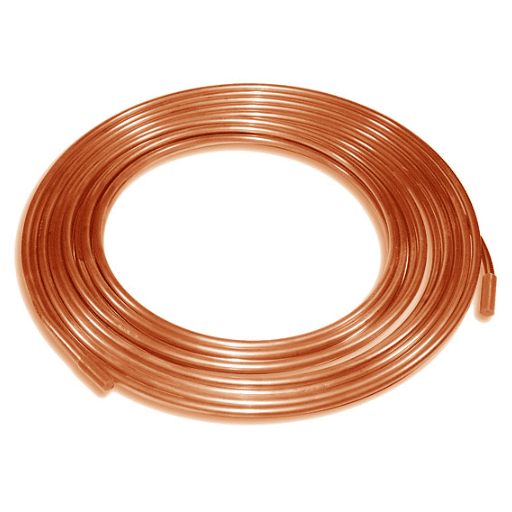
- Coiled format for refrigeration and hydraulic applications (up to 200m+ continuous length)
Applications & Industry Usage

Heat Exchanger Applications
Heat exchangers represent the main use for SA789 duplex tube. Chemical plants, refineries, and power stations use shell-and-tube heat exchangers to implement duplex tubes when their cooling water contains chlorides or their process fluids show corrosive properties.
Duplex material provides the best solution for heat exchanger applications because it combines thermal conductivity that matches austenitic materials with outstanding corrosion protection and exceptional strength. The material allows designers to create thinner wall structures, which enhance heat transfer performance while still achieving the required pressure resistance.
Common Heat Exchanger Applications:
- Oil refinery overhead condensers (ammonium chloride corrosion)
- Chemical plant product coolers (process chloride exposure)
- Power plant condensers (seawater or brackish cooling water)
- Desalination plant evaporators (seawater service)
- Refrigeration system condensers and evaporators
Engineers use TEMA standards with ASTM A789 to develop their heat exchanger specifications. The TEMA standard provides mechanical design rules that engineers need to follow, while ASTM A789 defines the material specifications. The combined standards ensure that heat exchanger tubes maintain strength under operational pressures and protection against corrosion.
Chemical Process Industry
Chemical plants specify SA789 duplex tube for process piping, reactor tubes, and heat exchangers handling chloride-containing chemicals. The duplex microstructure provides resistance to stress corrosion cracking that plagues austenitic grades in hot chloride service.
Key chemical industry applications include:
- Urea plant equipment (high-pressure strippers, carbamate condensers)
- Organic acid handling (acetic acid, formic acid)
- Chloride salt processing (sodium chloride, calcium chloride)
- Phosphoric acid production
- Petrochemical process piping
Urea-grade 316L urea (a low-ferrite austenitic grade) has traditionally dominated urea plant materials, but duplex grades are increasingly specified for high-pressure strippers and condensers where stress corrosion cracking resistance is critical.
Oil & Gas Production Equipment
Offshore oil platforms and onshore production facilities utilize SA789 duplex tube for heat exchangers, process piping, and injection systems. The combination of high strength (which decreases weight for offshore structures) together with seawater corrosion resistance makes duplex material an economically viable choice despite its higher material costs.
Applications include:
- Seawater cooling systems (heat exchangers, intercoolers)
- Glycol dehydration units (corrosion from glycol degradation products)
- Produced water handling (chloride and H2S exposure)
- Gas injection systems (CO2 and seawater mixtures)
- Subsea production equipment (manifolds, flowlines)
NACE MR0175/ISO 15156 provides materials requirements for H2S (sour) service. S31803 and S32205 are suitable for sour service use when operators maintain both hardness restrictions and environmental protection standards. Material certification must include hardness testing and compliance verification for sour service applications.
Desalination Plants
Desalination plants that use multi-stage flash (MSF) and multi-effect distillation (MED) technologies operate their heat exchangers with SA789 duplex tubes. The seawater at high temperatures creates a highly corrosive environment, which causes 316L to experience rapid pitting, yet duplex grades deliver an extended operational lifespan.
The high strength of duplex materials enables thin-wall construction, which decreases material needs for the desalination plants’ large tube bundles. A typical MSF plant may contain 5,000-10,000 tubes per unit — material savings from thinner walls translate to significant cost reduction.
Duplex has largely replaced copper-nickel alloys in modern desalination construction because it provides better corrosion protection at similar costs throughout its operational life.
Pulp & Paper Processing
Pulp mills use SA789 duplex tube for their digesters, evaporators, and heat recovery systems. The digest liquor (white liquor and black liquor) contains sodium sulfide and sodium carbonate plus organic compounds that attack standard stainless grades.
The black liquor concentration system operates at high temperatures and accumulates chloride while maintaining alkaline conditions, which makes duplex grades perform better than austenitic alternatives. The economic benefits of duplex selection result from extended campaign life between required tube bundle replacements.
Welding & Fabrication Considerations

Welding Process Selection (GTAW, GMAW)
The welding process for duplex stainless steel needs both temperature control for welding and temperature control for interpass work to maintain the correct phase distribution throughout both the heat-affected area and the weld metal. The process results in excessive ferrite and intermetallic phase creation when operators use excessive heat, while insufficient heat prevents the formation of austenite.
Gas Tungsten Arc Welding (GTAW/TIG) is the preferred process for duplex tube welding, particularly for thin-wall heat exchanger tubes. GTAW enables operators to control the heat input precisely while creating welds that remain clean and free from spatter. The pulsed GTAW system enables better control because it switches between two current states: maximum and minimum.
Recommended parameters:
- Heat input: 0.5 – 1.5 kJ/mm (0.5 – 1.0 kJ/mm for thin wall)
- Interpass temperature: ≤ 150°C (302°F)
- Shielding gas: 98% Ar / 2% N₂ (nitrogen addition compensates for nitrogen loss during welding)
- Backing gas: Same composition for root pass protection
Gas Metal Arc Welding (GMAW/MIG) can be used for thicker-wall duplex tubing and attachments. Spray transfer mode with pulsed current provides good control. Heat input must be carefully monitored — GMAW tends toward higher heat input than GTAW.
Filler Metal Recommendations (2209)
Duplex tube welding requires filler metal with higher nickel content than the base metal to promote adequate austenite formation in the weld metal. AWS A5.9 ER2209 is the standard filler metal for S31803 and S32205 welding.
ER2209 composition: 22.5% Cr, 8.5% Ni, 3.2% Mo, 0.15% N
The higher nickel content (8.5% vs. 5% nominal in base metal) ensures 30-60% ferrite in the as-welded condition without post-weld heat treatment. Using 316L filler (19% Cr, 12% Ni, 2.5% Mo) or matching composition filler without nitrogen addition results in excessive ferrite and reduced corrosion resistance.
For autogenous tube-to-tubesheet welding (no filler added), nitrogen additions to the shielding and backing gas become even more critical to maintain phase balance.
Heat Input and Interpass Temperature Control
Controlling heat input and interpass temperature is the single most important factor in successful duplex welding. The “golden zone” for duplex welding:
- Heat input: 0.5 – 1.5 kJ/mm
- Interpass temperature: < 150°C (302°F)
- Maximum layer temperature: 100°C (212°F)
Excessive heat input (> 2.0 kJ/mm) causes:
- Excessive ferrite formation in HAZ and weld metal
- Nitrogen loss from the weld pool
- Precipitation of sigma phase (if slow cooling follows)
- Reduced toughness and corrosion resistance
Insufficient heat input (< 0.5 kJ/mm) causes:
- Insufficient austenite formation
- Rapid cooling promotes excessive ferrite
- Poor fusion and lack of penetration
In practice, this means limiting weld bead size, controlling travel speed, and allowing adequate cooling time between passes. For thick-wall tube welding, temperature indicators or pyrometers verify interpass temperature compliance.
Post-Weld Heat Treatment Requirements
Duplex stainless steel needs no post-weld heat treatment when proper welding procedures are used, while austenitic grades require such treatment. The financial benefits of this practice become apparent because field PWHT for large heat exchangers involves high costs and complicated technical requirements.
Solution annealing after welding becomes necessary when welding procedure controls are not followed because of excessive heat input, high interpass temperature, and wrong filler metal usage, or when service conditions reach extreme levels. Solution annealing requires heating to 1900-2050°F (1040-1120°C) followed by rapid water quench, which becomes impractical for most field-fabricated equipment.
Welding procedure qualification according to ASME Section IX or EN ISO 15614-1 requirements for critical applications shows that the planned welding procedure delivers suitable mechanical attributes and protection against corrosion.
Procurement & Quality Verification

Mill Test Report Requirements
The Mill Test Report (MTR) for SA789 duplex tube must document chemical composition, mechanical properties, heat treatment, and dimensional compliance. For duplex grades, additional documentation of ferrite content is required.
Required MTR Data for SA789 Duplex Tube:
- Heat number and product identification
- Chemical composition (all elements per ASTM A789 Table 1)
- Mechanical test results (yield strength, tensile strength, elongation, hardness)
- Heat treatment records (annealing temperature, time, quench method)
- Ferrite content (base metal and HAZ for welded tube)
- Dimensional inspection results (OD, wall thickness, length)
- Non-destructive testing results (ultrasonic, eddy current)
- Hydrostatic test pressure and result
Zhongzheng provides comprehensive MTR packages including spectrographic analysis results and ultrasonic testing records. MTRs are issued per ASTM/ASME standard format for acceptance by international EPC contractors.
Third-Party Inspection (TPI) Options
Third-party inspection by recognized agencies (SGS, Bureau Veritas, TÜV, Lloyds Register) provides independent verification of material quality and compliance. TPI scope typically includes:
- Witness of chemical analysis (spectrographic verification)
- Witness of mechanical testing (tensile test, hardness test)
- Review of heat treatment records
- Dimensional inspection witness
- Non-destructive testing witness (ultrasonic, eddy current)
- Visual inspection and marking verification
- Documentation review and MTR certification
TPI inspection increases expenses for projects because it requires two to five percent of the material value as expenses. Zhongzheng supports TPI inspection at our Lantian Industrial Zone facility with advanced notification and inspection coordination.
Documentation Packages for EPC Projects
Engineering, Procurement, and Construction (EPC) contractors require comprehensive documentation packages that may exceed standard MTR content. Typical EPC documentation requirements include:
- Material certificates per EN 10204 3.1 or 3.2 (inspection certificate types)
- Inspection and Test Plan (ITP) adherence records
- Non-conformance reports (if applicable) and disposition
- Calibration records for testing equipment
- Weld procedure specifications and qualifications (for welded tube)
- Heat treatment charts and temperature records
- Packing list with heat number traceability
- Country of origin certificate
- Certificate of compliance to specified standards
Zhongzheng provides EPC-grade documentation packages upon request, with document indexing and compilation for project record retention requirements.
Lead Times and MOQ Considerations
SA789 duplex tube lead times vary by product form, grade, and specification complexity:
Standard Stocked Sizes (S31803):
- Seamless tube, common sizes: 2-4 weeks
- Welded tube, common sizes: 1-3 weeks
- Minimum order: Typically 500 kg per size
Non-Stocked / Custom Sizes:
- Seamless tube, custom dimensions: 6-10 weeks
- Welded tube, custom dimensions: 4-6 weeks
- Minimum order: 1,000-2,000 kg (varies by size)
S32205 (Enhanced Nitrogen):
- Lead time typically 2-4 weeks longer than S31803
- Higher minimum orders due to production run economics
With TPI Inspection:
- Add 1-2 weeks for inspection scheduling and report preparation
Zhongzheng provides confirmed lead times at the quotation stage, with milestone updates during production for project-scheduled orders. Expedited delivery options are available for critical turnaround and maintenance situations.
Comparison: Duplex vs Austenitic Stainless

316L vs S31803 Cost-Performance Analysis
The decision between 316L and S31803 duplex involves balancing upfront material cost against lifecycle performance. The analysis depends on application severity and service life requirements.
Cost Comparison (Indicative, varies by market conditions):
- 316L seamless tube: Base cost reference (1.0×)
- S31803 duplex tube: 1.15-1.30× 316L cost
- S32205 duplex tube: 1.20-1.40× 316L cost
Performance Comparison:
| Parameter | 316L | S31803 | Advantage |
|---|---|---|---|
| Yield Strength (ksi) | 30 | 65 | S31803 (2.2×) |
| PREN (typical) | 24 | 35 | S31803 (46% higher) |
| SCC Resistance | Poor | Excellent | S31803 |
| Chloride Pitting Threshold | ~1,000 ppm | ~3,000-5,000 ppm | S31803 |
| Weldability (as-welded) | Excellent | Good* | 316L |
| Availability | Excellent | Good | 316L |
| Cost | Lower | Higher | 316L |
*S31803 requires controlled welding procedure; 316L is more forgiving
When Duplex is the Better Investment
Specify S31803 or S32205 duplex when your application meets any of these criteria:
Corrosion Environment Triggers:
- Chloride concentration >1,000 ppm at temperatures >50°C
- Seawater or brackish water service
- Intermittent wet/dry chloride exposure
- H2S-containing environments (sour service)
- Historical stress corrosion cracking with austenitic grades
Mechanical Design Triggers:
- Wall thickness reduction is desired for weight or heat transfer
- High-pressure rating requirements
- Fatigue loading conditions (high strength improves fatigue life)
- Thermal cycling conditions
Economic Triggers:
- Service life target >15 years in corrosive environment
- High cost of downtime or tube replacement
- Safety-critical applications where failure is unacceptable
- Extended maintenance intervals desired
When 316L Remains Appropriate:
- Fresh water or low-chloride service
- Ambient temperature applications
- Short service life requirements (<10 years)
- Complex field fabrication requiring extensive welding
- Tightest budget constraints with acceptable replacement cycle
The lifecycle cost analysis typically favors duplex for heat exchangers and process equipment with >15-year service life expectations in corrosive environments. The higher initial material cost is recovered through extended service life, reduced maintenance, and avoided replacement costs.
FAQ
What is the difference between ASTM A789 and ASTM A790?
ASTM A789 regulates the manufacturing of ferritic/austenitic stainless steel tubing, which producers steel pipes through both seamless and welded methods. ASTM A790 covers seamless and welded ferritic/austenitic stainless steel pipe — larger-diameter, thicker-wall products for process piping and pressure vessels. The material grades (S31803, S32205) and property requirements are identical; the dimensional standards differ. Engineers specify A789 for tube and A790 for pipe.
What is PREN, and why does it matter for duplex selection?
The Pitting Resistance Equivalent Number (PREN) serves as a calculated index that predicts the ability of materials to resist pitting corrosion through the formula PREN = %Cr + 3.3×%Mo + 16×%N. Higher PREN indicates better pitting resistance. The material 316L exhibits a PREN value of approximately 24, while S31803 shows a PREN value of approximately 35, and S32205 has a PREN range between 37 and 38. PREN provides a quantitative basis for grade selection based on chloride exposure severity. Engineers use PREN thresholds to specify appropriate grades: PREN >32 for moderate chloride service, PREN >40 for severe service (super duplex territory).
Can SA789 duplex tube be used in sour service (H2S environments)?
The NACE MR0175/ISO 15156 standard permits the use of S31803 and S32205 materials for sour service applications according to their defined limits. The standard establishes a maximum hardness limit of 32 HRC, while it also limits environmental conditions through specific H2S partial pressure, temperature, and chloride concentration requirements. The material needs to exist in an annealed state, which must undergo a certified hardness evaluation. The selection of super duplex grades (S32750, S32760) requires higher PREN values for severe sour service operations. Always verify specific application parameters against NACE MR0175 Tables or conduct a fitness-for-service assessment.
What filler metal should be used for welding S31803 duplex tube?
Use AWS A5.9 ER2209 filler metal for welding S31803 and S32205. ER2209 contains 8.5 percent nickel, which exceeds the base metal nickel content of 5 percent to establish proper austenite formation during welding. 316L filler and matching-composition filler without nitrogen addition create excessive ferrite while decreasing corrosion resistance. ER2209 exists in two forms which are solid wire (GTAW/GMAW) and flux-cored wire. The backing and shielding gas must contain 1-2 percent nitrogen to make up for nitrogen loss that occurs during the welding process.
How do I verify my supplier is delivering genuine duplex microstructure?
Request MTR documentation showing:(1)chemical composition meeting ASTM A789 Table 1, (2)ferrite content 30-60% per ASTM E562 or equivalent, (3)mechanical properties meeting Table 2 requirements, and (4)solution annealing records. For critical applications, specify a third-party witness of production testing or independent laboratory verification. Ferrite content verification serves as the main distinguishing factor because genuine duplex displays 30-60% ferrite, while improperly processed material displays more than 70% ferrite or mostly austenitic structure.
What is the maximum operating temperature for SA789 duplex tube?
The maximum recommended operating temperatures for ASTM A789 duplex grades reach 600°F (315°C) for S31803 and 600°F (315°C) for S32205 in their annealed state. 475°C (885°F) embrittlement and sigma phase formation become dangerous at temperatures above these limits. Continuous service above 500°F (260°C) requires impact testing at minimum design temperature. 316H and specialized high-temperature grades serve better than duplex for high-temperature applications.
What is the difference between S31803 and 2205?
S31803 serves as the UNS designation, while 2205 acts as the common industry name that describes the material, which contains approximately 22% chromium and 5% nickel. The two terms refer to one material despite their different uses. However, the term “2205” is sometimes employed as an informal way to reference the material.
Conclusion
The SA789 S31803 duplex stainless tube provides better chloride protection and superior strength compared to austenitic stainless steel grades, while costing less than super duplex materials. The successful specification process requires you to understand three factors, which include the situations that require S32205 with its higher nitrogen content to be used, the complete welding procedure controls that maintain phase balance, and the complete documentation that your supplier needs to provide as evidence of their true duplex microstructure.
Key specification takeaways:
- Specify S32205 over S31803 when PREN >35 is required or sour service conditions apply
- Control welding heat input to 0.5-1.5 kJ/mm with interpass temperature below 150°C
- Verify MTR includes ferrite content of 30-60% and solution annealing records
- Consider duplex lifecycle cost advantages for >15-year service in corrosive environments
- Reference TEMA standards in addition to ASTM A789 for heat exchanger applications
The Lantian Industrial Zone facility in Wenzhou produces SA789 duplex seamless and welded tube, which Zhongzheng manufactures and tests through MTR documentation that includes spectrographic analysis, ultrasonic testing, and ferrite content verification. The technical team responds to specification inquiries within a 24-hour period after customers submit their heat exchanger tube requirements, which include grade recommendations, dimensional feasibility confirmation, and lead time estimates.