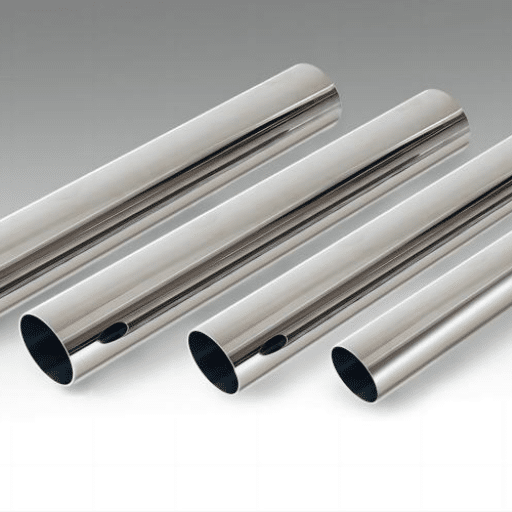
You are specifying process piping for a petrochemical plant. The engineer’s checklist requires seamless piping according to ASTM A312 standards, but your procurement team wants to know if welded piping would provide material savings of 20 to 40 percent while still meeting regulatory requirements. The answer depends on three variables: your operating pressure, the corrosivity of the service fluid, and whether your governing code assigns a weld joint efficiency factor below 1.0.
This guide provides you with specific thresholds and a decision-making framework used by engineering and procurement teams to select the appropriate pipe type during their initial specification process. We will explain the production methods for seamless and welded stainless steel pipe and demonstrate how their actual pressure ratings and corrosion resistance differ and we will show the requirements of ASTM A312 for each pipe type, and we will identify the situations when modern welded pipe can be used instead of seamless pipe.
For a complete reference on stainless steel seamless pipe specifications, grades, and applications, see our pillar guide. This article focuses specifically on the manufacturing method decision.
At Zhongzheng, we manufacture both seamless and welded stainless steel pipe on dedicated production lines in Wenzhou. The following guidance reflects what our technical team tells procurement engineers when they submit a line list and ask the same question.
At a Glance: Seamless vs Welded Stainless Steel Pipe

Engineering buyers scan for a side-by-side reference before they read the detail. Here is the comparison that should have been in the first article on this topic.
| Attribute | Seamless Pipe | Welded Pipe |
|---|---|---|
| Manufacturing method | Hot piercing of solid billet, then rolling and elongation | Strip forming plus fusion welding (TIG, ERW, plasma) |
| Pressure capability | Higher; no weld seam weak point | Lower; ASME B31.3 weld efficiency factor ~0.85 |
| General pressure threshold | Preferred above ~0.8 MPa (116 psi) operating pressure | Suitable below ~0.8 MPa; advanced ERW can extend this |
| Corrosion resistance | Uniform grain structure; no heat-affected zone vulnerability | Weld seam and HAZ are potential weak points; PWHT mitigates |
| Relative cost | 20-40% higher than welded | Lower initial cost; favorable TCO in non-critical service |
| Maximum typical OD | Generally limited to NPS 24 (610 mm) | Available in very large diameters (NPS 36 and above) |
| Wall thickness range | Sch 5S to Sch 160 and above | Sch 5S to Sch 80 (varies by welding method) |
| Key standards | ASTM A312 (seamless), ASTM A213, ASTM A269, GB/T 14976 | ASTM A312 (welded), ASTM A778, GB/T 12771 |
| Typical applications | High-pressure, critical safety, corrosive service | Structural, low-to-medium pressure, cost-sensitive projects |
Your project requires operation at pressure levels below 0.8 MPa, together with a welded pipe that receives complete radiographic inspection according to your code requirements, which results in actual cost reductions and exhibits low technical risk. The seamless specification serves as the design standard for sour service subsea operations and high-pressure boiler feed systems.
Manufacturing Process: How Each Pipe Type Is Produced
Seamless Pipe Manufacturing
Seamless stainless steel pipe starts as a solid round billet. The billet is heated in a rotary furnace to approximately 1,200-1,250°C, then pierced on a mandrel or plug mill to form a hollow shell. That shell is elongated through rolling and sizing operations, typically on a pilger mill or continuous mandrel mill, until it reaches the target outer diameter and wall thickness. For a step-by-step breakdown of each stage, see our dedicated guide to the seamless pipe manufacturing process.
The pipe undergoes solution annealing after its initial formation to restore its austenitic microstructure and corrosion resistance, which hot working had disrupted. The final steps consist of cold drawing or rolling to achieve precise dimensions, while pickling or passivation prepares the surface for testing, which includes complete non-destructive examination.
The defining characteristic is the absence of any longitudinal weld seam. The grain structure exists in uniformity through all directions, which provides seamless pipes with both strength and resistance to corrosion.
At Zhongzheng’s Wenzhou facility, seamless pipe production covers austenitic grades (304/L, 316/L, 321, 347), duplex (UNS S31803/S32205), and super duplex (UNS S32750/S32760) to ASTM A312, ASTM A213, ASTM A269, and GB/T 14976.
Welded Pipe Manufacturing
Welded pipe starts as a flat strip coil, slit to the required width. The strip is formed into a cylindrical shape through a series of roll stands, then the longitudinal edges are fused together.
The welding method determines the application range:
- TIG (GTAW) welding produces the highest quality welds with minimal spatter and excellent corrosion resistance in the weld zone. It is slower and more expensive than ERW, which makes it the standard for sanitary tubing, thin-wall instrumentation tube, and applications where surface finish and weld integrity are paramount.
- ERW (electric resistance welding) uses electrical resistance heating to fuse the edges at high speed. It is the dominant method for industrial welded pipe in standard schedules and diameters because it delivers consistent quality at high throughput.
- Plasma and laser welding are used for precision applications requiring deep, narrow weld profiles with minimal heat input and distortion.
The pipe undergoes post-weld heat treatment (PWHT) solution annealing after workers remove or grind the external weld bead until it becomes flush with the surface. The heat-affected zone (HAZ) requires post-weld heat treatment (PWHT) to restore its original chromium levels and passivation features, which protect against hostile conditions.
Zhongzheng manufactures TIG-welded and ERW welded pipe for industrial, structural, and sanitary applications to ASTM A312, ASTM A778, and GB/T 12771.
Why the Manufacturing Method Matters
The difference exists beyond academic boundaries. Seamless pipe maintains consistent mechanical attributes and full 360-degree corrosion resistance throughout its entire length. The welded pipe exhibits a weld seam together with a heat-affected zone that displays different microstructural, hardness, and corrosion resistance characteristics when compared to the base metal. Modern welding and PWHT methods have achieved substantial progress in closing this gap, although the seam remains a metallurgical discontinuity that engineering codes address through weld joint efficiency factors.
Pressure Ratings and Structural Integrity

The Pressure Threshold That Determines Pipe Type
Seamless pipe becomes the most preferred option in industrial applications when systems operate at pressures above 0.8 MPa, which equals approximately 116 psi. The welded pipe system becomes acceptable according to code requirements when proper inspection procedures and grade selection processes are followed for operating conditions that fall short of that pressure limit. The sustained pressure conditions create a situation where weld seams face a high risk, thus making seamless piping systems the safer choice.
The 0.8 MPa value operates as an industry standard, but it does not function as a legal requirement. Your design code, together with the safety factor and inspection level, will determine the final decision. ASME B31.3 Process Piping establishes allowable stress values that remain unchanged regardless of how pipes are manufactured. The standard uses a weld joint efficiency factor to welded pipe, which decreases the calculated pressure capacity.
Weld Efficiency Factor: What ASME B31.3 Says
ASME B31.3 assigns a weld joint efficiency factor, designated E, that reduces the allowable stress for welded pipe depending on the extent of non-destructive examination:
- Seamless pipe: E = 1.0 (no weld seam, full efficiency)
- Welded pipe with spot radiography: E = 0.85
- Welded pipe with 100% radiography: E = 1.0
A welded pipe that undergoes basic spot radiographic testing possesses 85 percent of the pressure capacity that a seamless pipe maintains for identical material grade, wall thickness, and design temperature. The welded pipe needs a wall thickness increase or an allowable operating pressure decrease to achieve a matching pressure rating. The extra material cost and weight make it difficult to obtain a beneficial outcome from that calculation.
The E = 0.85 factor pushes high-pressure services, which operate at maximum wall thickness, to require custom wall designs which remove the cost benefits of welded pipes and make seamless pipes the clear choice.
When Modern Welded Pipe Can Substitute for Seamless
The distance between seamless pipes and welded pipes has decreased significantly during the last 20 years. The advanced ERW lines produce welded pipe through their complete ultrasonic inspection system, which tests weld seams and their automated PWHT system. The welded pipe achieves seamless pipe specifications through its compliance with ASTM A312, which requires the same chemical composition and mechanical properties, and dimensional tolerances.
The design code and end-client material specifications allow for welded pipe validation through 100% radiographic or ultrasonic weld inspection and complete PWHT for multiple services, which previously required seamless pipes as the only acceptable option. The technical risk of welded pipe in food and beverage process lines, water treatment systems and HVAC systems and general structural applications remains low while it delivers significant cost savings.
Cost Analysis: Initial Price vs Total Cost of Ownership
Why Seamless Pipe Costs More
Seamless pipe typically costs 20-40% more than welded pipe of the same grade, diameter, and schedule. The premium comes from three factors:
- Raw material cost. A solid round billet costs more per kilogram than an equivalent strip coil because billet production involves additional casting and rolling steps.
- Equipment and energy. Piercing mills, pilger mills, and mandrel mills are capital-intensive, energy-intensive machines. The hot piercing and rolling process consumes more energy per meter of finished pipe than strip forming and welding.
- Yield and processing time. Seamless manufacturing involves more steps, more handling, and lower material utilization. Scrap rates from piercing defects, wall thickness variation, and end cropping are higher than in welded pipe production.
When Welded Pipe Delivers Better Value
Welded pipe provides lower total cost of ownership for applications that do not require seamless pipe because of pressure, corrosion, and safety requirements. The 20-40% material savings compound across large projects. Production setup requires less time because strip coil inventory is more accessible than specialized billets.
The Hidden Cost of Over-Specification
The more expensive mistake is not buying welded when seamless is unnecessary. The situation requires a welded pipe, which will fail at the weld seam or HAZ, depending on its application. A weld seam leak in a high-pressure chemical reactor, an offshore riser, or a boiler feedwater line costs infinitely more than the material premium for seamless pipe. The process piping specifications for critical services require seamless pipes because procurement teams should not disregard this requirement based on cost unless they conduct a technical assessment.
Corrosion Resistance and Durability
Seamless Uniformity vs Weld Seam Vulnerability
Seamless pipe exhibits a uniform grain structure, which provides equal protection against corrosion throughout its circular perimeter. The area lacks a weld seam and a heat-affected zone, together with all metallurgical boundaries, thus preventing the development of localized corrosion.
Welded pipe contains three distinct zones which exhibit different rates of corrosion: the base metal, the weld metal, and the heat-affected zone. The HAZ can experience sensitization during welding if the time-temperature profile allows chromium carbide precipitation at grain boundaries. This process reduces the local chromium content needed for passivation while creating an area that becomes vulnerable to intergranular corrosion and stress corrosion cracking.
The solution annealing process, which occurs after welding, enables post-weld heat treatment to redissolve chromium carbides while restoring the austenitic structure, thus eliminating this vulnerability. ASTM A312 welded pipe must be delivered in a solution-annealed condition because this requirement exists for all cases except those that specifically state otherwise.
Chloride Environments: Where the Difference Matters
The weld seam and HAZ of welded pipe become a site for pitting and crevice corrosion when chloride-rich environments exist because of insufficient PWHT and improper weld metal chemistry matching with the base metal. The risk for standard austenitic grades 304 and 316L becomes manageable through proper welding procedure and inspection. The most reliable option for critical subsea or sour service applications consists of seamless pipe or fully qualified welded pipe, which undergoes complete NDT testing.
The dual-phase microstructure of duplex and super duplex grades UNS S32205 and S32750 provides superior protection against stress corrosion cracking and chloride pitting, which drives their increased adoption in seawater and sour service applications. The market provides both seamless and welded duplex pipe options, but customers face stricter welding procedure qualification and inspection requirements compared to standard austenitic grades.
Application Guide: When to Specify Seamless, Welded, or Either

Specify Seamless Pipe For
- High-pressure systems with operating pressure above approximately 0.8 MPa (116 psi), especially where ASME B31.3 or equivalent codes apply
- Critical safety applications including oil and gas downstream process piping, chemical reactor lines, power boiler feedwater, and nuclear service
- Highly corrosive environments including sour service (H2S/CO2), subsea seawater exposure, and concentrated chloride process streams
- Applications requiring NACE MR0175/ISO 15156 compliance for sulfide stress cracking resistance
- Small-diameter, high-schedule process piping (Sch 80, Sch 160, XXS) where wall thickness uniformity and pressure integrity are paramount
- Services where any weld seam failure is unacceptable from a safety or environmental perspective
Specify Welded Pipe For
- Low-to-medium pressure fluid transport below ~0.8 MPa, including water distribution, process water, and non-hazardous chemical transfer
- Structural and architectural applications where the pipe is not pressurized or where pressure is minimal
- Large-diameter requirements above NPS 24 (610 mm), where seamless pipe is either unavailable or prohibitively expensive
- Cost-sensitive projects with non-critical service conditions where the 20-40% cost savings of welded pipe are material to project economics
- Sanitary process lines where TIG-welded, ground-and-polished tube meets 3-A, DIN 11850, or ASME BPE requirements
- HVAC, water treatment, and general industrial piping where code allowances for welded pipe are well established
The Overlap Zone: Where Either Type Works
There is a substantial middle ground where both seamless and welded pipe are technically acceptable, and the choice becomes a function of cost, lead time, and procurement preference:
- Medium-pressure process piping (0.3-0.8 MPa) with full weld inspection and PWHT
- Food and beverage applications where sanitary welded tube (TIG-welded, ground flush, passivated) is code-acceptable and widely used
- Instrumentation and hydraulic tubing where both seamless cold-drawn tube and welded-and-drawn tube are available to ASTM A269
- General chemical processing in non-chloride, non-sour services where 316L welded pipe with standard inspection meets the design basis
In this overlap zone, Zhongzheng’s dual manufacturing capability matters. We can quote both seamless and welded options for the same specification, allowing procurement teams to compare real pricing and lead times rather than assuming seamless is the only answer.
Standards and Quality Control Differences
ASTM A312: What It Requires for Seamless and Welded Pipe
ASTM A312 serves as the primary standard for austenitic stainless steel pipes used in pressure applications. The standard includes specifications for both seamless and welded pipes, although some customers find it surprising that the two methods share identical chemical composition requirements, mechanical property requirements, and heat treatment requirements.
The difference is in testing and inspection:
- Seamless pipe must pass either a hydrostatic test or a non-destructive electric test (eddy current or ultrasonic). Dimensional tolerances apply to OD, wall thickness, and length. Because there is no weld seam, there is no weld-specific inspection requirement.
- Welded pipe must also pass hydrostatic or non-destructive electric testing. In addition, the weld seam must be inspected. For standard ASTM A312 welded pipe, the weld is inspected by radiographic or ultrasonic methods to the extent specified in the purchase order. For more stringent requirements, 100% radiography or ultrasonic inspection can be specified.
The critical point is that ASTM A312 does not treat welded pipe as inferior material. It treats it as a different manufacturing method with different inspection emphasis. A properly manufactured, inspected, and heat-treated ASTM A312 welded pipe is a fully code-compliant product for a wide range of services.
Quality Testing at Zhongzheng
Whether a pipe is seamless or welded, it leaves our facility only after passing the same sequential QC workflow:
- Spectrographic verification: Every heat of raw material (billet or strip coil) is analyzed on imported optical emission spectrometers before entering production. The chemical composition is recorded and forms the basis of the Mill Test Report.
- In-process dimensional inspection: OD, wall thickness, and ovality are checked against specification tolerances during production.
- Non-destructive testing: Seamless pipe receives 100% ultrasonic flaw detection for internal and external defects. Welded pipe receives weld integrity testing by visual, radiographic, or ultrasonic methods depending on the specification.
- Hydraulic pressure testing: Finished pipe is hydrostatically tested to the pressure specified in the applicable standard, with results documented per order.
- Final inspection and documentation: Surface quality, end preparation, marking, and dimensional verification. MTRs, hydrostatic test records, and inspection reports are compiled per shipment.
The testing protocol adapts to the pipe type, but the standard does not. Both seamless and welded pipe must meet the same chemical, mechanical, and dimensional requirements to ship under an ASTM A312 MTR.
Size Availability and Procurement Considerations

Diameter and Wall Thickness Ranges
Seamless pipes are produced in sizes that range from NPS 1/8 to NPS 24, which has an outside diameter of 610 mm and offer wall thicknesses that start at Sch 5S and reach up to Sch 160 and higher. The maximum diameter that can be achieved in practice depends on the size of the billet and the operational capabilities of the piercing mill. The only feasible option for pipelines with diameters that exceed NPS 30, NPS 36, and NPS 42 is to use welded pipes
The range of welded pipes extends from NPS 1/2 to NPS 48 and greater, while their wall thicknesses vary between Sch 5S and Sch 80 based on the welding technique and the equipment used for forming. The forming and welding process is more scalable to large diameters than piercing and rolling solid billets.
Lead Time Implications
Welded pipe generally has shorter lead times than seamless pipe for standard grades and dimensions. Steel mills maintain strip coil inventory in standard widths and thicknesses, which enables welded pipe manufacturers to start their production processes without delay. Seamless pipe production needs billet procurement, which leads to extended mill lead times when manufacturing specialty grades such as duplex and super duplex.
The production lead time for custom dimensions depends on both available tooling and the scheduled production times of both pipe types. Zhongzheng’s technical team confirms feasibility and lead time for non-catalogue OD, wall thickness, and length combinations before order commitment.
Selection Decision Matrix
Use this sequence to determine the right pipe type for your project:
1. What is your maximum operating pressure?
- Above 0.8 MPa (116 psi) → Seamless recommended, or welded with 100% radiography and full PWHT plus code verification
- Below 0.8 MPa → Either type possible; proceed to Question 2
2. What is the corrosion environment?
- High chloride, sour service (H2S), subsea seawater, or concentrated acids → Seamless strongly preferred; duplex or super duplex grades likely required
- Moderate or controlled environment → Either type with proper grade selection (304/L or 316/L for most services)
3. What diameter do you need?
- Above NPS 24 (610 mm) → Welded (seamless unavailable or uneconomical)
- NPS 24 and below → Either type
4. Is first cost or total cost the primary driver?
- First cost critical, service is non-critical → Welded
- Long-term reliability and safety are paramount → Seamless
5. What does your governing code specify?
- ASME B31.3 with standard weld efficiency (E = 0.85) → May require thicker wall for welded; run the calculation
- ASTM A312 with purchaser-specified 100% radiography → Welded acceptable at design pressure with E = 1.0
- End-client material specification mandates seamless → Seamless, regardless of other factors
Conclusion
The selection between seamless and welded stainless steel pipe requires evaluation of the manufacturing method, inspection level and material grade according to pressure, corrosion and safety requirements established for the intended application.
Seamless pipe commands a 20-40% premium because it eliminates the weld seam as a potential failure point and delivers uniform properties around the full circumference. The premium requires justification because it serves necessary functions in high-pressure operations and critical safety applications and environments with aggressive corrosive materials. Welded pipe delivers equivalent code compliance at lower cost for low-to-medium pressure structural and non-critical services, provided it is manufactured, heat-treated, and inspected to the same standard.
The wrong choice is almost always over-specification in one direction or under-specification in the other. The organization incurs unnecessary budget expenses through its choice of seamless pipe for the low-pressure water distribution system. The organization faces increased risk through its choice of standard inspection for welded pipe on high-pressure sour gas lines, which offers no cost benefits.
At Zhongzheng, we manufacture both ASTM A312 seamless stainless steel pipe and TIG-welded industrial and sanitary pipe at our Wenzhou facility, with the same spectrographic verification, ultrasonic or radiographic inspection, and hydraulic pressure testing applied to every pipe regardless of type. Submit your line list or specification, and our technical team will confirm the right pipe type, grade, and standard for your project within 24 hours.
FAQ
What is the main difference between seamless and welded stainless steel pipe?
The fundamental distinction between seamless and welded stainless steel pipe lies in their construction methods. The production of seamless pipe begins with a solid billet which undergoes hot piercing and rolling to create a pipe without any longitudinal weld seam. The production process of welded pipe begins with a flat strip which transforms into a cylindrical shape through welding at its longitudinal seam. The lack of a weld seam enables seamless pipe to operate at higher pressures while delivering uniform corrosion protection, whereas welded pipe provides customers with more affordable options for larger diameter pipes.
Is a seamless pipe always stronger than a welded pipe?
The effective pressure capacity of seamless pipe exceeds that of welded pipe when both pipes share the same grade and wall thickness and diameter because welded areas create potential weak points. The ASME B31.3 standard establishes a weld joint efficiency factor of 0.85 for welded pipe which standard inspection procedures apply, resulting in lower allowable stress values compared to seamless pipe. The implementation of 100% radiographic inspection enables welded pipe to achieve an E value of 1.0 together with its corresponding pressure rating, although this process entails extra inspection expenses and additional requirements.
What conditions allow for using welded pipe in applications that require high pressure?
Welded pipe can be used for high-pressure applications if the design code allows it, the weld seam needs 100% radiographic or ultrasonic inspection, and post-weld heat treatment needs to restore HAZ corrosion resistance. The project specification needs to undergo examination because numerous codes and end-client requirements still demand the use of seamless pipe for the most critical services which operate at the highest pressure levels.
Why does seamless pipe cost more than welded pipe?
The price of seamless pipe exceeds that of welded pipe because of the different manufacturing processes used. Seamless pipe costs 20 to 40 percent more because manufacturers need to use solid billet as raw material instead of strip coil and their manufacturing processes require more power and more expensive equipment and they produce less usable material and need more time to create their products. The premium is justified when the application requires the pressure capability, uniformity, and absence of weld seam that seamless pipe provides.
What ASTM standard covers both seamless and welded stainless steel pipe?
The standard specification for austenitic stainless steel pipe requires seamless and welded and heavily cold-worked steel pipes to comply with ASTM A312. The manufacturing methods established identical chemical composition and mechanical property standards which both methods must follow. The testing and inspection processes only differ because seamless pipe requires wall uniformity and defect testing while welded pipe needs additional testing for weld seam inspection.
Does welded pipe have worse corrosion resistance than seamless pipe?
Welded pipe demonstrates decreased corrosion resistance at its weld seam and heat-affected zone when manufacturers fail to conduct post-weld heat treatment or when they use weld metal with incorrect chemical composition ratios to base metal. ASTM A312 requires welded pipe to be furnished in the solution-annealed condition which restores corrosion resistance. Proper PWHT and inspection processes enable welded pipe to provide sufficient corrosion resistance for most industrial applications. Seamless pipe or qualified welded pipe with full NDT coverage represents the safer specification for highly aggressive environments which include seawater and sour service and concentrated chlorides.
Reference Sources
- ASME B31.3-2024: Process Piping Code (pressure design, weld joint efficiency factors)
- NACE MR0175 / ISO 15156: Petroleum and natural gas industries, Materials for use in H2S-containing environments