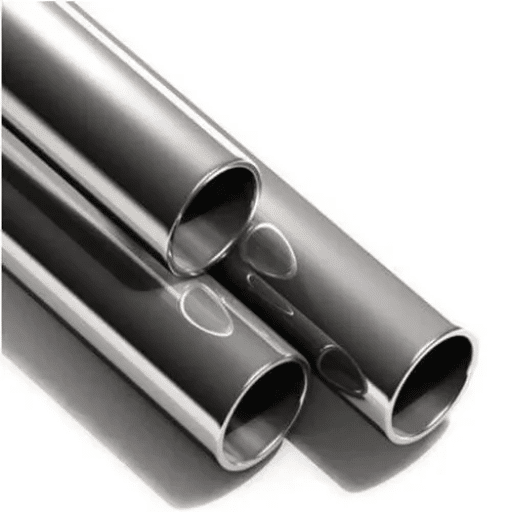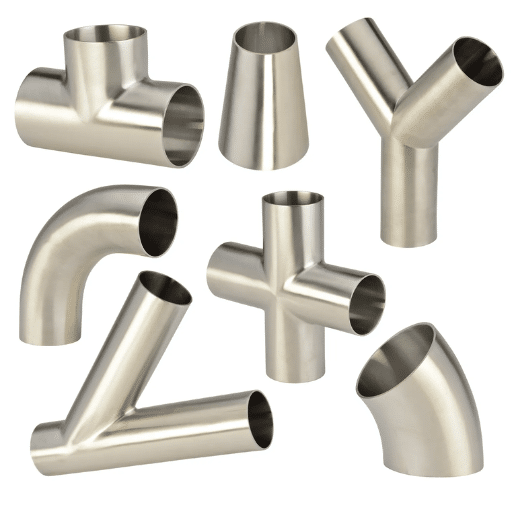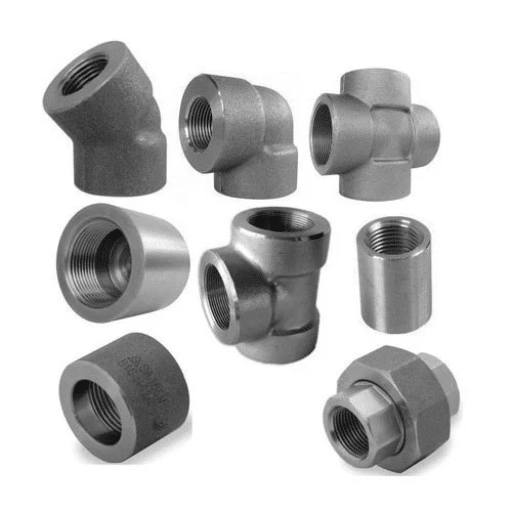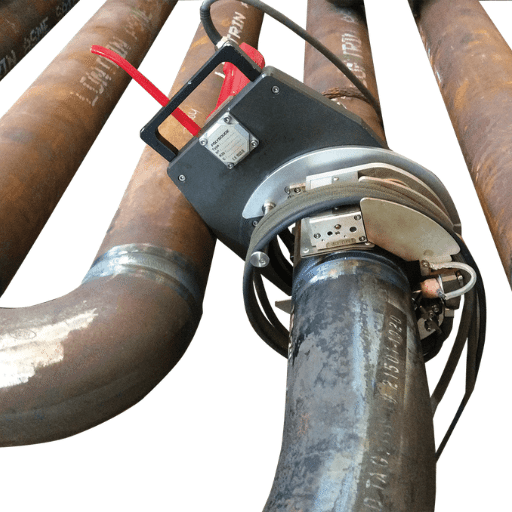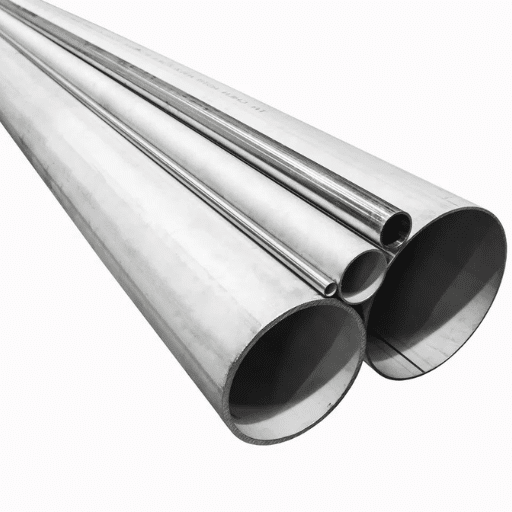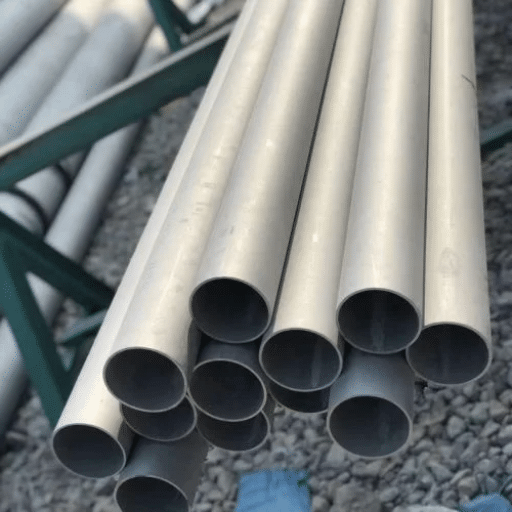
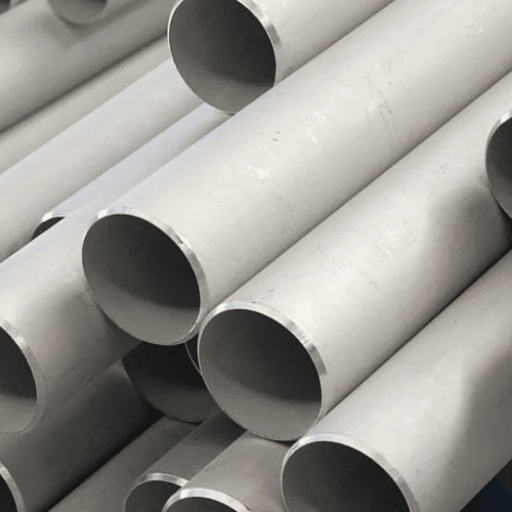
All projects which require stainless steel piping must make the same basic choice between seamless piping and welded piping. The operating conditions which the system must handle together with purchasing budget limits and performance requirements of the system determine which option to select. The manufacturing process of seamless pipes and welded pipes creates essential differences which affect their ability to withstand pressure and structural strength and resistance to corrosion and total expenses over time. The guide delivers all technical information which explains each pipe type and their production methods and grade selection process and their optimal applications in various industrial sectors.
5+
Common SS Pipe Grades
47%
Projected Global Energy Growth by 2050
+20%
Rise in Corrosion-Resistant Material Searches
ASTM
/ ASME Quality Standards
Understanding Stainless Steel Seamless Pipes

Definition and Characteristics
Stainless steel seamless pipes are manufactured entirely without welding or seams, crafted from solid steel billets through a forming process that creates consistent structural integrity throughout the pipe wall. The construction of seamless pipes achieves high durability which enables their use in demanding industrial applications. Their unbroken internal surfaces decrease leak potential, improve fluid movement, and prevent waste build-up — creating a more efficient system overall. Chemical processing and oil and gas operations and high-performance engineering projects that require structural uniformity and pressure integrity select stainless steel seamless pipes as their preferred material.
Seamless vs. Welded Pipes: Core Differences
Common Grades of Stainless Steel Seamless Pipes
Stainless steel seamless pipes are produced in multiple grades which manufacturers created to match specific industrial needs. The selection of the proper grade requires evaluation of operating environment, applicable regulations, and anticipated service life. The latest industry reports show increasing demand for high-quality materials which include 316L and 904L in both pharmaceutical manufacturing and offshore oil exploration.
304 / 304L
The material provides exceptional protection against corrosion in food processing facilities chemical plants and architectural structures. The low-carbon 304L variant provides increased resistance to intergranular corrosion after welding — a critical consideration in fabricated assemblies.
316 / 316L
The material shows excellent protection against pitting and crevice corrosion when exposed to high-chloride environments. The material has broad applications in marine settings and pharmaceutical manufacturing and in semiconductor clean rooms where contamination control is essential.
317 / 317L
The material contains more molybdenum than 316 which enhances its corrosion resistance during chemical exposure to acid processing and industrial cleaning operations that exceed standard material capacity.
321 / 347
The material uses titanium (321) or niobium (347) as stabilizing elements which prevent carbide precipitation during welding. The material functions best in high-temperature applications that include exhaust systems and heat exchangers which maintain operation at temperatures up to 1500°F (815°C).
904L
The material is an austenitic grade that contains high alloy content and copper which enhances its capacity to resist highly oxidizing and reducing acids. The material is required for chemical industry operations and seawater processing facilities because standard 316L material does not meet the service requirements.
Manufacturing Process of Stainless Steel Seamless Pipes

Raw Materials and Alloys Used
The production process starts when the company procures raw materials of the highest quality. The main raw materials needed for production include iron ore chromium nickel and molybdenum which require nitrogen as an additional component that matches specific alloy grade requirements. The proportions of these elements establish the materials mechanical properties which include tensile strength and corrosion resistance and heat resistance. The two most widely used grades — 304 and 316 — contain 18% chromium and 8–10% nickel while 316 contains an additional 2–3% molybdenum for enhanced chloride environment pitting resistance.
Advanced Alloy Context
The energy sector and aerospace industry increasingly depend on superalloys including 904L and duplex stainless steels — materials that exhibit exceptional performance in extreme conditions through 20–23% chromium content, over 25% nickel, and active trace element additions that boost durability and chemical protection. Ongoing progress in alloy creation meets industry requirements by delivering affordable solutions that enhance specialized operational performance without sacrificing corrosion resistance or structural integrity.
Seamless Pipe Formation Techniques
Ongoing innovations include the integration of automated controls in these manufacturing processes. These advancements enable manufacturers to achieve tighter tolerances, reduce material waste, and cater to evolving demands in oil and gas, power generation, and chemical processing — creating reliable and efficient solutions that meet the specific needs of modern industrial applications.
Quality Control Standards: ASTM and ASME
The American Society for Testing and Materials (ASTM) and the American Society of Mechanical Engineers (ASME) established strict quality control standards which industrial sectors use to guarantee safe and dependable product performance in seamless pipe manufacturing. The two frameworks together establish a complete process description which extends from manufacturing to product usage while they support international adherence to modern engineering requirements. Manufacturers now use automated data-driven monitoring systems to track compliance because these systems combine real-time data verification with advanced technological solutions.
Benefits of Using Stainless Steel Seamless Pipes

Benefit 01
Durability & Strength
Seamless pipes which lack welded joints provide complete structural strength throughout their entire wall section which allows them to withstand operational stress while preventing corrosion during extreme service conditions. Current research confirms that stainless steel seamless pipes maintain their integrity under both high-pressure and high-temperature conditions. The materials provide excellent durability because of their natural strength and ability to resist thermal expansion and scaling which results in extended operational life and needs little maintenance for petrochemical operations and power generation facilities and structural support systems.
No weld zone = no localized weakness. Uniform cross-section performance across the full pipe length and wall thickness.
Benefit 02
Corrosion Resistance
Stainless steel seamless pipes show exceptional corrosion resistance because their high chromium content generates a protective oxide layer which shields their surfaces. The protective coating functions as a security barrier which prevents moisture penetration while it stops environmental oxidizers that lead to rust and material deterioration. The 20% increase in searches for “corrosion-resistant materials for harsh environments” and “stainless steel pipe longevity” demonstrates that industry professionals are becoming more aware of this performance benefit. The inherent anti-corrosive properties of seamless pipes make them suitable for use in marine environments and chemical processing facilities and locations that experience extreme corrosive conditions.
The passive chromium oxide film reforms automatically when the surface is damaged — providing continuous self-protective capability throughout service life.
Benefit 03
Long-Term Cost-Effectiveness
The search volume for “long-term cost savings of stainless steel pipes” and “lifecycle cost analysis for corrosion-resistant materials” showed a 15% increase during the last twelve months because more businesses now understand total cost of ownership when compared to base product costs. Stainless steel seamless pipes deliver outstanding cost savings through their long-lasting performance damage resistance and minimal maintenance requirements. The oil and gas and pharmaceutical industries along with desalination facilities obtain major financial advantages by choosing these pipes because they stop expensive material replacements and operational downtime which occurs from using inferior products. The complete recyclability of their materials minimizes environmental damage while advancing worldwide sustainability goals.
+15% rise in lifecycle cost analysis searches confirms the shift from unit price to total cost of ownership as the primary procurement decision metric.
Applications Across Various Industries

Considerations When Choosing Stainless Steel Seamless Pipes

Pipe Length and Wall Thickness
The piping system’s structural strength requires engineers to select correct pipe length and wall thickness dimensions which determine both pressure resistance and safety standard requirements. Industries require particular measurements which enable them to reach their operational targets while they fulfill their regulatory compliance obligations. The correct pipe length and wall thickness combination must be evaluated against the system’s operating pressure, temperature range, fluid characteristics, and applicable ASME or ASTM standards. Engineers need all design guidance and design tools which enable them to determine the best technical solutions for their particular project needs, because generic options create the possibility of either excessive cost estimation or insufficient performance threshold identification.
Schedule Ratings and Their Implications
Piping systems use schedule ratings to establish standard wall thickness measurements which depend on specific pipe dimensions and operating pressures. The ratings determine how much operational pressure and physical environmental exposure a pipe can safely endure — making schedule selection one of the most consequential engineering decisions in system design.
Schedule 40
Equal wall thickness throughout its structure — suitable for moderate-pressure applications where cost management is also a priority. Commonly used across general industrial and commercial piping systems where pressure and temperature demands do not require heavier walls.
Schedule 80
Thicker walls that perform better under high-pressure conditions — specified for high-pressure, high-temperature environments including steam, chemical processing, and heavy industrial service where structural failure consequences are severe and safety margins must be maximized.
Schedule 40 vs. 40S
The Schedule 40S system allows different stainless steel piping wall thickness measurements which differ from carbon steel Schedule 40 specifications. The schedule number needs verification because it determines your application requirements for internal pipe diameter and pressure rating and fitting compatibility.
Inventory & Supply Chain Factors
- 1
Demand Forecasting with Market Data
Real-time search trend analysis can track how material usage and regional customer preferences evolve. Monitoring activity for terms like “Schedule 80 pipe suppliers” and “high-pressure pipe pricing” enables supply chain managers to anticipate inventory pressure and adjust procurement lead times before shortages develop. - 2
Matching Stock to Expected Delivery Timelines
Businesses can improve inventory management by using market data to align internal stock levels with expected delivery times — achieving optimal product availability while minimizing both stock shortages and excess inventory holding costs across product categories throughout the procurement cycle. - 3
Supplier Qualification for Critical Applications
The process of locating dependable tubing suppliers demands assessment of their certifications together with verification of their material traceability capabilities and their proficiency in handling seamless stainless steel and specialty alloy materials. The ideal supplier provides mill test reports, custom sizing, cutting services, threading, and passivation finishing options while maintaining stock of both common and extended inventories for urgent project requirements.
Frequently Asked Questions
Reference Sources
Source 01
Crack Failure Analysis of Stainless Steel Seamless Pipe
Discusses the failure behavior and analytical investigation of stainless steel seamless pipes under industrial service conditions — informing design and material selection practices for critical applications.
Source 02
Explores the use of stainless steel piping systems, including seamless pipe configurations, in waterworks and industrial settings across multiple service environments.
Source 03
Failure Analysis of 316L Stainless Steel Seamless Tube
Provides insights into the failure mechanisms of 316L stainless steel seamless tubes and specific recommendations for improving their operational lifespan across demanding industrial applications.