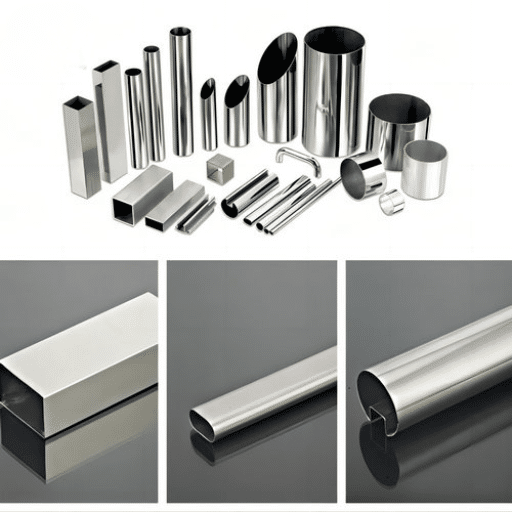
The BP Whiting refinery conducted a standard inspection when they received 316L seamless pipe in March 2023 because all certificates matched their specifications, and they confirmed the correct dimensions, and they found all MTR documents to be complete. Three months later, during hydrostatic testing of a new process line, three joints failed at 60 of design pressure. The analysis found that the chromium content was 14.2 percent, which differed from the 16-18 percent Mill Test Report specification. The “ASTM-certified” pipe turned out to be fake, which resulted in $890000 replacement costs, schedule delays, and safety investigations that traced back to one decision, which involved sourcing from a Chinese manufacturer without proper verification protocols.
You must choose between two ways to obtain stainless steel when you search for suppliers from China. Chinese manufacturers provide competitive prices together with their ability to produce large volumes and their development of advanced quality control systems; however, the market includes suppliers who focus on reducing expenses instead of following regulatory requirements. Companies that want to identify trustworthy business partners and avoid unproductive relationships need to base their decisions on operational assessment systems, which help them differentiate between qualified manufacturers and untrustworthy candidates.
The guide implements that assessment method. The process of the guide shows you how to find Chinese stainless steel manufacturers who operate legally and establish their product standards through quality assessment. The guide helps you evaluate production capacity while protecting your project through procurement process design. The principles apply to you when you need to specify pipe for an EPC contract, source fittings for maintenance inventory, or evaluate manufacturers for a long-term supply agreement.
Why Source Stainless Steel from China?

The Wenzhou Manufacturing Advantage
Wenzhou City in Zhejiang Province produces more stainless steel pipe and tube than any other region in China—and arguably more than any single metropolitan area globally. The Lantian Industrial Zone in Longwan District contains over 200 manufacturers who produce stainless steel products which include standard 304 pipe and super duplex seamless tube used for offshore applications and maintained by Zhongzheng operations.
The supply chain benefits from this concentration because it creates actual advantages. Major Chinese stainless steel mills such as Tsingshan and TISCO operate distribution hubs which separate 50 kilometers from their raw material supply points. The area provides specialized equipment for electropolishing and bright annealing and precision drawing to support local manufacturing activities. Stainless steel export operations have achieved efficiency through optimized processes at freight forwarders and container packing facilities and export logistics providers. International buyers benefit from this development because they receive shorter lead times and competitive pricing and they can choose manufacturers who specialize in stainless steel production instead of general metal manufacturing.
Cost Structure Without Compromising Quality
The competitive advantage that Chinese stainless steel production facilities hold over their competitors results from their operational efficiency methods. The Wenzhou area maintains two skilled manufacturing job categories which pay workers 40 to 60 percent less than employers in Europe and North America. Western manufacturers face transportation expenses when they need to bring in additional materials from distant suppliers, but the centralized supply network in their operations removes this cost burden. The equipment in manufacturing facilities achieves higher operational efficiency because they can produce between 5000 and 10000 tons every year, which smaller businesses cannot accomplish.
The manufacturers achieved cost reductions while maintaining all their quality requirements. The company manufactures its products according to ASTM A312 and ASME B36.19 and EN 10216-5 standards while providing documentation that EPC contractors accept without qualification exceptions. The testing equipment, quality systems, and technical expertise investments made by manufacturers indicate their ability to meet international standards.
Production Capacity and Scale Benefits
Chinese manufacturers can supply materials needed for large projects because their production capabilities exceed what local vendors can deliver. Your supply chain management process becomes simpler when one approved manufacturer produces seamless piping products, welded piping products, piping components, flanges, and valves from a single facility. Chinese manufacturers with flexible production lines can deliver all 500 tons of the needed 316L seamless pipe that your project requires in 47 different diameter and wall thickness combinations without delivering partial shipments, which would disrupt your project schedule.
What Makes a Qualified Stainless Steel Manufacturer?

Essential Certifications
A qualified stainless steel manufacturer in China maintains certifications that demonstrate systematic quality management and standard compliance. These certifications fall into three categories:
Quality Management Systems: The ISO 9001 certification shows that the manufacturer maintains a documented quality management system which includes established procedures for procurement production control inspection and corrective action. International buyers use ISO 9001 as a fundamental requirement which demonstrates that manufacturers implement systematic methods instead of unstructured approaches. You need to check whether your product categories fall within the certification scope because certain manufacturers possess ISO 9001 certification for general metal products but lack certification for pressure-rated pipe and tube.
Standard Compliance Documentation: ISO certification does not enable organizations to declare their compliance with ASTM ASME and EN standards through self-declaration. Manufacturers who meet requirements must create written procedures that match particular standards which include ASTM A312 for seamless pipe ASTM A790 for duplex and ASME B16.9 for fittings. Request a sample Mill Test Report (MTR) before placing orders—legitimate manufacturers provide these readily, with detailed chemical composition, mechanical properties, and heat treatment records.
Industry-Specific Certifications: Your application requirements determine which additional certifications you require. NACE MR0175 compliance for oil and gas sour service (H2S environments) ASME BPE for pharmaceutical applications or PED (Pressure Equipment Directive) compliance for European projects. Not all Chinese manufacturers maintain these specialized certifications—verify availability for your specific requirements.
Production Equipment and Testing Infrastructure
The testing facilities of manufacturers with certification and those whose certification remains uncertain create an observable divide between these two groups. Multiple production stages require verification of high-quality stainless steel which depends on particular testing equipment.
Chemical Composition Verification: The imported optical emission spectrometers (OES) serve as the chemical analysis standard for chemical analysis. The brands Bruker Thermo Fisher and Oxford Instruments provide measurement accuracy up to 0.001% for essential elements which include chromium and nickel and molybdenum. Manufacturers need to provide their operating spectrometer models together with their latest calibration date information. Manufacturers who cannot name their equipment or provide calibration certificates warrant scrutiny.
Non-Destructive Testing (NDT): Ultrasonic flaw detection identifies internal defects—seams, laps, inclusions—that visual inspection cannot detect. The qualified manufacturers execute ultrasonic testing on all seamless pipe and tube systems. Eddy current testing provides alternative NDT for smaller diameter tubing. Request documentation of NDT procedures and acceptance criteria.
Hydrostatic Pressure Testing: Every pressure-rated pipe needs hydrostatic testing to confirm its structural integrity. The qualified manufacturers conduct tests at standard pressure levels which apply to their respective industries. The test pressure together with the holding time and acceptance criteria needs to follow standard requirements.
Export Experience and International Client Portfolio
The manufacturers who operate their international business with extensive export knowledge understand the international procurement standards. The inspectors at third-party inspection (TPI) agencies including SGS and Bureau Veritas and TÜV have received their responses from the company. The team possesses knowledge about all required documentation packages which EPC contractors need to submit. The organization can deliver client testimonials which demonstrate their expertise through actual projects completed in your particular industry and geographic area.
The exporter needs to provide details about their export activities. The exporter needs to specify both their regular shipping destinations and their target markets. The company needs to provide their current client contact details for their clients located in your service area. Manufacturers who possess authentic international business experience will answer these inquiries while the manufacturers who provide noncommittal answers will create trust problems.
How to Verify Chinese Stainless Steel Manufacturer Quality

The Factory Audit Checklist
Whether you conduct the audit personally, engage a third-party inspection agency, or request detailed documentation, evaluate manufacturers against these 15 critical points:
| Audit Point | What to Verify | Red Flags |
|---|---|---|
| 1. Business License | Valid registration, scope includes stainless steel manufacturing | Vague scope, trading company rather than manufacturer |
| 2. ISO 9001 Certification | Current certificate, scope covers your products | Expired certificate, scope excludes pipe/tube |
| 3. Production Equipment | Seamless pipe mills, welding lines, heat treatment furnaces | No visible production equipment (trading company) |
| 4. Spectrometer | Brand, model, calibration records | No spectrometer; outdated equipment; no calibration |
| 5. NDT Equipment | Ultrasonic flaw detectors, calibration status | No NDT capability; equipment not calibrated |
| 6. Hydrostatic Test Equipment | Test pumps, pressure gauges, procedure documentation | No hydrostatic testing; informal procedures |
| 7. Dimensional Inspection | Calipers, micrometers, wall thickness gauges | No inspection equipment; uncalibrated instruments |
| 8. Raw Material Storage | Organized inventory, heat segregation, identification | Mixed heats without segregation; poor organization |
| 9. In-Process Control | Work instructions, inspection points, non-conformance system | No documented procedures; no inspection records |
| 10. Finished Goods Storage | Protection from contamination, proper marking | Rusty or damaged inventory; incorrect marking |
| 11. Documentation System | MTR templates, traceability procedures, record retention | No MTR samples; cannot explain traceability |
| 12. Technical Staff | Metallurgical engineers, QC inspectors, certifications | No technical staff; cannot answer specification questions |
| 13. Export Experience | Shipping records, client references, TPI history | No export experience; no international references |
| 14. Third-Party Inspection Support | TPI coordination procedures, inspector accommodation | Refuses TPI; no experience with inspection agencies |
| 15. Financial Stability | Registered capital, facility investment, equipment age | Recently established; minimal capital; old equipment |
Manufacturers scoring positively on 12+ of these points typically represent reliable partners. Those failing on multiple critical items (spectrometry, NDT, hydrostatic testing) pose unacceptable risks for pressure-rated applications.
Spectrographic Analysis: Verifying Chemical Composition
The most common quality failure in stainless steel sourcing is material substitution—delivering 304 instead of 316L, or providing off-grade material with incorrect chemistry. Spectrographic analysis prevents this.
Qualified manufacturers perform optical emission spectrometry (OES) on every heat of raw material before production begins. The spectrometer vaporizes a small sample of metal and analyzes the light spectrum to determine exact chemical composition—chromium, nickel, molybdenum, carbon, manganese, and trace elements. Results are compared against specification limits for the ordered grade.
When evaluating manufacturers, request a sample MTR showing chemical composition. Verify that the reported values fall within specification ranges for your grade. For 316L, chromium should read 16.0-18.0%, nickel 10.0-14.0%, molybdenum 2.0-3.0%, carbon maximum 0.03%. Values outside these ranges indicate either testing errors or material misidentification.
Documentation Review: Reading an MTR Correctly
The Mill Test Report (MTR) serves as your primary quality verification document. A complete MTR for stainless steel pipe should include:
Heat Identification: Heat number, melt number, or cast number that enables traceability to the original mill production batch. This number should appear on product markings and enable correlation between MTR and physical material.
Chemical Composition: Percentage values for all specified elements—chromium, nickel, molybdenum, carbon, manganese, silicon, phosphorus, sulfur, and nitrogen (for duplex grades). Compare against specification limits for your ordered grade.
Mechanical Properties: Tensile strength (minimum 75 ksi for ASTM A312 316L), yield strength (minimum 30 ksi), and elongation (minimum 35%). These values demonstrate the material was properly processed and heat-treated.
Heat Treatment Records: Temperature, time, cooling method for solution annealing. Proper heat treatment ensures carbide dissolution and corrosion resistance.
Hydrostatic Test Results: Test pressure, holding time, and acceptance confirmation. For ASTM A312, test pressure typically equals 1.5x design pressure based on specified wall thickness.
Dimensional Inspection: Actual measured values for outer diameter, wall thickness, and length compared against specified tolerances.
Standard Compliance Statement: Explicit confirmation that the product conforms to the specified standard (ASTM A312, ASTM A790, etc.).
Understanding Chinese Stainless Steel Production Capabilities
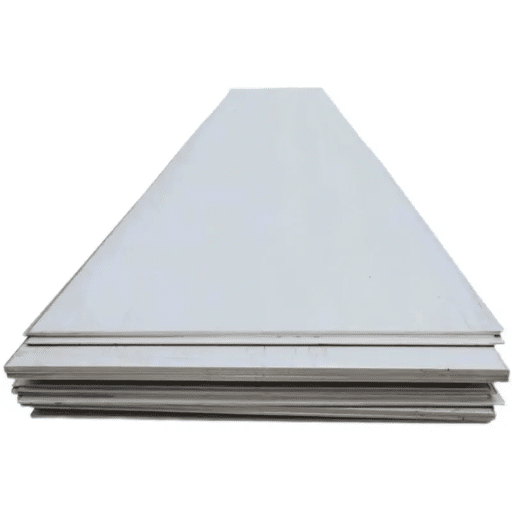
Seamless vs. Welded Pipe Manufacturing
Chinese manufacturers like Zhongzheng operate both seamless and welded production lines, each with distinct capabilities and applications.
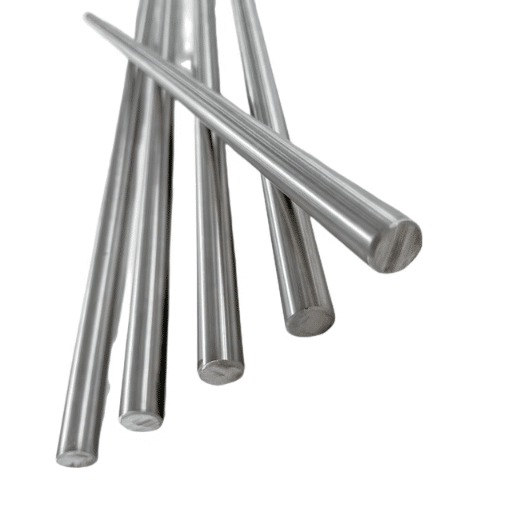
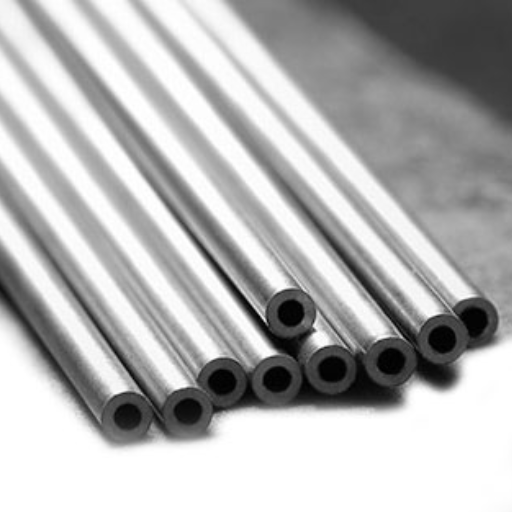
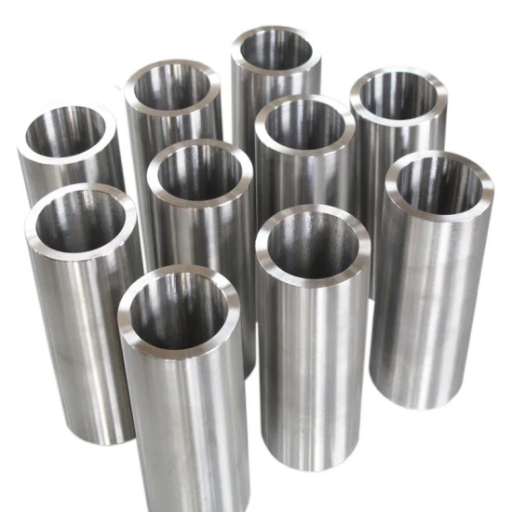
Seamless Pipe Production begins with solid steel billets which are heated to their forging temperature, and then undergo both piercing and elongation through hot rolling or extrusion processes. The next step involves cold drawing which creates exact specifications for both dimensions and surface finish. Seamless pipe provides enhanced pressure capacity and structural strength because it lacks weld seams which create potential failure points. The Chinese seamless production facilities manufacture pipes with outer diameters from 6mm to 610mm and wall thicknesses that range from Sch 5S to Sch XXS, using materials that include 304/L and super duplex S32750.
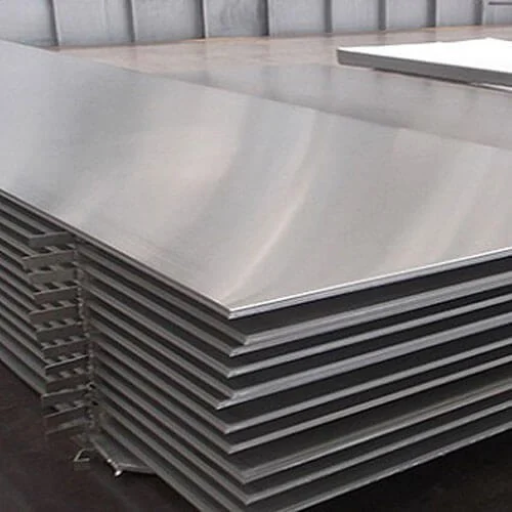
Welded Pipe Production starts with stainless steel strip or plate which manufacturing processes transform into cylindrical shape through TIG (GTAW) and plasma and high-frequency welding methods. Modern Chinese welded pipe meets ASTM A312 and A778 requirements for many applications, offering cost advantages of 20-40% compared to seamless. Welded pipe suits lower-pressure applications which require larger diameters that exceed 24″ NPS and it applies to situations where inspectors can check the welded joints for strength.
Grade Range: From 304 to Super Duplex S32750
Leading Chinese manufacturers cover the full stainless steel spectrum:
Austenitic Grades: The combination of 304/L and 316/L stainless steel grades provides suitable material properties for producing common products which require protection against general corrosion and food processing and chemical industry applications. The 321 and 347 grades provide stabilized materials which operate reliably at temperatures above 400°C. The 310S alloy functions as a material which can withstand extreme temperature conditions up to 1150°C.
Duplex Stainless Steels: The UNS S31803/S32205 duplex steel grade known as Duplex 2205 delivers better strength and protection against chloride corrosion than 316L because it achieves a Pitting Resistance Equivalent Number (PREN) of 35+. The Chinese manufacturers with advanced heat treatment systems produce duplex pipes which meet the ASTM A790 specifications.
Super Duplex: The UNS S32750 grade known as 2507 and the S32760 grade provide PREN values which surpass 40 necessary for use in offshore seawater environments and sour gas (H2S) conditions. The grades demand exact control of their heat treatment process together with detailed evaluation which specialized Chinese manufacturers can provide but most manufacturers cannot deliver.
Custom Manufacturing and OEM Capabilities
Beyond standard catalogue items, qualified Chinese manufacturers accommodate custom requirements:
Non-Standard Dimensions:The first category requires product dimensions which include outer diameters and custom wall thicknesses and precise cut lengths. The production process needs both production capacity and technical assessment to determine its manufacturing capabilities.
Special Surface Finishes: The electropolished tubing presents an Ra value of 0.4μm or lower for its interior surface which serves both pharmaceutical and semiconductor industries. The instrument tubing uses a bright annealed finish whereas industrial pipes require descaled surfaces which use an annealed and pickled A&P finish.
Specialized Testing: The testing requires additional NDT methods and impact tests at particular temperatures and intergranular corrosion tests according to ASTM A262 Practice E and ferrite content tests for duplex grades.
Procurement Best Practices for China Sourcing

Structuring Your RFQ for Accurate Quotes
The quality of quotes you receive correlates directly with the quality of your Request for Quotation. Structure RFQs to include:
Complete Technical Specification: Standard (ASTM A312, A790, etc.), grade (316L, S32750, etc.), outer diameter, wall thickness or schedule, length requirements, and quantity. Include any special requirements: heat treatment, surface finish, NDT level, or third-party inspection.
Documentation Requirements: Specify MTR content, additional test reports needed, and certification format (EN 10204 3.1, 3.2, etc.). Clear documentation requirements prevent disputes after order placement.
Delivery Terms: Required delivery date, destination port, and Incoterms preference (FOB, CIF, DAP). Chinese manufacturers work with established freight forwarders but need clear guidance on your logistics preferences.
Quality and Inspection Requirements: Specify any third-party inspection requirements, acceptance criteria, or witnessing requirements. Manufacturers factor inspection costs and scheduling into their quotations.
Evaluating Lead Times and Production Schedules
Standard lead times from qualified Chinese manufacturers range from 30-45 days for common grades and sizes. Specialty grades (super duplex, electropolished) or large quantities may extend to 60-90 days. When evaluating lead time quotations:
Confirm Start Point: Does the lead time start from order confirmation, deposit receipt, or raw material availability? Clarify this to avoid schedule misunderstandings.
Understand Production Scheduling: Manufacturers with continuous production lines for standard products maintain shorter lead times than those scheduling custom production runs. Ask about production capacity and current backlog.
Plan for Inspection Time: If third-party inspection is required, add 5-10 days to the production schedule for inspection coordination, witnessing, and report issuance.
Third-Party Inspection Arrangements
The first-time supplier relationship needs critical application work to be done through third-party testing which includes both testing observation and document verification. The main testing organizations which operate in China include SGS Bureau Veritas TÜV Rheinland and Lloyds Register.
Inspection Scope: Define what the inspector will witness—chemical analysis hydrostatic testing dimensional inspection visual examination or documentation review. Organizations need to conduct comprehensive inspections which deliver maximum assurance because sample inspections decrease operating expenses while still providing essential supervision.
Timing Coordination: The manufacturer needs to schedule inspection before the shipment date while providing enough time for production completion and inspection notification. Your manufacturer needs to work with you to create inspection schedules and establish main channels of communication.
Documentation Review: The inspector needs to confirm that the MTRs match the inspected product and the test results meet specification requirements while maintaining traceability from raw material to finished product.
Red Flags: Warning Signs of Unreliable Manufacturers

Certification Claims Without Documentation
Legitimate manufacturers provide certification copies promptly. Be wary of:
- ISO certificates that cannot be verified through the issuing body
- Standard compliance claims without supporting MTR samples
- Expired certifications presented as current
- Certification scopes that don’t cover your product category
Unrealistic Pricing and Lead Time Promises
If pricing seems too good to be true, investigate carefully. Market prices for stainless steel raw materials are relatively transparent—significant deviations below market pricing suggest material substitution, reduced wall thickness, or skipped testing. Similarly, lead times significantly shorter than competitors may indicate:
- No actual production (trading company reselling standard stock)
- Skipped quality testing
- Overcommitment with intention to delay later
Communication and Technical Response Gaps
Qualified manufacturers respond to technical inquiries with specific, accurate information. Red flags include:
- Vague responses to specification questions (“we can do any standard”)
- Inability to explain testing procedures or equipment
- No technical staff available for engineering discussions
- Responses that suggest misunderstanding of your requirements
Quality Inconsistency Patterns
For ongoing relationships, monitor for quality drift:
- Chemical composition values that vary significantly between heats
- Dimensional tolerances trending toward limits
- Documentation errors or missing information
- Pressure test failures or customer complaints
Establish clear acceptance criteria upfront, and don’t hesitate to request corrective action when deviations occur. Reliable manufacturers welcome feedback and implement improvements; questionable suppliers dismiss concerns or make unfulfilled promises.
Zhongzheng: ASTM-Certified Stainless Steel Manufacturing in Wenzhou

Manufacturing Infrastructure and QC Equipment
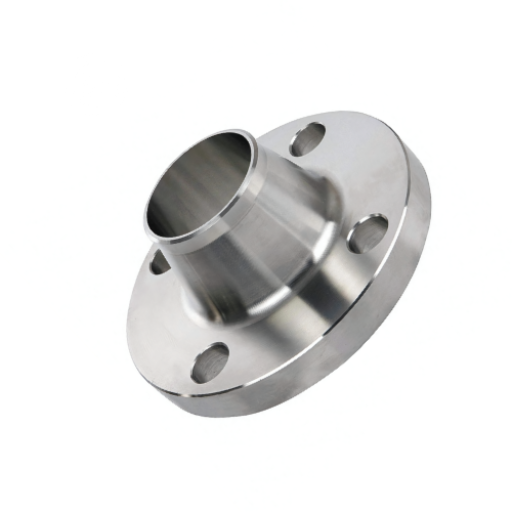
Zhongzheng operates from the Lantian Industrial Zone in Longwan District, Wenzhou—at the center of China’s stainless steel manufacturing region. Our facility houses dedicated production lines for seamless pipe, welded pipe, precision tube, and specialty products including electropolished tubing and heat exchanger tube.
Our quality control infrastructure includes:
- Imported optical emission spectrometers for chemical composition verification of every raw material heat
- Ultrasonic flaw detection systems providing 100% NDT coverage on seamless products
- Hydraulic pressure testing equipment with calibrated pressure gauges and documented test procedures
- Dimensional inspection stations with calibrated measuring instruments traceable to national standards
- Surface finish measurement equipment for electropolished and bright annealed products
Documentation Package and MTR Standards
Every Zhongzheng shipment includes comprehensive documentation:
- Mill Test Reports with full chemical composition, mechanical properties, heat treatment records, and hydrostatic test results
- Dimensional inspection reports verifying OD, wall thickness, length, and tolerance compliance
- Standard compliance certificates confirming conformance to specified ASTM, ASME, or EN standards
- Material traceability documentation linking finished product to raw material heat number
For projects requiring enhanced documentation, we provide EN 10204 3.2 certificates (with third-party inspector verification), NACE MR0175 compliance documentation, and customized test reports aligned with your project’s quality plan.
Export Experience and Third-Party Inspection Support
Zhongzheng serves clients across petroleum, chemical, power generation, food processing, and pharmaceutical industries worldwide. We maintain established procedures for:
- Third-party inspection coordination with SGS, Bureau Veritas, TÜV, and project-specified agencies
- Export packaging to international standards—waterproof wrapping, wooden crating, seaworthy bundling
- Documentation packages meeting EPC contractor requirements
- Phased delivery scheduling aligned with project construction milestones
Our technical team responds to inquiries within 24 hours, providing specification clarification, grade selection guidance, and application engineering support. We welcome client audits and third-party inspections as standard practice—not exceptions.
Frequently Asked Questions
Are Chinese stainless steel pipes good quality?
Chinese manufacturers supply 55 percent of world stainless steel production while their top companies operate advanced testing centers which include international standard testing equipment and maintain complete ASTM and ASME testing compliance through their established quality control processes. Companies that meet ISO 9001 certification standards must pass audits while providing complete material test reports to enable third-party verification of their operations. The Chinese manufacturing industry produces defects through trading companies which do not operate manufacturing facilities and through manufacturers who skip necessary testing procedures.
How do I find a reliable stainless steel manufacturer in China?
First step requires you to check manufacturing credentials through three documents which are valid business license and ISO 9001 certification and records of production equipment. Request sample MTRs and evaluate their completeness and accuracy. The organization needs to verify its export history while sharing client contacts as references. For essential operations, you should either perform a factory inspection yourself or hire an independent inspection organization to do it. The trustworthy manufacturers maintain open operations while their suspicious customers fail to share records which indicates operational difficulties.
What certifications should a Chinese stainless steel manufacturer have?
The basic certifications required for your business operations include ISO 9001 certification which corresponds with your quality management system and necessary certification for each applicable standard which includes ASTM A312 and A790 certification according to material test reports and relevant industrial certifications which apply to your particular use case which includes NACE MR0175 for oil and gas and ASME BPE for pharmaceutical and PED certification for European projects. You need to check that certificates remain active and include your particular product types. The history of third-party inspections which include respected organizations such as SGS and Bureau Veritas and TÜV offers additional evidence of verification.
How long does it take to get stainless steel from China?
The standard lead time for common grades and sizes which includes production and inspection and export preparation requires 30 to 45 days. The delivery time for specialty grades with custom dimensions or large quantities reaches 60 to 90 days. The ocean freight process requires an additional 2 to 4 weeks based on the selected destination. The production schedule requires an additional 5 to 10 days for third-party inspection. Manufacturers who meet qualification criteria provide verified lead times during the quotation process and continue to share schedule updates throughout the manufacturing process.
What is Wenzhou famous for in stainless steel manufacturing?
Wenzhou City in Zhejiang Province serves as China’s primary manufacturing hub for stainless steel pipes and tubes and fittings. The Longwan District contains more than 200 manufacturers who create products which range from standard 304 pipe to super duplex seamless tube for offshore applications. The supply chain advantages emerge from the concentration of raw material distribution hubs and specialized equipment providers and export logistics infrastructure which supports stainless steel operations. The manufacturers in Wenzhou produce a major portion of the worldwide stainless steel piping export market.
What is the process to get a third-party inspection for Chinese stainless steel products?
You must select an accredited inspection agency from SGS, Bureau Veritas, TÜV, or Lloyds Register and create inspection scope which includes chemical analysis, hydrostatic testing, and dimensional inspection, or documentation review. The manufacturer needs to notify the inspector about the testing readiness of their production work. The inspector observes specific tests which he conducts, MTRs against actual product. The majority of Chinese manufacturers who meet qualification standards maintain established procedures for TPI coordination and consider inspection as a typical practice.
What is EN 10204 3.1 certification?
The EN 10204 3.1 European standard for material certification requires manufacturers to use their authorized inspection representative who works outside the manufacturing department to confirm test outcomes. The testing results provide proof that certified experts conducted testing operations and assessment procedures through independent work that did not involve production duties. The standard EN 10204 3.2 provides higher verification through third-party inspectors who authenticate their findings. The majority of EPC projects mandate either 3.1 or 3.2 certification for all pressure-rated materials. The material test report must identify the certification type through its official name and show both the inspector’s signature and his professional credentials.
How do I verify a Mill Test Report is genuine?
The heat number on the MTR needs to be checked against the actual product markings. The verification process requires chemical composition values to be checked against specification ranges of the ordered grade. The verification process requires testing results to be compared against established minimum standards which include tensile strength and yield strength and elongation. The test dates need to be checked for their logical connection to both production and shipment timing. The original mill certificate needs to be requested from the raw material supplier for extra authentication. Reputable manufacturers maintain traceability records and can provide this documentation. The material requires further examination because the MTR contains incomplete or conflicting information.
Conclusion: Making the Right Sourcing Decision
Sourcing stainless steel from China offers compelling advantages: competitive pricing, extensive production capacity, and increasingly sophisticated quality systems. But realizing these advantages requires systematic manufacturer evaluation—not guesswork or price-only comparison.
The framework in this guide protects your project:
- Verify manufacturing credentials through ISO certification, equipment inspection, and documentation review
- Confirm testing capabilities—spectrometry, NDT, and hydrostatic testing are non-negotiable for pressure-rated applications
- Audit systematically using the 15-point checklist to identify qualified manufacturers
- Structure procurement properly with clear specifications, documentation requirements, and quality acceptance criteria
- Engage third-party inspection for critical applications or first-time supplier relationships
The $890,000 failure at BP Whiting—and countless similar incidents—stemmed from accepting documentation at face value without verification. Qualified manufacturers like Zhongzheng welcome scrutiny because our quality systems withstand inspection. The facility conducts spectrographic verification for every heat material that enters its premises. The facility conducts ultrasonic testing for every seamless pipe. The facility conducts hydrostatic testing for every pressure-rated product. The MTR we supply shows the actual content of the pipe through our precise measuring and testing process.
Do you want to obtain stainless steel from a certified manufacturer? Your specifications should include standard and grade and dimensions and quantity which our technical team will use to check material availability and provide price information and lead time details within 24 hours. You can request a sample MTR and inquire about our third-party inspection services and you can book a facility inspection. The location of our company is Lantian Industrial Zone in Longwan District of Wenzhou and we are prepared to show manufacturers the reasons why our company earns trust from EPC contractors and project engineers across the globe.