Inconel 625 welding is straightforward in principle and unforgiving in practice. Use matching nickel filler (ERNiCrMo-3 wire or ENiCrMo-3 electrode), keep heat input low at a target below 1.2 kJ/mm, control interpass temperature, and start from clean, verified base metal. For corrosion service, Inconel 625 needs no preheat and no post-weld heat treatment, because it is a solid-solution alloy that never has to be aged to reach its strength.
That last fact is what makes 625 one of the most weldable nickel superalloys. It’s also why the failures that do occur rarely come from the alloy itself. They come from the filler someone grabbed off the wrong shelf, a carbon-steel brush, or a base metal that was never actually 625.
In 2024, a shop welding a 625 spool into a desalination line ran out of ERNiCrMo-3 wire mid-shift. A fitter reached for ER316L, the same filler the crew used on the 316L headers next door. The root looked fine, passed visual, passed radiography.
It failed the corrosion test three weeks later. The weld metal matched 316L, not 625, and it could not resist the chloride service it was built for. The fix was expensive: cut out the joint, re-order wire, re-qualify, re-weld. A matching filler that cost a few dollars more per kilo would have prevented it.
This guide is for welding engineers, fabrication supervisors, and QA/QC inspectors who need a qualified 625 welding procedure, and for procurement engineers verifying that 625 pipe, tube, or fittings will weld as specified. You’ll get filler-metal selection and handling, process choices with starting parameters, heat input and interpass control, gas and joint-prep detail, the defects and their causes, dissimilar joints and overlay, the WPS/PQR route, and how to verify the base metal before the arc is struck. For the material specification itself, our Inconel 625 pipe specifications sit one level up; for the wider family, start with our complete nickel alloy pipe guide.
Key Takeaways
- Weld 625 with matching nickel filler: ERNiCrMo-3 wire (AWS A5.14) for TIG/MIG and ENiCrMo-3 electrode (AWS A5.11) for stick. Stainless fillers such as ER316L and ER308L are not acceptable and are a common, consequential field error.
- Keep heat input low, targeting below 1.2 kJ/mm with stringer beads. Low heat input limits niobium and molybdenum segregation and the brittle Laves phase it produces.
- Maximum interpass temperature is a range by source, roughly 93 / 120 / 150 °C, and tighter (around 100 °C) for sour service and 9% nickel steel. Publish the basis, not one universal number.
- No preheat and no post-weld heat treatment are required for corrosion service. Optional solution annealing near 1,060–1,150 °C is reserved for critical nuclear, aerospace, or sour-service components.
- Submerged-arc welding is not recommended, and magnetic particle testing does not apply because 625 is non-magnetic. Use argon back-purge on the root, penetrant testing, and radiography or ultrasonic testing for pressure-retaining welds.
Is Inconel 625 Weldable?
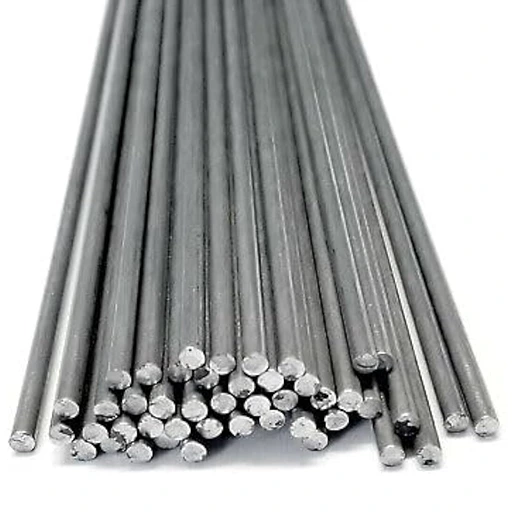
Yes. Inconel 625 is one of the most weldable nickel superalloys. Its strength comes from solid-solution strengthening, molybdenum and niobium dissolved in the nickel-chromium matrix, not from precipitation hardening, so the weld metal and heat-affected zone keep their strength and corrosion resistance as-welded. No aging treatment is required after welding, and the alloy tolerates weld repair well.
That single property explains why 625 is the default filler for dissimilar joints and the default overlay alloy across the nickel family. It also sets up the one process warning worth stating early: submerged-arc welding (SAW) is not recommended for 625. The high heat input and slow cooling of SAW promote the segregation and cracking that the rest of this procedure exists to prevent. This is the same weldability character as HASTELLOY X, and Haynes states the SAW caution directly.
There is no phase balance to manage here, unlike duplex. If your shop’s baseline is welding duplex stainless steel, where nitrogen and ferrite targets dominate, the logic is different: 625 has a single austenitic structure and its control levers are filler match, cleanliness, and heat input.
Filler Metal Selection: ERNiCrMo-3 and ENiCrMo-3
Filler selection is the first decision, and for 625 it is the least negotiable.
Why Matching Nickel Filler Is Mandatory
The base metal is roughly 58–61% nickel with 8–10% molybdenum and 3.15–4.15% niobium. A matching filler meets that chemistry; a stainless filler does not. ER316L and ER308L lack the nickel and molybdenum to match 625’s corrosion resistance, so the weld becomes the weakest point in a corrosion-resistant system. This is the field error from the introduction, and it recurs because the wire looks similar and the shop may already have it. It is not acceptable in chloride, seawater, or sour service.
GTAW and GMAW: ERNiCrMo-3
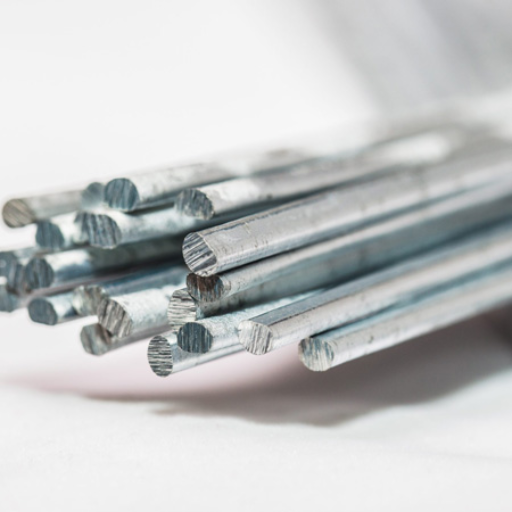
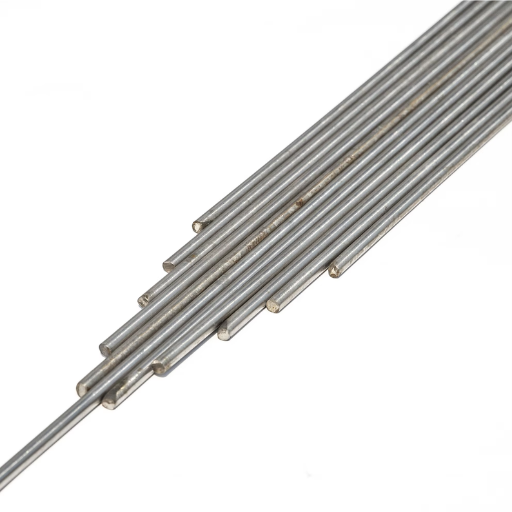
ERNiCrMo-3 (classified under AWS A5.14, also written S Ni 6625) is the standard matching wire for gas tungsten arc welding (TIG) and gas metal arc welding (MIG). Typical deposit chemistry is roughly 21–22% chromium, 8.5–9.3% molybdenum, and 3.3–3.5% niobium, with iron generally under 1–2%. It’s also the default filler for dissimilar joints, overlay, and root backing.
SMAW: ENiCrMo-3
For shielded metal arc welding (stick), use ENiCrMo-3 electrodes to AWS A5.11. These electrodes are moisture-sensitive, so store and bake them per the manufacturer’s recommendation; absorbed moisture drives porosity. Expect to run lower current than a carbon-steel electrode of the same diameter.
FCAW and Overlay Consumables
Flux-cored welding uses ENiCrMo-3T1 (classified under AWS A5.34), a rutile, fast-freezing flux that supports vertical-up progress with a wide arc for even penetration. The same ERNiCrMo-3 wire drives weld overlay, covered below. The Inconel 625 vs 718 welding difference matters here: 625 filler tolerates dilution and needs no aging, which 718 filler cannot match.
Inconel 625 Welding Processes: GTAW, GMAW, SMAW, and FCAW
Most arc processes apply to 625. Selection is about heat control and access, not weldability.
GTAW / TIG (First Choice)
Gas tungsten arc welding gives the finest heat control and is the first choice for thin wall, root passes, and precision joints. It’s the usual process for inconel 625 tig welding on tube and small-bore pipe.
GMAW / MIG (Fill, Cap, Overlay)
Gas metal arc welding suits fill and cap passes and is the standard process for overlay. Use spray or pulsed-spray transfer; avoid short-circuit transfer, which produces a cold, viscous pool and lack of fusion in nickel alloys.
SMAW / Stick (Field and Repair)
Shielded metal arc welding is the workhorse for field joints and repairs where wire feed is impractical. Keep the arc short and the passes as stringers.
FCAW
Flux-cored welding improves deposition rate for fill and vertical-up work, with consistent penetration from the fast-freezing slag.
What Not to Use
Submerged-arc welding is not recommended, per Haynes, because high heat input and slow cooling drive cracking. Oxyacetylene is never used; carbon pickup from the flame destroys corrosion resistance.
| Process | Filler | Starting parameters (verify and qualify) |
|---|---|---|
| GTAW | ERNiCrMo-3 | 1.6 mm rod ~80–130 A (1–3 mm wall); 3.2 mm rod ~150–220 A (6–12 mm); DCEN; 10–15 L/min argon |
| GMAW | ERNiCrMo-3 | 1.2 mm wire ~180–250 A, 24–30 V; travel 200–400 mm/min; spray or pulsed |
| SMAW | ENiCrMo-3 | 3.2 mm ~75–110 A; 4.0 mm ~80–140 A (lower than carbon-steel equivalents) |
| FCAW | ENiCrMo-3T1 | Per consumable datasheet; rutile fast-freeze slag |
| SAW | None | Not recommended for 625 |
These are starting points to be qualified before production use, not published settings.
Heat Input, Interpass Temperature, Preheat and PWHT
This is where 625 welds succeed or fail, because the thermal cycle decides how much niobium and molybdenum segregate.
Heat Input: Keep It Low
Target low heat input, commonly below 1.2 kJ/mm, applied with stringer beads and a short arc. The formula is Q = U · I · 60 / (v · 1000) in kJ/cm, where U is arc voltage, I is current, and v is travel speed. Low heat input limits the segregation of niobium and molybdenum, which otherwise forms the brittle, niobium-rich Laves phase on slow cooling. Present the target as a range with its basis, and confirm it against the qualified procedure.
Interpass Temperature
Maximum interpass temperature is a range by source, not one number, and this is worth stating plainly:
- HAYNES: below 93 °C (200 °F)
- Deutsche Nickel: below 120 °C
- VDM: at or below 150 °C
- Common published guidance: at or below 150 °C general, and at or below 100 °C for 9% nickel steel transitions and sour-service work
Monitor with thermocouples and let the joint cool between passes. The 550–850 °C window is the one to move through quickly; long dwell there embrittles the alloy.
Preheat: Generally Not Required
Preheat is generally not required for 625; room temperature is fine, and excessive preheat is counterproductive. The only justification is removing moisture or condensation in cold or humid conditions, limited to roughly 50–100 °C applied uniformly.
Post-Weld Heat Treatment: Generally Not Required
PWHT is generally not required for corrosion resistance or most applications, and there is no aging step, a key contrast with 718. Optional solution annealing near 1,060–1,150 °C dissolves Laves and delta phases for critical nuclear, aerospace, or sour-service components; that is a mill thermal treatment, not routine field stress relief. Stress relief may be specified for sour gas service under NACE MR0175 / ISO 15156. Avoid long service in the 550–850 °C range, where secondary-phase embrittlement occurs.
Need the parameter window confirmed for your joint? Send us your grade, OD × wall, welding process, and service medium, and our technical team will confirm the 625 welding parameters and base-material documentation within 24 hours.
Shielding and Backing Gas
Gas selection for 625 is about cleanliness and porosity control, not alloying.
- GTAW: 100% argon; argon–helium blends (for example argon with up to about 30% helium) for thicker sections. Do not add CO₂ or O₂.
- GMAW: argon-rich blends with spray or pulsed-spray transfer.
- Root back purge: argon, held until the root and first fill layer are complete. Without it, the root oxidizes and sugars, destroying the passive layer on the inside surface.
Do not add hydrogen or nitrogen to general 625 shielding gas. Iron and nickel cleanliness and porosity control govern here, which is the opposite of the nitrogen story in duplex welding.
Joint Preparation and Welding Technique
Cleanliness Is the Number-One Risk
Nickel alloys are sensitive to sulfur, phosphorus, lead, zinc, and iron contamination. Fingerprints, marking crayons, cutting fluid, or a brush previously used on carbon steel can all cause cracking or porosity. Use dedicated stainless-steel tools, degrease with a suitable chloride-free solvent (acetone or an approved cleaner) before and after brushing, and remove all scale, paint, penetrant residue, and corrosion products before welding.
Groove Design
Because the weld pool is viscous and sluggish, 625 wants wider, more open joints than an austenitic grade. A typical single-V uses a 60–75° included angle, a 2–3 mm root gap, and a 1–1.5 mm land; use a U-joint for heavy wall. Confirm the geometry against the qualified WPS.
Technique Rules
- Deposit stringer beads rather than weaving; keep the arc short and heat input low.
- Strike the arc only inside the joint. Stray arc strikes create defects and must be ground out.
- Tack with full gas shielding, and grind away tacks in single-sided welds where required.
- Clean each layer before depositing the next.
Common Inconel 625 Welding Defects and How to Avoid Them
Most 625 weld defects trace to a small set of root causes, each with a direct control:
| Defect | Cause | Prevention |
|---|---|---|
| Solidification (hot) cracking | Niobium/molybdenum segregation, high heat input, high restraint, contamination | Low heat input, stringer beads, correct filler, clean base metal, control restraint |
| Porosity | Contamination (sulfur, phosphorus, lead, zinc, oil), moisture in electrodes, poor shielding or back-purge | Clean surfaces, dry and baked consumables, adequate gas coverage, back-purge |
| Laves phase | Slow cooling or high heat input forming a brittle niobium-rich intermetallic | Control heat input and cooling rate; avoid over-thick passes |
| HAZ liquation cracking | Low-melting grain-boundary constituents in the heat-affected zone | Low heat input, controlled interpass temperature |
| Lack of fusion | Short-circuit transfer, low current, poor technique | Spray or pulsed transfer, correct parameters |
| Sensitization/chromium depletion | Improper thermal history in dissimilar or high-temperature service | Correct filler, avoid long high-temperature excursions |
For repairs, grind to sound metal, re-qualify the repair procedure where the code requires it, and keep every pass inside the qualified parameters.
Welding Inconel 625 to Other Metals (Dissimilar Joints)
625 is the alloy of choice for heterogeneous joints because its filler tolerates dilution and needs no aging.
625 to Carbon Steel
Use a buttering layer of ERNiCrMo-3 on the carbon-steel side, sometimes with stress relief applied to the steel before the final joining weld. This controls dilution and isolates the 625 joint from high-temperature exposure. Do not apply PWHT after the joining weld if it would embrittle the 625 side. Managing dilution is the whole game.
625 to Stainless Steel
For joints to 304 or 316L, matching ERNiCrMo-3 is standard. The filler’s higher nickel and molybdenum content bridges the two base metals without the martensite risk that appears when duplex meets carbon steel.
625 to 9% Nickel Steel and Cryogenic Service
Use ERNiCrMo-3 with an interpass temperature held at or below 100 °C; the same combination suits cryogenic service. For other high-nickel welding contexts, see welding Hastelloy C-276 and other nickel alloys.
Weld Overlay and Cladding with 625
ERNiCrMo-3 is the industry-standard overlay and cladding consumable on carbon and low-alloy steel, used to put a corrosion-resistant internal surface on a cheaper structural shell. A common application is internal cladding on API 5L Gr B line pipe for chloride or seawater service.
Typical automated GMAW or TIG cladding starts near 1.2 mm wire, pure argon at about 20 L/min, 22–24 V, 123–150 A, and 5–7 m/min wire feed, with heat input around 5.6–7.2 kJ/cm and dilution controlled to roughly 5–12%. These are starting points; qualify the overlay procedure for the specific substrate and service.
Qualifying the Inconel 625 Welding Procedure: WPS, PQR and Codes
Qualification is where parameter choices become evidence.
- ASME Section IX is the baseline for WPS, PQR, and WPQ qualification. Inconel 625 is P-No. 43.
- AWS A5.14 / SFA 5.14 classifies the wire (ERNiCrMo-3); AWS A5.11 the electrodes (ENiCrMo-3); AWS A5.34 the flux-cored consumables.
- AWS D10.11 guides root-pass welding of pipe without backing, useful for 625 root procedures.
- API RP 582 covers welding guidelines for corrosion-resistant alloys.
- NACE MR0175 / ISO 15156 governs sour service and adds hardness and condition limits, usually as a project requirement.
- EN ISO 15614-1 is the European qualification route.
On inspection: 625 is non-magnetic, so magnetic particle testing doesn’t apply. Use visual and dye penetrant testing, with radiography or ultrasonic testing for critical pressure-retaining welds. For the full standards index, see the full nickel alloy standards index.
Weldability Starts at the Mill: Verifying Your Inconel 625
The insight most 625 welding guides miss is that weldability is decided before the arc is struck. The condition and chemistry of the pipe you received set the ceiling on what any procedure can achieve.
What Makes 625 Weldable
Three variables are controlled at the mill, not in the fabrication shop: the correct grade and condition (Grade 1 versus Grade 2), a properly mill-annealed or solution-annealed structure, and clean, correct chemistry with niobium at 3.15–4.15% and molybdenum at 8.0–10.0%.
What to Demand in the MTR
When you source 625 for a welding program, the Mill Test Report (MTR) should state:
- The grade basis, UNS N06625.
- Spectrographically verified chemical composition, with niobium and molybdenum in range.
- The heat treatment condition (mill anneal or solution anneal, with the temperature).
- Heat-number traceability from melt to finished product.
Supplementary Verification
Add PMI (XRF or OES) on receipt, because 625 has visual look-alikes. A receiving inspector we worked with checked a shipment stencilled “625” against its paperwork and found the heat was actually Alloy 600, no niobium at all. The material was rejected before a single weld was made, avoiding a fabrication program that would have failed at the coupon stage.
This is where the mill matters. At Zhongzheng, every heat is spectrographically verified before it enters production, and finished pipe is ultrasonically flaw-detected and hydraulically proven before shipment, so the MTR reflects the physical material rather than a label. If your program depends on the base metal welding correctly, verify it the same way you verify the procedure.
Frequently Asked Questions
Is Inconel 625 weldable?
Yes. Inconel 625 is one of the most weldable nickel superalloys. It is solid-solution strengthened, so the weld metal and heat-affected zone retain their strength and corrosion resistance as-welded, with no aging treatment required.
What filler metal is used for welding Inconel 625?
Use ERNiCrMo-3 wire (AWS A5.14) for TIG and MIG, and ENiCrMo-3 electrode (AWS A5.11) for stick welding. For flux-cored welding, use ENiCrMo-3T1 under AWS A5.34.
Can you use stainless steel filler to weld Inconel 625?
No. ER316L, ER308L, and similar stainless fillers lack the nickel and molybdenum to match 625’s corrosion resistance. A matching nickel filler such as ERNiCrMo-3 is required, especially in chloride or sour service.
What is the heat input for welding Inconel 625?
Target low heat input, commonly below 1.2 kJ/mm, using stringer beads and a short arc. Low heat input limits niobium and molybdenum segregation and the brittle Laves phase that forms on slow cooling.
What is the maximum interpass temperature for Inconel 625?
Sources give a range: below 93 °C (HAYNES), below 120 °C (Deutsche Nickel), and at or below 150 °C (VDM). Hold at or below 100 °C for sour service and 9% nickel steel. Monitor with thermocouples and allow cooling between passes.
Do you need preheat to weld Inconel 625?
Generally no. Inconel 625 welds at room temperature. Preheat is only justified to remove moisture in cold or humid conditions, limited to roughly 50–100 °C applied uniformly.
Do you need post-weld heat treatment for Inconel 625?
Generally no. PWHT is not required for corrosion service, since 625 requires no aging. Optional solution annealing near 1,060–1,150 °C is reserved for critical nuclear, aerospace, or sour-service components.
Can you weld Inconel 625 to carbon steel?
Yes. Use a buttering layer of ERNiCrMo-3 on the carbon-steel side to control dilution, and avoid applying PWHT after the joining weld if it would embrittle the 625 side.
Why does Inconel 625 crack during welding?
Solidification cracking in 625 comes from niobium and molybdenum segregation under high heat input or high restraint, often worsened by contamination. Low heat input, stringer beads, the correct filler, and clean base metal prevent it.
Conclusion
Inconel 625 welding comes down to controlling four things: matching nickel filler, low heat input, interpass temperature, and a clean, verified base metal. Get those right and the weld keeps the strength and corrosion resistance that made you choose 625. Get them wrong, and the joint can pass visual inspection and radiography, then fail in service with nothing visible to warn you.
The second half of the equation is material. A 625 pipe with the wrong chemistry, the wrong condition, or the wrong grade label can’t be rescued by procedure alone. Verify the MTR before you weld, add PMI at receiving, and confirm the condition is correct.
Start with the ranges here as a working basis, qualify the procedure against ASME Section IX with 625 qualified as P-No. 43, and verify the base metal you received. Send us your application, grade, OD × wall, and welding process, and our technical team will confirm 625 pipe, tube, and fittings availability with full material documentation within 24 hours.