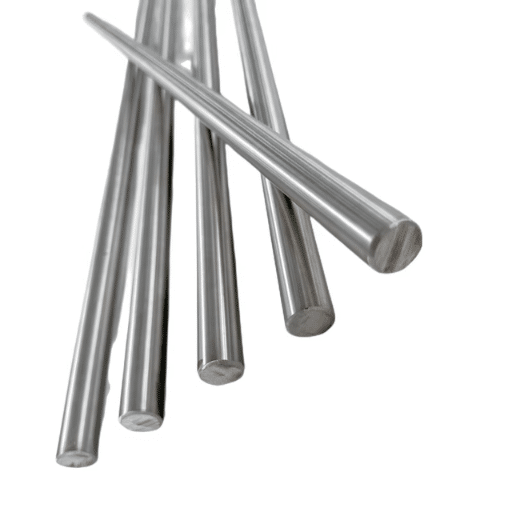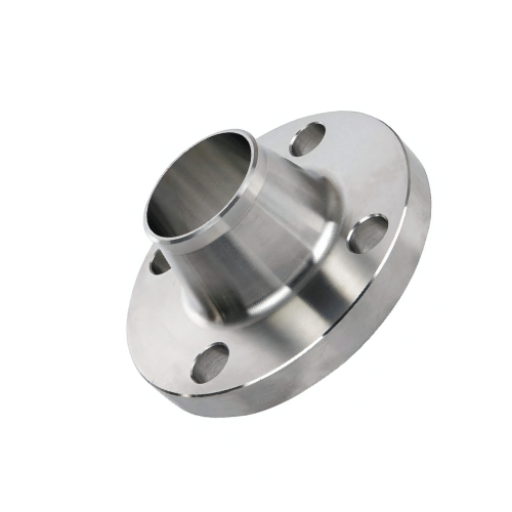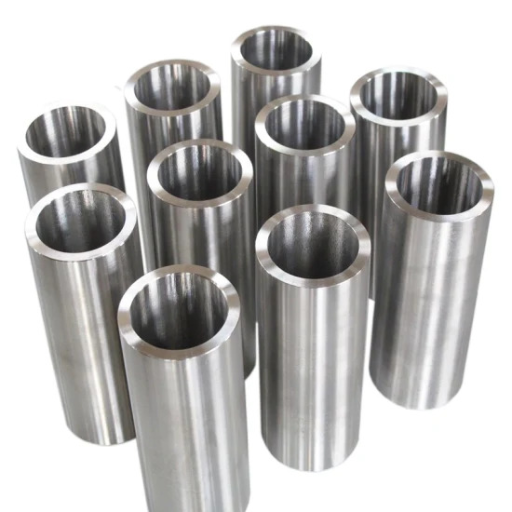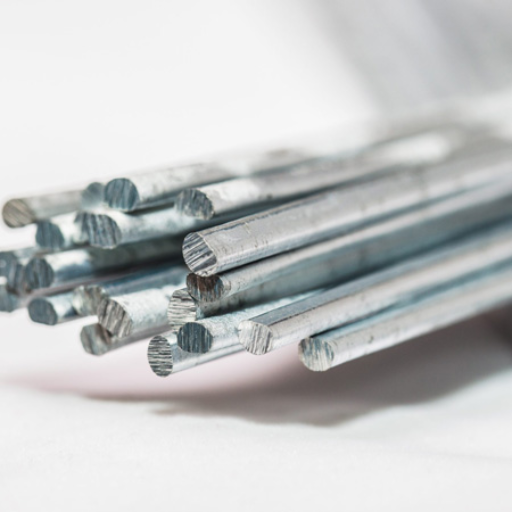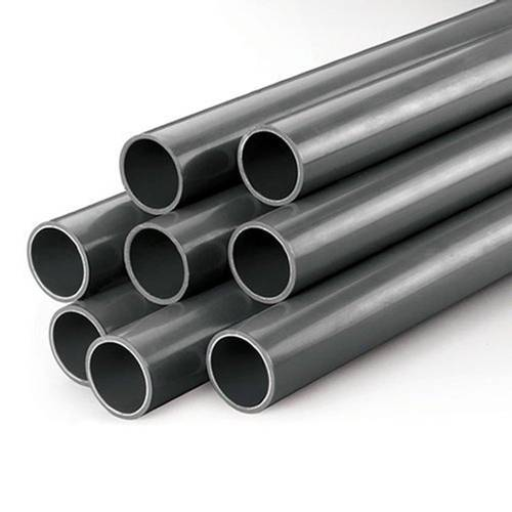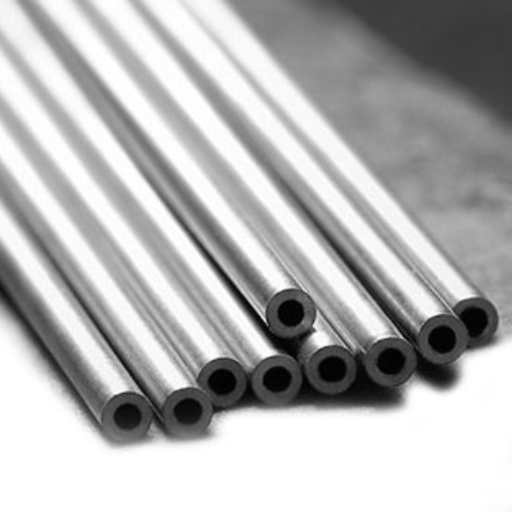
Inconel 625 tube is a seamless or welded tube made from the nickel-chromium-molybdenum-niobium alloy UNS N06625 (W.Nr. 2.4856). Seamless tube is supplied to ASTM B444 and welded tube to ASTM B704, ordered as an exact OD × wall pair rather than by pipe schedule. It is specified for heat exchanger bundles, instrumentation lines, capillary runs and aerospace plumbing where 316L, 904L and super duplex 2507 run out of corrosion allowance.
That definition is easy. The order is not.
In February 2025, Daniel, a project buyer for a Gulf Coast EPC, ordered 3,200 m of 25.4 mm “Inconel 625 tube, Schedule 40S, ASTM B705.” The mill shipped B705 welded pipe: correct alloy, valid MTR, wrong product. The tube would not fit the tubesheet, and the bundle was rebuilt six weeks late.
If you already know 625, the chemistry isn’t the hard part. This guide covers the decisions that reach the purchase order: which standard fits which form, whether Grade 1 or Grade 2 applies, which B704 class and NDT method to write, how to dimension a tube and a U-bend, and what the result costs per meter. For the alloy itself, our Inconel 625 pipe guide covers the metallurgy; our nickel alloy pipe guide places 625 against 825, C-276, and Monel.
Have a tube datasheet open? Send the OD × wall, length or U-bend geometry, service medium, temperature, pressure and required standard to our technical team. We’ll confirm form, Grade, NDT class, and documentation, and respond within 24 hours.
Key Takeaways
- ASTM B444 covers seamless pipe and tube only, B704 covers welded tube only, and B705 covers welded pipe only. A purchase order that confuses them can be rejected even when the alloy is correct.
- B704 Class 1 requires one NDT method; Class 2 requires both a leak test and an electric test. If the class is omitted, the mill may choose.
- Grade 2 is solution annealed, not aged, and has lower room-temperature yield than Grade 1 (276 MPa vs 414 MPa). It suits service above roughly 593 °C, not ambient strength.
- Tube is ordered as an exact OD × wall pair. “Schedule 40S tube” is a pipe specification applied to the wrong product.
- 2026 indicative pricing runs USD 60–95/kg for seamless tube at 25.4 × 2.11 mm and USD 35–65/kg for welded B704 tube, FOB China.
What Is Inconel 625 Tube?
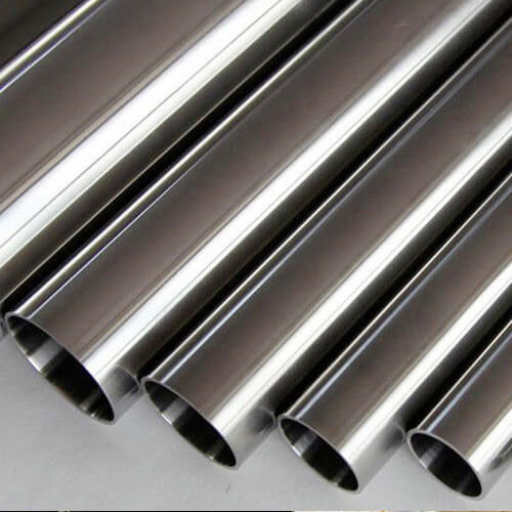
Inconel 625 tube is a seamless or welded tube made from UNS N06625, a nickel-chromium-molybdenum-niobium alloy with roughly 58–61% nickel, 20–23% chromium, 8–10% molybdenum and 3.15–4.15% niobium plus tantalum. It is supplied annealed or solution annealed, in exact OD × wall sizes, for corrosion-resistant and high-temperature service.
“Inconel 625,” “Alloy 625” and “625” name the same material. Inconel is a Special Metals trade name; Alloy 625 is the generic designation most mills use on certificates. The UNS number resolves any ambiguity.
Two properties drive most tube specifications. PREN runs 48–51, with seawater corrosion below 0.025 mm/year. The niobium-stabilized structure also holds strength where austenitic stainless steel creeps or cracks.
For tube buyers, the practical question isn’t what 625 is. It’s which version of the product you’re ordering.
Tube vs Pipe: The Purchasing Difference That Changes the Order
Pipe is sized by nominal pipe size and wall schedule; tube is sized by exact outside diameter and wall thickness. That difference changes the standard, the tolerance, the fittings and the inspection.
| Purchase attribute | Tube | Pipe |
|---|---|---|
| Sizing system | Exact OD × wall (e.g., 25.4 mm × 2.11 mm) | NPS + schedule (e.g., NPS 1, Sch 40S) |
| Dimensional standard | ASTM B751 (welded tube) or B829 (seamless, via B444) | ASME B36.19M |
| Typical joint | Tubesheet, compression fitting, U-bend | Welded, flanged, threaded |
| What OD tolerance controls | Fit in tubesheet hole or ferrule | Weld fit-up |
| Typical purchase line | “19.05 mm OD × 1.65 mm min wall, B704 Class 2” | “NPS 3/4, Schedule 40S, B705” |
“Schedule 40S tube” is not a standard product. Schedule numbers belong to pipe under ASME B36.19M. Weld a tube line into a piping specification, and the mill can reject the order or ship something that meets the cited standard but not the product you needed.
For tube, write the exact OD and wall every time. For a heat exchanger, add the wall basis (average or minimum) and the U-bend geometry. For instrumentation, add the OD tolerance the fitting manufacturer requires.
ASTM B444 vs B704 vs B705: Choosing the Right Standard
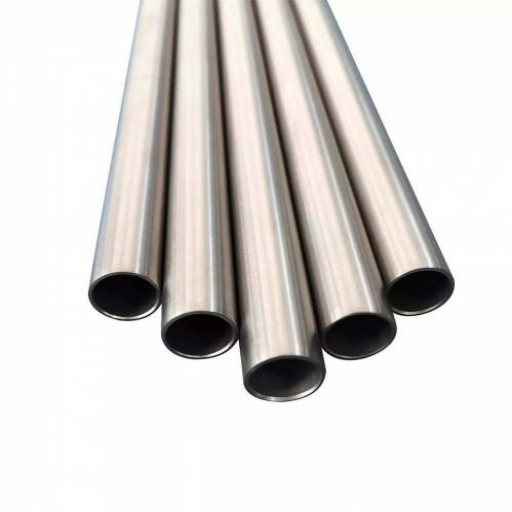
Inconel 625 tube specifications depend on form. Three ASTM standards cover 625 tubular product, and each covers a different form. Citing the wrong one is the most common technical error in 625 tube purchasing.
| Product form | Standard (current edition) | Scope |
|---|---|---|
| Seamless tube | ASTM B444 / ASME SB444 (B444-23) | Cold-worked seamless pipe and tube, UNS N06625; OD ≥ 3.2 mm, wall ≥ 0.38 mm; general requirements per B829 |
| Welded tube | ASTM B704 / ASME SB704 (B704-23) | Welded boiler, heat exchanger and condenser tube; OD 3.18–127 mm, wall 0.38–12.70 mm; dimensions per B751 |
| Welded pipe | ASTM B705 / ASME SB705 (B705-24) | Welded pipe, not tube; general requirements per B775 |
| Aerospace tube | SAE AMS 5581G (2022) | Seamless or welded 625 tubing, annealed; Type 2 welded is cold reduced after welding |
Three scope facts matter more than the rest:
- B444 is seamless only. Several supplier pages claim it covers welded tube. It does not.
- B704 is welded tube only. It does not cover seamless tube, and it does not cover pipe.
- B705 is welded pipe only. A quotation offering “B705 tube” has a loose description even if the product is usable pipe.
B829 governs general requirements for seamless product under B444, B751 governs welded tube dimensions under B704, and B775 governs welded pipe under B705. Do not interchange them.
ASTM B622 does not cover Inconel 625. Its alloy list stops short of N06625. Here is why B622 does not cover 625 and which standard to cite instead. For aerospace work, AMS 5581G adds 35% minimum elongation (versus 30% in B444/B704), a flammability test, and cold reduction after welding for Type 2 tube.
B704 Class 1 vs Class 2: The NDT Clause Buyers Forget
B704 has two examination classes, and they are not grades. They define how much non-destructive testing each piece receives.
| Class | NDT requirement |
|---|---|
| Class 1 | One of: hydrostatic test, pneumatic test, eddy current test, or ultrasonic test |
| Class 2 | Both a leak test (hydrostatic or pneumatic) and an electric test (eddy current or ultrasonic) |
If a purchase order omits the class and the test method, B704 permits the manufacturer to select. A mill can ship Class 1 with a single eddy-current pass, which is valid B704 product and may be far short of the end client’s datasheet.
In 2024, a Gujarat fabrication shop won a refinery cooler bundle. Ravi, the QC engineer, left the B704 class line blank, assuming the mill would choose the stricter option. It shipped Class 1 with eddy current only. The end client required Class 2, and re-testing 1,800 tubes took three weeks and about USD 14,000.
Specify Class 2 for critical heat exchanger service, sour service under NACE MR0175 / ISO 15156, high-pressure duty, and any bundle where a tube leak means a shutdown. Class 1 can be correct for lower-consequence work, but write it deliberately, not by omission.
Want to see what the test package should contain before you release an order? Request a sample MTR, PMI record and eddy-current report for an Inconel 625 tube lot from our technical team.
Seamless vs Welded Inconel 625 Tube
Inconel 625 seamless tube starts as a billet or hollow, then is cold worked and annealed to size. It has no longitudinal weld and is the usual callout when the order reads Inconel 625 tube ASTM B444 Grade 1. Inconel 625 welded tube is formed from strip, welded without filler metal, then either left as-welded or cold reduced and annealed to remove the weld bead.
| Decision factor | Seamless (B444) | Welded (B704) |
|---|---|---|
| Pressure and fatigue duty | Preferred for high pressure and cyclic service | Suitable where pressure and cycling are moderate |
| Sour service | Often mandatory for critical wells | Acceptable if Class 2 tested and hardness controlled |
| Corrosion risk at seam | None | Weld seam is a potential inspection and corrosion focus |
| Cost | 1.5–2× welded for the same size | Lower base cost, especially in large OD |
| Availability | Small-bore seamless is widely stocked | Large-diameter welded is more available |
| Best fit | Small-bore, high-pressure, sour, critical | Cost-sensitive bundles, larger OD, moderate duty |
Welded B704 tube is correct for much heat exchanger and condenser duty. The weld isn’t a defect; it’s a feature that must be examined and documented. Choose seamless when the service makes the seam a liability, not because it sounds stronger.
For weld procedure, filler selection and heat input, welding Inconel 625 covers those in detail.
Grade 1 vs Grade 2 for Tube
Both grades are defined in B444 and B704, and the difference surprises buyers who assume the higher number is stronger.
| Grade | Condition | Tensile min | Yield min (0.2%) | Elongation min |
|---|---|---|---|---|
| Grade 1 | Annealed | 827 MPa (120 ksi) | 414 MPa (60 ksi) | 30% |
| Grade 2 | Solution annealed, 1093 °C min (optional stabilization at 982 °C) | 690 MPa (100 ksi) | 276 MPa (40 ksi) | 30% |
Grade 1 is the annealed condition and the default for corrosion service. It delivers the higher room-temperature yield and is what most stock tube is.
Grade 2 is solution annealed and has lower room-temperature yield. Several supplier pages describe it as “solution annealed and aged” with higher strength, quoting around 150 ksi tensile. For B444 and B704 tube, that’s wrong. Grade 2 is not aged, and it isn’t a strength upgrade at ambient temperature.
Its purpose is elevated-temperature service. Above roughly 593 °C, creep and rupture strength govern design, and the solution-annealed structure performs better. Specify Grade 2 when the tube operates above that threshold for sustained periods.
Grade 2 is not a blanket upgrade. Long-term exposure above about 600 °C can embrittle 625 through phase precipitation, so design temperature and duration belong in the specification discussion. For the full reasoning, see the Inconel 625 pipe guide.
Sizes, Tolerances and the BWG System
Inconel 625 heat exchanger tube is usually ordered in a small set of ODs: 12.7, 15.9, 19.05, 22.2 and 25.4 mm. Wall thickness is commonly written in Birmingham Wire Gauge, still used across much of the industry.
| BWG | Wall (mm) | Wall (in) |
|---|---|---|
| 10 | 3.404 | 0.134 |
| 12 | 2.769 | 0.109 |
| 14 | 2.032 | 0.080 |
| 16 | 1.651 | 0.065 |
| 18 | 1.245 | 0.049 |
| 20 | 0.889 | 0.035 |
| 22 | 0.711 | 0.028 |
BWG is a gauge convention, not a tolerance. “BWG 16” tells the mill the nominal wall, not the acceptable range. You also have to state the basis: average wall allows variation around nominal, while minimum wall requires every measurement at or above it. The two are not interchangeable, and the difference in yield and price is real.
OD tolerance matters more on tube than pipe because the OD is a sealing surface. For instrumentation tube, the ferrule grips the OD; a tube that meets wall tolerance but misses OD tolerance will leak at the fitting. Indicative commercial tolerances run ±0.10 mm on OD for 3.18–15.88 mm and ±0.19 mm for 15.88–25.4 mm, with welded tube wall commonly ±12.5% under B751. Confirm the exact values against the standard text and your datasheet.
For exact weights across ODs and walls, the nickel alloy pipe and tube weight chart lists the values. The calculation method is in the price section.
Heat Exchanger and U-Bend Tube Requirements
Inconel 625 U-bend tube is where specifications become geometry. The common project reference is TEMA Class RCB.
| U-bend requirement | Typical limit |
|---|---|
| Minimum bend radius | ≥ 1.5 × nominal tube OD |
| Flattening (ovality) at bend | ≤ 10% of nominal OD |
| Wall thinning at extrados | ≤ 12.5% of nominal wall (confirm against project spec) |
| Leg spacing tolerance | ±1.0 mm when spacing < 5 × OD; ±1.5 mm when > 5 × OD |
| Post-bend heat treatment | Procedure agreed with purchaser/company |
| Bend support | Full support plate at the U-bend |
Typical order tests are 100% hydrostatic, eddy current, flattening and flaring. Flattening and flaring check ductility after bending; eddy current covers the full length, including the bend.
Wall thinning is the value most often missed. Bending stretches the extrados, and a 12.5% allowance on a 1.65 mm wall leaves about 1.44 mm minimum at the bend. If the design assumes nominal wall throughout, the bundle is underspecified before the tubes are bent.
Instrumentation, Control-Line and Capillary Tube
Inconel 625 instrumentation tubing runs from 1/16 in to 1 in OD (1.6–25.4 mm) with walls from about 0.25 mm to 3.05 mm, supplied in straight lengths or long coils. Add three items that heat exchanger tube doesn’t need: OD tolerance, temper and cleanliness. OD tolerance governs fitting integrity; temper governs bendability and pressure rating; cleanliness governs whether the line can be flushed without contamination.
Inconel 625 capillary tube is smaller, roughly 0.1–6 mm OD, used for pressure sensing, chemical injection and subsea control lines. Pressure rating is a function of OD and wall, so size the tube against the working pressure and fitting rating together.
Surface Finish, Testing and Documentation
B704 requires the oxide scale from welding and annealing to be removed. Welded 625 tube is supplied pickled, bright annealed, or occasionally polished. Bright annealing gives a clean, oxide-free surface and is common for instrumentation and high-purity duty. Pickled tube is normal for heat exchanger bundles.
The test package is where tube procurement is won or lost. A B704 Class 2 order should arrive with a hydrostatic or pneumatic leak test record plus an eddy-current or ultrasonic report, referenced to the heat number and standard edition. A B444 seamless order normally carries a hydrostatic test and, where specified, eddy current or ultrasonic inspection.
PMI is not optional on 625. Inconel 625 and Inconel 600 look identical on the rack, and 600 has no niobium. X-ray fluorescence or optical emission PMI confirms the chemistry of the actual piece, not just the heat certificate.
The Mill Test Report should show the heat number, standard and edition, grade, condition, dimensions, chemical composition and mechanical results. EN 10204 3.1 is a mill-issued certificate; 3.2 requires an independent inspector. For sour service, hardness results and cold-work history matter as much as chemistry. Coordinate any TPI visit before production, not after.
Applications: Where 625 Tube Is Specified
Inconel 625 tube shows up wherever chlorides, temperature and pressure make 316L or super duplex marginal.
- Shell-and-tube heat exchangers and condensers. Chlorinated seawater cooling, refinery coolers and feedwater heaters, often with U-bend geometry and Class 2 NDT.
- Instrumentation and chemical injection lines. Small-OD tube in coils, where OD tolerance and cleanliness decide fitting performance.
- Subsea control lines and umbilicals. Corrosion-resistant Inconel 625 tubing for hydraulic and chemical lines in long lengths.
- Aerospace hydraulic, fuel and bleed-air lines. AMS 5581G tube with flarability testing and, for Type 2 welded product, cold reduction after welding.
- Chemical processing, FGD and nuclear service. Where chloride stress corrosion cracking rules out austenitic stainless steel.
For sour service selection across grades, sour service grade selection for oil and gas covers the NACE MR0175 / ISO 15156 framework. For 625 specifically: Group 4, commonly 35 HRC maximum, and cold work beyond roughly 15% can disqualify the tube even when hardness passes.
Inconel 625 Tube Price and Cost per Meter
Tube is quoted per kilogram and bought per meter, so a price per meter comparison only works after you convert. The indicative 2026 bands are FOB China and exclude freight, duties and distributor margin.
| Form | Standard | 2026 indicative (USD/kg) |
|---|---|---|
| Seamless tube, 25.4 mm OD × 2.11 mm wall | ASTM B444 | 60–95 |
| Seamless tube, general range | ASTM B444 | 50–90 |
| Welded tube | ASTM B704 | 35–65 |
| Seamless pipe (contrast) | ASTM B444 | 50–90 |
| Welded pipe (contrast) | ASTM B705 | 35–65 |
Seamless runs roughly 1.5–2× welded for the same size. Small-OD tube sits at the upper end of its band because processing cost per kilogram rises as wall and diameter shrink. Distributors add 15–30% over mill base, and Chinese mill-direct pricing typically runs 10–20% below Western mills.
To convert a quote into a budget line, use the 625 weight per meter formula with density 8.44 g/cm³:
kg/m = (OD − t) × t × 0.02652 (OD and t in mm)
| Size | Weight | At USD 60–95/kg |
|---|---|---|
| 25.4 mm OD × 2.11 mm wall | ≈ 1.30 kg/m | ≈ USD 78–124/m |
| 6.35 mm OD × 1.245 mm wall (1/4 in × 0.049 in) | ≈ 0.169 kg/m | ≈ USD 10–16/m |
A buyer who sees USD 70/kg may assume a meter costs USD 70. The 1/4 in instrumentation tube costs about USD 12. The per-kilogram number is a material benchmark; the per-meter number is the line item.
Elena, a procurement manager at a Spanish EPC, ranked two 2026 quotes for 19.05 mm tube by price per kg: USD 68 and USD 74. Then she checked the wall. The cheaper quote was 1.65 mm; the datasheet required 2.11 mm minimum. At the correct wall, the same mill quoted USD 76/kg.
For the raw-material floor, nickel and molybdenum linkage and the reason seamless quotes below about USD 45/kg aren’t credible, the full Inconel 625 price breakdown carries the model.
How to Specify and Buy Inconel 625 Tube
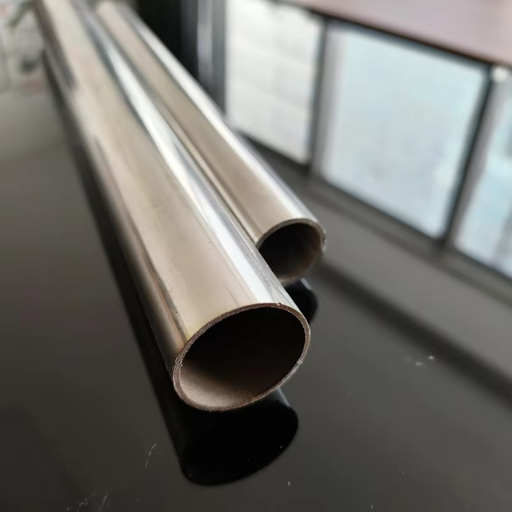
A correct 625 tube order answers nine questions. Leave any blank and the mill will answer it for you.
- Form and standard. Seamless B444, welded B704, welded pipe B705, or aerospace AMS 5581G.
- Grade and condition. Grade 1 annealed, or Grade 2 solution annealed with the service temperature stated.
- Class and NDT method. For B704: Class 1 or Class 2, and which tests.
- Dimensions. Exact OD × wall, average or minimum basis, and the OD tolerance if fittings are involved.
- Length or coil. Random, cut-to-length, straight length or coil, with coil weight and diameter.
- U-bend data. Bend radius, leg length, leg spacing tolerance and post-bend heat treatment.
- Finish. Bright annealed, pickled or polished, plus any cleanliness requirement.
- Testing and documentation. PMI, MTR, EN 10204 3.1 or 3.2, heat-number traceability and TPI witness points.
- Commercial terms. Quantity, MOQ, validity date and delivery basis.
Here is the whole thing as one purchase description:
Inconel 625 welded tube, ASTM B704-23 Grade 1 Class 2, 25.4 mm OD × 2.11 mm minimum wall, 6000 mm random length, bright annealed, 100% hydrostatic and eddy current tested, PMI on each lot, EN 10204 3.1 MTR with heat-number traceability.
That line leaves little for a mill to interpret, and it gives your inspector a checklist.
On supplier qualification, ask for the MTR, a PMI record and a sample eddy-current report before the first order. A supplier who hesitates on a sample lot is telling you something. MOQ commonly runs 500–1,000 kg, with 20–40% small-lot premiums below that, and standard lead time is typically 8–14 weeks.
Frequently Asked Questions
What is Inconel 625 tube used for?
Inconel 625 tube is used in shell-and-tube heat exchangers, condensers, feedwater heaters, instrumentation and chemical injection lines, subsea control lines, aerospace hydraulic and fuel lines, and FGD systems. It is chosen where chlorides, seawater, sour service or high temperature defeat 316L and super duplex stainless steel.
What is the difference between Inconel 625 tube and pipe?
Tube is ordered by exact OD × wall and used with tubesheets, compression fittings or U-bends. Pipe is ordered by NPS and schedule and joined by welding, flanging or threading. The alloy can be identical; the standards, tolerances, fittings and inspection differ.
What is the difference between ASTM B444 and ASTM B704?
B444 covers cold-worked seamless pipe and tube. B704 covers welded boiler, heat exchanger and condenser tube, with dimensions per B751. If you need a seamless tube, cite B444; if the tube has a longitudinal weld, cite B704.
What is the difference between B704 Class 1 and Class 2?
Class 1 requires one non-destructive test, chosen from hydrostatic, pneumatic, eddy current or ultrasonic. Class 2 requires both a leak test and an electric test. Class is an examination category, not a grade, and omitting it lets the manufacturer choose.
What does BWG mean for heat exchanger tube?
BWG is Birmingham Wire Gauge, the gauge system used to state nominal tube wall thickness. BWG 16 is 1.651 mm and BWG 18 is 1.245 mm. BWG is a nominal convention, not a tolerance, so the order must also state average or minimum wall.
How much does Inconel 625 tube cost per meter?
At 2026 bands, 25.4 mm OD × 2.11 mm seamless tube weighs about 1.30 kg/m and costs roughly USD 78–124/m. A 6.35 mm OD × 1.245 mm instrumentation tube weighs about 0.169 kg/m and costs roughly USD 10–16/m. Convert every quote with the kg/m formula.
What is the maximum temperature of Inconel 625 tube?
Inconel 625 tube resists oxidation up to about 980 °C and is used at cryogenic temperatures as well. For sustained load, Grade 1 service is usually limited to about 593 °C; above that, specify Grade 2 solution-annealed tube for creep and rupture strength.
Is Inconel 625 tube suitable for sour service?
Yes, under NACE MR0175 / ISO 15156-3, which places 625 in Group 4 with a commonly cited 35 HRC maximum. Cold work beyond roughly 15% can disqualify the tube even when hardness passes.
Conclusion and Next Step
Inconel 625 tube is the same alloy as 625 pipe, but a different purchasing product. The order succeeds or fails on five decisions:
- Standard by form: B444 for seamless tube, B704 for welded tube, B705 for welded pipe, AMS 5581G for aerospace.
- Grade and condition: Grade 1 annealed for corrosion service; Grade 2 solution annealed above roughly 593 °C.
- B704 class and NDT: Class 2 when the consequence of a leak is high; never leave the class blank.
- Dimensions: exact OD × wall, average or minimum basis, OD tolerance for fittings, and U-bend geometry within TEMA limits.
- Documentation: PMI, MTR, heat traceability and the test reports the end client will accept.
Write those five into the purchase description and most of the risk disappears before the mill quotes. For the alloy background, our complete nickel alloy pipe guide covers where 625 sits against 825, C-276 and Monel.
Send us your Inconel 625 tube datasheet with the OD × wall, length or U-bend geometry, service medium, temperature, pressure and required standard. Our technical team will confirm form, Grade, NDT class and documentation and respond within 24 hours. Start with your tube specification.