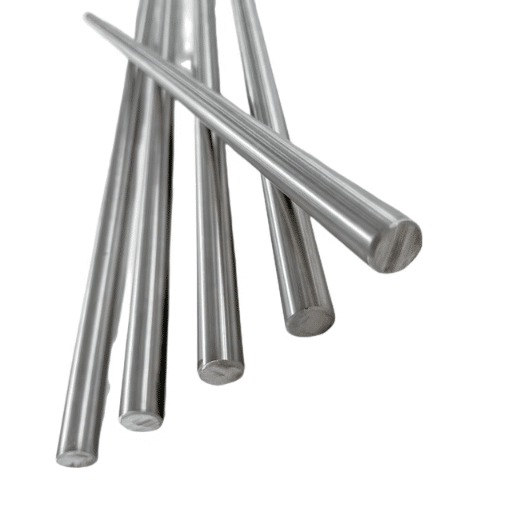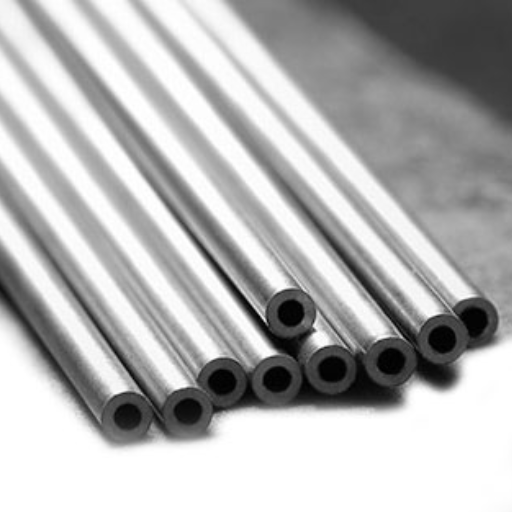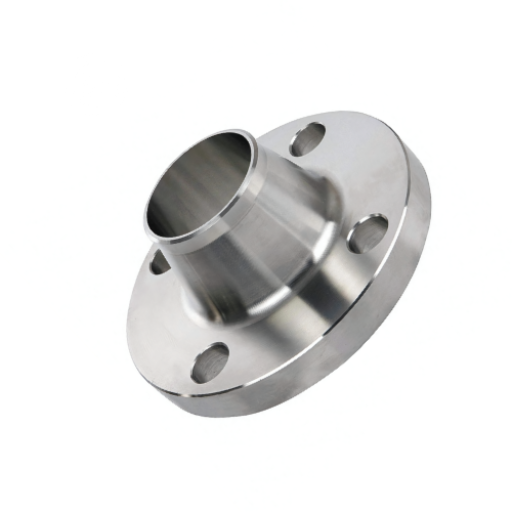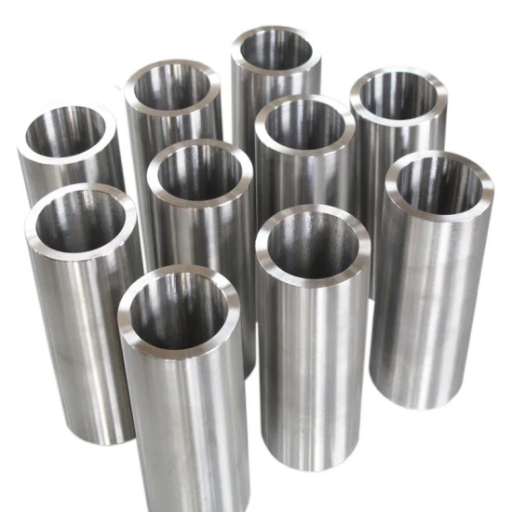
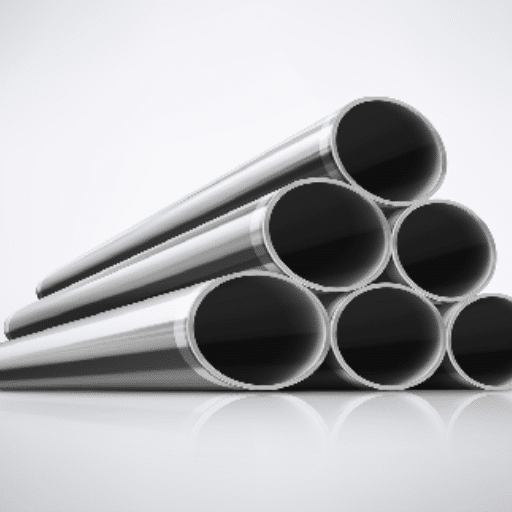
The UNS S32750 pipe grade, which goes by the names 2507 and F53, contains 25 percent chromium as its super duplex stainless steel composition. The material provides a minimum yield strength of 80 ksi and achieves a PREN value higher than 40 while delivering exceptional protection against both chloride pitting and sour service environments. Super duplex S32750 pipe is used in applications that require higher protection than standard duplex 2205 can provide against both chloride and H2S, and high offshore, chemical, and subsea operating temperatures.
A Gulf of Mexico platform upgrade procurement engineer assessed seawater cooling system requirements during the previous year. The original design called for 316L pipe with cathodic protection.
The combination of chloride concentration and pressure at operating depth required 316L to undergo inspection every 18 months. The equipment would need to be replaced within 10 years.
The team determined that the equipment needed a super duplex S32750 seamless pipe after they completed their calculations. The material cost increased significantly. The life of the service expanded three times its original duration. The platform required a straightforward decision because it had a design life of 25 years.
This guide provides information about super duplex S32750 pipe requirements for your project while delivering information about the grade properties and its superior performance compared to duplex 2205 and the methods to verify authentic S32750 through document evaluation and physical inspection.
Key Takeaways
- S32750 contains 25% Cr, 7% Ni, 4% Mo, and 0.27% N — yielding PREN > 40 for extreme chloride and sour service environments where duplex 2205 fails
- ASTM A790 governs seamless and welded super duplex pipe; NACE MR0175/ISO 15156 governs sour service compliance with a 32 HRC hardness maximum
- Specify S32750 over duplex 2205 when chloride exceeds 5,000 ppm, H2S partial pressure exceeds 0.05 psi, or design temperature exceeds 250°F (121°C)
- Verify genuine S32750 by spectrometric analysis, ferrite content of 35–55%, and phase balance documentation on the Mill Test Report
- Zhongzheng manufactures UNS S32750 seamless and welded super duplex pipe with full MTR, NACE compliance verification, and third-party inspection support
What Is Super Duplex S32750 Pipe?
The 25Cr Super Duplex Microstructure
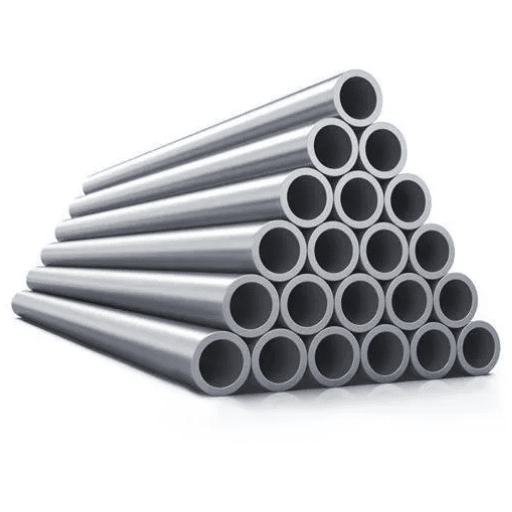
Super duplex stainless steels maintain a balanced austenitic-ferritic dual-phase microstructure, but with significantly higher alloy content than standard duplex grades. S32750 contains approximately 25% chromium, 7% nickel, 4% molybdenum, and 0.27% nitrogen. The super duplex stainless steel pipe, which uses this alloy, achieves a more stable passive layer compared to standard austenitic and duplex stainless steel grades.
The nitrogen addition is critical. At 0.24–0.32% nitrogen enhances the austenite phase, while it increases pitting resistance and it accelerates secondary austenite precipitation during welding. The grade requires this nitrogen content to reach the PREN threshold, which determines super duplex performance.
The pipe grade produces a yield strength that equals double the strength of 316L stainless steel. The material provides outstanding protection against chloride stress corrosion cracking and pitting and crevice corrosion.
UNS S32750 vs. Duplex 2205 — When to Upgrade
Duplex 2205 (UNS S32205) is the workhorse duplex grade. It performs well in many chemical and marine environments. But there are specific conditions where 2205 is no longer sufficient.
Understanding duplex vs super duplex stainless steel begins with comparing PREN values and alloy content. Upgrade to super duplex S32750 pipe when your application meets any of these thresholds:
- Chloride concentration exceeds 5,000 ppm in the operating environment
- H2S partial pressure exceeds 0.05 psi (0.34 kPa) — requiring NACE MR0175 compliance
- Design temperature exceeds 250°F (121°C) in chloride service
- Seawater exposure without cathodic protection, especially at elevated temperatures
- Subsea or offshore applications where inspection access is limited and replacement cost is extreme
The cost premium of S32750 over 2205 is typically 30–50% on raw material. But in critical service, the life-cycle cost calculation almost always favors super duplex.
S32750 Chemical Composition and Mechanical Properties
Chemical Composition Table
| Element | UNS S32750 (ASTM A790) | UNS S32205 (Duplex 2205) | 316L (ASTM A312) |
|---|---|---|---|
| Chromium | 24.0–26.0% | 22.0–23.0% | 16.0–18.0% |
| Nickel | 6.0–8.0% | 4.5–6.5% | 10.0–14.0% |
| Molybdenum | 3.0–5.0% | 3.0–3.5% | 2.0–3.0% |
| Nitrogen | 0.24–0.32% | 0.14–0.20% | — |
| Carbon (max) | 0.030% | 0.030% | 0.030% |
| Manganese (max) | 1.20% | 2.00% | 2.00% |
| Iron | Balance | Balance | Balance |
The molybdenum and nitrogen levels are the key differentiators. S32750’s 4% molybdenum and 0.27% nitrogen push its PREN well above the super duplex threshold of 40. Duplex 2205, by comparison, typically achieves PREN 34–36.
Mechanical Properties vs. Duplex 2205 and 316L
| Property | S32750 | S32205 | 316L |
|---|---|---|---|
| Yield Strength (min) | 80 ksi (550 MPa) | 65 ksi (450 MPa) | 30 ksi (205 MPa) |
| Tensile Strength (min) | 116 ksi (800 MPa) | 95 ksi (655 MPa) | 70 ksi (485 MPa) |
| Elongation (min) | 15% | 25% | 35% |
| Hardness (max, NACE) | 32 HRC | 28 HRC | — |
S32750’s 80 ksi minimum yield strength enables thinner wall designs for high-pressure service. This can partially offset the material cost premium by reducing overall pipe weight.
PREN Calculation and Why > 40 Matters
PREN — Pitting Resistance Equivalent Number — is the single most important figure for specifying corrosion-resistant alloys in chloride environments. The standard formula is:
PREN = %Cr + 3.3(%Mo) + 16(%N)
For a typical S32750 composition:
- PREN = 25 + 3.3(4.0) + 16(0.27)
- PREN = 25 + 13.2 + 4.32
- PREN = 42.5
This exceeds the super duplex threshold of 40. For comparison:
- 316L: PREN ~24–25
- Duplex 2205: PREN ~34–36
- S32750: PREN ~40–45
In practice, a PREN above 40 means S32750 resists pitting initiation in seawater at temperatures up to 50°C (122°F). Below this threshold, pitting becomes increasingly likely as chloride concentration and temperature rise.
ASTM A790 and ASTM A928 Standards for Super Duplex S32750 Pipe

ASTM A790 Seamless and Welded Pipe Requirements
UNS S32750 pipe is manufactured to super duplex pipe ASTM A790 compliance requirements. ASTM A790/A790M is the governing specification for seamless and straight-seam welded ferritic/austenitic stainless steel pipe. For S32750, the standard covers:
- Seamless pipe: Manufactured by hot-working or cold-working billets, with no welded seam. For guidance on selecting the right construction method, see our comparison of seamless vs welded stainless steel pipe.
- Welded pipe: Produced from flat-rolled strip with a longitudinal weld, then typically cold-worked and heat-treated
- Heat treatment: Solution annealing at minimum 1925°F (1052°C), followed by rapid water quench — critical for maintaining the correct phase balance
- Tests required: Transverse tension test, flattening test (welded pipe), flange test (seamless pipe), hydrostatic or non-destructive electric test, and ferrite content determination
The ferrite content requirement is especially important for duplex and super duplex grades. ASTM A790 requires ferrite content in the range of 35–55% for S32750 pipe. Outside this range, the mechanical properties and corrosion resistance deviate from specification.
For austenitic pipe standards like ASTM A312 stainless steel pipe, ferrite content is not a controlled parameter. For super duplex, it is mandatory.
ASTM A928 Welded Pipe with Filler Metal
ASTM A928/A928M covers welded ferritic/austenitic stainless steel pipe fabricated with the addition of filler metal. This standard is relevant when:
- Pipe diameter exceeds the practical range for seamless production
- Project specifications allow welded construction for cost or availability reasons
- The welding procedure uses matching super duplex filler metal to maintain corrosion resistance in the weld zone
Welded super duplex pipe under ASTM A928 requires weld procedure qualification, including ferrite measurement in the weld metal and heat-affected zone. The filler metal must match the base metal’s PREN to avoid creating a corrosion-susceptible weld zone.
NACE MR0175 and Sour Service Compliance
H2S Partial Pressure Limits for S32750
NACE MR0175/ISO 15156-3 governs the use of corrosion-resistant alloys in oil and gas production containing H2S. S32750 is listed as an acceptable material for sour service, but with specific restrictions:
- Maximum hardness: 32 HRC (Rockwell C) in the final delivered condition
- H2S partial pressure: S32750 is acceptable across the full range of H2S partial pressures covered by NACE MR0175, provided hardness and environmental limits are met
- Chloride concentration: Acceptable up to the limits defined in the standard’s environmental severity tables
- pH range: Must remain within the envelope defined for CRAs (corrosion-resistant alloys)
The 32 HRC maximum is critical. Cold-working beyond specification can push hardness above this limit. Improper heat treatment does the same.
A hardness reading above 32 HRC on a receiving inspection report means the pipe is not NACE-compliant. The MTR does not override the physical test result.
Hardness Requirements (32 HRC Maximum)
NACE compliance verification needs hardness testing for three areas, which include the pipe body and weld zone, and the heat-affected zone of the welded pipe. The test method is typically Rockwell C (HRC) or Vickers (HV), which converts measurements to HRC equivalent.
Zhongzheng tests the super duplex pipe for hardness during the final inspection. The results are recorded and included in the documentation package. Buyers who need NACE compliance should include this requirement during the inquiry process to ensure testing protocols and documentation formats match their project quality plans.
Documentation Needed for NACE Compliance
A compliant documentation package for NACE MR0175 sour service typically includes:
- Mill Test Report with full chemical composition and mechanical properties
- Hardness test report showing HRC values below 32
- Heat treatment records documenting solution annealing temperature and quench rate
- Ferrite content measurement report
- Hydrostatic test certificate
- NACE compliance certificate or declaration (project-specific format)
Want to see what a complete S32750 documentation package looks like? Request a sample MTR from our technical team — we will send a representative material test report with NACE compliance documentation within 24 hours.
Super Duplex S32750 Pipe Applications
Offshore Seawater Systems
Super duplex pipe offshore applications demand the highest corrosion resistance. S32750 super duplex pipe is the default specification for:
- Seawater lift risers and flowlines
- Firewater systems
- Cooling water intake and discharge
- Subsea manifolds and umbilicals
- Ballast water treatment systems
The applications show that 316L cathodic protection methods fail to deliver effective results. Super duplex eliminates the need for external protection systems while delivering a 25+ year service life.
The North Sea platform upgrade required subsea materials engineer Marcus to review the seawater lift system specification, which specified 316L pipe with cathodic protection as the original design. The 150-meter depth created conditions that required annual inspection of 316L because the chloride concentration and pressure combination created a safety risk. The system required replacement within 8 years.
His team selected UNS S32750 super duplex seamless pipe after conducting a life-cycle cost model analysis. The initial material cost increased by 220%. The system required no cathodic protection system, yet its expected service life extended beyond 25 years.
For projects specifying seamless construction, see our stainless steel seamless pipe product range. For a platform with a 30-year design life, the math was clear.
Sour Gas and CO2 Injection Pipelines
Sour gas fields contain H2S, which causes sulfide stress cracking in standard stainless steels. CO2 injection systems for enhanced oil recovery create high-pressure, corrosive environments. S32750 pipe addresses both challenges:
- NACE MR0175 compliance validates resistance to sulfide stress cracking
- PREN > 40 provides margin against CO2 corrosion and chloride attack
- High yield strength allows thinner wall designs for high-pressure CO2 injection lines
Major projects in the Middle East, North Sea, and Gulf of Mexico have specified S32750 for sour service flowlines and CO2 injection pipelines.
Chemical Process and Desalination Plants
Chemical processing applications with high chloride process streams — brine evaporation, acid handling, and aggressive chemical transport — increasingly specify super duplex pipe. Desalination plants use S32750 for:
- Brine heater tubes and shells
- Reverse osmosis high-pressure piping
- Evaporator and crystallizer connections
- Seawater intake piping
The combination of seawater exposure and high operating temperatures in desalination makes 316L marginal and duplex 2205 borderline. S32750 provides the corrosion margin needed for reliable long-term operation.
S32750 Pressure Rating and ASME B31.3 Allowable Stress

Engineers who want to use super duplex S32750 pipe for their high-pressure work should refer to ASME B31.3 Table A-1 to find the pipe’s permitted stress limits. The pressure ratings of Super duplex S32750 pipe use the Barlow formula method, which applies to austenitic grades but requires different stress limits. ASME B31.3 Table A-1 lists allowable stress for S32750 at various temperatures.
The allowable stress for S32750 seamless pipe at room temperature reaches higher values than 316L because its yield strength reaches 80 ksi. The S32750 pipe schedule allows operators to use higher operational pressures than 316L, which enables them to choose lighter schedules that maintain the same pressure while decreasing weight and costs.
For a detailed calculation methodology and schedule selection process, see our complete guide to stainless steel pipe pressure rating. The article covers Barlow formula application, temperature derating, and quality factor adjustments for welded vs. seamless construction.
Key point for procurement engineers: When switching from 316L to S32750 for pressure service, re-evaluate the required schedule. The higher allowable stress may permit a thinner wall, offsetting part of the material cost premium.
How to Verify Genuine S32750 at Receiving Inspection
Spectrometric Analysis Checkpoints
The only way to confirm that delivered pipe is actually S32750 is spectrographic analysis. A handheld XRF analyzer or laboratory optical emission spectrometer must verify:
- Chromium: 24.0–26.0%
- Nickel: 6.0–8.0%
- Molybdenum: 3.0–5.0%
- Nitrogen: 0.24–0.32%
The molybdenum reading is the most common failure point. The mislabeled duplex 2205 pipe shows 3.0 to 3.5% molybdenum, which falls within the 2205 range but does not meet the S32750 minimum requirement of 3.0% because most samples show 4.0% molybdenum content. Any material that shows a molybdenum reading below 3.5% must be rejected because it does not meet the S32750 specification.
The QA inspector at a Houston valve manufacturer received a shipment of “S32750 seamless pipe”, which was intended for a sour gas project in March 2024. He performed a handheld spectrometer test on a sample piece before he allowed production to proceed.
The molybdenum reading showed 3.1% content. The value fell within the duplex 2205 range. The actual value fell below the S32750 range, which is expected 3.5% to 4.5% content. The supplier had sent S32205 products, which he had incorrectly labeled as S32750.
The catch prevented a $400,000 valve assembly from being built with the wrong material. The system prevented the installation of H2S piping, which would have experienced catastrophic failure.
Ferrite Content Measurement (35–55% Target)
Ferrite content determines whether the pipe has the correct phase balance. ASTM A790 requires 35–55% ferrite for S32750. Measurement methods include:
- Feritscope (magnetic induction): Fast, non-destructive, field-portable
- ** metallographic examination**: Destructive but definitive; required for formal documentation
- Calculated from chemical composition: WRC-92 diagram or Schaeffler diagram estimation
Ferrite below 35% indicates insufficient corrosion resistance and reduced yield strength. Ferrite above 55% increases susceptibility to sigma phase formation during welding or elevated temperature exposure.
MTR Review Checklist for Super Duplex
When reviewing a Mill Test Report for S32750 pipe, verify these elements:
- Grade designation: Explicitly states UNS S32750 or 2507
- Chemical composition: All elements within ASTM A790 ranges, especially Cr, Ni, Mo, N
- Mechanical properties: Yield strength ≥ 80 ksi, tensile strength ≥ 116 ksi
- Hardness: Below 32 HRC if NACE compliance is required
- Ferrite content: 35–55% with test method stated
- Heat treatment: Solution annealing temperature and quench method documented
- Hydrostatic test: Test pressure and duration recorded
- Standard compliance: Reference to ASTM A790 (or A928 for welded) and applicable revision
If any of these elements are missing or out of specification, the pipe does not meet S32750 requirements — regardless of the supplier’s claims.
S32750 vs S32760: Key Differences
Composition Differences (S32760 Adds Tungsten and Copper)
UNS S32760 (Zeron 100) is the other common super duplex grade. The primary compositional differences are:
| Element | S32750 | S32760 |
|---|---|---|
| Chromium | 24.0–26.0% | 24.0–26.0% |
| Nickel | 6.0–8.0% | 6.0–8.0% |
| Molybdenum | 3.0–5.0% | 3.0–4.0% |
| Nitrogen | 0.24–0.32% | 0.20–0.30% |
| Tungsten | — | 0.5–1.0% |
| Copper | — | 0.5–1.0% |
The tungsten and copper additions in S32760 improve resistance to sulfuric acid and certain reducing environments. Both grades achieve PREN > 40 and meet similar mechanical property requirements.
When S32760 Is Preferred Over S32750
Specify S32760 instead of S32750 when:
- The environment contains sulfuric acid at moderate concentrations
- Reducing conditions dominate over oxidizing conditions
- Project specifications explicitly call for Zeron 100 or S32760
- Slightly better resistance to certain localized corrosion mechanisms is required
For most offshore seawater and sour gas applications, S32750 is the default specification. S32760 is typically specified only when the specific chemical environment justifies the tungsten and copper additions.
Zhongzheng manufactures both grades. Submit your process fluid composition. Our technical team will confirm the appropriate specification within 24 hours.
Sourcing Super Duplex S32750 Pipe from China
What to Verify in a Chinese Manufacturer’s Capability
Not every stainless steel manufacturer claiming super duplex capability can actually produce compliant S32750. When qualifying a Chinese supplier for super duplex pipe, verify:
- Raw material sourcing: Do they purchase S32750 billet or strip from certified mills, or do they attempt to produce the alloy in-house? Super duplex requires precise nitrogen control that only specialized melt shops achieve.
- Heat treatment equipment: Solution annealing at 1925°F (1052°C) with rapid water quench requires specialized furnace and quench systems. Inadequate heat treatment is the most common cause of out-of-specification ferrite content.
- Testing equipment: Do they have optical emission spectrometers for chemical verification, ultrasonic flaw detectors for NDT, and hydraulic testing equipment? Ask for equipment make and model.
- Super duplex production history: How many heats of S32750 have they produced? How many have failed ferrite or hardness requirements?
- Documentation format: Can they provide MTRs in the format your project requires, including NACE compliance certificates and third-party inspection support?
Zhongzheng operates its production lines for seamless and welded pipe, which use imported optical emission spectrometers. The company operates ultrasonic flaw detection systems and hydraulic testing machines throughout its production process. The company uses spectrographic analysis to verify every heat of S32750 before it starts its production process. The company tests each production batch to determine its ferrite content and hardness levels.
Third-Party Inspection and Documentation
For critical projects, third-party inspection (TPI) by agencies such as SGS, Bureau Veritas, TÜV, or Lloyd’s Register provides independent verification of material compliance. TPI scope for super duplex pipe typically includes:
- Witnessing chemical analysis by spectrometry
- Witnessing mechanical testing (tensile, hardness)
- Reviewing heat treatment records
- Verifying ferrite content measurement
- Witnessing hydrostatic testing
- Final dimensional and visual inspection
- Document review and certification
Zhongzheng supports TPI at our Wenzhou facility. The QC team of our organization handles inspector scheduling together with production completion notifications and witness testing arrangements. The TPI requirements should be established during the inquiry phase because this information will help develop an inspection plan that meets your project quality standards.
A Singapore-based EPC contractor was sourcing pipe for a combined-cycle power plant with an adjacent desalination unit. The power side needed a standard 316L process pipe. The desalination brine heaters required S32750 super duplex for the high-chloride evaporator sections.
The procurement manager chose one Wenzhou manufacturer to receive all specifications because he wanted to avoid testing two different suppliers. The manufacturer produced both grades under one quality system. The vendor management costs for their organization decreased by 40% because they used a consolidated MTR format together with a unified inspection protocol and a single point of contact system.
Conclusion
Super duplex S32750 pipe is not an upgrade you specify for marginal gain. It is the grade you specify when the operating environment eliminates standard austenitic and duplex alternatives. The combination of 25% chromium with 4% molybdenum and a PREN value above 40 in S32750 provides sufficient corrosion protection and mechanical strength for seawater and sour service and high-chloride chemical environments.
The specification decision is only the first step. The receiving inspection verification process uses spectrometric analysis, ferrite measurement, and MTR review to confirm that the delivered pipe matches the specified pipe. In critical service, there is no margin for mislabeled material.
Zhongzheng manufactures super duplex S32750 seamless or welded pipe according to ASTM A790 and A928 standards with complete MTR documentation. We provide NACE MR0175 compliance verification and third-party inspection support. Please send us your line list or specification. Our technical team will confirm grade suitability, available dimensions, and lead time within 24 hours.
FAQ
What does PREN > 40 mean for super duplex S32750 pipe?
The PREN value for super duplex S32750 pipe predicts its ability to withstand chloride pitting corrosion. The formula is PREN = %Cr + 3.3(%Mo) + 16(%N). The PREN range of 40 to 45, which S32750 achieves, demonstrates its ability to resist pitting, which starts in seawater at 50°C (122°F). Pitting will start to develop after the point of PREN 40 in areas with high chloride exposure.
What is the difference between S32750 and 2507?
The two terms refer to the same material because 2507 represents the common name, which industrial professionals use to identify UNS S32750. The “25” refers to approximately 25% chromium content, and “7” refers to approximately 7% nickel content. The formal designation of UNS S32750 appears in procurement documents, which list 2507 as the common industry abbreviation.
Is S32750 pipe suitable for subsea applications?
S32750 material shows widespread use in subsea flowlines, risers, manifolds, and umbilicals. Its combination of high yield strength (80 ksi) and PREN value exceeding 40 and NACE MR0175 certification for sour service use establishes it as the most frequently used material in deepwater and subsea pipeline systems. DNV-ST-F101 submarine pipeline standard recognizes super duplex grades for these applications.
What is the maximum hardness for NACE MR0175 compliance in S32750?
NACE MR0175/ISO 15156-3 specifies a maximum hardness of 32 HRC (Rockwell C) for S32750 in sour service. This applies to the base metal, weld metal, and heat-affected zone. Hardness testing must be performed and documented for all three zones on the welded pipe.
Can S32750 pipe be welded in the field?
Yes, but with strict controls. Field welding of S32750 requires:
- Matching super duplex filler metal (typically 2507/P100 or equivalent)
- Interpass temperature control below 150°C (302°F) to prevent sigma phase formation
- Post-weld solution annealing when possible; if not possible, strict heat input control
- Ferrite measurement in the weld metal and HAZ
- Hardness verification to confirm NACE compliance
Field welding without these controls risks sigma phase precipitation, reduced corrosion resistance, and hardness exceedance.
How does S32750 compare to Inconel 625 for seawater service?
Inconel 625 (UNS N06625) provides better protection against corrosion than S32750 in almost all types of environments. In seawater, this material outperforms super duplex because it withstands higher temperatures and extreme chloride levels. Inconel 625 costs 4–6x more than S32750 but provides better performance. The material provides lower yield strength than the competitor.
The material S32750 delivers sufficient corrosion protection for seawater environments that exist at temperatures reaching 50°C because it costs less than other materials. Engineers use Inconel 625 for applications that operate beyond 50°C. The material is specified for use in situations that demand maximum protection against corrosion regardless of financial costs.