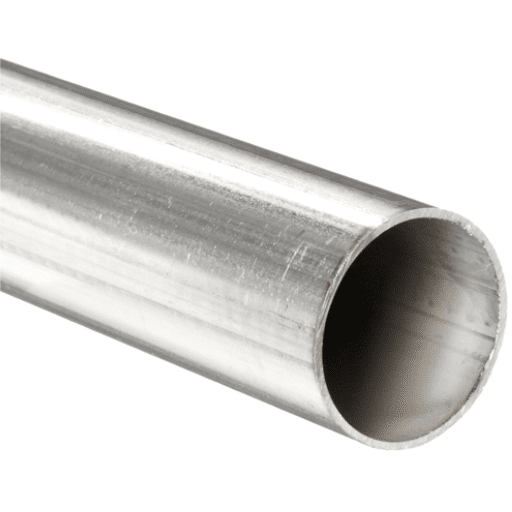
A stainless steel pipe schedule establishes standardized wall thicknesses that determine the pipe’s ability to withstand pressure and its weight and cost for each nominal pipe diameter. The schedule numbers 5S, 10S, 40S, 80S, and 160 provide users with an exact measurement of pipe wall thickness which enables them to calculate the pipe’s pressure capacity and weight per foot. The selection of a correct schedule represents one of the most costly specification errors that procurement engineers must avoid to prevent from making their most expensive specification mistakes.
Derek who worked as a procurement manager in Houston, ordered Schedule 40S pipe for a 2000 psig nitrogen system because his supplier told him that this was their standard practice. The pipe reached its destination at the scheduled time, and it successfully passed visual inspection before being installed without any problems. The hydrotest revealed three joint failures which occurred at 1200 psig. Derek used “standard” pipe, which had only 50 percent of the necessary wall thickness required by code for that particular pressure situation. The plant shutdown resulted in $47000 production losses for his plant, while he later spent 40 percent more to install Schedule 80S pipe, which he needed to replace after discarding 40S pipe.
The guide provides you with a complete system that will help you choose stainless steel pipe schedules for your needs. The program will show you how schedule numbers connect to wall thickness dimensions and how ASME B36.19M dimension tables can be read, and how pipe weight should be calculated for freight planning and most importantly, how to find the right schedule that matches your design pressure needs without spending extra money on unnecessary wall thickness. For a broader view of seamless pipe specifications, see our stainless steel seamless pipe guide.
Key Takeaways
- Stainless steel pipe schedule (5S, 10S, 40S, 80S, 160) defines wall thickness for a fixed outer diameter, higher schedule means thicker wall, higher pressure capacity, and significantly higher weight and cost.
- ASME B36.19M governs stainless steel pipe dimensions; the “S” suffix (40S, 80S) distinguishes stainless steel schedules from carbon steel schedules under B36.10M, even though dimensions are identical for 40S/40 and 80S/80.
- Schedule 40S represents approximately 60-70% of all stainless steel pipe specified in process industries because it balances pressure capacity, availability, and cost for most applications.
- For pressure design, calculate required wall thickness from your design pressure and temperature using ASME B31.3 formulas, then select the nearest standard schedule, never assume 40S is correct.
- Sch 80S pipe weighs approximately 1.8-2.2× as much as Sch 40S for the same NPS, directly impacting material cost, freight cost, and field handling requirements.
What Is a Stainless Steel Pipe Schedule?
The History of Pipe Schedules
The pipe schedule system originates from the early standardization efforts which American Standards Association established during the twentieth century. Engineers needed a simple way to specify wall thickness without writing out decimal dimensions on every drawing. The solution was the schedule number, which designates specific wall thickness measurements for each nominal pipe size (NPS).
The schedule number was originally approximated by the formula Sch = 1000 × P/S, where P represents internal design pressure and S denotes allowable stress of the material. The schedule system maintains its status as universal procurement shorthand for wall thickness despite modern pressure design using advanced calculation methods. It is how buyers specify pipe, how mills catalog stock, and how logistics teams estimate freight.
How Schedule Numbers Relate to Wall Thickness
The outside diameter (OD) of pipes remains constant for each nominal pipe size. The wall thickness between schedules determines the inside diameter (ID) of pipes. A higher schedule number results in three effects: thicker walls, which increase the pipe’s ability to withstand pressure, and make the pipe heavier and more expensive to manufacture.
For example, NPS 4″ pipe has an OD of 4.500 inches regardless of schedule. But the wall thickness varies dramatically:
| Schedule | Wall Thickness | ID |
|---|---|---|
| 5S | 0.083″ | 4.334″ |
| 10S | 0.120″ | 4.260″ |
| 40S | 0.237″ | 4.026″ |
| 80S | 0.337″ | 3.826″ |
| 160 | 0.531″ | 3.438″ |
The wall thickness at 80S increases almost two times its original thickness at 40S. The weight increases almost two times for every foot, which results in material costs that approach double the weight. The process requires welding to take additional time and needs more filler metal during the production phase. The choice of schedule creates a direct link to project expenses because it costs more to operate.
NPS vs Actual Dimensions
Nominal Pipe Size (NPS) serves as a piping system designation that does not function as an actual measurement. NPS 2″ pipe does not measure 2.000 inches in either OD or ID. The outer diameter of the product measures 2.375 inches. The internal diameter exists in relation to the schedule. New engineering professionals encounter confusion because piping specifications contain this information, which establishes fitting compatibility through outer diameter measurements instead of NPS values.
When you order NPS 2″ Sch 40S pipe, you receive pipe with a 2.375″ OD and a 0.154″ wall. Your NPS 2″ Sch 40S elbow must match that OD to weld correctly. The piping system maintains outer diameter compatibility when you combine different schedules at the same NPS, but this practice results in inner diameter variations that reduce flow capacity and hinder inspection tool movement.
Want to see how schedule selection connects to grade-specific seamless pipe specifications? Our 304 stainless steel seamless pipe guide covers Schedule 40S and 80S dimensions for TP304.
ASME B36.19M Stainless Steel Pipe Schedules
Standard Schedule Designations
ASME B36.19M stainless steel pipe dimensions are governed by the standard that recognizes five schedule designations for stainless steel:
- Schedule 5S: The lightest wall. Used for low-pressure vent, drain, and decorative applications where pressure is minimal and weight savings matter.
- Schedule 10S: Light-duty process piping. Common in food and beverage applications where pressure is low but corrosion resistance and cleanability are required.
- Schedule 40S: The default specification for most process piping. Handles moderate pressures across a wide temperature range. Approximately 60-70% of stainless steel pipe specified in chemical, oil and gas, and power industries is 40S.
- Schedule 80S: Heavy wall for high-pressure systems. Used in hydraulic circuits, high-pressure steam, and severe service where 40S does not provide adequate safety margin.
- Schedule 160: Extra heavy wall for specialized high-pressure applications. Not commonly stocked; usually produced to order.
Note that 40S and 80S are dimensionally identical to the carbon steel Schedule 40 and 80 found in ASME B36.10M. The “S” suffix exists only to confirm the pipe is being specified under the stainless steel standard.
Stainless Steel vs Carbon Steel Schedules
ASME B36.19M does not include every schedule found in B36.10M. The stainless steel standard omits Schedules 20, 30, 60, 100, and 120. The main reason for this practice exists because engineers select stainless steel pipes when they need materials that resist corrosion more than they need pipes that withstand high pressure. The standard schedule range reflects the most common use cases.
Legacy specifications require cross-referencing with carbon steel drawings to determine which standard applies. A specification calling for “Schedule 40” without the “S” technically references B36.10M carbon steel dimensions. The correct way to write stainless steel is to use “Schedule 40S” or to directly reference B36.19M. Your mill and your inspector will thank you.
Schedule Availability by Grade
Not all schedules are available in every stainless steel grade. Understanding grade-to-schedule mapping prevents specification errors and procurement delays.
- 304/304L: Available in all schedules from 5S through 160. Schedule 40S and 80S are mill-standard stock items with the shortest lead times. Schedules 5S and 10S in large NPS (above 8″) may require confirmation.
- 316/316L: Available in 5S through 160. Schedule 40S and 80S are commonly stocked. For schedule 40 stainless steel pipe dimensions in TP316L, wall thickness and weight are identical to TP304; only material density differs slightly (316L is approximately 1% heavier).
- 321/321H: Available primarily in 40S and 80S for high-temperature service. Heavier schedules typically require production orders.
- Duplex 2205: Generally available in 40S, 80S, and 160. Lighter schedules (5S, 10S) are rarely produced because duplex alloys are selected for strength in demanding services where heavier walls are required.
- Super duplex 2507: Almost exclusively 40S, 80S, and 160. Lead times for non-standard schedules range from 8-12 weeks.
For chloride-service applications requiring Schedule 40S or 80S in 316L, confirm mill stock before finalizing project schedules. Non-standard combinations (e.g., Sch 160 in 321H) may require 6-10 week lead times.
Schedule Availability by Manufacturing Method
Seamless pipe can be produced in all schedules from 5S through 160 because the hot piercing and rolling process can achieve any wall thickness within the mill’s capacity. Welded pipe is more commonly available in 5S, 10S, 40S, and 80S. Schedule 160 welded pipe is rare because forming and welding thick strip becomes technically challenging and economically unfavorable compared to seamless production.
If your project requires Sch 160 in diameters above NPS 6″, seamless is almost certainly your only practical option. For standard process piping in 40S and 80S, both seamless and welded formats are widely available. See our seamless vs welded stainless steel pipe comparison for format selection guidance.
Stainless Steel Pipe Schedule Chart & Dimensions

Complete Dimension Table
The following stainless steel pipe schedule chart shows dimensions and weights for common schedules per ASME B36.19M. Use this as your reference for bill of materials preparation, weight estimation, and procurement specification. Schedule 40 stainless steel pipe dimensions appear in the center columns because 40S serves as the primary standard for process piping specifications.
| NPS | OD (in) | Sch 5S Wall | Sch 5S WT (lb/ft) | Sch 10S Wall | Sch 10S WT (lb/ft) | Sch 40S Wall | Sch 40S WT (lb/ft) | Sch 80S Wall | Sch 80S WT (lb/ft) | Sch 160 Wall | Sch 160 WT (lb/ft) |
|---|---|---|---|---|---|---|---|---|---|---|---|
| 1/2″ | 0.840 | 0.065 | 0.54 | 0.083 | 0.67 | 0.109 | 0.85 | 0.147 | 1.09 | 0.188 | 1.31 |
| 3/4″ | 1.050 | 0.065 | 0.69 | 0.083 | 0.86 | 0.113 | 1.13 | 0.154 | 1.47 | 0.219 | 1.94 |
| 1″ | 1.315 | 0.065 | 0.87 | 0.109 | 1.40 | 0.133 | 1.68 | 0.179 | 2.17 | 0.250 | 2.84 |
| 1-1/2″ | 1.900 | 0.065 | 1.27 | 0.109 | 2.09 | 0.145 | 2.72 | 0.200 | 3.63 | 0.281 | 4.86 |
| 2″ | 2.375 | 0.065 | 1.60 | 0.109 | 2.64 | 0.154 | 3.65 | 0.218 | 5.02 | 0.344 | 7.46 |
| 3″ | 3.500 | 0.083 | 3.03 | 0.120 | 4.33 | 0.216 | 7.58 | 0.300 | 10.25 | 0.438 | 14.32 |
| 4″ | 4.500 | 0.083 | 3.92 | 0.120 | 5.61 | 0.237 | 10.79 | 0.337 | 15.00 | 0.531 | 22.51 |
| 6″ | 6.625 | 0.109 | 7.59 | 0.134 | 9.29 | 0.280 | 18.97 | 0.432 | 28.57 | 0.562 | 36.39 |
| 8″ | 8.625 | 0.109 | 9.91 | 0.148 | 13.40 | 0.322 | 28.55 | 0.500 | 43.39 | 0.594 | 50.95 |
| 10″ | 10.750 | 0.134 | 15.19 | 0.165 | 18.65 | 0.365 | 40.48 | 0.500 | 54.74 | 0.719 | 77.03 |
| 12″ | 12.750 | 0.156 | 21.07 | 0.180 | 24.20 | 0.375 | 49.56 | 0.562 | 73.15 | 0.844 | 107.32 |
Weights shown are for 304 stainless steel; 316L is approximately 1% heavier due to higher nickel and molybdenum content. For metric projects, convert lb/ft to kg/m by multiplying by 1.488.
Key Dimensional Notes
ASTM A312 specifies wall thickness tolerance for seamless pipe at +22.5% / -12.5% at any point. This means a pipe ordered at Sch 40S nominal wall (0.237″ for NPS 4″) could measure as thin as 0.207″ at any location and still meet standard. For pressure design, engineers must verify that the minimum possible wall, nominal minus 12.5%, still meets the required stainless steel pipe pressure ratings.
Weight tolerance is typically ±10%. For freight planning, use the table weight plus 10% as your conservative estimate. Container loading calculations and crane capacity assessments should never use nominal weight without margin.
Schedule 40S vs 80S: Key Differences
The most common specification decision in stainless steel process piping is choosing between Schedule 40S and 80S. The two schedules together account for more than 85 percent of all stainless steel pipe specifications used in chemical, oil and gas, and power applications. Understanding the schedule 40S vs 80S tradeoffs saves money and prevents both under-specification and over-specification.
Wall Thickness and Pressure Capacity
The wall thickness of 80S pipes reaches 1.4 to 1.6 times the wall thickness of 40S pipes at any given NPS. At NPS 4″, the 40S wall is 0.237″ while the 80S wall is 0.337″. The additional 0.100″ wall thickness enables the structure to withstand pressure that exceeds design limits in most operating conditions. The 40S seamless pipe at 100°F has a pressure rating of 1,000 psig, while the 80S seamless pipe has a pressure rating of 1,800 psig.
Weight and Cost Impact
The weight of Schedule 80S stainless steel pipe equals 1.8 to 2.2 times the weight of 40S pipe, which has the same NPS. The weight of NPS 4″ Sch 40S measures 10.79 lb/ft, but Sch 80S has a weight of 15.00 lb/ft. The material cost follows weight closely: 80S typically costs 50-100% more than 40S, depending on diameter, grade, and mill source.
The weight of goods determines the freight charge. A container load of NPS 6″ Sch 80S weighs 50% more than the same piece count in 40S, which could result in you reaching heavy-lift freight rates.
When to Choose Which
Specify Schedule 40S for general process piping below 500 psig, steam service below 400°F, structural applications, and any service where pressure requirements are moderate and cost optimization matters.
Specify Schedule 80S for high-pressure process piping above 500 psig, hydraulic systems, steam service above 400°F, and any application where corrosion allowance or erosion requires wall thickness beyond what 40S provides.
Need exact pressure ratings for your design conditions? Our stainless steel pipe pressure ratings guide provides temperature-derated values for 304, 316L, and duplex grades.
Pipe Weight Calculations and Logistics

Weight Per Foot Formula
You can calculate theoretical pipe weight using the standard engineering formula:
Imperial: W = 10.69 × (OD – Wall) × Wall
Where W = stainless steel pipe weight per foot in lb/ft, OD and Wall in inches
Metric: W = 0.02466 × (OD – Wall) × Wall
Where W = weight in kg/m, OD and Wall in millimeters
For example, NPS 4″ Sch 40S:
W = 10.69 × (4.500 – 0.237) × 0.237 = 10.79 lb/ft
This matches the table value within rounding error. The formula is useful when you need weight for a non-standard OD/wall combination or when interpolating between tabulated values.
Freight and Handling Implications
International shipping costs are determined by the weight of pipes that need to be shipped. A 20-foot container can hold approximately 21-25 metric tons of pipe, depending on diameter and packaging. The 20-foot NPS 8″ Sch 80S order that you placed will result in 868 lb weight for each piece, which you ordered at 43.39 lb/ft. Each container can hold approximately 50 items which weigh a total of 19.7 tons. The container with Sch 40S at28.55 lb/ft specification allows you to transport 50 pieces, but it only weighs 13.0 tons, which results in unused weight capacity and lower total freight costs for each foot of pipe.
If you require Sch 160 in large sizes, then you will reach container weight limits before you complete your volume requirements. A 20-foot shipment of NPS 12″ Sch 160 pipe, which weighs 107.32 lb/foot results in each piece weighing over 2,100 lb. At 10 pieces, you are at 21,000 lb, which is close to the weight limit of a standard container. The situation requires a heavy-lift container or flat-rack shipment, which results in additional costs and more difficult handling procedures.
Need grade-specific schedule data for chloride service? Our 316L seamless stainless steel pipe guide includes Schedule 40S and 80S pressure ratings for TP316L.
How to Select the Right Stainless Steel Pipe Schedule
Pressure-Based Selection
The correct way to select a pipe schedule is to calculate the required wall thickness from your design conditions, then choose the nearest standard schedule. ASME B31.3 provides the formula for the minimum required thickness:
t = (P × D) / (2 × S × E + P × Y)
Where:
- t = minimum required wall thickness (inches)
- P = internal design pressure (psig)
- D = outside diameter (inches)
- S = allowable stress at design temperature (psi)
- E = quality factor (1.0 for seamless, 0.85 for ERW welded)
- Y = temperature coefficient (0.4 for austenitic stainless steel below 900°F)
For 304 stainless steel at 100°F, the allowable stress S is approximately 20,000 psi. For a NPS 4″ seamless pipe at 1,000 psig:
t = (1,000 × 4.500) / (2 × 20,000 × 1.0 + 1,000 × 0.4) = 0.112 inches
The nearest standard schedule above 0.112″ is Sch 10S at 0.120″. Sch 40S at 0.237″ would be massive overkill, more than double the required wall. Yet many engineers default to 40S because it is “standard.” That assumption costs money.
Schedule Selection by Application
For quick reference, the following matrix provides typical schedule selections by service condition. Always verify with ASME B31.3 calculations for your specific pressure and temperature.
| Application | Typical Schedule | Rationale |
|---|---|---|
| Low-pressure vent/drain (<150 psig) | 5S or 10S | Cost optimization, adequate strength |
| General process piping (150-500 psig) | 40S | Standard specification, excellent availability |
| High-pressure process (500-1,000 psig) | 80S | Pressure requirement with safety margin |
| Hydraulic systems (>1,000 psig) | 80S or 160 | Very high pressure, cyclic loading |
| Steam service (>400°F) | 40S or 80S | Temperature derating requires thicker wall |
| Structural/support | 40S | Balance of strength and weight |
When to Specify Heavier Than Required
Sometimes the calculated minimum wall is not the right specification. Add wall thickness when:
- Corrosion allowance: The design code or your corrosion specialist requires additional metal to accommodate expected uniform corrosion over the design life. A 10-year design life with a 0.005-inch per year corrosion rate adds 0.050″ to the required wall.
- Erosion: High-velocity slurry or particulate-laden gas streams erode pipe walls. Add erosion allowance based on velocity and particulate hardness.
- Mechanical protection: Buried pipe, pipe in traffic areas, or pipe subject to external impact may need a heavier wall than pressure alone dictates.
- Future expansion: If operating pressure may increase within the asset’s life, specify for the future condition now to avoid replacement later.
Common Stainless Steel Pipe Schedule Mistakes

Overspecifying Wall Thickness
The most expensive mistake in pipe procurement results from choosing a heavier schedule than a project needs. Sch 80S costs 50-100% more than Sch 40S for the same grade and NPS. The product increases freight expenses because it weighs 80-120% more than the original weight. The process needs additional welding time, together with more filler metal for its construction. The piping system may need to support its weight with stronger supports and anchors.
A chemical plant in Singapore upgraded its cooling water system in 2024. The project engineer specified Sch 80S for all NPS 3″ and smaller piping because he wanted “extra safety margin.” The design pressure was 120 psig. Sch 10S would have met the code requirement with a margin to spare. The overspecification added 34,000inmaterialcost 34,000inmaterialcost, 8,000 in excess freight and an estimated 12,000 in additional welding labor. The safety margin provided no extra safety because the system relief valve operated at 150 psig for all pipe wall thicknesses.
Underspecifying for the Application
The opposite mistake is equally costly. The common mistake occurs when people use Sch 40S for high-pressure steam without considering the temperature derating. The 304 stainless steel allows a stress limit of 20,000 psi which decreases to 15,800 psi at 800°F. A pipe that was adequate at ambient temperature may become noncompliant with code requirements when it reaches its operating temperature.
Always check the pressure-temperature rating for your specific grade and schedule. Never assume that a schedule that works in one service will work in another. The correct schedule will change when any of the four variables, which include pressure, temperature, grade and code, undergo a change.
Mixing Schedule Conventions
The specification error occurs in procurement documents when they incorrectly specify “Schedule 40” for stainless steel materials. The reference becomes unclear because it requires the “S” suffix to resolve its identity. B36.19M 40S and B36.10M 40 have identical measurements but the two standards impose different limitations that apply to different areas of their respective documents. A mill receiving a purchase order for “Schedule 40” stainless steel pipe may request clarification, which delays quotation. A less careful mill may incorrectly identify carbon steel pipe for quoting purposes, which results in a material mismatch during receiving inspection.
Always specify “Schedule 40S per ASME B36.19M” or reference ASTM A312 for the material and B36.19M for the dimensions. The production process depends on exact specifications, which need to be defined with complete precision.
Schedule Selection Decision Framework
Quick Reference Matrix
Use this matrix as your starting point for schedule selection. Confirm with ASME B31.3 calculations before finalizing procurement specifications.
| Design Pressure | Temperature | Recommended Starting Schedule |
|---|---|---|
| <150 psig | Ambient | 5S or 10S |
| 150-500 psig | Ambient | 40S |
| 500-1,000 psig | Ambient | 80S |
| >1,000 psig | Ambient | 160 or custom wall |
| Any pressure | >400°F | Verify derating; likely 80S or heavier |
The stress limit becomes non-linear when materials are tested at temperatures above their designated maximum. The 304 stainless steel allows a stress limit of 18,500 psi at 500°F. The stress limit decreases to 11,000 psi at 1,000°F. The same pressure at a higher temperature requires a heavier schedule. Always consult the appropriate ASME B31.3 stress table for your grade and temperature before selecting a schedule.
Verification Checklist
Before finalizing your pipe specification, confirm:
- Design pressure confirmed at worst-case operating condition, including startup, shutdown, and upset scenarios
- Design temperature identified, including maximum anticipated operating temperature
- Corrosion allowance added for expected service life based on process environment
- Applicable design code identified (ASME B31.3 for process piping, B31.1 for power piping)
- Required wall thickness calculated per code formula, not assumed from previous projects
- Nearest standard schedule selected with margin, not arbitrary “standard” selection
- Mill stock availability confirmed for selected schedule, grade, and NPS
- Weight and freight impact evaluated for international shipment planning
- Fabrication implications reviewed (welding time, filler metal, support loads)
Conclusion
People who need to understand stainless steel pipe schedule need to know that this system of measurement directly shows wall thickness. Wall thickness determines which factors for pressure capacity and material weight, material cost, freight cost, and fabrication complexity will be affected. Sch 40S and Sch 80S create material cost differences that exceed 100 percent while increasing freight expenses by thousands of dollars when both systems measure the same NPS.
The correct approach to stainless steel pipe schedule selection is engineering-first: calculate the required wall thickness from your design pressure, temperature and corrosion allowance using ASME B31.3 formulas. Then select the nearest standard schedule. Do not default to 40S because it is common. Do not specify 80S because it “feels safer.” Engineer the selection, document the calculation, and buy exactly what your system requires.
When you are ready to specify stainless steel seamless pipe for your project, send us your design pressure, temperature, NPS, grade requirement, and applicable code. Our technical team will determine wall thickness requirements and select the appropriate stainless steel pipe schedule while checking available stock from our Wenzhou facility to provide a complete quotation which includes sizing information and weight assessment, and delivery schedule within 24 hours. We produce both seamless and welded stainless steel pipes, which range from schedule 5S to schedule 160, and we conduct complete spectrographic verification, ultrasonic testing, and hydrostatic proof testing for all our products.
Frequently Asked Questions
What is the most common stainless steel pipe schedule?
The most frequently used stainless steel pipe schedule needs Schedule 40S which accounts for 60-70% of stainless steel pipes used in process industries. The system provides an optimal solution because it meets most needs through its pressure capacity and available resources and its economical pricing.
What is the difference between Schedule 40 and Schedule 40S?
Schedule 40S is dimensionally identical to Schedule 40, but the “S” suffix confirms the pipe is specified under ASME B36.19M (stainless steel) rather than B36.10M (carbon steel). You should always use the “S” suffix when you need to specify stainless steel pipe standards.
How much heavier is Schedule 80S than Schedule 40S?
The weight of Schedule 80S stainless steel pipe for each nominal pipe size exceeds Schedule 40S by a factor of 1.8 to 2.2. NPS 4″ Sch 40S weighs 10.79 lb/ft, while Sch 80S weighs 15.00 lb/ft.
What steps should I follow to select an appropriate pipe schedule for my project?
The ASME B31.3 formula requires you to calculate minimal wall thickness requirements through design pressure and temperature and corrosion allowance data. The standard schedule should be chosen from the options 5S, 10S, 40S, 80S, and 160 which provides a thickness that matches or exceeds your calculated requirement.
What does the S in Schedule 40S stand for?
The “S” in Schedule 40S indicates the schedule is defined under ASME B36.19M, the dimensional standard for stainless steel pipe. The schedule of carbon steel pipes follows ASME B36.10M which does not include the “S” suffix.
What is the formula to calculate the weight of stainless steel pipe for each foot of length?
The standard formula is W = 10.69 x (OD – Wall) x Wall, where W is weight in lb/ft, and OD and Wall are in inches. The metric version of theW formula requires W to equal 0.02466 times the difference between OD and Wall multiplied by Wall, which uses OD and Wall measurements in millimeters to calculate kg/m.
Reference Sources
- ASME B36.19M, Stainless Steel Pipe, Dimensional standard for stainless steel pipe
- ASTM A312/A312M, Standard Specification for Seamless, Welded, and Heavily Cold Worked Austenitic Stainless Steel Pipes, Material standard
- ASME B31.3, Process Piping Code, Pressure design basis and allowable stress tables