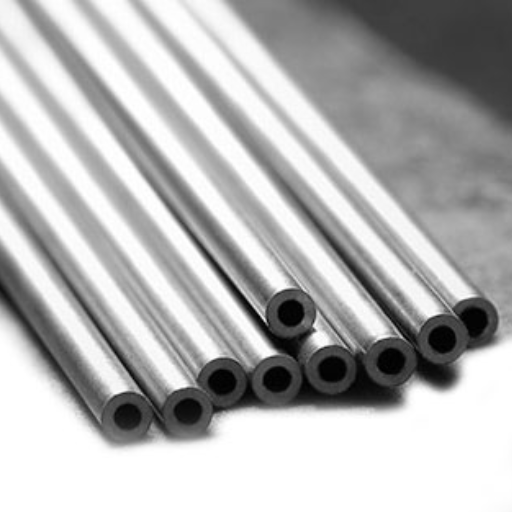
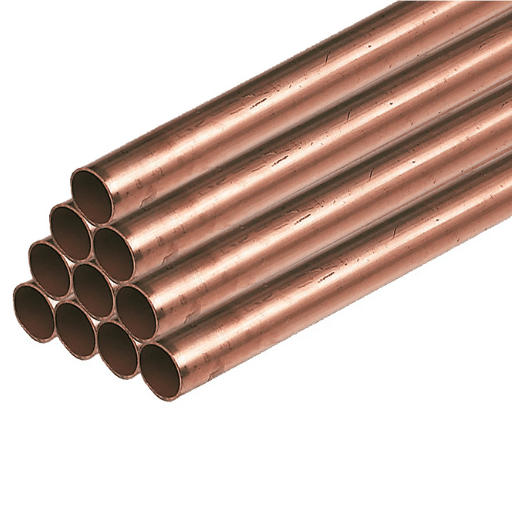
The best copper tube for most heat exchangers is UNS C12200 (DHP) seamless copper tubing conforming to ASTM B75, chosen for its thermal conductivity of roughly 330–339 W/m·K, excellent formability, and reliable freshwater corrosion resistance. For seawater, brackish water, or ammonia-bearing service, engineers should specify copper-nickel heat exchanger tubes or stainless steel alternatives instead.
What if the tube material you specify today costs your project 30% more in energy losses over the next decade? That is the real decision heat exchanger designers face when they compare copper, stainless steel, and aluminum. Each material changes the heat transfer surface area, the unit footprint, the pumping power, and the maintenance interval. Pick the wrong one, and you do not just overpay on day one; you underperform for years.
At Zhongzheng, we manufacture C12200 DHP copper tube for heat exchangers, HVAC, and refrigeration applications from our Wenzhou facility. This guide explains when copper is the right choice, which standard and temper to specify, how to avoid the most common failure modes, and what documentation you should demand from your supplier.
Key Takeaways
- UNS C12200 DHP seamless copper tube per ASTM B75 is the default grade for freshwater heat exchangers because it balances conductivity, formability, and brazability.
- Copper conducts heat roughly 20–30× faster than 304 stainless steel, allowing smaller, lighter, and lower-cost heat exchanger bundles in compatible services.
- Recommended maximum tube velocity for copper tubes in water service is 6.0 ft/s; exceeding 7.5 ft/s risks erosion-corrosion and shortened tube life.
- Specify C70600 or C71500 cupronickel for seawater/brackish service; never use copper where ammonia or high chloride levels are present.
- Always request a Mill Test Report (MTR) with spectrographic chemical analysis, hydrostatic test results, and dimensional inspection data.
What is a copper tube for a heat exchanger?

The Default Grade: UNS C12200 DHP
Copper tube for heat exchanger applications most commonly uses UNS C12200, also known as DHP (Deoxidized High Phosphorus) copper. The controlled phosphorus content, typically 0.015–0.040%, removes oxygen from the melt and prevents hydrogen embrittlement during brazing or annealing. This makes C12200 more forgiving than C11000 ETP (Electrolytic Tough Pitch) copper when tubes are heated during fabrication.
ASTM B75 covers seamless copper tube in C12000 (DLP, Deoxidized Low Phosphorus) and C12200 (DHP) tempers for general engineering and heat exchanger service. For condenser and heat exchanger applications specifically, ASTM B111 covers copper and copper-nickel seamless condenser tubes, including the cupronickel grades used in marine environments.
Why Copper Dominates Heat Transfer Applications
Copper’s thermal conductivity ranges from approximately 330 W/m·K for C12200 DHP up to 385–401 W/m·K for high-purity oxygen-free copper. By comparison, 304 stainless steel sits around 14–17 W/m·K. That difference means a copper heat exchanger can achieve the same heat duty with significantly less surface area, reducing tube count, shell diameter, and overall weight.
Mini-story — The chiller retrofit that paid for itself
In 2024, a facilities engineer named David replaced the stainless-steel tube bundle in a 500-ton process chiller with a C12200 copper bundle of the same shell diameter. The copper bundle delivered roughly 1.07–1.35 kW/m of heat transfer power versus 0.83 kW/m for the previous stainless design. The chiller reached setpoint faster, the compressor ran fewer hours per day, and the annual energy savings covered the tube replacement cost within 18 months.
For designers, the practical implication is clear: when the service fluid is compatible with copper, the material allows smaller, lighter, and often less expensive equipment. The trade-off is that copper is not suitable for every environment.
Copper Alloys Used in Heat Exchanger Tubes
| Alloy | UNS | Nominal Composition | Best Application |
|---|---|---|---|
| DHP copper | C12200 | Cu ≥ 99.9%, P 0.015–0.040% | General freshwater heat exchangers, condensers, HVAC |
| DLP copper | C12000 | Cu ≥ 99.9%, P 0.004–0.012% | Welding and brazing applications where lower phosphorus is preferred |
| ETP copper | C11000 | Cu ≥ 99.90%, oxygen ~0.04% | Limited heat exchanger use due to hydrogen embrittlement risk |
| 90/10 cupronickel | C70600 | Cu 88.6–90.4%, Ni 9–11%, Fe 1.0–1.8% | Seawater, brackish water, desalination plants |
| 70/30 cupronickel | C71500 | Cu 69.0–71.0%, Ni 29–33%, Fe 0.4–1.0% | Severe marine and offshore condenser service |
For most inland freshwater cooling, C12200 is the correct starting point. The phosphorus addition makes it brazeable, formable, and resistant to hydrogen damage without the cost premium of oxygen-free grades.
Copper vs Stainless Steel vs Aluminum Heat Exchanger Tube
Thermal Conductivity and Heat Exchanger Sizing
| Material | Typical Thermal Conductivity (W/m·K) | Relative Heat Transfer Efficiency |
|---|---|---|
| Copper (C12200 DHP) | 330–339 | 1.0 (baseline) |
| Copper (C10100 OFHC) | 385–401 | ~1.15–1.20 |
| Aluminum | 205–250 | ~0.60–0.75 |
| Carbon steel | 45–55 | ~0.14–0.17 |
| 304 stainless steel | 14–17 | ~0.04–0.05 |
The table explains why a copper tube heat exchanger can be 30–50% smaller than a stainless-steel unit for the same duty. In applications where space, weight, or first cost matters — such as HVAC rooftop units, domestic water heaters, and automotive radiators — copper is often the pragmatic choice.
Corrosion and Service Environment
Copper performs well in clean freshwater, but it has defined limits. High-velocity water causes erosion-corrosion. Chloride-rich seawater accelerates pitting and dealloying. Ammonia, even at low concentrations from cleaning agents or industrial atmospheres, causes stress corrosion cracking of copper alloys.
Stainless steel, particularly 316L or duplex grades, becomes the better choice when chlorides exceed copper’s tolerance, when ammonia is present, or when high-temperature oxidation resistance is required. Aluminum competes on cost and weight but sacrifices thermal conductivity and mechanical strength compared with copper.
Mini-story — The seawater lesson
A shipyard procurement team in Southeast Asia specified C12200 copper tubes for a new seawater-cooled auxiliary condenser to save on first cost. Within 14 months, the tubes showed through-wall pitting and the condenser required emergency retubing. The replacement specification used C70600 90/10 cupronickel per ASTM B111. The cupronickel bundle cost more upfront but has now run for six years without a failure.
This is why service environment analysis must come before material selection. Stainless steel heat exchanger tube alternatives are the safer path when copper’s corrosion limits are exceeded.
Cost and Life-Cycle Analysis
Copper tube typically costs more per kilogram than carbon steel and less than titanium or high-nickel alloys. However, the total installed cost of a copper heat exchanger is often lower because the smaller bundle requires less shell material, fewer supports, and less floor space. When fluid compatibility is confirmed, copper frequently delivers the lowest life-cycle cost among metallic options.
Unsure whether copper, cupronickel, or stainless steel fits your heat exchanger service? Speak with our technical team and we’ll review your fluid chemistry, temperature, and velocity before recommending a grade.
Standards and Specifications for Copper Heat Exchanger Tube

ASTM B75 — Seamless Copper Tube
ASTM B75 is the foundational specification for seamless copper tube used in heat exchangers, general engineering, and fluid transport. It covers C12000 and C12200 in tempers O60 (soft annealed), H55 (light drawn), and H80 (hard drawn). The standard defines tensile strength, elongation, dimensional tolerances, and eddy current or hydrostatic testing requirements.
ASTM B111 — Copper and Copper-Nickel Seamless Condenser Tubes
When the application is a condenser or heat exchanger in corrosive service, ASTM B111 becomes the governing standard. It includes C12200, C70600 (90/10 Cu-Ni), C71500 (70/30 Cu-Ni), and other alloys. The standard specifies minimum wall thickness, expanded-test requirements, and non-destructive testing protocols suited to power plant and marine service.
ASTM B395 — U-Bend Heat Exchanger and Condenser Tubes
ASTM B395 covers tubes that are bent into a U-shape for shell-and-tube heat exchangers. The standard addresses bend requirements, heat treatment after bending, and dimensional tolerances for the return bends. Designers ordering U-bend copper tube should specify this standard in addition to ASTM B75 or B111.
ASTM B359 — Integral Finned Tube
For air-cooled or air-heating applications, ASTM B359 covers copper tube with integral external fins. Finned copper tube increases the external surface area without increasing shell diameter, improving heat transfer in air-to-fluid exchangers such as HVAC condensers and evaporators.
EN 12451, EN 13600, and JIS H3300
For European projects, EN 12451 covers copper and copper alloy seamless tubes for heat exchangers. EN 13600 applies to copper products for electrical applications. JIS H3300 is the Japanese industrial standard for copper and copper alloy seamless pipes and tubes. Specifying the correct regional standard at inquiry stage prevents documentation mismatches during receiving inspection.
Temper, Dimensions, and Configuration
Temper Selection for Heat Exchangers
| Temper | Condition | Typical Use |
|---|---|---|
| O60 (soft annealed) | Fully annealed, maximum ductility | Coiled heat exchangers, U-bends, applications requiring severe forming |
| H55 (light drawn) | Partially cold-worked | General heat exchanger tubes, moderate forming, straight lengths |
| H80 (hard drawn) | Fully cold-worked, highest strength | High-pressure straight runs where forming is minimal |
Most heat exchanger tubes are supplied in O60 or H55 temper. O60 is preferred when tubes must be bent into U-bends or coiled into compact assemblies. H80 is specified when pressure requirements drive wall thickness selection and forming is limited.
Standard Dimensions
Commercial seamless copper tube for heat exchangers is available across a wide dimensional range:
- Outer diameter (OD): 4.76 mm (3/16″) to 219 mm (8-5/8″)
- Wall thickness: 0.635 mm minimum, with heavier walls for high-pressure designs
- Straight lengths: commonly up to 6 m or 15 m depending on OD and transport constraints
- Coils: level-wound coils (LWC) and pancake coils for HVAC and refrigeration applications
Always specify OD × wall thickness × length rather than using vague nominal size descriptions. Engineering buyers should also state tolerance requirements because ASTM B75 provides standard tolerances that may need tightening for precision heat exchanger work.
Enhanced Surface Options
Two enhanced copper tube types deserve attention:
- Inner grooved copper tube: The internal surface has fine helical grooves that increase surface area and promote refrigerant turbulence. This design is widely used in air-conditioning evaporators and condensers to improve heat transfer coefficients.
- Finned copper tube: External fins increase air-side surface area. ASTM B280 air conditioning copper tube applications and HVAC coil manufacturers frequently use finned copper tube to maximize compactness.
Heat Exchanger Design Considerations
Tube Velocity Limits
Velocity is the single most overlooked design variable for copper heat exchanger tubes. The suggested maximum water velocity for copper tubes is 6.0 ft/s (1.83 m/s). The absolute maximum should not exceed 7.5 ft/s (2.29 m/s). Above these limits, erosion-corrosion accelerates dramatically, particularly at tube inlets, bends, and near partial blockages.
Designers should also consider water quality. Suspended solids, entrained air, and turbulent flow at tube entries all lower the safe velocity threshold. In critical applications, specifying an erosion-corrosion-resistant alloy or adding inlet ferrules may be necessary.
Fouling and Cleaning
Copper’s natural antimicrobial properties reduce biofouling compared with carbon steel, but copper tubes still foul from mineral scale, sediment, and biological films. Mechanical cleaning with brushes and chemical cleaning with approved solvents are both compatible with copper when performed correctly. Avoid ammonia-based cleaners and oxidizing acids that attack copper alloys.
Common failure modes to monitor include:
- Erosion-corrosion: caused by excessive velocity or particulate-laden water
- Pitting: often linked to stagnant conditions, deposits, or chloride concentrations
- Galvanic corrosion: occurs when copper couples with less noble metals in the same electrolyte
- Stress corrosion cracking: triggered by ammonia or mercury exposure
Brazing and Joining
Copper heat exchanger tubes are commonly joined by brazing. BCuP (phosphorus-copper) filler metals are widely used for copper-to-copper joints because they self-flux on clean copper. BAg (silver-bearing) fillers provide better flow and strength for copper-to-brass or copper-to-steel joints. Avoid brazing in a hydrogen atmosphere with oxygen-bearing copper grades because hydrogen embrittlement can occur.
Pressure and Temperature Limits
Wall thickness selection follows the design pressure, design temperature, and applicable pressure vessel or piping code. ASME BPVC Section VIII and TEMA standards provide guidance for shell-and-tube heat exchangers. Copper’s strength decreases at elevated temperatures, so long-term service above 150°C (302°F) requires careful review of allowable stress values.
Applications by Industry

HVAC and Refrigeration
Copper tube dominates HVAC heat exchangers because of its thermal performance and ease of fabrication. Applications include condensers, evaporators, heat pumps, VRF systems, fan coils, and chillers. Inner grooved copper tube designs are particularly valuable in modern high-efficiency refrigerant systems.
Industrial Process Cooling
Oil coolers, compressor intercoolers, and industrial dryers frequently use C12200 copper tubes when the cooling medium is clean freshwater. The material’s fatigue resistance and thermal fatigue performance suit systems with frequent thermal cycling.
Water Heating and Solar Thermal
Domestic hot water cylinders, solar thermal collectors, and swimming pool heaters benefit from copper’s rapid heat transfer. A study referenced by the International Copper Association noted that copper heating coils reached target temperature approximately 15 minutes faster than comparable stainless-steel coils.
Marine and Seawater Cooling
Pure copper is not suitable for raw seawater. For marine condensers, desalination plants, and shipboard cooling, engineers specify cupronickel heat exchanger tubes such as C70600 (90/10) or C71500 (70/30). These alloys retain reasonable thermal conductivity — roughly 45 W/m·K for C70600 — while delivering seawater corrosion resistance far superior to pure copper.
Automotive and Transportation
Copper-brass radiators and oil coolers remain common in automotive, locomotive, and heavy-equipment cooling systems. The combination of high thermal conductivity, formability, and recyclability keeps copper competitive despite pressure from aluminum alternatives.
Quality Control and Testing
Zhongzheng Copper Tube Production Process
At Zhongzheng, we apply the same zero-defect philosophy to copper tube production that we use for stainless steel. Every heat of cathode copper is spectrographically verified before entering production. Seamless tube is produced through continuous casting and extrusion or cold drawing, depending on the OD and wall combination. In-line dimensional monitoring tracks OD, wall thickness, and ovality throughout the run.
Quality Control Tests
Each order of copper heat exchanger tube from Zhongzheng can be supported with the following verification:
- Spectrographic chemical analysis: confirms copper, phosphorus, and impurity levels meet the UNS specification.
- Eddy current testing: detects surface and near-surface defects along the full tube length.
- Hydrostatic pressure testing: validates structural integrity at a specified test pressure.
- Dimensional inspection: records OD, wall thickness, length, straightness, and ovality against tolerance requirements.
- Surface cleanliness verification: ensures tubes are free of contamination that could affect brazing or refrigerant systems.
Documentation Package
International procurement teams should always require a Mill Test Report (MTR) that includes chemical composition, mechanical properties, heat number, hydrostatic test results, and dimensional inspection data. EN 10204 3.1 certification is available for projects requiring independent mill verification. Full heat traceability from raw cathode to finished tube is standard practice at Zhongzheng.
Mini-story — The documentation gap
An EPC contractor in the Middle East once received a shipment of heat exchanger tubes with an MTR that listed only the purchase order number and nominal dimensions. The receiving inspector rejected the lot because there was no chemical analysis, no hydro test record, and no heat traceability. The replacement shipment from Zhongzheng included a complete MTR package with spectrographic results and hydrostatic test documentation. The lot passed inspection on the first review.
Procurement and Specification Best Practices
Complete RFQ Specification
A well-specified RFQ for a copper heat exchanger tube should include:
- UNS designation (e.g., C12200) and applicable standard (e.g., ASTM B75)
- Temper (O60, H55, or H80)
- OD × wall thickness × length
- Straight length, coil, or U-bend configuration
- Surface finish and cleanliness requirements
- Required certification level (MTR, EN 10204 3.1, third-party inspection)
The more complete the specification, the faster the supplier can confirm feasibility, pricing, and lead time.
Cost Considerations
Copper pricing tracks the London Metal Exchange (LME) copper price, so quotes typically have a material price component and a processing component. Quantity has a significant impact on unit price; larger quantities reduce per-meter manufacturing overhead. Standard sizes from China suppliers generally offer the most competitive pricing, while custom dimensions and specialty tempers carry longer lead times.
Lead Times and MOQ
From Zhongzheng’s Wenzhou facility, standard C12200 copper heat exchanger tube is typically available in 3–5 weeks. Custom dimensions, U-bend configurations, or specialty cupronickel grades may require 5–7 weeks. Minimum order quantities vary by product size and specification; our technical team confirms the applicable MOQ with every quotation.
Request a C12200 copper tube quotation with your OD, wall, and length requirements. Our team will confirm grade suitability, temper, and delivery within 24 hours.
Frequently Asked Questions
What is the best copper tube for heat exchangers?
UNS C12200 DHP seamless copper tube per ASTM B75 is the default choice for most freshwater heat exchangers. It offers the best balance of thermal conductivity, formability, brazeability, and cost. For seawater or severely corrosive service, specify C70600 or C71500 cupronickel per ASTM B111.
What is the difference between C12200 and C11000 copper tube?
C12200 contains 0.015–0.040% phosphorus as a deoxidizer, which prevents hydrogen embrittlement during brazing and annealing. C11000 ETP copper contains residual oxygen that can cause embrittlement when heated in a reducing atmosphere. For heat exchangers that will be brazed or formed, C12200 is the safer and more common choice.
Can copper tube be used for seawater heat exchangers?
Pure copper is not recommended for raw seawater because chloride ions cause rapid pitting and dealloying. For seawater service, use 90/10 cupronickel (C70600) or 70/30 cupronickel (C71500), which provide superior corrosion resistance while retaining useful thermal conductivity.
What is the maximum velocity for copper heat exchanger tubes?
The recommended maximum water velocity for copper tubes is 6.0 ft/s (1.83 m/s). The absolute maximum is 7.5 ft/s (2.29 m/s). Higher velocities increase erosion-corrosion risk, especially at tube inlets, bends, and areas of turbulence.
How does copper compare to stainless steel for heat exchangers?
Copper conducts heat roughly 20–30× faster than 304 stainless steel, enabling smaller and more efficient heat exchangers. However, stainless steel offers better corrosion resistance in chloride, ammonia, and high-temperature environments. Material selection should be based on service conditions, not thermal conductivity alone.
What standards apply to copper heat exchanger tubes?
The most common standards are ASTM B75 for seamless copper tube, ASTM B111 for copper and copper-nickel condenser tubes, ASTM B395 for U-bend tubes, and ASTM B359 for integral finned tubes. Regional standards include EN 12451 and JIS H3300.
Can copper heat exchanger tubes be brazed?
Yes. C12200 copper tube is widely brazed using BCuP or BAg filler metals. BCuP fillers are self-fluxing on clean copper-to-copper joints. Avoid heating oxygen-bearing copper grades in a hydrogen atmosphere to prevent embrittlement.
Conclusion
Selecting the right copper tube for heat exchanger work starts with the service environment. For clean freshwater cooling, C12200 DHP seamless copper tube per ASTM B75 is the default specification that delivers excellent thermal performance, formability, and brazability. When seawater, brackish water, or ammonia are present, engineers should upgrade to cupronickel or stainless steel alternatives.
Key takeaways to remember:
- Specify C12200 DHP per ASTM B75 for standard freshwater heat exchanger service.
- Limit tube velocity to 6.0 ft/s to avoid erosion-corrosion.
- Choose O60 temper for forming and U-bends; H80 for high-pressure straight runs.
- Always request an MTR with spectrographic analysis and hydrostatic test results.
- For seawater, specify C70600 or C71500 cupronickel per ASTM B111.
At Zhongzheng, we manufacture C12200 copper heat exchanger tube with full ASTM compliance, eddy current testing, hydrostatic testing, and traceable MTR documentation from our Wenzhou facility. Send us your heat exchanger tube specification — grade, OD, wall, length, and quantity — and our technical team will confirm suitability, pricing, and delivery within 24 hours.