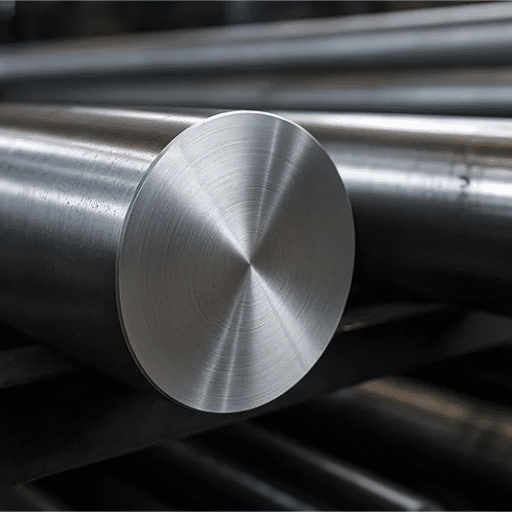
Zeron 100 vs 2507. Both are super duplex stainless steels. Both resist corrosion in extreme environments. Both offer roughly double the strength of standard 316L. So how do you choose between them?
The answer depends on your application. Zeron 100 (UNS S32760) carries more copper and tungsten for aggressive acid service. Duplex 2507 (UNS S32750) offers slightly higher tensile strength and excellent thermal conductivity for heat transfer equipment. This guide breaks down the differences in composition, mechanical properties, corrosion resistance, and cost so you can specify the right grade with confidence.
At Zhongzheng, we manufacture super duplex stainless steel pipe and tubing to ASTM A790 and ASME SA790. Whether your specification calls for UNS S32750 or S32760, our technical team verifies grade, heat treatment, and documentation before shipment.
What Is Super Duplex Stainless Steel?

Super duplex stainless steels contain a mixed microstructure of about 50% austenite and 50% ferrite. This dual-phase structure delivers exceptional strength and corrosion resistance. Standard duplex grades like 2205 perform well in moderate chloride environments. Super duplex grades like Zeron 100 and 2507 handle the most aggressive conditions.
The “super” designation comes from higher chromium, molybdenum, and nitrogen content. These additions push the Pitting Resistance Equivalent Number (PREN) above 40. A PREN above 40 means the material resists pitting and crevice corrosion even in hot, chloride-rich seawater.
Zeron 100 vs 2507: At a Glance
| Property | Zeron 100 (UNS S32760) | Duplex 2507 (UNS S32750) |
|---|---|---|
| Chromium | 24-26% | 24-26% |
| Nickel | 6-8% | 6-8% |
| Molybdenum | 3-4% | 3-5% |
| Copper | 0.5-1.0% | Trace |
| Tungsten | 0.5-1.0% | None |
| Nitrogen | 0.20-0.30% | 0.24-0.32% |
| PREN | >40 | >40 |
| Minimum Tensile Strength | 750 MPa | 795 MPa |
| Yield Strength | 550-620 MPa | 550 MPa min |
| Typical CPT | 80-100°C | 70-90°C |
Both alloys meet ASTM A790, A182, and A240 specifications. Both require solution annealing and rapid water quenching to preserve the ferrite-austenite phase balance.
Chemical Composition: What Sets Them Apart
Zeron 100 and 2507 share a similar base. The critical differences are copper and tungsten.
Copper in Zeron 100 improves resistance to sulfuric acid and non-oxidizing acids. This makes Zeron 100 the better choice for chemical processing environments with aggressive mineral acids.
Tungsten in Zeron 100 adds localized corrosion resistance. Tungsten stabilizes the passive film in hot chloride environments where pitting starts.
Higher nitrogen in 2507 strengthens the austenite phase and improves weldability. Nitrogen also raises the critical pitting temperature without adding costly nickel.
For most seawater and offshore applications, these composition differences produce nearly identical field performance. For chemical processing with sulfuric or phosphoric acid, Zeron 100’s copper content provides a measurable advantage.
Mechanical Properties Compared
Tensile and Yield Strength
Both alloys deliver roughly twice the yield strength of 316L austenitic stainless steel. This allows thinner wall sections and significant weight reduction.
- Zeron 100: 750 MPa minimum tensile strength, 550 MPa yield
- Duplex 2507: 795 MPa minimum tensile strength, 550 MPa yield
The higher tensile strength of 2507 matters in high-pressure piping and subsea umbilicals where every MPa of capacity counts. For structural supports and pressure vessels, both alloys exceed typical design requirements.
Impact Resistance and Toughness
Super duplex steels maintain toughness at temperatures down to -50°C. Both Zeron 100 and 2507 meet Charpy V-notch impact requirements for offshore platforms in the North Sea and Arctic regions.
The ferrite-austenite microstructure absorbs energy better than fully ferritic or fully austenitic steels. This dual-phase behavior prevents brittle fracture under sudden impact loads.
Corrosion Resistance: The Deciding Factor
Pitting and Crevice Corrosion
PREN measures resistance to localized corrosion. The formula is:
PREN = %Cr + 3.3(%Mo) + 16(%N)
Both Zeron 100 and 2507 achieve PREN values above 40. In practice, this means both alloys resist pitting in seawater at temperatures up to 50°C. At higher temperatures or in more aggressive brines, Zeron 100’s copper and tungsten provide a slight edge.
Critical Pitting Temperature (CPT)
CPT is the temperature at which pitting starts in a standard ferric chloride test. Higher is better.
- Zeron 100 CPT: 80-100°C depending on surface finish
- 2507 CPT: 70-90°C depending on surface finish
For heat exchangers handling hot brine or chemical process streams above 60°C, Zeron 100 offers more safety margin.
Stress Corrosion Cracking (SCC)
Both alloys resist chloride-induced stress corrosion cracking far better than 316L or 304. This is the primary reason engineers specify super duplex for seawater cooling systems and offshore risers. In sour gas environments with H₂S, both grades meet NACE MR0175/ISO 15156 requirements for oil and gas service.
Applications by Industry

Oil and Gas
Offshore platforms, subsea manifolds, and flowlines use both alloys extensively. Zeron 100 dominates in the North Sea and Gulf of Mexico, where seawater temperatures and chloride levels are highest. Duplex 2507 is common in heat exchangers and process piping where thermal conductivity matters.
Marine and Desalination
Seawater reverse osmosis (SWRO) plants and multi-stage flash (MSF) desalination units rely on super duplex for long service life. Zeron 100 has documented performance exceeding 20 years in seawater intake pumps. Both alloys work for high-pressure piping, but Zeron 100’s copper content provides extra protection in the evaporator sections where brine concentrates.
Chemical Processing
This is where Zeron 100 pulls ahead. Sulfuric acid, phosphoric acid, and organic acid environments attack the passive film on 2507 more aggressively. Zeron 100’s copper content stabilizes the film in these non-oxidizing acids. For concentrated sulfuric acid service above 90%, neither alloy is suitable — specialty nickel alloys like Alloy 20 or Hastelloy are required.
Power Generation
Cooling water systems, flue-gas desulfurization scrubbers, and geothermal plants use both grades. 2507’s higher thermal conductivity makes it slightly better for heat exchanger tubes. Zeron 100’s superior pitting resistance wins in cooling towers with high chloride blowdown.
Welding and Fabrication
Both alloys require controlled welding procedures. The heat-affected zone can lose phase balance if improperly welded. This reduces corrosion resistance and toughness.
Recommended filler metals:
- GTAW (TIG): ER2594 wire
- SMAW (Stick): E2594 electrodes
- GMAW (MIG): ER2594 with argon-rich shielding gas
Key welding rules:
- Interpass temperature must stay below 150°C
- Heat input should remain between 0.5 and 2.0 kJ/mm
- Post-weld heat treatment is generally not required if procedures are followed
- Solution annealing restores properties if the welding exceeds the recommended heat input
At Zhongzheng, we supply super duplex pipe and fittings with full weld procedure documentation. Our mill test reports include ferrite-austenite phase balance verification for every heat.
Zeron 100 vs 2507: Which Should You Choose?

Use this decision framework:
Choose Zeron 100 when:
- Your application involves sulfuric or phosphoric acid
- You need the highest pitting resistance in hot seawater
- Critical pitting temperature above 80°C is required
- Your specification explicitly calls for UNS S32760
Choose 2507 when:
- Your application is general seawater or offshore service
- You need slightly higher tensile strength for pressure ratings
- Thermal conductivity matters for heat transfer equipment
- Your specification calls for UNS S32750
- Cost savings over Zeron 100 improve project economics
For most marine and offshore applications, either alloy performs well. The practical difference is smaller than the data sheets suggest. In chemical processing with aggressive acids, Zeron 100 is the safer specification.
Frequently Asked Questions
What is the difference between Zeron 100 and 2507?
Zeron 100 contains copper and tungsten for superior acid resistance. Duplex 2507 offers slightly higher tensile strength and better thermal conductivity. Both are super duplex stainless steels with PREN values above 40.
Which is stronger: Zeron 100 or 2507?
Duplex 2507 has a slightly higher minimum tensile strength at 795 MPa compared to Zeron 100’s 750 MPa. Both alloys offer roughly double the yield strength of 316L stainless steel.
Can I weld Zeron 100 and 2507 together?
Yes, but use ER2594 filler metal and control interpass temperature below 150°C. Both alloys share similar welding procedures. Always verify ferrite-austenite phase balance in the weld zone.
Is Zeron 100 better than 2507 for seawater?
Both perform excellently in seawater. Zeron 100 has a slightly higher critical pitting temperature, which provides extra safety margin in hot tropical seawater or concentrated brine.
What does PREN mean?
PREN stands for Pitting Resistance Equivalent Number. It predicts resistance to pitting corrosion. PREN above 40 indicates excellent resistance. Both Zeron 100 and 2507 exceed this threshold.
What ASTM standards apply to these alloys?
ASTM A790 covers seamless and welded pipe. ASTM A182 covers forged fittings. ASTM A240 covers plate, sheet, and strip. Both alloys comply with all three standards.
Does Zhongzheng supply Zeron 100 and 2507?
Yes. Zhongzheng manufactures seamless pipe, welded pipe, and fittings in both UNS S32750 and S32760. We provide full MTRs with chemical analysis, mechanical testing, and phase balance documentation.
Conclusion
Zeron 100 vs 2507 is not a contest with one winner. Both are exceptional super duplex stainless steels that outperform standard austenitic grades in strength and corrosion resistance. The right choice depends on your specific environment.
For aggressive chemical service with sulfuric or phosphoric acid, specify Zeron 100. For general offshore, marine, and heat exchanger applications, 2507 delivers comparable performance at a lower cost. For critical sour gas service, both grades meet NACE MR0175 requirements when properly solution annealed and tested.
The most important specification decision is not Zeron 100 vs 2507. It ensures your supplier delivers genuine super duplex material with documented chemical composition, mechanical properties, and ferrite-austenite phase balance. Substandard material fails regardless of the grade on the label.
At Zhongzheng, we manufacture ASTM-certified super duplex stainless steel pipe with full traceability. Every heat is spectrographically verified. Every pipe is hydrostatically tested. If your project requires UNS S32750, S32760, or electropolished tubing for hygienic service, send us your specification. Our technical team will confirm grade, dimensions, and delivery within 24 hours.
Sources
- ASTM International, ASTM A790 / A790M — Standard Specification for Seamless and Welded Ferritic/Austenitic Stainless Steel Pipe
- NACE International, NACE MR0175 / ISO 15156 — Petroleum and natural gas industries — Materials for use in H₂S-containing environments
- Rolled Alloys, Zeron 100 Technical Data Sheet — UNS S32760 super duplex stainless steel properties and applications