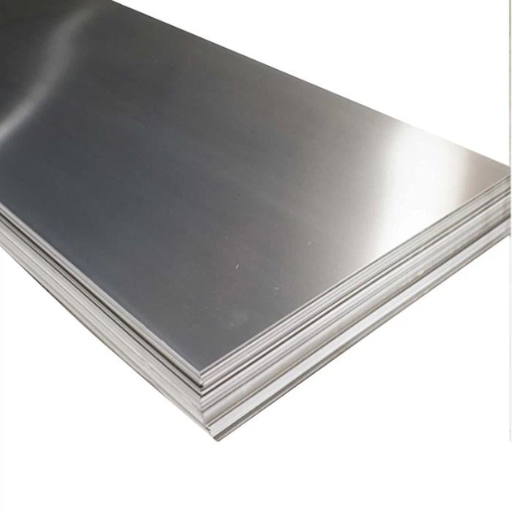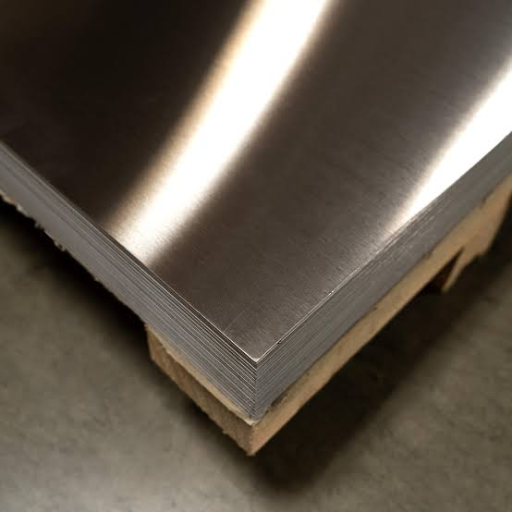
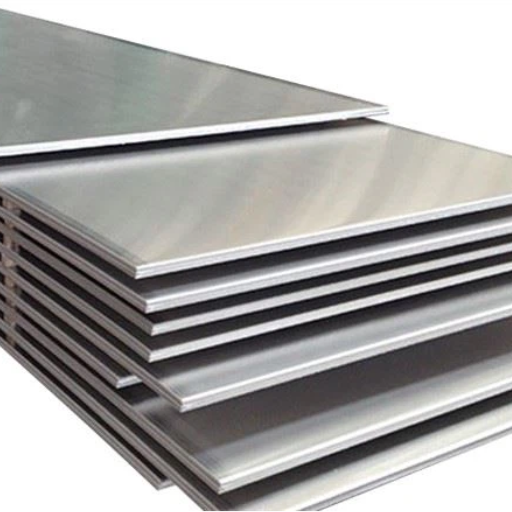
310S stainless steel is a 25% chromium, 20% nickel austenitic grade with 0.08% maximum carbon, ordered to ASTM A312 for pipe, A213 or A249 for tube, and A240 for plate. It is bought for oxidation resistance above roughly 900 °C, where 304 and 321 run out of chromium.
Most people meet this grade in the middle of a heat problem. A furnace door warps at 1,000 °C, a kiln liner scales through in two years, a radiant tube bulges. The quote comes back: change to 310S. Sometimes that is right. Sometimes it moves the failure from oxidation to embrittlement and adds nothing but a nickel bill.
The difference is temperature and atmosphere. 310S is the strongest oxidation answer in the standard austenitic family, and also the grade most likely to crack after long service in the 650–950 °C window. Those two facts sit one page apart on most data sheets and are never explained together.
Key Takeaways
- 310S is 25Cr-20Ni-0.08C (UNS S31008). The alloy content is the product; a certificate showing 18% chromium is not 310S, whatever the label says.
- No ASTM standard sets a maximum service temperature. Published oxidation guidance runs from 1,050 °C (EN 10095) to 1,100 °C (mill data, mildly cyclic), falling to 950 °C in high-sulfur gas and 850–950 °C when carburizing.
- 650–950 °C is the sigma-phase window. Long service there embrittles 310S, often making it the wrong grade for a continuous 700 °C line where 321 or 347 is cheaper and safer.
- 310S and 310H have identical room-temperature minimums. 310H buys creep rupture life and a grain-size requirement, not a higher tensile.
- Hardness limits depend on form. A312 pipe has none; A213 tube is capped at 192 HBW / 90 HRB, and A240 plate at 217 HBW / 95 HRB.
Specifying 310S for a furnace or kiln? Send the drawing with service temperature, atmosphere and cycle frequency. We will confirm whether 310S, 310H, 253 MA or a nickel alloy is right. Request a line-list review.
What Is 310S Stainless Steel?
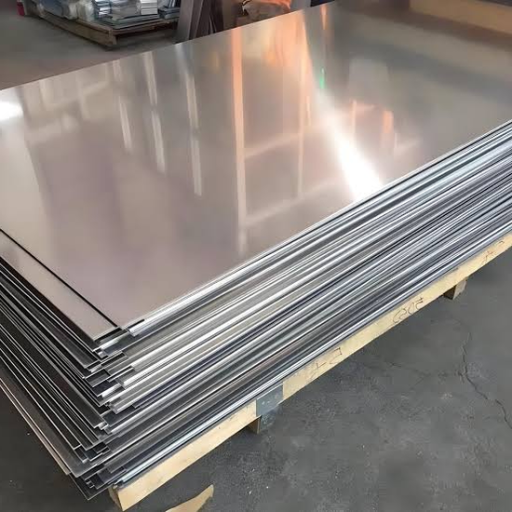
310S stainless steel is a fully austenitic, high-chromium, high-nickel stainless steel built for oxidation resistance and strength retention at elevated temperature. Its UNS number is S31008, the European designation is 1.4845 (X8CrNi25-21), the Japanese equivalent is SUS310S, and the Chinese grade is 06Cr25Ni20.
Chromium at 24.0–26.0% builds a passive layer that survives far hotter than the 18% layer on 304, nickel at 19.0–22.0% keeps the structure fully austenitic so the oxide stays attached under cycling, and carbon is capped at 0.08% to limit carbide precipitation. The “S” means low carbon, not “super”: it separates 310S from 310 stainless steel, the legacy 0.25% carbon grade.
That legacy grade still gets ordered, which is a problem. A312/A312M-25 does not list TP310, and A240/A240M-25a does not list UNS S31000 either; what you can buy to modern standards is 310S, 310H, 310Cb and 310HCb. A purchase order reading “TP310 to A312” has no grade to match, and what ships may be either S or H.
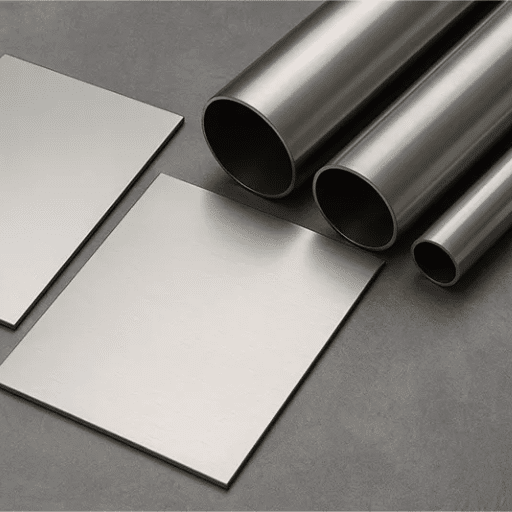
Product form decides the standard: A312 for pipe, A213 for seamless heat-exchanger tube, A249 for welded tube, A240 for plate. The chemistry is close across all four; the testing rules are not.
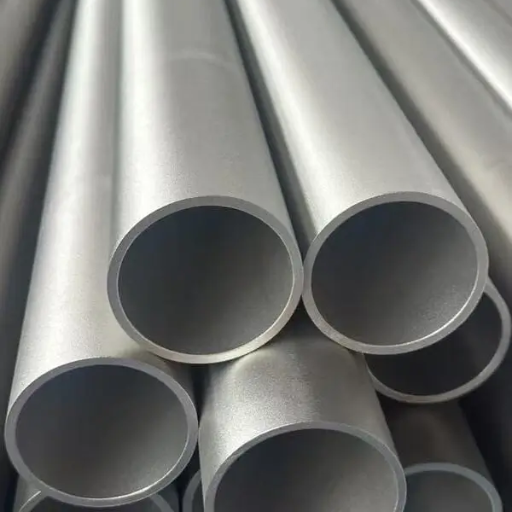
Zhongzheng produces 310S in welded and seamless pipe, including the TP310S welded pipe range, with EN 10204 3.1 mill certificates.
310S Stainless Steel Composition and Specifications
Two rows change depending on what you ordered.
| Element, % | 310S, A312 pipe | 310S, A240 plate | 310H, A312 pipe | 309S, A240 | 304, A240 |
|---|---|---|---|---|---|
| Carbon | 0.08 max | 0.08 max | 0.04–0.10 | 0.08 max | 0.08 max |
| Chromium | 24.0–26.0 | 24.0–26.0 | 24.0–26.0 | 22.0–24.0 | 18.0–20.0 |
| Nickel | 19.0–22.0 | 19.0–22.0 | 19.0–22.0 | 12.0–15.0 | 8.0–11.0 |
| Silicon | 1.00 max | 1.50 max | 1.00 max | 0.75 max | 0.75 max |
| Molybdenum | 0.75 max | not specified | not specified | not specified | not specified |
| Manganese | 2.00 max | 2.00 max | 2.00 max | 2.00 max | 2.00 max |
| Phosphorus | 0.045 max | 0.045 max | 0.045 max | 0.045 max | 0.045 max |
| Sulfur | 0.030 max | 0.030 max | 0.030 max | 0.030 max | 0.030 max |
The silicon and molybdenum rows cause rejections. A312 pipe caps silicon at 1.00% and molybdenum at 0.75%; A240 plate allows silicon to 1.50% and sets no molybdenum limit. A plate certificate can pass a plate order and fail a pipe order on one element, though both say “310S.”
| Property, specified minimum | A312 pipe (310S / 310H) | A213 tube | A249 welded tube | A240 plate |
|---|---|---|---|---|
| Tensile strength | 515 MPa (75 ksi) | 515 MPa | 515 MPa | 515 MPa |
| Yield, 0.2% offset | 205 MPa (30 ksi) | 205 MPa | 205 MPa | 205 MPa |
| Elongation | 35% long, 25% transverse | 35% | 35% | 40% |
| Hardness, max | none specified | 192 HBW / 90 HRB | 90 HRB / 200 HV | 217 HBW / 95 HRB |
A312/A312M-25 contains no hardness requirement for any grade. That is not an omission: A312 tests pipe by tension, flattening, hydrostatic or electric test, and grain size for the H grades. Supplier pages printing “95 HRB max” against TP310S pipe are pasting the A240 plate row onto a pipe table.
| Standard | Product form | 310 coverage | Watch for |
|---|---|---|---|
| ASTM A312 / SA312 | Seamless, welded, HCW pipe | TP310S, TP310H, TP310Cb, TP310HCb | No TP310; no hardness clause |
| ASTM A213 / SA213 | Seamless boiler and HX tube | TP310S, TP310H and Mo/Cb variants | 192 HBW / 90 HRB |
| ASTM A249 / SA249 | Welded HX and condenser tube | TP310S, TP310H | 90 HRB; reverse bend test |
| ASTM A240 / SA240 | Plate, sheet, strip | 310S, 310H, 310Cb, 310MoCbN | No S31000; Si 1.50 |
| ASTM A269 | General-service tube | No 310 grade listed | Do not order “A269 TP310S” |
A269/A269M-25 Table 1 has no 310 grade in any form, so a supplier offering “A269 TP310S” is quoting a specification that cannot cover the order. Ask which standard the certificate will name.
The A312 standard governs pipe, and the grade chart puts these numbers beside the rest of the austenitic family.
310S Stainless Steel Temperature Limits
No ASTM standard sets a maximum service temperature for 310S. A312, A213, A249 and A240 specify chemistry, mechanicals, heat treatment and testing, and none tells you how hot the pipe may run. Every figure quoted is a mill recommendation, a code figure or an oxidation test result, and the source decides the number.
| Source | Figure | Basis |
|---|---|---|
| BSSA, citing EN 10095 table B.2 | 1,050 °C | General oxidation service for 1.4845 |
| Sandmeyer Steel | 1,100 °C | Mildly cyclic oxidizing, sulfur ≤ 2 g/m³ |
| Sandmeyer Steel | 950 °C | Oxidizing, sulfur above 2 g/m³ |
| Sandmeyer Steel | 1,000 °C | Low-oxygen atmosphere |
| Sandmeyer Steel | 850–950 °C | Nitriding or carburizing atmospheres |
| Rolled Alloys | 1,093 °C (2,000 °F) | Oxidation, mildly cyclic |
The sulfur row surprises people. Above 2 g/m³ of sulfur, Sandmeyer drops the ceiling from 1,100 °C to 950 °C: a furnace on high-sulfur fuel does not get the same 310S life as one on clean gas, and the alloy cannot tell the difference. Where carburizing is severe, 310S is the wrong choice entirely, and Sandmeyer points to alloy 330 (N08330), whose 34–37% nickel absorbs carbon without forming the brittle surface layer.
Scenario: the kiln liner that scaled through. A 1,120 °C tunnel kiln specifies 310S liner plates because the grade “resists oxidation to 1,100 °C.” The plates are 6 mm, the cycle is continuous, and the fuel carries sulfur. At twelve months the hot face is heavily scaled; at eighteen months the 6 mm section measures 4 mm in places. Nothing was defective. The number had been quoted at its best condition, peak temperature in clean gas, against continuous service in dirty gas.
Above roughly 1,100 °C, 310S stops being a candidate: the next options are 253 MA (S30815) for cyclic oxidation and creep to about 1,150 °C, 330 for carburizing service, 800H for creep strength, then nickel alloys. At the cold end it keeps toughness to about −268 °C, which is why some 310S orders have nothing to do with heat.
The Sigma-Phase Trap, 650–950 °C
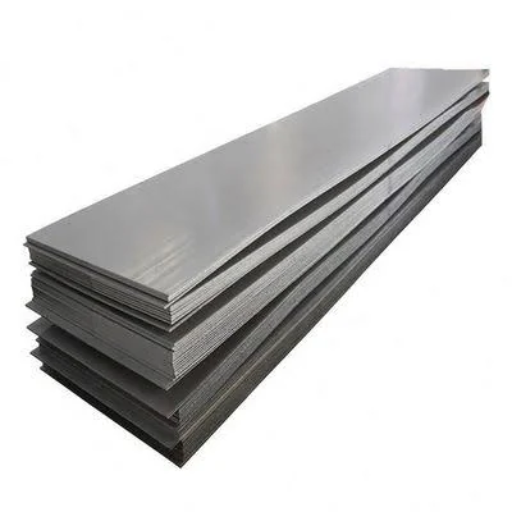
Between roughly 650 and 950 °C, 310S forms sigma phase: a hard, brittle intermetallic that precipitates at grain boundaries and removes toughness without changing appearance or room-temperature tensile strength. Sandmeyer gives the band as 1,202–1,742 °F. Inside it, long exposure is enough; nothing has to go wrong for sigma to form.
The consequence shows up at shutdown, hydrostatic test or cold restart. The pipe that passed every inspection at commissioning is now brittle at ambient temperature, and a thermal shock the design absorbed without notice can crack it. A solution anneal at 1,100–1,150 °C dissolves the sigma again, but annealing an installed kiln shell or field-welded line is rarely practical, which is why prevention beats recovery.
That is why 310S is badly matched to continuous service near 700 °C. The grade gets specified there because it is “the high-temperature one,” but 700 °C is below the oxidation ceiling 310S is bought for and squarely inside the window it is vulnerable to. At 700 °C with a welded joint that will not be annealed, the stabilized grades do the job without the hazard, and the 321 stainless steel pipe guide covers that decision.
Scenario: the reformer line that cracked cold. A 10 in 310S line runs continuously at 720 °C, passes hydrostatic testing at commissioning, and runs three years without a leak. During a planned shutdown it is drained and flushed with cool water, and a section near a support cracks through the wall. Metallurgy finds sigma along the grain boundaries and a brittle fracture. The operating temperature never exceeded design: the grade had been sitting inside its own embrittlement window the whole time.
310S Stainless Steel vs 310H, 309S, 253 MA, 330 and 800H
| Grade | UNS | Composition hook | Best for | Limit |
|---|---|---|---|---|
| 310S | S31008 | 25Cr-20Ni, C 0.08 max | Oxidation to ~1,050–1,100 °C, mildly cyclic | Sigma at 650–950 °C; no creep grade |
| 310H | S31009 | 25Cr-20Ni, C 0.04–0.10 | Creep and rupture above ~800 °C | Same sigma band; carbon hurts aqueous corrosion |
| 309S | S30908 | 22Cr-12Ni | Budget high-temperature service to ~1,000 °C | Less oxidation reserve |
| 253 MA | S30815 | 21Cr-11Ni, Si 1.4–2.0, N 0.14–0.20, Ce | Cyclic oxidation and creep above 1,000 °C | Not a wet-corrosion alloy |
| 330 | N08330 | 18Cr-35Ni, Si 0.75–1.50 | Carburizing and nitriding atmospheres | Costly; lower oxidation ceiling |
| 800H / 800HT | N08810 / N08811 | 32Ni-21Cr, C 0.05–0.10 | Creep strength at 900–1,000 °C | Nickel-alloy cost |
310S vs 310H
The H does not make the alloy stronger at room temperature. Both grades specify 515 MPa tensile and 205 MPa yield in A312 pipe, because those minimums come from the annealed austenitic structure, not from carbon.
What 310H buys is creep rupture life. Carbon at 0.04–0.10% forms carbides that pin grain boundaries at temperature, and A312 requires ASTM grain size No. 6 or coarser for TP310H so the structure resists creep. TP310S carries no grain-size requirement. A213 and A249 follow the same intent, though the A213-25 table gives No. 7 where A312 and A249 give No. 6, so confirm the edition and product form on the order.
The price of creep life is corrosion: higher carbon means more chromium carbide after high-temperature exposure, so 310H is the worse choice for any aqueous duty. Use 310H for pressure parts that must hold shape at 800–1,000 °C, and 310S for everything else.
310S vs 309S, 253 MA and 330
309S is the cheaper neighbor at 22Cr-12Ni, and BSSA puts its oxidation guide at 1,000 °C against 1,050 °C for 310, so at 950 °C with a tight budget it is a real option.
253 MA is the most overlooked of the group. It carries 1.4–2.0% silicon, 0.14–0.20% nitrogen and a cerium addition, and BSSA puts its oxidation guide at 1,150 °C, above 310S. Silicon and rare earths improve oxide adherence under cycling, exactly where 310S spalls, so when the problem is thermal cycling rather than steady temperature, 253 MA usually wins at similar cost.
330 answers carburizing and 800H answers creep; neither substitutes for 310S in oxidation service. The grade selection guide puts the family on one page.
310S Stainless Steel Corrosion Limits
310S is a heat-resistant grade, and its wet-corrosion performance is a by-product rather than a design feature. Sandmeyer is blunt: 310 is not designed for wet corrosive service, and the carbon that supports high-temperature properties works against aqueous corrosion resistance. Long high-temperature exposure also leaves it prone to intergranular corrosion, because chromium carbides form at the grain boundaries even at 0.08% carbon.
That rules it out of seawater and high-chloride water, where the absence of molybdenum means no pitting or crevice resistance and no protection against chloride stress corrosion cracking, and out of reducing acids such as sulfuric and hydrochloric, which attack the passive film faster than it rebuilds. The seawater selection guide covers what does work in chlorides. What it does earn is sulfidation resistance: its chromium resists sulfur-bearing hot gas better than most heat-resistant grades, which is why it appears in burner parts, flare tips and combustion chambers.
Need the grade checked against the atmosphere, not just the temperature? Send the gas analysis with the drawing. We will compare sulfur and oxygen against the oxidation data and say whether 310S, 253 MA or 330 is the right order. Request a specification review.
Welding and Heat Treatment
310S welds easily by every standard fusion process: TIG, plasma, MIG, shielded metal arc, submerged arc and flux-cored.
The filler is where buyers get caught. Rolled Alloys recommends AWS E310-15 electrodes or ER310 bare wire, the matching 25/20 composition, and that filler brings its own problem: 25/20 weld metal is fully austenitic, with no ferrite to resist hot cracking, and it forms sigma if the joint is later held in the 650–950 °C band. A312 Table 6 lists no filler for TP310S, because A312 welded pipe is made without filler.
Post-weld treatment is simple and often skipped: solution anneal at 1,900 °F (1,040 °C) minimum, then water quench or rapid cool, as A312, A213 and A249 require. The quench rate matters, because slow cooling through the carbide range undoes the anneal.
There is no stabilization anneal for 310S. A312 Supplementary Requirement S6 covers TP309HCb, TP310HCb, TP321, TP321H, TP347, TP347H, TP348 and TP348H, and 310S is absent because it has no titanium or niobium to stabilize. That gap traps fabricators: a shop used to stress-relieving stabilized grades at 870–900 °C applies the same cycle to a 310S weld, which relieves residual stress and puts the metal straight into the sigma window.
Scenario: the stress relief that did harm. A fabricator welding a 310S furnace shell applies an 870 °C stress-relief cycle because that is the shop standard for high-temperature stainless. The weld passes radiography. Sixteen months later a repair exposes cracks in the heat-affected zone that began at the grain boundaries: the cycle relieved residual stress and precipitated sigma at once. For 310S the right treatment is a full solution anneal where the joint allows it, and no thermal cycle where it does not.
Two supplementary requirements matter for aggressive duty. S7 invokes intergranular corrosion testing to ASTM A262 Practice E on the sensitized condition, and S9 is a weld decay test in boiling 50% hydrochloric acid, where the weld metal-to-base metal loss ratio must fall between 0.90 and 1.1. Neither happens unless it is on the purchase order.
How to Specify and Verify 310S Stainless Steel
What the order should state: grade and UNS (TP310S, S31008, not “310”); standard and edition (A312-25 for pipe, A213 for seamless tube, A249 for welded tube, A240 for plate); construction (SML, WLD or HCW); size and schedule; heat treatment (solution annealed, 1,040 °C minimum, rapid cool); testing (hydrostatic or NDE, plus S7 or S9 where warranted); certification (EN 10204 3.1 naming the standard); and marking.
What to check on the certificate: carbon 0.08% or below for 310S and 0.04–0.10% for 310H; chromium 24.0–26.0% and nickel 19.0–22.0%, since a heat at 18% chromium is a different alloy; silicon 1.00% or below and molybdenum 0.75% or below if the order was A312 pipe; grain size No. 6 or coarser for 310H; tensile at or above 515 MPa and yield at or above 205 MPa.
Three checks are easy to get wrong. A hardness value on an A312 pipe certificate means the mill tested to a standard it was not ordered to. A handheld XRF gun gives no reliable carbon number, so order laboratory combustion analysis when carbon carries the decision. And a certificate naming A240 on an order that specified A312 is no paperwork inconvenience: the standards differ on silicon, molybdenum, hardness and elongation, so material can meet one and fail the other.
The A312 pipe guide covers the general standard, and the quality control page describes how heat-level verification works on our side.
Where 310S Pipe and Tube Earn Their Place
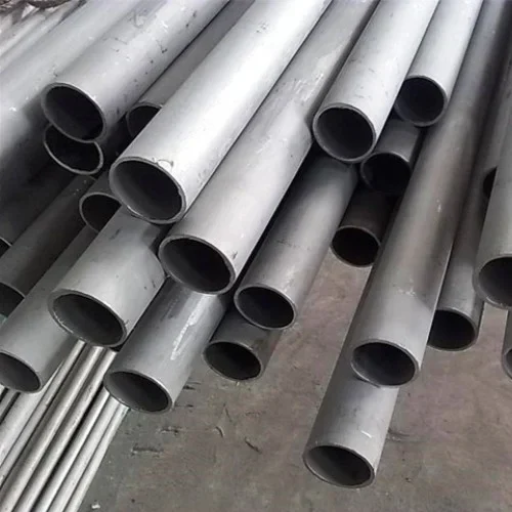
The applications that justify the nickel all share one feature: the metal runs where 304 and 321 oxidize away.
- Furnace and kiln internals. Radiant tubes, muffles, retorts, annealing covers, burner grids, walking beams, doors.
- Fluidized-bed and coal-combustor components. Grids, wind boxes, tube hangers and burner shields, where sulfur resistance matters as much as temperature.
- Thermowells, refractory anchors and flare tips. Small parts in hot gas, where thin sections make oxidation life decisive.
- Heat-exchanger and superheater tube. In A213 or A249 form, above the 321 gas-side limit.
- Cryogenic and non-magnetic parts. Toughness to −268 °C, low permeability.
The heat-exchanger tube range covers the tube forms, and the 310S pipe page covers the pipe product line. The places it should not go are as clear: continuous 650–950 °C service, aqueous chlorides, seawater, hygienic surfaces, and any duty where a cheaper stabilized grade meets the same temperature.
FAQ
What is the difference between 310 and 310S stainless steel?
310 stainless steel is the legacy grade with up to 0.25% carbon. 310S (UNS S31008) caps carbon at 0.08% to reduce carbide precipitation and improve weldability. Modern standards list 310S, not 310: A312/A312M-25 has no TP310 grade and A240/A240M-25a has no UNS S31000.
What is the maximum temperature for 310S stainless steel?
No ASTM standard specifies one. The published oxidation guide is 1,050 °C from EN 10095 and about 1,100 °C from mill data under mildly cyclic conditions with sulfur below 2 g/m³; above that sulfur level it falls to 950 °C, and in carburizing atmospheres to 850–950 °C. Treat these as atmosphere-based guidance, not a code limit.
Is 310S better than 304 or 321?
Only above roughly 900 °C. Below that, 304 is cheaper and does the same job, and 321 handles the 425–815 °C weld-sensitization problem better because it is stabilized. 310S wins at 950–1,100 °C and loses in the sigma band, where it embrittles.
What is 310S welded with?
Matching 25/20 filler, typically AWS ER310 bare wire or E310-15 electrodes. A312 Table 6 leaves TP310S blank because A312 welded pipe is made without filler. The weld metal is fully austenitic and prone to hot cracking and sigma, so the procedure needs care and a solution anneal at 1,040 °C or above where the joint allows it.
Is 310S stainless steel magnetic?
No, in the annealed condition. The 19–22% nickel keeps the structure fully austenitic, so permeability stays low even at cryogenic temperature. Cold working can introduce slight magnetism, and welded joints may respond weakly.
Does 310S rust?
Not in clean, dry, high-temperature service. It corrodes in aqueous chlorides, seawater and reducing acids, and is prone to intergranular corrosion after long exposure at temperature. It is a heat-resistant grade first; do not assume wet-corrosion performance from its chromium content.
The Grade You Buy for Oxidation, Not for Prestige
The grade earns its price in one situation: metal that must survive oxidizing gas above roughly 900 °C, where the 18% chromium grades oxidize through. Four decisions settle the order. Is the temperature genuinely above 900 °C? Is the atmosphere clean enough for the 1,050–1,100 °C figure, or do sulfur and carbon cut it to 950 °C or lower? Does the service sit in the sigma window, where 321 or 347 is safer? And do the certificate’s product form and standard match the order?
Get those right and 310S is a long-lived material. Get them wrong and it becomes the most expensive way to move a failure from the tube wall into the heat-affected zone.
Have a furnace or kiln line to specify? Send the drawing with service temperature, atmosphere and cycle. We will confirm the grade and standard, and quote TP310S in seamless or welded construction. Send your line list.