A stainless steel grade chart is a lookup table. You read across a row; you find four numbers that decide the specification: chromium, nickel, molybdenum, and the specified minimum yield strength. Everything else follows from those four.
Most of the grade charts you’ll find online get one thing wrong, and it isn’t a typo. They publish typical values in columns that engineers read as guaranteed minimums. A page says 316 has 620 MPa tensile because that’s what one mill’s test certificate happened to show. ASTM A312 requires 515 MPa.
If you design to the higher number, you’ve designed to a value nobody has agreed to supply.
That is the problem this stainless steel grade chart is built to fix. Every mechanical column below names its basis and its governing standard. Every temperature figure carries the caveat that no standard sets one. Every cost figure is an index, not a price, because prices go stale and this page is meant to be linked to for years.
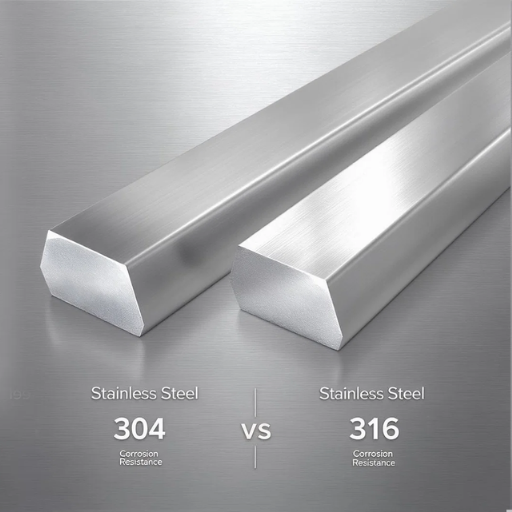
The chart covers ten grades across all four families, from 304 through 2507. For the decision framework behind the numbers, the full 304 vs 316 comparison covers grade selection end to end.
If you already know your service conditions and just need the grade confirmed against them, send them to our technical team, and we will come back within 24 hours.
Key Takeaways
- A grade chart is only usable if it separates specified minimums from mill typicals. In ASTM A312, 304 and 316 both carry a 515 MPa tensile minimum and a 205 MPa yield minimum; the higher numbers on vendor pages are typicals, not requirements.
- PREN (Cr + 3.3 Mo + 16 N) is the fastest way to rank chloride resistance: about 18 for 304, 25 for 316 and 316L, 25 for 310S, 35 for 2205, 43 for 2507.
- No ASTM standard sets a maximum service temperature for any of these grades. The temperature column is mill datasheet guidance limited by oxidation, sigma phase, or 475 °C embrittlement, and it isn’t a specification limit.
- Duplex wins on strength, not corrosion alone. 2205 carries a 450 MPa specified minimum yield against 170 MPa for 316L, roughly 2.6 times, with a higher PREN than 316.
- Grade equivalents across UNS, EN and GB are approximate. They map closely enough to start a conversation and not closely enough to substitute one for another without checking the full analysis.
Stainless Steel Grade Chart
Here are the four grades that account for most specification arguments, side by side. If you only need one stainless steel comparison chart, this is the one.
Yield is the specified minimum under ASTM A312 for austenitic pipe and ASTM A240 for duplex plate.
| Grade | UNS | Cr % | Ni % | Mo % | PREN | Yield min (MPa) |
|---|---|---|---|---|---|---|
| 304 | S30400 | 18.0–20.0 | 8.0–11.0 | none | ≈18 | 205 |
| 316L | S31603 | 16.0–18.0 | 10.0–14.0 | 2.00–3.00 | ≈25 | 170 |
| 2205 | S32205 | 22.0–23.0 | 4.5–6.5 | 3.0–3.5 | ≈35 | 450 |
| 2507 | S32750 | 24.0–26.0 | 6.0–8.0 | 3.0–5.0 | ≈43 | 550 |
Note what those two columns do: 316L has the lowest yield in that table and the second-lowest PREN. Those two facts are unrelated, and confusing them is the most common specification error in this family.
Now the full stainless steel grades chart. Ten grades, four families, one page.
Every strength figure is a specified minimum, not a mill typical. Austenitic minimums are from ASTM A312, duplex and super-austenitic minimums from ASTM A240, and PREN is calculated from the composition ranges in those standards.
| Grade | Family | UNS | Cr % | Ni % | Mo % | Other % | C max % | PREN | Tensile min (MPa) | Yield min (MPa) | Elong. min % | Typical max continuous service temp (°C), not a spec limit |
|---|---|---|---|---|---|---|---|---|---|---|---|---|
| 304 | Austenitic | S30400 | 18.0–20.0 | 8.0–11.0 | none | none | 0.08 | ≈18 | 515 | 205 | 35 | ≈870–925 °C |
| 316 | Austenitic | S31600 | 16.0–18.0 | 10.0–14.0 | 2.00–3.00 | none | 0.08 | ≈25 | 515 | 205 | 35 | ≈870–925 °C |
| 316L | Austenitic | S31603 | 16.0–18.0 | 10.0–14.0 | 2.00–3.00 | none | 0.030 | ≈25 | 485 | 170 | 30 | ≈870–925 °C |
| 321 | Austenitic | S32100 | 17.0–19.0 | 9.0–12.0 | none | Ti ≥5×C | 0.08 | ≈18 | 515 | 205 | 35 | ≈870–925 °C |
| 347 | Austenitic | S34700 | 17.0–19.0 | 9.0–13.0 | none | Nb+Ta ≥10×C | 0.08 | ≈18 | 515 | 205 | 35 | ≈870–925 °C |
| 310S | Austenitic | S31008 | 24.0–26.0 | 19.0–22.0 | none | none | 0.08 | ≈25 | 515 | 205 | 35 | ≈1,100–1,150 °C |
| 904L | Super-austenitic | N08904 | 19.0–23.0 | 23.0–28.0 | 4.0–5.0 | Cu 1.0–2.0 | 0.020 | ≈34–36 | 490 | 220 | 35 | ≈400 °C |
| 2205 | Duplex | S32205 | 22.0–23.0 | 4.5–6.5 | 3.0–3.5 | N 0.14–0.20 | 0.030 | ≈35 | 620 | 450 | 25 | ≈300 °C |
| 2507 | Super duplex | S32750 | 24.0–26.0 | 6.0–8.0 | 3.0–5.0 | N 0.24–0.32 | 0.030 | ≈43 | 800 | 550 | 25 | ≈300 °C |
| 17-4PH | Precipitation-hardening | S17400 | 15.0–17.5 | 3.0–5.0 | none | Cu 3.0–5.0, Nb+Ta 0.15–0.45 | 0.07 | ≈16 | Condition-dependent | Condition-dependent | Condition-dependent | ≈300 °C |
Three notes before you read anything into it.
The temperature column is not a specification limit. No ASTM standard sets a maximum service temperature for austenitic stainless steel. The figures are mill datasheet guidance, and each one is limited by a different mechanism: oxidation for the austenitics, sigma-phase formation for 904L, 475 °C embrittlement for the duplex grades, and overaging for 17-4PH. Treat the column as a prompt to check a datasheet, not as a number to write into a purchase order.
17-4PH has no single strength figure. It is supplied in conditions, and the condition sets the properties. In H900 it reaches roughly 1,310 MPa tensile; in H1150 it is closer to 1,000 MPa. Publishing one number for this grade would be worse than publishing none, so the chart doesn’t.
Carbon limits differ by product form. A240 sets 0.030% for L grades, A312 permits 0.035%, and A276 covers bar and forgings. If you are specifying pipe rather than plate, the 316L pipe specification sets out the A312 requirements for this grade.
How to Read This Chart
The word that matters most in the header row is minimum. A specified minimum is a contractual floor. The mill must meet it on every heat, and if it doesn’t, the material is non-conforming and you can reject it.
A typical is an observation about what one producer usually achieves. It carries no obligation at all.
The trap works like this. A buyer compares grades on a vendor page that quotes typical tensile values, designs a pressure rating to the higher figure, and then receives material that meets the standard minimum and misses the number the design assumed. The material is compliant. The design margin is gone.
Two habits prevent it. First, read the header before the numbers. Second, when a supplier quotes a strength figure, ask which standard clause it comes from. A supplier who can’t name the clause is quoting a datasheet, not a specification.
If you are checking a specific grade against a specific service condition, send the line list to our technical team and we will confirm the grade, the governing standard and the documentation package before production.
Types of Stainless Steel: The Four Families
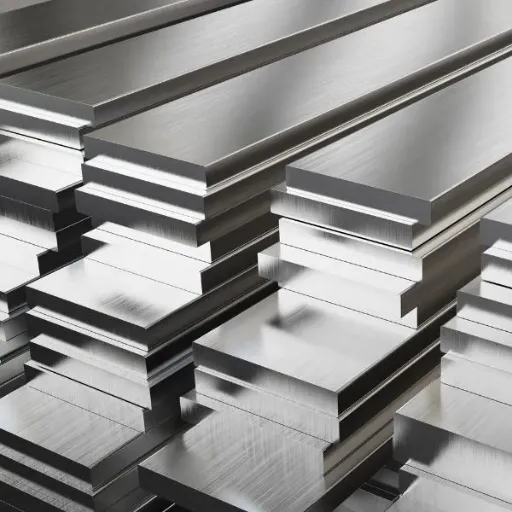
A stainless steel grade is a named combination of chemical composition and specified minimum properties, registered so that a buyer and a seller can agree on what will be delivered. The name is the contract. Everything else in this article is a consequence of that.
The grades fall into four families, and the family explains more about a grade’s behaviour than any single element does.
Austenitic grades carry nickel at 8% or above, which stabilises the face-centred cubic structure. They are non-magnetic in the annealed condition, formable, and weldable by every common process. This is the 300 series, and it accounts for the majority of stainless steel tonnage worldwide. 304, 316, 316L, 321, 347 and 310S are all austenitic, and they differ mainly in what has been added to handle a specific service condition.
Ferritic and martensitic grades are the 400 series. Ferritics such as 430 carry chromium with little or no nickel, stay magnetic, and cost less. Martensitics such as 410 and 420 gain hardness through heat treatment rather than through alloying, which is why they appear in cutlery and wear parts rather than process piping. Neither family is in the chart above because neither is a realistic substitute for the grades that are.
Duplex grades hold a mixed austenite-ferrite microstructure, roughly half and half. That structure is why 2205 delivers a 450 MPa specified minimum yield, about 2.6 times 316L’s 170 MPa, while beating it on PREN. It is also why duplex has a temperature ceiling at the bottom of the range rather than the top. Duplex corrosion resistance covers the chloride behaviour and the stress corrosion cracking advantage.
Precipitation-hardening grades such as 17-4PH are martensitic with copper and niobium additions that form fine precipitates during an ageing treatment. They reach very high strength through heat treatment rather than cold work, which is why the properties depend entirely on which condition you order.
Stainless Steel Grades Explained: What the Numbers Mean
The 300-series numbering isn’t arbitrary. The first digit indicates the family, and the following digits encode the alloying additions in a rough sequence. In practice, you don’t need to decode it, because four grades cover most of the decision space and each one exists for a reason you can state in a sentence.
304 is the default. It handles atmospheric exposure, fresh water, food contact and most process chemistry that doesn’t involve chlorides. If nothing in the service condition argues for something else, 304 is the answer, and it’s often the correct answer rather than the cheap one.
316 adds 2.00 to 3.00% molybdenum, which raises PREN from about 18 to about 25. That’s the entire change, and it’s worth paying for in chloride service and worth refusing in chloride-free service. Where 316L stops resisting chloride sets out the measured crevice temperatures and the three conditions that defeat it anyway.
316L is 316 with carbon capped at 0.030% instead of 0.08%. The L doesn’t improve pitting or crevice resistance at all. What it does is prevent chromium carbide precipitation in the weld heat-affected zone, which is the mechanism behind intergranular corrosion. If your spools are welded, this is the grade you want, and the reason has nothing to do with PREN.
321 and 347 are stabilised grades. Titanium in 321 and niobium plus tantalum in 347 preferentially combine with carbon, so chromium stays in solution and can’t be depleted at grain boundaries. That makes them the correct choice for sustained service inside the 425 to 815 °C sensitization band, where an L grade’s low carbon isn’t enough because the exposure is continuous rather than a single weld cycle. The British Stainless Steel Association publishes grade data sheets that set out both limits side by side.
310S is the high-temperature grade. Chromium at 24 to 26% and nickel at 19 to 22% push oxidation resistance to roughly 1,100 to 1,150 °C, well beyond what 304 or 316 will survive. It is the grade you specify when the problem is heat rather than chloride.
904L adds molybdenum at 4 to 5% plus copper at 1 to 2%, which is what makes it the standard choice for sulphuric acid and phosphoric acid service, a ranking the Nickel Institute charts by medium. Its PREN of 34 to 36 sits close to duplex 2205, but it remains fully austenitic and therefore far easier to weld.
PREN and the Chloride Question
The pitting resistance equivalent number is a single figure that ranks grades by chloride resistance:
PREN = Cr + 3.3 × Mo + 16 × N
The 3.3 multiplier is the part worth remembering. One point of molybdenum is worth more than three points of chromium, which is why 316 reaches PREN 25 on 2.5% molybdenum while 310S needs 25% chromium to get to the same place. Nitrogen is the most efficient addition of all in duplex grades, which is why 2507 hits 43.
Read as a ladder, the chart above gives you: about 16 for 17-4PH; 18 for 304, 321 and 347; 25 for 316, 316L and 310S; 34 to 36 for 904L; 35 for 2205; 43 for 2507.
Two warnings about using it. PREN ranks grades; it doesn’t predict a service life. It ignores temperature, crevice geometry, and chloride concentration, and all three decide real outcomes.
A PREN of 25 also doesn’t mean a grade is safe at every temperature and chloride level. Duplex 2205 versus 316L works through the point where the ladder stops being the deciding factor.
Stainless Steel Grade Equivalents: UNS, EN and GB
Every grade carries at least three names, and buyers sourcing internationally need all of them. The UNS number is the American unified designation. The EN number is the European designation. The GB designation is the Chinese national standard, and it was reformatted under GB/T 20878, so older drawings may carry the previous format.
| Grade | UNS | EN | GB (current format) |
|---|---|---|---|
| 304 | S30400 | 1.4301 | 06Cr19Ni10 |
| 316 | S31600 | 1.4401 | 06Cr17Ni12Mo2 |
| 316L | S31603 | 1.4404 | 022Cr17Ni12Mo2 |
| 321 | S32100 | 1.4541 | 06Cr18Ni11Ti |
| 347 | S34700 | 1.4550 | 06Cr18Ni11Nb |
| 310S | S31008 | 1.4845 | 06Cr25Ni20 |
| 904L | N08904 | 1.4539 | 015Cr21Ni26Mo5Cu2 |
| 2205 | S32205 | 1.4462 | 022Cr23Ni5Mo3N |
| 2507 | S32750 | 1.4410 | 022Cr25Ni7Mo4N |
| 17-4PH | S17400 | 1.4542 | 05Cr17Ni4Cu4Nb |
These are approximate mappings, not interchangeable specifications. The trap is a buyer who substitutes a GB or EN designation for an ASTM one on the assumption that equivalent means identical, and then discovers a composition difference in an element the equivalence table never listed. A grade can sit inside the EN range and outside the ASTM range on the same element, or carry a residual that changes weldability without appearing in any of the three names.
The safe procedure is to name the governing standard in the purchase order, not just the grade. “316L to ASTM A312” is a specification. “316L equivalent” is an intention.
What This Chart Does Not Tell You
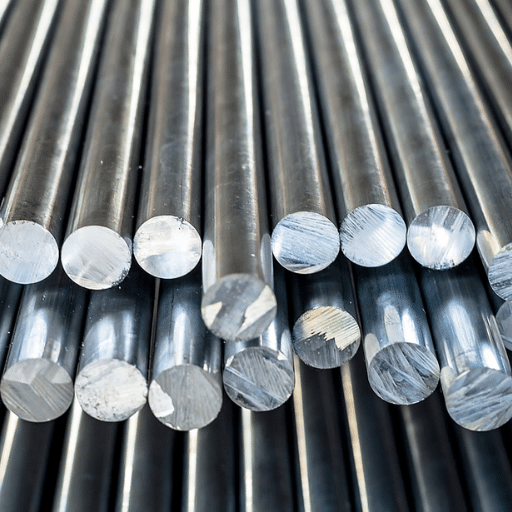
A stainless steel grade chart is a compression of a datasheet, and compression loses things. Four of them matter enough to state.
Temperature is a service question, not a grade question. The column above gives mill guidance, and every figure in it is limited by a different mechanism. What actually limits your component may be oxidation, creep strength, sigma-phase embrittlement, thermal fatigue or something else entirely. None of those appear in a grade chart, and none of them are covered by a standard minimum.
Cost is an index, not a price. With 304 set at 1.0, 316L runs roughly 1.3 to 1.6 times, 2205 roughly 1.8 to 2.2, 904L and 2507 roughly 3 to 4, and 17-4PH roughly 3 to 5. Those multipliers move with nickel and molybdenum markets and were set in November 2026. Any absolute price on a reference page is wrong within a quarter, which is why this page doesn’t carry one.
Availability and product form are not in the chart either. A grade that exists as plate may not exist as seamless pipe in your diameter, and a grade that exists in both may carry a mill minimum order that changes the economics entirely. This is usually the constraint that decides a specification, and it’s the one no chart can answer.
And the chart says nothing about fabrication. Duplex grades need tighter heat input control than austenitics. 17-4PH needs a specific ageing treatment after welding. 904L is more forgiving than either but slower to machine.
Duplex stainless steel welding covers the heat-input limits, and ASTM A790 duplex pipe sets out the grades, heat treatment, and test regime. The 304 side of the specification is in the 304 pipe specification.
Stainless Steel Grade Chart: Frequently Asked Questions
What are the grades of stainless steel?
There are more than 100 registered grades, but four families cover the field: austenitic (the 300 series, including 304, 316 and 316L), ferritic and martensitic (the 400 series), duplex (2205 and 2507), and precipitation-hardening (17-4PH). The ten grades in the chart above account for the large majority of industrial specification decisions.
What is the difference between 304 and 316 stainless steel?
Molybdenum. 316 carries 2.00 to 3.00% molybdenum and 304 carries none, which lifts PREN from about 18 to about 25 and buys roughly 15 to 25 °C of extra crevice-corrosion headroom under ASTM G48 Method B. In chloride-free service the two grades perform almost identically, and 304 is the correct specification rather than the budget compromise.
Is 316 stronger than 304?
No. ASTM A312 sets identical specified minimums for both grades: 515 MPa tensile, 205 MPa yield and 35% elongation. The same is true of 304L and 316L, both at 485 MPa tensile and 170 MPa yield. Molybdenum buys corrosion resistance and nothing else. Any page quoting a strength difference between 304 and 316 is quoting typicals.
What does the L mean in 316L?
Low carbon, capped at 0.030% in ASTM A240 or 0.035% in A312, against 0.08% for the standard grade. The lower carbon prevents chromium carbide precipitation during welding, which protects the heat-affected zone from intergranular corrosion. It doesn’t improve pitting or crevice resistance, and it doesn’t extend the service temperature range.
Which stainless steel grade is most corrosion resistant?
Of the ten in the chart, 2507 has the highest PREN at about 43, followed by 2205 at about 35 and 904L at 34 to 36. That ranking holds for chloride-driven pitting and crevice attack. It doesn’t hold universally: 904L outperforms the duplex grades in sulphuric acid, and 304 outperforms 316 in strongly oxidising media such as nitric acid.
What is a good PREN for seawater service?
There is no specification threshold, but the working convention in offshore procurement is PREN above 40 for seawater-facing components, which puts 2507 in scope and 2205 at about 35 marginal. Duplex versus super duplex stainless steel sets out where that boundary actually falls. Ambient, clean, flowing seawater is a different case from warm, stagnant or chlorinated seawater, and the second condition defeats far more grades than the first.
Are UNS, EN and GB grade designations interchangeable?
No. They map closely and are useful for identifying a starting point, but the composition ranges differ at the edges and the mechanical requirements can differ too. Specify the governing standard alongside the grade name, and verify the full chemical analysis against that standard rather than against an equivalence table.
Can I use this chart to specify a grade?
Use it to shortlist, not to specify. A specification names the grade, the product standard, the dimensions, the mechanical requirements, the test regime and the documentation package. The chart gives you the first item and a starting point on the second. Everything after that belongs in the purchase order.
Conclusion: Specify From the Standard, Not the Blog
A stainless steel grade chart is a starting point, and the value of this one is that it tells you where the starting point ends.
The four numbers that matter are chromium, nickel, molybdenum and specified minimum yield. PREN turns the first three into a single ranking that runs from 18 for 304 to 43 for 2507. The L suffix changes none of that and changes everything about weld-zone integrity.
Duplex more than doubles the yield without doubling the corrosion resistance. None of it’s complicated once the basis of each number is stated.
What this chart can’t do is tell you the maximum service temperature, the delivered price or the availability of your diameter. Those are questions for a datasheet, a quotation and a mill, respectively, and any page that answers them confidently is guessing.
Before you specify, get three things in writing: the governing standard, the specified minimum you are designing to, and the condition of supply. Everything else in this article is a shortcut to those three.
Send us your line list with the service conditions, and we will confirm grade, standard, dimensions, and delivery within 24 hours. If the chart says 304 is the right answer, we will tell you that too.