904L stainless steel is a super-austenitic grade (UNS N08904, EN 1.4539) with 19–23% chromium, 23–28% nickel, 4–5% molybdenum and 1–2% copper. It is specified for sulfuric and phosphoric acid service that 316L cannot survive, and for chloride-bearing process water where 316L is prone to stress-corrosion cracking.
Two buyers typed that query this morning. One runs a 70 °C phosphoric acid line and needs pipe that will not pit through in eighteen months. The other wants to know why a stainless watch case costs more than a used car.
Both are asking the right question. You have probably read that 904L is “better than 316L.” That’s true inside a narrow window of acid concentration and temperature, and false outside it. This guide gives you the window: the composition that does the work, the product-form limits most suppliers blur, the temperature ceiling and its basis, and an honest answer on the Rolex connection.
Key Takeaways
- 904L is UNS N08904 / EN 1.4539: 19–23% Cr, 23–28% Ni, 4–5% Mo, 1–2% Cu, 0.020% C max. Copper is the element that separates it from 316L in sulfuric acid.
- It owns the 20–85% sulfuric acid gap. Full 0–100% resistance is a claim at 35 °C and below, not a universal one.
- PREN runs 32–36, close to 2205 duplex and well below 254 SMO at about 43. It is not a 6Mo substitute.
- It is not a high-temperature alloy. Mill guidance stops at 550 °C for prolonged service; ASME design data stop at 371 °C.
- The product form changes the numbers. A312 pipe has no hardness limit, A269 tube has no tensile requirement, and A240 plate is the only common form with a 220 MPa yield minimum.
Sizing 904L for an acid line? Send the line list with concentration, temperature and chloride level. Our technical team will confirm the grade, standard and wall thickness, and reply within 24 hours. Request a line-list review.
What Is 904L Stainless Steel?
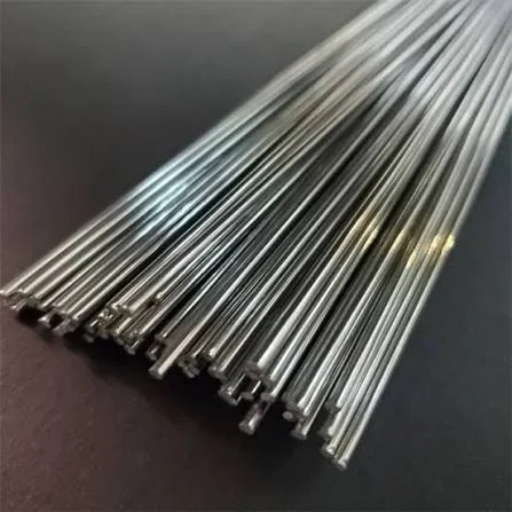
904L stainless steel is a fully austenitic, copper-bearing super-austenitic stainless steel with about 20% chromium, 25% nickel, 4.5% molybdenum and 1.5% copper. The copper and high nickel content give it resistance to sulfuric and phosphoric acid, and to chloride stress-corrosion cracking, beyond what 316L delivers.
UNS N08904 is the American designation and EN 1.4539 is the European number. X1NiCrMoCu25-20-5 is the EN chemical symbol, and “904L” is the common trade name. All of them describe the same austenitic chemistry.
“Super-austenitic” refers to the nickel, molybdenum and copper level, not to a hardness class. Annealed 904L is non-magnetic. Heavy cold work can produce a slight magnetic response, so a magnet is not a grade test.
It is also the steel in a Rolex case. Rolex calls its version Oystersteel and states that it is grade 904L, produced for the company since 1985. That’s the same UNS N08904 described here, not a proprietary metallurgy. The watch connection explains a large share of the search demand, and a large share of the confusion.
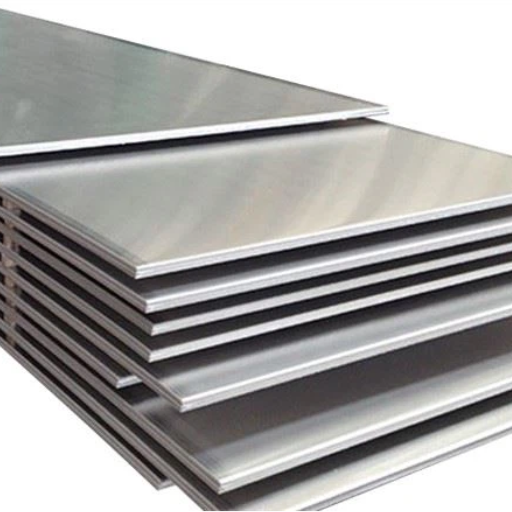
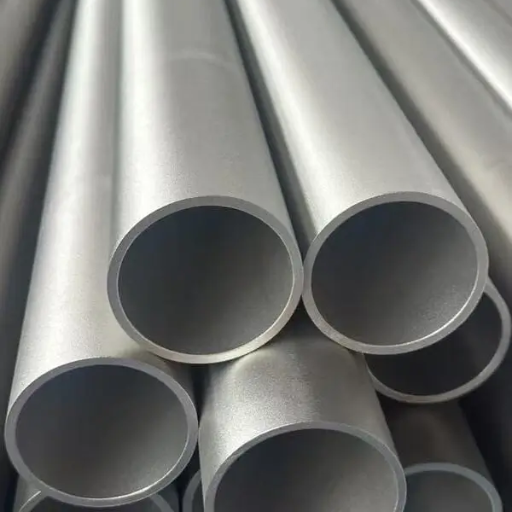
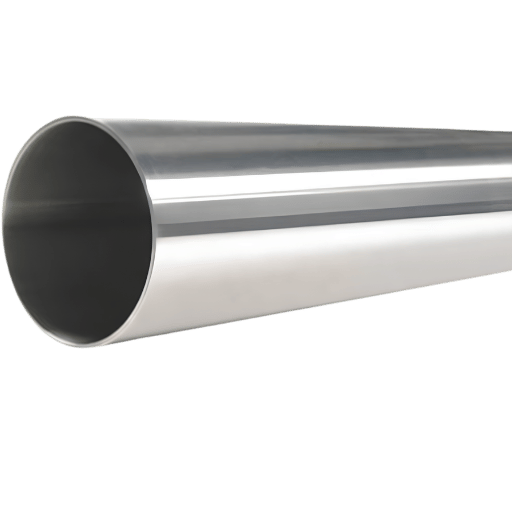
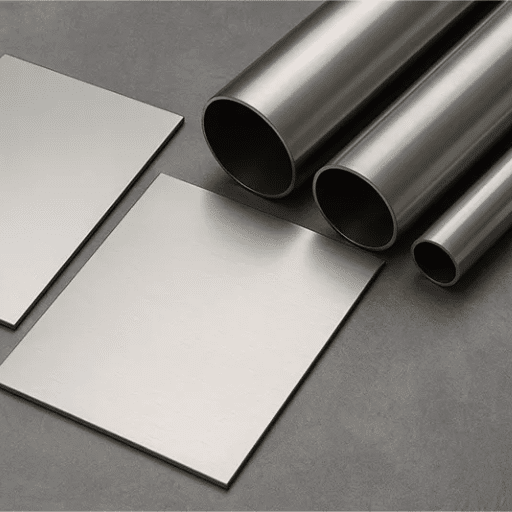
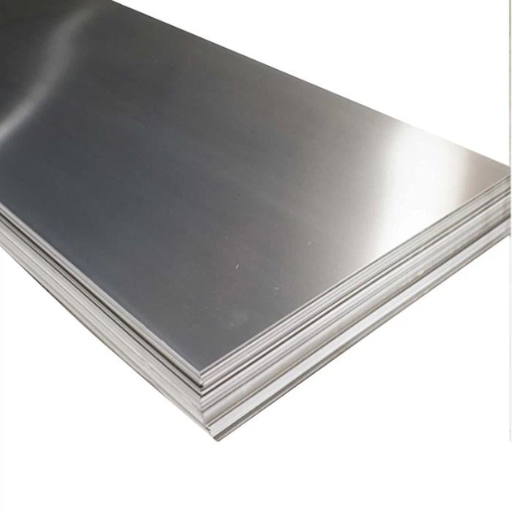
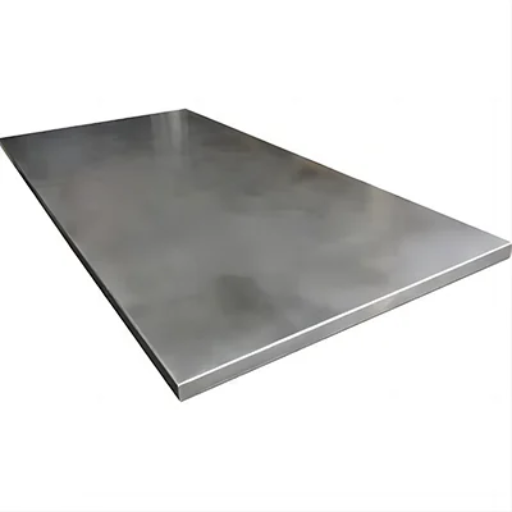
Typical physical values are density 8.0 g/cm³, melting range 1,300–1,390 °C and modulus of elasticity 200 GPa. The main 904L stainless steel properties appear in the tables below, starting with chemistry. Product form decides the standard: A312 for pipe, A213 or A249 for heat-exchanger tube, A269 for general-service tube and A240 for plate. We manufacture 904L heat-exchanger tube and 904L sanitary tube to those routes, and the existing 904L stainless steel pipe page covers the pipe range.
904L Stainless Steel Composition and Specifications
Composition: the copper is the difference
| Grade | UNS | C max | Cr | Ni | Mo | Cu | N max | PREN |
|---|---|---|---|---|---|---|---|---|
| 904L | N08904 | 0.020 | 19.0–23.0 | 23.0–28.0 | 4.0–5.0 | 1.0–2.0 | 0.10 | 32–36 |
| 316L | S31603 | 0.030 | 16.0–18.0 | 10.0–14.0 | 2.0–3.0 | not specified | 0.10 | 24–26 |
| 317L | S31703 | 0.030 | 18.0–20.0 | 11.0–15.0 | 3.0–4.0 | not specified | 0.10 | 29–31 |
| 2205 | S32205 | 0.030 | 22.0–23.0 | 4.5–6.5 | 3.0–3.5 | not specified | 0.14–0.20 | 34–36 |
| 254 SMO | S31254 | 0.020 | 19.5–20.5 | 17.5–18.5 | 6.0–6.5 | 0.50–1.00 | 0.18–0.25 | ~43 |
Chromium builds the passive film. At 19–23%, 904L sits above 316L and below 254 SMO. Nickel keeps the structure austenitic and raises the chloride stress-corrosion threshold; at 23–28%, 904L carries roughly twice the nickel of 316L. Molybdenum controls pitting and crevice corrosion, and at 4–5% it puts 904L a step above 317L and a step below 254 SMO.
Copper is the acid-specific element. It improves resistance in sulfuric and phosphoric acid, and it is the reason 904L works in the 20–85% sulfuric window where 316L does not. No 316L, 317L or duplex grade carries copper at this level.
Carbon is capped at 0.020% to limit carbide precipitation during welding. Nitrogen is capped at 0.10%, below the 0.14–0.20% in 2205 and the 0.18–0.25% in 254 SMO, so 904L relies on nickel and molybdenum rather than nitrogen for pitting resistance.
The phosphorus and sulfur limits also depend on product form. A312, A213, A249 and A269 cap P at 0.040% and S at 0.030%; A240 plate relaxes both to 0.045% and 0.035%. A plate certificate can pass A240 and fail a pipe order on phosphorus or sulfur.
Mechanical minimums depend on product form
| Property | A312 pipe | A213 tube | A249 tube | A269 tube | A240 plate |
|---|---|---|---|---|---|
| Tensile, min | 490 MPa | 490 MPa | 490 MPa | not specified | 490 MPa |
| Yield 0.2%, min | 215 MPa | 215 MPa | 215 MPa | not specified | 220 MPa |
| Elongation, min | 35% long / 25% trans | 35% | 35% | not specified | 35% |
| Hardness, max | none specified | 192 HBW / 90 HRB | B90 / 200 HV | 192 HBW / 200 HV or 90 HRB | 90 HRBW |
This table corrects the error on most 904L supplier pages. A312-25 contains no hardness clause for UNS N08904. A certificate that quotes 90 HRB on A312 pipe is quoting A213, A249 or a project requirement, not A312.
A269-25 sets hardness but no tensile test. A certificate that quotes 490 MPa tensile and 220 MPa yield for A269 tube is quoting a different standard. A240 plate is the only common form with a 220 MPa yield minimum.
Mill typicals run above the minima. Aperam publishes 610 MPa tensile, 295 MPa yield and 41% elongation; Alleima publishes 530–720 MPa tensile, 230 MPa minimum yield and 40% minimum elongation. Use the standard minimum for compliance and the mill typical for design margin.
Which standard covers which form
| Standard | Scope | 904L designation |
|---|---|---|
| A312/A312M-25 | Seamless, welded and heavily cold worked austenitic pipe | UNS N08904 |
| A213/A213M-25 | Seamless boiler, superheater and heat-exchanger tube | UNS N08904 |
| A249/A249M-24a | Welded boiler, superheater, heat-exchanger and condenser tube | UNS N08904 |
| A269/A269M-25 | Seamless and welded general-service tube | UNS N08904 |
| A240/A240M-25a | Plate, sheet and strip for pressure vessels | UNS N08904 (904L) |
| A182/A182M | Forged flanges, fittings and valves | F904L |
| B625-21 / B677-21 | Legacy Ni-Fe-Cr-Mo-Cu product standards | no longer covers N08904 |
The current editions of A312, A213, A249 and A269 list UNS N08904. They don’t list a grade called “TP904L.” That designation is trade shorthand, and it has no row in the grade table. If the purchase order says “TP904L,” add the UNS number so the mill and the inspector work from the same chemistry.
The B-series standards are a buying trap. ASTM B625-21 and B677-21 no longer cover N08904. The ASTM scope notes state that the grade moved to Committee A01 and is now covered by A240 for flat products and A269 or A312 for pipe and tube. A supplier who quotes B677 for 904L seamless pipe is citing a standard that no longer lists the grade.
The Sulfuric Acid Gap: Where 904L Earns Its Nickel
Sulfuric acid is the application that built 904L. 316L handles dilute acid up to about 20% concentration and concentrated acid above about 85% at ambient temperature. Between 20% and 85%, 316L corrodes at rates that make it uneconomic. 904L fills that gap.
The qualification matters. 904L provides full resistance across 0–100% sulfuric acid concentration up to 95 °F (35 °C). Above 35 °C, the acceptable concentration range narrows, and temperature and concentration have to be checked together.
“904L handles all sulfuric acid” is wrong. “904L handles the 20–85% gap at moderate temperature” is right.
| Environment | 316L | 904L | 254 SMO |
|---|---|---|---|
| Pickling acid, 20% HNO3 + 4% HF, 25 °C | >6 mm/yr | 0.47 mm/yr | 0.27 mm/yr |
| Wet-process phosphoric acid, 60 °C | >5 mm/yr | 1.2 mm/yr | 0.05 mm/yr |
| Tall oil distillation, 253 °C | 0.88 mm/yr | 0.056 mm/yr | 0.01 mm/yr |
These are Sandmeyer plate data, and they show the pattern. 904L is a large step over 316L and a smaller step below 254 SMO. In wet-process phosphoric acid at 60 °C, 904L corrodes about 24 times slower than 316L, but 254 SMO corrodes about 24 times slower than 904L.
Scenario: the phosphate plant that almost bought one grade for everything. Elena, a process engineer at a phosphate fertilizer plant, had two exchangers on one line. The cooler ran at 45 °C and the heater at 68 °C. Her predecessor specified 316L for both, and the heater was losing wall thickness at more than 5 mm/yr. Published rates put 904L at 1.2 mm/yr and 254 SMO at 0.05 mm/yr at 60 °C. Elena specified 254 SMO for the hot exchanger and 904L for the cooler and piping. The plant stopped replacing bundles every two years, and the capital budget went where the corrosion was.
Where 904L stops
Nitric acid is the clearest limitation. Molybdenum-bearing grades resist nitric acid less well than molybdenum-free grades, and Atlas Steels states that 904L has lower resistance than 304L in aggressive nitric acid. A nitric acid plant isn’t 904L territory.
Hydrochloric acid is also a limit. 904L handles dilute, aerated HCl better than 316L, but it is not a hydrochloric acid alloy. Hot, concentrated HCl needs a nickel alloy or a lined system.
Chloride stress-corrosion cracking is a strength, not immunity. 316L-type austenitics crack above about 60 °C, and at temperatures above about 100 °C even at chloride levels in the parts-per-million range. The 25% nickel in 904L raises that threshold, but hot, tight crevices in seawater can still attack it.
904L vs 316L, 2205 and 254 SMO
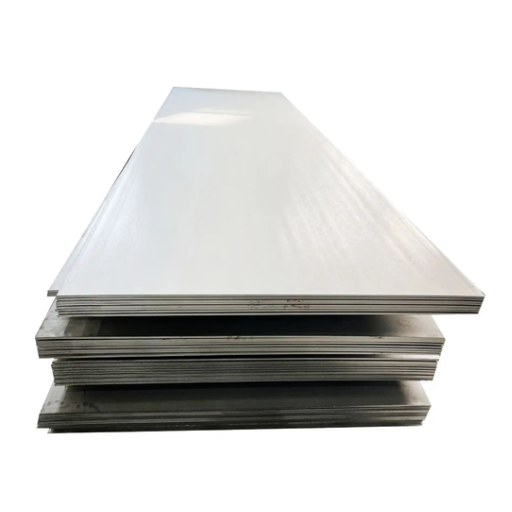
904L vs 316L
The 904L vs 316L decision starts with the acid map, not the price.
| Property | 904L | 316L |
|---|---|---|
| UNS | N08904 | S31603 |
| Chromium | 19.0–23.0% | 16.0–18.0% |
| Nickel | 23.0–28.0% | 10.0–14.0% |
| Molybdenum | 4.0–5.0% | 2.0–3.0% |
| Copper | 1.0–2.0% | not specified |
| PREN | 32–36 | 24–26 |
| Yield, A240 plate | 220 MPa | 170 MPa |
| Hardness, A240 plate | 90 HRBW max | 95 HRBW max |
| Sulfuric acid, 20–85% | Suitable at moderate temperatures | not suitable |
| Chloride SCC | much higher threshold | cracks above ~60 °C |
| Relative material cost | 2–3× | 1× |
The mechanical difference is smaller than the corrosion difference. 904L yields at 220 MPa on plate and 215 MPa on pipe; 316L yields at 170 MPa on plate. 904L is stronger, but it isn’t a high-strength grade, and it isn’t harder. 904L stainless steel hardness tops out at 90 HRBW on A240 plate, while 316L is allowed 95 HRBW, so a 904L watch case is slightly softer on the specification, not harder.
The cost difference is real. 904L carries roughly 25% nickel, 4.5% molybdenum and 1.5% copper, against 12% nickel and 2.5% molybdenum in 316L. Material cost runs two to three times 316L depending on form and mill. On a line where 316L lasts, 904L is an expensive answer to a question nobody asked.
The case for 904L is narrow and specific: sulfuric acid in the 20–85% range, phosphoric acid at temperature, chloride-bearing process water where 316L cracks, and applications where the maintenance cost of a 316L failure dwarfs the material premium.
904L vs 2205 and 254 SMO
| Property | 904L | 2205 | 254 SMO |
|---|---|---|---|
| UNS | N08904 | S32205 | S31254 |
| PREN | 32–36 | 34–36 | ~43 |
| Yield, A240 plate | 220 MPa | 450 MPa | 300 MPa |
| Sulfuric acid, 20–85% | strong | not a substitute for this gap | strong |
| Phosphoric acid, 60 °C | 1.2 mm/yr | not the usual choice | 0.05 mm/yr |
| Chloride SCC | good | very good | excellent |
| Seawater | moderate, avoid hot crevices | good | very good |
| Relative cost | high | moderate | highest |
2205 is the stronger and cheaper answer for chloride service that does not involve sulfuric acid. Its 450 MPa yield lets a designer cut wall thickness, and its PREN of 34–36 is close to 904L. It isn’t a substitute in the sulfuric acid gap, and it loses toughness at low temperature and above roughly 300 °C.
254 SMO is the step above 904L. Its 6% molybdenum and 0.20% nitrogen push PREN to about 43, and its corrosion rate in 60 °C phosphoric acid is 0.05 mm/yr against 1.2 mm/yr for 904L. It also costs more. The choice between 904L and 254 SMO is usually a question of whether the duty needs a 24-fold corrosion improvement or whether 904L already gives an acceptable life.
The watch question
A watch case is a corrosion and finishing application, not a hardness application. 904L takes a high polish, resists sweat and salt water, and contains more nickel than 316L. Those are the reasons a watchmaker uses it.
Scenario: the collector who wanted a harder steel. Daniel, a watch collector in Singapore, asked whether Oystersteel would resist scratches better than a 316L case because 904L sounds more advanced. The specification answers it: A240 allows 904L up to 90 HRBW and 316L up to 95 HRBW. Both are austenitic, non-hardenable by heat treatment, and similar in scratch resistance. What Daniel gets from 904L is better corrosion resistance and a brighter polish, not a scratch-proof surface. He bought the watch for the finish and the salt-air resistance, which is the honest reason.
Comparing 904L with 316L or 2205 for a specific duty? Send the operating conditions and we will confirm which grade gives the lowest life-cycle cost, including the option that is cheaper than 904L. Request a grade comparison.
Temperature, Heat Treatment and Welding Limits
The 550 °C ceiling and the 371 °C ASME limit
| Figure | Basis | Source |
|---|---|---|
| No ASTM maximum | No product standard sets a service temperature | A312, A213, A249, A269, A240 |
| 550 °C | Mill guidance for prolonged service; intermetallic precipitation above this | Alleima 2RK65, Atlas Steels |
| 371 °C | ASME design stress values stop here | Atlas Steels |
| 400 °C / 400–450 °C | Supplier pages; no standard basis | Gnee, Xinzhe, Alloy-Materials |
| 800–900 °C | Rapid intermetallic precipitation; avoid | Mill datasheets |
The number you use depends on what you are doing. A pressure-vessel designer works to ASME allowable stresses, and those values stop at 371 °C. A plant engineer choosing a material for a 500 °C process line works to mill guidance, which puts the practical ceiling at about 550 °C for prolonged service. Neither number is an ASTM limit, because no ASTM product standard sets one.
Above 550 °C, 904L loses toughness and corrosion resistance as intermetallic phases precipitate. The grade is fully austenitic, and the same chemistry that gives it acid resistance makes it unstable at temperature. If the duty is above 550 °C, use 310S, 253 MA, 800H or a nickel alloy. Don’t stretch 904L because it worked at 400 °C.
High-temperature proof strength is modest. Alleima’s 2RK65 datasheet publishes 176 MPa at 100 °C, 155 MPa at 200 °C, 136 MPa at 300 °C and 125 MPa at 400 °C. Those values are for reference, not for design without the applicable code.
Heat treatment
Pipe and tube standards set a minimum solution annealing temperature of 2,000 °F (1,100 °C), followed by water or rapid cooling. A312, A213, A249 and A269 all carry that requirement for N08904.
Plate mills publish overlapping ranges. Sandmeyer quotes 1,060–1,140 °C, Atlas quotes 1,090–1,175 °C, and Alleima quotes 1,050–1,150 °C for its 2RK65 grade. The common window is roughly 1,050–1,175 °C. Follow the product standard and the mill’s qualified procedure rather than picking one number from a datasheet.
Welding 904L without hot cracks
904L welds with ER385 filler (20 25 CuL) for GTAW and GMAW, and with E385 covered electrodes for SMAW. The matching filler keeps the copper and molybdenum level, which is the point of the grade.
No preheat is required. Interpass temperature should stay at or below 100 °C. Heat input should be low, with stringer beads rather than wide weaving, because 904L is fully austenitic and susceptible to solidification cracking in constrained joints.
Post-weld heat treatment is not required in most cases. Solution annealing after cold work restores maximum stress-corrosion resistance. Pickle and passivate the weld and heat-affected zone to restore the oxide film; a brushed weld with embedded iron is a corrosion site.
Scenario: the weld that cracked because the procedure was copied. Tomas, a fabricator in Spain, welded a 904L tank nozzle in 2024 using a 316L procedure. The filler was ER316L, the heat input was high, and the joint was heavily restrained. The root cracked during the hydro test. The repair used ER385, a lower heat input and a revised weld sequence. The second weld passed. 904L is not “316L with more alloy.” The welding procedure has to change with the chemistry.
How to Specify and Verify 904L Stainless Steel
The purchase order checklist
- Grade and UNS number: 904L, UNS N08904, EN 1.4539.
- Product standard and edition: A312-25 for pipe, A213-25 for seamless tube, A249-24a for welded tube, A269-25 for general-service tube, A240-25a for plate.
- Product form and construction: seamless or welded, and the welding method if welded.
- Size basis: OD × wall × length, with tolerances.
- Heat treatment: solution annealed, 1,100 °C minimum for pipe and tube, water or rapid cool.
- Test requirements: tensile, flattening, hydrostatic or nondestructive electric test, and any supplementary requirement such as A262 Practice E.
- Certificate: MTR with heat number, chemistry, mechanical results and heat treatment.
- Marking: grade, UNS number, standard, size, heat number and manufacturer.
What to check on the MTR
Read the chemistry against the product standard, not against a supplier table. Carbon must be 0.020% max, chromium 19.0–23.0%, nickel 23.0–28.0%, molybdenum 4.0–5.0% and copper 1.0–2.0%. Phosphorus and sulfur must meet the pipe/tube limits if the order is A312, A213, A249 or A269.
Check the mechanical values against the right row. A312 pipe is 490 MPa tensile, 215 MPa yield and 35% elongation, with no hardness requirement. A240 plate is 490 MPa tensile, 220 MPa yield, 35% elongation and 90 HRBW max. A269 tube is hardness only.
Check the heat treatment. “Annealed” is not enough. The certificate should show solution annealing at 1,100 °C minimum for pipe and tube, with the cooling method.
The three traps
Trap one: “TP904L.” A312 and A213 do not use that designation. The grade table lists UNS N08904. Ask for the UNS number on the certificate.
Trap two: B677 or B625. Neither current standard covers N08904. A certificate to B677 is a certificate to a standard that no longer lists the grade. Put A312, A213, A249, A269 or A240 on the order.
Trap three: the wrong mechanical row. A supplier may quote 220 MPa yield and 90 HRB for every form. That is the A240 plate row, not the A312 pipe row, and not the A269 tube row.
Handheld X-ray PMI confirms chromium, nickel and molybdenum, but it can’t measure carbon. A PMI gun that shows the right nickel doesn’t prove 0.020% carbon. For 904L, ask for a carbon analysis from the heat, and review the mill certificate. Our quality control process covers PMI, ultrasonic testing and MTR review before shipment.
If you are comparing A312 and A269 for tube, our guide to A312 vs A269 explains why the same chemistry carries different test requirements.
Where 904L Pipe, Tube and Plate Earn Their Place
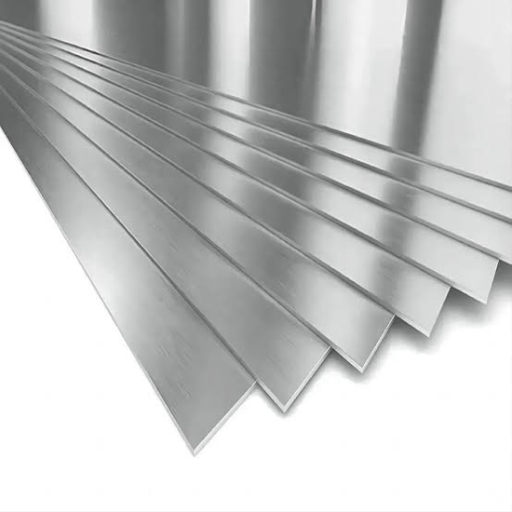
904L is specified in sulfuric and phosphoric acid plants, phosphate fertilizer production, pickling lines, flue-gas desulfurization, seawater cooling, pulp and paper, tall oil distillation, offshore topsides, pharmaceutical process piping and food processing. It is also used in watch cases and bracelets.
The common thread is an acid or chloride duty that 316L cannot hold, at a temperature below 550 °C, in a product form covered by A312, A213, A249, A269 or A240.
It’s the wrong choice for nitric acid service, hot concentrated hydrochloric acid, prolonged service above 550 °C, high-strength structural applications, and budget-driven 316L duty. It’s also not the first choice for hot, tight-crevice seawater, where 254 SMO or a super duplex grade gives more margin. Our guide to stainless steel for seawater covers that comparison, and the 2205 vs 316L guide explains where duplex fits.
For a broader view of the austenitic family, the stainless steel grade chart lists the composition and mechanical minimums for 304, 316L, 317L, 904L and the duplex grades side by side.
FAQ
Is 904L the same as 316L?
No. 904L is UNS N08904 with 19–23% chromium, 23–28% nickel, 4–5% molybdenum and 1–2% copper. 316L is UNS S31603 with 16–18% chromium, 10–14% nickel and 2–3% molybdenum. Both are austenitic, but 904L has roughly twice the nickel, twice the molybdenum and a copper addition.
Is 904L better than 316L?
Only for specific duties. 904L is better in sulfuric acid between 20% and 85%, in phosphoric acid at temperature, and in chloride-bearing water where 316L cracks. 316L is better on cost, availability and strength-to-price for mild service.
What is the maximum temperature for 904L?
No ASTM standard sets a maximum service temperature. Mill datasheets put the practical ceiling at about 550 °C for prolonged service, and ASME design stresses stop at 371 °C. The 400 °C and 450 °C figures on supplier pages have no standard basis.
Is 904L magnetic?
Annealed 904L is non-magnetic. Heavy cold work, such as severe bending or drawing, can produce a slight magnetic response. A magnet is not a reliable grade test; PMI or a chemical analysis is.
What is 904L welded with?
ER385 (20 25 CuL) filler for GTAW and GMAW, and E385 covered electrodes for SMAW. No preheat, interpass at or below 100 °C, low heat input, and pickling or passivation after welding.
Is Rolex’s Oystersteel 904L?
Yes. Rolex states that Oystersteel is grade 904L, produced for the company since 1985. It is the same UNS N08904 grade described here, not a separate metallurgical specification.
What standard covers 904L pipe?
ASTM A312/A312M covers 904L pipe, with UNS N08904 in the grade table. A213 and A249 cover tube, A269 covers general-service tube, and A240 covers plate, sheet and strip. B677 and B625 are legacy citations and no longer cover N08904.
Conclusion
904L stainless steel is a corrosion decision, not an upgrade decision. It earns its nickel in the 20–85% sulfuric acid gap, in phosphoric acid at temperature, and in chloride-bearing process water where 316L cracks. It doesn’t earn it above 550 °C, in nitric acid, in hot concentrated hydrochloric acid, or in a watch case that needs scratch resistance.
The specification is where projects go wrong. Put UNS N08904 and the correct product standard on the order. Check phosphorus and sulfur against the pipe or plate limits.
Check the mechanical row: A312 has no hardness limit, A269 has no tensile requirement, and A240 is the only common form with a 220 MPa yield minimum. Then verify the heat treatment and the carbon on the MTR.
Get those five items right, and 904L behaves as designed. Get them wrong, and you pay a super-austenitic price for a certificate that does not match the standard.
Ready to specify 904L? Send the line list, the product form and the operating conditions. Our technical team will confirm the grade, standard and test requirements, and respond within 24 hours. Request a 904L quote.