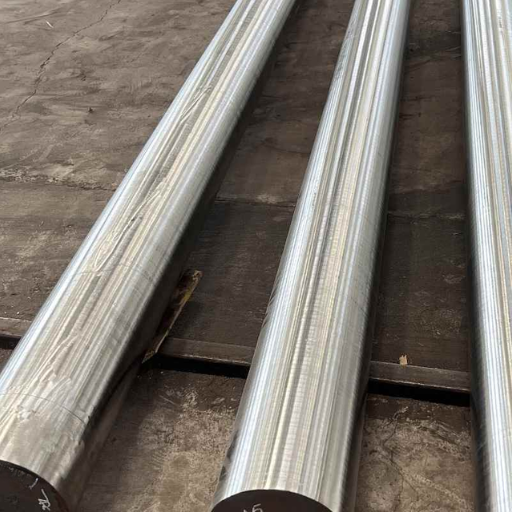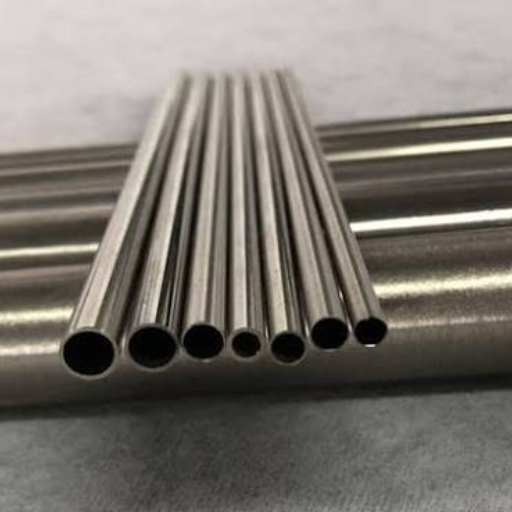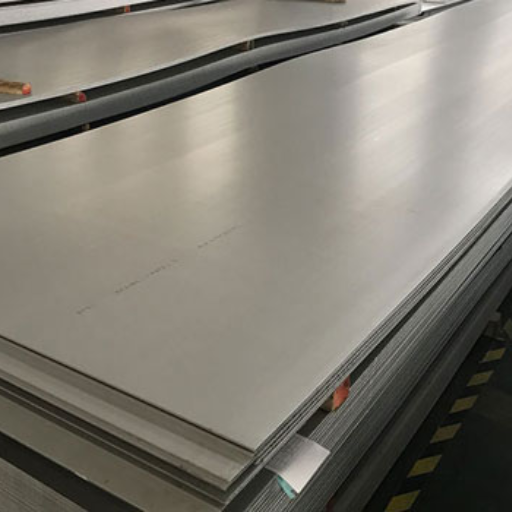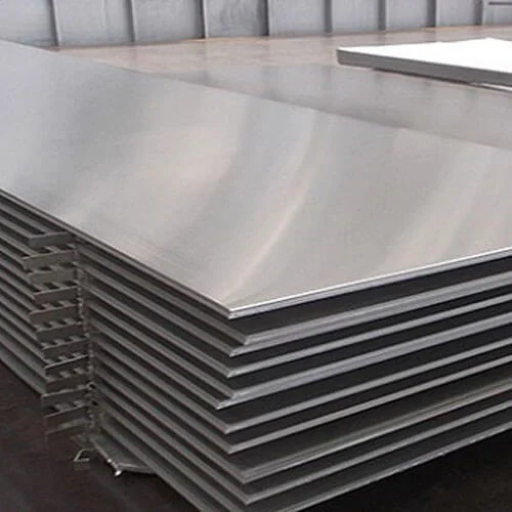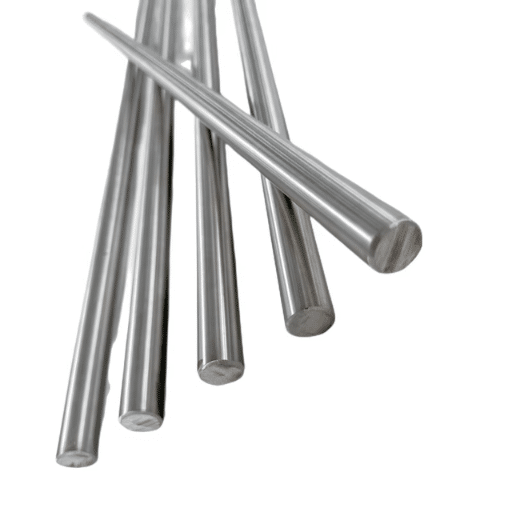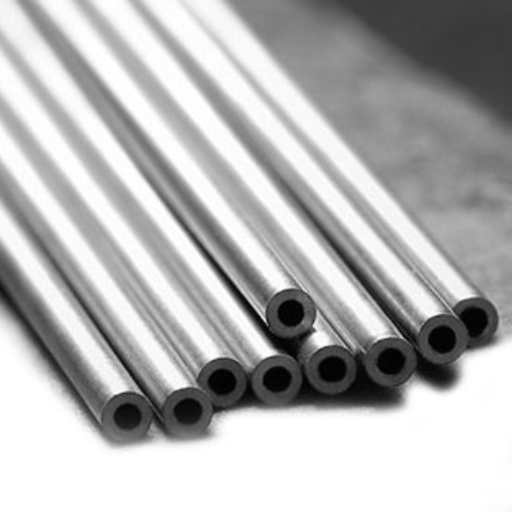
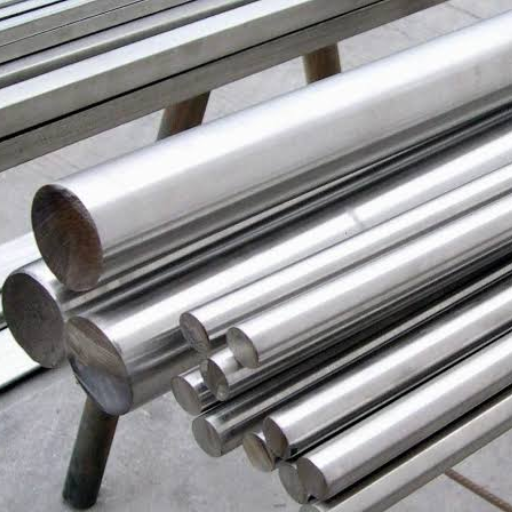
The difference between 304 and 316 stainless steel is 2 to 3% molybdenum, and what it buys is chloride resistance. It does not buy strength. ASTM gives both grades identical minimum yield and tensile requirements, so a buyer paying 30 to 60% more for 316 is paying for corrosion resistance alone.
That correction matters. Most 304 vs 316 stainless steel comparisons describe 316 as the stronger, better grade and leave it there, which turns a precise material decision into a vague upgrade instinct.
The cost of that vagueness runs both ways. Specify 316 where 304 would have lasted and you have donated margin to a problem you did not have. Specify 304 where chlorides are present and the failure arrives after commissioning, when the pipe is already welded in.
This guide covers what the molybdenum actually does, why the strength claim is false, where 316 stops working, and the four questions that settle the choice.
Key Takeaways
- 304 and 316 have identical specified minimums. Both are 515 MPa tensile and 205 MPa yield to ASTM A312; both L grades are 485 and 170 MPa. Molybdenum does not raise either number.
- The molybdenum moves PREN from roughly 18 to roughly 25. That is the entire corrosion argument, and it is worth 30 to 60% on price.
- 316 is not an immersion grade. The “marine grade” nickname oversells it; in chlorinated seawater above roughly 40 to 50 °C it pits like any austenitic.
- Above 800 °C, molybdenum buys nothing. It adds no oxidation resistance, so 316 is the wrong premium to pay in furnace service. Step to 310S for oxidation resistance, or to 321 and 347 for sensitization.
- Molybdenum is the field test. XRF reads it directly at 2 to 3% in 316 and zero in 304. A magnet and a spark test will not separate them.
Specifying a grade and need a second opinion on the chloride level? Send us the medium, the temperature and the standard, and we will confirm whether 304, 316 or a duplex grade is the right call before the order is placed. Our technical team replies within 24 hours. Request the review.
304 vs 316 at a Glance
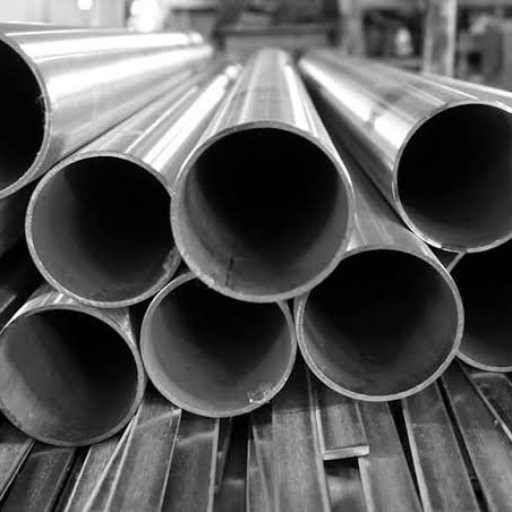
Any grade comparison starts with composition, because one alloying element explains everything that follows. Both grades are austenitic, both are chromium-nickel steels, and both trace back to the same 18/8 family. The 316 branch trades some chromium for molybdenum and adds nickel.
| Property | 304 | 316 |
|---|---|---|
| Chromium | 18.0–20.0% | 16.0–18.0% |
| Nickel | 8.0–11.0% | 10.0–14.0% |
| Molybdenum | none | 2.00–3.00% |
| Carbon, max | 0.08% | 0.08% |
| Tensile min, ASTM A312 | 515 MPa | 515 MPa |
| Yield min, ASTM A312 | 205 MPa | 205 MPa |
| PREN, approximate | 18 | 25 |
| Relative cost | 1.0 | 1.3–1.6 |
Read the two mechanical rows again. They are the same number. Everything else in this article follows from that, and from the one row where 316 genuinely differs.
What the Molybdenum Actually Buys
Stainless steel resists corrosion through a passive chromium-oxide film a few nanometres thick. Chloride ions attack that film locally, breaking it down at a point and letting the underlying metal dissolve. That is pitting, and it is the failure mode that decides most 304-versus-316 questions.
Molybdenum stabilises the film against chloride attack. It doesn’t make the steel harder, and it doesn’t change the crystal structure. It makes the passive layer harder to break locally.
The industry condenses this into a single number, the pitting resistance equivalent:
PREN = Cr + 3.3 × Mo + 16 × N
Run the arithmetic and the gap appears. For 304, roughly 18% chromium and no molybdenum give a PREN near 18. For 316, roughly 17% chromium and 2.5% molybdenum give a PREN near 25, with nitrogen adding a little to both.
The 3.3 multiplier is why such a small alloying addition matters. Every 1% of molybdenum is worth more than 3% of chromium on this index, which is why 316 carries less chromium than 304 and still resists chlorides better.
Treat PREN as an order of magnitude rather than a precise grade. It was developed for stainless steels generally and does not capture temperature, crevice geometry or chloride concentration. It is still the fastest way to see why the price gap exists.
The chloride-service case for 316L, including where it stops working, sits in the 316L seamless pipe guide.
304 vs 316 Stainless Steel Strength: Identical Minimums in ASTM
Here is the claim that most 304 vs 316 stainless steel comparisons get wrong. In ASTM A312, TP304 and TP316 carry the same minimum tensile strength, the same minimum yield strength and the same minimum elongation.
| Grade | Tensile min | Yield min | Elongation min |
|---|---|---|---|
| TP304 | 515 MPa | 205 MPa | 35% |
| TP316 | 515 MPa | 205 MPa | 35% |
| TP304L | 485 MPa | 170 MPa | 30% |
| TP316L | 485 MPa | 170 MPa | 30% |
Molybdenum is not a strengthening element in the austenitic grades. It doesn’t form a precipitate, doesn’t refine the grain, and doesn’t appear in the mechanical requirements at all.
The myth survives for a reason worth understanding. Molybdenum does improve strength retention at elevated temperature, so a 316 component at 500 °C outperforms a 304 component at 500 °C. At room temperature, on the certificate, the two are indistinguishable.
That distinction is the one to carry into a specification review. If someone tells you 316 is stronger, ask at what temperature. Below roughly 400 °C, the answer is no.
There is a real strength difference elsewhere in the family, and it runs the other way. The L grades are weaker by specification, 170 MPa against 205 MPa, which is a genuine design input rather than a marketing distinction.
304 vs 316 Stainless Steel Corrosion: Where 316 Wins and Where It Stops Winning
In chlorides, the margin is large. Coastal atmospheres, de-icing salts, brackish cooling water, chloride-bearing process streams and pulp and paper liquors all sit inside 316’s capability and outside 304’s.
In oxidising acids and general atmospheric exposure, the two grades perform similarly enough that paying for molybdenum is hard to justify. Nitric acid service is the clearest example: 304 is often the better choice because molybdenum adds nothing and costs money.
The honest limit on 316 is temperature-dependent pitting. The ranking across grades is stable and well established: 304 pits first, then 316, then duplex 2205, then super duplex 2507, then the 6% molybdenum super-austenitics.
Absolute critical pitting temperatures are not stable, and any article quoting a single figure without a test condition is misleading you. Measured values for the same 316L material have been reported from roughly 38 °C to roughly 58 °C depending on the ferric chloride concentration and test method used. Quote the method or quote nothing.
Molybdenum’s effect on chloride pitting is well documented, and the Nickel Institute is the standard reference for medium-by-medium corrosion data on both grades if you need to check a specific chemical against a specific temperature.
Crevice corrosion is the harsher test of the two. A gasket face, a threaded joint or a weld underlap creates a stagnant pocket where chloride concentrates and oxygen cannot reach. The gap between the grades widens in crevices, which is why flanged and threaded assemblies in coastal service are usually specified in 316 regardless of the pipe grade.
Welding is where the choice becomes visible. ER308L is the matching filler for 304 and ER316L for 316, and the filler should match the parent metal’s molybdenum content. Welding 316 with a 308 filler leaves a molybdenum-free weld bead inside an otherwise chloride-resistant pipe, and that bead is where pitting starts.
What that means practically is that 316’s “marine grade” nickname oversells it. Above the waterline, in splash and spray zones, 316 is a reasonable specification. In continuous or chlorinated seawater immersion, it is not, and duplex 2205 is the usual next step.
Already holding a mill certificate you are not certain about? Send it over and we will check the grade, the standard and the product form against each other before your inspector does. Start the check here.
Temperature: Why 304 Is Sometimes the Better Choice
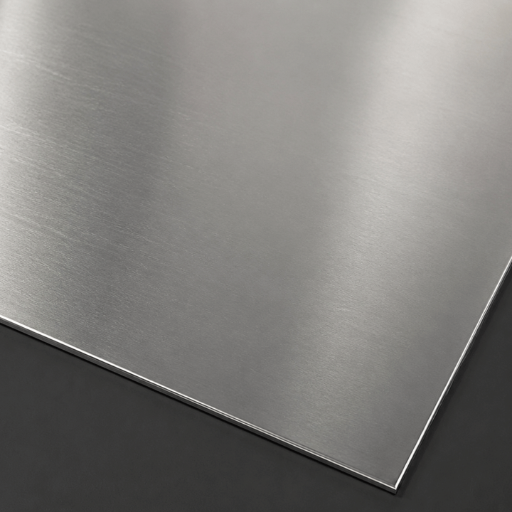
Molybdenum buys nothing in oxidation service. It is there for chloride resistance, and at high temperature it is dead weight that you have paid a premium for.
The 316 stainless steel temperature limit is no higher than 304’s, which surprises buyers who assume the more expensive grade is the safer one. Where 304 is adequate, paying for 316 in furnace service buys no extra headroom. Below about 800 °C, for annealing trays, furnace internals and general heat-treat fixtures, 304 is often the better starting point on cost alone.
Both grades share a separate problem above roughly 425 °C. In the 425 to 815 °C window, chromium carbides precipitate at the grain boundaries and deplete the adjacent metal of chromium. That is sensitization, and it leaves a welded assembly vulnerable to intergranular corrosion even though the parent metal is fine.
Above roughly 800 °C, neither grade is the right answer because oxidation, not sensitization, is the issue. The escape route is 310S, which carries 25% chromium and 20% nickel for oxidation resistance that 304 and 316 do not have. For the sensitization problem in the 425 to 815 °C window, the answers are the stabilised grades: 321 ties up carbon with titanium, and 347 uses niobium.
Choosing between those is a separate decision from 304 versus 316, and it usually starts when someone discovers the temperature rating was never the constraint they thought it was.
The L Grades: When Carbon Matters
The L stands for low carbon. Standard 304 and 316 are capped at 0.08% carbon; the L grades are capped at 0.03% in ASTM A240, with A312 permitting 0.035% for the pipe grades.
That 0.05 percentage point is the difference between a weld that survives and one that does not. Carbon is what forms chromium carbide in the sensitization window, so removing it removes the mechanism.
The rule of thumb is straightforward. If the assembly is welded and cannot be solution annealed afterwards, specify the L grade, because that covers the short thermal cycle of welding itself. If it is welded and used at ambient temperature, standard 304 or 316 is usually adequate.
Low carbon does not cover sustained service in the 425 to 815 °C range, where even these grades will eventually sensitize. That duty calls for a stabilised grade such as 321 or 347, or a high-carbon grade such as 304H or 316H.
The trade-off is real and often ignored. The L grades carry lower specified minimums, 170 MPa yield against 205 MPa, so a pressure design that was calculated on the standard grade needs rechecking when someone substitutes L for weldability.
Dual-certified material, sold as 304/304L or 316/316L, resolves most of this by meeting both specifications at once. It has become common enough in plate and sheet that the question rarely arises there.
Two related decisions sit either side of this one: 304 versus 304L, and 316 versus 316L. The first is covered in the 304 pipe specification. The second matters more than most buyers expect, because the pressure rating does change.
Cost: What the Molybdenum Premium Really Is
316 typically costs 1.3 to 1.6 times 304. The ratio moves with molybdenum and nickel pricing, so treat any fixed figure you read as a snapshot rather than a rule.
Two things drive it. Molybdenum is an expensive alloying addition, and 316 also carries more nickel than 304, typically 10 to 14% against 8 to 11%. Both are commodity-priced metals that move independently of steel. The British Stainless Steel Association publishes grade data sheets covering both, which set out the composition gap behind the premium more clearly than a supplier price list does.
The question worth asking is not whether 316 costs more, which it obviously does. Is 316 stainless steel worth the extra cost? That depends on the chloride concentration and temperature in your service, and both are measurable.
If the medium is chloride-free, the answer is no, and 304 is the correct specification rather than the budget compromise you settle for. If chlorides are present at concentrations and temperatures that put 304 at risk, the answer is yes, and the premium is cheaper than the failure.
There is a third case that gets missed: chlorides present at a level where 316 also fails. That is where the premium is wasted twice, once on 316 and again on the replacement.
The 304 vs 316 stainless steel price ratio is not stable across a project timeline, because nickel and molybdenum move on different cycles. A quotation held for six months is a forecast rather than a price, and the grade decision should survive that movement either way.
When Neither Grade Is Right
There are duties where the 304 vs 316 stainless steel question is the wrong question, because both answers fail.
Duplex 2205 carries a PREN near 35 and roughly twice the yield strength of either austenitic grade. It is the standard upgrade for chloride service above 316’s limit, and for anything where stress corrosion cracking is a concern. The duplex 2205 versus 316L comparison sets out where the crossover sits.
904L is a super-austenitic with about 20% chromium, 25% nickel, 4.5% molybdenum, and 1.5% copper. It is the sulfuric and phosphoric acid answer, and it is chosen for reducing-acid service rather than for chlorides.
The 6% molybdenum super-austenitics, such as UNS S31254, push PREN past 43 and sit above duplex on chloride resistance while remaining fully austenitic and therefore easier to weld than duplex.
Beyond those sits the nickel-alloy family, which is a different cost bracket entirely. The nickel alloy versus stainless steel comparison covers where that boundary falls.
Specifying and Verifying
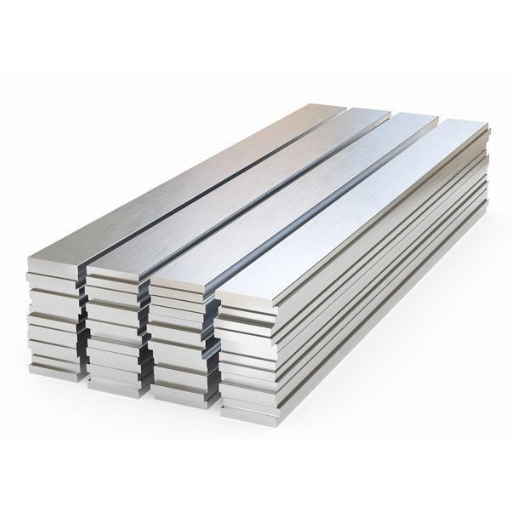
The grade name alone is not a specification. Each product form has its own governing standard, and a purchase order that names the grade without the standard leaves the mill room to interpret.
| Product form | Standard |
|---|---|
| Plate, sheet, strip | ASTM A240 |
| Seamless and welded pipe | ASTM A312 |
| Boiler and heat exchanger tube | ASTM A213 |
| General service tube | ASTM A269 |
| Bar | ASTM A276 |
| Forgings | ASTM A182 |
The edition matters as much as the number. ASTM International publishes each product form separately, and an order citing a superseded edition invites rejection even when the material is correct.
The mill test report is where the specification becomes evidence. It should state the UNS number rather than the trade name, the heat number, the governing standard with its edition, the chemical composition including molybdenum, and the mechanical results.
That molybdenum line is the one to check. A certificate that shows 2.5% molybdenum is 316. A certificate that shows none is 304, whatever the heading says.
In the yard, telling 304 from 316 stainless steel narrows to one instrument: portable X-ray fluorescence reads molybdenum directly and is the only field test that separates the two grades reliably. A magnet won’t help, because both grades are austenitic and effectively non-magnetic in the annealed condition. A spark test is unreliable enough to be dangerous.
For pressure design, the grade choice feeds directly into wall thickness, and the stainless steel pipe pressure rating guide works through how the L-grade reduction changes the calculation. Product-form questions, including how the rectangular tube market handles the same decision, sit in the 304 versus 316L rectangular tube guide.
304 vs 316 Stainless Steel: Frequently Asked Questions
What is the difference between 304 and 316 stainless steel?
316 contains 2 to 3% molybdenum, which 304 does not. That addition raises the pitting resistance equivalent from roughly 18 to roughly 25, improving resistance to chlorides. Both grades have identical specified minimum strength in ASTM A312.
Is 316 stainless steel stronger than 304?
No, not at room temperature. ASTM A312 gives TP304 and TP316 the same 515 MPa minimum tensile and 205 MPa minimum yield. Molybdenum improves strength retention above roughly 400 °C, which is where the misconception comes from.
Can 316 stainless steel rust?
Yes. 316 resists chlorides better than 304, but it is not immune. In chlorinated or warm seawater, it will pit, and the “marine grade” nickname overstates what it can do in continuous immersion.
Is 304 or 316 food safe?
Both are accepted for food contact, and both appear in sanitary service. 316 is specified where cleaning chemicals or chloride-bearing products create a corrosion risk; 304 is adequate for general food handling.
What does the L mean in 304L and 316L?
Low carbon. The L grades cap carbon at 0.030% in ASTM A240 plate and sheet and 0.035% in A312 pipe, against 0.08% for the standard grades. That limits chromium carbide precipitation during welding. They carry a lower specified strength, 170 MPa yield against 205 MPa.
Is 316 stainless steel magnetic?
No. Both 304 and 316 are austenitic and effectively non-magnetic when annealed. Cold working can make either slightly magnetic, which is why a magnet is not a grade identification test.
Which is better for seawater, 304 or 316?
Neither, for continuous immersion. 316 is the better of the two and is adequate above the waterline, but in chlorinated or warm seawater both grades pit. Duplex 2205 is the usual minimum for immersion service.
What is the maximum temperature for 316 stainless steel?
Neither 304 nor 316 is usually recommended for sustained service much above 800 °C, and molybdenum adds no oxidation resistance, so the premium buys nothing there. Above that range, 310S or a nickel alloy is the correct choice.
Conclusion: Pay for the Chloride, Not the Label
The 304 vs 316 stainless steel decision reduces to four questions, and none of them is about price.
- Is chloride present? If not, 304 is the correct specification, not the cheaper one.
- At what concentration and temperature? This decides whether 316 is sufficient or whether duplex is the floor.
- Is the assembly welded and hot? If it cannot be annealed after welding, use the L grade. Sustained service in the 425 to 815 °C window needs 321 or 347.
- Which standard governs the product form? A240, A312, A213, A269, A276 and A182 are not interchangeable.
Answer those and the grade follows.
| Service condition | Grade |
|---|---|
| Indoor or outdoor, chloride-free, ambient | 304 |
| Coastal atmosphere, splash and spray zone | 316 |
| Welded assembly, cannot be annealed afterwards | 304L or 316L |
| Sustained service in the 425–815 °C window | 321, 347 or 304H/316H |
| Chlorinated or warm seawater immersion | Duplex 2205 |
| Sulfuric or phosphoric acid | 904L |
| Sustained service above 800 °C | 310S or a nickel alloy |
Skip those questions, and you are buying a label rather than a material property.
That is also why the honest answer is short. Is 316 stainless steel better than 304? Only for a specific medium, temperature, and weld procedure.
The one habit worth keeping is checking the certificate for molybdenum. It is a single line; it takes seconds, and it is the difference between knowing what is in the pipe and assuming it.
Send us the line list with medium, temperature, and standard exactly as written. We will confirm which grade each line needs and where 304 is being over-specified, and you will have it back within 24 hours. Request the grade review.