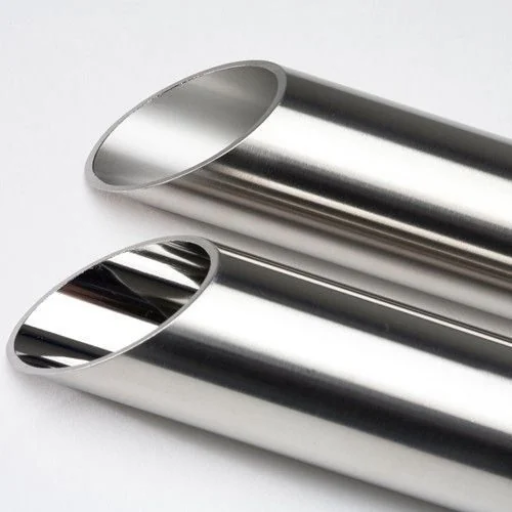
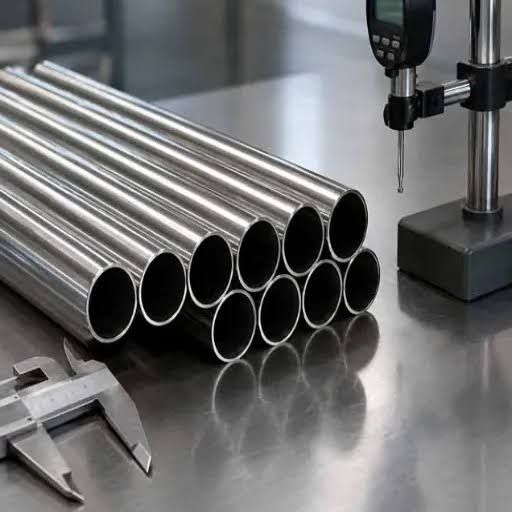
Electropolishing removes a thin layer of metal and passivation does not. Specify passivation when the surface is clean and only the oxide film needs restoring. Specify electropolishing when the bore must be smoother, brighter, or certified to an ASME BPE SF4 to SF6 finish or a SEMI F19 requirement.
Priya, a QA engineer at an injectable plant in Hyderabad, approved a 316L water loop that arrived “passivated to ASTM A967” and looked clean, with a complete certificate. Four months later an auditor asked for the finish designation on the line list. It read SF4. Passivation cannot produce SF4, and the loop conformed to the wrong standard.
The two processes are different. What matters is which one your drawing requires, and what evidence proves it. This guide gives you the decision rule, the current standards, and two purchase-order clauses that survive an audit.
If your line list already names a finish, send the clause and the tube specification. We will confirm what the report must show before you order.
Key Takeaways
- Passivation removes contaminant iron and rebuilds the passive film without removing metal. Ra, dimensions and appearance do not change.
- Electropolishing dissolves 5 to 10 µm per surface, lowering Ra and brightening the surface while passivating it in the same step.
- Passivation alone satisfies A967/A967M-25, A380/A380M-25, AMS 2700G and most food-duty tube. ASME BPE SF4 to SF6 and SEMI F19 require electropolishing.
- Passivation does not remove weld heat tint. Pickle the tint off first, or the corrosion returns at the weld.
- An electropolished part is passivated; a passivated part is not electropolished. Pay for both only when the specification names both.
What Is the Difference Between Electropolishing and Passivation?
Passivation is a chemical clean. Nitric or citric acid dissolves contaminant iron from the surface so the chromium oxide film can re-form. Electropolishing is electrochemical. The part is the anode in an acid bath, and current dissolves a thin layer of metal, smoothing the surface and enriching it in chromium.
What passivation changes
Machining, grinding, welding and handling can leave free iron on a stainless surface, and that iron rusts and interrupts the oxide film. A passivation bath dissolves the iron without removing metal, and the chromium-rich oxide layer re-forms over a cleaner surface.
Passivation does not change dimensions, Ra or appearance, and does not remove weld heat tint. Euro Inox states plainly that no metal is removed during acid-assisted passivation.
ASTM A967/A967M-25 defines three routes: nitric acid immersion, citric acid immersion and an electrochemical treatment. All three are passivation. The tests in Practices A to G look for contaminant iron, not for a surface profile.
What electropolishing changes
Electropolishing reverses electroplating. The tube is the anode in a bath that is typically an equal-volume mix of 96% sulphuric acid and 85% orthophosphoric acid. Euro Inox gives the working window as 5 to 25 A/dm², 40 to 75 °C, and 2 to 20 minutes. Current density is highest at microscopic peaks, so the peaks dissolve faster and the profile levels out.
Three changes happen together. The surface gets smoother. Iron and nickel dissolve preferentially, leaving a chromium-enriched surface. And the part is passivated as it polishes.
ASTM B912-26 says this directly in Note 1: passivation occurs simultaneously with electropolishing under proper conditions, and the process also removes heat tint and oxide scale.
Metal removal is real, so dimensions change. Euro Inox puts typical removal at 5 to 10 µm per surface, with up to 50 µm for extra smoothing. More is removed at corners and edges unless the polisher shields them or adds auxiliary cathodes. On thin-wall tube, that allowance belongs in the tolerance stack.
Side by side
| Passivation | Electropolishing | |
|---|---|---|
| What it is | Chemical immersion in nitric or citric acid | Electrochemical dissolution in acid |
| Metal removed | None measurable | 5 to 10 µm typical, up to 50 µm |
| Effect on Ra | None | Lowers Ra; amount depends on the starting finish |
| Appearance | Unchanged | Brighter |
| Dimensions | Unchanged | Reduced by the removal depth |
| Weld heat tint | Not removed | Light tint removed; heavy scale needs pickling first |
| Surface chromium | Oxide re-forms; no enrichment | Iron and nickel dissolve first, chromium enriched |
| Governing standard | ASTM A967/A967M-25; A380 is practice; AMS 2700G | ASTM B912-26; ISO 15730:2023 |
| Typical tube use | Post-fabrication clean-up, utilities, food duty | Pharma and biotech product contact, UHP gas, low-Ra bore |
The relationship runs one way. An electropolished surface is passivated because the process removes iron and grows the oxide film. A passivated surface is not electropolished, because its profile did not change. That single sentence settles most of the argument.
The Tube Problem: Bore, Length and Wall
On a six-metre tube with a 12 mm bore, geometry decides whether either process works.
Passivation is a wetting and exchange problem. The acid has to reach the whole bore, hold long enough to dissolve the iron, then be displaced by rinse water. Coiled tube, blind ends and horizontal lengths that trap air are the usual failure points. A supplier who floods one end of a coil and drains the other has not necessarily passivated the far end.
Electropolishing is a current-distribution problem. The cathode has to sit inside the bore, and current density falls as the distance from the contact point increases. Long small-bore tube needs a moving cathode, a segmented cathode, or repeated repositioning. The edge effect that removes extra metal at a fitting also does so at the tube ends.
Our guide to electropolished stainless steel tubing covers the equipment side.
Both processes need a clean starting surface. Oil, drawing lubricant and fingerprints block the acid or disturb the current, and the streaky result usually started as a cleaning failure.
One more trap. Ra alone doesn’t tell you which process was used. Euro Inox publishes a photograph of a mechanically polished surface and an electropolished surface with identical Ra values. The electropolished one is cleaner and more corrosion-resistant, and the number on the report is the same.
If Ra is your only acceptance criterion, you cannot tell what you bought. Our guide to how Ra is measured on tube covers the cutoff, evaluation length and sampling that decide whether the reading means anything.
Electropolishing vs Passivation: When Passivation Alone Is Enough
Passivation is correct when the profile is already acceptable and the job is to restore corrosion resistance after fabrication.
That covers most machined parts, welded assemblies, fittings and general fabrication. It also covers tube cut, bent, welded or handled on site, where the damage is contamination rather than roughness. The applicable documents are ASTM A967/A967M-25 for the treatment and tests, ASTM A380/A380M-25 for the cleaning and pickling practice, and AMS 2700G for aerospace work. Our guide to pickling and passivation of stainless steel covers the chemistry, the tank sequence and pickling vs passivation.
Food and dairy duty usually lands here too. The long-standing hygienic benchmark is Ra below 0.8 µm. Bright-annealed or ground tube can meet that before any polishing, so the finish step becomes pickling to remove weld tint, followed by passivation.
EHEDG Doc. 18 treats pickling, passivation and electropolishing as separate treatments, not alternatives, and that sequence is the practical example.
Utility lines, CIP return lines and surfaces that never touch product are also passivation territory. A smoother bore buys cleanability the validation cannot show and the process doesn’t need.
Passivation is usually enough when:
- the drawing names no Ra limit or BPE finish
- the damage is contamination after machining or welding
- the duty is food, dairy, utility or CIP, with no product contact
One caution. “Passivate to A967” does not name a process. A967-25 includes nitric immersion, citric immersion and an electrochemical treatment. If the process matters to your qualification, write the method, not just the standard.
When Your Tube Needs Electropolishing
Electropolishing is required when the specification asks for a surface that passivation cannot create.
The clearest case is ASME BPE. SF4, SF5 and SF6 are electropolished finishes, with SF4 set at a maximum Ra of 0.38 µm (15 µin). A passivated tube cannot conform to SF4, because passivation does not change Ra. If the line list says SF4 and the certificate says “passivated,” the lot does not meet the drawing, however clean it looks.
Our guide to ASME BPE surface finish levels walks the full SF0 to SF6 table.
Semiconductor gas service is the second case. SEMI F19 adds a chromium-to-iron ratio and a tighter roughness limit for ultra-high-purity components. Suppliers commonly quote Ra ≤ 0.25 µm and Cr/Fe ≥ 1.5 against it. Confirm those figures against the licensed standard your project cites.
The third is cleanability in pharma and biotech product contact. Electropolishing removes the disturbed, work-hardened layer that mechanical polishing leaves behind, along with embedded abrasive and contamination. It also reaches the inside of a long bore where a mechanical polish cannot follow.
Two more justify the step-up. Light burrs can be deburred and polished in one pass, and chloride service benefits from the chromium-enriched surface. Neither replaces the right alloy, but both extend service life.
Heavy weld heat tint is not on this list. Electropolishing takes off light tint, and B912 credits it with removing heat tint and oxide scale. On a heavily oxidised weld, Euro Inox and EHEDG both expect pickling first, or a chromium-depleted layer stays under a bright surface.
Electropolishing vs Passivation: Which Standard Goes on the PO
Name the document and the edition.
| Standard | Current edition | What it covers | Process |
|---|---|---|---|
| ASTM A967/A967M | -25 (2025) | Chemical passivation: nitric, citric, electrochemical; tests A to G | Passivation |
| ASTM A380/A380M | -25 (2025) | Practice for cleaning, descaling, pickling and passivation | Guidance |
| SAE AMS 2700 | G (2025) | Aerospace passivation methods and acceptance tests | Passivation |
| ASTM B912 | -26 (2026) | Passivation of stainless steels using electropolishing; five tests | Electropolishing |
| ISO 15730 | 2023 | Electropolishing as a means of smoothing and passivating | Electropolishing |
| ASME BPE | Current edition | SF4 to SF6 electropolished finishes and Ra maxima | Electropolishing |
| SEMI F19 | Current edition | UHP gas service; chromium enrichment and roughness | Electropolishing |
First, name the process as well as the standard. A967-25 covers an electrochemical route, so “passivate per A967” can be met by more than one process. “Passivate per A967/A967M-25, nitric immersion, Practice D” cannot.
Second, do not use A380 as an acceptance criterion. It tells a fabricator how to clean, descale, pickle and passivate, but gives no pass or fail result you can hold a lot against.
Third, state the edition. A967-25 replaced A967/A967M-17. A380/A380M-25 replaced the earlier edition, and B912-26 replaced B912-02(2018). A certificate citing an older edition is not automatically wrong, but it should be a deliberate choice rather than an inherited template.
ISO 15730:2023 is the international equivalent for electropolishing, and it names the same five tests.
Pickle removes the tint, passivation rebuilds the film, electropolishing does both and changes the profile. If a drawing asks for more than one, write the order.
Electropolishing vs Passivation: What the Cost Difference Buys
Passivation is cheaper. It’s a tank dip or spray with no fixturing, cathode or current control. Parts are processed in bulk, and inspection is a free-iron test.
Electropolishing stainless steel costs more because it requires more equipment and handling. The tube needs a cathode sized to the bore, racking or contacts, masking where polishing is unwanted, bath time, current, rinsing, and drying. Long tube ties up tank length, and thin wall may need a thicker starting wall to leave metal for removal. Inspection is heavier because the finish is now a measured requirement.
Public comparisons range from 10% to several hundred percent, depending on geometry, lot size and minimum charges. That spread is too wide to budget from. Quote both treatments against the same drawing, quantity and inspection plan.
The bigger question is whether you need the smoother surface. Henrik, a procurement manager at a brewery in Aarhus, specified electropolishing on a CIP return line that never touched product. The polish passed, the invoice came in well above the passivation quote, and the line performed exactly as a pickled and passivated line would have. The finish was not wrong, only unnecessary.
The opposite mistake costs more. Passivation on an SF4 line produces a lot that cannot conform. The tube may be clean and still be rejected at validation, because the drawing asked for a profile the process never promised.
How to Specify and Verify the Finish
A passivation clause needs four things: standard and edition, treatment method, test and report.
Passivate all surfaces to ASTM A967/A967M-25.
Treatment: [nitric acid immersion / citric acid immersion].
Test: [Practice D copper sulfate / Practice E potassium
ferricyanide-nitric acid / Practice A water immersion].
Sampling: [plan and lot size].
Report: edition, treatment, raw test results, lot identification,
and an EN 10204 3.1 mill test report.
An electropolishing clause needs two proofs, because it makes two claims: a profile and a passive surface. The clause follows our guide to specifying ASTM B912 on a purchase order.
Electropolish all product-contact surfaces to ASTM B912-26.
Ra ≤ [0.4] µm maximum, measured to ASME B46.1 with a [0.8] mm
cutoff. The limit is a maximum, not an average: no individual
reading may exceed it. Read at [positions], including both ends
of each length, and report every reading with its location.

Passivation verification: [copper sulfate / modified ferroxyl /
humidity] per ASTM B912-26.
Post dip and final rinse before test.
Report: B912 edition, heat number, bath and current records,
Ra readings and instrument settings, raw test results, sampling
plan, and an EN 10204 3.1 mill test report.
The asymmetry is the point. A passivation certificate answers one question: is there contaminant iron left on the surface? An electropolishing certificate has to answer that and a second one: does the profile meet the drawing? A report that offers only Ra has proved the polish and skipped the passivation, and one that offers only a copper sulfate pass has done the reverse.
Rafael, a maintenance engineer at a Rioja winery, learned the heat-tint rule the hard way. A repaired tank was welded, cleaned and passivated to A967, and rust appeared along the weld within a season. The heat tint had never been pickled off, so the chromium-depleted layer sat under a passive film that was intact everywhere except where it mattered. The fix was pickling, then passivation; the second passivation was not the repair.
Need the finish checked against the line list? Send the drawing, the standard and the Ra callout. We electropolish stainless steel tubing in-house to Ra ≤ 0.4 µm on the interior surface and will confirm the achievable finish, test method and documentation package before production. Request a finish review.
Frequently Asked Questions
What is the difference between electropolishing and passivation?
Passivation is a chemical treatment that removes contaminant iron and rebuilds the chromium oxide film without removing metal. Electropolishing is electrochemical: it dissolves a thin layer of metal, lowering Ra and brightening the surface while passivating it at the same time.
Is electropolishing a type of passivation?
Yes, in the sense that ASTM B912 is titled “Passivation of Stainless Steels Using Electropolishing,” and A967-25 also lists an electrochemical treatment. Electropolishing does more, because it changes the surface profile and removes metal.
Do you need to passivate after electropolishing?
Usually no. ASTM B912-26 Note 1 states that passivation occurs simultaneously with electropolishing. A separate passivation step is normally unnecessary unless the drawing or customer specification names it. Re-passivation later is legitimate after contamination or mechanical damage.
Does passivation change surface roughness?
No. Acid-assisted passivation removes no metal, so Ra and dimensions stay where they were. If a supplier claims that passivation lowered Ra, either the part was electropolished, or the before and after readings came from different surfaces or different instrument settings.
Can passivation remove weld heat tint?
No. Weld heat tint is an oxide with a chromium-depleted layer beneath it, and nitric acid passivation will not remove it. Nitric acid alone is not an effective pickling agent.
Pickle the tint off with a nitric and hydrofluoric acid treatment, then passivate. Electropolishing can remove light tint, but heavy scale should be pickled first.
Passivation vs electropolishing: which is better for pharma tube?
Electropolishing, when the line list names an ASME BPE SF4 to SF6 finish or a low Ra limit. Passivation alone is appropriate for utility lines, CIP returns and surfaces that don’t touch product. A passivated tube cannot conform to SF4, because passivation does not change Ra. The drawing decides, not the process name.
The Finish Is a Decision, Not a Default
Electropolishing vs passivation is not a matter of preference. Passivation restores chemistry; electropolishing changes geometry and restores chemistry at the same time. Treating them as interchangeable is how a clean-looking lot fails a drawing that asked for a profile.
Three checks settle the choice. Read the finish designation, not just the word “passivated.” Confirm that the standard named can produce that designation. Then require the test that proves it, with individual readings and raw results.
If the line list says SF4, SF6 or SEMI F19, the tube needs electropolishing. If it names A967 or A380 and no profile, passivation is the compliant and lower-cost route. If it names both, write the sequence and check the heat tint.
Send your line list and the finish clause. Our technical team will confirm the achievable Ra, the applicable standard edition and the documentation package within 24 hours. Start with your specification.