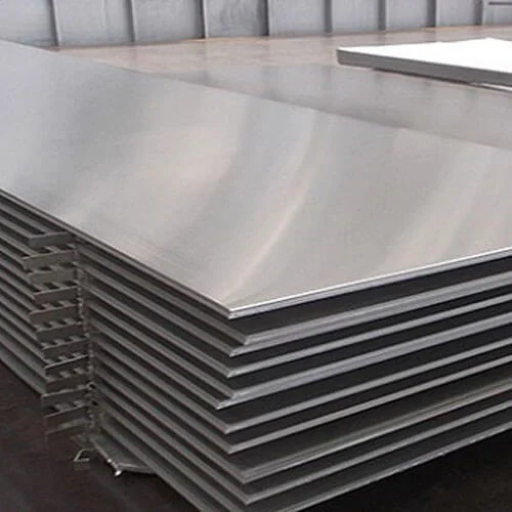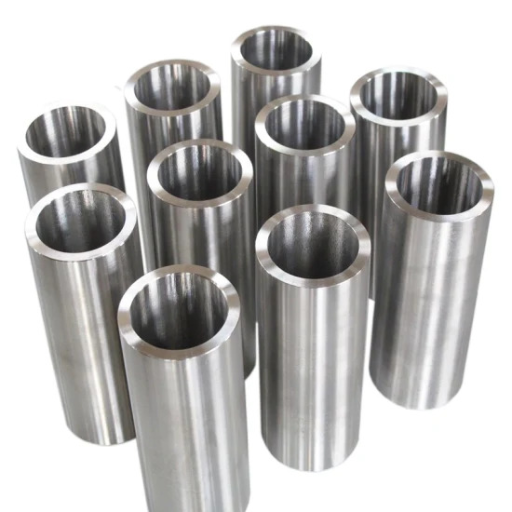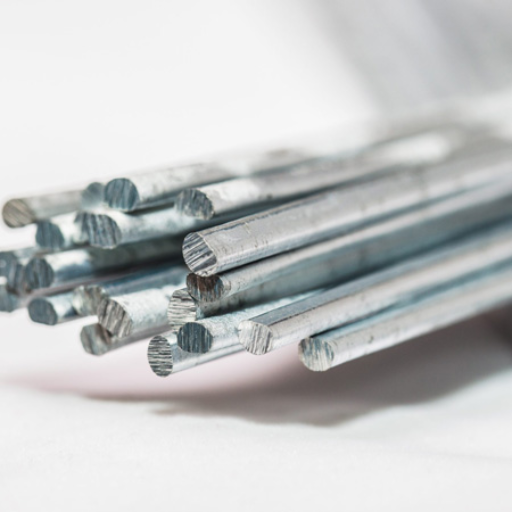
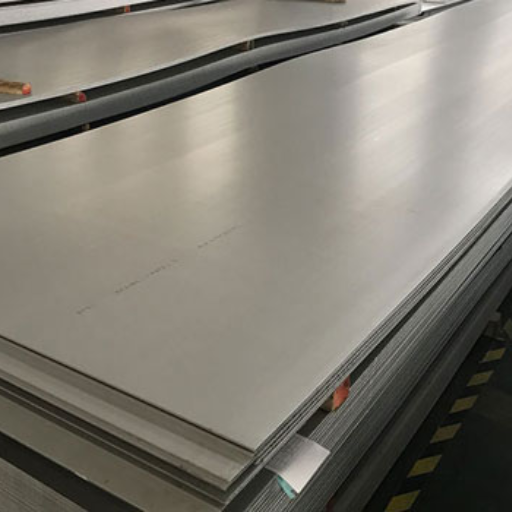
Inconel 625 sheet is flat-rolled UNS N06625 supplied to ASTM B443, in thicknesses below 0.1875 in (4.76 mm). Above that line, the same metal is called plate, and it is hot-rolled rather than cold-rolled. The chemistry does not change. The rolling route, the tolerance band, and the pressure-vessel calculation all do.
Here is how the arithmetic catches people.
Take a typical line: four pieces of Inconel 625, 6 mm, 1.5 m by 3 m. The enquiry called it sheet, and 6 mm is plate, which is the first thing to catch. One quote comes back at 34,200, another at 34,200, and another at 41,000, and the cheaper looks like a 16% saving on identical material.
It rarely is. The cheaper quote is usually 5 mm stock, substituted because 5 mm was on the floor and the order said “6 mm nominal.”
Eighteen square metres of 625 weighs 760 kg at 5 mm and 912 kg at 6 mm. Both quotes work out to $45 per kilogram. The 152 kg gap is the entire price difference, and it was never a discount.
That is the failure this page prevents.
Key Takeaways
- Sheet stops at 0.1875 in (4.76 mm). Below it the product is cold-rolled sheet; at and above it, hot-rolled plate. Both run to ASTM B443, and both pair with B906 for tolerances, finish and marking.
- Inconel 625 sheet weighs 8.44 kg per square metre per millimetre of thickness. A 6 mm plate in 1.5 m by 3 m is 228 kg. Freight and quote comparison both turn on that number.
- Grade 2 has a lower room-temperature yield than Grade 1 (276 MPa against 414 MPa) and is still the correct choice above roughly 593 °C. Ordering “Grade 2” as an upgrade is a mistake in both directions.
- ASTM B168 does not cover 625. Its alloy list runs N06600 through N06617; N06625 is not among them, yet supplier catalogues put B168 beside Inconel 625 sheet constantly.
- AMS 5666 is bar, forgings and extrusions, not plate or sheet. That is AMS 5599, or AMS 5869.
Send us your size list and we will confirm which standard governs each line and what it weighs before you commit. Our technical team answers within 24 hours. Send the list here.
Inconel 625 Sheet Thickness: Where Sheet Ends, and Plate Begins
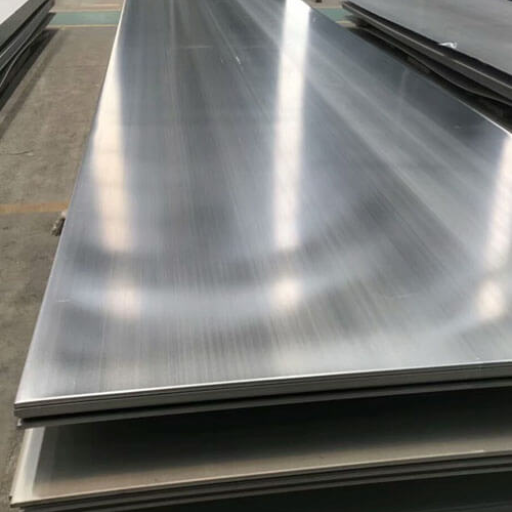
Inconel 625 sheet runs from 0.5 mm to 4.76 mm. At 4.76 mm and over the product is plate. Below the line the mill cold-rolls; above it, the mill hot-rolls and descales, so the tolerance table and the as-delivered finish change with it.
| Thickness | Product form | Rolling route | Standard |
|---|---|---|---|
| 0.10 to 0.30 mm | Foil, thin strip | Cold rolled | B443 |
| 0.30 to under 0.50 mm | Strip, coil | Cold rolled, slit | B443 |
| 0.50 to under 4.76 mm | Sheet | Cold rolled | B443 |
| 4.76 mm and over | Plate | Hot rolled by default | B443 |
| 4.76 to 9.5 mm, on request | Cold-rolled plate | Cold rolled | B443 |
One row in that table is worth pausing on.
Cold-rolled plate is the exception worth knowing: available to 9.5 mm on request, with a tighter thickness tolerance and a better surface, at higher cost and longer lead time. If your drawing calls a tolerance the hot-rolled table cannot hold, order that row.
B443 is one document covering three product forms. Inconel 625 plate, sheet and strip all sit inside it, under both the ASTM and the ASME SB443 designation. A supplier who says “B443 covers plate but not sheet” has it backwards, and a buyer who accepts it orders plate for a 2 mm requirement.
ASTM B906 is part of your purchase whether you name it or not. ASTM International publishes B906 as the general-requirements document for flat-rolled nickel plate, sheet and strip. It carries the thickness tolerances, the permissible variations, the finish definitions, the sampling plan and the marking rules. An order that cites only “ASTM B443” leaves every one of those to the mill’s default.
That default is usually reasonable. It is not usually what your engineering drawing says.
Grade 1 or Grade 2: The Choice That Changes With Thickness
ASTM B443 supplies N06625 in two conditions, and the names mislead almost everyone the first time.
Grade 1 is annealed at a minimum of 871 °C. It is the stronger of the two at room temperature: 414 MPa minimum yield, roughly 827 MPa tensile. It is specified for service up to about 593 °C.
Grade 2 is solution annealed at 1,083 to 1,093 °C, and it is the condition most Inconel 625 sheet is mistakenly ordered in. It carries a lower room-temperature yield, 276 MPa, and it is the correct choice above roughly 593 °C, where creep and rupture resistance take over from ambient strength.
Read those two sentences again. Grade 2 is the weaker material at 20 °C and the better material at 650 °C. Buyers order it as an upgrade because the number is higher, and that assumption fails in both directions.
For Inconel 625 sheet and plate there is a second consequence that pipe buyers never meet. Plate goes into pressure-vessel shells, and shell thickness comes from an allowable stress that depends on which condition was supplied. A vessel designed on Grade 1 allowable stress and built from Grade 2 plate is not necessarily unsafe, but the calculation has to be redone before the plate is cut. The Inconel 625 pipe specification covers the condition decision in full.
Which Standard Covers Inconel 625 Sheet, Plate, Strip and Bar
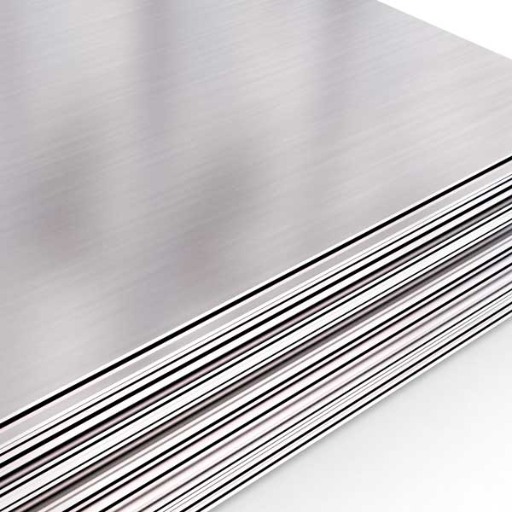
Three ASTM documents cover the 625 family’s non-tubular forms, and they are not interchangeable.
B443, B446 and B564 Are Three Different Products
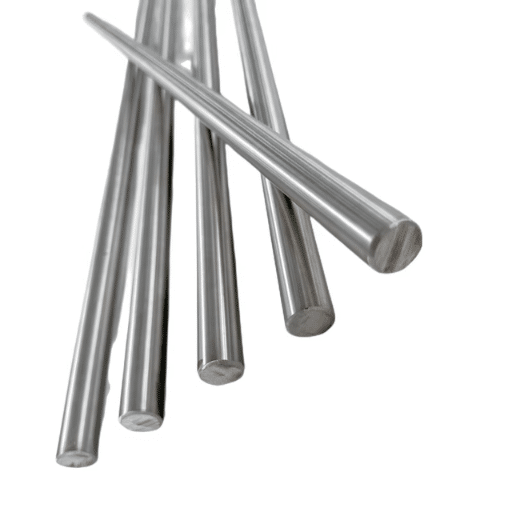
B443 covers Inconel 625 plate, sheet and strip. B446 covers rod and bar, currently at edition B446-24. B564 covers forgings. A mill certificate citing B446 against a plate order has certified the wrong product form, and the mechanical test schedule will not match what you specified.
B906 governs flat product only. It does not extend to bar or forgings, which reference B880 for chemical check-analysis limits. An order citing B906 against bar stock has attached the wrong document.
The B168 Citation Error
ASTM B168 is the flat-product specification for nickel-chromium-iron alloys. Its enumerated alloy list runs N06600, N06601, N06603, N06690, N06693, N06025, N06045 and N06617.
N06625 is not on that list. Inconel 625 is a nickel-chromium-molybdenum-niobium alloy, and it is governed by B443.
Supplier catalogues list B168 beside Inconel 625 sheet anyway, because B168 is the familiar flat-product spec for the 600 family and the two get grouped in the same table. A buyer who accepts a B168 certificate against a 625 order has accepted a certificate written for a different material family.
The failure is documentary, not metallurgical, and it surfaces at receiving inspection. A certificate citing B168 against a purchase order citing B443 gets held at the gate: the material is probably fine, but the paperwork cannot prove it. The mill has to reissue before anything moves, and that is a week lost to a one-line error.
The fix costs nothing. Put the standard and the edition on the order, and require the certificate to cite both.
Already holding a certificate you are not sure about? Send it over and we will check the cited standard against the alloy and the product form before your inspector does. Request a certificate review.
AMS 5599, AMS 5869 and AMS 5666 Are Not Interchangeable
The aerospace designations split by product form, and the split is where buyers go wrong.
| AMS number | Product forms |
|---|---|
| AMS 5599 | Sheet, strip and plate |
| AMS 5869 | Sheet, strip and plate |
| AMS 5666 | Bar, forgings and extrusions |
AMS 5666 appears on plate enquiries constantly because it is the number most people associate with 625. It does not cover plate or sheet. For flat product the relevant designations are AMS 5599 or AMS 5869, both administered by SAE International.
Where an aerospace or defence flow-down applies, the AMS document sits alongside B443 rather than replacing it. B443 gives you the ASTM chemistry and mechanical basis; the AMS document adds the aerospace testing and traceability regime on top. Order both if both are required.
Inconel 625 Sheet Weight per Square Metre and What It Does to Your Quote
Inconel 625 sheet has a density of 8.44 g/cm³. That gives a single number worth memorising: one square metre at one millimetre of thickness weighs 8.44 kg.
The formula is thickness in millimetres, multiplied by area in square metres, multiplied by 8.44.
| Thickness | kg/m² | kg per 1 m x 2 m | kg per 1.5 m x 3 m |
|---|---|---|---|
| 0.5 mm | 4.22 | 8.44 | 18.99 |
| 1.0 mm | 8.44 | 16.88 | 37.98 |
| 1.5 mm | 12.66 | 25.32 | 56.97 |
| 2.0 mm | 16.88 | 33.76 | 75.96 |
| 3.0 mm | 25.32 | 50.64 | 113.94 |
| 5.0 mm | 42.20 | 84.40 | 189.90 |
| 6.0 mm | 50.64 | 101.28 | 227.88 |
| 10.0 mm | 84.40 | 168.80 | 379.80 |
| 20.0 mm | 168.80 | 337.60 | 759.60 |
At roughly 40to40to45 per kilogram for flat product, a 10 mm plate in 1.5 m by 3 m is a 15,200to15,200to17,100 order. Freight is charged on weight. Cutting losses are charged on weight. A quote that looks 15% cheaper is very often a quote for a thinner sheet, a narrower width, or a different actual-versus-nominal convention.
Compare Inconel 625 sheet price per kilogram, not per sheet. One division catches the substitution every time.
The 40to40to45 band is Chinese domestic pricing in early 2026, not an export or landed price, and it moves with nickel. The 625 price guide covers the raw-material floor behind it.
Finish, Forming and the Limits of Inconel 625 Sheet
Inconel 625 sheet finish designations are borrowed, not standard. No.1, 2B and BA come from the stainless finish conventions in ASTM A480 and EN 10088-2. B443 does not define them, but suppliers use them anyway and buyers assume they mean what they mean on 304.
The translation: No.1 is hot rolled, annealed and pickled, which is how plate arrives. 2B is cold rolled, annealed, pickled and skin-passed. BA is bright annealed in a controlled atmosphere with no pickle, usually on thinner sheet. Specify the finish in words as well as letters, and agree it with the mill.
Forming is where Inconel 625 sheet punishes optimism. The alloy work-hardens fast, so bends spring back and tight radii crack.
| Thickness | Minimum bend radius (annealed) |
|---|---|
| Up to 1.5 mm | 1.0 x thickness |
| 1.5 to 3 mm | 1.5 x thickness |
| 3 to 6 mm | 2.0 x thickness |
| Above 6 mm | 2.5 x thickness, or hot form |
Run bend lines perpendicular to the rolling direction. Across-grain ductility is lower, and a radius that works with the grain will crack across it.
This is where 316L experience becomes a liability. A 1.5x radius that forms cleanly on 316L will crack Inconel 625 sheet at 3 mm, because the work-hardening rate is higher. The material is correct; the radius was borrowed from a different alloy.
Process annealing at 927 to 1,038 °C restores ductility between forming stages. Hot forming is capped at 1,149 °C, and a 15 to 20% finishing reduction after hot working avoids a duplex grain structure that shows up later as inconsistent properties.
Strip and coil are a separate purchase from Inconel 625 sheet. Slitting introduces burr, camber and slit edge condition variables that flat sheet does not have, so specify slit width tolerance, edge type, camber limit and coil inside diameter. The 625 tube guide covers the hollow-product equivalent.
Buying Inconel 625 Sheet ASTM B443: What to Write on the Order
Seven lines on the material take-off close every ambiguity this page describes.
- Form and thickness. “Sheet, 3.0 mm” or “plate, 12 mm.” State nominal and, where it matters, the tolerance class.
- Grade and condition. “Grade 1 annealed” or “Grade 2 solution annealed.” Never “625” alone.
- Product-form standard with edition. “ASTM B443” plus the edition suffix, not the number alone. Confirm the current edition with the mill before you write it.
- General-requirements standard. B906 for all Inconel 625 sheet, plate and strip.
- Finish. In words as well as the supplier’s letter code.
- Cut-to-length and quantity. Width, length, quantity, and whether weight is theoretical or actual.
- Documentation and verification. MTR to EN 10204 3.1 minimum, plus positive material identification on receipt. 625 and Inconel 600 are visually identical on the rack.
That last point is not paranoia. The Nickel Institute documents how closely the nickel-chromium family members resemble one another in service properties and appearance, and PMI is the only cheap way to confirm what actually arrived.
If you are reconciling designations across standards at the same time, the complete Inconel 625 designation map resolves UNS N06625, W.Nr. 2.4856, GH3625 and the rest in one table. And if the Inconel 625 sheet is feeding a flange or fitting scope, the 625 flange specification covers the B564 side.
Frequently Asked Questions
Is Inconel 625 sheet the same as Inconel 625 plate?
The alloy is identical. The product is not. Sheet is cold rolled below 0.1875 in (4.76 mm); plate is hot rolled at and above it. Inconel 625 plate ASTM B443 and sheet share one specification, but the tolerance table and the as-delivered finish differ.
What thicknesses does 625 sheet come in?
Cold-rolled sheet is commonly supplied from 0.5 mm to 4.76 mm, with strip down to 0.1 mm and Inconel 625 plate from 4.76 mm upward. Availability above roughly 50 mm narrows considerably and lead times extend.
What does a square metre of 625 sheet weigh?
8.44 kg per square metre per millimetre of thickness. A 2 mm Inconel 625 sheet weighs 16.88 kg/m²; a 6 mm plate in 1.5 m by 3 m weighs 227.9 kg.
How much does Inconel 625 sheet cost?
Roughly 40to40to45 per kilogram for flat product, domestic China, early 2026. That is not an export or landed price. Compare the figure per kilogram rather than per sheet, and check the thickness behind each quote before you accept it.
What is the difference between Grade 1 and Grade 2 Inconel 625 sheet?
Grade 1 is annealed at 871 °C minimum, yields 414 MPa minimum at room temperature, and suits service to about 593 °C. Grade 2 is solution annealed at 1,083 to 1,093 °C, yields 276 MPa, and is correct above 593 °C. Grade 2 is the weaker material at ambient temperature.
Is 625 sheet weldable?
Yes. GTAW with ERNiCrMo-3 filler, no preheat, and no post-weld heat treatment to retain corrosion resistance. The 625 welding guide covers the procedure and parameters.
What is Inconel 625 sheet used for?
Weld overlay and vessel cladding, expansion joints and bellows, ducting and exhaust systems, heat-exchanger shells, marine and offshore components, and aerospace sheet structures. The common thread is a combination of chloride resistance and high-temperature strength that stainless grades cannot hold together.
Conclusion: Get the Thickness, the Grade and the Standard on One Line
The metal is the easy part. For Inconel 625 sheet, four things carry the risk, and none of them is metallurgical: the thickness line, the condition, the standard that governs each product form, and the certificate that has to match it.
Get those onto one line and the order is safe. Leave any of them to the mill’s default and it surfaces at receiving inspection, after the freight is paid.
Send us your line list with thickness, grade, standard and cut size exactly as written, and we will confirm what governs each line and what it weighs before the order leaves your desk. Our technical team responds within 24 hours. Start the check here.