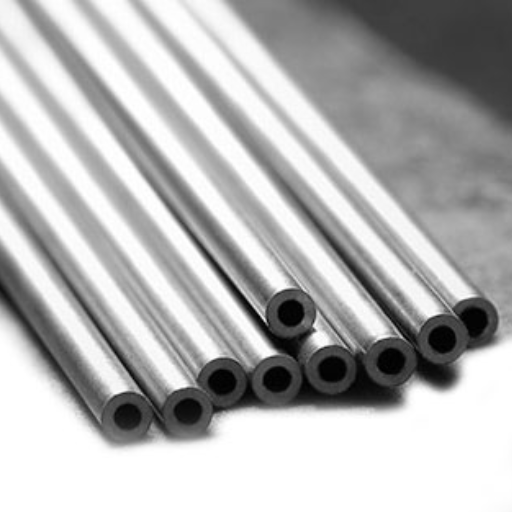
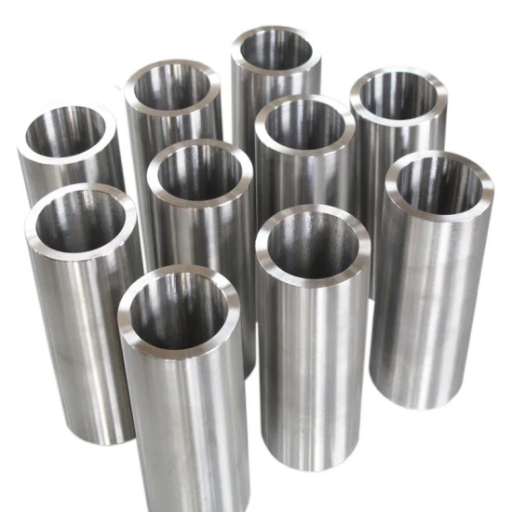
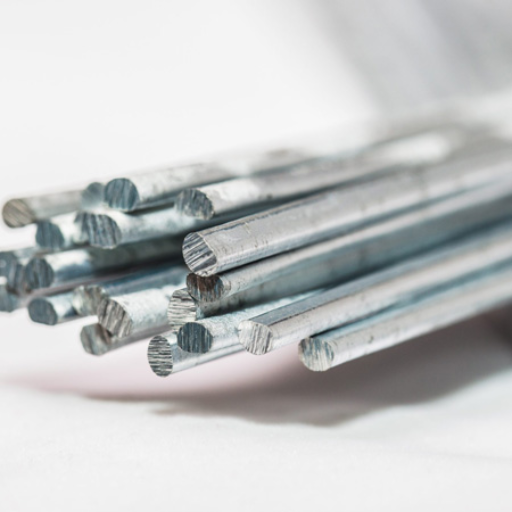
Medical gas copper tube is hard-drawn seamless copper tube, in Type K or Type L, that has been specially cleaned, degreased, end-capped, and marked for oxygen and medical gas service under ASTM B819 in the U. S. or EN 13348 in Europe. It isn’t the same product as plumbing or refrigeration tube, and buying the wrong one is one of the fastest ways to fail a hospital inspection.
Most medical gas lines don’t fail inspection because the copper was wrong. They fail because the tube wasn’t cleaned, capped, and documented to the standard the authority having jurisdiction expects. You already know the line has to carry oxygen, nitrous oxide, medical air, or vacuum without contaminating the gas stream. This guide gives you the governing standard, the Type K versus Type L decision, the cleanliness and capping rules, the certification to demand, and an RFQ checklist for sourcing medical gas copper tube from a qualified manufacturer.
If you’re pricing a project now, send us the standard, type, and OD × wall × length. Our technical team returns a same-day quotation with mill test reports.
Key Takeaways
- Positive-pressure medical gas tube must be hard-drawn seamless copper to ASTM B819 (U. S.) or EN 13348 (EU/UK), defaulting to Type L.
- Type K becomes mandatory only when operating pressure exceeds 185 psi (about 1276 kPa) and the tube is larger than NPS 3 (3-1/8″ OD), per NFPA 99.
- ASTM B819 limits internal residue to 0.038 g/m², while EN 13348 typically holds 0.020 to 0.029 g/m²; each length is individually capped and often nitrogen-charged.
- Joints are brazed with cadmium-free BCuP filler under a continuous oil-free dry nitrogen purge to stop cupric-oxide scale from forming inside the tube.
- A complete RFQ names the standard edition, type, size, temper, cleanliness limit, capping and nitrogen charge, and the mill test report format.
What Is Medical Gas Copper Tube?

Medical gas copper tube is a specially cleaned and capped grade of seamless copper tube built for piped medical gas and vacuum systems in hospitals, clinics, and laboratories. The base metal is phosphorus-deoxidized copper, C12200 (Cu-DHP), with copper plus silver at 99.9% minimum and phosphorus held at 0.015 to 0.040%. That’s the same alloy behind most C12200 copper tube, but the medical gas version adds controlled cleaning, capping, marking, and documentation that ordinary water tube doesn’t carry.
The tube carries oxygen, nitrous oxide, medical air, carbon dioxide, nitrogen, and anesthetic gas disposal (vacuum/WAGD). Because oxygen accelerates combustion, any hydrocarbon or oil residue inside the bore is a fire hazard, which is why the cleanliness rules are so strict. For a broader view of how this grade sits inside the standards landscape, see our seamless copper tube standards and selection guide.
The Governing Standards: ASTM B819, EN 13348, and NFPA 99
Three documents do most of the work, and they play different roles. ASTM B819 and EN 13348 are material standards that define the ASTM B819 copper tube or EN 13348 tube itself. NFPA 99 is an installation and facility code that tells you where each tube type is allowed. Confusing a material standard with an installation code is a common and expensive mistake.
ASTM B819-18, Standard Specification for Seamless Copper Tube for Medical Gas Systems, covers Type K and Type L tube in H58 hard-drawn temper, supplied in straight lengths, specially cleaned and individually end-capped. The Type K and Type L dimensions themselves come from ASTM B88. EN 13348 (often written as BS EN 13348 in the UK) is the European counterpart, referenced alongside HTM 02-01 and ISO 7396-1 for the system design. In Canada, CSA Z7396.1 governs installation.
The two material standards aren’t interchangeable on paper. The biggest practical gap for buyers is the residue limit and the marking language.
Table 1: ASTM B819 vs EN 13348 at a glance
| Item | ASTM B819 (U. S.) | EN 13348 (EU/UK) |
|---|---|---|
| Scope | Seamless copper tube for medical gas systems | Copper tube for medical gas and vacuum |
| Types | Type K and Type L | Designated by OD × wall (metric) |
| Temper | H58 hard-drawn, straight lengths | Hard-drawn (R250/R290) or annealed, by designation |
| Internal residue limit | ≤ 0.038 g/m² (about 38 mg/m²) | ≤ 0.020 to 0.029 g/m² (jurisdiction dependent) |
| Marking | OXY, MED, OXY/MED, OXY/ACR, ACR/MED | Manufacturer, size, standard, “cleaned for medical gas” |
| Capping | Each length individually capped/plugged | Each length capped, often nitrogen sealed |
| Typical lengths | 6 m (20 ft) straight | 3 m or 6 m straight |
Want the standards matched to your project? Send your destination code (NFPA 99, HTM 02-01, ISO 7396-1, or CSA Z7396.1) and our technical team will confirm whether ASTM B819 or EN 13348 tube fits your specification within 24 hours.
Type K vs Type L: Which Medical Gas Copper Pipe Do You Need?
The short answer: start with Type L, and move to Type K only when NFPA 99 forces you to. Remember the nominal-versus-actual rule first. For ASTM tube, the actual outside diameter is always 1/8″ larger than the nominal size, so a 1/2″ nominal tube measures 5/8″ (0.625″) OD. Our copper tube size chart covers the full B88 dimension set if you need every row.
NFPA 99 (Section 5.1.10) sets the trigger clearly. Type K is required where the operating pressure is above 185 psi (about 1276 kPa) and the tube size is larger than NPS 3, which is 3-1/8″ OD (DN80). Below that combination, Type L is the standard for positive-pressure mains, branches, and drops. Type L is also lighter and cheaper, so there’s no reason to over-specify Type K everywhere.
Table 2: ASTM B819 Type K and Type L dimensions (typical)
| Nominal size | Actual OD (in) | Type K wall (in) | Type L wall (in) | Type L ID (in) |
|---|---|---|---|---|
| 1/4″ | 0.375 | 0.035 | 0.030 | 0.315 |
| 3/8″ | 0.500 | 0.049 | 0.035 | 0.430 |
| 1/2″ | 0.625 | 0.049 | 0.040 | 0.545 |
| 3/4″ | 0.875 | 0.065 | 0.045 | 0.785 |
| 1″ | 1.125 | 0.065 | 0.050 | 1.025 |
| 1-1/2″ | 1.625 | 0.072 | 0.060 | 1.505 |
| 2″ | 2.125 | 0.083 | 0.070 | 1.985 |
| 3″ | 3.125 | 0.109 | 0.090 | 2.945 |
| 4″ | 4.125 | 0.134 | 0.110 | 3.905 |
Dimensions are typical drawn-temper values for reference; verify against current ASTM B88/B819 before ordering. The colour code is simple: Type L is marked blue, Type K is marked green.
Here’s the decision in practice, shown as an illustrative scenario. When Priya, a project engineer on a 200 psi nitrous oxide riser in a Dubai hospital, ran the numbers in early 2025, the 3″ main sat above both the 185 psi threshold and the NPS 3 cutoff. She kept the riser in Type K and dropped the ward branches to Type L, which satisfied the inspector and saved about 18% on the lineal footage of heavy-wall tube. The rule is specific enough that you shouldn’t guess; calculate the design pressure and size, then pick the type.
Medical Gas Copper Tube Sizes by Line Function

Sizing follows the gas flow at peak demand, which the project engineer calculates using the NFPA 99 flow method. Still, there are practical minimums that show up on nearly every medical gas copper pipe schedule. Positive-pressure mains and branches typically start at DN15 (5/8″ OD), while vacuum mains and branches start larger at DN20 (7/8″ OD) because vacuum flow needs more area. Drops to outlets are commonly DN15, and alarm or gauge runouts may drop to DN8 (3/8″).
Table 3: Typical sizes by line function
| Line function | Typical minimum | Common range |
|---|---|---|
| Positive-pressure main | DN15 (5/8″ OD) | 3/4″ to 4″ nominal |
| Positive-pressure branch | DN15 (5/8″ OD) | 1/2″ to 2″ nominal |
| Outlet drop | DN15 (5/8″ OD) | 1/2″ nominal |
| Alarm / gauge runout | DN8 (3/8″ OD) | 1/4″ to 3/8″ nominal |
| Vacuum / WAGD main | DN20 (7/8″ OD) | 1″ to 4″ nominal |
One point trips buyers up: medical gas tube is supplied as hard-drawn straight lengths, not soft coils. The drawn temper suits capillary brazed fittings and keeps the bore round and clean, which is why you won’t see pancake coil on a hospital gas job the way you would on an HVAC lineset. Vacuum and WAGD service is also more permissive on material, where ASTM B88, B280 ACR, B819, or even stainless (TP304L/316L) can be permitted; our ASTM B280 ACR copper tube guide explains where refrigeration-grade tube overlaps and where it doesn’t.
Cleaning, Degreasing, and Capping for Oxygen Service
This is the section that separates a compliant medical gas copper tube from a reject. True oxygen clean copper tube has every trace of oil, grease, and particulate removed from the bore, and the bore stays sealed until the moment of installation. Oxygen turns hydrocarbon residue into an ignition source, so the limit is measured, not assumed.
Under ASTM B819 the total internal residue must not exceed 0.038 g/m² (about 38 mg/m²); EN 13348 jurisdictions typically tighten that to 0.020 to 0.029 g/m². Mills hit the number with an alkaline or detergent wash, steam or solvent cleaning, or vapour degreasing, aligned with the cleaning logic in CGA G-4.1 for oxygen service. After cleaning, each length is individually end-capped or plugged at the factory, bundled, and plastic-wrapped. If you specify it at ordering, the tube can also be charged with dry, oil-free nitrogen during capping so the bore stays inert through transit and storage.
The tube leaves the mill marked for service: OXY, MED, OXY/MED, OXY/ACR, or ACR/MED, along with the manufacturer, size, and temper. NFPA 99 then requires the tube to stay capped until it’s prepared for installation, which is why you’ll see installers cut and braze one length at a time rather than opening a whole bundle. The C12200 DHP copper alloy underneath is the same reliable base, but it’s the cleaning and capping discipline that makes it medical-grade.
Consider Marco, an OEM manifold builder in South Korea who ordered capped B819 tube in late 2024 for export to a U. S. hospital. His first shipment arrived clean but uncharged, and a humid six-week ocean transit left a faint oxide film inside the bore that failed his incoming inspection. On the reorder he specified nitrogen charging and a charge certificate up front, and the second lot cleared the residue test on arrival. The certificate cost almost nothing; the re-clean would have cost him the delivery window.
Brazing, Nitrogen Purge, and Why Buyers Should Care
You’re buying tube, not installing it, but the joint quality depends on the tube you supply. Medical gas joints are brazed, and the brazers are certified to ASSE 6010 with procedures qualified to AWS B2.2 or ASME Section IX. The filler is AWS A5.8 BCuP, cadmium-free, and on copper-to-copper joints NFPA 99 uses the phosphorus in the filler as the flux, so no separate flux is applied. Wrought-copper fittings typically follow ASME B16.22.
The critical control is the continuous oil-free dry nitrogen purge (Nitrogen NF) during every braze. Without it, the heated copper forms black cupric-oxide scale inside the tube, and that scale flakes into the gas stream and can condemn the whole system. The purge runs until the joint is cool to the touch, with flow low enough to displace air without putting positive pressure on the joint.
For the full purge-and-braze procedure and tube-handling detail, the Copper Development Association’s Copper Tube Handbook is the standard industry reference. Label the installed line to the governing colour code (CGA C-9 in the U. S., CSA Z7396.1 in Canada) at the required intervals, and get the authority having jurisdiction to sign off before the system is validated. Your job as the buyer is to make sure the medical gas copper tube arrives clean enough that the installer isn’t fighting contamination from the start.
Certification and Traceability to Demand
Paperwork is where medical gas orders succeed or stall. A distributor who can’t produce the right certificates will hold up your receiving inspection, and a hospital project doesn’t forgive a documentation gap. Demand the documents at quotation, not after the shipment lands.
Table 4: Certification and document checklist
| Document | What it proves |
|---|---|
| Mill test report (EN 10204 3.1 or ASTM format) | Heat chemistry and mechanical properties for the lot |
| Degreasing / oxygen-clean certificate | Internal residue test result against the standard limit |
| Nitrogen-charge certificate | The tube was capped under dry, oil-free N₂ (when specified) |
| Eddy-current test record (ASTM E243) | The bore and wall were non-destructively screened |
| Dimensional inspection report | OD, wall, length, and straightness within tolerance |
| Heat/lot traceability | Each length ties back to a single heat and test set |
The mill test report is the backbone. Every heat should be spectrographically verified before production, and the chemistry on the report should match what’s physically in the tube, not just what was ordered. That traceability is what lets your QC team accept the material without qualification exceptions. When Lena, an MGPS coordinator on a clinic project, received a bundle whose residue certificate named the wrong standard edition, her receiving inspection held the line for a week until the mill reissued the paperwork; matching the certificate to the adopted code up front would have avoided the delay.
How to Specify Medical Gas Copper Tube in an RFQ

A vague RFQ produces a vague quote, and on a medical gas job, “vague” can mean non-compliant. Use this checklist, and you won’t leave the inspector’s questions unanswered.
- Standard and edition: ASTM B819-18 or EN 13348, plus the project’s adopted code (NFPA 99, HTM 02-01, ISO 7396-1, CSA Z7396.1).
- Type: Type K or Type L, with the design pressure and the NPS 3 trigger checked.
- Size: nominal size and actual OD, in inches or metric to match the standard.
- Temper and form: H58 hard-drawn, straight lengths (state length, e.g., 6 m).
- Cleanliness limit: 0.038 g/m² (ASTM) or 0.020 to 0.029 g/m² (EN), with a residue test certificate.
- Capping and nitrogen charge: individually capped, with dry oil-free N₂ charge if required.
- Certification: EN 10204 3.1 mill test report, eddy-current record, dimensional report, lot traceability.
- Quantity and delivery: total metres or pieces, destination, and required ship date.
The three mistakes we see most are ordering ASTM B88 water tube instead of B819, forgetting to request the nitrogen charge on long-transit orders, and accepting a quote with no residue certificate. Any one of those can fail the job at receiving inspection.
Conclusion
Medical gas copper tube isn’t a commodity you can swap for plumbing or refrigeration tube. The right product is hard-drawn seamless C12200 to ASTM B819 or EN 13348, cleaned to a measured residue limit, individually capped, marked for oxygen service, and backed by a traceable mill test report. Pick Type L by default, step up to Type K only above the 185 psi and NPS 3 trigger, and specify the cleaning, capping, and certification in the RFQ so the inspector’s questions are answered before the tube even ships.
Zhongzheng manufactures copper tube to international standards from our Wenzhou facility, with spectrographic heat verification and full documentation packages for medical gas projects worldwide. Send your standard, type, and OD × wall × length, and our technical team will confirm compliance, available sizes, pricing, and lead time within 24 hours. Request an ASTM B819 / EN 13348 quotation →
FAQ
What copper tube is used for medical gas?
Hard-drawn seamless copper tube to ASTM B819 (U. S.) or EN 13348 (EU/UK), in Type K or Type L, made from C12200 phosphorus-deoxidized copper. It must be specially cleaned, individually capped, and marked for oxygen or medical gas service.
What is ASTM B819?
ASTM B819 is the Standard Specification for Seamless Copper Tube for Medical Gas Systems. It defines Type K and Type L tube in hard-drawn (H58) temper, supplied in straight lengths, cleaned to an internal residue limit of 0.038 g/m², and individually end-capped.
What is the difference between Type K and Type L medical gas pipes?
Type K has a thicker wall than Type L at the same outside diameter and is marked green; Type L is marked blue. Type L is the default for medical gas, while Type K is required only when pressure exceeds 185 psi and the tube is larger than NPS 3 (3-1/8″ OD).
Does medical gas copper tube need to be cleaned for oxygen?
Yes. Oxygen makes hydrocarbon and oil residue an ignition hazard, so the bore must be degreased to a measured residue limit and kept capped until installation. ASTM B819 sets the limit at 0.038 g/m², while EN 13348 jurisdictions typically hold 0.020 to 0.029 g/m².
What is the residue limit for a medical gas copper tube?
ASTM B819 limits total internal residue to 0.038 g/m² (about 38 mg/m²). EN 13348 and HTM 02-01 projects typically require a tighter 0.020 to 0.029 g/m², so confirm the governing standard before you order.
Can ASTM B88 or B280 be used for medical gas systems?
For positive-pressure medical gas, no; those systems require ASTM B819 (or EN 13348) tube. For vacuum and WAGD lines, NFPA 99 is more permissive and may allow ASTM B88, B280 ACR, B819, or stainless steel, subject to the engineer’s specification and the adopted code.