The foundation of electronic precision depends on the selection of materials used in electronic devices. Material selection during design and procurement processes becomes critical when system performance requires protection against signal loss and oxidation and needs to maintain reliability through multiple thermal cycling tests. Oxygen-free copper (OFC) has established itself as the critical material for these demands — delivering conductivity, purity, and mechanical stability that standard copper grades cannot consistently provide. The guide presents an in-depth analysis of OFC by covering its composition and essential characteristics and the actual benefits it provides compared to traditional copper and its main industrial uses and the specification criteria that should be used to choose appropriate materials for specific applications.
Understanding Oxygen-Free Copper

Definition and Composition
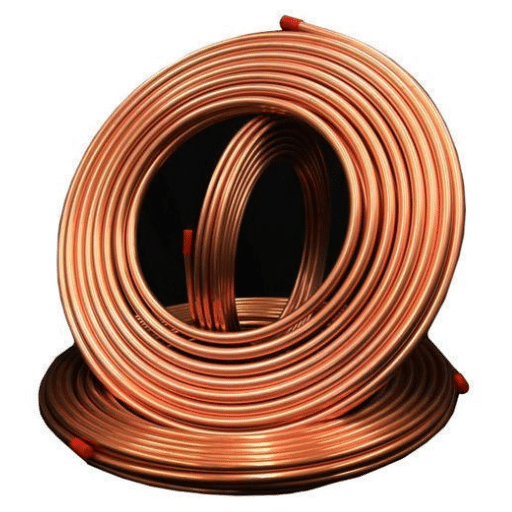
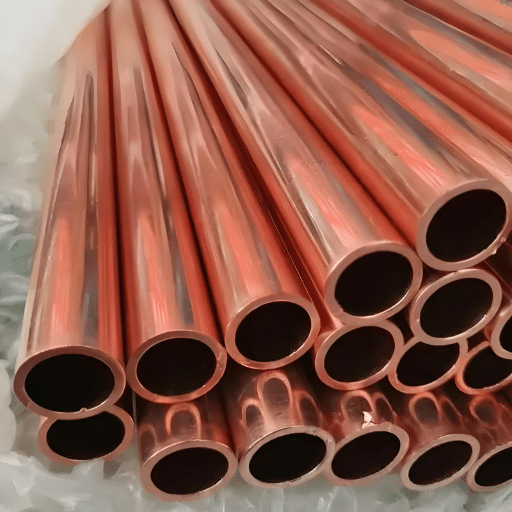
Oxygen-Free Copper (OFC) is a highly refined copper material defined by its extremely low oxygen content — below 0.001% by weight — and corresponding high copper purity. The standard grades of copper include C10100 which has 99.99% purity and C10200 which has 99.95% purity both of which have higher material cleanliness than standard electrolytic tough pitch ETP copper. The production process uses electrolytic refining and fire-refining techniques which have been developed to remove oxygen and all other contaminants that decrease electrical conductivity and mechanical strength and long-term material stability.
OFC achieves its high electrical conductivity because of its pure OFC composition and pure OFC composition provides better corrosion resistance and thermal fatigue protection and higher resistance to hydrogen embrittlement which makes OFC the preferred material for high-frequency electronics and superconductor research and precise audio-visual equipment and cutting-edge scientific instruments.
Key Material Properties
OFC vs. Standard Copper — Direct Comparison
| Factor | Oxygen-Free Copper (OFC) | Standard ETP Copper |
|---|---|---|
| Copper Purity | 99.95% – 99.99% | ~99.9% — with higher impurity variance |
| Oxygen Content | < 0.001% | 0.02% – 0.04% |
| Electrical Conductivity | 1–4% higher than standard | Baseline IACS reference |
| Hydrogen Embrittlement Risk | Eliminated — no oxide inclusions | Present — oxygen reacts with hydrogen at high temperatures |
| Corrosion Resistance | Superior — no internal oxide formation | Standard — oxide inclusions reduce long-term resistance |
| High-Temperature Stability | Excellent — maintains structural and conductive integrity | Reduced — voids develop under thermal stress |
| Preferred Applications | Semiconductors, superconductors, HF electronics, aerospace | General electrical wiring, standard plumbing, basic connectors |
Advantages of Oxygen-Free Copper in Electronics

Documented Performance Data
- ▸OFC electrical conductivity exceeds 101% IACS — delivering 1–4% lower resistivity than standard ETP copper across equivalent cross-sections.
- ▸OFC electrical resistivity: ~1.70 µΩ·cm — the lowest achievable in commercially produced copper tube and rod forms.
- ▸Global OFC market compound annual growth rate projected at over 5% over the next decade, driven by 5G, EV, and semiconductor demand.
- ▸Closed-loop copper recycling reduces production energy requirements by up to 85% compared to primary extraction processes.
Core Performance Advantages
Exceptional Conductivity and Signal Integrity
OFC’s high purity eliminates the grain boundaries and impurities that restrict electron flow in standard copper. The absence of oxygen prevents copper oxide development — a degradation pathway that progressively reduces conductivity in standard materials over their operational lifespan. This combination of properties makes OFC the preferred specification for high-frequency telecommunications, precision audio engineering, data transmission systems, and advanced computing infrastructure where stable, low-loss signal performance is non-negotiable.
High Purity and Reduced Oxidation
OFC’s copper content exceeding 99.99% eliminates harmful contaminants that would otherwise initiate oxidation and degrade conductivity over time. This oxidation resistance is particularly critical in high-moisture or chemically active operating environments — including 5G base station infrastructure, precision medical technology, and sustainable energy systems — where material degradation directly translates to system reliability failure and increased lifecycle maintenance costs.
Durability in High-Precision Applications
OFC’s pure microstructure protects against the defect formation and operational fatigue that accumulate in less pure materials under extended high-stress use. Its superior tensile strength and thermal resistance enable it to sustain both structural and conductive properties during high-temperature and high-pressure operation — critical for aerospace instruments, medical imaging devices, precision robotics, and high-frequency signal transmission systems where unplanned failure is not an acceptable operational outcome.
Industrial Applications of Oxygen-Free Copper

OFC Application Summary by Sector
| Industry | Primary OFC Form Used | Critical Property Required |
|---|---|---|
| Electronics / Semiconductors | Wire, tubing, PCB traces, connectors | Maximum conductivity; zero oxide contamination |
| Telecommunications / 5G | High-frequency cable, connectors | Signal integrity; low attenuation at high frequencies |
| Aerospace | Tubing, electrical wiring, heat exchangers | Thermal fatigue resistance; lightweight structural reliability |
| Medical / Diagnostic | Precision tubing, instrument components | Biocompatibility; electromagnetic compatibility; precision performance |
| Renewable Energy | Windings, conductors, EV battery wiring | High current capacity; recyclability; energy transfer efficiency |
| Cryogenics / Scientific | Superconducting leads, cooling components | Ultra-low impurity thermal conductivity; cryogenic stability |
Current Trends and Innovations

Advancements in Copper Processing Technologies
Laser-Assisted Refinement
The process uses focused laser beams to refine copper surfaces through microstructural changes which result in enhanced purity and uniformity that conventional methods fail to achieve. This method produces copper components that exhibit high performance through exceptional surface quality and precise dimensional measurements which aerospace and electronics industries prefer for their needs.
Hydrometallurgical Processing
Water-based chemistry extraction methods provide an environmentally superior alternative to traditional pyrometallurgical approaches which produce lower greenhouse gas emissions and reduced energy requirements. New electrorefining and SX-EW technologies work together with existing methods to produce higher purity results which require lesser operational expenses.
ML-Driven Process Optimization
Machine learning and predictive analytics now function as real-time systems which identify manufacturing defects through their application in copper production processes and their automatic response to changes in material quality. The result is decreased waste which produces consistent product quality while manufacturing processes achieve automatic operational adjustments.
Closed-Loop Recycling Systems
Closed-loop processing achieves up to 85% reduction in production energy compared to primary extraction while maintaining all original OFC material properties through the recycling cycle. The use of AI and machine learning in predictive maintenance systems enables recycling facilities to extend their equipment lifetimes while decreasing their unplanned operational downtime.
Future Outlook
The demand trajectory for oxygen-free copper in electronics points clearly upward. The deployment of 5G networks together with electric vehicle market expansion and advanced semiconductor fabrication growth and high-precision medical technology expansion create sustained broad-based demand for a material which standard copper grades cannot provide. Analysts project the global OFC market to achieve a compound annual growth rate exceeding 5% over the next decade because the material serves an essential function in developing next-generation electronic systems.
The worldwide movement toward renewable energy sources and electrification technologies strengthens this prediction. OFC has become the standard material for transformers and motors and EV battery systems and photovoltaic systems because its electrical and thermal characteristics help achieve better energy conversion results. The aerospace and telecommunications and renewable energy industries will adopt OFC as manufacturing processes develop because it has become an essential component for electronic devices that will be created in the upcoming ten years.
Frequently Asked Questions
Reference Sources
- ▸Selected Aspects of Evolution Properties of Oxygen-Free Copper for High-Advanced Electrotechnical Application Explores OFC property characteristics in advanced electrotechnical applications including vacuum apparatus and electron tube manufacturing.
- ▸Experimental Study on the Mechanical Properties of Oxygen-Free Copper Used in High Energy Physics Detectors and Accelerators Investigates OFC tensile strength and impact resistance under the demanding mechanical conditions of high-energy physics instrumentation.
- ▸High Purity Oxygen-Free Copper for Advanced Applications Examines the thermal and electrical properties of high-purity OFC and its deployment across advanced precision application environments.