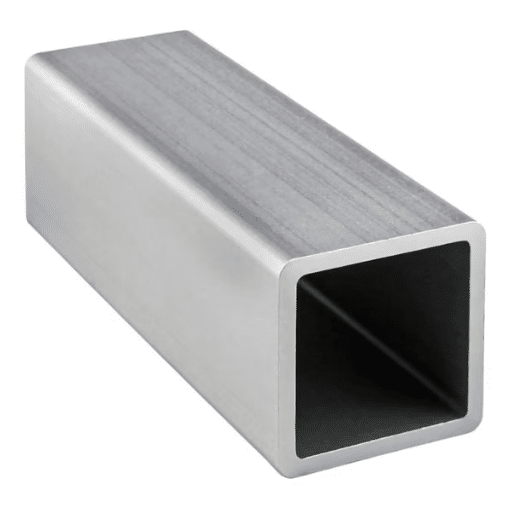
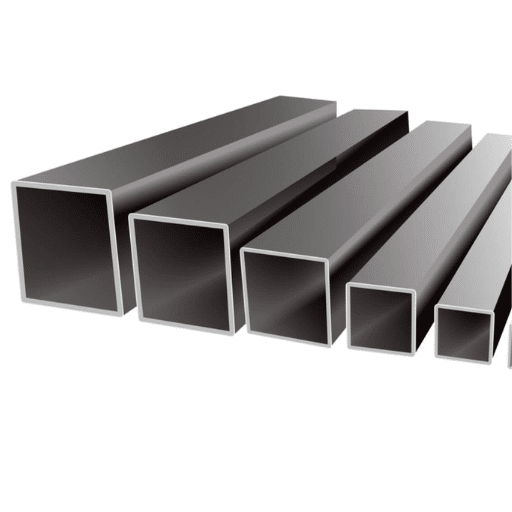
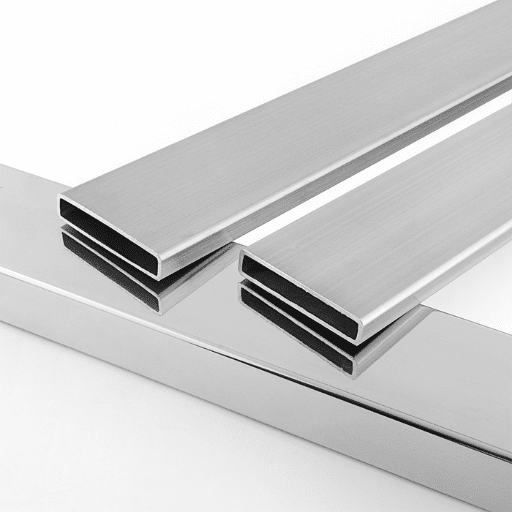
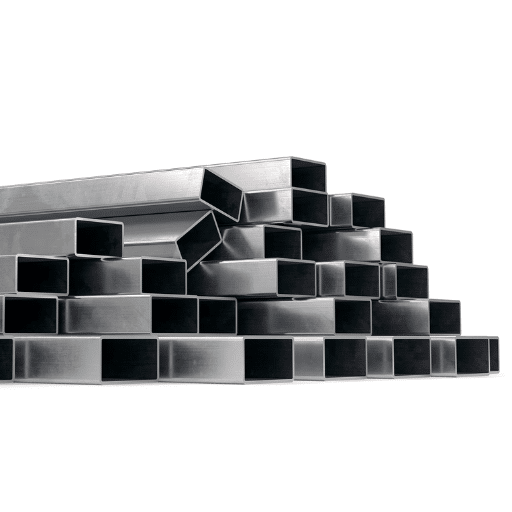
316L seamless stainless steel pipe is the standard upgrade from 304 when your process stream contains more than 50 ppm chloride at ambient temperature. With 2-3% molybdenum giving it a PREN of approximately 24 (versus ~18 for 304), TP316L seamless pipe resists pitting corrosion to roughly 1,000 ppm chloride at room temperature, making it the default specification for chemical processing, marine service, and coastal installations.
The correct inquiry exists because you need to select pipe materials that function in environments containing chloride while evaluating the maintenance capabilities of 304 stainless steel. The engineering profession employs 304 stainless steel at insufficient levels for projects that face unavoidable chloride-induced pitting, which engineers fail to identify until the project enters its testing phase. The first signs of damage appear after 12 to 24 months as tiny holes develop in heat exchanger tubes and crevice corrosion attacks flange joints, while cooling water systems experience total system failure under their high-pressure operations. The distinction between 304 and 316L exists as an objective fact. The decision about which path to take requires evaluation of chloride levels combined with temperature conditions and expenses associated with unexpected operational interruptions.
This guide provides you with a structured method to select 316L seamless pipes through its detailed requirements, which include exact chemical make-up defined by ASTM A312, PREN assessment, temperature-based chloride resistance limits, ASME B31.3 pressure standards, and a framework that shows 316L applications and duplex 2205 requirements.
Key Takeaways
- 316L seamless stainless steel pipe (UNS S31603) contains 2-3% molybdenum, giving it a PREN of ~24 versus ~18 for 304, the quantitative basis for its chloride resistance advantage.
- At ambient temperature, 316L resists pitting to approximately 1,000 ppm chloride; 304 begins failing above 50 ppm. At 60°C, 316L tolerance drops to ~200 ppm.
- Specify TP316L over TP316 when welded construction, service above 800°F, or thick-wall sections are involved, the 0.03% maximum carbon in 316L prevents sensitization.
- Seamless 316L pipe is mandatory for high-pressure chloride service, cyclic loading, and no-weld specifications; welded 316L is acceptable for low-pressure, cost-sensitive projects.
- For continuous seawater immersion or chloride levels above 1,000 ppm, duplex 2205 (PREN ~35) or super duplex S32750 (PREN >40) outperforms 316L despite the higher material cost.
What Is 316L Stainless Steel Seamless Pipe?
Austenitic Stainless Steel with Molybdenum
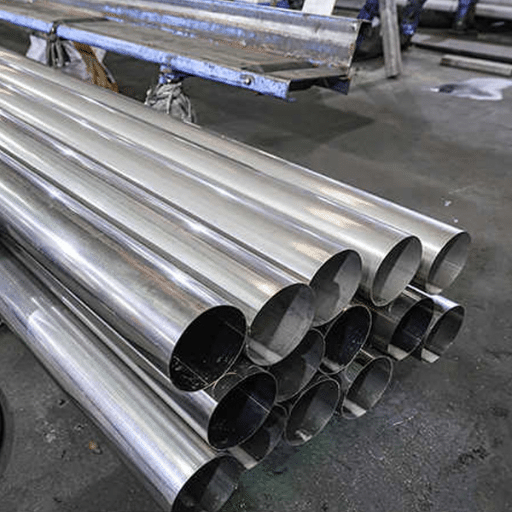
316L seamless stainless steel pipe is an austenitic grade designated UNS S31603 under the ASTM A312 standard. Its composition differs from the workhorse 304 grade in one element that fundamentally changes its corrosion behavior: molybdenum.
| Element | TP316L (UNS S31603) | TP304 (UNS S30400) |
|---|---|---|
| Chromium | 16.0-18.0% | 18.0-20.0% |
| Nickel | 10.0-14.0% | 8.0-11.0% |
| Molybdenum | 2.00-3.00% | — |
| Carbon | ≤0.03% | ≤0.08% |
The 2-3% molybdenum addition does not simply “improve corrosion resistance” in vague terms. Molybdenum dissolves into the austenitic matrix, which creates a passive chromium oxide film that protects against pitting and crevice corrosion caused by chloride ions. The Pitting Resistance Equivalent Number (PREN) for 316L reaches approximately 24 because its value exceeds that of the 304 grade, which has a PREN of approximately 18. Engineers who specify process piping use PREN as a concrete metric that calculates the operational lifespan of their pipes.
The seamless format matters because 316L is often specified for environments where any defect becomes a corrosion initiation site. Seamless pipe, produced by hot piercing a solid billet and rolling it into a hollow tube, has no longitudinal weld seam. That means no heat-affected zone, no weld metal with potentially different chemistry, and no geometric stress concentration where chloride ions preferentially attack.
Seamless vs Welded 316L Pipe: Key Differences
The manufacturing process establishes how well the final product will maintain its structural strength. The production of seamless 316L pipe begins with a solid round billet, which undergoes heating to about 1,200°C before workers use piercing and rolling methods to create the desired outer diameter and wall thickness. The process produces a consistent grain pattern that extends throughout the entire cross-sectional area.
Welded 316L pipe begins as flat strip, which workers form into a cylinder, then they join the ends together through TIG or plasma welding. The weld seam creates a heat-affected zone where chromium carbides can precipitate during cooling, which leads to a local chromium depletion that makes the area more vulnerable to intergranular corrosion. For 316L, the low carbon content (≤0.03%) mitigates this risk significantly, that is the entire purpose of the “L” designation, but the weld seam itself remains a metallurgical discontinuity.
Welded 316L pipe provides complete serviceability for applications that require low-pressure operation at ambient temperature and minimal chloride contact, while it costs 20-40% less than seamless. The use of seamless 316L pipe becomes essential for high-pressure systems, nuclear applications, according to ASME Section III standards, and all situations that have no welding requirements. See our detailed seamless vs welded stainless steel pipe comparison for pressure thresholds and cost analysis.
316 vs 316L: The Carbon Distinction
The difference between TP316 and TP316L is 0.05% carbon. That is the only compositional distinction ASTM A312 recognizes between the two grades. But that 0.05% determines whether your welded construction will survive long-term service in the sensitization temperature range.
| Property | TP316 (UNS S31600) | TP316L (UNS S31603) |
|---|---|---|
| Carbon | ≤0.08% | ≤0.03% |
| Tensile Strength | 515 MPa min | 485 MPa min |
| Yield Strength | 205 MPa min | 170 MPa min |
| Welding Requirement | May require post-weld heat treatment | Generally no PWHT required |
Stainless steel undergoes carbon diffusion to its grain boundaries, which forms chromium carbides when it reaches temperatures between 800 and 1,500 degrees Fahrenheit, which corresponds to 427 to 816 degrees Celsius. The loss of chromium from the grain boundary area creates a condition that allows intergranular corrosion to occur. The maximum carbon content of TP316L at 0.03% prevents carbide precipitation from occurring in most welded applications, which do not need post-weld solution annealing.
The conditions to use TP316L instead of TP316 require welded construction with service temperatures above the sensitization range and wall thickness which exceeds Schedule 80, and situations where post-weld heat treatment becomes impossible. The only situation to use TP316 occurs when a seamless pipe with minimal welding will operate at temperatures below 800°F and the need for slightly higher strength makes the welding difficulties of 316 acceptable.
ASTM A312 TP316L Seamless Pipe Specifications

Chemical Composition Requirements
ASTM A312/A312M covers seamless, welded, and heavily cold-worked austenitic stainless steel pipe. For TP316L seamless pipe, the standard specifies:
| Element | TP316L Requirement |
|---|---|
| Carbon | ≤0.03% |
| Chromium | 16.0-18.0% |
| Nickel | 10.0-14.0% |
| Molybdenum | 2.00-3.00% |
| Manganese | ≤2.00% |
| Silicon | ≤1.00% |
| Phosphorus | ≤0.045% |
| Sulfur | ≤0.030% |
| Nitrogen | ≤0.10% |
The molybdenum range is particularly critical. At the low end (2.00%), PREN drops toward 23. At the high end (3.00%), PREN approaches 25. When ordering 316L seamless pipe for aggressive chloride service, specify the molybdenum minimum you require and verify it on the Mill Test Report.
Mechanical Properties
ASTM A312 requires the following minimum mechanical properties for TP316L seamless pipe in the solution-annealed condition:
- Tensile strength: 485 MPa (70 ksi) minimum
- Yield strength: 170 MPa (25 ksi) minimum
- Elongation: 35% minimum in 50mm gauge length
- Hardness: 192 HBW (90 HRB) maximum
The yield strength requirement for TP316L, which needs to reach 170 MPa, shows a lower value than the requirement for TP316, which needs to reach 205 MPa. This demonstrates how reduced carbon content affects the process of solid-solution strengthening. The design pressure requirements in ASME B31.3 force engineers to use this lower yield strength value when calculating wall thickness requirements because actual working conditions use conservative stress limits from 316L based on historical code standards instead of precise yield strength values.
The production of seamless products uses controlled hot working together with solution annealing to create these specific material characteristics. The complete absence of weld metal enables the entire cross-section to undergo heat treatment, which results in uniform mechanical properties that welded pipe systems struggle to maintain in their weld fusion zones.
Dimensional Tolerances
ASTM A312 specifies the following tolerances for seamless pipe:
- Outside diameter: ±1.0% for NPS 8 and under; ±0.5% for NPS 10 and over
- Wall thickness: +22.5% / -12.5% at any point (seamless specific)
- Length: Random lengths 16-22 feet typical; cut lengths per order
- Straightness: 1/8 inch per 10 feet (approximately 0.1%)
Seamless pipe manufacturing has asymmetrical wall thickness tolerance standards that differ from standard industry practices. The +22.5% allowance accommodates the inherent variability of hot piercing and rolling, while the -12.5% floor ensures minimum structural integrity. Engineers need to check that the ordered wall thickness minus 12.5% still maintains the required pressure rating standards for pressure design.
Corrosion Resistance of 316L Seamless Stainless Steel Pipe: The Molybdenum Advantage
PREN and Pitting Resistance
The Pitting Resistance Equivalent Number (PREN) is the most widely used quantitative metric for comparing austenitic stainless steels in chloride environments. The standard formula for austenitic grades is:
PREN = %Cr + 3.3(%Mo) + 16(%N)
For a typical 316L seamless pipe with 17% chromium, 2.5% molybdenum, and 0.05% nitrogen:
PREN = 17 + 3.3(2.5) + 16(0.05) = 17 + 8.25 + 0.8 = ~26
Conservative engineering practice uses a PREN of approximately 24 for 316L, reflecting the lower end of the molybdenum range and accounting for real-world chemistry variation. For comparison:
| Grade | Typical PREN |
|---|---|
| 304 | ~18 |
| 316L | ~24 |
| 317L | ~27 |
| Duplex 2205 | ~35 |
| Super Duplex S32750 | >40 |
The starting point for corrosion engineers who need to test chloride service grades begins with PREN, which fails to predict results because it ignores temperature, pH, velocity, and crevice geometry. The transition from 18 (304) to 24 (316L) results in a significant advancement for pitting resistance. The transition from 24 to 35 (duplex 2205) introduces an entirely new operational capacity.
Chloride Resistance Thresholds
The critical question for specifying engineers is not whether 316L is “more corrosion resistant” than 304. It is whether 316L will survive the specific chloride concentration and temperature of the service environment.
At ambient temperature (approximately 20°C):
- 304: Susceptible to pitting above ~50 ppm chloride
- 316L: Resists pitting to approximately 1,000 ppm chloride
At elevated temperature (60°C and above):
- 316L tolerance drops to approximately 200 ppm chloride
The interaction between temperature and chloride levels shows non-linear behavior, which creates permanent damage. The cooling water system can function safely with 150 ppm chloride at 25°C because it uses 316L material for multiple years. The same 150 ppm at 70°C, which might exist inside a heat exchanger tube, will start pitting damage within several months. The safe limit decreases more rapidly when both chloride levels and temperature rise than when each element rises separately.
The technically correct specification for duplex 2205 (PREN ~35) appears when chloride levels reach 1,000 ppm at all temperatures or when temperatures exceed 60°C with chloride above 200 ppm. The seawater immersion at approximately 19,000 ppm chloride requires a special design for duplex systems, while super duplex S32750 (PREN >40) provides a safer option.
When your application pushes beyond 316L’s chloride envelope, duplex stainless steel seamless pipe offers PREN values exceeding 35 with approximately twice the yield strength of austenitic grades.
Marine and Seawater Service
Seawater contains approximately chloride levels of 19000 ppm, which represents twenty times the pitting threshold of 316L at room temperature. Despite this fact, 316L seamless pipe finds extensive usage throughout marine applications. What methods enable this operation?
The answer to the question depends on two factors, which are exposure geometry and velocity. 316L shows sufficient performance for marine atmospheric exposure because it protects against splash zones and areas that experience wetting and drying cycles. The system operates efficiently in high-velocity seawater systems, which have flow rates exceeding 1.5 m/s, because the water movement prevents biofilm development and maintains unfavorable conditions for crevice formation. The impact of velocity operates in two ways because increased flow patterns decrease fouling danger, yet they create erosion-corrosion problems when particulates exist.
316L experiences failure during marine operations because stagnant seawater and crevice areas beneath gaskets and deposits create conditions for continuous immersion without cathodic protection. In these conditions, crevice corrosion begins when the 316L PREN limit reaches its maximum value, which happens independently of seawater bulk chemistry. The engineering standard for continuous seawater immersion in subsea flowlines, seawater intake risers, and ballast systems requires duplex 2205 or super duplex S32750 instead of 316L.
316L Seamless Stainless Steel Pipe Pressure Ratings and Temperature Limits

ASME B31.3 Process Piping Ratings
Seamless 316L stainless steel pipe pressure ratings follow ASME B31.3 Table A-1, which assigns allowable stress values by material grade and temperature. The following table shows selected pressure ratings for common schedules:
| Temperature (°F) | Sch 40S 1″ NPS | Sch 40S 4″ NPS | Sch 80S 1″ NPS | Sch 80S 4″ NPS |
|---|---|---|---|---|
| 100 | 3,040 | 1,440 | 4,210 | 2,550 |
| 300 | 2,620 | 1,240 | 3,630 | 2,200 |
| 500 | 2,330 | 1,100 | 3,230 | 1,960 |
| 800 | 1,950 | 920 | 2,710 | 1,640 |
The values presented here depend on two construction conditions, which require perfect building execution and typical wall thickness limits. The same schedule ratings that ASME B31.3 establishes for welded pipe also apply to welded pipe, but designers must use the weld joint efficiency factor. A seamless Sch 40S 4″ pipe at 100°F has a design pressure of 1,440 psig, which is equivalent to the welded equivalent of the same schedule that must not exceed 1,440 × 0.85 = 1,224 psig for code purposes.
Maximum Operating Temperatures
The maximum continuous service temperature for 316L seamless pipe extends to 850°F because of carbide precipitation problems, which occur despite its low carbon content. The material begins to experience intergranular corrosion when chromium carbide precipitation reaches a specific threshold, which occurs within reasonable timeframes at temperatures above this limit.
The material 316L can endure short temperature spikes to 1,600°F, which equals 871°C, without suffering major destruction; however, multiple thermal cycles through this temperature range will result in corrosion protection deterioration.
316L maintains its exceptional ductility at temperatures down to -425°F, which equals -254°C, making it ideal for cryogenic applications that require LNG transfer and low-temperature process piping systems.
The seamless design offers specific benefits for operations that require thermal cycling. The material lacks a weld seam, which creates thermal expansion problems due to different expansion rates between weld metal and base metal, thus eliminating the risk of fatigue cracking during rapid temperature shifts.
When to Specify Seamless 316L Pipe
Applications Requiring Seamless Format
Seamless 316L pipe is mandatory, not optional, for the following service conditions:
- High-pressure chloride-containing systems above 1,000 psig at ambient temperature
- Cyclic loading and fatigue-critical service where weld seams create stress concentration
- Nuclear applications under ASME Section III where weld efficiency factors are unacceptable
- Severe thermal cycling conditions where weld metal thermal expansion mismatch causes fatigue
- No-weld-specification projects where the procurement document explicitly prohibits longitudinal seams
- Hydrogen service where atomic hydrogen can concentrate at weld discontinuities
For all other applications, the seamless versus welded decision is economic. Seamless 316L costs 20-40% more than welded 316L. That premium is justified when the application risk justifies it.
Industries and Applications
Oil & Gas: The 316L seamless pipe serves sour service applications which meet NACE MR0175/ISO 15156 hardness requirements. The pipe system handles chloride ingress which comes from produced water through its subsea flowlines that use cathodic protection and its platform process piping system. For H2S partial pressures above NACE limits, duplex or super duplex becomes mandatory regardless of chloride.
Chemical Processing: The process involves transferring acids and handling chlorinated solvents and piping operations which display contact between chloride-based catalysts or byproducts and the pipe structure. 316L serves as the standard material for chemical process piping when 304 metal fails to meet requirements but duplex metal costs too much.
Marine: The systems operate through seawater cooling and the offshore platform piping system functions within splash zones while coastal areas face atmospheric exposure up to 1 kilometer from the shoreline. The application requires you to use duplex 2205 or super duplex S32750 for seawater systems which continuously submerge.
Power Generation: The system uses condenser tubes and feedwater heaters which face pitting danger because chloride enters through cooling water and boiler treatment chemicals. The heat exchanger applications use 316L seamless tube as their standard material.
Pharmaceuticals: Water for Injection (WFI) systems and clean-in-place (CIP) / steam-in-place (SIP) systems where chloride-based sanitizers contact the pipe surface. 304 stainless steel seamless pipe is adequate for pure water without chloride sanitizers; 316L is required when sodium hypochlorite or chloride-based cleaners are used.
Food & Beverage: Salted and brined product processing, pickle and sauce manufacturing, and coastal facilities where atmospheric chloride accelerates corrosion. 316L is required for any product contact with salt concentration above trace levels.
When Welded 316L Pipe Is Acceptable
Welded 316L pipe is suitable for three specific applications, which include systems operating at pressures below 1,000 psig and cost-sensitive projects with low chloride exposure and situations where lead time requirements prevent using seamless production methods. The 20-40% cost savings of welded pipe over seamless are meaningful on large-diameter, long-length projects where the corrosion risk does not justify the seamless premium.
316 vs 316L Selection Decision Framework

When 316L Is Mandatory
Specify TP316L seamless pipe when any of the following conditions apply:
- Welded construction: Any significant welding of 316 base metal creates sensitization risk unless post-weld solution annealing is performed. TP316L’s ≤0.03% carbon makes this risk negligible for most applications.
- Service temperatures 800-1,500°F: The carbide precipitation range. TP316L’s low carbon content limits chromium depletion at grain boundaries.
- Thick-wall sections: In heavy-wall pipe (above Schedule 80), the through-thickness thermal gradient during welding increases sensitization severity. TP316L is the safer specification.
- Corrosive environments with welded joints: When the service environment is already aggressive, any additional metallurgical vulnerability from sensitization becomes unacceptable.
- Post-weld heat treatment impractical: Field fabrication, large assemblies, or schedule constraints that prevent furnace annealing.
When 316 Is Acceptable
TP316 (UNS S31600, ≤0.08% carbon) is acceptable only when:
- A seamless pipe with minimal welding is used
- Service temperature remains below 800°F throughout the design life
- Post-weld solution annealing is practical and specified
- Maximum strength is required (TP316’s yield strength is 205 MPa versus 170 MPa for TP316L)
- Cost optimization is a priority (TP316 typically costs 5-10% less than TP316L)
For most procurement engineers, the cost differential between 316 and 316L is small enough that standardizing on 316L eliminates the risk of a fabricator welding 316 and creating a sensitization liability.
Cost-Benefit Analysis
The material cost hierarchy for austenitic seamless pipe is approximately:
- 304: Baseline (1.0×)
- 316L: 1.20-1.30× the cost of 304
- 316: 1.15-1.25× the cost of 304
- Seamless premium: 1.20-1.40× over-welded for the same grade
The project specifies seamless 316L to replace welded 304 and thus requires a combined grade and format premium, which usually costs between 40 and 70 percent. The chloride-induced failure of 304 will require replacement and downtime, and product contamination will result during the 3-5 year period when the premium pays back. The premium becomes difficult to explain for non-chloride service except when pressure and code requirements demand seamless implementation.
304 vs 316L: When to Upgrade
Chloride Concentration Decision Matrix
The following matrix provides a starting point for grade selection based on chloride exposure. These are guidelines, not guarantees; always confirm with a corrosion specialist for your specific chemistry, pH, and velocity conditions.
| Chloride (ppm) | Temperature | Recommendation |
|---|---|---|
| <50 | Ambient | 304 acceptable |
| 50-200 | Ambient | 316L recommended |
| 200-1,000 | Ambient | 316L required |
| >1,000 | Any | Consider duplex 2205 |
| Any | >60°C with >200 ppm | 316L or duplex required |
Application-Specific Upgrade Guidance
The installation needs 316L material because it operates within 1 kilometer of the coastline, where salt-laden air delivers chloride onto exterior pipe surfaces. The local environment must demonstrate extreme conditions before 304 material becomes necessary beyond 1 kilometer distance.
The chemical process streams require assessment through specific process evaluations, which need to measure actual chloride ion levels, pH value, and temperature. The “weak acid” solution contains 500 ppm chloride at 80°C, which will corrode 304 stainless steel within a few months.
The 316L material functions properly under conditions of intermittent splash and spray and high-velocity flow when used with cathodic protection. The duplex 2205 material serves as the basic requirement for applications involving continuous contact with stagnant seawater or low-velocity seawater.
The food processing industry requires 316L material for contact with brined, pickled or salted products. The 304 material provides a cost-effective solution for dairy and beverage, and non-salted food applications.
Not sure whether your chloride levels require 316L or duplex? Our technical team reviews process stream data and recommends the correct grade, schedule, and format within 24 hours.
Welding and Fabrication Guidelines
Filler Metal Selection
For 316L seamless pipe fabrication, the following filler metals apply:
- ER316L: Standard filler for 316L-to-316L joints. Matches base metal chemistry with ≤0.03% carbon.
- ER318: Enhanced corrosion resistance with 2.5-3.5% Mo plus niobium stabilization. Used for severe service where weld metal corrosion resistance must exceed base metal.
- ER309L: For dissimilar metal joints (316L to carbon steel). The higher chromium and nickel content accommodates dilution from the carbon steel side.
Even when welding TP316 base metal, use ER316L filler. The filler metal’s low carbon content overrides the base metal’s higher carbon, producing a weld deposit with equivalent corrosion resistance to 316L.
Seamless Pipe Welding Considerations
The seamless pipe body itself has no HAZ sensitization concerns because the base material lacks any weld seam. The installation process creates fabrication welds which establish the only area where sensitization risk exists.
Weld preparation follows ASME Section IX requirements: typically 37.5° bevel angles for V-groove butt joints, with 1-3 mm root faces depending on wall thickness. For thick-wall seamless pipe (Schedule 80 and above), control heat input to prevent excessive grain growth in the weld HAZ. For sanitary and pharmaceutical applications, back-purge with argon to prevent root oxidation.
Post-Weld Treatment
TP316L generally requires no post-weld heat treatment for most applications. The ≤0.03% carbon content keeps carbide precipitation below harmful levels during typical welding thermal cycles.
If post-weld solution annealing is specified, for example, in nuclear or critical chemical service, heat to a minimum of 1,950°F (1,065°C) followed by rapid water quench. This process dissolves chromium carbides, which formed during the process, and restores the material’s ability to resist corrosion.
Passivation after fabrication is standard practice for 316L. A nitric acid or citric acid treatment dissolves any free iron contamination from cutting, grinding, or handling, restoring the full chromium oxide passive film.
Quality Control and Testing

Seamless-Specific Testing
Every 316L seamless pipe should undergo the following verification before shipment:
- Hydrostatic testing: 1.5× design pressure minimum, per ASTM A312. Test pressure is calculated based on ordered wall thickness, not nominal.
- Ultrasonic testing: 100% non-destructive ultrasonic examination for internal and external defects. Seamless pipe has no weld seam to inspect, so ultrasonic focuses on material homogeneity and any inclusions or laminations.
- Eddy current testing: Surface defect detection for smaller-diameter seamless tube.
- Dimensional verification: OD, wall thickness, straightness, and ovality measured against specification tolerances.
- PMI (Positive Material Identification): Handheld XRF or optical emission spectroscopy to confirm molybdenum content is within the 2.00-3.00% range. This is critical for 316L; a mislabeled 304 pipe will pass visual inspection and dimensional checks but fail catastrophically in chloride service.
At Zhongzheng, every heat of raw material is spectrographically verified by imported optical emission spectrometer before entering production. The molybdenum reading is recorded on the MTR before a single billet is pierced.
Documentation Requirements
A complete documentation package for 316L seamless pipe should include:
- EN 10204 3.1 Mill Test Report (MTR): Chemical composition, mechanical properties, heat treatment records, and hydrostatic test results
- Heat traceability: Heat number linking raw material certificate to finished pipe marking
- Dimensional inspection report: Measured OD, wall thickness, and straightness values
- Non-destructive testing records: Ultrasonic or eddy current test results
- Standard compliance certificate: Confirmation of ASTM A312 compliance
Third-Party Inspection
The critical projects require third-party inspection from either SGS, Bureau Veritas, or TÜV because these organizations deliver unbiased material compliance assessments. The testing procedures which observers watched included hydrostatic test observation, ultrasonic testing verification, and dimensional spot-checking and MTR document review.
The verification process for NACE MR0175/ISO 15156 compliance testing in sour service applications confirms that material hardness remains below 250 HV10 while the chemical composition of materials meets all requirements needed for H2S exposure.
Procurement Best Practices
Complete Specification Example
A properly specified 316L seamless pipe order reads:
ASTM A312 TP316L seamless stainless steel pipe, NPS 4″ Sch 40S, random lengths 16-22 feet, mill finish, hydrostatically tested, PMI verified, with EN 10204 3.1 Mill Test Report including chemical analysis and mechanical properties per ASTM A312. Molybdenum content minimum 2.3%.
The molybdenum minimum is optional but recommended for aggressive service. ASTM A312 allows as low as 2.00%, but specifying a 2.3% floor gives additional PREN margin without significantly affecting cost.
Lead Times and Planning
Standard seamless 316L pipe from China typically requires:
- Standard sizes (NPS 1/2″ to 6″, Sch 40S/80S): 4-6 weeks production plus shipping
- Large diameter or heavy wall (NPS >8″, Sch 160): 6-10 weeks
- Special testing (NACE, TPI witnessed): Add 1-2 weeks
- Custom lengths or close tolerances: Add 1 week for special processing
TP316L is widely available from Chinese seamless pipe mills, but the “L” grade requires tighter carbon control during melting. Confirm with your supplier that they maintain carbon below 0.03% on every heat, not just on average.
Quality Verification Checklist
Before accepting shipment, verify:
- Chemical composition matches ASTM A312 (critical: Mo 2.0-3.0%, C ≤0.03%)
- Mechanical properties meet minimums (tensile ≥485 MPa, yield ≥170 MPa)
- Hydrostatic test pressure documented and passed
- Dimensional tolerances within ASTM A312 limits
- Heat number traceability from MTR to pipe marking
- Surface quality free of defects, scale, and contamination
- Documentation package complete per purchase order requirements
Conclusion
The standard specification for chloride service requires 316L seamless stainless steel pipe because 304 stainless steel fails to operate in this environment. The 2-3% molybdenum content, which creates a PREN of about 24, enables 316L to resist chloride attacks at room temperature approximately twenty times better than 304. The economic choice for process streams with chloride levels between 50 and 1,000 ppm, which contain 316L metal. The technical specifications require duplex 2205 when chloride levels reach 1,000 ppm or when temperatures exceed 60°C and chloride concentrations exceed 200 ppm.
The seamless format protects high-pressure applications and cyclic operations and applications without welded joints because any metallurgical discontinuity creates a risk of failure at that point. The welded 316L pipe provides equivalent corrosion resistance to lower-pressure ambient service environments at 20-40% lower cost.
The 316 versus 316L decision is easier to understand because TP316L should be used except in cases where welding and temperatures above 800°F will not take place. The 5-10% material cost premium over TP316 eliminates the risk of sensitization-related failure.
When you are ready to specify 316L seamless pipe for your project, send us your process conditions, chloride concentration, temperature, pressure, and design code, and our technical team will confirm the right grade, schedule, and format. We manufacture TP316L seamless pipe to ASTM A312 at our Wenzhou facility, with full spectrographic verification, ultrasonic testing, and hydrostatic proof testing on every order. Our team responds within 24 hours with grade confirmation, available dimensions, and lead time.
Reference Sources