Specifying the wrong copper tube standard is an expensive mistake. A mechanical contractor in Dubai learned this on a 500-room hotel project: the refrigeration linesets were supplied to an obsolete temper designation, the brazed joints failed pressure testing, and the replacement material added six weeks to a project already behind schedule. The cost of the tubing itself was minor compared to the labor, refrigerant loss, and liquidated damages.
This guide is written for procurement engineers, HVAC contractors, plumbing specifiers, and heat-exchanger designers who need to choose the right seamless copper tube the first time. You will learn how seamless construction differs from welded tube, which ASTM, EN, and JIS standards apply to each application, how to select the correct alloy and temper, and what documentation you should require from your supplier. If you are also evaluating stainless steel seamless tube for the same project, the selection framework is similar but the alloy choices differ.
Need a quote for certified seamless copper tube? Send your specification to Zhongzheng and receive a technical response within 24 hours →
Key Takeaways
- Seamless copper tube is manufactured without a longitudinal weld seam, giving it uniform wall thickness and higher pressure reliability than welded alternatives.
- ASTM B280 covers ACR/refrigeration service, ASTM B88 covers potable water tube, ASTM B75 covers general engineering, and ASTM B819 covers medical gas systems.
- C12200 (DHP) is the most common alloy for HVAC, plumbing, and brazed assemblies because its phosphorus content prevents hydrogen embrittlement.
- Type K, L, and M designations refer to wall thickness, with Type K being the thickest and Type M the thinnest for a given nominal size.
- Zhongzheng manufactures seamless copper tube to ASTM, EN, and JIS standards with full material traceability and third-party inspection support.
What Is Seamless Copper Tube?
Definition and Manufacturing Process
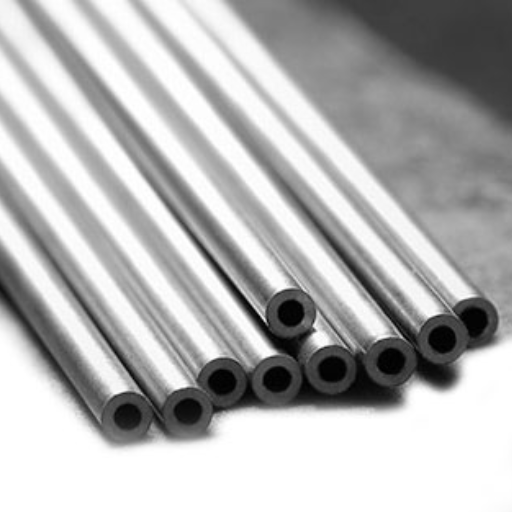
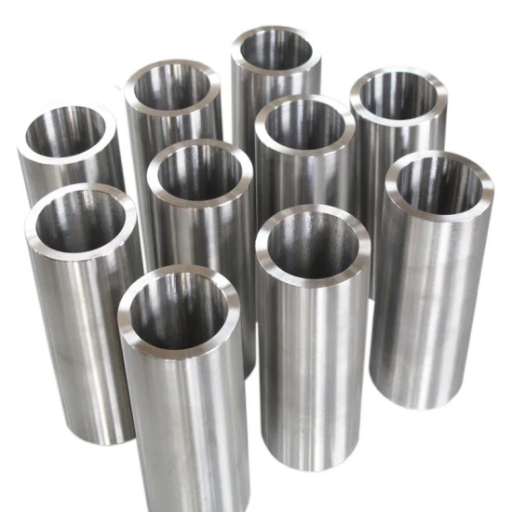
Seamless copper tube is tubing produced from a solid copper billet or casting that is heated, pierced, and elongated into a hollow form without any welded joint along its length. The typical production route includes extrusion or rotary piercing, followed by cold drawing, annealing, and final dimensional finishing.
Because the wall is formed from a single piece of metal, seamless copper tube maintains a continuous grain structure around the entire circumference. This structural uniformity is why engineers specify it for pressure-boundary applications: there is no seam to act as a stress riser, fatigue crack initiation site, or leak path.
The most widely used material is UNS C12200, also called DHP (Deoxidized High Phosphorus) copper or TP2 in Chinese designation. It contains a minimum of 99.9% copper and 0.015–0.040% phosphorus. The phosphorus addition improves brazing behavior and prevents hydrogen embrittlement during high-temperature joining. Refer to the Copper Development Association tube handbook for alloy-property details and installation guidance.
How Seamless Differs from Welded Copper Tube
Welded copper tube starts as flat strip that is roll-formed into a cylinder and joined along its length. Modern welding can produce high-quality tube, but the weld zone remains a metallurgical discontinuity. The practical differences matter for procurement decisions:
| Characteristic | Seamless Copper Tube | Welded Copper Tube |
|---|---|---|
| Manufacturing method | Extruded or pierced from solid billet | Formed from strip and longitudinally welded |
| Wall uniformity | Consistent around full circumference | Potential variation at weld zone |
| Pressure rating | Higher allowable working pressure | Lower due to seam stress concentration |
| Bending and flaring | Predictable, no seam separation risk | Weld seam may crack during tight forming |
| Interior surface | Smooth and uniform | Weld bead may require removal in critical service |
| Typical cost | Higher raw material cost | Lower, suitable for non-critical applications |
| Common standards | ASTM B280, B68, B75, B88, B819 | ASTM B587, B447, some general service specs |
For decorative, low-pressure, or non-critical drainage applications, welded tube is often adequate. For refrigerant lines, potable water, medical gas, heat exchangers, and any system where a leak carries real cost, seamless copper tube is the technically justified choice.
Seamless Copper Tube Standards and Specifications
The correct standard determines alloy, temper, cleanliness, dimensional tolerance, and testing requirements. Using ASTM B280 water tube for medical gas, for example, would fail inspection regardless of its copper quality. Always verify the latest revision from ASTM International or the relevant national standards body before specifying.
ASTM Standards Overview
| Standard | Application | Common Grades | Key Requirements |
|---|---|---|---|
| ASTM B42 | General purpose seamless copper pipe | C12200 | Threaded, flanged, or brazed pressure piping |
| ASTM B68 | Bright annealed seamless tube | C12200 | Clean, oxide-free interior and exterior surface |
| ASTM B75 | Seamless copper tube, general engineering | C12200 | Broad size and temper range for fluid transfer |
| ASTM B88 | Seamless copper water tube | C12200 | Types K, L, M for plumbing and water distribution |
| ASTM B111 | Condenser and heat exchanger tubes | C12200, C70600, C71500 | High thermal conductivity, often low-fin or u-bend |
| ASTM B280 | ACR and refrigeration field service | C12200 | Clean, dry, sealed ends; R410A/R32 compatible |
| ASTM B306 | Drain, waste, and vent (DWV) | C12200 | Non-pressurized plumbing drainage |
| ASTM B819 | Medical gas and vacuum systems | C12200 | Extreme cleanliness, capped ends, degreased |
International Standards
European projects frequently specify EN standards instead of ASTM:
- EN 1057: Seamless, round copper tubes for water, gas, and sanitation. Equivalent scope to ASTM B88.
- EN 12735-1: Tubes for piping systems in air conditioning and refrigeration. Equivalent to ASTM B280.
- EN 13348: Copper tubes for medical gases and vacuum. Equivalent to ASTM B819.
Asian construction and equipment exports often reference JIS H3300 C1220T, the Japanese Industrial Standard for seamless copper and copper alloy tubes. C1220T is a tighter-tolerance DHP variant commonly used for HVAC, refrigeration, and precision instrument tubing.
How to Select the Right Standard
Use this decision tree to narrow the specification:
- Refrigeration or air conditioning field piping → ASTM B280 / EN 12735-1
- Potable water distribution → ASTM B88 / EN 1057
- Heat exchanger, condenser, or boiler tube → ASTM B111
- Medical gas or vacuum → ASTM B819 / EN 13348
- General fluid transfer or instrumentation → ASTM B75 / ASTM B68
- Drainage, waste, or vent (non-pressurized) → ASTM B306
Not sure which standard governs your project? Ask Zhongzheng’s applications engineers for a standard-matching review →
Copper Tube Alloys and Grades
The alloy grade controls thermal conductivity, corrosion resistance, formability, and cost. Selecting the wrong grade can produce hydrogen embrittlement during brazing, inadequate conductivity in an electrical application, or rapid corrosion in seawater.
Common Alloys for Seamless Tube
| Alloy | Common Name | Copper Content | Best For |
|---|---|---|---|
| C11000 | ETP (Electrolytic Tough Pitch) | ≥99.90% | Electrical busbars, general thermal applications |
| C12200 | DHP (Deoxidized High Phosphorus) | ≥99.90% | HVAC/R, plumbing, brazed assemblies, most common |
| C10100 | OFE (Oxygen-Free Electronic) | ≥99.99% | Semiconductor, high vacuum, electronics |
| C10200 | OF (Oxygen-Free) | ≥99.95% | High-purity thermal/electrical, hydrogen service |
| C70600 | 90/10 Copper-Nickel | 88–90% Cu | Seawater heat exchangers, marine service |
| C71500 | 70/30 Copper-Nickel | 70% Cu | High-velocity seawater, offshore condensers |
Grade Selection Matrix
| Application | Recommended Grade | Why This Grade |
|---|---|---|
| HVAC/R refrigerant lines | C12200 | Resists hydrogen embrittlement during brazing |
| Potable water plumbing | C12200 | Corrosion resistant, code-accepted, long service life |
| Shell-and-tube heat exchangers | C12200 / C70600 / C71500 | Thermal conductivity plus corrosion resistance |
| Medical gas distribution | C12200 | Clean, non-reactive, compatible with oxygen and vacuum |
| High-purity electronics | C10100 / C10200 | Maximum conductivity and oxygen-free reliability |
| Marine or seawater service | C70600 / C71500 | Resists chloride corrosion and biofouling |
For the majority of mechanical contractors and plumbing engineers, C12200 seamless copper tube is the correct default. Its phosphorus content makes brazing predictable, and it is accepted by every major plumbing and mechanical code worldwide.
Standard Sizes, Dimensions, and Tolerances
Imperial Copper Tube Sizes (ASTM B88)
ASTM B88 defines seamless copper water tube in Types K, L, and M. The type designation refers to wall thickness for a given outside diameter, not the OD itself.
| Nominal Size | OD (inch) | Type K Wall | Type L Wall | Type M Wall |
|---|---|---|---|---|
| 1/4″ | 0.375″ | 0.035″ | 0.030″ | — |
| 1/2″ | 0.625″ | 0.049″ | 0.040″ | 0.028″ |
| 3/4″ | 0.875″ | 0.065″ | 0.045″ | 0.032″ |
| 1″ | 1.125″ | 0.065″ | 0.050″ | 0.035″ |
| 1-1/4″ | 1.375″ | 0.065″ | 0.055″ | 0.042″ |
| 1-1/2″ | 1.625″ | 0.072″ | 0.060″ | 0.049″ |
| 2″ | 2.125″ | 0.083″ | 0.070″ | 0.058″ |
- Type K: Thickest wall, highest pressure rating, used for buried service or high-pressure systems.
- Type L: Medium wall, common for general water distribution above and below ground.
- Type M: Thinnest wall, used for above-ground residential and light commercial where pressure is moderate.
Metric Equivalents
Metric specifications are usually expressed as OD × wall thickness in millimeters. Common HVAC/R and plumbing sizes include 6 × 1 mm, 8 × 1 mm, 10 × 1 mm, 12 × 1 mm, 15 × 1 mm, 22 × 1 mm, and 28 × 1 mm. Custom OD and wall combinations are standard practice for OEM heat-exchanger manufacturers.
Temper Designations
| Temper | Description | Typical Use |
|---|---|---|
| O60 | Soft annealed | Field bending, coils, refrigerant linesets |
| H55 | Light drawn | Moderate strength with some formability |
| H80 | Hard-drawn | Straight runs, structural support, higher pressure |
Soft annealed tube is supplied in coils and is the default for field-installed HVAC and refrigeration work. Hard-drawn tube is supplied in straight lengths and is preferred for rigid distribution mains where bends are minimal.
Major Applications of Seamless Copper Tube
HVAC and Refrigeration
ASTM B280 seamless copper tube is the standard material for refrigerant piping in residential, commercial, and industrial HVAC systems. It is supplied clean and dry with sealed ends to prevent moisture, oil, and particulate contamination before installation.
Modern high-pressure refrigerants such as R410A and R32 require careful attention to wall thickness and pressure rating. Using Type M or thin-walled tube in a high-pressure split system can create a code violation and a safety risk. For R410A linesets, contractors typically specify ASTM B280 hard-drawn or annealed tube with wall thickness appropriate to the operating pressure.
Plumbing and Potable Water Systems
Copper plumbing systems have demonstrated service lives exceeding 50 years. Seamless copper tube to ASTM B88 (or EN 1057 in Europe) resists internal corrosion, inhibits bacterial growth, and withstands the pressure cycles of municipal water distribution.
- Type K: Buried service, high-pressure, or aggressive water conditions.
- Type L: General commercial and residential water distribution.
- Type M: Above-ground residential where pressure is moderate and cost matters.
Heat Exchangers and Condensers
Seamless copper tube for heat exchanger service is typically ordered to ASTM B111. The high thermal conductivity of copper, approximately 391 W/m·K at 20°C, makes it ideal for shell-and-tube condensers, evaporators, and boiler tubes.
For seawater or brackish water service, copper-nickel alloys C70600 and C71500 outperform C12200. They resist chloride corrosion and biofouling while retaining good thermal performance. Low-fin tube and u-bend configurations are common options that can be sourced directly from the mill.
If your project also requires stainless steel heat exchanger tube, Zhongzheng can supply both materials from one source. See our stainless steel heat exchanger tube page for alloy and finish options.
Medical Gas Systems
Medical gas distribution demands the highest cleanliness levels. ASTM B819 and EN 13348 seamless copper tube must be degreased, cleaned, and capped to prevent contamination by oil, particulate, or moisture. Residual contamination in an oxygen or nitrous oxide line can compromise patient safety.
Medical gas tube is normally supplied in hard-drawn straight lengths with sealed ends. Installation crews must use clean tools, purge with oil-free nitrogen, and perform pressure and purity testing before commissioning.
Industrial and Electrical Applications
Beyond fluid transport, seamless copper tube is used for compressed air lines, fuel gas distribution, instrument tubing, and high-purity process piping. For electrical grounding or busbar applications where conductivity is critical, C11000 or oxygen-free grades may be specified.
Seamless Copper Tube vs. Stainless Steel Tube
Copper and stainless steel are both common choices for corrosion-resistant tubing, but they are not interchangeable. The decision depends on thermal performance, corrosion environment, and lifecycle cost.
Thermal Conductivity Comparison
Copper’s thermal conductivity is roughly 391 W/m·K at room temperature. Austenitic stainless steel such as 316L ranges from 15 to 25 W/m·K. In heat exchanger design, this difference means copper tubes can be smaller, lighter, and more efficient for the same duty.
Corrosion and Environment Selection
| Environment | Copper Tube | Stainless Steel Tube |
|---|---|---|
| Fresh water | Excellent (C12200) | Excellent (316L) |
| Seawater | Use C70600/C71500 | Use 316L, duplex, or super duplex |
| Chloride-rich cooling water | Limited | Superior |
| Ammonia or amines | Not compatible | Compatible (304/316L) |
| High-purity steam | Good | Excellent |
| Food and dairy | Limited | Preferred (316L sanitary) |
When to Specify Each
Choose seamless copper tube when thermal conductivity, brazability, or long plumbing service history is the dominant requirement. Choose stainless steel seamless tube when chloride corrosion, ammonia exposure, or hygienic surface finish is the controlling factor.
For aggressive industrial environments, Zhongzheng also supplies stainless steel pipe alternatives in 304, 316L, duplex, and super duplex grades.
Quality Control and Documentation
A tube specification is only as reliable as the quality system behind it. International buyers should require documented evidence of compliance rather than relying on supplier assurances.
Zhongzheng QC Process
Every heat of raw material is verified with imported optical emission spectrometry before entering production. The seamless copper tube manufacturing line then includes:
- Dimensional inspection: OD, wall thickness, length, and ovality.
- Hydrostatic pressure testing: Validates structural integrity at pressures above design conditions.
- Eddy current testing: Detects surface and near-surface flaws.
- Ultrasonic flaw detection: Identifies internal discontinuities.
- Visual and cleanliness inspection: Especially critical for ASTM B280 and B819 tube.
Documentation Package
The standard export documentation package includes:
- Mill Test Report (MTR) with chemical composition and mechanical properties.
- Dimensional inspection report.
- Hydrostatic test certificate.
- EN 10204 3.1 certification for European projects.
- Third-party inspection support through SGS, TÜV, or Bureau Veritas upon request.
If you are unfamiliar with reading an MTR, see our guide on how to read a mill test report.
Selecting a Seamless Copper Tube Manufacturer
For international buyers, the manufacturer selection process is as important as the material specification. A low price from an unverified mill can translate into wall-thickness deviations, incorrect temper, missing certifications, and port delays.
Factory Capability Checklist
| Check | Why It Matters |
|---|---|
| Scope of standards compliance | Confirms the mill can produce ASTM, EN, or JIS tube as required |
| Testing equipment | Spectrometer, hydrostatic tester, eddy current, ultrasonic |
| Traceability system | Heat-to-finished-product tracking for the MTR |
| Export documentation experience | Familiarity with EN 10204, third-party inspection, packing lists |
| Reference projects | Proof of supply to similar industries or regions |
Procurement Best Practices
An effective RFQ for seamless copper tube should include:
- Standard specification (ASTM B280, B88, B75, B819, etc.).
- Alloy grade (C12200, C11000, C70600, etc.).
- Temper (O60, H55, H80).
- OD × wall thickness × length.
- Quantity and acceptable tolerances.
- Required tests and documentation.
- Delivery terms and destination port.
- Packaging requirements, especially for moisture-sensitive ACR tube.
Zhongzheng accepts custom OD × wall × length combinations and provides documented tolerances before production begins. Our technical team responds to application questions within 24 hours.
Frequently Asked Questions
What is the difference between seamless and welded copper tube?
Seamless copper tube is produced from a solid billet without a longitudinal weld seam, giving it uniform wall thickness and higher pressure reliability. Welded copper tube is formed from strip and joined along its length, which creates a stress concentration at the seam. Seamless tube is preferred for pressurized and critical systems; welded tube is acceptable for low-pressure, non-critical applications.
What does C12200 mean in copper tube?
C12200 is the UNS designation for Deoxidized High Phosphorus (DHP) copper. It contains a minimum of 99.9% copper and 0.015–0.040% phosphorus. The phosphorus addition prevents hydrogen embrittlement during brazing and improves high-temperature strength, which is why C12200 is the most common alloy for HVAC, plumbing, and medical gas tube.
What is the difference between Type K, L, and M copper tube?
Type K, L, and M refer to wall thickness for a given nominal size under ASTM B88. Type K has the thickest wall and highest pressure rating, Type L is medium thickness for general water distribution, and Type M is the thinnest for above-ground residential use.
Which ASTM standard applies to HVAC copper tube?
ASTM B280 is the standard for seamless copper tube used in air conditioning and refrigeration field service. It covers material, cleanliness, temper, packaging, and dimensions for refrigerant linesets and connections.
Can seamless copper tube be used for medical gas?
Yes. ASTM B819 and EN 13348 specify seamless copper tube for medical gas and vacuum systems. These standards require enhanced cleanliness, degreasing, and capped ends to prevent contamination.
What is the pressure rating of C12200 copper tube?
Pressure rating depends on OD, wall thickness, temper, and temperature. As an example, 1/2″ Type K annealed copper tube has a working pressure well above 900 psi at room temperature. Ratings decrease at elevated temperature, so always verify against the governing code such as ASME B31.
How do I verify copper tube quality from a Chinese manufacturer?
Request the MTR with chemical composition and mechanical properties, confirm the mill has spectrometry and hydrostatic testing capability, and ask for EN 10204 3.1 or third-party inspection support from SGS, TÜV, or Bureau Veritas. A factory audit or pre-shipment inspection is advisable for first-time suppliers.
Conclusion
Selecting the right seamless copper tube comes down to four decisions: the governing standard, the alloy grade, the size and temper, and the quality system behind the material. Get any of these wrong, especially the standard, and you risk field failures, code violations, and project delays that far exceed the cost of the tubing itself.
For most HVAC, plumbing, and brazed applications, C12200 seamless copper tube in the appropriate ASTM specification is the correct choice. For heat exchangers, medical gas, and marine service, the specification changes and the documentation requirements become stricter.
Zhongzheng manufactures seamless copper tube to ASTM B75, B88, B280, B819, and related EN/JIS standards from our Wenzhou facility. We provide full material traceability, EN 10204 3.1 certification, and third-party inspection support for international projects. Send us your OD, wall thickness, and standard requirements, and our technical team will return a detailed quotation within 24 hours.