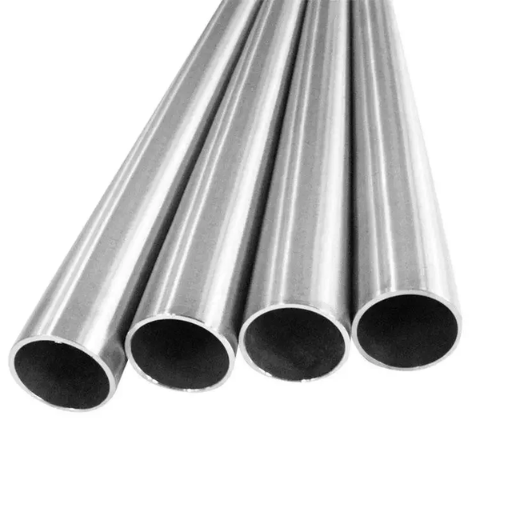
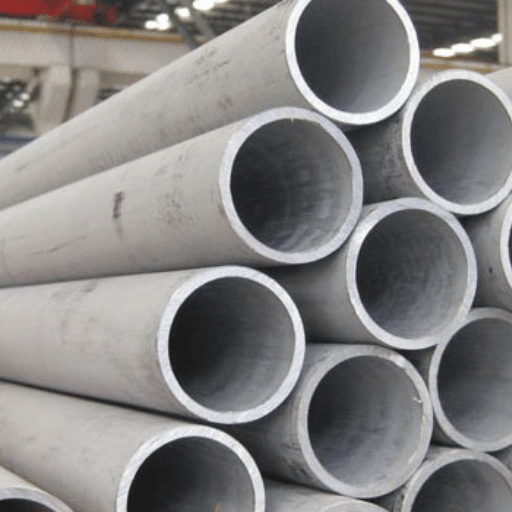
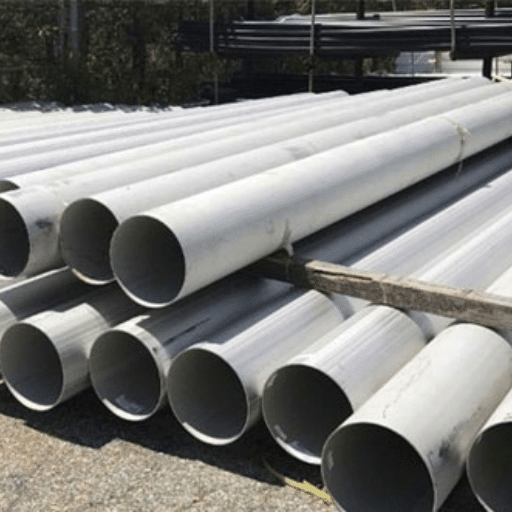
To source duplex stainless steel from China safely, you need to do six things: lock your specification, shortlist real manufacturers, scrutinize heat-number-traceable MTRs for PREN and ferrite, arrange a factory audit or third-party inspection, agree safe payment terms, and verify the material on receipt. China now produces more than half of the world’s stainless steel, and duplex is its fastest-growing grade — but a standard-grade sourcing process will not protect you with a two-phase alloy. A grade label alone cannot prove duplex chemistry, phase balance, or heat treatment, and the buyer who skips duplex-specific verification is the buyer who gets substitution.
Sourcing duplex stainless steel from China is not like buying 304. Duplex 2205 and super duplex 2507 are premium alloys with a roughly 50/50 austenite-ferrite microstructure that a single MTR line item does not prove. Done right, sourcing from Wenzhou or Jiangsu mills cuts material cost 20–35% versus Western suppliers. Done wrong, it fails in service — months after the material passed receiving inspection. This guide is written from the manufacturer’s side: we are a Wenzhou, Zhejiang producer of duplex and super duplex pipe, tube, and fittings to ASTM A790/A789/A928, and we publish our verification process so you can audit it. If you are sourcing for an oil & gas, chemical, or desalination project, you will leave this article with a checklist you can hand to your QC team.
Key Takeaways
- China produces over half of the world’s stainless steel, and duplex output grew about 24% year-on-year — the fastest-growing category, making qualified sourcing there viable.
- Duplex verification differs from standard-grade verification: PREN, ferrite phase balance, and solution-annealing records must be confirmed, not just grade labels.
- Distinguish real manufacturers from trading companies by demanding heat-number-traceable EN 10204 3.1 MTRs that only a producer can issue.
- Third-party inspection (SGS, Bureau Veritas, Intertek) and portable PMI spot checks are non-negotiable on first orders.
- Safe commercial terms: 30% T/T deposit plus 70% against bill of lading, or an irrevocable L/C at sight for large or new orders.
Why Source Duplex Stainless Steel from China

China’s Manufacturing Scale
China accounted for more than 55% of global stainless steel output, with crude production around 40.9 million tons in 2025. Within that, duplex output reached roughly 509,000 tons, up about 24% year-on-year — the fastest-growing stainless category. That volume matters for buyers: it means dedicated duplex production lines, mature solution-annealing and testing infrastructure, and a supply base that has shipped duplex into offshore, chemical, and desalination projects worldwide. Pipe exports alone exceeded 822,000 tons in 2025, up nearly 16%.
The Price and Lead-Time Reality
Chinese duplex typically runs 20–35% below Western mill pricing — a smaller gap than for standard grades, because duplex carries premium alloy costs on both sides. Lead times are the bigger planning variable. Duplex specialty grades run 12–20 weeks versus shorter windows for standard austenitic, so procurement calendars need a buffer. Orders of 20 tons or more unlock mill-level pricing. The trade-policy context also shifts quickly: US Section 232 derivative tariffs on stainless derivatives took effect in August 2025, EU CBAM carbon border adjustments began phasing in for 2026, and China’s 9–13% stainless export VAT rebate affects effective landed cost. Revalidate these figures before you commit to a cost model, because they change.
Want to benchmark pricing and lead time for your specific duplex specification? Send us your grade, standard, dimensions, and quantity and our technical team will confirm cost and delivery window within 24 hours.
Step 1: Define Your Duplex Specification
Lock the Grade and Product Form
Start with the UNS designation, not the trade name. Common grades are UNS S31803/S32205 (duplex 2205), and UNS S32750/S32760 (super duplex). S32205 is the modern nitrogen-refined choice over the legacy S31803, and S32750 is the default for seawater-facing and high-chloride service. For a detailed grade comparison, see our duplex 2205 vs super duplex 2507 guide. Then lock the product form — pipe, tube, fittings, flanges — and the manufacturing method: seamless versus welded affects both the governing standard and the inspection regime.
Cite the Governing Standard
The standard number is your first line of defense. ASTM A790 covers seamless and welded duplex pipe; ASTM A789 covers duplex tube; ASTM A928 covers welded duplex pipe with filler metal; ASTM A182 covers duplex fittings and flanges (F51/F53/F55). If your service is sour, add NACE MR0175/ISO 15156. For the full test and documentation picture on pipe, read our ASTM A790 duplex pipe specification guide. An ambiguous RFQ invites grade substitution. A precise one — grade, standard, dimensions, finish, quantity — is the first verification step you take, before any supplier responds.
Step 2: Find and Shortlist Suppliers
Where to Look
Trade platforms like Alibaba, Made-in-China, and Global Sources work as a discovery layer, not a trust signal. Trade shows such as Canton Fair and Stainless Expo Shanghai put you face-to-face with producers. Direct outreach to manufacturing clusters in Wenzhou/Zhejiang, Jiangsu, and Shandong reaches the mills themselves. Industry referrals and freight-forwarder networks are often the fastest route to a qualified supplier.
Shortlisting Signals
Three signals separate a manufacturer from a trader. First, the business license: on China’s National Enterprise Credit Information system (gsxt.gov.cn), the registered scope must include manufacturing, not just trading. Second, heat-level traceability: a real producer can issue MTRs tied to specific heat numbers; a trader resells without it. Third, factory-floor evidence: request a live video walkthrough of the production line and QC equipment. Also verify ISO 9001 on the certification body’s database and ask for 2–3 verifiable buyer references in your region.
A “manufacturer” once quoted us competitive prices on super duplex 2507 but could not produce a single heat-number-traceable MTR or solution-annealing record. When a buyer requested a live video walkthrough, the camera showed a stockyard, not a production line. The business license confirmed it: the scope listed trading, not manufacturing. For a premium alloy like duplex, documentation and production evidence are the product.
Step 3: Request and Scrutinize the Documentation

The Documents That Matter
A qualified duplex supplier provides: an EN 10204 Type 3.1 material test certificate (MTR/MTC) with heat-number traceability; chemical composition with PREN shown or calculable; mechanical properties; solution-annealing heat-treatment records; ferrite content where specified; and hydrostatic, ultrasonic, and dimensional test reports. Type 3.2 certification, witnessed by a third party, applies where your project requires it.
Reading the MTR for Duplex — What Most Buyers Miss
Three checks catch most problems. First, PREN: 2205 runs about 34–36, super duplex 2507 above 40. Compare the reported chemistry against the grade window — if molybdenum and nitrogen sit at the very edge, that is a warning, not a pass. Second, ferrite phase balance: duplex is a two-phase alloy, and the report should show phase-balance verification, typically within a 35–55% ferrite range depending on the governing spec. Third, heat numbers must map to your actual lot; a generic MTR without heat traceability is a red flag.
Duplex corrosion resistance is manufactured during solution annealing. One buyer accepted a 2205 lot based on chemistry alone and skipped the heat-treatment record check. The material had not been properly annealed, leaving intermetallic precipitates that destroyed chloride corrosion resistance, and it failed weeks later during related testing. Every duplex MTR should show annealing temperature and time. If it does not, ask why.
Step 4: Verify Quality — Audit, TPI, and PMI
Factory Audit Options
For high-value or first orders, arrange a third-party audit (SGS, Bureau Veritas, Intertek, TÜV, Lloyds) or an in-person visit. On a duplex line, check: incoming material spectrographic verification, heat-treatment furnace records, ferrite and phase-balance testing capability, ultrasonic and hydraulic testing equipment, and how MTRs are generated.
Third-Party Inspection (TPI)
TPI runs in three stages: incoming material check, during-production inspection (DUPRO), and pre-shipment inspection. An inspector can witness hydrostatic, ultrasonic, dimensional, and chemical verification. One detail matters more than most: confirm the governing standard is written into the purchase order. Chinese suppliers often quote GB/T equivalents by default, and unless your PO says ASTM or ASME, you may receive material documented to the wrong code.
PMI on Receiving
Positive material identification with a portable XRF or spectrometer is cheap insurance on a premium alloy. A spot check at receiving confirms the grade and catches substitution before the material reaches your project.
A buyer ordered S32205 duplex 2205 pipe and received an MTR showing chemistry at the edge of the grade window. A portable XRF check at receiving flagged molybdenum below spec — the lot had been substituted with a leaner, cheaper duplex. Because the contract specified PMI testing and heat-number-traceable MTRs, the material was rejected before installation. Verification cost a few hundred dollars. The substitution would have failed in chloride service months later.
Ready to have us prove our process before you commit? Arrange a factory audit or third-party inspection — we support SGS, BV, Intertek, TÜV, and Lloyd’s witness testing at our Wenzhou facility.
Step 5: Agree Commercial Terms Safely
Payment Terms Comparison
| Term | Structure | Best for |
|---|---|---|
| T/T 30/70 | 30% deposit; 70% against B/L copy | Repeat orders, under ~$50K |
| L/C at sight | Irrevocable; documents against payment | New or large orders ($100K+) |
| T/T 30/70 pre-shipment | Balance after production, before loading | Custom material |
| D/P | Documents against payment via bank | Middle ground |
Never pay 100% in advance. Roughly 60–70% of China steel transactions use T/T, and the standard first-order structure is a 30% deposit plus 70% against bill of lading copy. With an L/C, every document must match the L/C terms exactly — a single discrepancy can delay payment by weeks.
Incoterms
FOB is the most common and safest starting point: you control freight, insurance, and destination clearance. CIF/CFR simplifies to single-point responsibility for the seller; EXW suits experienced importers. Confirm the loading port — Ningbo-Zhoushan, Shanghai, or Wenzhou — and the delivery window in the contract.
RFQ Documentation Checklist
- Grade + UNS designation (S32205, S32750, etc.)
- Product form + seamless/welded
- Governing standard (ASTM A790/A789/A928/A182)
- Dimensions, tolerance, finish, quantity
- Documentation required (EN 10204 3.1/3.2 MTR, ferrite report, NACE clause)
- Testing requirements (hydrostatic, UT, PMI, TPI)
- Payment terms + Incoterms + delivery window
Step 6: Logistics, Packaging, and Receiving Inspection
Sea freight is the default: FCL for volume, LCL for small orders, with 20–35 days to Europe and North America. Export packaging matters more than buyers expect — waterproof wrapping, VCI paper, corner protection, and wooden crates protect a transit-sensitive surface. On receipt, do a visual and dimensional check, run a PMI spot check, and cross-reference the MTR heat numbers against the marks stenciled on the material. On first orders, build a 3–6 month lead-time buffer into project planning. For offshore or oil & gas procurement specifically, see how duplex pipe performs in sour and seawater service.
Red Flags to Avoid
- A quotation far below market — signals grade substitution or negative tolerance.
- MTRs without heat numbers or EN 10204 Type 3.1 status.
- Vague surface finish descriptions instead of standard codes.
- Refusal to support third-party inspection.
- Business license scope without manufacturing.
- Chemistry sitting at the edge of the duplex window without explanation.
- No solution-annealing heat-treatment records — for duplex, annealing is mandatory.
Zhongzheng: A Duplex Manufacturer That Invites Verification

We are Zhejiang Zhongzheng Stainless Steel Manufacturing Co., Ltd., based in Wenzhou’s Lantian Industrial Zone — the heart of China’s stainless pipe and fittings supply chain. We manufacture seamless and welded pipe, tube, and industrial fittings in duplex 2205 and super duplex UNS S32750/S32760, to ASTM A790/A789/A928 and A182. Every heat is spectrographically verified before it enters production; every finished pipe is ultrasonically tested and hydraulically proven before shipment; and every order ships with EN 10204 3.1 MTRs that survive receiving inspection. Our super duplex stainless steel pipe, seamless stainless steel pipe, welded stainless steel pipe, and industrial fittings are all produced under one roof, so you can consolidate your entire duplex scope into a single qualified source with one documentation package.
Send us your duplex specification — grade, standard, dimensions, quantity, and destination. Our technical team will confirm grade suitability, compliance, pricing, and lead time within 24 hours. And you are welcome to audit our facility.
Frequently Asked Questions
How do I source duplex stainless steel from China?
Source duplex stainless steel from China in six steps: define your grade and standard; shortlist real manufacturers (not traders); request EN 10204 3.1 MTRs with heat-number traceability; arrange a factory audit or third-party inspection; agree safe payment terms such as 30% T/T deposit plus 70% against B/L, or L/C at sight; and verify the material with PMI on receipt.
How do I verify a Chinese duplex stainless steel manufacturer?
Verify a Chinese duplex manufacturer by confirming business registration on China’s National Enterprise Credit Information system (gsxt.gov.cn), checking ISO 9001 validity, requesting EN 10204 3.1 MTRs with heat numbers for every lot, and arranging a factory audit or third-party inspection. For duplex specifically, confirm PREN, ferrite phase balance, and solution-annealing records on the MTR.
Are Chinese duplex stainless steel pipes good quality?
Chinese duplex stainless steel can meet international quality standards when supplied by a qualified manufacturer with spectrographic verification, solution annealing, ultrasonic and hydraulic testing, and full EN 10204 3.1 documentation. The risk is not geography; it is unverified suppliers. The same verification steps that protect you from any mill protect you from a Chinese one.
What is a mill test report (MTR) for duplex pipe?
A mill test report (MTR) or material test certificate is the document that certifies a pipe’s chemical composition, mechanical properties, heat treatment, and test results against a governing standard. For duplex, the MTR must show heat-number traceability, PREN, ferrite phase balance, and solution-annealing records — not just a grade label.
How do I verify duplex grade 2205 vs 2507?
Verify the grade on the MTR by checking chemistry against the UNS window and calculating PREN: 2205 runs about 34–36, while super duplex 2507 exceeds 40. Confirm ferrite content and heat-treatment records. At receiving, a portable XRF or spectrometer spot check confirms the chemistry independently of the paperwork.
How much cheaper is duplex stainless steel from China?
Chinese duplex typically costs 20–35% less than Western mill pricing, though the gap is smaller than for standard grades because duplex carries premium alloy costs. Lead times for duplex specialty grades run 12–20 weeks. Revalidate pricing and trade-policy factors — tariffs and carbon adjustments change the effective landed cost.
What payment terms are safe when importing from China?
The safe default is a 30% T/T deposit with 70% against bill of lading copy for orders under roughly 50K, and an irrevocable L/C at sight for new or large orders above 50K, and an irrevocable L/C at sight for new or large orders above 100K. Never pay 100% in advance, and ensure every document matches your L/C terms exactly.
What is Wenzhou known for in stainless steel manufacturing?
Wenzhou, in Zhejiang province, is China’s recognized center for stainless steel pipe and fittings manufacturing. Its Longwan district, including Lantian Industrial Zone, hosts a dense ecosystem of raw material suppliers, producers, and export logistics providers. If you want to understand the broader grade landscape first, our complete duplex stainless steel guide covers the metallurgy behind these grades.
Conclusion
Sourcing duplex stainless steel from China is a viable, value-positive strategy — if you verify like a manufacturer would. Define the spec precisely. Shortlist real producers, not traders. Scrutinize the MTR for PREN, ferrite, and heat-treatment records. Audit and inspect. Transact safely. And check the material on receipt. Each step is cheap. Each step skipped is how a premium alloy becomes a service failure.
Zhongzheng is a Wenzhou manufacturer that publishes its QC process and invites third-party inspection — the kind of supplier this guide tells you to look for. Send your duplex specification and documentation requirements. Our technical team will confirm grade, standard, compliance, pricing, and lead time within 24 hours — and you are welcome to audit our facility.