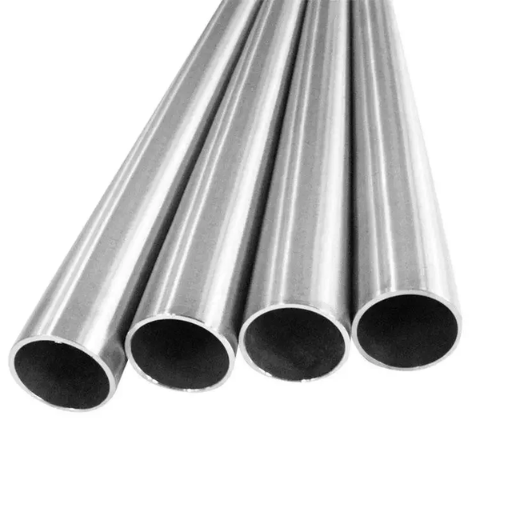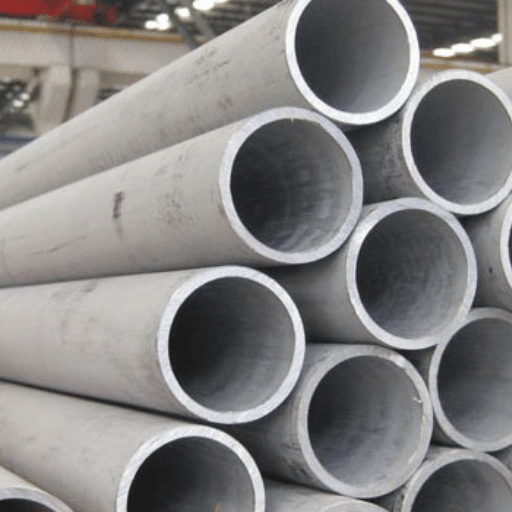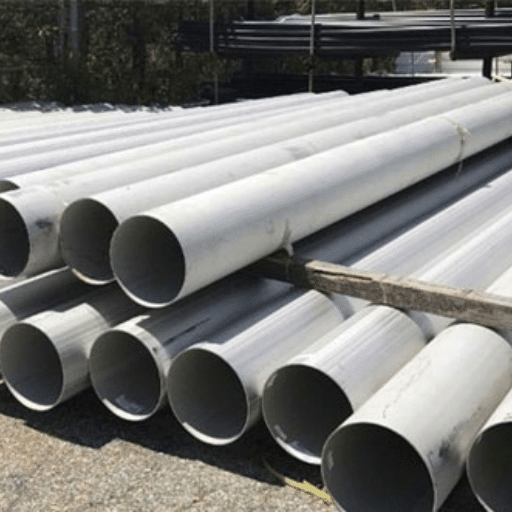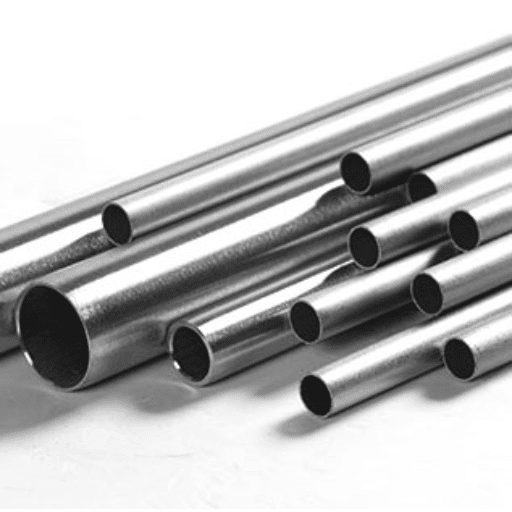
Duplex stainless steel oil and gas applications span the full value chain: production tubing, flowlines, manifolds, process piping, heat exchangers, and seawater systems where 316L fails and carbon steel would need an excessive corrosion allowance. This guide maps each duplex grade to the systems where it belongs, translates the sour-service and offshore standards that govern compliance, and gives you a verification checklist for EPC procurement.
On a warm offshore platform, 316L can crack from chloride stress-corrosion cracking within months. In a sour gas well, carbon steel needs a corrosion allowance measured in millimetres plus a continuous inhibitor program. Duplex stainless steel in oil and gas service was developed for exactly these two problems, and it now carries most of the corrosion-resistance load across the industry.
Here is what this article covers: where each duplex grade goes in upstream, midstream, and downstream systems, the difference between duplex 2205 and super duplex 2507, what NACE MR0175 and NORSOK M-630 actually require, and how to verify that the material you receive matches the certificate you ordered. It is written from the perspective of a manufacturer that produces both standard austenitic and duplex pipe, so the guidance runs to specification and verification, not just grade lists.
If you are evaluating duplex for a specific project, our technical team can confirm the right grade, standard, and documentation package within 24 hours.
Key Takeaways
- Duplex 2205 and super duplex 2507 are the workhorse grades across the oil and gas value chain, chosen where chlorides, H2S, or weight drive the decision.
- Duplex delivers roughly twice the yield strength of 316L (2205 at about 450 MPa), enabling thinner walls, lighter offshore structures, and lower installed cost.
- Sour service is governed by NACE MR0175 / ISO 15156 limits (hardness up to 310 HV10 and defined environmental envelopes); offshore Norway adds NORSOK M-630 requirements.
- The weakest link is fabrication: duplex corrosion resistance is manufactured in and can be welded away without qualified procedures.
- Demand verification before shipment: 3.1 mill test reports, ferrite measurement, NACE test reports where applicable, and third-party inspection.
Why Duplex Stainless Steel Fits Oil & Gas Service

Duplex stainless steel is a two-phase alloy with a roughly 50/50 ferrite-austenite microstructure. That split microstructure is the reason for its unusual combination of properties: the ferrite phase delivers high strength, the austenite phase delivers toughness and corrosion resistance, and together they defeat the failure modes that kill standard austenitic grades.
The Two-Phase Advantage
The numbers matter more than the marketing. Duplex 2205 (UNS S31803/S32205) has a minimum yield strength around 450 MPa, about double the 205 MPa of 316L. That is not a small difference. It means a duplex line can be specified at a thinner wall for the same pressure rating, which cuts weight, weld metal, and installation cost. For offshore topsides and deepwater, where every kilogram drives design and installation cost, that single property shapes material selection more than any other.
The same microstructure resists chloride stress-corrosion cracking, pitting, and crevice corrosion far beyond what 316L tolerates. In the corrosion science, the relevant number is the Pitting Resistance Equivalent Number (PREN): 316L sits around 24 to 26, duplex 2205 around 34 to 36, and super duplex 2507 above 40. For a deeper treatment of how duplex resists attack, see our guide to duplex corrosion resistance.
Where 316L Stops Working
Every grade has a corrosion threshold. For 316L, chloride stress-corrosion cracking becomes a real risk above roughly 60°C in chloride-bearing service, and pitting begins in warm seawater because its critical pitting temperature is only around 10 to 15°C. In a Gulf of Mexico flowline carrying produced water, or a North Sea seawater system, those limits are exceeded in normal operation.
Duplex pushes that threshold much higher. That is why the oil and gas industry moved to duplex families for anything carrying warm chlorides, H2S, or seawater. The duplex vs super duplex comparison explains exactly how far each family extends the envelope.
The Cost Position
Duplex costs more than carbon steel at purchase. It costs far less than the nickel alloys it replaces in many services, often around one-third of the material cost. The lifecycle arithmetic matters: thinner walls reduce weight, no large corrosion allowance is needed, inhibitor programs disappear, and inspection intervals lengthen.
When Marcus, a materials engineer at a mid-sized EPC, evaluated duplex 2205 production tubing for a sour well in 2024, the first-cost gap against carbon steel plus inhibitor dosing was significant. Once he added the inhibitor program, the annual inspection burden, and the larger tubing string carbon steel required for the same flow, the duplex option won on total installed cost. That is the normal outcome in sour, chloride-rich service.
Duplex Stainless Steel Grades Used in Oil & Gas
The duplex family spans four tiers, and oil and gas buyers need to know which tier each grade belongs to. Choosing duplex stainless steel for oil and gas is not a one-grade decision.
| Grade | UNS Designation | PREN | Typical Oil & Gas Role |
|---|---|---|---|
| Lean duplex | S32101 / S32202 / S32304 | ~25 | Less aggressive services; replacing 304L/316L in tanks, some heat exchanger tubes |
| Duplex 2205 | S31803 / S32205 | ~35 | Standard workhorse: topside piping, flowlines, produced water, OCTG |
| Super duplex 2507 | S32750 / S32760 | >40 | Subsea, hot seawater, high-chloride/high-H2S, risers, umbilicals |
| Hyper duplex | S32707 / S33207 | >45 | Deepwater extremes (emerging; limited availability) |
For a grade-by-grade specification deep-dive, the super duplex S32750 pipe guide covers the highest-PREN grade in detail. For the rest of this article, the focus stays on 2205 and 2507 because they carry the overwhelming majority of oil and gas applications.
Upstream: Production Tubing, Wellheads & Flowlines
Upstream is where duplex stainless steel oil and gas reputation was built. The environment is the most aggressive: sour gas, produced water with high chloride content, CO2, and seawater exposure from the wellhead to the subsea tree.
Downhole and OCTG
Production tubing and casing in sour wells are a primary duplex application. Duplex 2205 and super duplex grades are specified where high strength must coexist with resistance to H2S, CO2, and brine. Materials are qualified to ISO 13680 or API 5CRA and must satisfy the NACE MR0175 / ISO 15156 limits covered later in this article.
The benefit is a single material that does three jobs at once. It carries the load, resists the environment, and avoids the injection and monitoring burden of carbon steel in sour service. That is why duplex production tubing is standard in high-H2S, high-CO2 wells worldwide.
Wellheads and Christmas Trees
Wellhead and flowline piping, valve bodies, and fittings on the tree are routinely duplex or super duplex. These components face the same produced fluids as the tubing but add exposure to seawater and marine atmosphere. Fittings and flanges are normally supplied to ASTM A182 (grades F51, F53, F55) to match the pipe’s chemistry and mechanical properties, which is why we produce duplex stainless steel fittings to match the pipe package.
Flowlines and Subsea Production Systems
Subsea is the fastest-growing duplex territory. Flowlines, spools, manifolds, trees, jumpers, and risers all face internal produced fluids plus external seawater. Super duplex 2507 is the default where hot seawater meets crevice geometries, because its PREN above 40 gives it the critical pitting temperature needed for 40°C seawater service. For the offshore-specific picture, our published article on duplex pipe in offshore oil and gas covers topside and platform systems in detail.
Seawater injection and firewater systems are super duplex territory for the same reason: warm, aerated seawater in pump and distribution lines pits lower-PREN grades quickly. Umbilical and control-line tubing, in small-diameter seamless form, carries hydraulic fluids to subsea equipment and is another super duplex staple.
When a project requires thin-wall seamless tubing for subsea control lines, the manufacturing method matters. Our seamless stainless steel pipe lines produce the tight-tolerance small diameters those systems demand, with the same QC applied to every heat.
Midstream: Transport, Pipelines & Storage

Midstream moves the produced fluids from the field to the processing plant, and duplex stainless steel oil and gas transport earns its place wherever the fluid is wet, sour, or chloride-laden.
Line Pipe and Pipelines
Corrosion-resistant alloy line pipe is governed by API 5LC. Duplex and super duplex line pipe is used for subsea and onshore pipelines carrying wet sour gas or crude that would corrode carbon steel from the inside while seawater attacks the outside. The internal and external corrosion resistance of duplex eliminates the need for the coating and inhibition programs that carbon steel pipelines require.
Hydraulic and Instrumentation Lines
Small-diameter seamless duplex tubing carries hydraulic fluid and instrument air across facilities and subsea systems. These lines are thin-walled and often run in areas that are hard to inspect, so a leak is expensive to find and fix. Duplex tubing is specified precisely because it will not be the failure point.
Storage and Pressure Vessels
Sour storage tanks and separators are built in duplex where the stored fluid is corrosive and weight or footprint is a concern. Because duplex allows thinner walls than carbon steel with the same strength, vessel weight drops, which reduces foundation and lifting cost.
Downstream: Refining & Petrochemical Processing
Downstream facilities process the fluids into products, and there the corrosion challenge shifts from seawater to high-chloride crudes and intermediate streams at elevated temperature.
Refinery Process Piping
The key reference for duplex in refining is API TR 938-C, which covers the use of duplex stainless steel in the oil refining industry. Refiners specify duplex where chloride-bearing feedstocks and intermediate streams demand a corrosion-resistant alloy that 316L cannot reliably handle and carbon steel would require heavy corrosion allowance. It is worth stating the boundary honestly: for severe high-temperature duties, stabilized austenitic grades or alloy steels (P11, P22, P91) are often the better call. Duplex has an upper temperature ceiling around 280 to 300°C before sigma-phase embrittlement becomes a concern, and it is not a high-temperature alloy.
Heat Exchangers
Shell-and-tube exchangers, coolers, and condensers use duplex tubes wherever chlorides are present in the process stream. Tube bundles are replaced far more often than shells, so the tube material carries the corrosion risk. Duplex tubes in heat exchangers are a direct upgrade path when 316L tubes have pit or crack in service. We manufacture duplex heat exchanger tube to TEMA and ASME requirements for exactly this duty.
Separators, Scrubbers, and Tanks
Sour gas treatment and produced water handling use duplex internals and piping. The same material that resists the produced water upstream handles it downstream without a change in grade philosophy.
Downstream Sour Service Uses a Different Standard
A distinction many buyers miss: NACE MR0175 / ISO 15156 governs upstream oil and gas production, while NACE MR0103 / ISO 17945 governs sour environments in refineries and downstream plants. The two standards are related but separate, and an RFQ for a refinery job should reference the downstream standard, not the upstream one.
Sour Service Compliance: NACE MR0175 / ISO 15156 Explained
Sour service is where material selection stops being a preference and becomes a compliance exercise. NACE MR0175 / ISO 15156 is the governing standard for materials in equipment used in oil and gas production environments containing wet H2S.
What the Standard Governs
The standard sets two categories of limits. Environmental limits cover chloride concentration, temperature, H2S partial pressure, and pH. Material limits cover hardness, heat treatment, and fabrication condition. For duplex, the hardness limit that appears in most project specifications is 310 HV10 maximum, and the material must be in the solution-annealed condition.
Duplex Under the Standard
Duplex 2205 and super duplex grades are qualified for sour service within defined environmental envelopes. The standard’s limits are deliberately conservative; they assume low pH and high chloride can occur simultaneously. A published envelope for S31803, for example, covers service up to roughly 100,000 mg/l chloride, pH 4.5, 80°C, and 0.35 bar H2S partial pressure. Outside that envelope, project-specific qualification testing is required.
The important framing: NACE compliance is a project or supplementary requirement, not an automatic grade certification. Saying “NACE MR0175 compliant” without referencing the governing edition and clause is not a complete answer. A qualified buyer asks which clause applies and what the documented limits are.
Qualification Testing
Where the standard’s envelopes are exceeded, qualification moves to test-based evidence. NACE TM0177 covers sulfide stress cracking (SSC) testing, and NACE TM0284 covers hydrogen-induced cracking (HIC) testing. Both are worth requesting in an RFQ if your fluid chemistry sits near or beyond the standard envelope. One welding caveat matters in sour service: nitrogen uptake from shielding gas can reduce the stress-corrosion cracking resistance of duplex weldments, which is why welding procedures are controlled so tightly.
For the authoritative source, the standard is published and maintained by AMPP (formerly NACE), and technical papers on duplex in sour environments are available through OnePetro.
Offshore Standards: NORSOK M-630 for the Norwegian Continental Shelf

Operators on the Norwegian Continental Shelf, and increasingly other North Sea and subsea projects, work to NORSOK M-630. This standard sets material data sheets (MDS) for piping, and its duplex requirements are more demanding than a plain ASTM order.
The duplex MDS under NORSOK M-630 typically demands:
- PREN verification: a minimum PREN around 35 for duplex and around 40 or higher for super duplex, calculated from the actual heat chemistry
- G48 pitting test: ferric chloride testing at 22°C for duplex and 40°C for super duplex
- Charpy impact: at least 45 J at -46°C (confirm the current edition)
- Hardness: 310 HV10 maximum
- Ferrite content: 35 to 55% austenite-ferrite balance
Manufacturers that supply piping to Norwegian projects also need qualification under NORSOK M-650 for special materials. Welding follows strict procedure controls: overalloyed filler such as ER2594 on 2507 base metal, interpass temperature limited to 150°C, heat input held in the 0.5 to 2.5 kJ/mm range, and argon with 2 to 3% nitrogen as shielding gas.
Documentation is the other half of NORSOK compliance. Full EN 10204 Type 3.1 mill test reports with heat and cast traceability are required, not optional. NORSOK standards are published by Standards Norway.
Material Selection: When Duplex Beats the Alternatives
The real procurement decision in oil and gas piping is not which stainless steel to buy. It is which material class: carbon steel with corrosion allowance, a corrosion-resistant alloy, or an alloy steel for high temperature. This table is the decision framework.
| Service Condition | Preferred Option | Why |
|---|---|---|
| Non-corrosive, high temperature | Carbon steel + corrosion allowance/alloy steel | Lowest cost |
| Moderate chloride, dry gas | 316L | Adequate within its limits |
| Sour, chloride-rich, weight-sensitive | Duplex 2205 | Best strength plus corrosion balance |
| Hot seawater, deepwater, high H2S | Super duplex 2507 | PREN above 40, wider NACE envelope |
| Extreme temperature or acidity beyond duplex | Nickel alloys | Beyond duplex capability |
The selection logic runs in a fixed order: corrosion rate, then strength, then weight, then cost, then fabricability. Validate every candidate against the actual fluid chemistry, temperature, pressure, and governing code before specifying. The complete duplex stainless steel guide walks through the full family if you need the broader context first.
Field Lessons: Why Fabrication Discipline Matters
Duplex is not a cure-all, and its real-world failures are almost always fabrication failures rather than grade failures. A Shell Pressure Vessel Piping (PVP) 2022 paper documented two cases that every buyer should know.
In the first, a 2205 shell-and-tube heat exchanger leaked in under two years in H2S, NH3, and HCl service. The grade was right for the environment. The problem was fabrication: the weld procedure deviated from its qualification, leaving the heat-affected zone without the phase balance the base metal had.
In the second, a super duplex 2507 seawater filter failed in weeks after qualified welding procedures were not followed on site.
The lesson is direct. Duplex corrosion resistance is manufactured in: phase balance, solution annealing, and qualified welding are non-negotiable. When you audit a supplier, ask for heat treatment records, ferrite measurement results, welding procedure qualifications (WPQ), and QC test reports before shipment, not just a grade certificate.
Specifying & Verifying Duplex Stainless Steel for an Oil & Gas Project
Here is the checklist our own buyers work through, and the one you should take to any duplex RFQ.
- Grade and UNS designation: for example, UNS S32205 or UNS S32750
- Product form and manufacturing method: seamless vs welded pipe
- Applicable standard: ASTM A790 / A789, ASME, API 5LC where relevant
- Sour service: NACE MR0175 / ISO 15156 clause and hardness limit
- Offshore Norway: NORSOK M-630 MDS reference
- Testing: chemical composition, mechanical properties, ferrite content, hydrostatic, NDT, G48 where specified
- Documentation: EN 10204 Type 3.1 MTR, NACE test reports, third-party inspection
The verification catch is where good buyers separate from the rest. A materials engineer sourcing super duplex for a seawater injection system requested NACE test reports and a positive material identification (PMI) check at receiving. The receiving check flagged chemistry at the edge of the S32750 window and an elevated ferrite count that would have failed NORSOK-style acceptance. The material was rejected before installation, avoiding a chloride-service failure months before it would have surfaced. That is what a documented QC chain does.
At Zhongzheng, every heat of duplex is spectrographically verified before production, ultrasonically tested and hydraulically proven before shipment, and shipped with an MTR that reflects the measured material, not just the order. We support third-party inspection by SGS, Bureau Veritas, TÜV, and Lloyds, and we manufacture super duplex stainless steel pipe against ASTM A790 and A789 with the phase-balance documentation your project requires.
Frequently Asked Questions
What is duplex stainless steel used for in oil and gas?
Duplex is used for production tubing, flowlines, manifolds, process piping, heat exchangers, seawater injection, and pressure vessels in oil and gas. It is specified where chloride-rich, sour (H2S-containing), or seawater-exposed service exceeds the capability of 316L and where its roughly double yield strength enables thinner, lighter components.
Why use duplex instead of carbon steel in oil and gas?
Duplex is chosen where carbon steel plus a corrosion allowance cannot reliably contain sour or chloride-rich fluids, or where weight reduction matters offshore and in deepwater. Compared with carbon steel it removes the corrosion allowance and inhibitor burden; compared with nickel alloys it delivers comparable corrosion resistance at a fraction of the material cost.
Is duplex stainless steel good for sour service?
Yes, within defined limits. Duplex 2205 and super duplex grades are approved for sour service under NACE MR0175 / ISO 15156, subject to a hardness limit of 310 HV10 and environmental limits on chloride, temperature, H2S partial pressure, and pH. Outside the standard’s envelopes, project-specific testing such as NACE TM0177 or TM0284 is required.
What is the difference between duplex and super duplex for oil and gas?
The main difference is PREN: 2205 sits around 35, super duplex 2507 above 40. Super duplex also has higher yield strength (around 550 MPa vs 450 MPa) and is specified for subsea, hot seawater, and higher-H2S service, where the NORSOK G48 test temperature rises from 22°C for duplex to 40°C for super duplex.
What is NORSOK M-630?
NORSOK M-630 is the Norwegian offshore standard for material data sheets and element requirements for piping. For duplex it demands PREN verification, G48 pitting testing at 22°C (duplex) or 40°C (super duplex), Charpy impact at -46°C, hardness up to 310 HV10, and 35 to 55% ferrite, plus full 3.1 mill test report traceability.
What pipe specifications are required for offshore applications?
Offshore duplex piping is typically specified to ASTM A790 (seamless and welded pipe), ASTM A789 (tube), and ASTM A928 (welded pipe), with fittings to ASTM A182. Projects on the Norwegian shelf add NORSOK M-630 material data sheets, and sour service adds NACE MR0175 / ISO 15156 limits. Line pipe may be specified to API 5LC.
Is duplex better than 316L for oil and gas?
In chloride-rich, sour, or seawater service, yes. Duplex 2205 offers roughly double the yield strength of 316L and a PREN of about 35 versus 24 to 26, resisting pitting and chloride stress-corrosion cracking that 316L cannot. For moderate, dry, low-chloride service, 316L remains a valid, lower-cost choice.
Conclusion
Duplex stainless steel oil and gas service delivers the strength plus corrosion balance that makes duplex the default corrosion-resistant alloy across upstream, midstream, and downstream systems, within defined environmental and fabrication limits. The value-chain systems map, the NACE and NORSOK compliance picture, and the verification checklist are the decision tools a buyer needs to specify with confidence.
The grades, the standards, and the documentation are all knowable. The remaining variable is the supplier: whether the phase balance, heat treatment, and testing behind the material match the certificate. That is why we publish how we test, invite third-party inspection, and document every heat.
Send us your fluid chemistry, operating temperature, H2S and chloride levels, and applicable code. Our technical team will confirm the right duplex grade, standard, and documentation package within 24 hours. Contact our technical team →