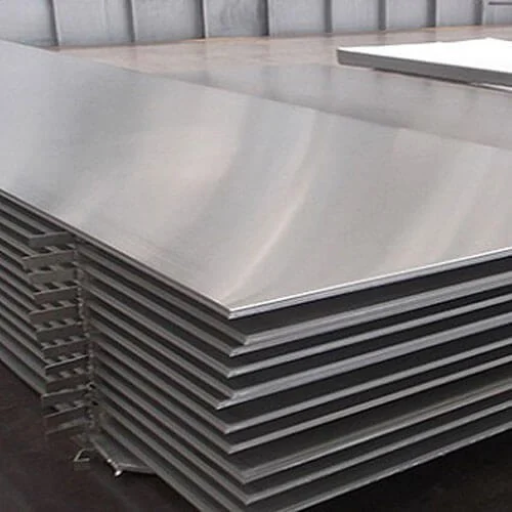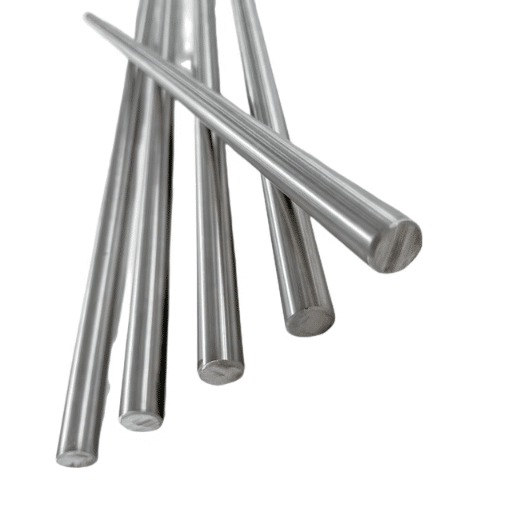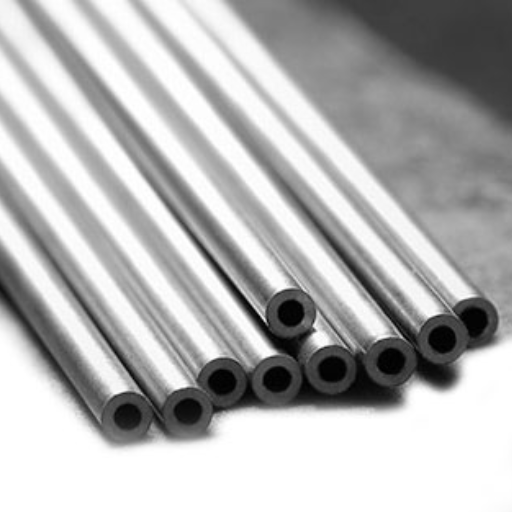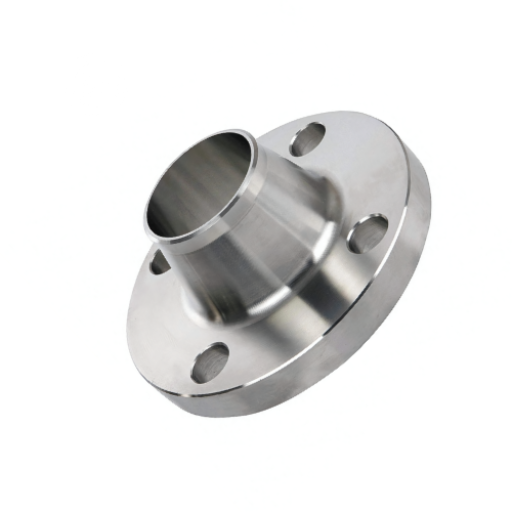
Choose copper tube when thermal conductivity, ease of installation, and first-cost efficiency matter most. Choose stainless steel tube when corrosion resistance, mechanical strength, long service life, or hygiene compliance drive the specification. The wrong call usually isn’t about which material is “better”, it’s about mismatching the material to the service environment.
Engineers and procurement teams ask us about the copper tube vs stainless steel tube decision almost every week. A heat exchanger designer wants to know if 316L can replace copper without sacrificing heat transfer. A contractor wants to know why a chilled-water line failed after five years in a coastal building. An EPC buyer wants one document that justifies the material choice to their end client. This guide gives you the side-by-side engineering data, the standards that govern each product, the applications where each one wins, and the RFQ checklist that prevents a material mismatch.
If you’re sourcing either material now, send us your OD × wall × length, service fluid, and design conditions. Our technical team returns a same-day quotation with grade confirmation and MTR documentation. Request a copper or stainless steel tube quotation →
Key Takeaways
- Copper wins on thermal conductivity (~385–399 W/m·K) and ease of soldering/brazing; stainless steel wins on corrosion resistance, tensile strength (~515 MPa for 304), and service life (50–100+ years).
- Copper tube is governed by ASTM B88/B280/EN 1057; stainless steel process tube by ASTM A312/A213/A269/ASME B36.19M.
- Never join copper and stainless steel directly without a dielectric union, galvanic corrosion will attack the copper.
- For heat exchangers, copper remains the default for HVAC/R; stainless steel dominates chemical, marine, food, and pharmaceutical service.
- A complete RFQ names the standard, grade/temper, OD × wall × length, quantity, destination code, and required test reports.
The Two Materials at a Glance

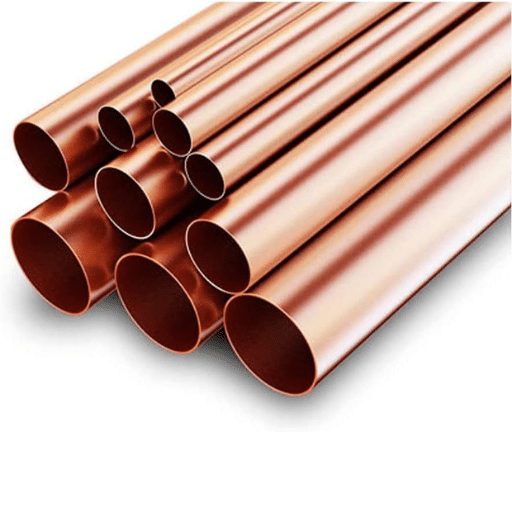
Copper tube for industrial and HVAC service is almost always phosphorus-deoxidized copper tube C12200, with copper plus silver at 99.9% minimum and phosphorus at 0.015 to 0.040%. The relevant standards are ASTM B88 for water tube, ASTM B280 for air-conditioning and refrigeration (ACR) tube, ASTM B819 for medical gas, and EN 1057 for European plumbing and heating. For background on copper alloys and design resources, see copper.org. For a deeper look at how copper tube standards fit together, see our seamless copper tube standards and selection guide.
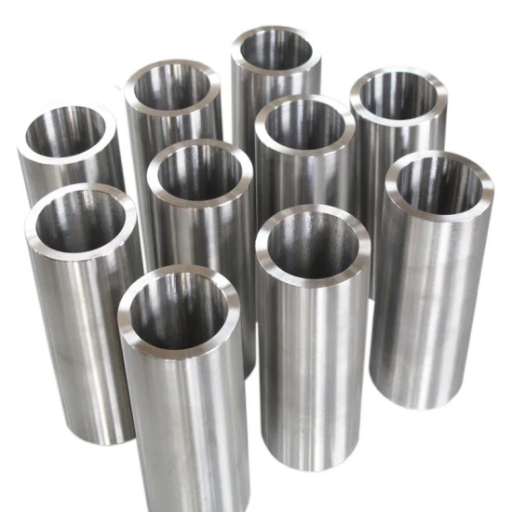
Stainless steel tube covers a broader family. The workhorse grades are 304/304L and 316/316L austenitic stainless steels, governed by ASTM A312 for seamless and welded pipe, ASTM A213 for boiler and heat exchanger tube, ASTM A269 for general service tubing, and ASME B36.19M for dimensions. For aggressive chloride service, buyers step up to duplex 2205 (UNS S32205) or super duplex S32750/S32760 grades with a higher PREN (Pitting Resistance Equivalent Number) under ASTM A790. For the grade basics, our 316L seamless stainless steel pipe specifications guide covers the most common upgrade path from 304.
Table 1: Property comparison at a glance
| Property | Copper tube (C12200) | Stainless steel tube (304/316L) |
|---|---|---|
| Thermal conductivity | ~385–399 W/m·K | ~13–21 W/m·K |
| Tensile strength (annealed) | ~220 MPa | ~515 MPa (304) |
| Density | ~8.96 g/cm³ | ~8.0 g/cm³ |
| Melting range | ~1,080°C | ~1,400–1,450°C |
| Typical service life | 20–50 years | 50–100+ years |
| Relative cost | Higher, volatile | Grade-dependent; often lower lifecycle cost |
Values are typical for comparison; confirm against the specific standard and temper for your order.
Copper vs Stainless Steel Tube Thermal Conductivity and Heat Transfer
This is the single biggest reason copper dominates HVAC, refrigeration, and small-bore heat exchangers. In terms of copper vs stainless steel thermal conductivity, the gap is large: copper sits at roughly 385–399 W/m·K, while 304 stainless steel sits at only 13–21 W/m·K. In a finned-tube evaporator or a domestic hot-water coil, that difference means copper can move the same heat duty in a smaller footprint with fewer tubes.

Thermal conductivity comparison: copper tube vs stainless steel tube
But the gap isn’t always as large as the raw number suggests. Stainless steel is much stronger, so a designer can use thinner walls, sometimes 0.5–0.8 mm compared with copper’s typical 1.2 mm minimum, which reduces conductive resistance. A smoother bore and lower fouling tendency can also improve convective heat transfer. In some thin-walled designs, the overall heat transfer coefficient of stainless can come within a few percent of copper.
Still, for most HVAC/R and compact heat exchanger work, the copper vs stainless steel heat exchanger choice usually favors copper. Our copper tube for heat exchanger C12200 guide covers the sizing and standard details for that application specifically.
When Priya, a thermal engineer in Mumbai, redesigned a shell-and-tube condenser in 2024, she ran the numbers for both materials. Copper gave her the smallest bundle and lowest fan power. But the cooling water was brackish, and 316L gave her a 25-year design life without retubing. She split the difference: copper tubes for the clean closed-loop refrigerant side and 316L for the raw-water side.
Copper Tube vs Stainless Steel Tube Corrosion Resistance
In copper vs stainless steel corrosion resistance, stainless steel wins in aggressive environments because of its self-healing chromium oxide passive layer. 316L adds 2–3% molybdenum, which dramatically improves resistance to chloride pitting and crevice corrosion. In seawater or high-chloride chemical service, designers move to duplex 2205 or super duplex S32750. Our duplex stainless steel seamless pipe ASTM A790 guide explains when that upgrade is justified.
Copper is corrosion-resistant in neutral freshwater and many atmospheric environments, but it fails predictably in several common conditions:
- Chlorinated or chloride-rich water, pitting, and pinhole leaks
- Acidic or soft water (pH below ~6.5), blue-green staining, and copper leaching
- Ammonia, sulfur compounds, or hydrogen sulfide, stress-corrosion cracking, and general attack
- High-velocity flow and erosion-corrosion accelerate dramatically above ~1.5–2 m/s
- Direct contact with dissimilar metals causes galvanic corrosion to attack the copper
The velocity issue is often overlooked. Copper’s corrosion rate at 6 m/s can be roughly 20× that of stainless steel, which is why stainless is specified for high-velocity pump discharge lines and spray systems.
Strength, Pressure, and Durability
Stainless steel is simply the stronger material. Annealed copper tube has a tensile strength around 220 MPa, while annealed 304 stainless is around 515 MPa. That strength advantage translates to higher pressure ratings, better vibration resistance, and longer unsupported spans. Stainless steel can also handle water velocities up to roughly 30 m/s in some designs, while copper is typically limited to much lower values.
Service life reflects this. Copper tube in normal plumbing and HVAC service typically lasts 20–50 years, depending on water chemistry and installation quality. Stainless steel tube commonly lasts 50–100+ years in similar or harsher environments. For a building owner or EPC contractor evaluating lifecycle cost, that longevity often offsets a higher initial material price.
One caveat: stainless steel is harder and less forgiving to work with. It requires powered cutters, rolling or press-fit tools, and TIG welding or orbital welding for high-integrity joints. Copper, by contrast, can be cut with a wheel cutter, bent by hand in annealed temper, and joined with solder, brazing, or compression fittings.
Copper vs Stainless Steel Tube Cost: Material vs Lifecycle

In copper vs stainless steel cost, copper is often more expensive per kilogram, and its price is tied to commodity markets, so it can swing during a project. Stainless steel pricing is more grade-dependent: 304/L is usually the most economical, 316/L carries a molybdenum premium, and duplex/super duplex grades can be significantly more.
But the initial tube cost is only part of the calculation. Installation labor, maintenance, downtime, and replacement frequency matter just as much. Copper installs faster and with cheaper tooling, which lowers first cost. Stainless steel often wins on lifecycle cost in corrosive or high-duty applications because it requires fewer repairs and lasts longer.
When a Dubai contractor priced a coastal hotel’s chilled-water reticulation in 2023, copper looked 12% cheaper on material. But the specification engineer added a 25-year maintenance allowance. The copper option needed one retubing cycle and several leak repairs. The 316L option did not. On a net-present-value basis, stainless steel was the lower-cost choice.
Installation, Joining, and Galvanic Compatibility
Field handling is one of the biggest practical differences in any copper vs stainless steel pipe or tubing installation. Copper’s workability is a genuine advantage. Soft annealed copper can be routed around obstacles with minimal fittings. Joints are made by capillary soldering, brazing, or compression, techniques familiar to plumbers and HVAC technicians everywhere. Wrought-copper fittings typically follow ASME B16.22.
Stainless steel is less forgiving. Tube cutters must be designed for hard metal, bends usually require a powered bender, and joints are TIG welded, orbital welded for hygienic tube, or made with press-fit systems. Fittings follow ASME B16.9/B16.11 for butt-weld and forged fittings.
The galvanic issue is non-negotiable. Copper and stainless steel are far apart on the galvanic series. If they are joined directly in the presence of an electrolyte, basically any water, the copper becomes the anode and corrodes. Use dielectric unions, insulating flanges, or compatible transition fittings. Don’t mix the two metals in the same run without isolation.
Application-by-Application Decision Matrix
Table 2: Where to specify copper vs stainless steel tube
| Application | Preferred material | Why |
|---|---|---|
| HVAC/R linesets and coils | Copper (ASTM B280 ACR) | Highest thermal conductivity; easy to bend and braze |
| Domestic hot/cold water | Copper (ASTM B88) or 304/316L | Copper for neutral water; 316L for aggressive/soft/chlorinated water |
| Heat exchangers, HVAC/R | Copper | Best heat transfer for compact units |
| Heat exchangers, chemical/marine | 316L or duplex | Corrosion resistance outweighs conductivity penalty |
| Medical gas, positive pressure | Copper (ASTM B819) | Required by NFPA 99; oxygen-clean and capped |
| Medical gas, vacuum/WAGD | Copper or 316L | NFPA 99 is more permissive for vacuum service |
| Food, beverage, pharma | 316L sanitary (DIN 11850, 3-A, ASME BPE) | Hygienic surface, CIP/SIP compatibility, regulatory acceptance |
| Chemical/petrochemical process | 316L, 321, 347, or duplex | Pressure, temperature, and corrosion resistance |
| Marine and seawater | 316L minimum; duplex/super duplex preferred | Chloride resistance and long service life |
| High-velocity water systems | Stainless steel | Erosion-corrosion resistance |
This copper tube vs stainless steel tube application matrix summarizes where each material typically wins. Use it as a starting point, then confirm the grade, standard, and wall thickness against your actual service conditions.
For HVAC copper tube specifically, our ASTM B280 ACR copper tube guide covers the standard, sizes, and packaging details.
When Marco, a project engineer in South Korea, specified tube for a brewery expansion in early 2025, he started with copper out of habit. The brewery’s quality manager rejected it: CIP chemicals and occasional chlorinated rinse water made copper a regulatory and corrosion risk. Marco switched to 316L sanitary tube with tri-clamp fittings. The thermal conductivity was lower, but the cleaning validation passed on the first attempt.
Standards and Test Reports to Demand
The material choice means little if the tube doesn’t arrive with the right documentation. Demand the documents at quotation stage, not after the shipment lands.
Copper tube standards:
- ASTM B88: seamless copper water tube (Type K, L, M)
- ASTM B280: seamless copper tube for air conditioning and refrigeration
- ASTM B819: seamless copper tube for medical gas systems
- EN 1057 / EN 12735: European copper tube for plumbing, gas, and refrigeration
Stainless steel tube standards:
- ASTM A312: seamless and welded austenitic stainless steel pipe. See our seamless stainless steel pipe ASTM A312 guide for grade coverage and schedules.
- ASTM A213: seamless ferritic and austenitic boiler, superheater, and heat exchanger tubes
- ASTM A269: seamless and welded austenitic stainless steel tubing for general service
- ASTM A270: seamless and welded austenitic stainless steel sanitary tubing
- ASTM A790 / A928: duplex and super duplex seamless/welded pipe
- ASME B36.19M: stainless steel pipe dimensions
Documentation to request:
- Mill test report (EN 10204 3.1 or ASTM equivalent) with heat chemistry and mechanical properties
- Dimensional inspection report (OD, wall, length, straightness)
- Hydrostatic test record
- Eddy-current or ultrasonic test record for seamless tube
- Heat/lot traceability
- Surface finish certificate for sanitary or electropolished tube
At Zhongzheng, an ISO 9001-aligned quality system ensures every heat is spectrographically verified before production. The MTR reflects what we measured, not just what was ordered. That’s the traceability that lets your QC team accept the material without qualification exceptions.
How to Specify Either Material in an RFQ

A vague RFQ is the fastest way to receive the wrong tube in a copper tube vs stainless steel tube procurement. Use this checklist and you’ll eliminate most receiving-inspection surprises.
- Application and service fluid: water, refrigerant, chemical, seawater, steam, medical gas, food product
- Design pressure, temperature, and velocity: these determine wall thickness and grade
- Applicable standard and grade/temper: ASTM B88 Type L, ASTM A312 316L, ASTM A790 S32205, etc.
- Dimensions: OD × wall thickness × length, in metric or imperial to match the standard
- Quantity and delivery schedule: total metres or pieces, destination, required ship date
- Surface finish (stainless): mill finish, pickled, bright annealed, electropolished to Ra ≤ 0.4μm
- Required tests and certifications: MTR format, hydrostatic test, NDT, third-party inspection
- Customer specification or end-client standard: EPC project specs often override generic standards
Send your completed specification to our technical team and we’ll confirm grade suitability, available dimensions, pricing, and lead time within 24 hours. Request a copper or stainless steel tube quotation →
Conclusion
There is no universal winner in the copper tube vs stainless steel tube decision. Copper wins where heat transfer, workability, and first cost are the primary drivers. Stainless steel wins where corrosion resistance, strength, service life, and hygiene compliance matter more. The right choice depends on the service fluid, pressure, temperature, velocity, water chemistry, and the standard your project has adopted.
For procurement, the critical step is to name the standard, grade, dimensions, and required tests in the RFQ. That single discipline prevents most material mismatches and receiving-inspection delays.
Zhongzheng manufactures both copper tube and stainless steel tube from our Wenzhou facility, with spectrographic heat verification, ultrasonic testing, hydrostatic testing, and full documentation packages for international projects. Send us your application, standard, and OD × wall × length, and our technical team will confirm the right material, grade, pricing, and lead time within 24 hours. Send us your specification →
FAQ
Which is better, copper or stainless steel tubing?
It depends on the application. Copper is better for thermal conductivity and ease of installation. Stainless steel is better for corrosion resistance, strength, and long service life. Match the material to the service environment, not a general preference.
Is copper more corrosion-resistant than stainless steel?
No. Copper resists neutral freshwater well but is vulnerable to chlorides, acidic water, ammonia, and high-velocity erosion. Stainless steel, especially 316L and duplex grades, outperforms copper in most aggressive environments.
Can you connect a copper pipe to a stainless steel pipe?
Only with galvanic isolation. Direct contact between copper and stainless steel in an electrolyte causes galvanic corrosion that attacks the copper. Use dielectric unions, insulating flanges, or approved transition fittings.
Why is copper used in HVAC instead of stainless steel?
Copper’s thermal conductivity is roughly 20 times higher than stainless steel, so it transfers heat efficiently in compact coils and linesets. It is also easier to bend, cut, and braze in the field.
Is stainless steel pipe more expensive than copper?
Not always. Copper often has a higher initial material cost and more price volatility. Stainless steel grades vary: 304/L is usually competitive, while 316/L and duplex grades cost more upfront but can deliver lower lifecycle cost in corrosive service.
What stainless steel grade replaces copper in seawater?
For seawater service, use 316L as a minimum. For long-term reliability, specify duplex 2205 (UNS S32205) or super duplex S32750/S32760, which offer much higher chloride pitting resistance.
What standards govern copper tube vs stainless steel tube?
Copper water tube is governed by ASTM B88; ACR tube by ASTM B280; medical gas tube by ASTM B819. Stainless steel process pipe is governed by ASTM A312; heat exchanger tube by ASTM A213/A269; sanitary tube by ASTM A270; duplex pipe by ASTM A790.