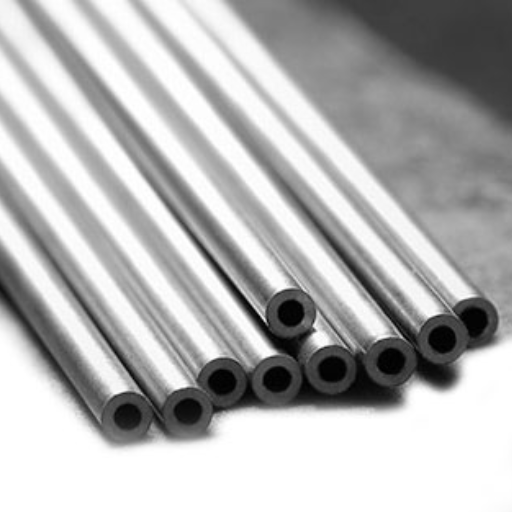
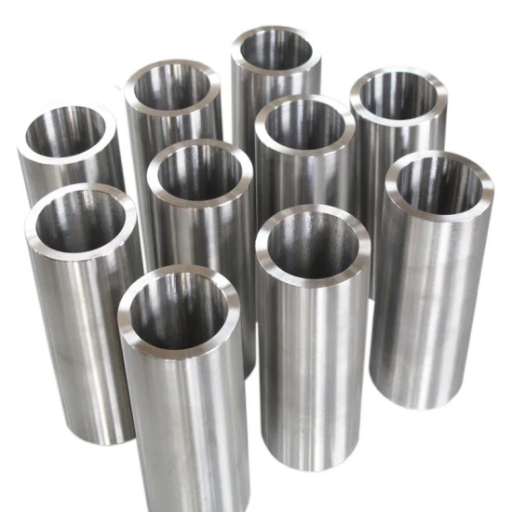
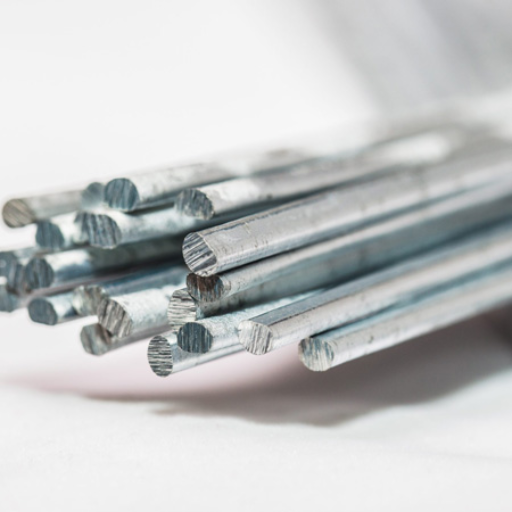
The copper tube manufacturing process transforms raw copper cathode into seamless tube through melting, casting, extrusion, cold drawing, annealing, finishing, and inspection. For buyers, the process itself is the specification: every stage leaves fingerprints that determine whether a tube will pass hydrostatic testing, hold pressure in service, and last 20 years or more.
A copper tube looks simple. The danger is that it can pass dimensional checks and still fail later. That usually happens because the buyer inspected the result without understanding how the result was made. This guide walks through the copper tube manufacturing process the way a procurement engineer or QA manager needs to see it: not just how copper tubes are made, but how to verify they were made right. If you are sourcing now, send us your standard and application, and we’ll confirm the right temper, dimensions, and test package. Request a copper tube quotation →
What is the copper tube manufacturing process? It is the sequence of metallurgical and mechanical steps that converts copper cathode into a finished seamless tube. The standard route has eight stages: raw material selection and melting, casting, hot extrusion, cold drawing, annealing, surface finishing, quality control, and documentation.
Key Takeaways
- The copper tube manufacturing process has eight main stages: raw material melting, casting, hot extrusion, cold drawing, annealing, finishing, quality control, and documentation.
- Most seamless copper tube starts as cathode copper, is melted and deoxidized for C12200 / Cu-DHP, cast into a billet or shell, extruded into a mother tube, and cold-drawn to final size with intermediate annealing.
- Temper control (O50, O60, H58, H80) is set by the final annealing and drawing sequence, not by chemistry alone.
- ASTM B75, ASTM B88, ASTM B280, and ASTM B819 each specify different end-use requirements; EN 1057 applies to European plumbing and heating markets.
- Buyers should demand heat traceability, an MTR with chemical and mechanical results, hydrostatic test records, and eddy-current inspection for seamless tube.
What Is the Copper Tube Manufacturing Process?

The copper tube manufacturing process is the sequence of metallurgical and mechanical operations that converts copper cathode into a finished seamless tube. The standard route includes eight stages: raw material selection and melting, casting, hot extrusion, cold drawing, annealing, surface finishing, quality control, and documentation. Each stage is a control point where defects can be prevented or locked in.
Stage 1: Raw Material Selection and Melting
The process starts with cathode copper. Most seamless copper tube for plumbing, HVAC, and heat exchangers is made from phosphorus-deoxidized copper tube C12200, also known as Cu-DHP or UNS C12200. This grade requires a minimum of 99.90% copper plus silver and a phosphorus content of 0.015 to 0.040%. Phosphorus is added during melting to bind residual oxygen and prevent hydrogen embrittlement during casting and welding.
C12200 copper tube production starts with copper melted in induction, shaft, or reverberatory furnaces. Induction melting is common for high-quality tube because it gives precise temperature control and a clean melt. The melting point of copper is roughly 1,085°C. Once the melt reaches the target temperature and chemistry, operators grain-refine and deoxidize it before casting.
Zhongzheng verifies every heat with optical emission spectrometry (OES) before the metal moves to casting. That single step prevents a surprising number of downstream failures, because inclusions from off-chemistry material often do not show up until eddy-current testing or, worse, until the tube is in service.
Stage 2: Casting the Billet or Shell
After melting, the copper is cast into a form that can be extruded. There are three common approaches:
Continuous casting and rolling (CCR). CCR casts molten copper into a continuous bar and then rolls it into a round billet. This approach is efficient and widely used for standard plumbing and HVAC tube.
Up-casting / UPCAST. Vertical casting produces a high-purity round bar. It is favored for oxygen-free and high-conductivity copper grades because it minimizes oxide contamination.
Direct chill and centrifugal casting. These methods are used for larger billets or specialized copper alloys where grain structure matters.
The output of this stage is a billet or shell with the right diameter and internal structure for extrusion. Defects introduced here, porosity, inclusions, or segregation, are difficult to remove later. That is why the factory audit checklist always asks whether the melt is spectrographically checked and whether the billet surface is inspected before extrusion.
Stage 3: Hot Extrusion (Forming the Mother Tube)
Hot extrusion is the heart of the copper tube manufacturing process. A copper billet is heated to 750–900°C, then pushed through a die with a mandrel inside. The die sets the outer diameter; the mandrel sets the inner diameter and wall thickness. The result is a thick-walled mother tube, also called a hollow shell or extruded blank.
Extrusion presses range from 1,000 to 6,000 tons depending on the tube size. Larger presses handle bigger billets and produce tube with larger outside diameters. Wall uniformity at this stage depends on die and mandrel alignment, billet temperature, and press speed. A misaligned mandrel creates a wall-thickness variation that will persist through every subsequent drawing pass.
Some producers use piercing instead of extrusion, but extrusion dominates seamless copper tube manufacturing for water tube, ACR tube, and medical gas tube because it gives better dimensional control and a cleaner internal surface.
Stage 4: Cold Drawing to Size
The copper tube drawing and annealing sequence begins when the mother tube is too large and too thick-walled for finished dimensions. Cold drawing reduces both diameter and wall thickness by pulling the tube through a die, usually with a floating or fixed mandrel inside. A draw bench applies the tensile force needed to stretch and compress the tube into the desired size.
Multiple drawing passes are often required, especially for thin-walled or small-diameter tube. Each pass work-hardens the copper, so intermediate annealing is needed to restore ductility. Drawing also improves surface finish and tightens dimensional tolerances. The final dimensions are determined by the die and mandrel selection, not by guesswork at the extrusion press.
Stage 5: Annealing and Temper Control

Annealing turns a hard, drawn tube into a soft, bendable product or, conversely, leaves it in a harder temper for structural applications. The furnace heats the tube in a protective atmosphere to avoid oxidation, then operators cool it under controlled conditions. Bright annealing leaves a clean, oxide-free surface that often needs no further pickling.
ASTM B75 copper tube manufacturing standards define the tempers used after annealing:
| Temper | Designation | Typical properties | Common applications |
|---|---|---|---|
| O50 | Light annealed | Moderate strength, good ductility | Plumbing, general bending |
| O60 | Soft annealed | Lowest strength, highest ductility | HVAC linesets, coiled service |
| H58 | Drawn general purpose | Higher strength, reduced ductility | Rigid water lines, fittings |
| H80 | Hard drawn | Highest strength, lowest ductility | Structural, high-pressure runs |
The sequence of drawing and annealing determines the final temper. For example, drawing to size after the last anneal gives H58 or H80; annealing after the final draw gives O50 or O60. Temper matching is critical for installation. A refrigeration contractor cannot bend H80 tube by hand; a structural installer may not want soft annealed tube that moves under pressure.
For a deeper look at how tempers and standards fit together, see our seamless copper tube standards and sizes selection guide.
Stage 6: Surface Finishing and Forming
After annealing, the operator finishes the tube to its final form. This stage includes pickling or bright annealing, straightening, cutting to length, and coiling.
Coiling methods:
- Level Wound Coil (LWC): Tube wound in a flat, compact coil for HVAC linesets and long installations. LWC minimizes fittings and reduces field labor.
- Pancake Coil (PC): A flat, spiral coil used in refrigeration and split-system installations.
- Straight lengths: Cut to 6 m or 20 ft lengths for plumbing, heating, and process installations.
For medical gas applications under ASTM B819, finishing also means capping both ends to preserve internal cleanliness. A tube for medical gas service is not just dimensionally correct; it must be free of hydrocarbons, moisture, and particulates that could contaminate a hospital pipeline. Our HVAC copper tube ASTM B280 ACR guide covers the coiling and packaging details for refrigeration service.
Stage 7: Quality Control and Testing
Copper tube quality control is not a final step; it is a thread that runs through every stage of the copper tube manufacturing process. At the end of the line, testing confirms that the finished tube meets the standard. Common tests include:
Chemical composition analysis (OES). Verifies that the heat chemistry matches the specification, especially for phosphorus and residual oxygen in C12200.
Dimensional inspection. OD, wall thickness, length, and straightness are checked against the standard tolerances.
Eddy current testing (ASTM E243). Detects surface and near-surface defects in non-ferromagnetic conductive tubes at production-line speeds. This is a standard non-destructive test for seamless copper tube.
Copper tube hydrostatic test. Confirms that the tube can hold pressure without leaking. ASTM B75 specifies a fiber stress of 6,000 psi (41 MPa) with a maximum gauge pressure of 1,000 psi unless otherwise specified. ASTM B280 ACR tube requires a minimum of 10.3 MPa (1,500 psi) for 1/4″ tube.
Expansion and flattening tests. Verify ductility and weld integrity. These are especially important for tube that will be flared or bent in the field.
Mechanical testing. Tensile strength, hardness, and grain size confirm the temper. For example, ASTM B88 C12200 O50 tensile strength must be at least 205 MPa, while H58 must be at least 250 MPa.
Internal cleanliness. Hydrocarbon limits, moisture content, and particulate counts are checked for medical gas and some ACR applications.
A factory that skips any of these tests is not saving money; it is transferring risk to the buyer. At Zhongzheng, every heat is spectrographically verified, and every production lot is hydrostatically tested and eddy-current inspected before release. This discipline matters especially for heat-transfer applications; see our guide to copper tube for heat exchangers for specification advice. Request a sample MTR and test report →
Stage 8: Documentation, Traceability, and Packing
The last stage turns a physical tube into a qualified product. Documentation includes:
- Mill Test Report (MTR) with heat chemistry, mechanical properties, and test results.
- Heat/lot traceability linking the finished tube back to the raw material heat.
- EN 10204 3.1 or ASTM-equivalent certification for project documentation.
- Dimensional inspection report and NDT test records.
Packing matters too. Coils are bound and wrapped to prevent transit damage. Straight lengths are bundled and capped. Medical gas tube is sealed to maintain cleanliness. For international shipments, packing must match the destination code and prevent seawater corrosion of the tube surface.
Common Copper Tube Manufacturing Defects and How to Prevent Them

Understanding the process helps buyers see why defects happen. Here are the most common problems and their process roots:
Seams and laps. Usually caused by poor extrusion practice, damaged dies, or inclusions from the melt. Prevented by clean melting, proper die maintenance, and eddy-current inspection.
Wall thickness variation. Often traces back to mandrel misalignment or uneven billet temperature. Prevented by press calibration and inline dimensional checks.
Inclusions and porosity. Originate in melting or casting. Prevented by spectrographic heat verification, protective casting, and billet inspection.
Hydrogen embrittlement. A risk in oxygen-bearing copper when melted or annealed in a reducing atmosphere. Deoxidized C12200 is specifically designed to avoid this.
Surface contamination. Can occur during pickling, annealing, or handling. For medical gas and ACR tube, capped ends and clean-room handling are essential.
How to Audit a Copper Tube Manufacturer
When you visit a copper tube factory, or review its quality manual, ask these questions:
- Is every copper heat spectrographically verified before casting?
- What type of extrusion press is used, and what is its maximum tonnage?
- How many drawing passes are used, and is intermediate annealing performed between passes?
- What temper standards are used for final classification?
- Is hydrostatic testing performed on every lot?
- Is eddy-current testing performed inline or batch-wise?
- Can the supplier provide an MTR with heat traceability and full test results?
- What is the rejection and rework procedure for failed lots?
- How is medical gas or ACR tube capped and cleaned?
- What packing method is used for your destination and transport mode?
Red flags include missing heat records, no hydrostatic test records, unclear temper designation, and reluctance to provide third-party inspection. For comparison with another common material, see our copper tube vs stainless steel tube guide. If your project also specifies stainless steel, review our stainless steel seamless pipe ASTM A312 guide for analogous sourcing checks.
FAQ
What is the copper tube manufacturing process?
The copper tube manufacturing process is the sequence of melting copper cathode, casting a billet, hot extruding a mother tube, cold drawing to final size, annealing to control temper, finishing, testing, and documenting the lot. It is used to produce seamless copper tube for plumbing, HVAC, refrigeration, medical gas, and heat exchangers.
How are copper tubes made?
Copper tubes are made by melting cathode copper, deoxidizing it for C12200, casting into a billet or shell, extruding the billet through a die and mandrel to form a thick mother tube, then cold-drawing the mother tube to the required OD and wall thickness with intermediate annealing.
What is the copper tube extrusion process?
In the copper tube extrusion process, a heated copper billet is forced through a die containing a mandrel. The die shapes the outer diameter; the mandrel shapes the inner diameter. The result is a seamless mother tube that is later drawn to finished size.
What tempers are used for copper tube?
Common copper tube tempers are O50 (light annealed), O60 (soft annealed), H58 (drawn general purpose), and H80 (hard drawn). Soft tempers are used where bending is required; hard tempers are used for rigid, high-pressure runs.
What tests are performed on copper tube?
Standard tests include chemical analysis by OES, dimensional inspection, eddy-current testing, hydrostatic pressure testing, expansion and flattening tests, tensile and hardness testing, and internal cleanliness checks for medical gas or ACR service.
What is ASTM B75 copper tube?
ASTM B75/B75M is the standard specification for seamless copper tube in general engineering, plumbing, and heating applications. It covers dimensions, tempers, mechanical properties, and test requirements.
What is the difference between CCR and up-casting for copper?
Continuous casting and rolling (CCR) casts molten copper into a continuous bar that is rolled into a billet, and is efficient for high-volume standard grades. Up-casting (UPCAST) casts vertically and is preferred for oxygen-free or high-purity copper grades where cleanliness matters.
Why does temper matter when buying copper tube?
Temper determines whether the tube can be bent, flared, or installed in rigid runs. Soft annealed tube bends easily; hard-drawn tube resists deformation and holds higher pressure. The wrong temper causes installation failures or leaks at fittings.
Conclusion
The copper tube manufacturing process is not just a sequence of factory operations. It is the reason a tube passes or fails in service. Every stage, from cathode selection to final packing, leaves a trace in the finished product. Buyers who understand those stages can write better RFQs, qualify suppliers faster, and avoid receiving-inspection surprises.
At Zhongzheng, we run the full process from raw material to finished coil at our Wenzhou facility, with spectrographic heat verification, hydrostatic testing, eddy-current inspection, and full MTR documentation. Whether you need ASTM B88 water tube, ASTM B280 ACR tube, ASTM B819 medical gas tube, or EN 1057 copper tube for a European project, send us your standard and OD × wall × length. Our technical team will confirm the right grade, temper, and test package, and return a quotation within 24 hours. Send us your copper tube specification →