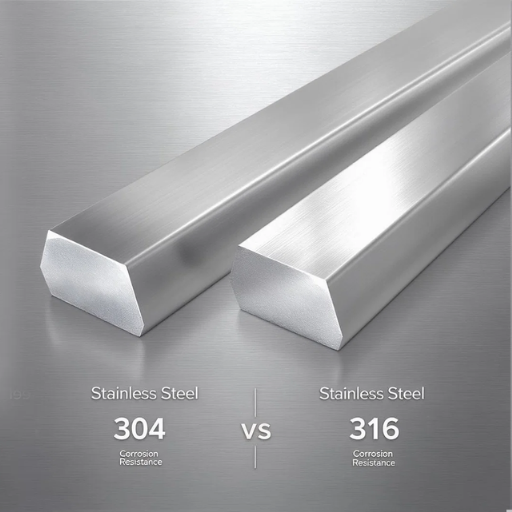
On corrosion, the difference between 316L and 304 stainless steel comes down to one alloying element. Grade 316L carries 2.00 to 3.00% molybdenum; grade 304 carries none. That addition lifts the pitting resistance equivalent number from roughly 18 to roughly 25 and buys about 15 to 25 °C of extra crevice-corrosion headroom in standard laboratory tests.
That is a genuine upgrade. It is not the transformation most comparisons imply.
Here is the part that usually gets skipped. When you search 316L vs 304 stainless steel corrosion, you are not comparing like with like. One grade is low-carbon and the other is not, and the carbon difference does nothing for pitting resistance. It does something else entirely, at welds, and that distinction changes how you should specify.
This article gives you the measured numbers: crevice temperatures with the method named, the PREN arithmetic, and where 316L still fails. For the broader selection framework, the full 304 vs 316 comparison covers grade choice end to end.
Key Takeaways
- Molybdenum is the only difference that moves pitting and crevice resistance. 316L has 2.00–3.00% Mo, 304 has none, and that shifts PREN from about 18 to about 25.
- Under ASTM G48 Method B, 304 sits at roughly 20–28 °C critical crevice temperature and 316/316L at roughly 38–52 °C. The gap is 15–25 °C, not a change of class.
- The “L” does not improve pitting resistance. 304L and 316L sit in the same crevice band as their standard-carbon equivalents; low carbon buys weld-zone integrity.
- 316L handles only ambient, clean, flowing seawater. Warm, stagnant or chlorinated water at roughly 19,000 ppm chloride defeats both grades.
- 304 and 316 have identical specified minimum strength in ASTM A312. Paying for 316 buys corrosion resistance only.
316L vs 304 Stainless Steel Corrosion: What the Molybdenum Changes
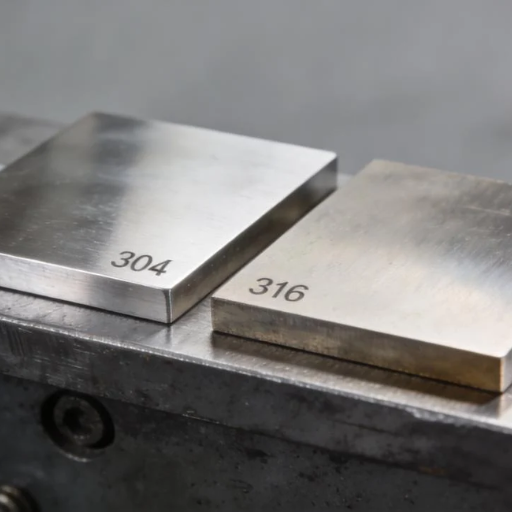
Chloride breaks the passive film at weak points, and molybdenum is what slows that down. It stabilises the film in the presence of chloride and raises the potential required to break it down. That is why molybdenum content, not chromium content, predicts chloride performance.
Working the PREN Arithmetic
The standard index is PREN = Cr + 3.3 × Mo + 16 × N.
Run the numbers for 304: about 18% chromium, no molybdenum, PREN near 18. Run them for 316L: about 17% chromium, 2.5% molybdenum, PREN near 25, with nitrogen nudging both grades slightly upward. The 3.3 multiplier does the work. One point of molybdenum is worth more than three points of chromium, which is why reaching PREN 25 on chromium alone would need an impractical alloy.
If your project needs the grade confirmed against your service conditions, send the line list to our technical team and we will check the specification against the chloride and temperature data before production.
What PREN Does Not Tell You
PREN is a ranking tool, not a service limit. It ignores three things that decide real outcomes.
- Temperature. A grade that passes at 25 °C can pit at 45 °C in the same fluid. Every measured threshold in this article is temperature-dependent by definition.
- Crevice geometry. A gasket face, a threaded joint, or a weld underlap creates a stagnant pocket where chloride concentrates and oxygen cannot reach. Crevice attack starts at lower temperatures than open-surface pitting, which is why this article uses crevice temperature as its metric.
- Chloride concentration and oxidiser content. Chloride alone is not the whole picture. Chlorinated water and low-pH conditions shift the threshold considerably.
Use PREN to shortlist. Use a measured crevice temperature, from your own testing or a published range with the method named, to specify.
316L vs 304 Corrosion Resistance: The Measured Gap
The critical crevice temperature (CCT) is the temperature above which crevice attack starts under a defined test. The most widely quoted method is ASTM G48 Method B, which uses ferric chloride solution and is published by ASTM International. Values move with the method, the surface finish, and the specimen geometry, so every figure below is a range and every figure carries the method.
| Grade | Critical crevice temperature (ASTM G48 Method B, FeCl₃) | PREN |
|---|---|---|
| 304 | ≈ 20–28 °C | ≈ 18 |
| 304L | ≈ 22–30 °C | ≈ 18 |
| 316 | ≈ 38–52 °C | ≈ 25 |
| 316L | ≈ 38–52 °C | ≈ 25 |
Special Metals’ technical bulletin for Inconel 686 puts the CCT for AISI 316 at approximately 50 °C under ASTM G48 methods C and D. That corroborates the top of the 316 range rather than contradicting it.
The honest reading of that table is a gap of about 15 to 25 °C. Molybdenum buys you roughly twenty degrees of extra crevice headroom. That is the entire quantitative case for the upgrade, and it is worth stating plainly because the alternative, “316 is far more corrosion resistant,” tells you nothing you can specify against.
What the Gap Means on a Real Component
Twenty degrees sounds small until you map it onto a service condition. A coastal plant with a summer ambient of 35 °C and a stagnant gasket face sits inside 304’s crevice range and outside 316L’s. The same plant in a temperate climate at 15 °C sits inside both, and the molybdenum is buying insurance rather than capability.
This is why the question “is 316L worth the extra cost” has no general answer. It has a temperature, a chloride level, and a joint design.
The Two Failures This Comparison Prevents
Neither of these is a customer story. Both are documented mechanisms, and both are the reason the table above matters.
Crevice attack at a gasket face. A flanged 304 assembly in a coastal plant develops pits at the joint, not in the pipe wall. The stagnant pocket between gasket and flange concentrates chloride and excludes oxygen, so the local environment is harsher than the bulk fluid the pipe was specified against.
The wall thickness was never the problem. The joint was, and no amount of extra wall thickness fixes it.
Weld-zone intergranular attack. A 304 spool is welded and put into hot chloride service. Chromium carbides precipitate in the heat-affected zone during the weld thermal cycle, depleting chromium from the adjacent metal. Corrosion then runs in a narrow band beside a weld that looks sound from the outside.
This one is a carbon problem, not a molybdenum problem, and it is the subject of the next section.
The “L” Is Not a Corrosion Upgrade
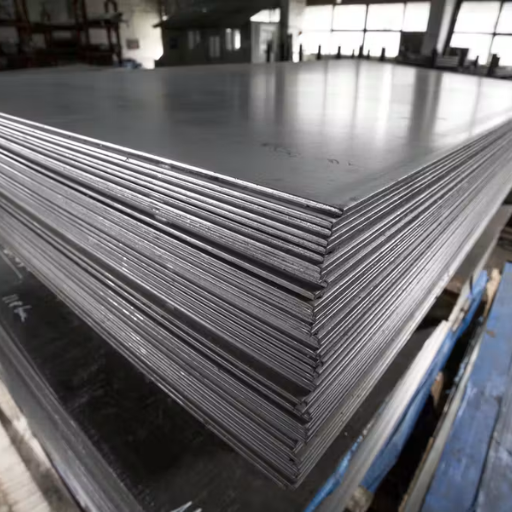
Look again at the table, because this is where most 304 vs 316 stainless steel corrosion comparisons go wrong. 304L sits at roughly 22–30 °C and 304 sits at roughly 20–28 °C. 316L and 316 occupy the same band. Low carbon does not move pitting or crevice resistance in any meaningful way.
What low carbon does is prevent sensitization. When austenitic stainless steel is held in the range of roughly 425 to 815 °C, chromium carbides precipitate at grain boundaries and draw chromium out of the surrounding metal. Below about 12% chromium locally, the grain boundary stops being stainless. The result is intergranular corrosion, and it follows the weld heat-affected zone precisely.
Lowering carbon from 0.08% to 0.030% leaves too little carbon available to form those carbides during a weld thermal cycle. That is what the L buys, and it is a welding benefit rather than a service-temperature benefit.
304L vs 316L: The Asymmetric Comparison Nobody Addresses
This is the part of 316L vs 304 stainless steel corrosion that the keyword itself hides. You typed 316L against 304. The L grade is low-carbon, the standard grade is not, so a quarter of the comparison is about carbon and three quarters is about molybdenum.
Most buyers do not order 304 against 316L. They order 304L against 316L, or 304 against 316. Once you line the grades up that way, the L stops being a corrosion variable and the molybdenum becomes the only thing left.
There is one case where the L matters more than the molybdenum. A welded 304 assembly in hot, chloride-bearing service has two vulnerabilities at once: crevice attack at the joints and intergranular attack at the welds. Upgrading to 316L addresses both, because it adds molybdenum and drops carbon. Upgrading to 316 addresses only the first.
If your spools are welded and your service runs warm, 316L is the correct choice over 316 for reasons that have nothing to do with PREN.
The carbon limits differ by product form. ASTM A240 sets 0.030% max for L-grade plate and sheet; ASTM A312 permits 0.035% for L-grade pipe. Both sit far below the 0.08% ceiling on standard grades, and the British Stainless Steel Association publishes grade data sheets setting out both. For the pipe-specific requirements, the 316L seamless pipe specification sets out the chemistry and test clauses.
Where 304 Still Wins
The comparison is usually framed as 304 being the budget option and 316L being the correct one. That framing produces as much over-specification as under-specification.
Chloride-free and oxidising service. Nitric acid service is the classic example. Oxidising acids maintain the passive film rather than attacking it, and molybdenum can actually be detrimental in strongly oxidising environments, a behaviour the Nickel Institute’s corrosion data charts by medium. 304 is not a compromise here; it is the correct specification.
Ambient, dry, or low-chloride conditions. Indoor process piping, food-grade lines handling chloride-free product, architectural and structural tube. If the service sits comfortably below 304’s crevice range, the molybdenum has nothing to do.
Cost. The 316L premium runs roughly 30 to 60% over 304 depending on product form and market conditions, driven by both the molybdenum addition and the higher nickel content. On a large tonnage order that is a real line item, and spending it where the corrosion mechanism is not chloride-driven buys nothing.
The failure mode to avoid is the mirror image of the one this article warns about. Specifying 316L everywhere “to be safe” hides which lines actually needed it, inflates the bill, and gives no credit for the lines where 304 would have run for twenty years. The 304 side of the specification is set out in the 304 pipe specification, which covers the same ASTM A312 clauses for the standard-carbon grade.
Can 316L Still Rust?
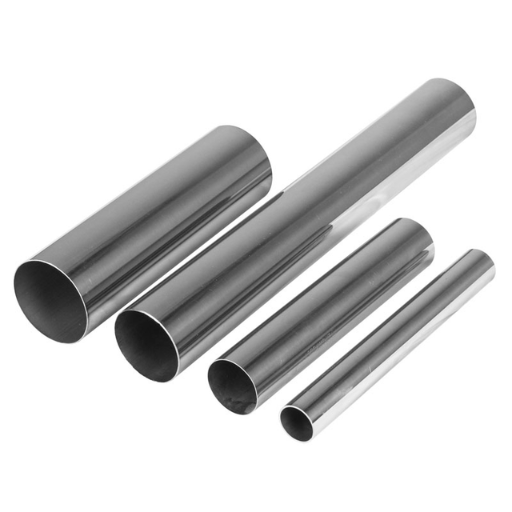
Yes. 316L is not rust-proof, and any supplier who tells you otherwise is either misinformed or selling.
Three conditions defeat it.
Warm or chlorinated seawater. Seawater carries roughly 19,000 ppm chloride. At ambient temperature with free-flowing, clean, oxygenated water, 316L can survive some seawater applications. That window closes quickly.
Add warmth, stagnation, biological activity, or chlorine dosing and that reputation collapses. Chlorinated seawater is particularly aggressive because the oxidiser raises the potential past the breakdown point.
Stagnant chloride pockets. The crevice mechanism described earlier applies to 316L too, just at a higher temperature. A gasket face, a weld underlap, or a thread root is the first place to fail.
Sensitized weld zones. 316 (standard carbon) can sensitize. 316L resists sensitization from the weld cycle, but not from sustained exposure in the 425–815 °C band. If the component operates in that range continuously, the answer is a stabilised grade such as 321 or 347, or a high-carbon grade such as 316H, not 316L.
When 316L is the wrong answer, the next step is duplex. Grade 2205 offers a PREN above 30 with roughly double the yield strength, and super duplex 2507 pushes past 40. Duplex corrosion resistance covers the chloride thresholds and the SCC behaviour, and duplex 2205 versus 316L sets out the strength and fabrication trade-off when you are deciding whether to skip a grade.
316L vs 304 Stainless Steel Corrosion: Frequently Asked Questions
Is 316L more corrosion resistant than 304?
Yes, in chloride-bearing service specifically. Molybdenum raises the PREN from about 18 to about 25 and lifts the critical crevice temperature by roughly 15 to 25 °C under ASTM G48 Method B. In chloride-free or strongly oxidising service, that advantage disappears and can reverse.
Can 316L stainless steel still rust?
Yes. 316L pits in warm or chlorinated seawater, in stagnant chloride pockets such as gasket faces, and in weld zones that have been sensitized by sustained exposure above roughly 425 °C. Its resistance is higher than 304’s, not absolute.
What is the difference between 304 and 316L corrosion resistance?
One alloying element. 316L contains 2.00 to 3.00% molybdenum and 304 contains none, which moves the PREN from roughly 18 to roughly 25. The practical effect is about 15 to 25 °C more crevice-corrosion headroom, and nothing else.
Does the L in 316L make it more corrosion resistant?
Not for pitting. 316L and 316 sit in the same critical crevice temperature band, and 304L and 304 do too. The L reduces carbon to 0.030% or below, or 0.035% in A312 pipe, which prevents chromium carbide precipitation during welding and protects the heat-affected zone from intergranular corrosion.
Is 316L stronger than 304?
No. ASTM A312 sets identical minimums for both grades: 515 MPa tensile, 205 MPa yield, and 35% elongation. The L grades are also identical to each other at 485 MPa tensile, 170 MPa yield, and 30% elongation. Molybdenum buys corrosion resistance, not strength.
What chloride level can 316L handle?
There is no specification limit. Published guidance varies by more than a factor of five depending on temperature, and none of it is normative. A figure quoted for ambient conditions does not hold at 60 °C. Test against your actual service temperature, or specify by critical crevice temperature rather than by chloride concentration.
Is 316L suitable for seawater?
Only for ambient, flowing, clean, unchlorinated seawater, and even then with reservations. Warm, stagnant, or chlorinated seawater defeats it. For real seawater service the specification starts at duplex 2205 and often moves to super duplex 2507.
When should I use 304 instead of 316L?
When the service is chloride-free or strongly oxidising, when the temperature stays well below 304’s crevice range, or when the joint design avoids stagnant pockets. Nitric acid service is the clearest case. Specifying 316L there adds cost without adding life.
Conclusion: Buy the Data, Not the Label
The 316L vs 304 stainless steel corrosion question has a measurable answer, and it is smaller than the marketing suggests.
Molybdenum takes PREN from about 18 to about 25 and buys roughly 15 to 25 °C of crevice headroom. That is worth paying for where chloride, temperature, and joint geometry put you near the threshold. It is not worth paying for in chloride-free service, where 304 is the correct specification rather than the cheap one.
The L is a separate decision from the molybdenum. It protects weld zones from intergranular attack and does nothing for pitting. Line the grades up properly, 304L against 316L, and the comparison becomes clear.
Before you specify, get three numbers: the maximum service temperature, the chloride concentration, and the crevice geometry at your joints. Those three decide the grade. Everything else is a proxy.
Send us your line list with the service conditions and we will confirm grade, standard, and delivery within 24 hours. If the answer is 304, we will tell you that too.