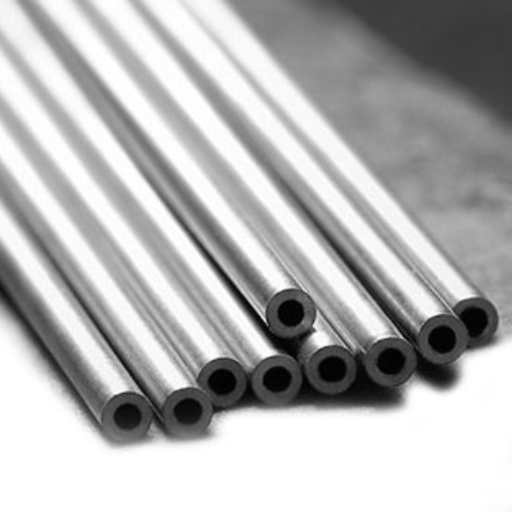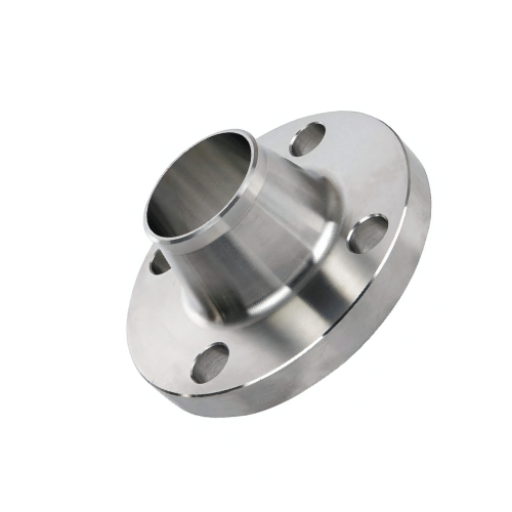
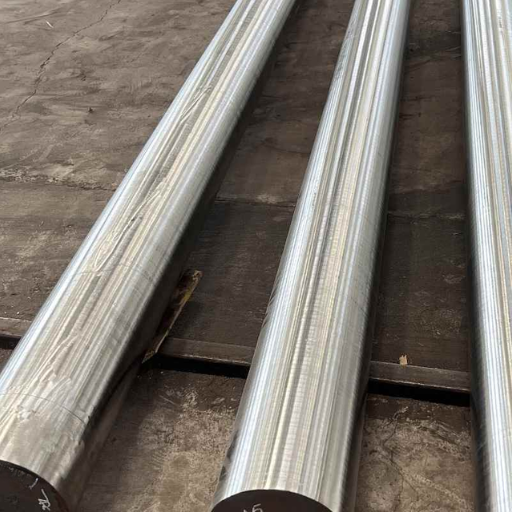
Inconel 625 heat treatment cannot make the alloy stronger. It is a solid-solution alloy with no aging step, so no furnace cycle raises its strength the way aging transforms Inconel 718. What heat treatment does decide is which of two conditions you receive, and that choice moves minimum yield from 414 MPa to 276 MPa.
Most buyers already know the material arrives annealed. Fewer know that “annealed” and “solution annealed” are two different treatments with two different property balances, and that the purchase order usually fails to say which one it wants.
That omission is cheap at the quotation stage and expensive later. A line ordered as “Alloy 625 to ASTM B444” with no grade named can ship as Grade 1 and pass every receiving inspection, because Grade 1 is compliant with the standard as written.
This guide covers the three treatments and what each one is for. It explains why the Grade 1 minimum is not a solution treatment, why cooling rate belongs on the order, and what over-annealing does. It closes on the one number your hardness callout cannot enforce.
Key Takeaways
- 625 cannot be hardened by heat treatment. It is solid-solution strengthened, so there is no aging step. Any supplier offering “heat treated for higher strength” is describing a different alloy.
- Grade 1 is annealed at 871 °C minimum and Grade 2 is solution annealed at 1,093 °C (2,000 °F) minimum. The gap between those two temperatures is the entire grade distinction.
- Cooling rate is part of every treatment. The two solution anneals specify air quench or faster, and stress relief specifies air quench, because slow cooling through 550–900 °C reprecipitates phases at the grain boundaries.
- Over-annealing raises hardness and destroys ductility. Prolonged holds precipitate δ phase; the remedy is a re-solution anneal near 1,150 °C with a rapid quench.
- ASTM B443 sets no hardness requirement at all. Hardness limits come from AMS 5599, NACE MR0175, or your own specification, so a bare “90 HRB max” on a PO is unenforceable.
Holding a mill certificate that names a heat treatment you cannot interpret? Send it over and we will confirm what condition the material is actually in and whether it matches the grade on your order. Our technical team replies within 24 hours. Request the review.
The Three Heat Treatments and What Each One Is For
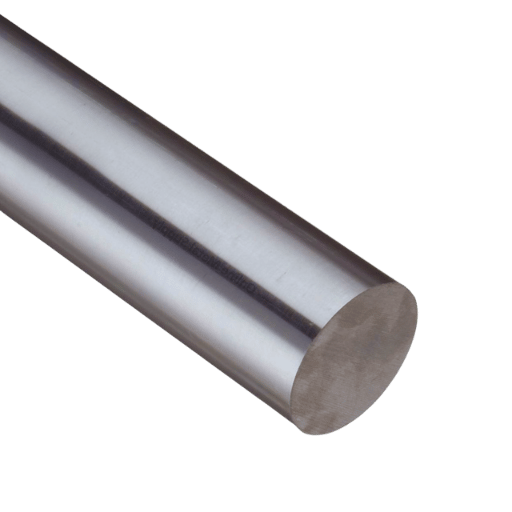
There are three standard Inconel 625 heat treatments, and they are not interchangeable grades of the same thing.
| Treatment | Temperature | Cooling | What it does |
|---|---|---|---|
| High solution anneal | 1,093–1,204 °C (2000–2200 °F) | Air quench or faster | Dissolves δ and carbides; maximum softness and homogeneity |
| Low solution anneal | 927–1,038 °C (1700–1900 °F) | Air quench or faster | Partial dissolution; a working anneal between forming stages |
| Stress relief | 899 °C (1650 °F) | Air quench | Relieves residual stress without a full recrystallisation |
These are mill and fabrication treatments, not a menu. The cycles are published in distributor technical data, and High Temp Metals lists all three with their cooling requirements. The high solution anneal is what produces Grade 2 properties and what you specify when creep resistance matters. The stress relief is what you apply after welding or cold forming, and complete stress relief is reported at 870 °C.
The low solution anneal is the one buyers ask about least and fabricators use most. It softens the alloy enough to keep cold reducing, without the over-annealing risk that comes with the top of the high range.
Cooling Rate Is Half the Specification
Two of those three treatments carry the same cooling requirement: air quench or faster. The third, stress relief, specifies air quench. That distinction is not boilerplate.
Slow cooling through roughly 550–900 °C gives δ phase and chromium carbides time to precipitate at the grain boundaries. The material still meets its tensile and yield minimums, so it certifies clean, and its ductility and corrosion resistance are both reduced.
A purchase order that reads “annealed to ASTM B443” without a cooling requirement can therefore be satisfied by a furnace cool. The certificate will be accurate. The material won’t behave the way the design assumed.
Write the cooling requirement on the order. It costs one line and closes the gap.
Inconel 625 Heat Treatment: Why 871 °C Is Not a Solution Anneal
The Grade 1 minimum of 871 °C is the single most misunderstood number in Inconel 625 heat treatment, because it sits inside the window where the strengthening phases are stable rather than dissolved.
| Condition | Minimum heat treatment | Cooling | Yield min |
|---|---|---|---|
| Grade 1 | 871 °C (1600 °F) | Air quench or faster | 414 MPa |
| Grade 2 | 1,093 °C (2000 °F) | Air quench or faster | 276 MPa |
Grade minimums per ASTM B443 (plate, sheet, strip), B444 (pipe and tube) and B564 (forgings). The 2,000 °F (1,093 °C) Grade 2 floor was confirmed across B444, B446 and B564.
The lower Grade 1 temperature is deliberate. That anneal is designed to relieve stress and restore ductility while leaving a portion of the niobium-rich precipitates undissolved. Retaining them is what delivers 414 MPa minimum yield.
Inconel 625 solution annealing runs at 1,093 °C (2,000 °F) minimum, hot enough to take those precipitates back into solution. The result is a cleaner, more homogeneous structure that is more stable under creep, and a lower room-temperature yield of 276 MPa.
Neither condition is better. They are answers to different questions. Below roughly 593 °C, Grade 1 gives you more strength for the same money. Above it, Grade 2 holds its structure while Grade 1 does not.
Grade 1 also carries lower minimum properties in heavy sections: 345 MPa rather than 414 MPa above 100 mm. The 625 flange specification sets those values out by thickness band, and the reduction is worth knowing before you assume the higher number applies to a forging.
What matters commercially is that the higher treatment can be applied to Grade 1 material, but the reverse isn’t practical. Order the condition you need, and state the temperature, not just the grade.
The full property table for both conditions sits in the Inconel 625 pipe specification, and the ordering error this creates for flat product is covered in the Inconel 625 sheet guide.
Over-Annealing: The Failure Mode Nobody Specifies Against
Every product specification sets a minimum temperature and a maximum on the resulting properties. None of them sets a maximum hold time.
That asymmetry has a consequence. A mill batches a furnace load, soaks it long enough to bring the whole load to temperature, and certifies the result. The material meets the minimum. It has also been at temperature longer than the metallurgy wanted.
Prolonged exposure precipitates δ phase, the equilibrium form of Ni₃Nb, along with M₆C and M₂₃C₆ carbides at the grain boundaries. Hardness rises, which looks like an improvement on the certificate. Ductility and toughness fall, which does not appear anywhere on the certificate.
The published metallurgy is clear on both the mechanism and the remedy. Research published in the Journal of Nuclear Materials records that prolonged high-temperature exposure causes δ precipitation with an associated loss of ductility, and that a re-solution anneal near 1,150 °C restores the structure.
What to check on the certificate: elongation, not just tensile and yield. A heat that meets 690 MPa tensile and misses its elongation is telling you it was soaked too long. That is the number to look at first.
Why Inconel 625 Cannot Be Hardened by Heat Treatment
This is the question that produces the most wrong answers, because 625 sits next to 718 in every catalogue and 718 hardens beautifully.
Inconel 625 gets its strength from molybdenum and niobium dissolved directly in the nickel-chromium lattice. Their atoms are larger than the nickel they replace, and that misfit resists dislocation movement. There is no precipitate to grow, so there is no aging cycle to run.
The near-miss is that γ″ does form in this alloy, and it does contribute to the annealed strength. That’s exactly why it can’t be used as a strengthening treatment. Above roughly 650 °C the γ″ transforms to δ, and the strength it provided leaves with it.
So the answer to “can you heat treat 625 for more strength” is no, and the reason matters. Attempting it is how you arrive at the 650 °C ceiling that limits the alloy in the first place.
If you need aged strength, you need a different alloy. The 625 vs 718 comparison sets out the two strengthening mechanisms side by side and what each costs.
Specifying a high-strength part and finding 625 short? Tell us the duty temperature and the load, and we will confirm whether 625, 718 or another grade is the right call before the order is placed. Ask the alloy question.
Inconel 625 Stress Relief After Welding: What It Buys and What It Costs
For corrosion service, 625 generally needs no post-weld heat treatment, and the 625 welding guide covers when it is and is not required.
What belongs here is what happens when you do apply one.
Inconel 625 stress relief runs at 870–900 °C. That is comfortably below the solution anneal, and the intent is to relax residual stress without a full recrystallisation.
The risk is time in the band. The 870–900 °C hold sits inside the window where secondary phases precipitate, and so does a slow ramp through it. That is why the heating and cooling rates matter as much as the hold temperature.
The second trap is temperature creep. A stress relief that drifts upward becomes a partial solution anneal, which will soften Grade 1 material toward Grade 2 properties. Nobody re-certifies the part afterwards, so the design still assumes 414 MPa and the metal now delivers less.
If a stress relief is required, specify the temperature, the hold time, and the heating and cooling rates. The rates are usually the ones missing.
Inconel 625 Hardness HRC: Why Your Purchase Order Has No Standard Behind It
ASTM International publishes B443 with no hardness requirement for either grade. Its mechanical requirements are tensile strength, yield strength and elongation, and that is the full list.
This surprises buyers who write “hardness 90 HRB max” on an order and expect it to be enforceable. It isn’t enforceable against B443, because B443 doesn’t contain the limit. The mill can meet the number or miss it and neither party has a reference to arbitrate against.
Hardness limits come from somewhere else, and which document you cite depends on the duty.
| Source | Applies to | Limit |
|---|---|---|
| ASTM B443 | Plate, sheet and strip | None specified |
| AMS 5599 / AMS 5869 | Aerospace sheet, strip and plate | Set within the AMS specification |
| NACE MR0175 / ISO 15156-3 | Sour service, all forms | 35 HRC max |
| Your engineering specification | Whatever it covers | Whatever you write |
Annealed 625 is commonly quoted in the 85–95 HRB range, but treat that as industry shorthand rather than a specification value. If hardness matters to your design, cite the document that contains the limit.
Otherwise the callout is decoration, and decoration doesn’t survive a dispute.
Inconel 625 Heat Treatment: Frequently Asked Questions
What is the heat treatment of Inconel 625?
Inconel 625 is supplied in one of two heat-treated conditions. Grade 1 is annealed at 871 °C (1600 °F) minimum, and Grade 2 is solution annealed at 1,093 °C (2,000 °F) minimum. Both are cooled by air quench or faster, and neither involves an aging step.
Can Inconel 625 be hardened by heat treatment?
No. It is a solid-solution strengthened alloy with no aging step. Molybdenum and niobium provide strength by lattice distortion, not by forming a strengthening precipitate. Attempting to age it drives the γ″ phase to δ above roughly 650 °C and reduces strength rather than raising it.
What is the annealing temperature of Inconel 625?
The Inconel 625 annealing temperature is 871 °C (1600 °F) minimum for Grade 1, or 1,093 °C (2,000 °F) minimum for Grade 2, where mill practice typically runs 1,093–1,204 °C. Both require air quench or faster cooling.
What is the difference between annealed and solution annealed Inconel 625?
The two differ only in annealing temperature, which decides how much of the strengthening phase survives. The 871 °C anneal leaves a portion of those precipitates undissolved and delivers 414 MPa minimum yield. The 1,093 °C solution anneal takes them fully into solution and delivers 276 MPa, with better creep stability above roughly 593 °C.
What is the hardness of Inconel 625?
ASTM B443 specifies none. Typical annealed material is commonly quoted at 85–95 HRB, but that is an industry figure rather than a specification limit. For sour service, NACE MR0175 / ISO 15156-3 commonly caps it at 35 HRC, and AMS 5599 carries limits for aerospace flat product.
What happens if you over-anneal Inconel 625?
δ phase and grain-boundary carbides precipitate, hardness rises, and ductility and toughness fall. The material can still meet its tensile minimum while failing on elongation. The remedy is a re-solution anneal near 1,150 °C followed by a rapid quench.
Does Inconel 625 need stress relief after welding?
Generally not for corrosion service, because the alloy requires no aging and the as-welded structure retains its properties. Where sour service or a project specification requires it, stress relief runs at 870–900 °C, and the hold time and cooling rate both need to be specified.
At what temperature does Inconel 625 lose its strength?
Above roughly 650 °C, where γ″ transforms to δ and the strengthening it provided disappears. That ceiling is a property of the alloy, not of the heat treatment, which is why no thermal cycle can raise it.
Conclusion: The Treatment Is a Specification, Not a Step
Four things belong on an Inconel 625 heat treatment callout, and most orders carry one of them.
- The treatment by name, annealed or solution annealed.
- The temperature, with its specification reference.
- The cooling rate, stated rather than assumed.
- The standard and edition that governs the product form.
Written out, a compliant line reads:
Alloy 625, UNS N06625, ASTM B444 Grade 2, solution annealed at 1,093 °C (2,000 °F) minimum, air quench or faster, hardness 35 HRC max per NACE MR0175.
Leave any of those to the mill’s default and you have described an intention rather than a requirement.
The two failures this prevents are both silent. Over-annealed material certifies clean and fails on ductility in service. A missing cooling requirement produces material that meets every mechanical minimum and corrodes early at the grain boundaries.
Neither shows up at receiving inspection. Both show up later, which is the expensive place.
Send us the line list with grade, condition and standard exactly as written. We will tell you which treatment each line needs and where the specification is silent, and you will have it back inside 24 hours. Start the check here.