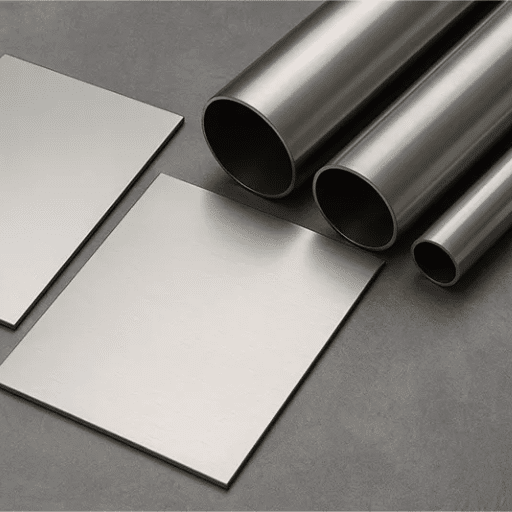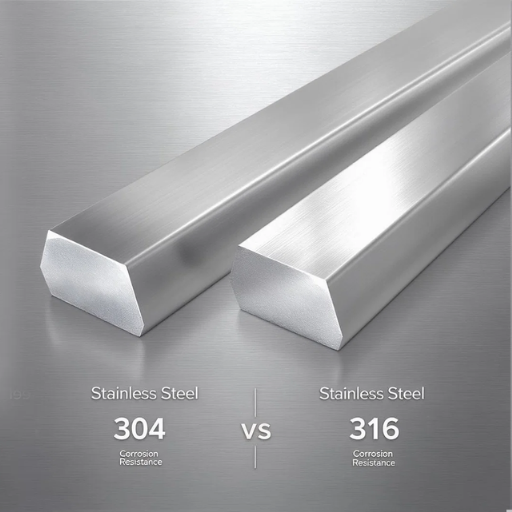
Four questions settle most stainless steel grade decisions, and they resolve in a fixed order: how much chloride the service contains, how hot it runs, whether the joint will be welded, and what product form and standard you are buying.
Work them in that order and a shortlist of a dozen grades usually collapses to one or two.
Most guides on the subject list the same five factors and stop. Naming a factor is not making a decision. “Consider the operating temperature” leaves a project engineer holding a line list and no answer. That gap is why this stainless steel grade selection guide is written as a procedure rather than a catalogue.
What follows is four questions with thresholds attached, a decision tree you can run against a live specification, and the verification step that decides whether the grade you specified is the grade that arrives. If you already have the four answers, send us the line list and our technical team will confirm the grade, standard, and documentation package against it.
Key Takeaways
- Grade selection resolves in a fixed order: chloride first, temperature second, welding third, product form fourth, because that is the order in which a wrong answer is hardest to fix later.
- PREN shortlists a grade; critical crevice temperature specifies it. 304 sits near PREN 18 and 20 to 28 °C. 316 and 316L sit near PREN 25 and 38 to 52 °C under ASTM G48 Method B.
- No specification limit exists for chloride concentration. Test or specify by crevice temperature; do not design to a published parts-per-million figure.
- The grade is half a specification. A240, A312, A213, A269 and A790 are not interchangeable, and the purchase order has to name one.
- Verifying matters as much as choosing. The molybdenum line on the mill test report separates 316 from 304, and portable XRF is the only reliable field test.
How to Choose Stainless Steel: The Four Questions
Grade selection is the process of matching four service variables to a standard grade: chloride exposure, service temperature, welding, and product form. The four are worked in that order because each later answer is cheaper to correct than the one before it. A welding problem can be closed with a procedure. A chloride problem cannot.
| Question | What actually decides it | Where it sends you |
|---|---|---|
| 1. Chloride | The chemistry at temperature, not the description on the drawing | 304L or 316L below the crevice temperature; 2205 or 2507 above it |
| 2. Temperature | Oxidation at the top, 475 °C embrittlement at the bottom, sensitization in between | 310S for high temperature; 321 or 347 welded above 425 °C; duplex below about 300 °C |
| 3. Welding | Whether the assembly is welded, and whether it stays hot afterwards | L grades for welded assemblies; stabilized grades above 425 °C |
| 4. Product form | What you are buying and to which specification | A240, A312, A213, A269, A276, A182 or A790 |
Question 1: What Is the Chloride Exposure?
Two different numbers do two different jobs here, and confusing them is the most common way a grade gets chosen badly.
Pitting resistance equivalent number (PREN) shortlists. Calculated as Cr + 3.3 Mo + 16 N, it runs roughly 18 for 304, 25 for 316 and 316L, 34 to 36 for 904L, 35 for 2205, and 43 for 2507. The composition behind each figure sits in the full grade chart.
PREN ranks grades; it doesn’t specify one. A high-PREN grade still crevices if the geometry gives corrosion somewhere to start and the metal is warm enough.
Critical crevice temperature (CCT) is specified. Measured to ASTM G48 Method B, 304 runs about 20 to 28 °C and 316 or 316L about 38 to 52 °C. That 15 to 25 °C gap is the whole 304 versus 316 decision in one line. The mechanism is in the full 304 vs 316 comparison; the measured results are in the crevice temperature data.
Read the range, not the midpoint. Crevice temperatures move several degrees between heats of the same grade, and no mill certificate tells you which end you bought.
Here is where this guide does something the others will not. It gives you no chloride concentration limit, because no such limit exists in any standard. Published guidance varies by more than a factor of five with temperature, flow, and crevice geometry, and none of it is normative. A table converting parts per million into a grade is an opinion in the clothing of a specification.
The British Stainless Steel Association’s selection principles start from the same place, working back to the lowest-cost grade that meets the corrosion case. That means stating the case, not the grade.
Seawater is about 19,000 ppm chloride, and that figure alone chooses nothing. Ambient flowing seawater in a welded line is a different problem from warm, stagnant, chlorinated seawater in a flanged joint, and the two can land four steps apart on the PREN ladder.
Question 2: What Is the Service Temperature?
Temperature is usually treated as one question with one ceiling. It is three mechanisms with three answers, and one of them points the opposite way from the others.
Oxidation at the top. Austenitic mill datasheets allow roughly 870 to 925 °C in continuous service. 310S, with its higher chromium and nickel, goes to about 1,100 to 1,150 °C.
475 °C embrittlement at the bottom. Duplex loses toughness when held hot, and its practical long-service ceiling is around 300 °C, well below what an austenitic will take.
Sensitization in between. Hold a welded austenitic between roughly 425 and 815 °C and chromium carbides form at the grain boundaries, stripping chromium from the metal beside them. That is why the L grades exist, and why the welding question comes next.
No ASTM standard sets a maximum service temperature for these grades. These figures are mill datasheet guidance, limited by oxidation, sigma phase, or embrittlement depending on the grade. They are a design input, not a compliance limit, and no certificate is issued against them.
Question 3: Will It Be Welded?
An unwelded 316 and a welded 316 are not the same material in the heat-affected zone. That zone is where the steel spends time in the sensitizing range, and it is why the specification changes the moment a joint appears.
For welded assemblies in chloride service or above about 425 °C, specify the L grade. 316L caps carbon at 0.030% in plate and 0.035% in pipe, leaving less carbon available to form chromium carbide. The strength cost is real: 170 MPa specified minimum yield against 316’s 205 MPa. Why the L suffix matters covers that trade.
Above roughly 425 °C, low carbon is not enough on its own. Specify 321 with titanium or 347 with niobium, which tie up carbon as a stable carbide before chromium can be taken.
Duplex is a separate case. It needs its own welding procedure, heat input limits and filler, and approving it because the parent metal is fine is how duplex welds fail.
Question 4: What Product Form, and to Which Standard?
A grade name is a composition. A product standard is a specification, and the two are not interchangeable.
| What you are buying | Standard | Note |
|---|---|---|
| Plate, sheet, strip | ASTM A240/A240M | The flat-product baseline |
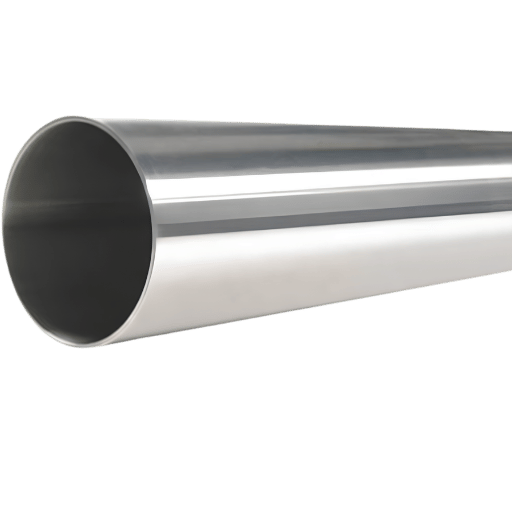
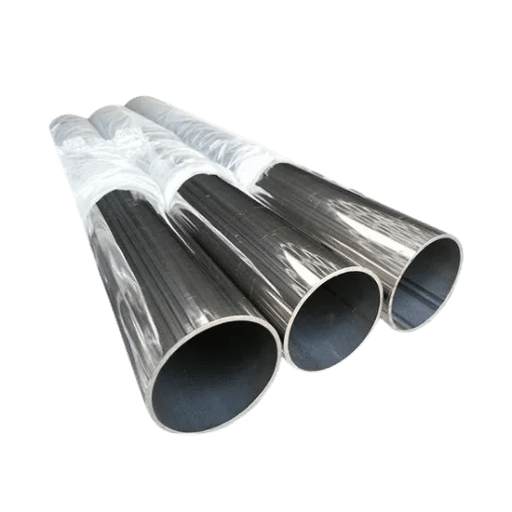
| Seamless and welded pipe | ASTM A312 | Line pipe and process pipe |
| Boiler and heat exchanger tube | ASTM A213 | Tighter wall tolerance |
| General service tube | ASTM A269 | Instrumentation and low pressure |
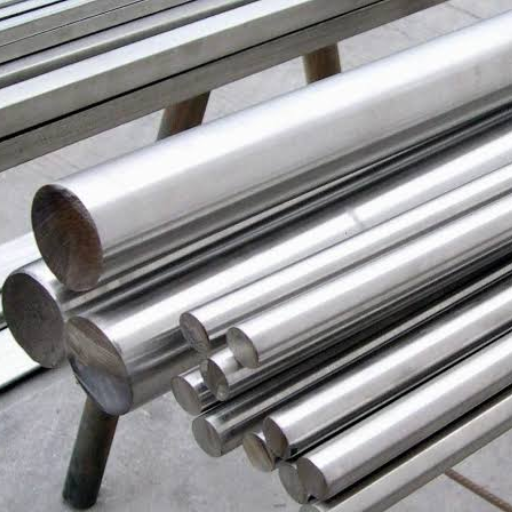
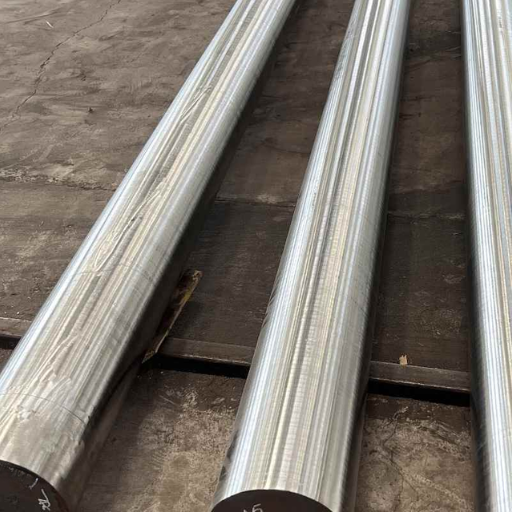
| Bar and rod | ASTM A276 | Machined components |
| Forgings and flanges | ASTM A182 | Pressure-retaining parts |
| Duplex pipe | ASTM A790 | Duplex has its own pipe standard |
Naming 316L without a standard leaves the mill room to interpret. A240 plate, A312 pipe and A213 tube carry different mechanical minimums and dimensional tolerances, and a certificate issued to the wrong one is a nonconformance even when the steel is correct. ASTM A240/A240M is where to read what the flat-product version of the specification actually requires.
Product form also shifts the grade choice at the margins. Shell-and-tube service has its own answers, because tube wall, tube-to-tubesheet joint and shell-side chemistry pull in different directions.
The Grade Selection Decision Tree
Run the four questions in sequence against a line item and the answer usually appears before the fourth one.
- Read the chloride. Chloride-free service stays in the austenitic family. If there is chloride, compare operating temperature with the CCT range for 316 or 316L. Below the range, 316L. Inside or above it, leave the austenitics.
- Read the temperature. Below 425 °C, continue. Between 425 and 815 °C with welding, move to 321 or 347. Above about 925 °C, move to 310S. Long service above 300 °C rules duplex out.
- Ask whether it is welded. If yes, the L grade or the stabilized grade, never the plain one.
- Name the standard. Match the product form to its specification and put it on the purchase order beside the grade.
Three worked examples, stated as conditions rather than as case studies.
Ambient, chloride-free, welded, pipe. Potable water at 20 °C in a welded line. 304L to A312. The L is the only part that needs justifying, and welding is the reason for it.
Warm chlorinated water, flanged, tube. Cooling water at 45 °C, chlorinated, flanged connections. 2205 to A790 rather than 316L. The crevice temperature range for 316L starts at 38 °C, so the operating temperature sits inside it with no margin. A flanged joint is a crevice by design, and the chloride is not going away.
Nitric acid, oxidising, welded. 304L, not 316L. Molybdenum helps in chloride and in reducing acids, and it makes things worse in strongly oxidising acids like nitric. Reaching for the more expensive grade here is a common and expensive mistake.
Working from a line list instead of one item? Send it with the service conditions and product forms, and our technical team will return the grade and standard per line within 24 hours. Send your specification.
When the Standard Grades Are Not Enough
The escape routes, in cost order
When 316L does not clear the chloride, the options run roughly in this order.
2205 duplex. PREN around 35, and a specified minimum yield of 450 MPa against 316L’s 170, roughly 2.6 times the strength. That strength often pays for the grade, because a thinner wall carries the same pressure rating. Duplex 2205 against 316L sets out the comparison.
2507 super duplex. PREN around 43, with a specified minimum tensile of 800 MPa and a minimum yield of 550 MPa. It is the answer when 2205’s crevice temperature is still short and the temperature is not high enough to rule duplex out.
904L and 6Mo (UNS S31254). 904L sits at PREN 34 to 36 and is bought for reducing acids and for chloride-plus-sulphuric service, not for raw pitting resistance. 6Mo sits near 2507 on pitting resistance with a different balance of nickel and molybdenum, and is often chosen when the fabrication route matters as much as the corrosion case.
Nickel alloys. Past roughly PREN 45, and into hot chloride, hydrofluoric acid or genuine chloride stress corrosion cracking risk in austenitics, the answer stops being a stainless steel. Where stainless stops and nickel alloys begin is the boundary to read first.
Indicative cost, indexed to 304 = 1.0 and dated November 2026: 316L around 1.3 to 1.6, 2205 around 1.8 to 2.2, 2507 and 904L around 3 to 4. These are relative indices, not prices. They move with nickel and molybdenum, and they aren’t a quotation.
What grade selection cannot fix
Three failures reach the plant on material that was specified correctly.
Crevice geometry. A gasket face, a threaded joint, a weld undercut, a deposit on the tube wall. Each is a crevice, and no grade removes it. Geometry decides whether corrosion starts; grade decides how long it takes.
Fabrication and surface condition. Heat tint from welding, iron contamination from carbon steel tooling, an unpassivated weld bead. A 316L surface left under a foreign layer corrodes like the layer, not like the grade.
Sensitization after the fact. A correct L grade welded with too much heat input loses the property that justified it, and the certificate will still read 316L.
No grade choice prevents these three, and no mill certificate detects them.
Verifying the Grade You Specified
Choosing 316L and receiving 304 are different failures, and the second is more common. A purchase order can’t enforce itself, so verification belongs inside the specification.
Read the certificate for what it proves. A mill test report should carry the UNS number rather than only the trade name, the heat number, the product standard with its edition, the chemical composition including molybdenum, and the mechanical results. UNS designations are the ones that survive translation between standards, and World Stainless keeps the reference material on designation systems.
Read the molybdenum line first. 316 and 316L carry 2.00 to 3.00% molybdenum; 304 carries none. A certificate showing 0.3% Mo is not a 316, and one with no Mo line cannot prove a 316.
Use portable XRF in the field. It separates 304 from 316 in seconds by reading the molybdenum peak. A magnet won’t help: both are austenitic and non-magnetic in the annealed condition, and cold-worked 304 can show a slight magnetic response that proves nothing.
Ask for EN 10204 Type 3.1. It is the documentation grade most international projects specify, issued by an inspection function independent of manufacturing and tied to the specific heat.
Stainless Steel Grade Selection Guide: FAQ
What grade of stainless steel should I use for my application?
Start with chloride and temperature, then confirm the product form. Chloride-free service below roughly 425 °C is normally 304 or 304L to A240 or A312. Chloride-bearing service below the crevice temperature moves to 316L. Above it, 2205.
Is all 316 stainless steel marine grade?
No, and the phrase is not defined in any standard. 316 and 316L reach a crevice temperature of about 38 to 52 °C, which handles ambient flowing seawater in a clean welded system and does not handle warm, stagnant, or chlorinated seawater at a flanged joint. PREN 25 against 2507’s 43 is the size of the gap.
What stainless steel grade is best for high temperature?
It depends on which direction you are going. Above about 925 °C, oxidation resistance drives the choice, and 310S runs to roughly 1,100 to 1,150 °C. Between 425 and 815 °C with welding, use 321 or 347. For long service above 300 °C, avoid duplex.
Do I need a duplex grade instead of 316L?
Only if you have a chloride problem or a strength problem that 316L does not solve. 2205 buys about 2.6 times the specified minimum yield and a crevice temperature well above 316L’s. It doesn’t buy high-temperature service, and it needs a welding procedure many shops do not have on the shelf.
What is the difference in hardness between 304 and 316?
Practically none, and neither grade is specified by hardness in A240 or A312. Both are austenitic, and neither hardens by heat treatment. Molybdenum changes corrosion resistance, not hardness.
Can I substitute an equivalent grade from another standard?
Sometimes, and the certificate has to say so. An EN 10088 1.4404 and an ASTM A312 316L are the same composition, but the mechanical minimums and product-form requirements belong to different documents. A dual-certified heat satisfies both; a certificate issued only to the foreign standard does not satisfy a purchase order written to ASTM.
Four Answers Before You Issue the PO
Grade selection is four questions, not a catalogue.
Chloride decides whether you stay austenitic. Temperature decides which austenitic, and whether duplex is ruled out. Welding decides the L or the stabilized grade. Product form decides the standard, and the standard is half the specification.
That is the whole procedure, and it is shorter than most stainless steel selection guides make it look.
Two things matter as much as the grade you pick. One is admitting which numbers do not exist: there is no chloride concentration limit and no standard maximum service temperature, however confidently a brochure states either. The other is verification, because the molybdenum line on a mill test report is the difference between a specification and an intention.
If you are holding a line list and the four answers are not resolving to a grade, send it to our technical team. We’ll confirm the grade, standard, and documentation package per line, usually within 24 hours, and we’ll tell you when a cheaper grade will do the job.